Call Us
+86 136 6007 9809
Call Us
+86 136 6007 9809

Jan. 22, 2024
Selecting an industrial nut is not simply a matter of matching the nominal thread of a bolt.
The nut becomes part of a complete bolted joint, and its performance depends on the relationship between:
bolt strength;
nut strength;
thread system;
thread engagement;
preload;
bearing surface;
joint materials;
locking method;
assembly torque;
temperature;
corrosion environment;
service loading.
For design engineers, the important question is therefore not:
“Which nut fits this bolt?”
It is:
“Which nut type, strength, material, locking mechanism and surface condition will maintain the required joint performance throughout the intended service life?”
For purchasing and supplier-development teams, additional questions include dimensional interchangeability,
applicable ISO/DIN/ASME specifications, coating consistency, thread inspection, lot traceability, sample approval and second-source qualification.
JUXIN FASTENERS supplies industrial nuts and drawing-based nut solutions including:
hex nuts;
flange nuts;
nylon insert lock nuts;
all-metal prevailing torque lock nuts;
serrated flange nuts;
weld nuts;
square nuts;
wing nuts;
cap nuts;
custom cold-formed and machined nuts.
Applications include automotive, EV equipment, rail transportation, industrial machinery, electrical equipment, power systems, automation, construction equipment and other OEM assemblies.
This guide explains how engineers and procurement teams can compare industrial nut types according to actual joint requirements rather than selecting by product name alone.
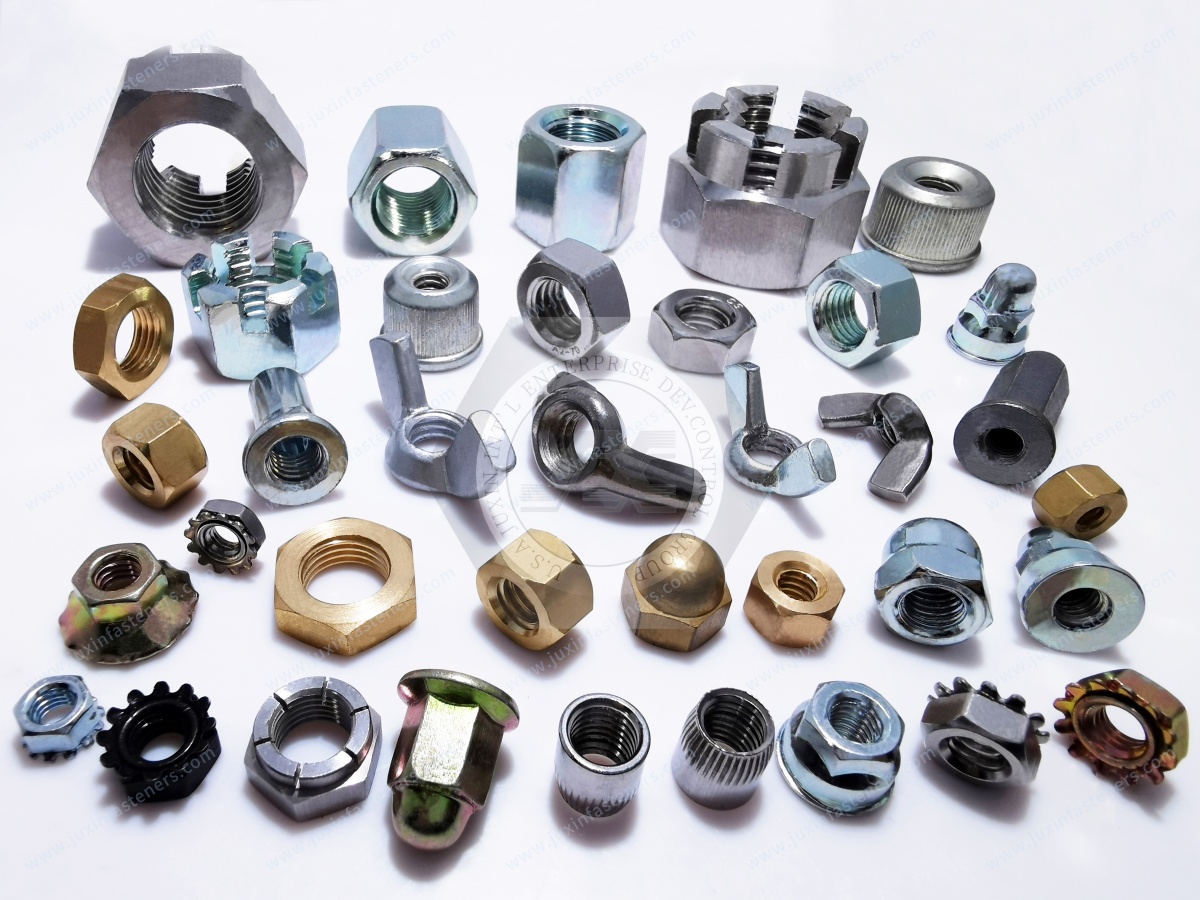
A practical selection path is:
Joint Function → Bolt Thread → Bolt Property Class → Required Preload → Vibration / Movement → Temperature → Corrosion → Installation Access → Nut Type → Coating → Validation
| Joint Requirement | Nut Type to Evaluate |
|---|---|
| General bolted assembly | Hex nut |
| Larger integrated bearing surface | Flange nut |
| Prevailing torque with polymer element | Nylon insert lock nut |
| Prevailing torque at elevated temperature | All-metal lock nut |
| Integrated bearing surface plus locking feature | Serrated or locking flange nut |
| Permanent threaded attachment to sheet | Weld nut |
| Anti-rotation geometry / special assembly | Square nut |
| Frequent hand adjustment | Wing nut |
| Covered exposed thread end | Cap nut |
| Nonstandard geometry or application | Drawing-based custom nut |
This is a starting point. Final selection depends on the complete bolted joint.
Hex nuts are among the most widely used internally threaded fasteners.
They provide six external wrenching surfaces and are used with:
bolts;
screws;
studs;
threaded rods.
International dimensional references can include ISO and DIN specifications depending on the required nut style and project specification.
Typical applications include:
machinery;
equipment frames;
automation;
automotive components;
electrical equipment;
industrial assemblies.
However, specifying only “M8 hex nut” is incomplete.
A procurement specification should also consider:
thread pitch;
dimensional standard;
nut property class;
material;
surface finish;
thread tolerance;
mating bolt;
assembly requirement.
A nut must be mechanically compatible with the mating bolt and required joint.
For metric carbon and alloy steel nuts, ISO 898-2 provides mechanical-property requirements for specified nut categories and thread ranges.
The nut property class should therefore not be selected independently from the bolt.
For example, an engineer evaluating a high-strength bolt should verify that the mating nut has the appropriate mechanical capacity for the specified bolted joint.
A dimensionally correct nut with inadequate mechanical properties can become the weak point of the assembly.
A flange nut integrates an enlarged bearing surface into the nut body.
Potential benefits include:
larger bearing area;
elimination of a separate washer in suitable applications;
simplified assembly;
improved load distribution at the bearing surface.
Flange nuts can be supplied in:
plain-bearing configurations;
serrated configurations;
prevailing-torque configurations;
application-specific geometries.
Typical applications include:
automotive assemblies;
industrial machinery;
equipment structures;
brackets;
sheet-related assemblies.
A flange nut and a conventional hex nut plus washer can perform similar assembly functions in some applications, but they are not automatically interchangeable.
A flange nut can reduce component count.
A separate washer can provide:
independent washer material selection;
specific washer hardness;
larger bearing diameter;
specialized surface or locking function.
Selection should consider:
bearing stress;
assembly speed;
component count;
joint surface;
torque-tension behavior;
service requirements.
Serrated flange nuts use teeth or serrations on the bearing surface.
When appropriately applied, these features can increase resistance to rotation by interacting with the mating surface.
However, serrations can also:
damage coatings;
mark the bearing surface;
change friction;
affect electrical contact;
influence torque-tension relationships.
A serrated flange nut should therefore not be selected solely because an assembly experiences vibration.
The mating surface and required joint behavior must also be considered.
Nylon insert lock nuts, often called Nyloc nuts, use a polymer locking element that interferes with the mating external thread.
DIN 985 is a widely recognized reference for a low-profile prevailing-torque nut with a non-metallic insert, while project specifications should define the exact applicable standard and requirements.
JUXIN FASTENERS supplies nylon insert lock nuts in suitable:
carbon steel;
stainless steel;
metric thread configurations;
drawing-based variants.
Typical applications include:
industrial machinery;
automation;
automotive equipment;
electrical equipment;
transportation assemblies;
general mechanical systems.
When the bolt enters the polymer insert, the external thread displaces the nylon and creates interference.
This produces prevailing torque even when the nut is not clamping the joint.
That distinction is important:
prevailing torque is not the same as bolt preload.
Prevailing torque is rotational resistance created by the locking feature.
Preload is the tensile force generated in the bolt when the joint is tightened.
A locking nut can provide prevailing torque while still requiring correct assembly control to establish the intended preload.
They may be appropriate where:
a reusable threaded locking solution is required;
service temperature is compatible with the polymer insert;
the joint specification permits a non-metallic locking element;
contamination requirements permit the material;
required prevailing torque can be achieved.
They should not automatically be selected for high-temperature environments.
For higher-temperature applications, an all-metal locking solution may be more appropriate.
Related Product: DIN 985 Nylon Insert Lock Nuts
All-metal prevailing torque nuts generate locking resistance through controlled deformation or specialized metal thread geometry rather than a polymer insert.
Potential advantages include:
no nylon locking element;
suitability for higher-temperature applications depending on material and specification;
robust metal construction;
prevailing-torque functionality.
Applications can include:
automotive systems;
industrial machinery;
exhaust-related equipment where specifically qualified;
rail equipment;
heavy equipment;
high-temperature assemblies.
Different all-metal lock nut designs create prevailing torque in different ways.
Therefore, “all-metal lock nut” should not be treated as one universal geometry.
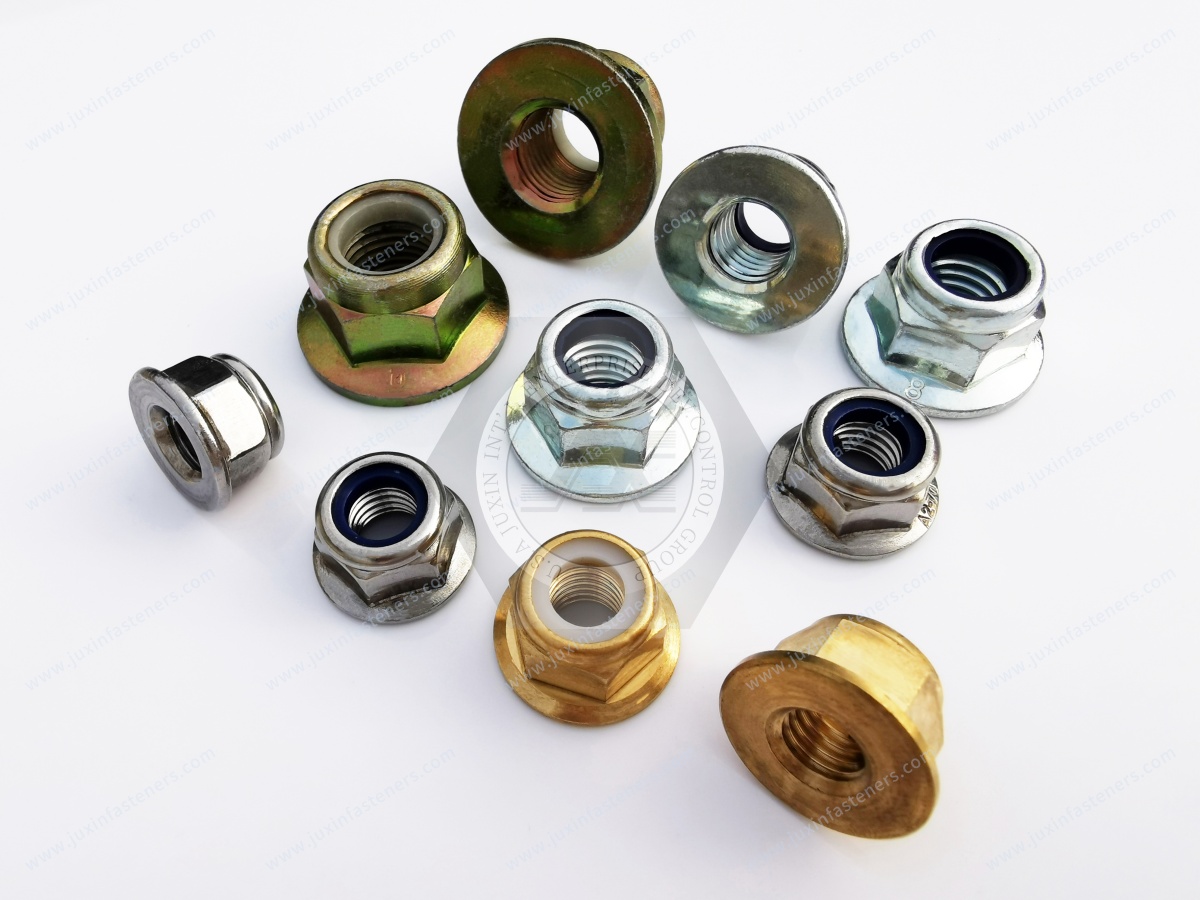
| Engineering Factor | Nylon Insert Lock Nut | All-Metal Lock Nut |
|---|---|---|
| Locking element | Polymer insert | Metal geometry |
| Prevailing torque | Yes | Yes |
| Elevated-temperature capability | Limited by insert and specification | Potentially higher depending on design/material |
| Metal-only construction | No | Yes |
| Thread friction behavior | Application-dependent | Application-dependent |
| Reuse | Must meet applicable prevailing-torque requirements | Must meet applicable prevailing-torque requirements |
| Typical selection driver | General prevailing-torque locking | Temperature / metal-only requirement |
Neither type is universally superior.
Selection depends on temperature, environment, required prevailing torque, mating bolt, serviceability and customer specification.
“Reusable” should not be interpreted as unlimited reuse.
Prevailing torque can change after repeated installation and removal.
For applications requiring repeated reuse, the nut should meet the applicable acceptance criteria after the specified number of installation cycles.
For critical assemblies, do not assume that a previously removed locking nut still provides the original locking performance.
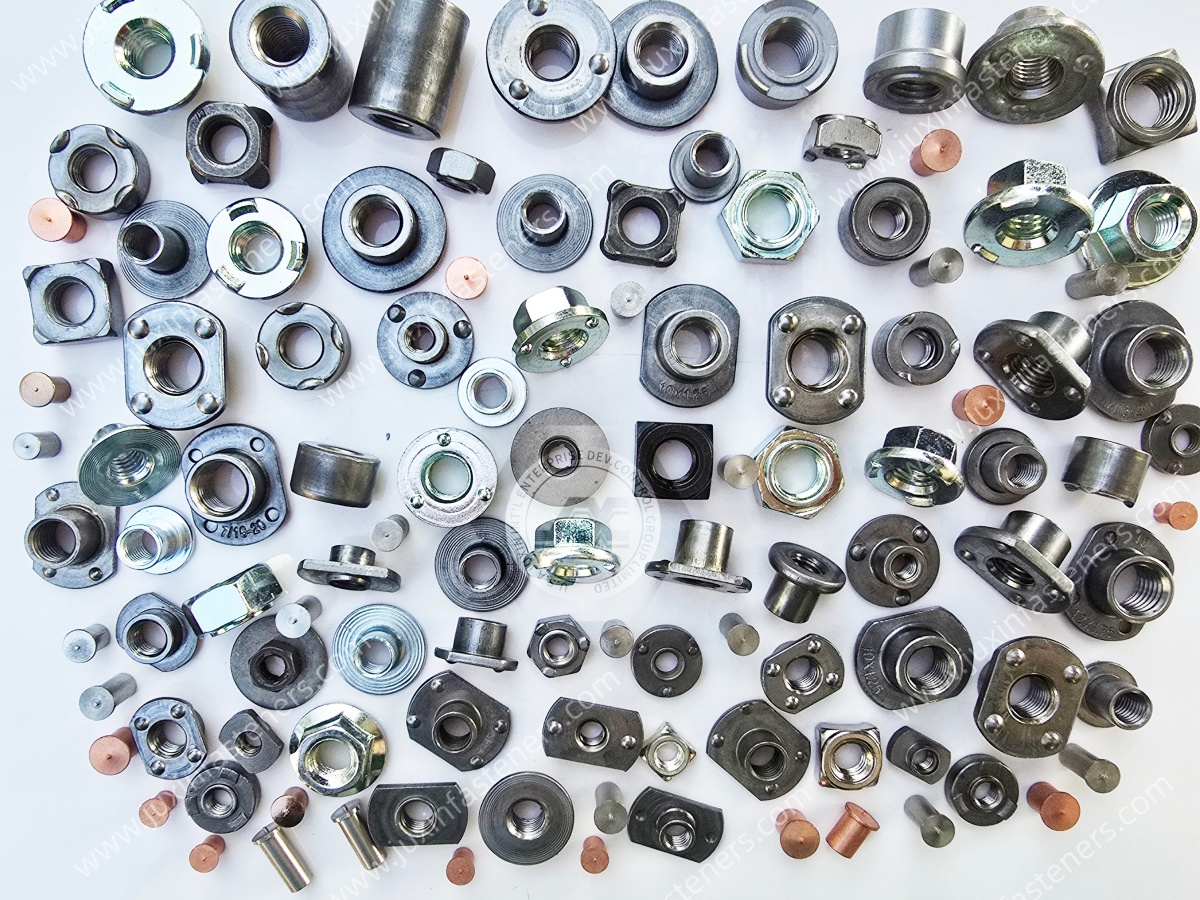
Weld nuts create a permanent threaded attachment on sheet or fabricated structures.
Common configurations include:
hex weld nuts;
square weld nuts;
projection weld nuts;
flange weld nuts;
custom automotive weld nuts.
Relevant international product families include DIN 929 hexagon weld nuts and DIN 928 square weld nuts, together with customer-specific automotive and industrial drawings.
JUXIN FASTENERS supplies weld nut solutions for suitable automotive, rail, machinery, enclosure and fabricated-metal applications.
Projection weld nuts contain defined welding projections that concentrate current and pressure during resistance welding.
Important variables include:
nut material;
projection geometry;
sheet material;
sheet thickness;
surface condition;
welding current;
electrode force;
weld time;
coating;
thread protection.
The nut and welding process should therefore be qualified together.
A dimensionally correct weld nut can still produce an unreliable assembly if the welding parameters are inappropriate.
Related Product: DIN 929 Hex Weld Nuts
Related Product: DIN 928 Square Weld Nuts
Related Solution: Automotive Projection Weld Nuts
Weld spatter or thermal distortion can affect the internal thread.
For production programs, inspection can include:
thread GO/NO-GO gauging;
dimensional inspection;
projection geometry;
visual inspection;
weld performance according to customer requirements.
Thread quality after welding should be considered as part of the complete manufacturing process.
Square nuts provide four wrenching surfaces and a larger body footprint than some conventional hex nut configurations.
Depending on the assembly, square geometry can provide:
anti-rotation through mating geometry;
increased bearing area;
captive installation possibilities;
compatibility with channels, cages or fabricated structures.
Applications can include:
machinery;
furniture systems;
fabricated equipment;
channels;
enclosures;
custom assemblies.
Square nuts should be selected according to the actual retaining geometry rather than treated simply as an alternative-shaped hex nut.
Wing nuts provide external wings that allow hand tightening and adjustment without a conventional wrench.
They are useful for:
frequently adjusted equipment;
removable covers;
fixtures;
clamps;
temporary positioning;
service assemblies.
Wing nuts can be manufactured in different architectures and materials.
JUXIN FASTENERS supports suitable wing nut requirements including metal wing nuts and specialized locking wing nut designs.
Where manual adjustment and resistance to unintended rotation are both required, specialized wing nut designs can incorporate a locking feature.
One example is a wing nut architecture combining:
metal or zinc-alloy body;
polymer locking element;
hand-operated wings.
This creates a different search and engineering intent from an ordinary DIN-style wing nut.
Related Product: Nylon Locking Wing Nuts
Cap nuts, also called acorn nuts in many markets, enclose the exposed end of a bolt or stud.
Potential reasons for selecting a cap nut include:
protecting exposed threads;
improving appearance;
reducing contact with sharp thread ends;
limiting contamination of exposed thread;
application-specific environmental protection.
However, a cap nut has limited internal depth.
The designer must ensure that the protruding bolt or stud does not bottom inside the cap before the joint reaches the required clamp condition.
This is a commonly overlooked selection issue.
Before specifying a cap nut, verify:
Available Internal Nut Depth > Actual Bolt Projection After Assembly
Allow for:
dimensional tolerances;
washer thickness;
joint stack variation;
thread lead-in;
required engagement.
If the bolt bottoms inside the cap nut, the installer may feel resistance even though the joint has not reached the intended preload.
Standard ISO or DIN nuts do not solve every assembly requirement.
Custom nuts may include:
nonstandard flange diameters;
special heights;
special wrenching geometry;
captive features;
custom locking elements;
special thread lengths;
special coatings;
application-specific projections;
cold-formed components;
CNC-machined precision nuts.
For custom nut projects, the drawing should define the functional features rather than relying on a generic product description.
JUXIN FASTENERS supports suitable metric and Unified inch threaded fastening requirements.
Common thread systems include:
ISO metric coarse;
ISO metric fine;
UNC;
UNF;
other drawing-defined thread requirements.
Thread compatibility requires more than matching nominal diameter.
Confirm:
nominal size;
pitch or threads per inch;
thread series;
tolerance class;
mating external thread;
coating effects where relevant.
Surface coating adds material to threaded surfaces.
For coated nuts, thread manufacture and coating control must work together so that the finished internal thread meets the required acceptance condition.
Important variables include:
base thread dimensions;
coating thickness;
coating distribution;
post-coating thread condition;
required thread gauge.
This is especially relevant for thicker corrosion-protection systems.
The finished coated nut—not only the uncoated blank—must satisfy the specified thread requirement.
For production nuts, appropriate thread plug gauges can be used to verify internal thread acceptance according to the specified thread system and tolerance.
Thread gauging is particularly important for:
coated nuts;
locking nuts;
weld nuts;
custom nuts;
high-volume OEM components.
However, passing a thread gauge does not validate every aspect of joint performance.
It confirms thread acceptance within the applicable gauging system, not preload, locking performance, welding quality or corrosion resistance.
Carbon and alloy steel nuts provide a practical combination of:
mechanical strength;
manufacturing efficiency;
cost effectiveness;
coating compatibility.
Selection should define:
mechanical property requirement;
dimensional standard;
thread;
coating;
corrosion requirement.
Avoid specifying only “carbon steel” for mechanically controlled OEM joints.
Common stainless nut materials include:
A2 / 304-type stainless steel;
A4 / 316-type stainless steel.
Stainless steel is often selected for corrosion resistance, but “stainless” does not mean corrosion-proof.
Performance depends on:
grade;
environment;
chloride exposure;
temperature;
crevice conditions;
surface condition;
mating material.
Stainless steel bolt-and-nut combinations can be susceptible to thread galling, particularly under unfavorable combinations of:
high friction;
high installation speed;
high contact pressure;
damaged threads;
unsuitable lubrication conditions.
Galling can cause:
sudden torque increase;
thread seizure;
damaged fasteners;
incomplete tightening.
For stainless assemblies, engineers should consider the complete thread pair and assembly process rather than assuming corrosion resistance alone determines suitability.
Related Engineering Guide: Stainless Steel Thread Galling Prevention
Copper or copper-alloy nuts may be considered for electrical applications where conductivity or other material properties are important.
Potential applications include:
electrical equipment;
power distribution;
terminals;
grounding systems;
conductive assemblies.
Electrical joint design should consider more than bulk conductivity.
Relevant factors can include:
contact surface;
contact pressure;
oxidation;
plating;
thermal cycling;
joint preload.
Aluminum and titanium can be used for specialized lightweight applications where their material properties justify the cost and design considerations.
Potential applications include:
lightweight equipment;
specialized transportation;
aerospace-related equipment where qualified;
high-performance machinery.
Material selection should consider:
strength;
thread wear;
galling;
corrosion;
galvanic compatibility;
temperature;
mating fastener material.
For aerospace applications, generic commercial material descriptions are not sufficient. The required alloy, specification, documentation and qualification must be defined by the customer.
Surface finish affects:
corrosion protection;
friction;
appearance;
electrical behavior;
assembly consistency.
Potential coating systems include:
zinc plating;
zinc-nickel;
mechanical or inorganic coating systems where specified;
customer-defined finishes.
Commercial names such as GEOMET® may appear in customer specifications;
the exact coating system and performance requirement should be confirmed from the drawing or purchasing specification.
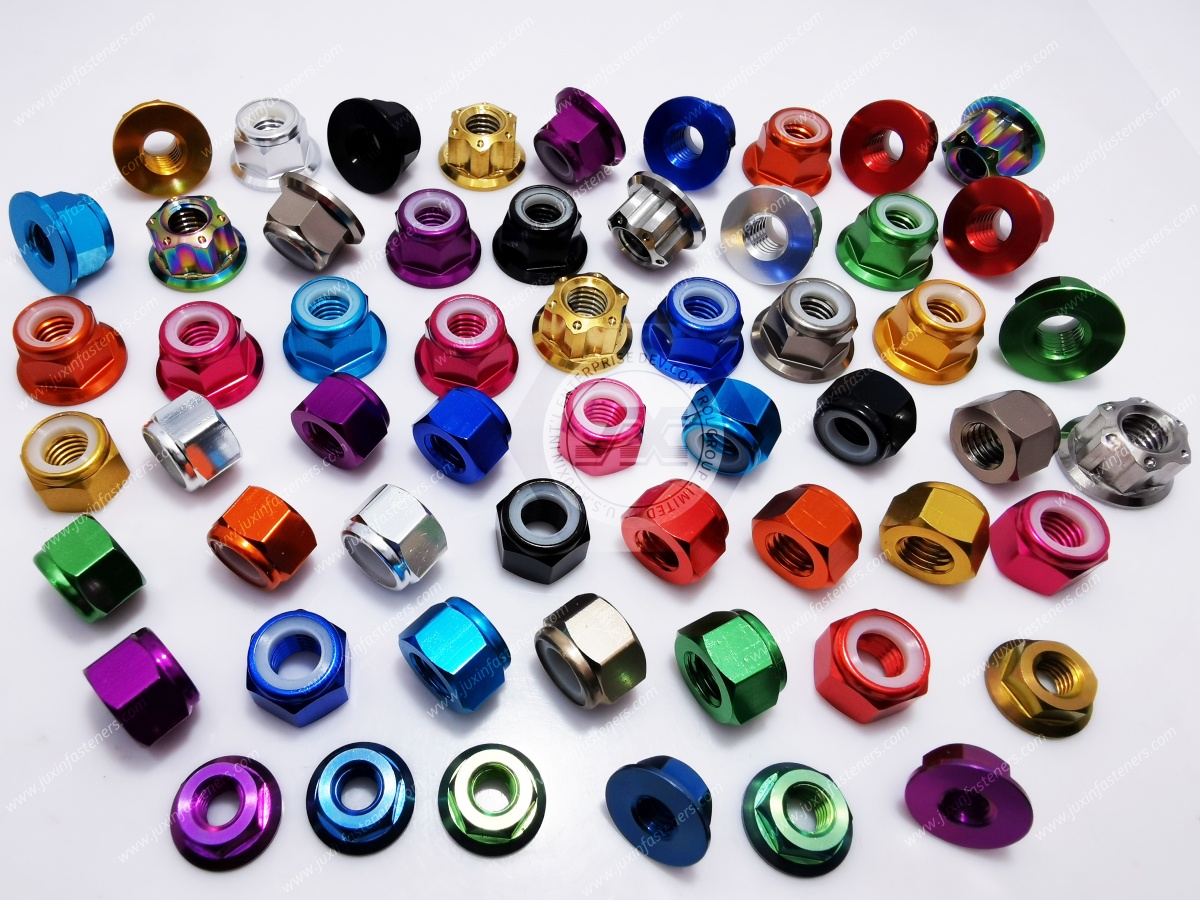
A common procurement mistake is specifying only:
“zinc plated”
without defining the required environment or performance.
A better specification may include:
coating system;
coating thickness where applicable;
passivation/topcoat;
corrosion test requirement;
acceptance criteria;
appearance;
friction requirement;
hydrogen-embrittlement controls where relevant.
Coating should be selected from the required performance—not from color alone.
High-strength steel fasteners can require special attention when electroplated.
Hydrogen introduced during manufacturing or surface treatment can create embrittlement risk in susceptible high-strength materials.
The risk depends on:
material strength/hardness;
manufacturing process;
cleaning/pickling;
coating process;
post-treatment controls;
applicable specification.
For high-strength fastener systems, coating selection should therefore be coordinated with material and mechanical requirements.
A customer requesting a “black nut” may be referring to appearance rather than corrosion performance.
Possible black finishes can have very different:
corrosion resistance;
friction;
coating thickness;
appearance consistency.
For OEM sourcing, define both:
appearance requirement + functional coating requirement
rather than relying on the word “black.”
This requires an important distinction.
A prevailing-torque lock nut creates rotational resistance through:
polymer interference;
deformed metal threads;
other controlled locking geometry.
A serrated flange nut creates interaction at the bearing surface.
But neither mechanism eliminates the need for correct joint design.
Bolted-joint loosening can be influenced by:
insufficient preload;
transverse movement;
joint settlement;
embedding;
vibration;
thermal cycling;
bearing-surface behavior.
Therefore:
locking feature ≠ substitute for correct preload
This distinction is particularly important in automotive, rail and industrial machinery applications.
When tightening a prevailing-torque nut, the measured tool torque includes more than the torque generating bolt preload.
Conceptually:
Total Applied Torque = Prevailing Torque + Thread/Bearing Friction Components + Preload-Generating Component
This matters because using the same tightening torque for a free-spinning nut and a prevailing-torque nut does not necessarily create the same bolt preload.
Assembly specifications should therefore be validated for the actual nut and coating system.
Torque is only an indirect method of controlling bolt preload.
Changes in:
coating;
lubricant;
topcoat;
thread condition;
bearing surface;
locking feature;
can change the torque-tension relationship.
This means a coating change that appears cosmetic can alter assembly behavior.
For controlled OEM applications, material and coating substitutions should be reviewed as engineering changes.
A stronger nut does not automatically create a stronger bolted joint.
Joint performance depends on the complete system:
Bolt + Nut + Thread Engagement + Clamped Parts + Bearing Surface + Preload + Friction + Service Load
Increasing one component's strength without reviewing the rest of the system may provide no useful benefit.
Automotive assemblies use multiple nut technologies according to location and manufacturing process.
Potential applications include:
body structures;
seat-related assemblies;
chassis equipment;
electrical equipment;
thermal-management equipment;
battery-related structures;
power electronics;
interior systems;
exterior systems.
Relevant nut families can include:
weld nuts;
flange nuts;
prevailing-torque nuts;
nylon insert lock nuts;
all-metal lock nuts;
custom nuts.
Automotive qualification should follow the actual customer drawing and validation requirements.
Rail equipment can require fastening systems capable of long service periods, vibration exposure, maintenance access and environmental variation.
Potential nut solutions include:
prevailing-torque lock nuts;
all-metal lock nuts;
flange nuts;
weld nuts;
stainless steel nuts;
drawing-based special nuts.
Where railway-specific joint requirements apply, they should be evaluated together with the complete bolted connection rather than assigning compliance to a generic nut family.
Typical applications include:
machine tools;
automation equipment;
conveyors;
packaging machinery;
robotic equipment;
hydraulic equipment;
industrial enclosures.
Relevant selection criteria include:
load;
vibration;
maintenance frequency;
adjustment;
corrosion;
assembly access.
Nut applications can include:
electrical cabinets;
power distribution equipment;
busbar-related assemblies;
power electronics;
communication equipment;
grounding systems.
Depending on the joint, engineers may need to consider:
conductivity;
electrical continuity;
insulation;
contact pressure;
corrosion;
temperature.
Industrial and construction equipment can require:
high-strength bolted joints;
corrosion-resistant fasteners;
locking nuts;
large-diameter nuts;
custom heavy-duty components.
Structural applications should follow the applicable project, engineering and regulatory specifications rather than generic nut recommendations.
Aerospace and high-reliability fastening requirements can involve:
specialized materials;
controlled manufacturing processes;
strict documentation;
traceability;
customer-approved specifications;
application-specific testing.
A commercial nut should never be described as “aerospace grade” simply because it is made from titanium, stainless steel or another premium material.
For aerospace-related sourcing, the controlling drawing, material specification, qualification and documentation requirements must be defined.
“M10 nut” does not define:
property class;
style;
height;
flange;
locking feature;
material;
coating.
A locking feature cannot compensate for every preload or joint-stiffness problem.
Nylon insert lock nuts must be evaluated against actual service temperature and applicable specification.
Coating can change friction and therefore assembly preload.
Stainless fasteners can gall during assembly.
The bolt can bottom inside the cap before the joint is clamped correctly.
Projection geometry can affect the welding process and resulting joint.
Color does not define corrosion performance.
Procurement teams frequently qualify alternative nut suppliers to reduce supply-chain risk.
A second-source review should compare more than the nominal thread.
Evaluate:
applicable standard or controlled drawing;
thread size and pitch;
thread tolerance;
nut dimensions;
material;
property class;
locking geometry;
prevailing-torque requirements where applicable;
flange or bearing geometry;
weld projections where applicable;
coating;
corrosion requirement;
friction requirement where specified;
marking;
inspection requirements;
packaging;
traceability;
application validation.
For special nuts, sample approval in the actual mating assembly can be more informative than visual comparison alone.
Depending on product and customer requirements, inspection can include:
dimensional inspection;
GO/NO-GO thread gauging;
material verification;
hardness testing;
mechanical-property testing;
prevailing-torque testing;
coating inspection;
corrosion testing;
weld-related validation;
visual inspection;
lot traceability.
The inspection plan should correspond to the actual risk and specification.
For custom nuts and second-source programs, an approved Golden Sample can provide a useful physical reference alongside the controlled drawing.
However, the drawing and approved specification remain the controlling technical documents.
Changes to:
material;
dimensions;
locking geometry;
coating;
manufacturing process;
should be controlled according to the customer's approval requirements.
This is particularly important where a seemingly small change can affect torque, welding or assembly behavior.
For efficient engineering review and quotation, provide:
nut type;
applicable ISO, DIN, ASME/ANSI or customer specification;
nominal thread size;
thread pitch or TPI;
thread tolerance;
nut dimensions;
mating bolt specification;
bolt property class or grade;
nut property class where applicable;
material;
hardness requirement where applicable;
locking mechanism;
prevailing-torque requirement where applicable;
flange requirement;
serration requirement;
weld projection geometry where applicable;
surface finish;
coating requirement;
corrosion requirement;
friction requirement where specified;
operating temperature;
application environment;
assembly torque or preload requirement where available;
2D drawing;
3D model for custom geometry where applicable;
sample quantity;
production quantity;
estimated annual demand;
inspection requirements;
material documentation;
traceability requirements;
packaging requirements.
For second-source projects, send the existing controlled drawing whenever possible.
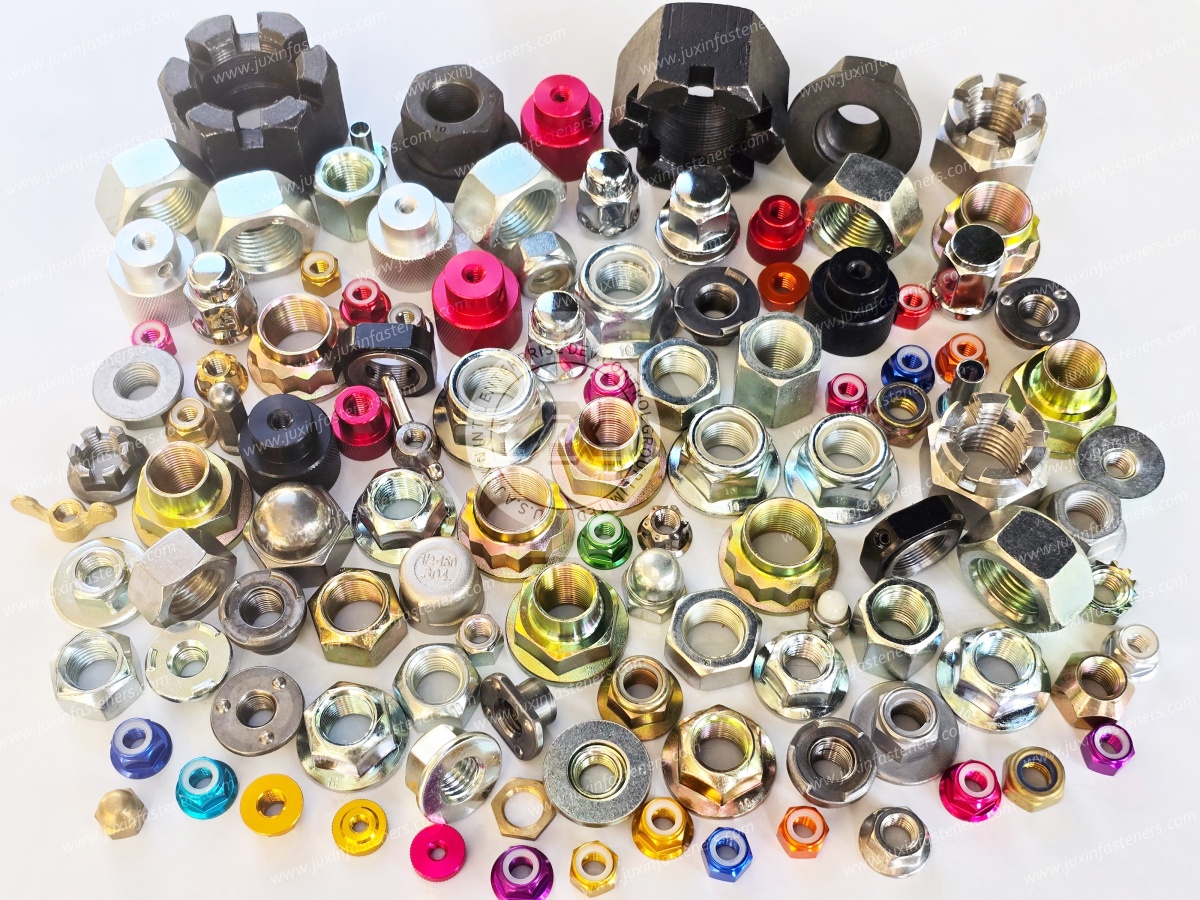
Common industrial nut families include hex nuts, flange nuts, nylon insert lock nuts, all-metal lock nuts,
weld nuts, square nuts, wing nuts, cap nuts and drawing-based custom nuts.
A standard hex nut normally rotates freely on the mating thread before clamping. A prevailing-torque lock nut introduces additional rotational resistance through a polymer or metal locking feature.
Prevailing torque is rotational resistance generated by the locking feature. Preload is tensile force generated in the bolt by tightening the joint.
No. Locking nuts can add resistance to rotation, but joint loosening also depends on preload, transverse movement, joint stiffness, settlement, friction and service conditions.
A nylon insert lock nut uses a polymer locking element. An all-metal lock nut generates prevailing torque through metal geometry.
Temperature and application requirements are important selection factors.
They may permit reuse under appropriate conditions, but prevailing torque can change after repeated cycles.
The applicable specification and acceptance requirement should control reuse.
The complete temperature requirement should be reviewed. Where a polymer insert is unsuitable, an appropriately specified all-metal nut may be considered.
A flange nut integrates an enlarged bearing surface into the nut. A conventional hex nut may require a separate washer depending on the joint design.
No. Serrations interact with the bearing surface and can affect coating, friction and surface condition. Suitability depends on the complete joint.
A weld nut is designed to be permanently attached to a metal component by welding, commonly resistance projection welding.
DIN 929 refers to a hexagon weld nut family, while DIN 928 refers to square weld nuts. The required geometry should be confirmed from the applicable specification and drawing.
Adhesive wear and galling can occur under high contact pressure and friction, especially with unfavorable assembly conditions.
Not in every environment. Performance depends on stainless grade, coating system, exposure, joint geometry and service conditions.
For controlled OEM applications, no. The required coating system, corrosion performance and friction behavior should also be defined.
Provide the drawing, thread, material, mechanical requirements, dimensions, locking or welding features, coating, quantity, application and inspection requirements.
Build internal links from this page to relevant existing pages such as:
DIN 985 Nylon Insert Lock Nuts
All-Metal Lock Nuts
Nylon Locking Wing Nuts
DIN 929 Hex Weld Nuts
DIN 928 Square Weld Nuts
Automotive Projection Weld Nuts
Automotive Hex Flange Weld Nuts
Stainless Steel Thread Galling Prevention
Blind Rivet Nuts
Self-Clinching Nuts
Custom CNC Machined Fasteners
Automotive Fastener Material and Coating Selection
Use the existing indexed JUXIN FASTENERS URLs when implementing these internal links.
Industrial nut sourcing should connect thread compatibility, mechanical properties, locking mechanism, material, coating, assembly conditions and supply-chain control.
JUXIN FASTENERS supports suitable requirements for hex nuts, flange nuts, nylon insert lock nuts, all-metal lock nuts, weld nuts, square nuts,
wing nuts, cap nuts and drawing-based custom nut components.
For design and structural engineers, provide the mating bolt, required thread, mechanical property requirements, joint loading, operating temperature,
environment, locking requirement and assembly conditions.
For purchasing, procurement development, strategic sourcing and supplier-development teams, provide the applicable standard or controlled drawing,
material, property class, coating, sample quantity, production quantity, estimated annual demand, inspection requirements, documentation requirements, traceability requirements and packaging requirements.
For second-source programs, provide the current controlled drawing and application specification whenever available.
Where a special locking or weld nut is involved, sample qualification should verify the functional features—not merely dimensional appearance.
Email: info@juxinfasteners.com
Website: www.juxinfasteners.com
Contact Us
Tel.:
+86 020 8621 0320
+86 020 3121 6067
E-mail:
Technical Support:
Navigation
SEND INQUIREY