
Call Us
+86 136 6007 9809
Call Us
+86 136 6007 9809

Jul. 11, 2023
Metal cap nuts, also known as dome nuts or acorn nuts, are used when a threaded joint requires a finished external appearance, protection around the exposed end of a bolt, or a defined enclosed nut geometry.
Unlike an ordinary hex nut, a cap nut incorporates a domed or closed-end section over the threaded area.
This geometry can help cover the exposed bolt end, reduce contact with sharp external threads, and provide a cleaner appearance on visible assemblies.
Depending on the design, cap nuts may be used in automotive components, industrial machinery, equipment housings, furniture and architectural hardware, brackets,
outdoor equipment, and other applications where both fastening function and external appearance matter.
However, a cap nut should not be selected only by its external appearance.
For engineering applications, the internal thread depth, available bolt protrusion, material, mechanical requirements, surface treatment, installation method,
corrosion environment, and whether a locking function is required all need to be considered.
JUXIN FASTENERS supplies metal cap nuts, dome nuts, acorn nuts, and customized threaded fastener components for industrial and automotive applications.
With more than 20 years of fastener experience, JUXIN FASTENERS supports customer-specific requirements for dimensions, materials, threads, surface treatments, quantities, inspection, packaging, and documentation.
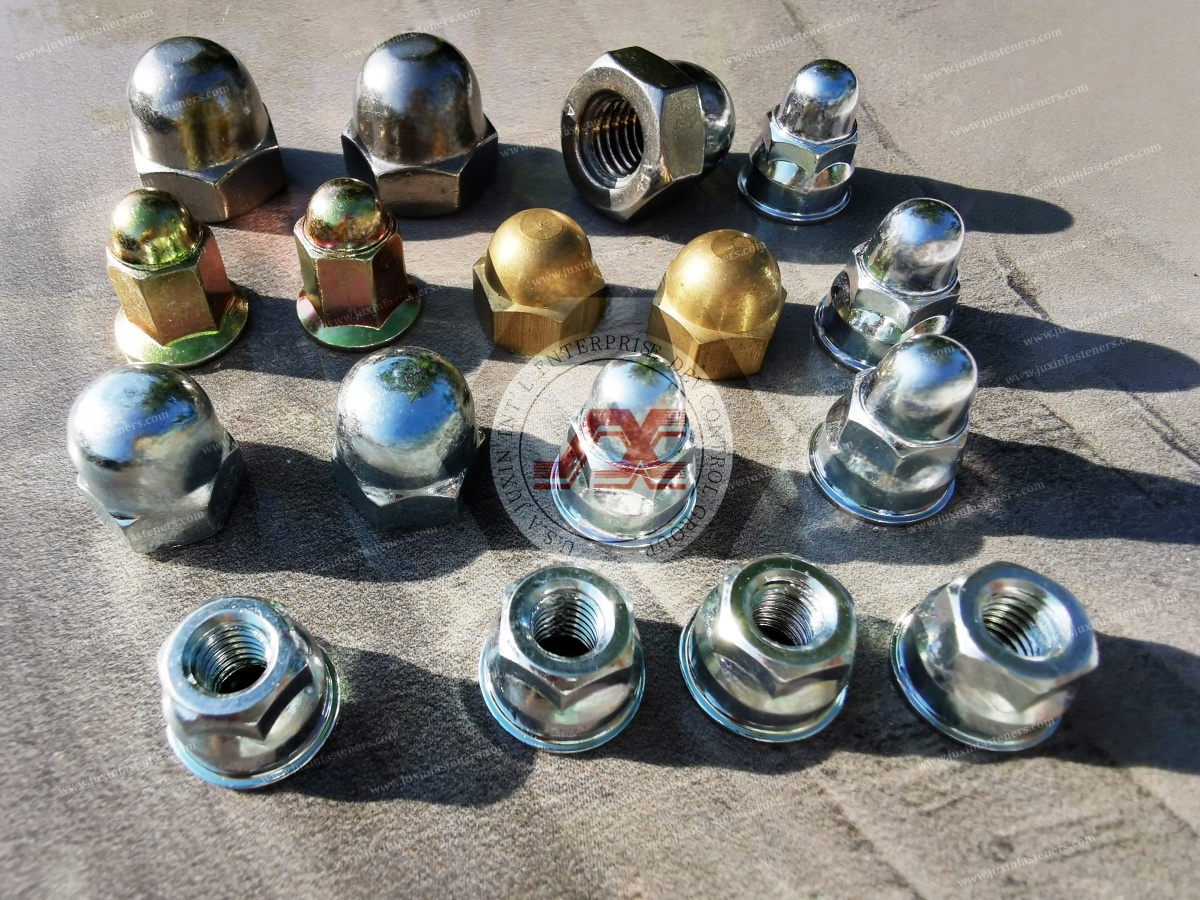
A metal cap nut is a nut with a closed or domed end that extends beyond the internal threaded section.
The most recognizable form is the hexagon dome nut, commonly known as an acorn nut.
Compared with a conventional open hex nut, the cap geometry provides an additional external surface over the end of the threaded connection.
Typical reasons for selecting a cap nut include:
Covering exposed bolt threads
Reducing contact with a protruding threaded end
Providing a smoother external profile
Improving the appearance of visible assemblies
Protecting the enclosed threaded end from direct external contact
Creating a defined decorative or functional fastening appearance
Meeting a customer-specific assembly design
The actual protective effect depends on the cap-nut geometry, fit, installation condition, material, and environment.
A standard cap nut should not automatically be described as waterproof or hermetically sealed.
If environmental sealing is required, the joint must be specifically designed and validated for that function.
In many industrial and commercial applications, the terms cap nut, dome nut, and acorn nut are used to describe similar products.
The exact terminology can vary by manufacturer, region, drawing, industry, and product geometry.
For search and procurement purposes, common terms include:
Metal cap nut
Dome nut
Domed cap nut
Acorn nut
Hexagon cap nut
Hex dome nut
Blind cap nut
The important point for engineering and purchasing is not the name alone.
The supplier should work from the actual:
Thread specification
Nut geometry
Overall height
Internal thread depth
Material
Surface treatment
Mechanical requirements
Quantity
Applicable standard or drawing
A drawing or sample is particularly valuable when the required geometry is not a standard DIN or ISO configuration.
DIN 1587 is a commonly referenced standard for hexagon dome nuts.
The standard provides a defined dimensional form for this type of domed hexagon nut.
For a standard application, specifying the applicable standard can make sourcing more straightforward because the supplier can identify the basic geometry and dimensions from the standard.
However, a complete purchasing specification may still need to define:
Thread size
Thread pitch
Material
Property class where applicable
Surface treatment
Thread tolerance
Quantity
Inspection requirements
Packaging
Special requirements
A DIN reference should therefore be treated as part of the product specification rather than as a substitute for the complete purchasing requirement.
Not every cap nut is a DIN 1587 product.
Depending on the application, customers may require:
Standard hexagon dome nuts
Low-profile dome nuts
High-profile cap nuts
Deep dome cap nuts
Decorative acorn nuts
Stainless steel dome nuts
Brass or bronze dome nuts
Locking dome nuts
Custom cap nuts
Special-profile cap nuts
Customer-drawing cap nuts
Standards such as DIN 917 may be relevant to specific low-type cap-nut configurations.
Where the customer's design does not correspond exactly to a standard product, the drawing should control the final dimensions.
One of the most overlooked aspects of a cap nut is the relationship between bolt protrusion and internal cap depth.
A cap nut is not simply a conventional nut with a decorative dome added to the outside.
The closed-end geometry creates a physical limit to how far the bolt can extend into the nut.
If the bolt is too long, it can contact the internal end of the cap before the nut is fully seated against the mating surface.
This condition is commonly described as bottoming.
If the bolt bottoms against the closed end of the cap nut before the nut reaches the intended seating position, the joint may not develop the required clamping condition.
The result can include:
Nut not fully seated
Incorrect joint compression
Apparent tightening without correct clamp load
Damage to the internal cap
Difficulty during automated assembly
Unexpected torque behavior
Assembly variation
This is a critical design consideration when replacing an ordinary open nut with a cap nut.
The bolt length that worked with an open nut may not necessarily be appropriate for the equivalent cap-nut assembly.
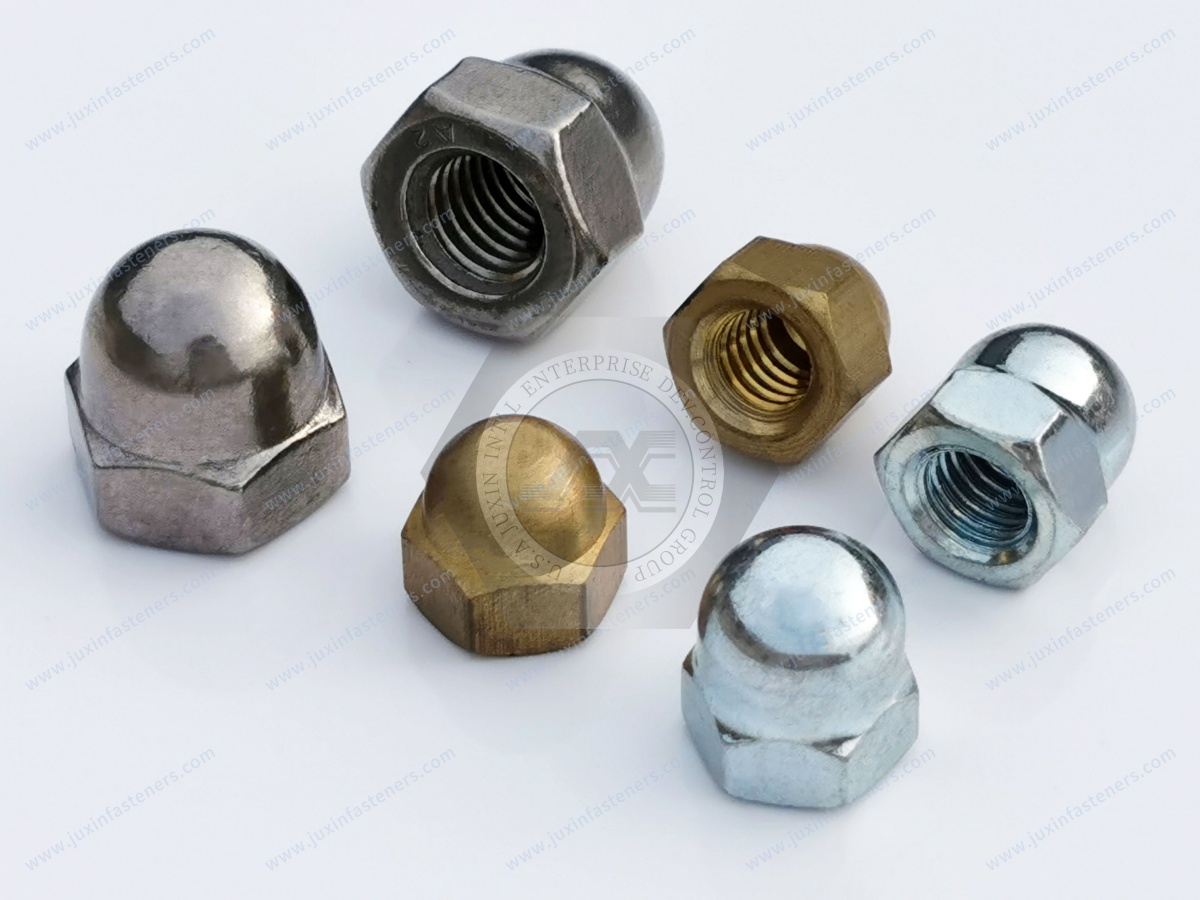
For a cap-nut application, engineers should compare three dimensions:
1. Effective threaded depth
The usable internal thread length available for bolt engagement.
2. Internal cap clearance
The unthreaded or enclosed internal space beyond the effective thread.
3. Actual bolt protrusion
The portion of the bolt extending beyond the mating component and entering the nut.
The basic design question is:
Does the installed bolt remain within the usable internal space without contacting the closed end before the nut seats correctly?
This should be checked using the actual bolt length, washer thickness, joint thickness, nut geometry, and manufacturing tolerances.
This simple check can prevent an avoidable assembly problem.
Another common sourcing mistake is assuming that every cap nut provides a locking function.
A standard metal dome nut is primarily a fastening and protective/appearance component.
It should not automatically be described as a prevailing-torque locking nut.
If the application is exposed to significant vibration, the design may require:
Prevailing-torque cap nut
Nylon-insert cap nut
All-metal locking nut
Thread-locking compound
Mechanical locking feature
Separate locking element
Customer-specific anti-loosening solution
The locking method should be selected according to the actual assembly and service conditions.
Cap nuts can be combined with prevailing-torque features in configurations designed for vibration resistance.
For example, nylon-insert locking nuts use a non-metallic insert to generate prevailing torque during installation.
Relevant standards can include ISO 2320 and specific dimensional or product standards such as ISO 10511, depending on the nut configuration.
DIN 986 is also associated with hexagon domed cap nuts incorporating a non-metallic insert.
The exact standard should match the actual product geometry.
A locking cap nut should therefore be specified with both:
The cap-nut geometry
The required locking function
This distinction is particularly important for automotive and machinery applications.
Automotive assemblies often require fasteners that combine functional performance with controlled appearance and packaging.
Metal cap nuts may be considered for applications such as:
Automotive brackets
Exterior hardware
Interior trim-related assemblies
Seat-related components
Chassis-related brackets
Body hardware
Mounting assemblies
Decorative exposed fasteners
Equipment and accessory assemblies
The correct specification depends on the location of the fastener and the actual mechanical requirements.
For components exposed to vibration, a standard dome nut should not be assumed to provide sufficient locking performance.
Where the joint requires prevailing torque or another locking function, the appropriate configuration should be specified.
For automotive applications, the fastener should also be evaluated against the surrounding material, corrosion environment, assembly process, and customer-specific requirements.
In industrial equipment, cap nuts can provide a useful combination of fastening and external thread coverage.
Applications can include:
Machinery frames
Equipment housings
Machine guards
Brackets
Automation equipment
Robotics
Industrial cabinets
Mechanical assemblies
Production equipment
Furniture and equipment hardware
For machinery with frequent maintenance, engineers should also consider whether the cap nut can be installed and removed using the available tooling.
The external hex dimensions, nut height, bolt protrusion, and tool access can all influence assembly efficiency.
The appearance of a fastener can become an important design parameter when the hardware is visible to the end user.
Metal dome nuts can provide a smoother and more finished appearance than a standard open hex nut.
Potential applications include:
Architectural hardware
Furniture
Display systems
Equipment panels
Public-facing equipment
Decorative structures
Specialty fixtures
In these applications, the surface finish may be selected not only for corrosion considerations but also for visual consistency.
Possible finishes may include:
Bright stainless steel
Polished stainless steel
Zinc finishes
Black finishes
Nickel finishes
Other customer-specified decorative or functional coatings
The actual finish should be defined according to the application and customer specification.
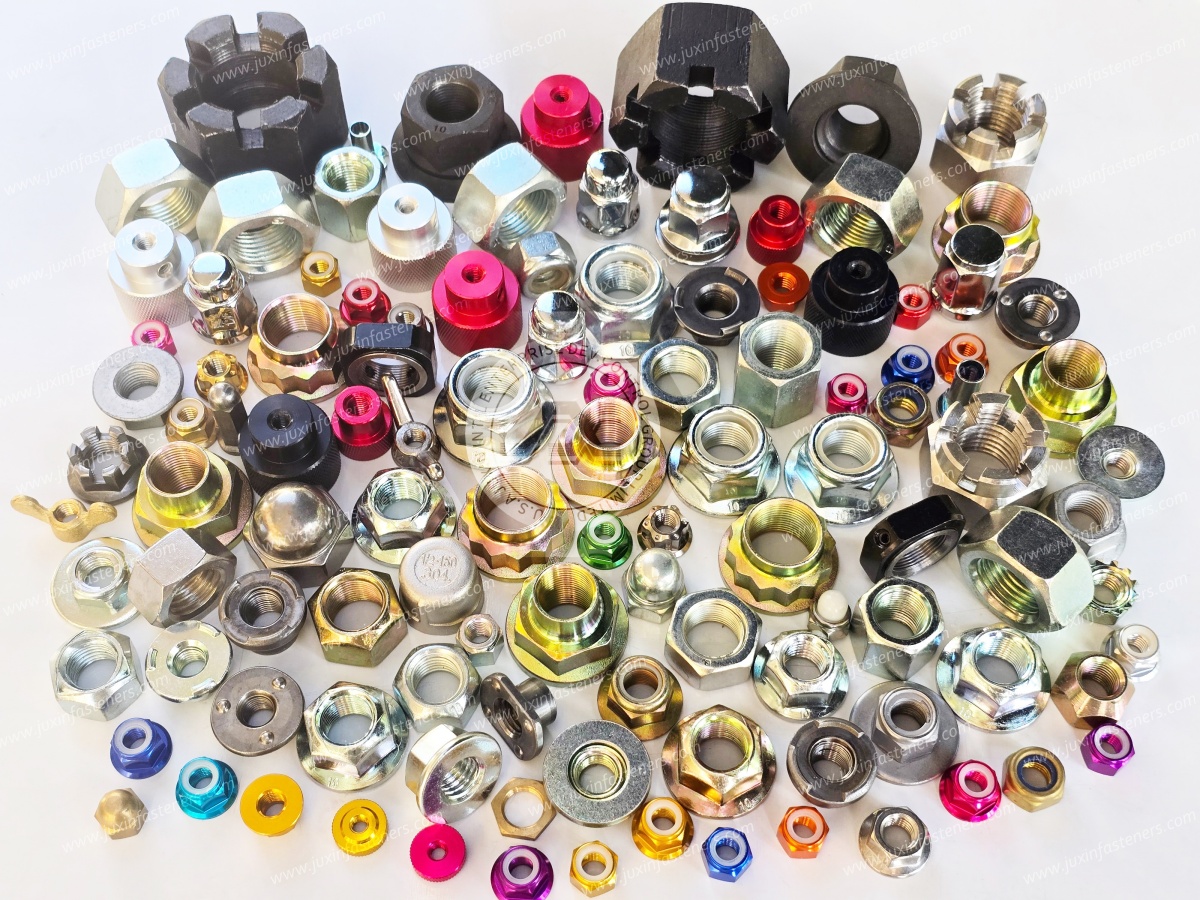
Material selection should consider mechanical requirements, corrosion exposure, temperature, appearance, and mating-component compatibility.
Potential material categories include:
Carbon steel cap nuts can provide a practical solution for general industrial applications.
The required mechanical properties and surface treatment should be specified according to the application.
Alloy steel may be considered when increased mechanical performance is required.
The appropriate property class and heat-treatment condition should be defined according to the applicable specification.
Austenitic stainless steels such as A2 and A4 families can be considered where corrosion resistance is an important design requirement.
Applicable requirements may be specified under ISO 3506.
Stainless steel should not automatically be selected simply because the application is outdoors.
The actual environment, temperature, chemical exposure, strength requirements, and galling risk should be evaluated.
Brass cap nuts can be useful where appearance, corrosion characteristics, electrical properties, or specific machining requirements make brass appropriate.
Certain bronze or copper-alloy cap nuts may be considered for specialized applications.
The specific alloy should be defined rather than using “bronze” as a generic material description.
Special applications may require customer-specified materials such as nickel alloys or other engineering alloys.
Such materials should be specified by exact grade and applicable material standard.
Stainless steel can provide useful corrosion resistance, but stainless steel threaded assemblies can also experience galling under certain installation conditions.
Risk can be influenced by:
Thread surface condition
Material combination
Installation speed
Contact pressure
Lubrication
Repeated assembly
Thread geometry
For stainless steel cap nuts used in production assembly, the fastening process should therefore be considered together with the material selection.
Simply specifying “stainless steel cap nut” may not provide enough information for a high-volume production application.
The surface treatment should be selected according to the intended function of the cap nut.
Possible requirements include:
Corrosion protection
Appearance
Wear resistance
Friction control
Compatibility with mating materials
Environmental requirements
Common steel fastener finishes may include:
Zinc plating
Trivalent zinc systems
Zinc-nickel alloy coatings
Zinc-flake coatings
Black zinc finishes
Nickel coatings
Nickel-chromium systems
Other customer-specified finishes
The correct coating depends on the substrate, required corrosion performance, mechanical requirements, appearance, and applicable specification.
For certain high-strength steel fasteners, non-electrolytically applied zinc-flake coating systems may be considered.
ISO 10683 provides requirements for non-electrolytically applied zinc-flake coatings on fasteners.
One advantage of this type of coating system is that it can provide corrosion protection without using a conventional electrolytic zinc-plating process.
For high-strength steel fasteners, the surface-treatment process should be evaluated carefully because the manufacturing route can affect hydrogen-related risk.
However, a generic zinc-flake designation should not be interpreted as an automatic guarantee of a particular corrosion-test result.
The coating system and required performance should be specified for the application.
Nickel and nickel-chromium finishes can be considered when appearance, surface durability, and corrosion performance are important.
Electrodeposited nickel and nickel/chromium coatings are covered by applicable international coating standards, including ISO 1456 for relevant electroplated coating systems.
For decorative applications, the exact coating stack and finish should be defined according to the required appearance and performance.
For engineering applications, the specification should also consider:
Coating thickness
Dimensional effect
Thread fit
Adhesion
Corrosion requirement
Surface appearance
Base material
A common procurement mistake is treating a decorative finish and an engineering corrosion-protection system as the same requirement.
They are not necessarily equivalent.
For example, a bright decorative finish may be selected primarily for appearance, while an industrial zinc-based coating may be selected primarily for corrosion protection.
When requesting a quotation, specify the required function rather than simply saying:
“Shiny finish.”
A better RFQ identifies:
Base material
Coating system
Color or appearance
Required coating thickness where applicable
Corrosion requirement
Applicable coating standard
Application environment
This allows suppliers to evaluate the correct process rather than selecting a visually similar finish.
The manufacturing process for a cap nut depends on its geometry, material, dimensions, annual volume, tolerances, and commercial requirements.
Potential manufacturing approaches can include:
Cold forming / cold heading
Multi-stage forming
Machining
Turning
Combination forming and machining
Secondary tapping
Secondary finishing operations
Cold forming can be highly effective for suitable production geometries because the material is formed rather than completely removed from bar stock.
Machining can be useful for:
Low-volume custom parts
Complex geometry
Special materials
Prototypes
Features not economical to form
Customer-specific dimensions
The correct process should be selected according to the actual part rather than assuming that every cap nut must be manufactured by one universal method.
For production cap nuts, cold forming may offer advantages when:
The geometry is suitable for forming
Production volume justifies dedicated tooling
Material is appropriate for the process
Dimensional requirements are compatible with the process
The part benefits from efficient material utilization
Machining may become more attractive when:
Quantities are relatively low
The geometry is highly customized
The material is difficult to cold-form
Tooling investment would not be economical
Tight special features require machining
The best process is therefore a commercial and engineering decision rather than a simple “cold heading is stronger” rule.
Cold forming can alter the material's grain flow compared with a part produced entirely through machining.
For suitable geometries, forming can preserve a more continuous material structure through portions of the component.
However, this does not mean that every cold-formed cap nut automatically has superior performance to a machined cap nut.
Actual performance depends on:
Material
Forming process
Heat treatment
Geometry
Thread production
Surface condition
Final inspection
The manufacturing route should therefore be selected according to the required product performance and production economics.
The internal thread is one of the most important functional features of a cap nut.
Important parameters include:
Thread size
Pitch
Thread tolerance
Thread depth
Effective thread length
Thread form
Surface condition
Entry chamfer
For metric internal threads, tolerance classes such as 6H may be specified where appropriate.
For inch threads, ASME B1.1 may be relevant depending on the thread system.
The exact thread specification should always follow the customer drawing or applicable standard.
Cross-threading can occur when the bolt is not correctly aligned with the internal thread during assembly.
Risk can be influenced by:
Entry geometry
Chamfer
Thread quality
Bolt alignment
Assembly speed
Tooling
Operator technique
Automated assembly conditions
For high-volume production, engineers should consider how the cap nut will be presented, aligned, and started during the assembly process.
A visually attractive cap nut that is difficult to start reliably may create unnecessary production problems.
When cap nuts are installed automatically, the design should be evaluated beyond the nut itself.
Consider:
Feeding orientation
Nut geometry
Wrench access
Socket engagement
Starting behavior
Thread alignment
Tightening torque
Part presentation
Surface finish
Packaging quantity
A supplier RFQ should identify whether the fastener will be installed manually, semi-automatically, or through an automated production system.
This information can influence the preferred product geometry and quality-control approach.
A cap nut has several dimensions that can affect assembly.
Typical inspection characteristics may include:
Thread size
Thread pitch
Across-flats dimension
Nut height
Dome height
Overall height
Internal thread depth
Internal clearance
Chamfer
Surface condition
The inspection level should be based on the customer's drawing and the functional importance of each feature.
Thread inspection may involve appropriate gauges or dimensional measurement methods according to the specified thread system.
Not every dimension needs to be measured using the same inspection method.
OEM and industrial customers may require different levels of documentation depending on the criticality of the fastener.
Possible documentation can include:
Certificate of Conformance
Material certificate
Dimensional inspection report
Surface-treatment records
Mechanical test information
Lot identification
Packing records
Customer-specific quality documentation
EN 10204 defines different types of inspection documents, including 3.1 certificates.
A 3.1 material certificate should only be supplied when the applicable material and customer requirements call for it.
It should not be presented as a universal document automatically supplied with every cap nut.
Global customers may require documentation related to regulatory or restricted-substance requirements.
Depending on the product and destination market, requirements may include:
RoHS-related material declarations
REACH-related substance information
Restricted-substance declarations
Customer-specific material declarations
Conflict-minerals information where applicable
These are regulatory or customer compliance requirements rather than product quality certifications.
The applicable requirement should be established based on the material, coating, market, customer specification, and current regulatory requirements.
When a standard cap nut does not fit the application, a custom drawing can define the required geometry.
A custom cap nut drawing may specify:
Thread size
Thread pitch
Thread tolerance
Overall height
Hex dimensions
Dome diameter
Dome height
Internal thread depth
Internal clearance
Material
Mechanical property
Surface treatment
Chamfers
Radii
Special features
Inspection requirements
A 2D drawing is often sufficient to establish the basic manufacturing definition.
A 3D model can also help communicate complex external geometry and assembly relationships where applicable.
For structural and mechanical engineers, the key question is not simply whether a cap nut fits the bolt.
The engineer should verify:
Mechanical requirement → thread engagement → bolt protrusion → internal cap clearance → seating → installation → service environment
This sequence helps prevent a common mistake: selecting a cap nut from an external dimension without checking the internal geometry.
For applications carrying meaningful structural or dynamic loads, the cap nut should be treated as part of the complete threaded joint.
Procurement teams should avoid sourcing cap nuts only by a generic description such as:
“M8 stainless acorn nut.”
A better sourcing description identifies:
Standard or drawing
Thread size
Thread pitch
Material grade
Surface treatment
Locking requirement
Dimensions
Quantity
Packaging
Inspection
Documentation
Application
This reduces quotation ambiguity and improves supplier comparability.
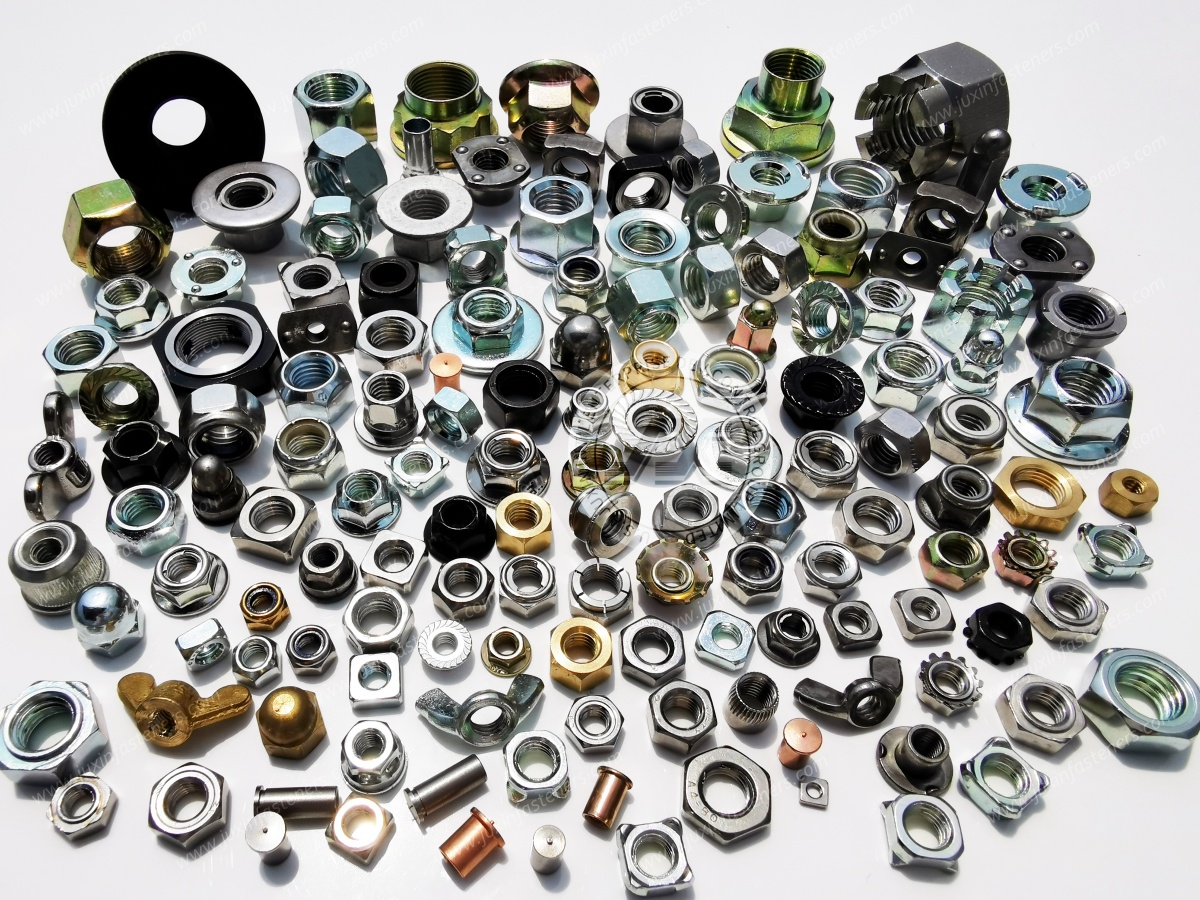
When evaluating a supplier, procurement and supplier-development teams should review:
Can the supplier manufacture the required geometry?
Can the supplier work to customer drawings?
Can the supplier support standard and custom cap nuts?
Can the supplier control the required thread specifications?
Can the supplier provide the required material and surface treatment?
How are critical dimensions controlled?
How are threads verified?
How is lot identification maintained?
Can required inspection documents be supplied?
How are nonconforming products controlled?
What is the MOQ?
What packaging options are available?
Can the supplier support repeat production?
Can production quantities scale with the program?
Are delivery and shipping terms clearly defined?
Can the supplier identify specification conflicts?
Can the supplier review drawings before production?
Can the supplier communicate tooling or process implications?
Can the supplier support engineering changes?
These questions are often more useful than simply asking for the lowest quotation.
OEM applications may require cap nuts that are not directly available as standard catalog products.
Examples include:
Special dome dimensions
Modified hex sizes
Extended or reduced heights
Special thread depths
Non-standard materials
Specific surface treatments
Customized locking features
Special packaging
Customer-specific marking
For these projects, the drawing revision should be controlled throughout quotation, tooling, production, inspection, and repeat ordering.
A controlled part number and drawing revision can significantly reduce the risk of producing an obsolete configuration.
For a technical and commercial quotation, provide:
2D drawing where available
3D model where useful
Part number
Thread size
Thread pitch
Thread tolerance
Internal thread depth
Overall height
Dome geometry
Across-flats dimension
Material grade
Mechanical property requirement
Surface treatment
Corrosion requirement where applicable
Locking requirement
Application
Annual quantity
Initial order quantity
Packaging requirement
Inspection requirement
Documentation requirement
Delivery destination
The more complete the RFQ, the easier it is for engineering and procurement teams to compare suppliers on an equivalent basis.
JUXIN FASTENERS supplies metal cap nuts and customized threaded fastener components for customers requiring standard or application-specific fastening solutions.
Potential product configurations include:
Hexagon dome nuts
Metal acorn nuts
Standard cap nuts
Custom cap nuts
Stainless steel cap nuts
Carbon steel cap nuts
Alloy steel cap nuts
Brass cap nuts
Bronze and specialty alloy configurations
Locking cap nuts
Nylon-insert cap nuts
Customer-drawing dome nuts
Available material and finishing options depend on the actual product specification.
The final manufacturing process is selected according to the geometry, material, quantity, dimensional requirements, and production economics.
Metal cap nuts and dome nuts can be considered across a broad range of applications, including:
Brackets
Body hardware
Interior and exterior hardware
Mounting assemblies
Specialty fastening systems
Machine frames
Guards
Brackets
Equipment housings
Mechanical assemblies
Equipment structures
Protective covers
Mounting components
Exposed fastening points
Cabinets
Enclosures
Equipment frames
Panels
Mechanical mounting systems
Visible hardware
Structural furniture assemblies
Decorative fastening
Fixtures
Specialty architectural components
Equipment assemblies
Brackets
Fixtures
Exposed mechanical hardware
The suitability of a cap nut depends on the actual load, environment, material, installation method, and customer specification.
A design engineer typically asks:
Will this cap nut fit the joint and perform the required function?
The procurement manager typically asks:
Can this supplier manufacture the required part consistently, document it properly, and supply it at the required commercial conditions?
These are different questions.
An effective OEM fastener supplier needs to support both.
Important information includes:
Standard
Material
Thread
Internal depth
External geometry
Bolt protrusion
Locking function
Surface treatment
Application environment
Important information includes:
Part number
Drawing revision
MOQ
Production quantity
Packaging
Quality documents
Traceability
Surface-treatment specification
Delivery requirements
Supplier communication
Change control
A technically correct product that cannot be managed through the customer's procurement system is not a complete supply solution.
JUXIN FASTENERS has more than 20 years of fastener experience supporting industrial and OEM fastening requirements.
For metal cap nuts, the focus is on matching the product configuration to the actual customer requirement rather than treating every dome nut as a generic commodity item.
The sourcing process can begin with:
Drawing → specification review → material and finish definition → manufacturing evaluation → quotation → sample/production requirements → inspection → shipment
Customers can provide an existing drawing, sample, part number, or technical specification for review.
For custom products, the final manufacturing and inspection requirements are established according to the approved customer specification.
Before selecting a metal cap nut, confirm the following:
1. What is the required thread?
Metric, unified, or another specified thread system.
2. What is the required cap geometry?
Standard dome, low profile, deep dome, or custom geometry.
3. How much bolt protrusion is available?
This is critical for avoiding internal bottoming.
4. Is a locking function required?
A standard dome nut should not automatically be treated as a locking nut.
5. What material is appropriate?
Carbon steel, alloy steel, stainless steel, brass, bronze, or another specified material.
6. What surface treatment is required?
The finish should be selected for the actual corrosion, appearance, friction, and environmental requirements.
7. What inspection and documentation are required?
Define CoC, material documentation, dimensional reports, traceability, and other customer requirements before production.
8. Is the part standard or custom?
A standard DIN configuration can simplify sourcing, while a custom drawing is appropriate when the required geometry falls outside the standard.
If you are sourcing metal cap nuts, acorn nuts, dome nuts, or customized threaded components for an automotive, machinery, architectural, or industrial application,
JUXIN FASTENERS can review your drawing, specification, sample, or existing part information.
Please provide the available details, including:
Drawing or specification
Thread size and pitch
Material
Surface treatment
Dimensions
Locking requirement
Quantity
Application
Inspection requirements
Documentation requirements
Our engineering and sourcing team can review the requirements and develop an appropriate fastening solution for your application.
JUXIN FASTENERS
More than 20 years of fastener experience
Website: juxinfasteners.com
Email: info@juxinfasteners.com
 MORE NEWS
Sep. 25, 2026
Sep. 25, 2026
Sep. 25, 2026
Contact Us
Tel.:
+86 020 8621 0320
+86 020 3121 6067
E-mail:
Technical Support:
Navigation
SEND INQUIREY