
Call Us
+86 136 6007 9809
Call Us
+86 136 6007 9809

Jul. 11, 2023
High-strength bolts and nuts are used when a bolted joint must withstand substantial tensile, shear, vibration, preload, or structural loading without excessive deformation or premature failure.
However, selecting a high-strength fastener is not simply a matter of choosing the highest available property class.
Bolt strength, nut compatibility, thread engagement, joint design, preload, installation method, material, surface treatment, corrosion environment, temperature,
and service conditions all influence the performance of the assembled joint.
For automotive, machinery, structural equipment, industrial systems, and other demanding applications,
the correct fastener specification must be considered as part of the complete joint rather than as an isolated component.
JUXIN FASTENERS supplies high-strength bolts, nuts, screws, and customized threaded components for industrial and automotive applications,
supporting customer requirements for material, mechanical properties, dimensions, surface treatment, inspection, documentation, and application-specific specifications.
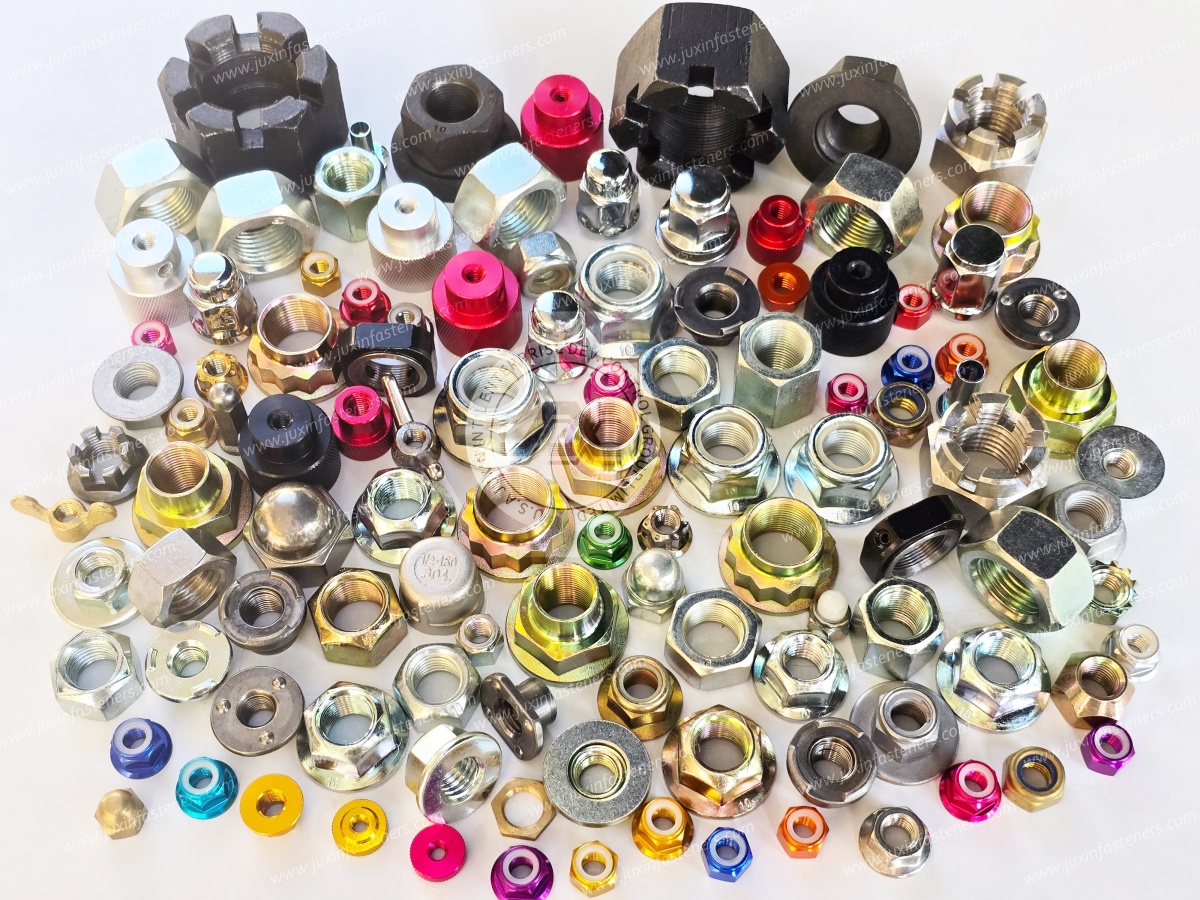
High-strength bolts and nuts are threaded fasteners manufactured and specified to provide higher mechanical performance than standard low-strength fasteners.
For metric steel fasteners, property classes such as 8.8, 10.9, and 12.9 are commonly used to identify mechanical performance levels.
ISO 898-1 provides mechanical and physical property requirements for bolts, screws, and studs, while ISO 898-2 covers specified property classes for nuts.
The property class provides important information about the mechanical capability of the fastener, but it does not by itself define the complete suitability of the joint.
A high-strength bolt assembly must still be evaluated according to:
Bolt property class
Nut property class
Material
Thread size and pitch
Thread engagement
Joint geometry
Clamping requirements
Installation method
Friction conditions
Surface treatment
Corrosion environment
Temperature
Dynamic loading
Assembly and maintenance requirements
This is why the correct question is not simply “Which bolt is strongest?”
The better engineering question is:
Which bolt and nut combination provides the required mechanical performance and joint reliability for the actual application?
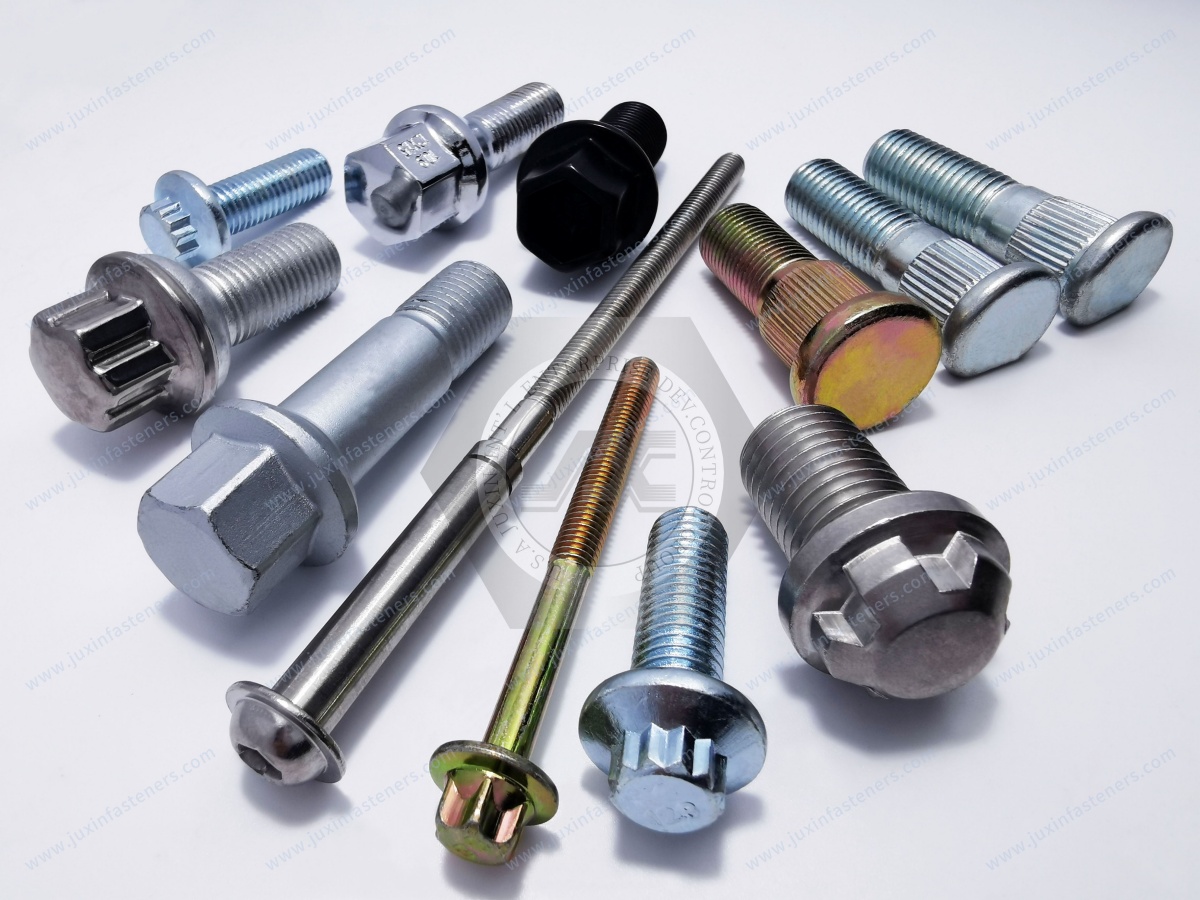
Metric high-strength bolts are frequently specified using property classes such as 8.8, 10.9, and 12.9.
The first number is related to the nominal tensile strength, while the second number is used with the first to derive the nominal yield-to-tensile relationship represented by the property class.
For example, a Class 8.8 bolt has a nominal tensile strength of approximately 800 MPa and a nominal yield-strength relationship represented by the 0.8 multiplier.
A Class 10.9 bolt has a nominal tensile strength of approximately 1,000 MPa.
A Class 12.9 bolt has a nominal tensile strength of approximately 1,200 MPa.
These values are useful for specification and comparison, but actual mechanical requirements should always be checked against the applicable standard and product specification.
| Property Class | Approx. Nominal Tensile Strength | Typical Engineering Position |
|---|---|---|
| 8.8 | 800 MPa | General high-strength industrial and automotive applications |
| 10.9 | 1,000 MPa | Higher-load automotive and industrial applications |
| 12.9 | 1,200 MPa | High-strength applications where the joint design specifically requires it |
The table is a general engineering reference rather than a substitute for the applicable standard, drawing, or customer specification.
A higher property class does not automatically mean a better fastener for every application.
One of the most important considerations in high-strength fastener selection is that increasing bolt strength can change the behavior of the complete joint.
A higher-strength bolt can provide greater tensile capacity, but the joint may still be limited by:
The mating material
Thread stripping
Nut capacity
Hole geometry
Joint stiffness
Bearing stress
Fatigue loading
Installation variation
Corrosion
Stress concentration
Component deformation
For example, replacing a Class 8.8 bolt with a Class 12.9 bolt does not automatically make the entire assembly three levels stronger.
The surrounding components must be capable of carrying the resulting load.
In some applications, using a higher-strength fastener without reviewing the joint design can create an imbalance between the fastener and the assembled components.
For this reason, fastener selection should be based on the complete load path rather than tensile strength alone.
A high-strength bolt should be matched with a suitable nut.
Using a high-strength bolt with an unsuitable nut can compromise the intended performance of the joint.
The selection should consider:
Bolt property class
Nut property class
Thread size
Thread pitch
Thread tolerance
Thread engagement
Material
Surface treatment
Installation torque or tightening method
Operating environment
For metric applications, ISO 898-1 and ISO 898-2 provide relevant mechanical property requirements for bolts and nuts.
Depending on the application, dimensional standards such as ISO 4014, ISO 4017, and ISO 4032 may also be relevant.
Other applications may require applicable DIN, ASTM, ASME, SAE, EN, or customer-specific requirements.
The correct standard should therefore be selected according to the actual fastener design and application rather than applying one standard to every product.
A common misunderstanding in fastener engineering is to treat tightening torque as being directly equivalent to clamping force.
It is not.
Torque is the input applied during tightening.
Preload is the tension generated in the bolt and the corresponding clamping force developed across the joint.
A simplified torque relationship is often represented as:
T = K × F × d
where:
T = tightening torque
K = torque coefficient influenced by friction
F = desired bolt preload
d = nominal bolt diameter
The important engineering point is that the torque coefficient can change significantly with thread friction and bearing-surface friction.
This means two bolts with the same diameter and property class may require different tightening conditions when their surface treatments, lubrication conditions, or friction characteristics differ.
Therefore, a torque value should not be transferred blindly from one fastener finish to another.
During tightening, part of the applied torque is consumed by friction.
A simplified representation is:
Applied torque = thread friction + bearing friction + torque converted into bolt tension
This is why surface treatment can influence installation behavior even when the underlying bolt material and strength class remain unchanged.
Factors that may affect friction include:
Coating type
Lubrication
Thread condition
Surface roughness
Nut bearing surface
Washer use
Assembly temperature
Repeated assembly
Contamination
Manufacturing variation
For production applications with controlled tightening requirements, the actual fastener condition should be considered when establishing the assembly process.
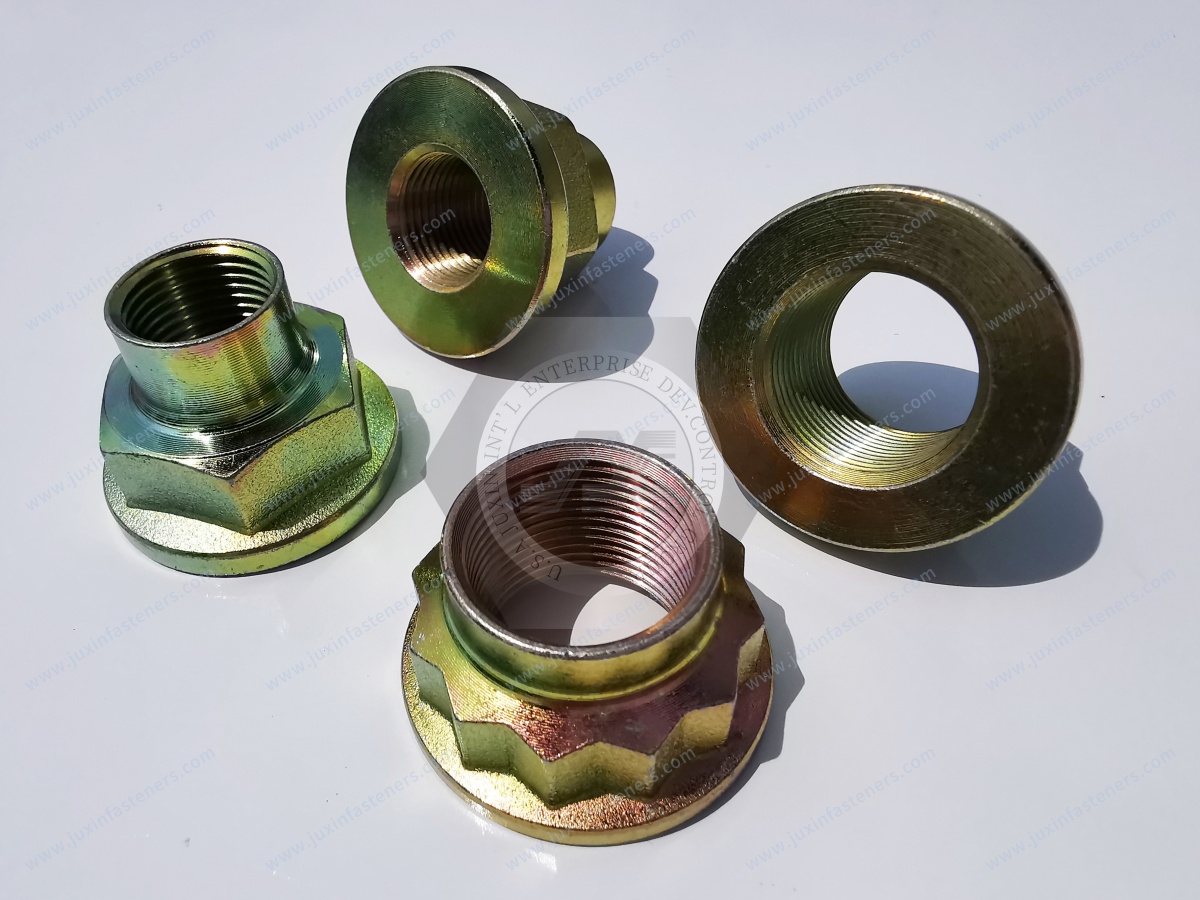
Preload is central to the performance of many bolted joints.
When a bolt is tightened, it is placed under tension while the joined components are compressed.
A properly designed joint uses this clamping force to keep the components together under service loading.
Depending on the application, insufficient preload can contribute to:
Joint separation
Relative movement
Fretting
Vibration-related loosening
Fatigue loading
Loss of joint stiffness
Excessive preload can also create problems, including:
Bolt yielding
Thread damage
Component deformation
Localized bearing stress
Reduced fatigue margin
Installation failures
The target preload therefore needs to be considered together with the bolt strength, joint design, tightening method, and service conditions.
Automotive applications frequently require high-strength fasteners because many joints are exposed to vibration, dynamic loads, temperature changes, repeated assembly, and limited installation space.
High-strength bolts may be used in applications such as:
Chassis components
Suspension-related assemblies
Brackets
Structural body components
Powertrain-related assemblies
Seat structures
Steering-related components
Engine and transmission assemblies
Automotive brackets
Mounting systems
Industrial vehicle components
The exact fastener specification depends on the vehicle platform, component design, joint loading, assembly process, and customer requirements.
For safety-related automotive components, the fastener should be evaluated as part of the complete assembly qualification rather than assuming
that a particular bolt property class by itself establishes compliance with a vehicle regulation.
Industrial machinery can require high-strength threaded fasteners where equipment is exposed to substantial static or dynamic loads.
Typical applications include:
Machinery frames
Mechanical equipment
Drive systems
Industrial brackets
Gearbox assemblies
Automation equipment
Robotics
Heavy-duty machinery
Production equipment
Structural machine components
Equipment mounting systems
The appropriate fastener depends on the loading condition, component material, operating environment, installation process, and maintenance requirements.
For machinery exposed to vibration, preload retention and joint stiffness can be as important as nominal tensile strength.
The correct property class should be determined from the joint requirements.
Class 8.8 is widely used for general high-strength metric applications.
It can be suitable where the required mechanical performance is above common low-strength fastening applications but where the joint does not require a higher property class.
Class 10.9 provides higher nominal tensile strength than Class 8.8 and is commonly considered for more demanding automotive and industrial applications.
It can be appropriate where the joint design requires increased bolt strength while maintaining a suitable safety margin and compatible assembly design.
Class 12.9 provides a still higher nominal tensile-strength level.
It should be selected only when the joint design, material compatibility, installation method, and service conditions justify the higher property class.
Higher strength does not eliminate the need to evaluate fatigue, preload, corrosion, hydrogen embrittlement risk, or joint behavior.
Surface treatment serves several possible purposes.
Depending on the application, the selected finish may be intended to provide:
Corrosion protection
Appearance
Controlled friction behavior
Environmental resistance
Compatibility with mating components
Specific customer requirements
Common surface treatments for steel fasteners may include:
Zinc electroplating
Trivalent zinc systems
Zinc-nickel alloy coatings
Zinc-flake coatings
Black zinc or other specified finishes
Electroless nickel
Other customer-specified coating systems
The appropriate finish depends on the fastener material, strength level, corrosion environment, assembly requirements, and applicable specifications.
The coating should therefore be specified together with the mechanical and dimensional requirements.
A coating is not simply a cosmetic layer.
For production fasteners, coating selection can influence:
Corrosion resistance
Thread dimensions
Friction behavior
Tightening torque
Electrical characteristics
Appearance
Environmental requirements
Hydrogen-related risk depending on the process
For example, changing from one zinc-based finish to another may change the friction characteristics of the joint.
This can affect the relationship between applied torque and resulting preload.
Therefore, when a customer changes the surface treatment, the assembly process may need to be reviewed rather than assuming that the previous torque specification remains unchanged.
Hydrogen embrittlement is an important consideration for certain high-strength steel fasteners, particularly when the fastener strength level, material condition, surface treatment process, and service stresses create a relevant risk.
Hydrogen-related cracking is not simply a consequence of the bolt being “strong.”
Risk depends on multiple factors, including:
Material susceptibility
Strength level
Manufacturing condition
Surface-treatment process
Hydrogen introduction
Applied stress
Service environment
Post-treatment controls
For high-strength fasteners, especially where electrochemical surface-treatment processes are involved, the applicable customer specification and process requirements should be reviewed carefully.
A responsible fastener specification should therefore identify the required coating system and any applicable hydrogen-embrittlement prevention or
relief requirements instead of relying on a generic statement such as “all high-strength bolts are safe from hydrogen embrittlement.”
Zinc-based coatings are widely used when corrosion protection is required.
For high-strength steel fasteners, however, the complete plating process needs to be considered.
Important factors can include:
Fastener strength class
Cleaning process
Pretreatment
Plating process
Coating thickness
Post-treatment
Hydrogen-related controls
Thread dimensional requirements
Customer specifications
The correct coating should be selected according to the application rather than simply choosing the finish with the highest nominal coating thickness.
Coating thickness alone does not define total corrosion performance.
Zinc-flake coating systems are often considered for applications requiring a combination of corrosion protection and controlled coating thickness.
ISO 10683 is relevant to non-electrolytically applied zinc-flake coatings for fasteners.
Depending on the system, zinc-flake coatings can provide a useful alternative to conventional electroplating for certain high-strength fasteners.
However, the actual coating system, friction characteristics, corrosion requirements, thickness, and validation should be specified according to the customer application.
A supplier should not treat a generic zinc-flake designation as proof that every product automatically meets a particular corrosion test duration.
Electroless nickel can be considered when a combination of surface protection, dimensional characteristics, appearance, and functional requirements makes it appropriate.
Depending on the process and specification, electroless nickel systems can provide a different performance profile from conventional zinc coatings.
For high-strength fasteners, the selected process must be evaluated with regard to:
Base material
Strength level
Coating thickness
Thread fit
Corrosion requirements
Friction requirements
Hydrogen-related considerations
Customer specifications
Electroless nickel should therefore be treated as an application-specific coating option rather than a universal replacement for zinc-based systems.
High-strength steel and high-strength stainless steel should not be treated as identical categories.
Stainless steel fasteners are selected for different reasons, often including corrosion resistance, temperature requirements, appearance, or material compatibility.
Common stainless fastener families include A2 and A4 stainless steel under applicable ISO 3506 requirements.
However, stainless steel grades have different mechanical and corrosion characteristics from hardened alloy-steel fasteners such as 10.9 or 12.9.
The engineer should therefore evaluate:
Required mechanical strength
Corrosion environment
Temperature
Galling risk
Electrical requirements
Mating material
Thread design
Installation method
The best fastener material is determined by the complete application rather than by strength alone.
Thread geometry is another critical factor in high-strength bolted joints.
The joint should consider:
Nominal diameter
Thread pitch
Thread tolerance
Thread engagement
Female-thread material
Hole condition
Load direction
Installation method
A stronger bolt does not automatically solve a weak female-thread connection.
If the internal thread is in a softer material, the limiting failure mode may be thread stripping rather than bolt tensile failure.
For this reason, the engineer should evaluate the complete threaded connection.
Coarse and fine threads can provide different engineering characteristics.
Coarse threads generally offer practical advantages in many general assembly applications, including robust handling and reduced sensitivity to minor contamination or damage.
Fine threads can provide greater thread engagement per unit length and can be useful in certain applications where adjustment, locking, or dimensional requirements favor a finer pitch.
The correct thread should be selected based on:
Material
Diameter
Joint geometry
Available engagement
Load
Assembly method
Adjustment requirements
Environmental conditions
There is no universal rule that fine threads are always stronger or that coarse threads are always better.
Washers may be used to distribute bearing load, protect the mating surface, manage installation conditions, or satisfy a specific joint design.
The washer specification should be compatible with the bolt and joint.
Important considerations include:
Washer material
Hardness
Thickness
Outside diameter
Inside diameter
Bearing area
Surface treatment
Application load
A washer should not be added simply because the bolt is high strength.
The complete joint design should determine whether a washer is required and which type is appropriate.
High-strength bolts can still loosen if the joint is poorly designed or exposed to severe vibration and transverse movement.
Depending on the application, engineers may consider:
Prevailing-torque nuts
Mechanical locking features
Thread-locking compounds
Lock washers where appropriate
Joint geometry
Increased preload
Improved joint stiffness
The locking method must be compatible with the operating temperature, service environment, assembly process, maintenance requirements, and customer specification.
A locking feature should not be considered a substitute for correct preload and joint design.
High-strength bolts can be used in dynamically loaded assemblies, but high tensile strength alone does not guarantee fatigue performance.
Fatigue behavior can be influenced by:
Preload
Stress range
Thread geometry
Thread runout
Surface condition
Stress concentration
Joint stiffness
Load distribution
Installation variation
Corrosion
Assembly quality
In many bolted joints, maintaining the intended clamping condition can help prevent excessive cyclic loading of the bolt.
This is another reason why joint design and installation control are essential.
The correct high-strength fastener for an indoor machine may not be suitable for an outdoor automotive or industrial environment.
The engineer should consider:
Humidity
Salt exposure
Chemicals
Temperature
Condensation
Outdoor exposure
Cleaning chemicals
Road environments
Galvanic interaction
Possible approaches may include:
Appropriate steel grade
Zinc-based coating
Zinc-nickel coating
Zinc-flake coating
Stainless steel
Customer-specific surface treatment
The selected solution should be based on the actual service environment and applicable corrosion requirements.
Mechanical strength is only one part of a production fastener specification.
For OEM and industrial applications, dimensional consistency is also important.
Typical controlled characteristics can include:
Nominal diameter
Thread pitch
Thread tolerance
Overall length
Head dimensions
Bearing surface
Chamfers
Thread length
Nut height
Across-flats dimension
Surface condition
Critical dimensions should be identified on the customer drawing or technical specification.
A supplier should not assume that every dimension requires the same inspection level.
The inspection plan should reflect the functional importance of each feature.
A professional high-strength fastener supply program should consider both product quality and documentation.
Depending on the customer requirement, documentation may include:
Material certificates
Mechanical property information
Dimensional inspection reports
Surface-treatment records
Certificates of Conformance
Applicable test reports
Batch or lot traceability
Packing identification
Customer-specific quality documents
Not every order requires every document.
The correct documentation package should be established according to the drawing, purchase order, quality agreement, and customer requirements.
For OEM and industrial procurement, traceability can become particularly important when fasteners are used in critical assemblies.
A supplier may need to maintain traceability through:
Raw material → manufacturing process → heat treatment where applicable → surface treatment → inspection → packing → shipment
The exact traceability structure depends on the product and customer requirements.
For a repeat-production program, clear lot identification can help connect delivered fasteners with the relevant inspection and material records.
For procurement teams, supplier selection involves more than comparing unit prices.
A high-strength fastener supplier should be evaluated on factors such as:
Ability to manufacture to drawing
Material control
Property-class control
Surface-treatment control
Dimensional inspection
Lot traceability
Documentation capability
Packaging
Change control
Communication
Engineering support
Production consistency
Export experience
The lowest unit price may not represent the lowest total procurement risk.
A small difference in fastener price can become insignificant compared with the cost of line stoppage, sorting, assembly problems, field failures, or uncontrolled engineering changes.
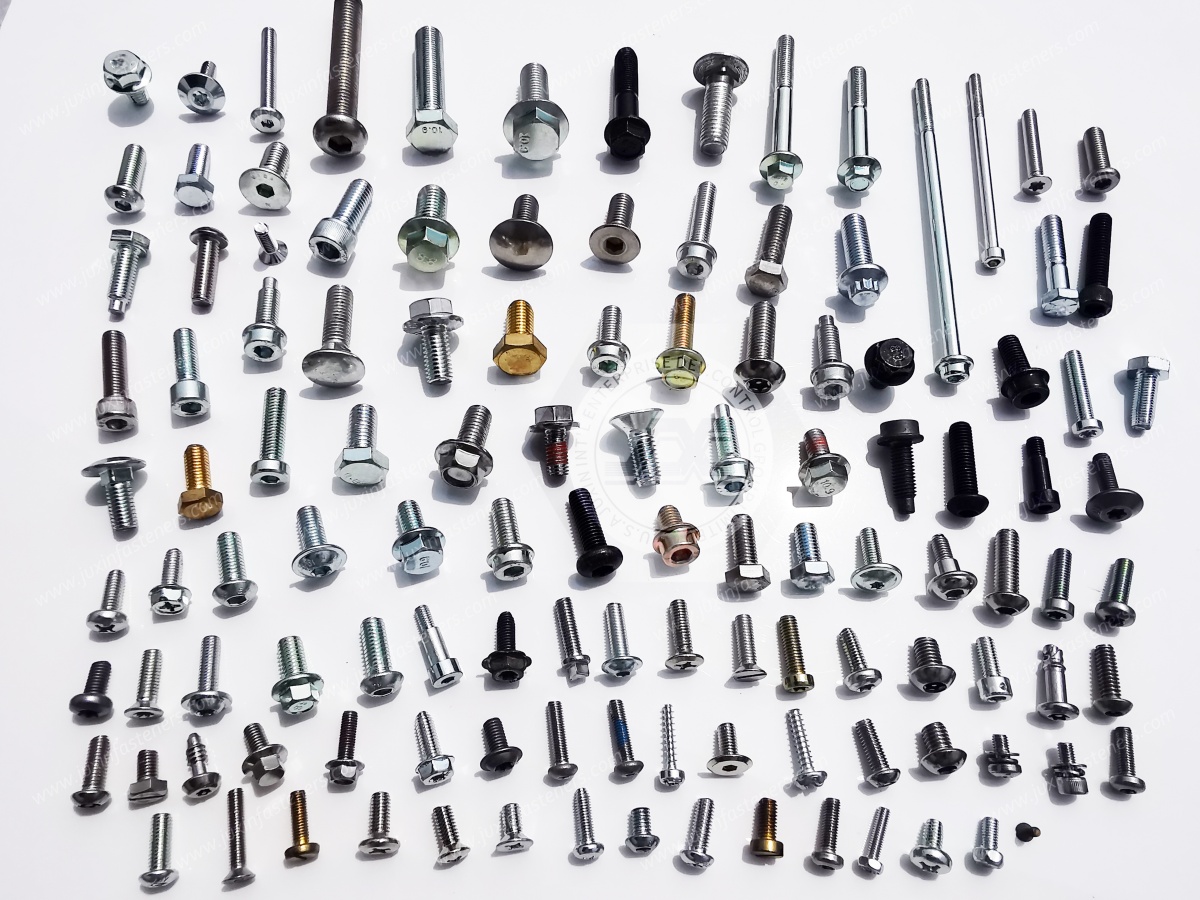
For engineers, the most important issue is ensuring that the supplier receives enough technical information to manufacture the correct part.
A complete drawing or specification should ideally define:
Product type
Nominal diameter
Thread pitch
Thread tolerance
Length
Head geometry
Nut geometry where applicable
Property class
Material
Surface treatment
Coating requirements
Special dimensions
Inspection requirements
Packaging requirements
Applicable standards
Quantity
If a drawing contains critical functional dimensions, these should be clearly identified.
If the fastener is replacing an existing component, providing the current part number and relevant drawing revision can reduce specification ambiguity.
Procurement teams often need to balance technical compliance, cost, delivery, documentation, and supplier risk.
When comparing suppliers, procurement should consider:
Technical compliance
Does the supplier manufacture to the required drawing and applicable standard?
Material
Is the requested material and property class clearly identified?
Surface treatment
Is the coating system defined rather than described only as “zinc plated”?
Quality documentation
Can the supplier provide the documentation required by the customer?
Traceability
Can production lots be identified and linked to inspection records where required?
Packaging
Can packaging protect threads and maintain part identification during international transportation?
Change control
Will changes to material, process, coating, tooling, or production location be communicated according to the customer's requirements?
Commercial terms
Are MOQ, packaging quantity, lead time, payment terms, and delivery terms clearly defined?
These factors provide a more meaningful basis for supplier comparison than price alone.
12.9 is not automatically better than 10.9 or 8.8.
The correct class depends on the joint.
Two M10 bolts can have completely different mechanical properties, materials, finishes, thread pitches, and applications.
Torque is affected by friction. The same torque does not always generate the same preload.
A high-strength bolt must be paired with a suitable nut and thread system.
Different coatings can change friction and therefore affect the torque-preload relationship.
Corrosion performance depends on the complete coating system and test requirements.
High-strength steel fasteners require appropriate consideration of manufacturing and surface-treatment processes where hydrogen embrittlement is a relevant risk.
Mechanical class alone is not enough to manufacture a production fastener.
Supplier capability, documentation, consistency, traceability, packaging, and quality risk also affect total procurement cost.
A useful specification might include:
Product: Hexagon head bolt
Size: M10
Thread: M10 × 1.5
Length: According to drawing
Property class: 10.9
Material: According to applicable specification
Surface treatment: Customer-specified zinc-based coating
Thread tolerance: According to drawing or applicable standard
Inspection: According to purchase specification
Documentation: CoC and required material/inspection documentation
Packaging: Customer-specified quantity and labeling
This is much more useful than simply writing:
“M10 high-strength bolt.”
The more critical the application, the more complete the specification should be.
For a high-strength nut, an RFQ should normally identify:
Nut type
Thread size
Thread pitch
Property class
Material
Surface treatment
Applicable dimensional standard
Thread tolerance
Height
Across-flats dimension
Quantity
Packaging
Inspection requirements
Documentation requirements
Application environment
For prevailing-torque nuts or other locking nuts, the locking performance requirements should also be specified where applicable.
JUXIN FASTENERS provides high-strength threaded fastener solutions for industrial and automotive applications, with more than 20 years of fastener experience.
The product scope can include customer-specified:
High-strength hex bolts
High-strength automotive bolts
Industrial bolts
High-strength nuts
Custom nuts
Custom screws
Threaded components
Specialty bolts
Weld nuts
Weld studs
Self-clinching fasteners
Rivet nuts
Stainless steel fasteners
CNC-machined fastener components
The final product configuration is determined by the customer's drawing, specification, material requirement, mechanical property requirement, surface-treatment requirement, quantity, and application.
JUXIN FASTENERS works with customers that require both standard and customized fastener solutions rather than treating every high-strength fastener as a generic catalog item.
Custom fasteners often require a different sourcing approach from standard commodity bolts.
The engineering review may need to consider:
Drawing interpretation
Material selection
Mechanical property requirements
Thread design
Head geometry
Special dimensions
Surface treatment
Assembly requirements
Inspection requirements
Packaging
Production quantity
For new product development, providing the original drawing or sample can help establish the required product definition.
Where the application is still under development, the supplier can evaluate the proposed fastener configuration based on the information available and identify specification points that require confirmation.
Fastener decisions made during product development can influence manufacturing cost and assembly performance for the entire production life of a component.
Engineers should consider the fastener at the beginning of the design process rather than waiting until production sourcing.
Early review can help identify:
Appropriate property class
Material compatibility
Thread size
Available installation space
Tool access
Surface-treatment requirements
Corrosion environment
Assembly torque requirements
Inspection requirements
Packaging requirements
For customized fasteners, early supplier involvement can also reduce the risk of designing a component around a specification that is difficult or unnecessarily expensive to manufacture.
For the fastest and most accurate technical quotation, provide as much of the following information as available:
Part drawing or technical specification
Part number
Bolt or nut type
Thread size
Thread pitch
Length or overall dimensions
Property class
Material
Surface treatment
Annual or project quantity
Initial order quantity
Application
Required standards
Inspection requirements
Documentation requirements
Packaging requirements
Target delivery location
Special assembly requirements
If a drawing is available, sending the drawing is usually more effective than describing a complex custom fastener only by email.
Before approving a high-strength fastener supplier, procurement and engineering teams can review:
Can the supplier manufacture the required geometry?
Can the supplier work to the required drawing revision?
Can the required property class be controlled?
Can the required material be sourced and documented?
Can the required surface treatment be supplied?
Is dimensional inspection available according to the customer's requirements?
Can material and inspection documentation be provided?
Is lot identification available where required?
Is change control clearly managed?
Is MOQ acceptable?
Are packaging quantities suitable?
Are shipping terms clear?
Can the supplier support repeat orders?
Is communication responsive and technically clear?
Can the supplier understand the customer's technical specification?
Can engineering questions be discussed before mass production?
Can customized fasteners be evaluated based on drawings or samples?
A supplier qualification process should reflect the criticality of the fastener in the customer's application.
JUXIN FASTENERS has more than 20 years of experience in the fastener industry and supports customers requiring industrial and automotive fastening solutions.
The focus is not only on supplying a bolt or nut, but on understanding the complete specification required for the customer's application.
For high-strength fasteners, this includes consideration of:
Mechanical property class
Material
Thread specification
Dimensions
Surface treatment
Corrosion environment
Assembly requirements
Inspection
Documentation
Packaging
Production quantity
For standard fasteners, customized fasteners, and OEM components, the appropriate supply solution depends on the customer's technical and commercial requirements.
The performance of a high-strength bolted joint depends on more than tensile strength.
The key engineering principles are:
1. Select the property class according to the joint.
Do not assume that the highest strength class is automatically the best option.
2. Match the bolt and nut correctly.
The threaded assembly must be considered as a complete system.
3. Distinguish torque from preload.
Friction strongly influences the relationship between tightening torque and clamping force.
4. Treat surface treatment as an engineering parameter.
Coating can influence corrosion protection, dimensions, friction, and installation behavior.
5. Consider hydrogen embrittlement risk where applicable.
This is particularly important for susceptible high-strength steel fasteners and relevant surface-treatment processes.
6. Evaluate the complete joint.
Bolt strength cannot compensate for inadequate threads, weak mating materials, poor joint geometry, or insufficient preload.
7. Define the RFQ clearly.
Drawing, material, property class, dimensions, finish, quantity, inspection, and documentation requirements should be established before production.
8. Select the supplier based on total requirements.
Technical capability, quality control, traceability, communication, documentation, and commercial performance all contribute to supply reliability.
If you are sourcing high-strength bolts, nuts, or customized threaded fasteners for an automotive or industrial application,
JUXIN FASTENERS can review your drawing, specification, sample, or existing part information.
Please send the available technical information, including:
Drawing or specification
Part number
Material
Property class
Surface treatment
Quantity
Application
Inspection or documentation requirements
Our team can review the requirements and discuss a suitable manufacturing and supply solution.
JUXIN FASTENERS
More than 20 years of fastener experience
Website: juxinfasteners.com
Email: info@juxinfasteners.com
 MORE NEWS
Sep. 25, 2026
Sep. 25, 2026
Sep. 25, 2026
Contact Us
Tel.:
+86 020 8621 0320
+86 020 3121 6067
E-mail:
Technical Support:
Navigation
SEND INQUIREY