Call Us
+86 136 6007 9809
Call Us
+86 136 6007 9809

Jan. 09, 2024
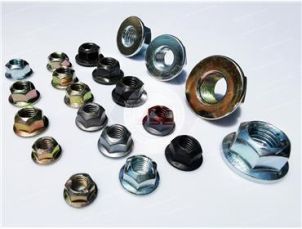
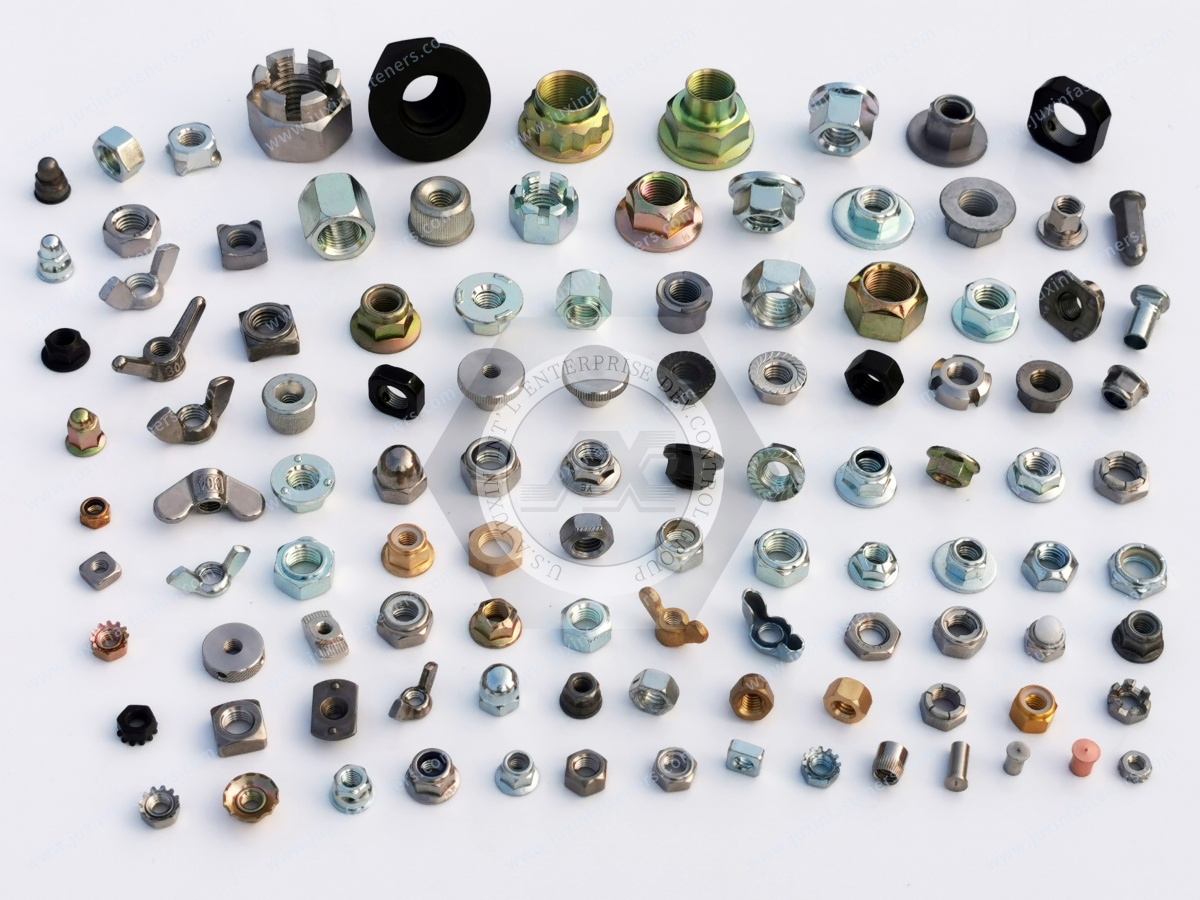
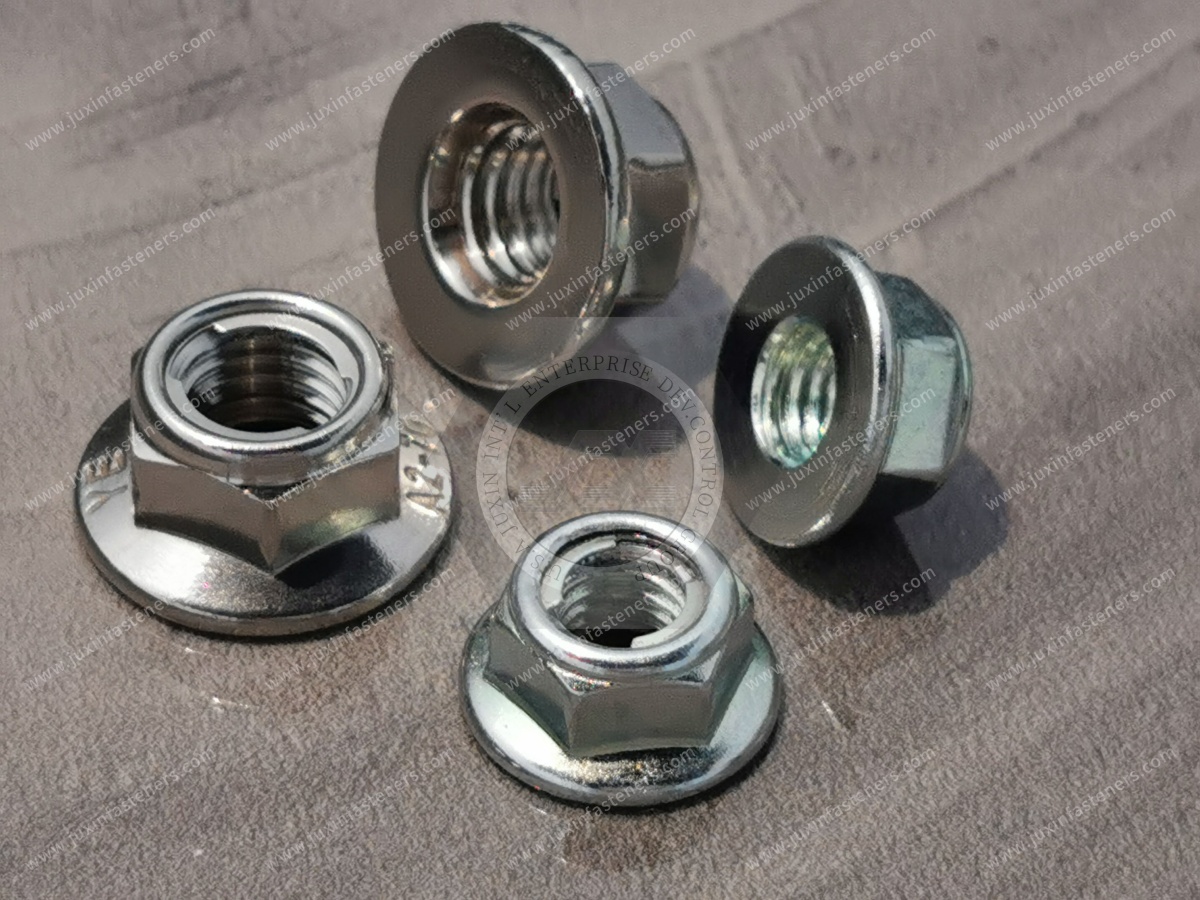
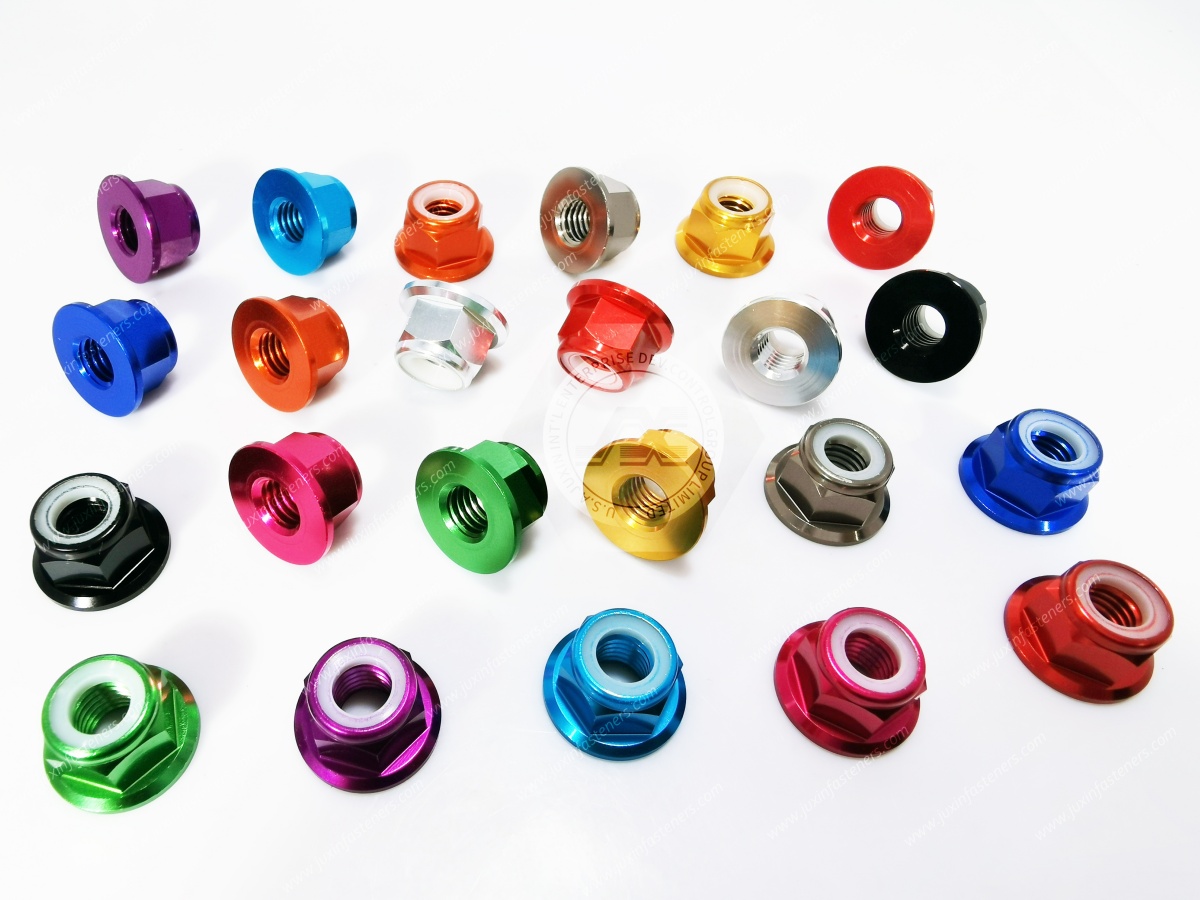
Hex flange nuts combine a hexagonal wrenching body with an integrated flange that provides a larger bearing surface against the mating component.
For automotive, machinery, transportation, electrical equipment and high-volume OEM assembly, this integrated geometry can provide important advantages:
larger bearing area;
reduced local bearing pressure;
potential elimination of a separate washer where the joint design permits;
fewer assembly components;
simplified automated feeding;
faster production assembly.
When additional resistance to nut rotation is required, serrated flange nuts incorporate radial serrations on the underside of the flange.
However, selecting between a plain hex flange nut, serrated flange lock nut, prevailing-torque flange nut,
or conventional hex nut and washer requires more than comparing their external appearance.
The correct choice depends on:
Joint Surface → Bearing Area → Required Preload → Vibration / Transverse Movement
→ Surface Coating → Friction → Temperature → Serviceability → Nut Strength → Assembly Method
JUXIN FASTENERS supplies suitable standard and drawing-based flange nut solutions including:
hex flange nuts;
serrated flange nuts;
serrated flange lock nuts;
high-strength flange nuts;
all-metal flange lock nuts;
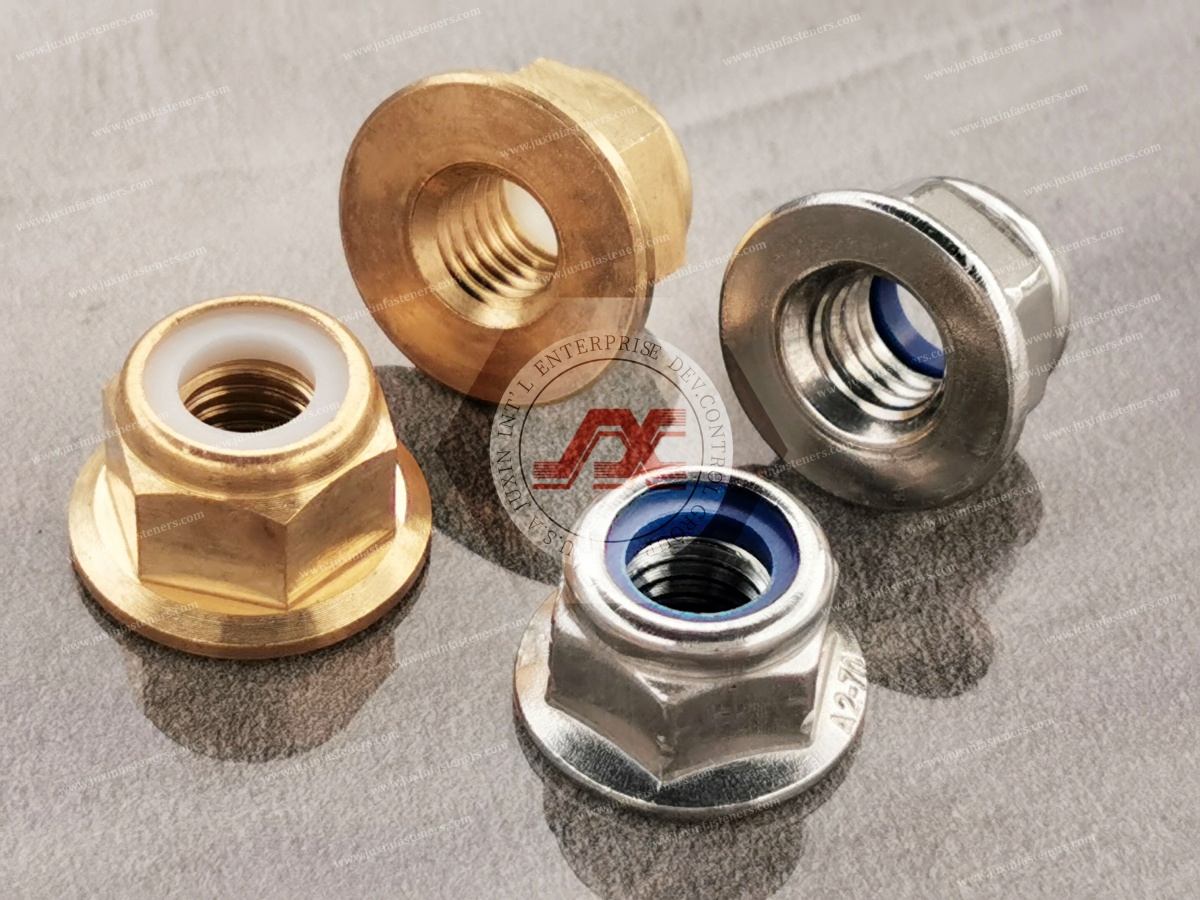
nylon insert flange lock nuts;
stainless steel flange nuts;
carbon steel flange nuts;
metric flange nuts;
Unified inch-thread flange nuts;
custom flange nuts manufactured to customer drawings.
Applications include automotive, EV systems, industrial machinery, rail transportation, electrical equipment, power systems, automation, heavy equipment and other OEM assemblies.
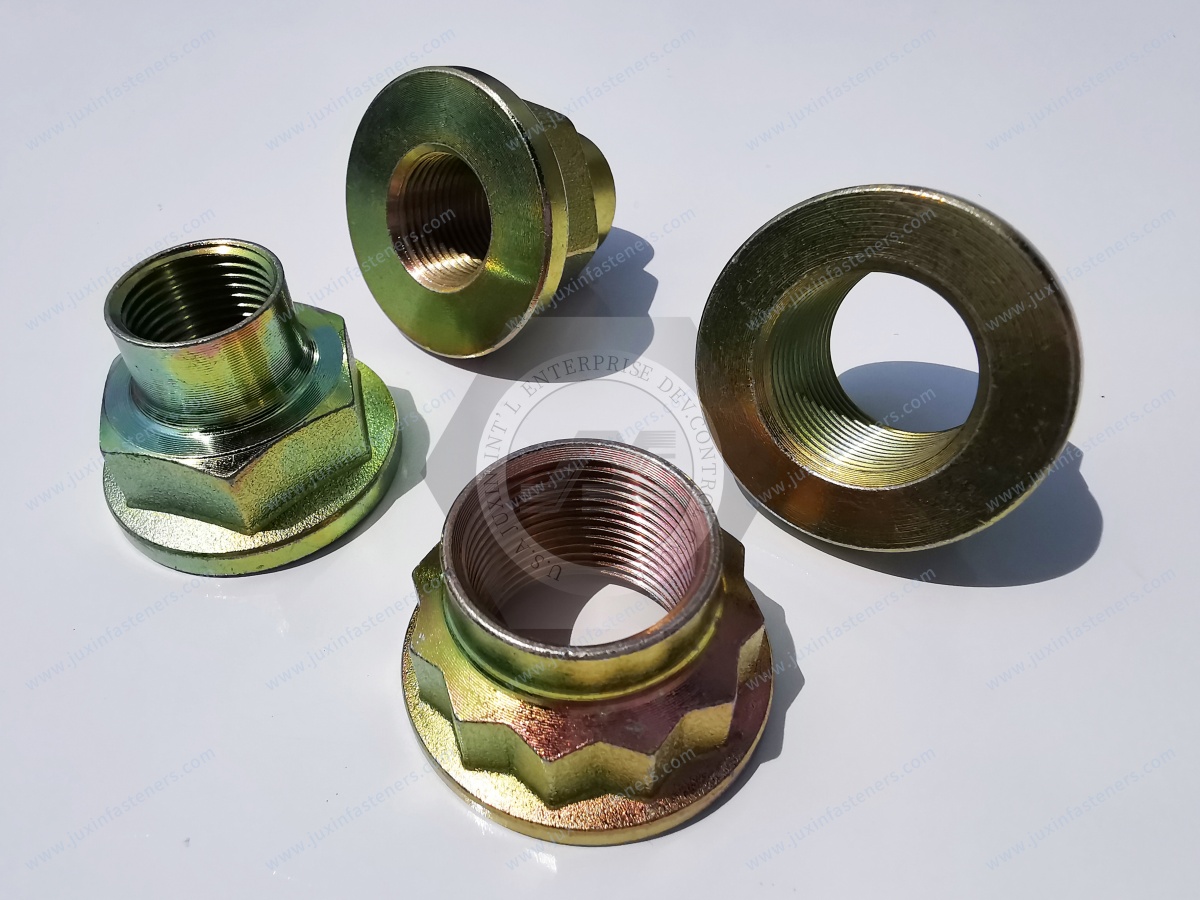
A hex flange nut is an internally threaded nut with an enlarged integral flange beneath the hexagonal wrenching portion.
The flange acts as an integrated bearing surface.
Compared with a conventional hex nut, the larger bearing diameter can distribute clamp load over a wider area of the mating component.
This can be useful when the joint requires:
increased bearing area;
simplified component count;
fast assembly;
controlled nut positioning;
compatibility with high-volume production.
However, describing a flange nut simply as a “nut with a built-in washer” is incomplete.
A separate washer and an integral flange do not always provide identical joint behavior.
The washer can have its own:
diameter;
thickness;
hardness;
coating;
geometry;
locking function.
Therefore, whether a flange nut can replace a conventional nut-and-washer combination depends on the complete joint.
The first major engineering decision is whether the flange bearing surface should be plain or serrated.
| Engineering Factor | Plain Flange Nut | Serrated Flange Nut |
|---|---|---|
| Bearing surface | Smooth | Toothed / serrated |
| Larger bearing area | Yes | Yes |
| Surface penetration | Minimal compared with serrated type | Intentional interaction possible |
| Resistance to rotation | Primarily joint preload/friction | Additional mechanical interaction at bearing surface |
| Surface marking | Lower risk | Higher risk |
| Coating damage | Lower risk | Must be evaluated |
| Repeated removal | Generally more surface-friendly | Mating surface can be damaged |
| Electrical contact | Application-dependent | Serrations may penetrate some surface films |
| Painted/decorative surface | Often more suitable | Requires careful evaluation |
Neither design is universally better.
The correct choice depends on the mating surface and functional requirements.
A serrated flange lock nut contains angled or radial teeth on the underside of the flange.
As the nut is tightened, the serrations interact with the mating surface and increase resistance to reverse rotation.
This creates a locking mechanism at the nut-to-bearing-surface interface.
That is different from a prevailing-torque nut.
For example:
Serrated flange nut: locking interaction occurs primarily at the bearing surface.
Nylon insert lock nut: prevailing torque is generated by polymer-to-thread interference.
All-metal lock nut: prevailing torque is generated by controlled metal thread geometry.
These mechanisms should not be treated as interchangeable.
A common description of serrated flange nuts is:
“The serrations prevent vibration loosening.”
That statement is too broad.
Bolted-joint self-loosening can be influenced by:
insufficient preload;
transverse movement;
joint settlement;
embedding;
bearing-surface deformation;
thermal cycling;
friction conditions.
Serrations can increase resistance to nut rotation, but they do not eliminate the need for correct:
joint design;
preload;
tightening procedure;
mating-surface selection.
For severe vibration or safety-critical joints, the complete bolted connection should be validated.
The flange increases the diameter of the nut's bearing surface.
A simplified engineering relationship is:
Bearing Pressure = Clamp Force ÷ Effective Bearing Area
Increasing effective bearing area can reduce local bearing pressure.
This can be useful for components where excessive local pressure could cause:
indentation;
surface damage;
coating compression;
localized deformation.
However, a larger flange does not automatically mean unlimited load capacity.
The joint still depends on:
flange stiffness;
mating-material strength;
nut strength;
bolt preload;
component geometry.
A flange nut can reduce component count, but it should not automatically replace a hex nut and washer.
Potential advantages:
one-piece assembly;
fewer loose components;
faster installation;
easier automated feeding;
integrated bearing surface.
Potential advantages:
independent washer diameter;
independent washer hardness;
larger bearing area where required;
specialized washer functionality;
flexibility in joint design.
The choice should therefore be based on:
assembly efficiency + bearing requirement + joint surface + friction + service requirements
rather than component count alone.
Even with a flange nut, a separate washer may still be required when specified by the joint design.
Examples can include applications requiring:
a substantially larger bearing area;
a hardened bearing surface;
protection of sensitive mating materials;
a specialized washer function;
controlled sliding or rotation;
structural assembly requirements;
customer-specific fastening specifications.
Therefore:
Flange nut ≠ washer automatically prohibited
The controlling engineering specification determines the assembly.
Not all serrated flange nuts use identical serration geometry.
Functional variables can include:
serration angle;
tooth height;
tooth spacing;
number of teeth;
radial position;
flange diameter;
material hardness.
These features influence interaction with the mating surface.
For a custom or second-source serrated flange nut, matching:
M thread + flange diameter + hex size
may not be sufficient.
The serration geometry itself can be a critical functional characteristic.
The performance of a serrated flange nut depends partly on the material beneath the flange.
Potential mating surfaces include:
bare carbon steel;
coated steel;
stainless steel;
aluminum;
painted sheet;
plated components;
composite structures.
Serrations can interact differently with each surface.
Before specifying a serrated flange nut, engineers should evaluate:
surface hardness;
coating thickness;
coating damage;
corrosion consequences;
electrical requirements;
service removal.
This deserves particular attention.
Serrations can cut through or damage:
paint;
zinc coatings;
conversion coatings;
other protective layers.
This may improve mechanical engagement but can expose the underlying substrate.
Possible consequences include:
localized corrosion;
cosmetic damage;
altered electrical contact;
changed friction behavior.
Therefore, a serrated flange nut should not be selected purely because the assembly experiences vibration.
The protective coating system must also be considered.
In some electrical assemblies, serrations may help penetrate certain surface films and contribute to metal-to-metal contact.
However, electrical performance should not be assumed from the presence of serrations alone.
Electrical joint design can depend on:
contact resistance;
surface coating;
oxide layers;
clamp force;
contact area;
thermal cycling;
corrosion;
mating materials.
Where electrical continuity is a functional requirement, it should be validated separately.
Flange nut specifications vary according to:
dimensional system;
thread system;
strength requirement;
locking design;
project specification.
Depending on the product and application, relevant international specifications may include applicable ISO, DIN, ASME/ANSI and customer-specific standards.
For procurement, do not specify only:
“DIN flange nut”
or:
“standard flange nut.”
A complete RFQ should identify the exact dimensional and mechanical requirements.
JUXIN FASTENERS supports suitable flange nut requirements using internationally recognized thread systems.
Common requirements can include:
ISO metric coarse;
ISO metric fine;
customer-specified metric threads.
Depending on the application:
UNC;
UNF;
other drawing-defined Unified thread requirements.
Thread specification should include:
nominal diameter;
pitch or TPI;
thread series;
tolerance;
mating bolt.
Carbon and alloy steel flange nuts can be specified according to applicable mechanical-property requirements.
Depending on nut design and applicable standard, higher-strength requirements can include suitable nut property classes such as:
Class 8;
Class 10;
Class 12 where applicable.
Do not describe a nut as:
“8.8 flange nut”
or:
“10.9 flange nut”
when using the ISO property-class system.
8.8 and 10.9 are commonly used bolt/screw property-class designations.
The nut property class should be specified separately.
Related Engineering Guide: High Strength Nuts & Bolt Compatibility
High strength flange nuts are used in suitable applications requiring a combination of:
higher nut mechanical properties;
integrated bearing surface;
production assembly efficiency.
Applications can include:
automotive equipment;
commercial vehicles;
heavy machinery;
construction equipment;
industrial equipment.
Selection should consider:
mating bolt property class;
nut property class;
flange geometry;
bearing surface;
coating;
tightening procedure.
A larger flange does not compensate for an incorrectly matched bolt and nut.
Carbon and alloy steel flange nuts provide a practical combination of:
mechanical strength;
forming capability;
cost efficiency;
coating compatibility.
Potential surface finishes include:
zinc plating;
zinc-nickel;
zinc-flake coating systems;
other customer-specified finishes.
For controlled OEM programs, the specification should define both mechanical properties and coating requirements.
Stainless steel flange nuts can be suitable for applications requiring improved corrosion resistance.
Common stainless options can include:
A2 / 304-type stainless steel;
A4 / 316-type stainless steel.
Potential applications include:
food-processing equipment;
outdoor equipment;
marine-related equipment;
chemical-processing equipment;
electrical equipment.
However:
stainless steel ≠ corrosion-proof
Selection depends on:
chloride exposure;
chemicals;
temperature;
crevice conditions;
mating material;
surface condition.
Stainless steel nut-and-bolt combinations can experience thread galling under unfavorable assembly conditions.
Risk can increase with:
similar stainless materials;
high installation speed;
high contact pressure;
damaged threads;
unsuitable lubrication conditions.
Galling can cause:
sudden torque increase;
thread damage;
seizure;
incomplete assembly.
For stainless flange nuts, engineers should evaluate the complete bolt-nut pair and installation process.
Related Engineering Guide: Stainless Steel Thread Galling Prevention
Zinc plating is commonly used on suitable carbon steel fasteners for corrosion protection.
However, specifying only:
“zinc plated flange nut”
may be insufficient for OEM procurement.
Depending on the project, additional requirements can include:
coating thickness;
passivation;
topcoat;
corrosion test requirement;
appearance;
friction characteristics.
Zinc-nickel coatings can be considered for suitable automotive and industrial applications requiring enhanced corrosion performance.
Potential applications include:
vehicle components;
commercial vehicles;
industrial machinery;
outdoor equipment;
electrical equipment.
For torque-controlled joints, the friction behavior of the complete coating system should also be considered.
Zinc-flake coating systems can be used for suitable high-performance industrial and automotive fastener applications.
Depending on the specified coating system, potential advantages can include:
corrosion protection;
controlled friction options;
suitability for certain high-strength steel applications.
Commercial coating names should not replace the engineering specification.
The drawing or purchasing requirement should define the required performance.
Tightening torque is only an indirect method of generating bolt preload.
A substantial portion of applied torque is consumed by friction:
in the threads;
under the nut bearing surface.
Because a flange nut has an integrated bearing surface, its:
coating;
lubrication;
flange geometry;
serration;
can influence tightening behavior.
Therefore:
same tightening torque + different flange nut finish ≠ necessarily same preload
This is especially important for automotive and high-volume OEM assembly.
A plain flange and serrated flange interact differently with the mating surface.
Serrations can alter:
bearing friction;
seating behavior;
surface deformation;
reverse-rotation resistance.
For torque-controlled production, substituting a plain flange nut with a serrated version—or vice versa—should not be treated as a cosmetic change.
The assembly process may require revalidation.
Some flange nuts use a locking mechanism within the thread rather than relying on flange serrations.
These include:
nylon insert flange lock nuts;
all-metal prevailing torque flange nuts.
This provides an important engineering distinction.
Serrated flange nut: bearing-surface locking mechanism.
Prevailing-torque flange nut: thread-based locking mechanism.
Some specialized designs can combine multiple functional features.
A nylon insert flange lock nut combines:
integrated flange;
polymer locking element;
internal thread.
Potential applications include:
machinery;
industrial equipment;
electrical equipment;
automotive-related assemblies.
Selection should consider:
operating temperature;
chemical exposure;
prevailing-torque requirement;
mating bolt;
reuse requirements.
For elevated temperatures, a polymer locking element may not be appropriate.
Related Product: Nylon Insert Lock Nuts
All-metal flange lock nuts create prevailing torque through controlled metal geometry rather than a polymer insert.
Potential advantages include:
metal-only locking system;
suitability for higher-temperature environments depending on material and specification;
robust prevailing-torque functionality.
Applications can include:
automotive;
commercial vehicles;
heavy machinery;
rail equipment;
industrial machinery.
Related Product: All-Metal Lock Nuts
These two products solve different assembly problems.
| Factor | Serrated Flange Nut | Nylon Insert Lock Nut |
|---|---|---|
| Locking interface | Bearing surface | Bolt thread |
| Polymer element | No | Yes |
| Surface marking | Possible | Usually lower |
| Temperature limitation from nylon | No | Yes |
| Prevailing torque before seating | No | Yes |
| Integrated flange | Yes | Depends on design |
| Surface coating interaction | Important | Less dependent on serrations |
Selection should be based on the complete assembly rather than simply choosing whichever product is described as a “lock nut.”
Automotive manufacturing is one of the major application areas for flange nuts.
Potential applications include:
chassis-related equipment;
seat structures;
brackets;
powertrain-related equipment;
interior assemblies;
exterior assemblies;
thermal-management equipment;
battery-related structures;
commercial vehicle assemblies.
Automotive selection criteria can include:
assembly speed;
vibration;
bolt property class;
corrosion;
coating friction;
automated feeding;
traceability.
EV and electrified equipment can require flange nuts for suitable:
battery enclosures;
thermal-management systems;
inverter housings;
converter assemblies;
high-voltage equipment;
brackets;
structural frames.
Depending on location, engineers may need to evaluate:
vibration;
galvanic compatibility;
electrical requirements;
corrosion;
temperature;
service access.
There is no single universal “EV flange nut.”
Selection depends on the actual joint.
Flange nuts can reduce component count in high-volume equipment assembly.
Applications include:
CNC machines;
automation equipment;
pumps;
compressors;
packaging machinery;
robotic equipment;
hydraulic systems;
industrial enclosures.
For serviceable machinery, consider whether serrations could damage the mating surface after repeated removal and installation.
Heavy-duty machinery can expose fasteners to:
shock;
vibration;
high mechanical loads;
contamination;
outdoor corrosion.
Suitable flange nut designs can include:
high strength plain flange nuts;
serrated flange nuts;
all-metal flange lock nuts.
Selection should be coordinated with the mating bolt and assembly procedure.
Rail vehicles and transportation equipment can use flange nuts in suitable:
interior equipment;
mechanical assemblies;
brackets;
electrical cabinets;
exterior equipment;
serviceable systems.
Rail projects can involve additional requirements for:
vibration;
corrosion;
fire-related material restrictions;
maintenance;
traceability.
The controlling project specification should determine final fastener selection.
Potential applications include:
electrical cabinets;
switchgear;
power distribution;
renewable-energy equipment;
industrial power systems;
energy storage equipment.
Depending on the assembly, engineers may need to consider:
electrical continuity;
insulation;
corrosion;
contact pressure;
temperature.
For conductive joints, do not assume that a serrated flange automatically guarantees the required electrical performance.
Flange nuts can be used in suitable:
solar mounting equipment;
inverter systems;
energy storage equipment;
outdoor electrical enclosures;
supporting mechanical assemblies.
Outdoor applications require particular attention to:
corrosion;
coating compatibility;
stainless grade;
galvanic interaction;
long-term environmental exposure.
Depending on design and quantity, manufacturing processes can include:
cold forming;
cold heading;
internal thread tapping or forming as appropriate;
machining for specialized geometries;
heat treatment where required;
surface treatment;
secondary locking-feature operations.
For high-volume standard or custom flange nuts, cold forming can provide efficient material utilization and repeatable production.
CNC machining can be useful for:
prototypes;
lower-volume special nuts;
unusual geometry;
precision custom components.
Standard flange nuts do not fit every OEM assembly.
JUXIN FASTENERS supports suitable drawing-based custom flange nut requirements involving:
special flange diameter;
special flange thickness;
custom nut height;
nonstandard wrenching geometry;
special thread;
locking features;
custom serrations;
stainless steel;
special coating;
customer-specific identification.
For custom projects, send the controlled 2D drawing whenever available.
Related Engineering Guide: Custom Nuts & Special Nuts Made to Drawing
A larger flange can provide more bearing area, but it can also create:
interference with nearby components;
increased material usage;
higher component weight;
forming challenges;
restricted tool access.
The correct flange diameter should satisfy the functional requirement without unnecessary overdesign.
A second-source flange nut should not be qualified solely by checking:
thread size;
hex width;
overall appearance.
Important comparison points can include:
applicable standard or controlled drawing;
thread size and pitch;
thread tolerance;
nut height;
hex dimensions;
flange diameter;
flange thickness;
bearing geometry;
serration geometry;
material;
property class;
hardness;
proof-load requirement;
coating;
friction requirement;
prevailing torque where applicable;
marking;
traceability.
For serrated flange nuts, the underside geometry deserves particular attention.
Two flange nuts may have the same:
thread;
hex size;
flange diameter;
material;
but different serration geometry.
Differences in:
tooth height;
tooth angle;
spacing;
hardness;
coating;
can change how the nut interacts with the mating surface.
For OEM second sourcing, visual similarity is not functional equivalence.
Depending on the product and customer requirements, inspection can include:
dimensional inspection;
flange diameter inspection;
flange thickness inspection;
thread GO/NO-GO gauging;
material verification;
hardness testing;
proof-load testing where applicable;
serration inspection;
prevailing-torque testing where applicable;
coating inspection;
corrosion testing;
visual inspection;
lot traceability.
Inspection should be based on the applicable product specification and application risk.
Internal thread accuracy is critical for assembly compatibility.
Thread plug gauges can be used to verify applicable internal thread requirements.
Particular attention may be required after:
heat treatment;
coating;
secondary locking operations.
However:
passing a thread gauge does not prove complete flange nut performance.
It does not validate:
mechanical properties;
locking behavior;
coating friction;
corrosion resistance;
joint preload.
A washer may still be required by the joint design or project specification.
Serrations can damage coatings, paint or soft mating materials.
Joint preload and transverse movement still matter.
Changing coating can change the torque-preload relationship.
“M8 flange nut” does not define property class, flange geometry, locking feature or coating.
Under the ISO system, 10.9 is a bolt/screw property-class designation. The nut requires its own appropriate property class.
Stainless threaded combinations can seize under unfavorable assembly conditions.
Serration geometry can affect functional performance.
The change can affect friction, mating surfaces and tightening behavior.
Before selecting a flange nut, confirm:
Metric or Unified inch?
Coarse or fine?
Required tolerance?
Mating bolt property class or grade?
Required nut property class?
Proof-load requirement?
Plain or serrated?
Required diameter?
Bearing-surface requirement?
No additional locking feature?
Serrated bearing surface?
Nylon insert?
All-metal prevailing torque?
Indoor?
Outdoor?
Marine?
Chemical exposure?
High temperature?
Bare metal?
Painted?
Plated?
Aluminum?
Electrically conductive joint?
Zinc?
Zinc-nickel?
Zinc-flake?
Stainless steel without coating?
Customer-specific finish?
Manual?
Pneumatic?
Automated?
Torque controlled?
Repeated service?
For faster technical review and quotation, provide:
applicable ISO, DIN, ASME/ANSI or customer specification;
flange nut type;
plain or serrated flange;
thread size;
pitch or TPI;
thread tolerance;
mating bolt specification;
bolt property class or grade;
nut property class where applicable;
flange diameter;
nut height;
material;
hardness requirement where applicable;
proof-load requirement where applicable;
serration requirement;
locking requirement;
prevailing-torque requirement where applicable;
surface treatment;
corrosion requirement;
friction requirement where specified;
operating temperature;
application environment;
assembly torque or preload requirement where available;
2D drawing for custom products;
sample quantity;
production quantity;
estimated annual demand;
inspection requirements;
documentation requirements;
traceability requirements;
packaging requirements.
For second-source development, send the existing controlled drawing and current application specification whenever possible.
A hex flange nut combines a hexagonal nut body with an integrated enlarged bearing flange.
The integral flange provides a larger bearing surface and can reduce component count where the joint design permits elimination of a separate washer.
No. Some assemblies still require a separate washer because of bearing-area, hardness, surface-protection or project-specific requirements.
A serrated flange nut has teeth on the underside of the flange that interact with the mating surface to increase resistance to reverse rotation.
No. A serrated flange nut primarily creates locking interaction at the bearing surface. A prevailing-torque nut generates rotational resistance through the thread or locking element.
They can increase resistance to rotation, but vibration loosening depends on the complete joint, including preload, transverse movement, friction and joint stiffness.
Yes. Serrations can penetrate or damage painted and coated mating surfaces.
Yes. Suitable applications can use A2/304-type or A4/316-type stainless steel depending on the required environment and specification.
A plain flange provides a smooth bearing surface. A serrated flange adds teeth designed to interact mechanically with the mating surface.
Applicable nut property classes depend on product design, thread range and standard. Classes 8, 10 and 12 can be relevant for suitable ISO nut configurations.
Under the ISO system, 10.9 normally refers to a bolt or screw property class. The nut should be specified using its applicable nut property class.
Yes. Suitable custom requirements can include special flange diameter, nut height, serration geometry, thread, material, coating and locking features.
Provide thread, applicable standard or drawing, plain or serrated flange, material, property class, coating, mating bolt, quantity and application requirements.
Build internal links from this page to relevant existing pages such as:
Industrial Nut Types & Selection Guide
High Strength Nuts & Bolt Compatibility
Custom Nuts & Special Nuts Made to Drawing
DIN 985 Nylon Insert Lock Nuts
All-Metal Lock Nuts
DIN 929 Hex Weld Nuts
DIN 928 Square Weld Nuts
Automotive Projection Weld Nuts
Automotive Hex Flange Weld Nuts
Stainless Steel Thread Galling Prevention
Automotive Fastener Material & Coating Selection
Fastener Coating Selection Guide
Use the existing indexed JUXIN FASTENERS URLs when implementing these internal links.
A flange nut should not be selected only because it reduces the number of components in an assembly.
The correct specification connects:
Thread + Mating Bolt + Nut Strength + Flange Geometry + Bearing Surface + Locking Method + Material + Coating + Friction + Assembly Process
JUXIN FASTENERS supports suitable requirements for hex flange nuts, serrated flange nuts, high strength flange nuts, nylon insert flange lock nuts, all-metal flange lock nuts and drawing-based custom flange nuts.
For design and structural engineers, provide the mating bolt, required nut property class, flange geometry, mating surface, joint load, service environment and assembly requirements.
For purchasing managers, procurement development, strategic sourcing and supplier-development teams, provide the applicable standard or controlled drawing,
material, coating, sample quantity, production quantity, estimated annual demand, inspection requirements, documentation requirements and traceability requirements.
For second-source projects, send the existing drawing whenever possible—especially for serrated flange nuts where underside geometry can be functionally important.
The goal is not simply to source a nut with a flange.
It is to select a flange nut whose bearing surface, locking mechanism, mechanical properties and coating are compatible with the complete OEM assembly.
Email: info@juxinfasteners.com
Website: www.juxinfasteners.com
Contact Us
Tel.:
+86 020 8621 0320
+86 020 3121 6067
E-mail:
Technical Support:
Navigation
SEND INQUIREY