Call Us
+86 136 6007 9809
Call Us
+86 136 6007 9809

Jan. 22, 2024
High strength nuts are used in bolted joints where the internally threaded component must support higher proof loads and work reliably with higher-strength bolts, screws or studs.
They are commonly required in:
heavy machinery;
automotive and commercial vehicles;
industrial equipment;
construction equipment;
energy systems;
rail equipment;
steel fabrication;
material-handling systems;
high-load OEM assemblies.
However, specifying a high strength nut requires more than asking for a “high tensile nut” or selecting a nut that looks heavier than a standard product.
Engineers and procurement teams need to consider the complete fastening system:
Bolt Property Class → Nut Property Class → Thread → Nut Style → Proof Load → Material / Heat Treatment → Coating → Friction → Assembly Method → Service Environment
JUXIN FASTENERS supports suitable high strength nut and custom nut requirements for OEM manufacturers, engineering companies, purchasing teams and supplier-development programs.
Relevant capabilities include:
property class 8 nuts;
property class 10 nuts;
property class 12 nuts where applicable;
high strength hex nuts;
high strength flange nuts;
high strength lock nuts;
all-metal prevailing torque nuts;
custom high strength nuts;
carbon and alloy steel nuts;
drawing-based special nuts;
coating and surface-treatment options according to customer requirements.
A high strength nut is an internally threaded fastener designed to meet specified mechanical-property requirements and to function with an appropriate mating bolt, screw or stud.
For ISO metric carbon and alloy steel nuts, ISO 898-2 is a key international reference for mechanical and physical properties.
Depending on nut style, thread and applicable requirements, ISO property classes include:
Class 8;
Class 10;
Class 12.
Other property classes exist for different nut configurations and applications.
A critical engineering distinction is:
Bolts and nuts do not use the same property-class notation.
For example:
8.8 is a bolt/screw property-class designation.
10.9 is a bolt/screw property-class designation.
8, 10 and 12 are nut property-class designations in the relevant ISO nut system.
Therefore, terms such as “10.9 grade nut” should not be used as a substitute for the correct nut property class.
A bolted joint is a system.
The bolt provides the external thread and develops tensile preload during tightening.
The nut provides the mating internal thread and must support the required thread loading without premature stripping or excessive deformation.
For an ISO metric joint, engineers should therefore specify the bolt and nut separately.
Example:
Bolt: M10 × 1.5, property class 10.9
Nut: M10 × 1.5, appropriate nut property class according to the applicable design and standard
This is more technically meaningful than writing:
“M10 Grade 10.9 bolt and nut.”
A nut that threads onto a bolt is not necessarily mechanically compatible with it.
A complete review should consider:
nominal thread diameter;
thread pitch;
thread tolerance;
bolt property class;
nut property class;
nut height/style;
proof-load requirement;
coating condition;
service temperature;
application standard.
The objective is to avoid a joint in which the nut becomes the unintended weak component.
For ISO metric carbon and alloy steel nuts, the property class defines specified mechanical performance under the applicable standard.
Common higher-strength classes include:
Class 8 nuts are widely used in mechanical and industrial assemblies where the specified bolt/nut combination requires this nut property class.
Potential applications include:
machinery;
automotive equipment;
industrial structures;
equipment frames;
construction machinery;
general heavy-duty assemblies.
Class 10 nuts provide higher proof-load capability than lower nut property classes within the applicable ISO system.
They may be selected for suitable joints using higher-strength mating bolts where required by the assembly design.
Potential applications include:
heavy machinery;
commercial vehicles;
industrial equipment;
high-load mechanical systems;
transportation equipment;
energy equipment.
Class 12 nuts represent a higher nut property class for applications where the applicable nut design, thread range,
mating fastener and engineering requirements call for this level of mechanical performance.
They should not be specified simply because “higher is better.”
The selected nut must be compatible with the:
mating bolt;
joint design;
nut style;
thread;
applicable standard;
service conditions.
A common sourcing mistake is to assume:
higher property class = automatically safer connection
That is not necessarily correct.
A bolted joint depends on:
bolt strength;
nut strength;
engaged threads;
clamped materials;
bearing surface;
preload;
friction;
joint stiffness;
external loading.
Specifying a stronger nut does not correct:
insufficient bolt preload;
poor joint geometry;
inadequate thread engagement;
soft bearing surfaces;
incorrect tightening;
excessive transverse movement.
The nut property class should therefore be selected as part of the complete joint design.
For high strength nuts, proof load is one of the key mechanical-property concepts.
A nut is subjected to a specified axial test load using the applicable test arrangement.
The objective is to verify that the nut can withstand the required proof load without unacceptable thread failure or permanent damage under the applicable standard.
This is important because a nut may appear dimensionally correct while still failing to provide the required mechanical performance.
For procurement teams, this creates an important distinction:
Dimensional conformity does not prove mechanical conformity.
A high strength nut supplier may need to control both.
Hardness testing can provide useful manufacturing and heat-treatment information.
However:
hardness alone does not establish complete nut performance.
A high strength nut can require control of:
chemical composition;
heat treatment;
hardness;
proof load;
thread;
dimensions;
surface condition.
For mechanically controlled OEM programs, relying only on hardness is insufficient.
Depending on the required property class, dimensions and manufacturing process, high strength nuts may use suitable:
carbon steel;
medium-carbon steel;
alloy steel;
heat-treated steel.
The actual material should be selected according to:
property-class requirement;
manufacturing method;
nut size;
heat-treatment process;
coating process;
customer specification.
The material name alone does not establish the final nut property class.
Heat treatment can be used to achieve the required mechanical properties of suitable high strength nut materials.
Controlled variables can include:
temperature;
time;
quenching conditions;
tempering;
furnace consistency;
material chemistry.
Improper heat treatment can affect:
hardness;
toughness;
proof-load performance;
dimensional stability;
cracking risk.
For this reason, high strength nut production requires control beyond simple dimensional inspection.
High strength hex nuts are widely used in industrial bolted joints because their geometry provides conventional wrenching and compatibility with standard assembly tools.
Applications can include:
machinery;
commercial vehicles;
equipment frames;
industrial structures;
heavy equipment;
energy equipment.
The specification should define more than:
“M16 high strength hex nut.”
A more useful RFQ includes:
M16 thread;
pitch;
applicable dimensional standard;
property class;
material requirement where specified;
coating;
quantity;
mating bolt;
application.
Heavy hex nuts use larger wrenching dimensions than conventional hex nuts under the applicable dimensional system.
They are commonly associated with structural and heavy-duty bolting applications.
For U.S. structural and mechanical applications, ASTM specifications such as ASTM A563/A563M may be relevant depending on the project and mating fastener.
Heavy hex geometry should not be confused with mechanical property class.
A larger nut is not automatically a higher-strength nut.
The geometry and mechanical specification are separate requirements.
International OEM sourcing frequently involves two different specification families.
Relevant specifications can include:
ISO metric threads;
ISO 898-2 nut mechanical properties;
applicable ISO nut dimensional standards;
project-specific coating and assembly requirements.
Depending on the application, specifications may include:
ASTM A563/A563M for carbon and alloy steel nuts;
ASTM F3125/F3125M for specified high-strength structural bolts and assemblies;
project-specific structural bolting requirements.
These systems should not be mixed casually.
The purchasing specification should identify the required standard rather than converting one system into another based only on approximate strength.
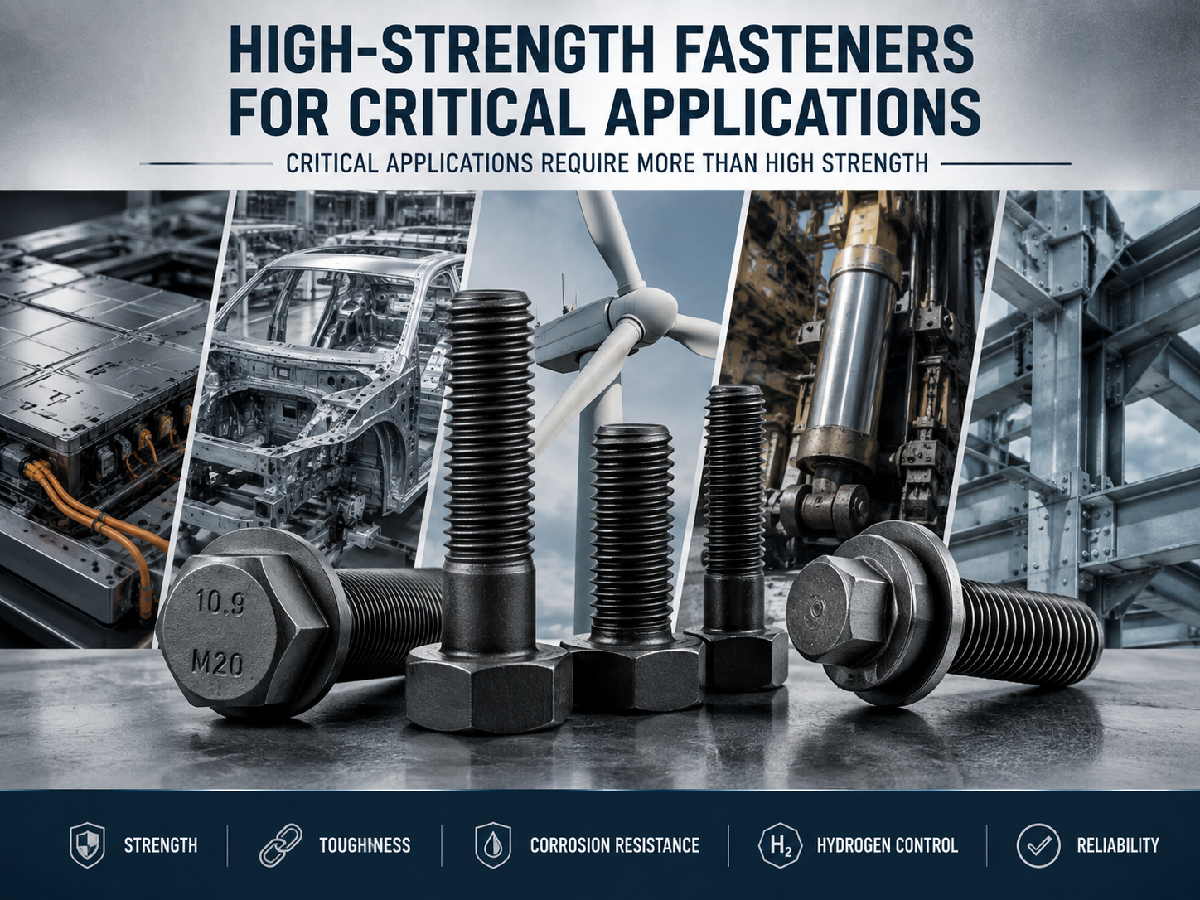
In structural steelwork, a bolt, nut and washer should not be treated as three unrelated catalog items.
The assembly may have controlled requirements for:
bolt;
nut;
washer;
dimensions;
mechanical properties;
coating;
lubrication;
preload;
installation method.
For European preloaded structural bolting applications, relevant EN structural bolting assembly requirements may apply according to the project specification.
For U.S. projects, ASTM and project-specific structural joint requirements may apply.
Always follow the controlling engineering specification.
Not every high strength nut is used in a preloaded structural connection.
This distinction is important.
A high strength nut may be used in:
a preloaded structural joint;
a non-preloaded structural joint;
a machinery assembly;
an automotive assembly;
a heavy-equipment joint.
The load-transfer mechanism depends on the actual joint design.
Therefore, the statement:
“High strength nuts work by friction between connected plates”
is not universally correct.
That describes certain preloaded slip-resistant joint designs—not every application using a high strength nut.
When a nut is tightened on a bolt, the bolt elongates and the clamped components are compressed.
This creates preload.
Conceptually:
Tightening → Bolt Tension → Joint Compression → Clamp Force
The resulting joint behavior depends on:
achieved preload;
friction;
joint stiffness;
external load;
surface condition;
settlement.
Preload is therefore a property of the assembled joint—not a property of the nut alone.
This is one of the most important engineering points in high strength fastening.
Installation torque is commonly used as an indirect method to generate bolt preload.
However, much of the applied torque is consumed by friction at:
the threads;
the nut bearing surface.
Therefore:
same torque ≠ automatically same preload
Changes in:
coating;
lubrication;
thread condition;
washer;
bearing surface;
prevailing-torque feature;
can change the resulting clamp force.
For controlled OEM assemblies, tightening parameters should be validated with the actual fastener system.
Surface treatment affects more than corrosion resistance.
A coating system can influence:
friction coefficient;
torque-tension relationship;
thread fit;
corrosion protection;
appearance;
installation behavior.
Potential finishes for suitable high strength nuts can include:
zinc plating;
zinc-nickel;
inorganic zinc-flake coating systems;
project-specific finishes.
The correct finish should be selected according to the controlling specification and service environment.
High-strength steel fasteners require careful consideration when certain electroplating and pretreatment processes are used.
Hydrogen introduced during:
cleaning;
acid pickling;
electroplating;
related processing;
can create embrittlement risk in susceptible high-strength steels.
Risk depends on:
material strength;
hardness;
manufacturing process;
surface-treatment process;
hydrogen-control procedures;
applicable specification.
For high-strength components, coating should therefore be treated as part of the engineering specification—not merely as a cosmetic finish.
Zinc-nickel coating can be considered for suitable OEM applications requiring enhanced corrosion performance compared with conventional zinc systems.
Applications can include:
automotive components;
commercial vehicles;
industrial equipment;
electrical equipment;
outdoor machinery.
However, the drawing should define the required:
coating system;
corrosion performance;
appearance;
friction requirement;
post-treatment where applicable.
The words “zinc-nickel” alone do not fully define the finished fastener performance.
Zinc-flake systems are widely used in suitable automotive, heavy-equipment and industrial fastener applications.
Depending on the specified system, potential benefits can include:
high corrosion protection;
controlled friction options;
suitability for certain high-strength fastener applications.
Commercial coating names should not replace the actual engineering specification.
Procurement documents should identify the required system and performance.
High strength nut performance also depends on correct internal thread geometry.
Coating adds material to threaded surfaces.
Therefore, manufacturing must consider:
pre-coating thread condition;
coating thickness;
finished thread acceptance;
applicable tolerance;
GO/NO-GO gauging.
A nut that was dimensionally acceptable before coating can become difficult to assemble if the coating process is not properly controlled.
Thread plug gauges can be used to verify the internal thread according to the applicable tolerance and inspection system.
This helps control:
assembly compatibility;
thread size;
pitch-diameter acceptance.
But thread gauging does not verify:
proof load;
hardness;
coating friction;
preload;
corrosion resistance.
A complete high strength nut inspection plan may therefore require multiple controls.
Some heavy-duty applications require both:
higher mechanical properties;
resistance to unintended nut rotation.
Possible solutions can include:
all-metal prevailing torque nuts;
high-strength flange lock nuts;
drawing-based special locking nuts.
For prevailing-torque steel nuts, applicable ISO functional requirements should be considered separately from the basic mechanical-property requirements of the nut.
A locking feature does not replace correct preload.
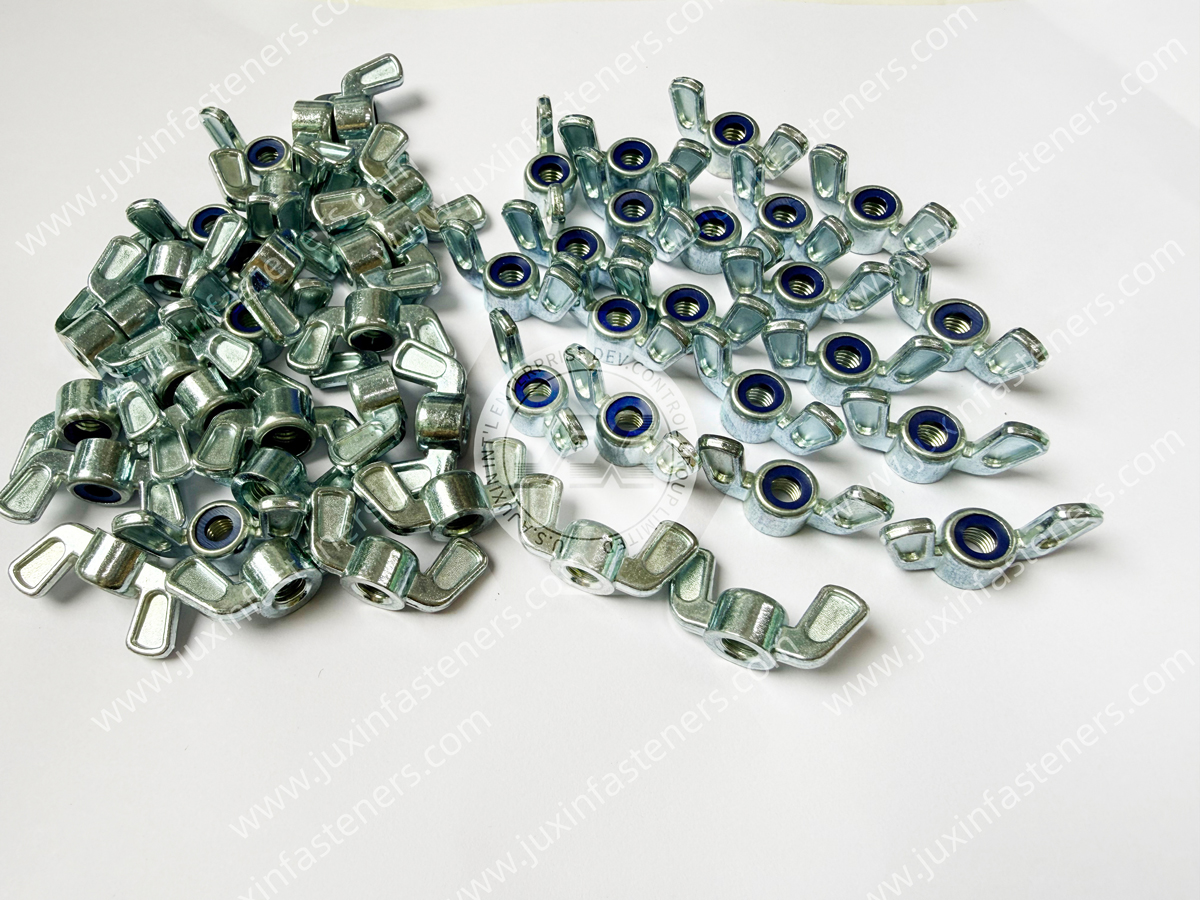
Nylon insert lock nuts can be supplied in different property classes where permitted by the applicable product specification.
However, the polymer locking element introduces additional engineering considerations:
service temperature;
chemical environment;
prevailing torque;
reuse;
mating bolt;
customer specification.
For higher-temperature environments, an all-metal locking solution may be more appropriate.
Related Product: DIN 985 Nylon Insert Lock Nuts
All-metal prevailing torque nuts create locking resistance without a polymer insert.
They can be useful in suitable:
heavy machinery;
commercial vehicles;
automotive systems;
rail equipment;
industrial machinery;
elevated-temperature applications.
The final selection should be based on:
property class;
prevailing-torque requirement;
temperature;
thread;
coating;
mating bolt.
Related Product: All-Metal Lock Nuts
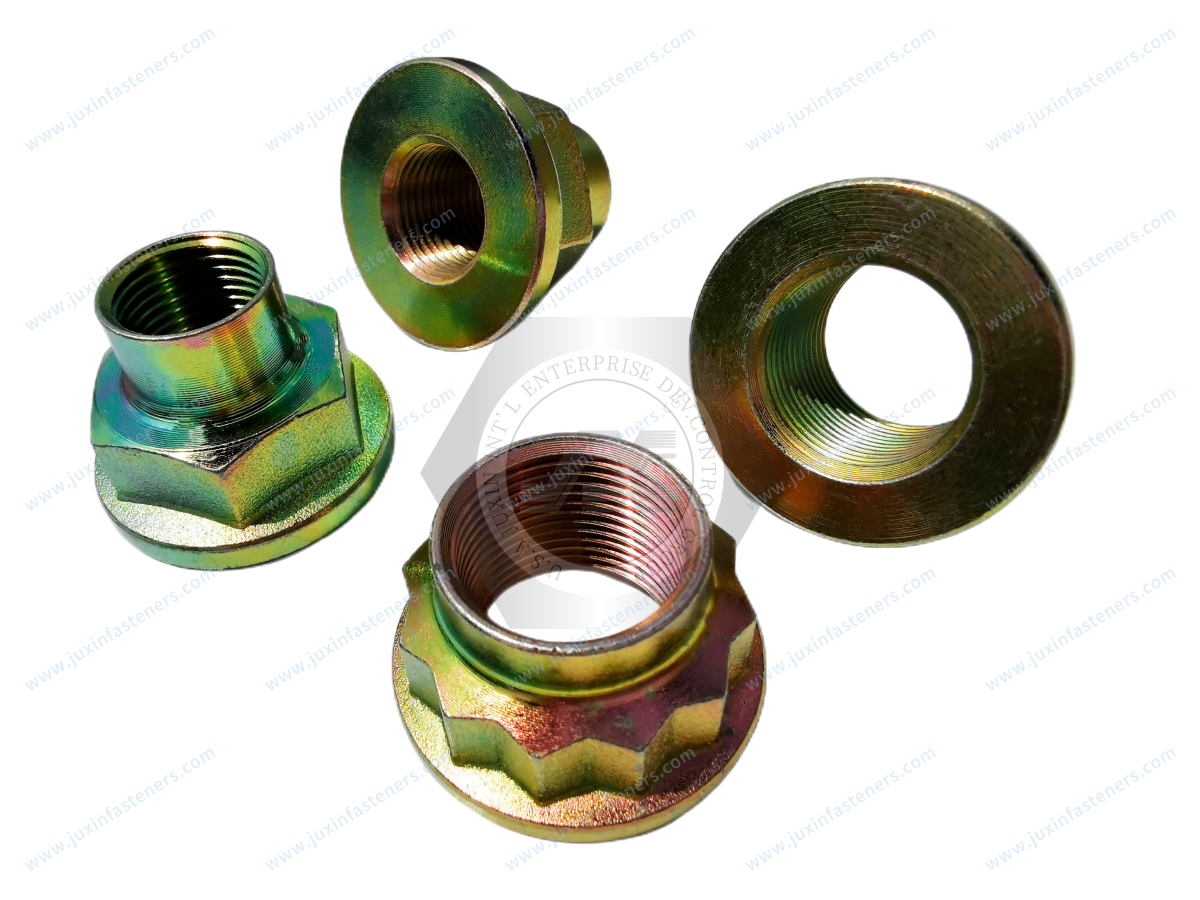
A flange nut integrates an enlarged bearing surface into the nut.
Potential advantages include:
larger bearing area;
reduced component count;
simplified assembly;
improved load distribution in suitable joints.
High strength flange nuts can be used in:
automotive equipment;
commercial vehicles;
machinery;
industrial assemblies.
However, flange geometry, material strength and property class should be specified independently.
Serrated flange nuts introduce teeth at the bearing surface.
These can increase resistance to nut rotation by interacting with the mating surface.
However, serrations can also affect:
surface coatings;
bearing friction;
mating-component finish;
electrical contact.
They should therefore not be treated as a universal vibration solution.
Automotive and commercial vehicle applications can require higher-strength nut solutions for suitable:
chassis equipment;
suspension-related assemblies;
seat structures;
brackets;
powertrain equipment;
structural components;
commercial vehicle systems.
Selection criteria can include:
bolt property class;
nut property class;
fatigue loading;
vibration;
corrosion;
coating friction;
installation torque;
traceability.
For safety-related automotive assemblies, the controlling OEM or Tier supplier specification takes precedence over generic recommendations.
Heavy equipment can expose bolted joints to:
high static loads;
shock;
vibration;
cyclic loading;
contamination;
outdoor corrosion.
Applications include:
construction machinery;
mining equipment;
hydraulic equipment;
material-handling machinery;
agricultural equipment;
industrial production machinery.
A high strength nut should be selected together with the appropriate bolt and assembly procedure.
Rail and transportation equipment can require fastening systems designed for:
vibration;
repeated loading;
long service intervals;
environmental exposure;
maintenance access.
Potential nut solutions include:
property-class-controlled hex nuts;
all-metal lock nuts;
flange nuts;
special high strength nuts.
Railway projects should follow the applicable vehicle, infrastructure or customer specifications.
Potential applications include:
power-generation equipment;
electrical infrastructure;
energy storage equipment;
industrial power systems;
renewable-energy machinery;
high-voltage equipment.
Selection may need to consider:
mechanical load;
corrosion;
thermal cycling;
vibration;
maintenance;
electrical requirements.
Structural bolting applications require careful distinction between:
general high strength mechanical fasteners;
structural bolting assemblies;
preloaded structural assemblies;
non-preloaded structural assemblies.
The nut must comply with the specified structural system.
Do not substitute a generic high strength nut merely because its nominal property class appears sufficient.
These terms are not automatically interchangeable.
A general high strength nut may satisfy specified mechanical properties but may not meet all requirements of a particular structural bolting assembly.
A structural project may control:
nut dimensions;
bolt grade;
washer;
assembly compatibility;
coating;
preload;
installation procedure;
inspection.
Procurement teams should therefore purchase according to the complete project specification.
Twist-off structural bolting systems use a specialized bolt assembly designed for controlled installation.
The spline end of the bolt is sheared during installation using the appropriate tool.
This should not be described as a special “torque shear nut.”
The controlled feature belongs to the structural bolting assembly and bolt design.
For U.S. structural applications, ASTM F3125/F3125M includes specified twist-off structural bolt assembly styles.
In a properly designed preloaded bolted joint, sufficient clamp force can reduce separation and limit fluctuating stress in the bolt under certain cyclic-loading conditions.
But fatigue performance depends on the complete joint.
Important factors include:
preload;
joint stiffness;
bolt geometry;
thread location;
load amplitude;
surface condition;
stress concentration.
Therefore:
high strength nut ≠ automatically high fatigue resistance
Fatigue performance is a joint-design issue.
Another common misconception is that a high strength nut automatically resists loosening.
It does not.
Strength and locking are different characteristics.
A Class 10 conventional hex nut can still rotate if the joint conditions permit self-loosening.
Where loosening risk exists, engineers should separately evaluate:
preload;
joint stiffness;
transverse movement;
prevailing-torque nuts;
mechanical locking methods;
assembly control.
10.9 is a bolt/screw property-class designation, not the normal ISO nut property-class notation.
Specify the correct nut property class.
Nut and bolt compatibility must be evaluated together.
Hardness alone does not verify proof-load performance.
Many high strength nuts are used in mechanical joints that are not structural slip-resistant connections.
Torque is an installation input. Preload is the resulting bolt tension/clamp force.
Different coating friction can change the resulting preload.
Mechanical strength and resistance to rotation are separate requirements.
Do not substitute between systems based only on apparent strength.
Structural systems may require specific compatible bolt, nut and washer combinations.
For OEM and supplier-development programs, qualification should review more than price and nominal thread.
Evaluate:
applicable standard;
controlled drawing;
nut property class or ASTM grade;
material;
heat treatment;
hardness;
proof-load requirements;
dimensions;
thread tolerance;
coating;
friction requirements where applicable;
corrosion requirements;
prevailing torque where applicable;
marking;
inspection records;
lot traceability;
packaging;
change control.
For critical components, production-process consistency matters as much as initial sample approval.
When developing a second source for an existing high strength nut, provide the current controlled specification whenever possible.
Compare:
thread;
nut style;
dimensions;
property class;
material;
heat treatment;
proof load;
hardness;
coating;
friction;
marking;
packaging;
traceability.
A replacement nut should not be approved solely because it fits the mating bolt.
Depending on the product and customer requirements, quality controls can include:
raw-material verification;
dimensional inspection;
thread GO/NO-GO gauging;
hardness testing;
proof-load testing;
coating inspection;
corrosion testing;
prevailing-torque testing for locking nuts;
visual inspection;
marking verification;
lot traceability.
Inspection requirements should follow the applicable standard and customer specification.
Two nuts can have:
the same dimensions;
the same thread;
the same coating;
nearly identical appearance;
and still have different mechanical performance.
This is why high strength nut sourcing cannot be based on appearance alone.
The component must meet the specified mechanical requirements.
Depending on the applicable standard and customer specification, high strength nuts may require controlled marking and lot traceability.
For OEM supply, traceability can connect finished products to:
raw material;
production lot;
heat treatment;
coating batch;
inspection records.
The exact traceability level should be agreed during supplier qualification.
For an accurate quotation and technical review, provide:
applicable ISO, DIN, EN, ASTM, ASME/ANSI or customer specification;
nut type;
nominal thread diameter;
thread pitch or TPI;
thread tolerance;
nut property class or ASTM grade;
mating bolt specification;
bolt property class or grade;
nut dimensions;
material requirement;
heat-treatment requirement where specified;
hardness requirement where specified;
proof-load requirement;
locking feature where applicable;
prevailing-torque requirement where applicable;
flange requirement;
serration requirement;
coating;
corrosion requirement;
friction requirement where specified;
operating temperature;
application environment;
assembly torque or preload requirement where available;
2D drawing;
sample quantity;
production quantity;
estimated annual demand;
inspection requirements;
documentation requirements;
traceability requirements;
packaging requirements.
For existing OEM components, send the controlled drawing and current application specification whenever available.
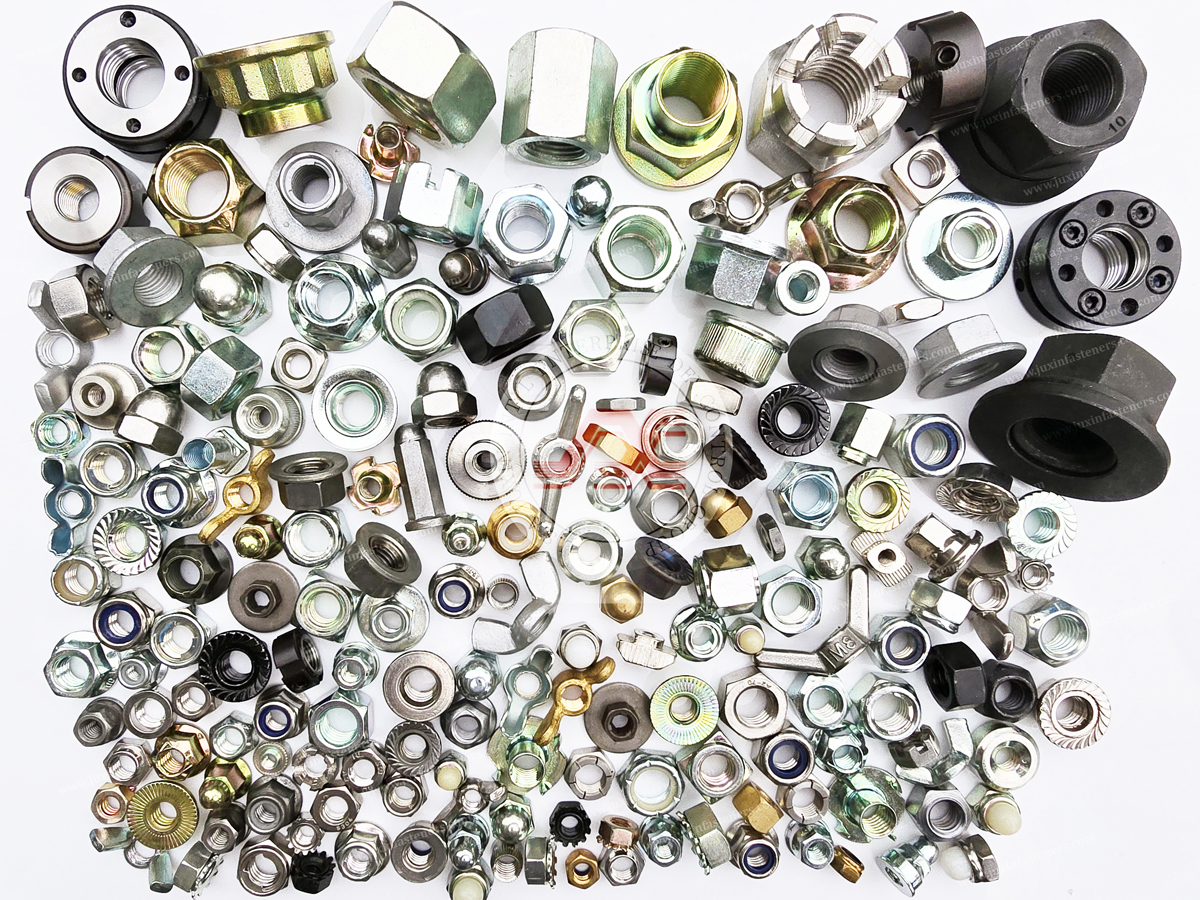
A high strength nut is an internally threaded fastener manufactured to specified mechanical-property requirements for use with an appropriate mating bolt, screw or stud in higher-load applications.
Property classes 8, 10 and 12 are common higher-strength nut classes within applicable ISO 898-2 configurations.
No. Class 10 identifies a nut property class, while 10.9 is a bolt/screw property-class designation.
For an ISO-based specification, it is better to identify the required nut property class and applicable nut standard rather than use the bolt designation 10.9 for the nut.
Proof-load testing verifies the nut's ability to withstand the specified axial test load under the applicable standard without unacceptable failure or permanent damage.
No. Hardness is only one characteristic. Mechanical conformity can also require proof-load performance and other specified properties.
The required manufacturing and heat-treatment route depends on material, property class, dimensions and applicable specification.
No. Strength and locking are separate functions.
Suitable coating depends on the fastener strength, process, hydrogen-embrittlement risk, corrosion requirement and customer specification.
A high strength nut describes mechanical capability. A structural nut may also need to comply with a specific structural bolting system, including dimensional and assembly requirements.
Not automatically. The standards use different classifications, dimensions and requirements. Any substitution should be approved against the controlling engineering specification.
At minimum, provide thread, nut style, applicable standard, property class or ASTM grade, mating bolt, material/coating requirements, quantity and application.
Build internal links from this page to relevant existing pages such as:
Industrial Nut Types & Selection Guide
Custom Nuts & Special Nuts Made to Drawing
All-Metal Lock Nuts
DIN 985 Nylon Insert Lock Nuts
Flange Nuts
DIN 929 Hex Weld Nuts
DIN 928 Square Weld Nuts
Automotive Projection Weld Nuts
Automotive Hex Flange Weld Nuts
Stainless Steel Thread Galling Prevention
Fastener Coating Selection
Custom CNC Machined Fasteners
Use the existing indexed JUXIN FASTENERS URLs when implementing these internal links.
High strength nut sourcing requires more than matching thread size.
The correct specification connects:
Nut Property Class + Mating Bolt + Thread + Geometry + Proof Load + Material + Heat Treatment + Coating + Assembly + Service Environment
JUXIN FASTENERS supports suitable requirements for high strength hex nuts, flange nuts, lock nuts,
all-metal prevailing torque nuts and drawing-based custom high strength nuts for OEM and industrial applications.
For design and structural engineers, provide the mating bolt specification, required nut property class, thread, joint load, operating environment and assembly requirements.
For procurement managers, strategic sourcing and supplier-development teams, provide the applicable standard or controlled drawing, material,
coating, sample quantity, production quantity, estimated annual demand, inspection requirements, documentation requirements and traceability requirements.
For second-source projects, provide the existing controlled drawing and application specification whenever possible.
The objective is not simply to supply a nut that fits the bolt.
The objective is to provide a mechanically compatible, consistently manufactured and properly specified component for the complete bolted joint.
Email: info@juxinfasteners.com
Website: www.juxinfasteners.com
Contact Us
Tel.:
+86 020 8621 0320
+86 020 3121 6067
E-mail:
Technical Support:
Navigation
SEND INQUIREY