Call Us
+86 136 6007 9809
Call Us
+86 136 6007 9809

Jan. 09, 2024
Threaded fasteners can loosen when a bolted joint experiences vibration, transverse movement, shock loading, settlement, thermal cycling or insufficient clamp force.
For automotive, rail transportation, industrial machinery, electrical equipment, automation and other OEM applications, this creates an important engineering question:
Which lock nut should be used for the actual joint conditions?
The answer is not simply “use a self-locking nut.”
Different lock nuts, self-locking nuts, prevailing torque nuts and anti-loosening nuts use fundamentally different locking mechanisms.
Common solutions include:
nylon insert lock nuts;
all-metal prevailing torque nuts;
distorted-thread lock nuts;
serrated flange lock nuts;
flange prevailing-torque nuts;
application-specific custom lock nuts.
Each solution behaves differently in terms of:
prevailing torque;
temperature capability;
vibration;
mating-surface interaction;
corrosion;
installation;
removal;
reuse;
bolt compatibility.
JUXIN FASTENERS supplies suitable standard and drawing-based locking nut solutions for OEM manufacturers, engineering teams, procurement departments and supplier-development programs.
A lock nut is a nut incorporating a feature intended to increase resistance to unintended rotation or loosening compared with a conventional freely running nut.
However, “lock nut” is a broad product category.
The locking function may come from:
thread interference;
polymer interference;
controlled metal deformation;
bearing-surface serrations;
other mechanical locking features.
Understanding where the locking action occurs is one of the most useful ways to select the correct product.
A practical classification is:
| Lock Nut Type | Primary Locking Interface | Polymer? | Surface Interaction? |
|---|---|---|---|
| Nylon insert lock nut | Bolt thread / nylon insert | Yes | Low |
| All-metal prevailing torque nut | Bolt thread / deformed metal thread | No | Low |
| Distorted-thread lock nut | Bolt thread / controlled deformation | No | Low |
| Serrated flange lock nut | Nut bearing surface / mating component | No | High |
| Flange prevailing-torque nut | Thread plus integral flange | Depends on design | Depends on flange |
This distinction matters because two products sold as “anti-loosening nuts” may work through completely different mechanisms.
Fastener loosening is not caused by vibration alone.
Several mechanisms can reduce joint reliability.
If the bolt is not tightened sufficiently, the clamped components can move relative to each other.
This can increase the risk of rotational loosening.
Movement perpendicular to the bolt axis is particularly important in self-loosening behavior.
If relative slip occurs at the joint interfaces, repeated movement can progressively rotate the nut or bolt.
Surface roughness, coatings and joint materials can settle after tightening.
This can reduce clamp force even if the nut has not visibly rotated.
Plastic, composites, gaskets and other compliant materials may creep or relax under sustained compression.
A lock nut cannot automatically compensate for loss of clamp force caused by the clamped material.
Different materials expand and contract at different rates.
Repeated heating and cooling can alter clamp force.
Incorrect torque, lubrication or friction assumptions can produce preload substantially different from the intended value.
This is one of the most important distinctions in anti-loosening fastener selection.
A locking nut can resist rotation.
That does not mean it automatically maintains the original clamp force.
Consider a joint where a soft gasket settles after assembly.
The nut may remain rotationally locked while the joint preload decreases.
Therefore:
Locking Function ≠ Preload Guarantee
A reliable bolted joint requires both:
appropriate locking strategy where required;
appropriate preload and joint design.
A prevailing torque nut generates resistance to rotation before the nut's bearing surface is fully seated against the joint.
This resistance is created by an intentional interference mechanism.
For example:
nylon insert deformation;
controlled deformation of the metal thread;
elliptical or distorted nut geometry.
Prevailing torque is therefore different from tightening torque.
These terms should not be used interchangeably.
Torque required to rotate the nut due to its locking feature when clamp load is not the primary resistance.
The total torque applied during assembly to generate bolt tension and joint clamp force.
In simplified terms:
Installation Torque = Friction + Prevailing Torque + Torque Contributing to Bolt Tension
This becomes especially important when tightening is controlled by torque.
A lock nut can require different assembly parameters from a conventional free-running nut.
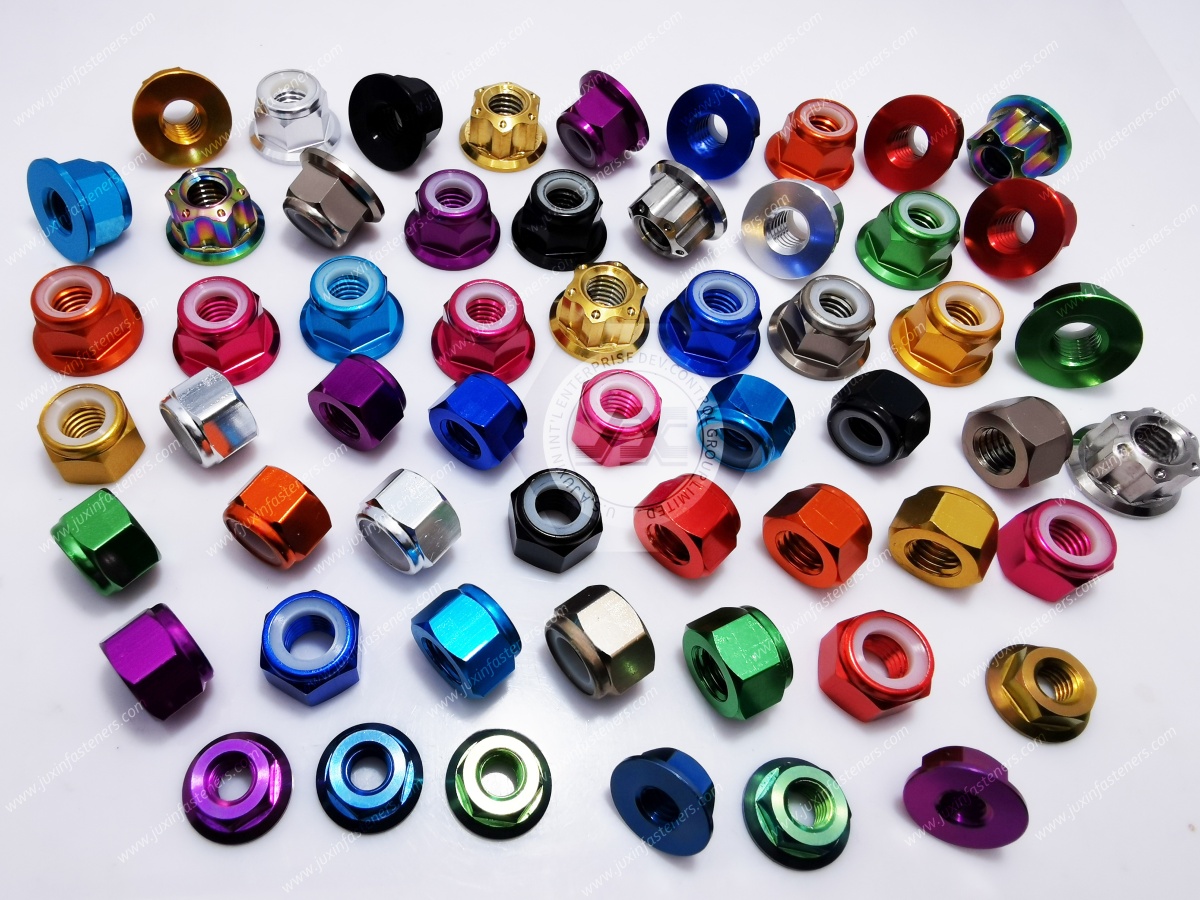
Nylon insert lock nuts, commonly called nylon lock nuts or Nyloc-type nuts, incorporate a polymer locking ring.
As the mating bolt enters the nylon element, the polymer deforms around the bolt threads and creates prevailing torque.
Potential advantages include:
effective prevailing-torque locking;
relatively simple installation;
no intentional damage to the mating bearing surface;
broad industrial availability;
carbon steel and stainless steel options.
Typical applications include:
machinery;
automotive-related assemblies;
electrical equipment;
automation systems;
appliances;
industrial equipment.
JUXIN FASTENERS supplies nylon insert lock nut solutions including suitable DIN 985-style low-profile nylon insert lock nuts and other application-specific configurations.
Related Product: DIN 985 Nylon Insert Lock Nuts
Nylon insert lock nuts can be appropriate where the assembly requires:
prevailing torque;
moderate operating temperatures compatible with the insert material;
limited surface damage;
conventional installation tools;
removable mechanical fastening.
They are especially useful when the designer wants the locking function to occur at the bolt thread, rather than through serrations against the mating surface.
The polymer insert creates the locking function.
Therefore, its behavior can be affected by:
temperature;
chemical exposure;
aging;
repeated installation.
For elevated-temperature applications, engineers should not select a nylon insert lock nut based only on thread size and strength.
The actual polymer and application temperature must be evaluated.
Where the temperature exceeds the suitable range of the polymer locking element, an all-metal prevailing torque nut may be more appropriate.
Polymer locking elements can interact differently with:
oils;
fuels;
cleaning agents;
solvents;
process chemicals.
For chemically exposed equipment, verify the compatibility of the insert material with the service environment.
Do not assume that the corrosion resistance of a stainless steel nut automatically guarantees chemical compatibility of the nylon insert.
All-metal lock nuts generate prevailing torque without using a polymer locking element.
The locking effect is created through controlled deformation or geometry in part of the metal thread.
Potential advantages include:
metal-only construction;
suitability for elevated-temperature applications where appropriate;
prevailing torque independent of a polymer insert;
robust industrial design.
Potential applications include:
automotive systems;
heavy machinery;
commercial vehicles;
rail equipment;
industrial machinery;
higher-temperature mechanical assemblies.
The nut contains a controlled interference zone.
As the bolt passes through this zone, elastic interaction between the mating threads creates resistance to rotation.
This produces prevailing torque.
The locking action therefore exists even before the nut is fully seated.
This differs fundamentally from a serrated flange nut, which primarily develops locking resistance through interaction with the bearing surface after seating.
| Selection Factor | Nylon Insert Lock Nut | All-Metal Lock Nut |
|---|---|---|
| Locking mechanism | Polymer/thread interference | Metal/thread interference |
| Polymer element | Yes | No |
| Elevated temperature | Limited by polymer/system | Generally better suited, subject to specification |
| Bearing-surface damage | Low | Low for non-serrated designs |
| Prevailing torque | Yes | Yes |
| Chemical compatibility | Polymer must be checked | Primarily metal/coating considerations |
| Reuse | Must be validated | Must be validated |
| Typical use | General OEM/machinery | Heavy-duty/high-temperature applications |
Neither type is automatically superior.
Selection depends on the application.
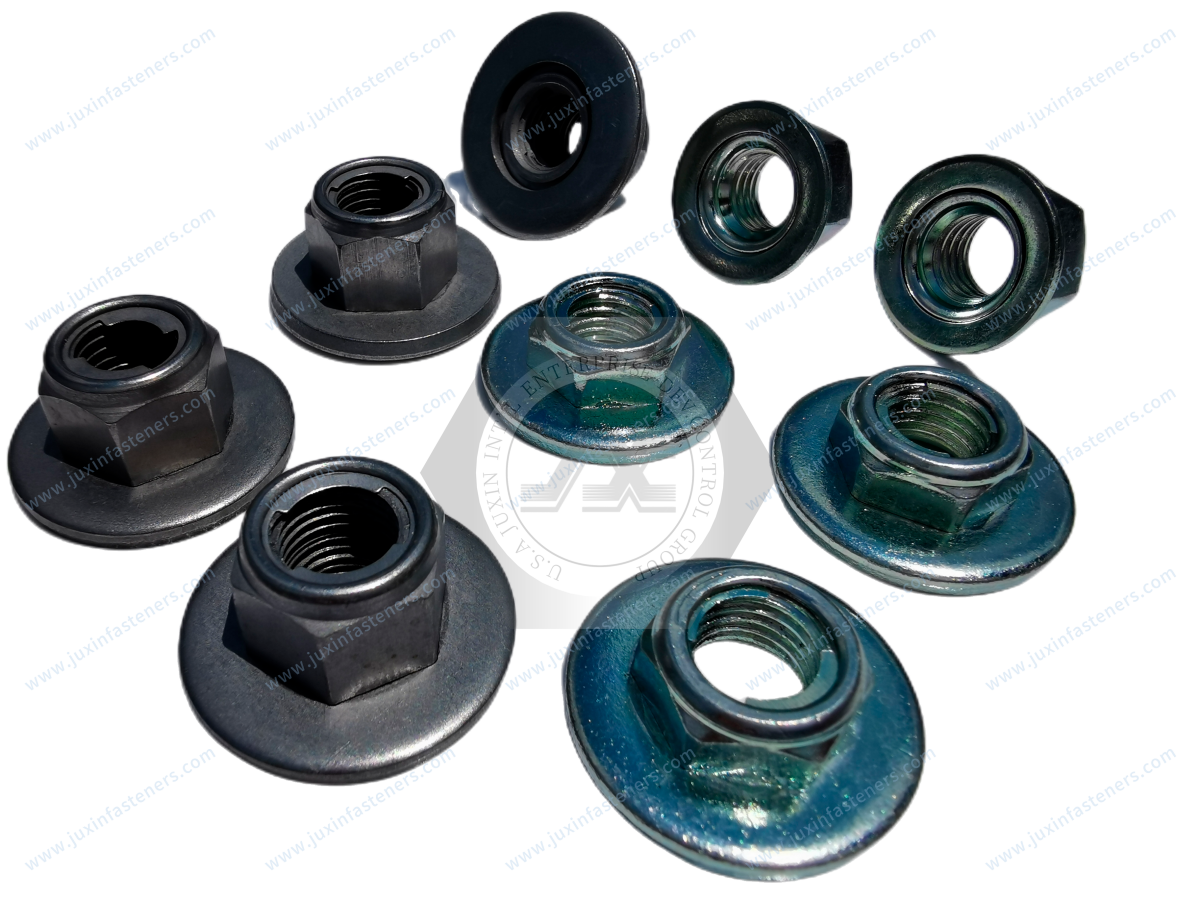
Distorted-thread lock nuts are a category of all-metal prevailing torque nuts.
A controlled section of the nut thread is intentionally deformed to create interference with the mating bolt.
Designs can use different deformation geometries depending on the product.
Benefits can include:
no polymer locking element;
prevailing torque;
compact construction;
suitability for demanding mechanical assemblies.
Critical parameters include:
mating bolt thread;
nut strength;
deformation geometry;
prevailing torque;
coating;
temperature.
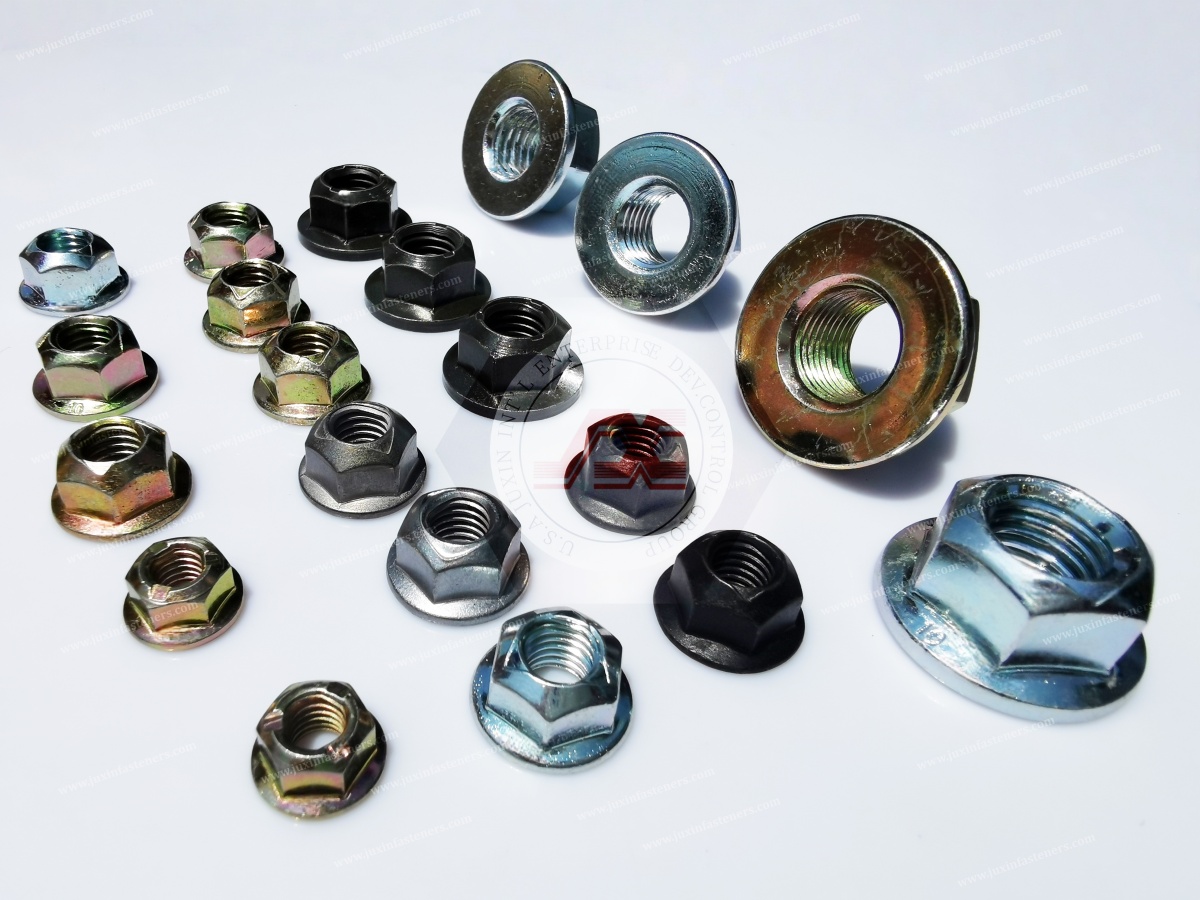
A serrated flange lock nut combines an integral flange with serrations on the underside.
Unlike a prevailing-torque nut, its primary anti-rotation mechanism occurs at the interface between the flange and mating surface.
Potential advantages include:
integrated bearing area;
reduced component count where a separate washer is not required;
resistance to reverse rotation;
efficient high-volume assembly.
Typical applications include:
automotive components;
machinery;
sheet-metal assemblies;
industrial equipment.
However, serrations can damage paint or protective coatings.
They are therefore not appropriate for every joint.
Related Engineering Guide: Hex Flange Nuts & Serrated Flange Lock Nuts
This distinction is important for both engineers and procurement teams.
Locking action primarily depends on interaction between:
serrations ↔ mating surface
Locking action primarily depends on:
nut locking feature ↔ mating bolt thread
This difference affects:
installation behavior;
surface damage;
removal;
reuse;
torque;
application suitability.
Where maintaining a painted or coated mating surface is important, serrated flange nuts require careful evaluation.
The serrations may penetrate:
paint;
zinc coatings;
conversion coatings;
other protective finishes.
Possible consequences include:
local coating damage;
corrosion initiation;
cosmetic damage.
A thread-based prevailing torque nut can be more suitable where intentional bearing-surface penetration is undesirable.
The complete joint still needs engineering validation.
Where service temperature exceeds the suitable range of a polymer locking element, engineers commonly evaluate all-metal prevailing torque nuts.
However, “all metal” does not automatically mean unlimited temperature capability.
Temperature can still affect:
base material;
heat treatment;
coating;
lubricant;
bolt material;
joint materials.
Always specify the actual operating temperature.
This depends on the nut type and specification.
It is unsafe to assume that every lock nut can be removed and reused indefinitely.
Repeated installation can change:
nylon insert interference;
metal deformation;
prevailing torque;
serration interaction;
coating condition.
For maintenance-critical equipment, engineers should establish:
permitted reuse;
inspection criteria;
minimum prevailing torque;
replacement policy.
The correct answer is:
Sometimes—but only when permitted by the applicable product specification, OEM requirement and verified locking performance.
Do not assume reuse based solely on appearance.
A lock nut may still look undamaged while its prevailing torque has decreased.
For critical applications, follow the applicable standard and customer maintenance specification.
A lock nut has at least two different functional requirements:
mechanical strength;
locking performance.
For ISO metric carbon and alloy steel nuts, applicable mechanical properties can be specified using appropriate nut property classes.
Higher-strength nut property classes can include, depending on configuration:
Class 8;
Class 10;
Class 12.
The locking function may then require separate prevailing-torque or product-specific requirements.
A nut should not be called “10.9 lock nut” under the ISO nut property-class system simply because it is intended to mate with a 10.9 bolt.
Related Engineering Guide: High Strength Nuts & Bolt Compatibility
A lock nut must be compatible with the mating bolt.
Engineering review should consider:
thread diameter;
pitch;
thread tolerance;
bolt property class or grade;
nut property class;
coating;
hardness;
locking mechanism.
For prevailing torque nuts, the bolt thread itself forms part of the locking interface.
Poor or damaged bolt threads can affect performance.
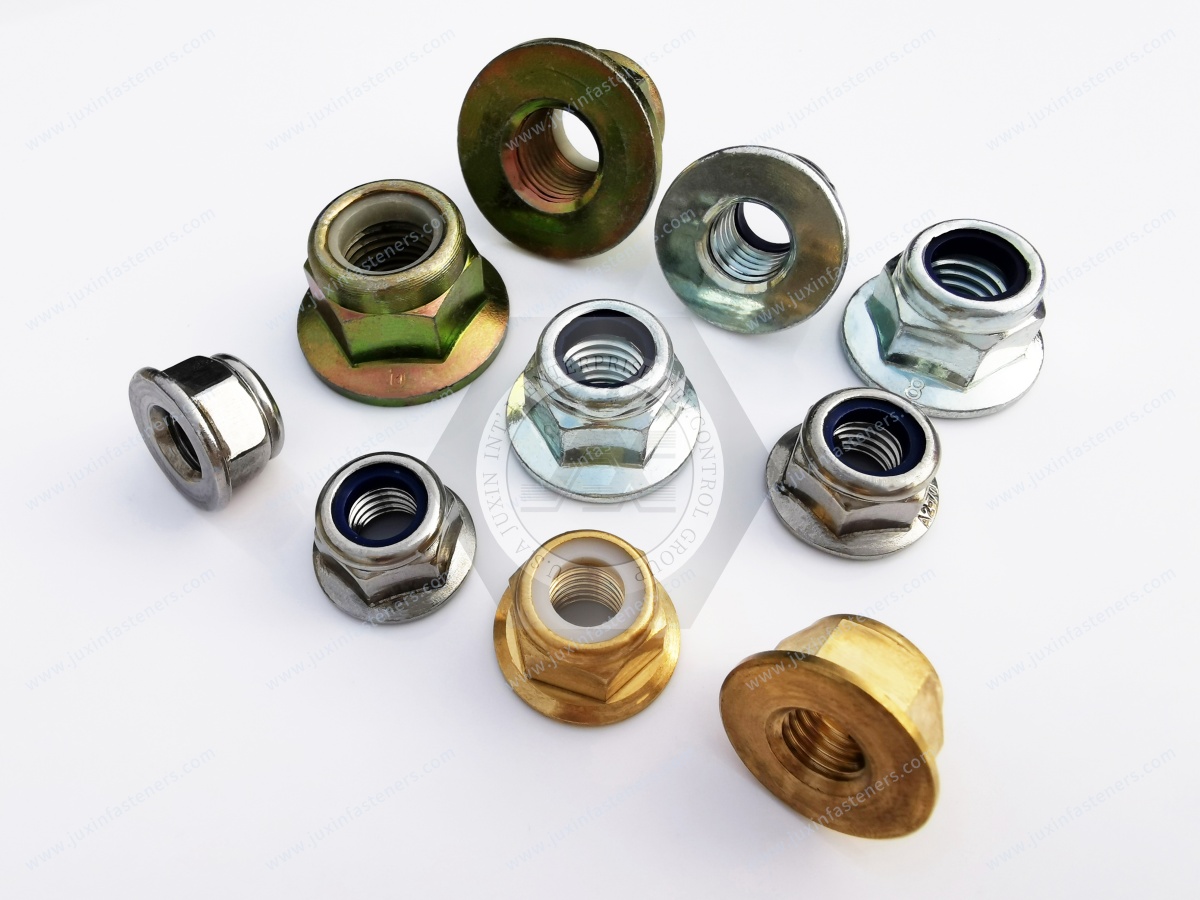
JUXIN FASTENERS supports suitable locking nut requirements using internationally recognized thread systems.
Possible requirements include:
ISO metric coarse thread;
ISO metric fine thread;
drawing-specific metric threads.
Possible requirements include:
UNC;
UNF;
customer-specified Unified threads.
For an RFQ, specify the complete thread designation rather than simply writing:
“M8 lock nut” or “1/4 lock nut.”
Carbon and alloy steel locking nuts are widely used in:
automotive;
machinery;
industrial equipment;
commercial vehicles;
construction machinery.
Potential finishes include:
zinc plating;
zinc-nickel;
zinc-flake coating systems;
black finishes;
customer-specified coatings.
Mechanical property and coating should be specified independently.
Stainless steel locking nuts can be suitable for applications requiring improved corrosion resistance.
Common material options include:
A2 / 304-type stainless steel;
A4 / 316-type stainless steel.
Potential applications include:
food-processing equipment;
marine-related equipment;
outdoor machinery;
chemical-processing equipment;
electrical equipment.
For nylon insert versions, remember that the stainless body and polymer locking element have different environmental limitations.
Stainless steel bolt-and-nut combinations can experience thread galling.
Risk can increase with:
similar stainless materials;
high assembly speed;
high contact pressure;
damaged threads;
unsuitable lubrication.
Prevailing torque can add additional rotational resistance, so the assembly process deserves particular attention.
A sudden increase in installation torque should not automatically be interpreted as “stronger locking.”
It may indicate thread damage or galling.
Related Engineering Guide: Stainless Steel Thread Galling Prevention
Surface treatment influences more than corrosion resistance.
It can also affect:
thread friction;
bearing friction;
prevailing torque;
assembly torque;
thread fit.
Potential coating systems include suitable:
zinc;
zinc-nickel;
zinc-flake;
nickel;
other customer-specified finishes.
The correct system depends on:
material;
strength;
corrosion requirement;
assembly method;
customer specification.
Suppose an OEM validates a lock nut with one coating and later changes to another finish.
Even if dimensions remain identical, the new coating can change:
coefficient of friction;
prevailing torque;
installation torque;
achieved bolt preload.
Therefore:
coating changes should not automatically be treated as cosmetic changes.
For torque-controlled OEM assembly, they may require revalidation.
A simplified bolted-joint relationship is:
T ≈ K × F × d
where:
T = tightening torque;
K = effective torque coefficient;
F = target preload;
d = nominal bolt diameter.
This relationship is only an approximation.
The effective coefficient is influenced by:
thread friction;
bearing friction;
lubrication;
coating;
geometry.
With a prevailing torque nut, additional torque is consumed by the locking feature.
Therefore, generic torque charts should not automatically be used for critical lock-nut assemblies.
Not necessarily.
Excessive prevailing torque can create other problems:
difficult assembly;
inaccurate torque-controlled preload;
bolt thread damage;
excessive tool load;
installation inconsistency.
The correct prevailing torque should meet the applicable functional requirement—not simply be as high as possible.
Automotive applications can expose fasteners to:
vibration;
temperature cycling;
road contaminants;
corrosion;
automated assembly;
service removal.
Potential applications include:
chassis-related assemblies;
seat structures;
suspension-related equipment;
brackets;
powertrain-related equipment;
interior and exterior systems;
EV battery and thermal-management equipment.
Selection criteria can include:
locking mechanism;
bolt property class;
corrosion resistance;
coating friction;
prevailing torque;
traceability.
Suitable lock nuts can be used in EV-related:
battery enclosures;
support frames;
cooling systems;
brackets;
power electronics;
high-voltage equipment.
Depending on location, engineers may need to consider:
electrical isolation;
electrical continuity;
galvanic interaction;
thermal cycling;
vibration;
corrosion;
maintenance access.
There is no single universal “EV lock nut.”
Selection depends on the actual joint.
Lock nuts are commonly used in:
CNC equipment;
robotics;
pumps;
compressors;
automation systems;
packaging machinery;
material-handling equipment;
hydraulic systems.
For machinery that requires regular maintenance, reuse requirements should be established during the design stage.
Rail vehicles and transportation equipment can require locking fasteners for suitable:
interior equipment;
mechanical systems;
electrical cabinets;
brackets;
exterior assemblies.
Rail applications may involve:
repeated vibration;
long service intervals;
temperature variation;
corrosion;
fire-related material requirements;
maintenance specifications.
The controlling project specification should determine the locking solution.
Lock nuts can be used in suitable:
electrical cabinets;
switchgear;
power distribution equipment;
energy storage systems;
renewable-energy equipment;
industrial power systems.
For electrical assemblies, consider whether the joint requires:
conductivity;
insulation;
corrosion resistance;
grounding continuity.
A mechanical locking feature does not automatically establish electrical performance.
Construction, mining and heavy industrial equipment can expose bolted joints to:
shock;
high vibration;
cyclic loading;
contamination;
outdoor corrosion.
Potential solutions include:
all-metal prevailing torque nuts;
high-strength lock nuts;
serrated flange nuts;
application-specific locking systems.
The correct selection depends on the actual failure mechanism.
Aerospace and aviation maintenance applications require controlled fastener specifications and approved hardware.
Material, geometry, locking method, traceability and documentation can be tightly controlled by the applicable drawing, aircraft specification or maintenance documentation.
A generic industrial lock nut should not be substituted into an aerospace application merely because the thread size matches.
For aerospace RFQs, provide the complete controlled specification or drawing.
A practical first-stage selection can look like this:
| Application Condition | Lock Nut Type to Evaluate |
|---|---|
| General industrial vibration | Nylon insert or suitable prevailing torque nut |
| Elevated temperature | All-metal prevailing torque nut |
| Painted mating surface | Thread-based locking solution |
| High-volume sheet-metal assembly | Serrated flange nut where surface damage is acceptable |
| Polymer/chemical exposure concern | All-metal solution |
| Frequent maintenance | Design with verified reuse/replacement policy |
| High-strength bolt system | Compatible higher-strength lock nut |
| Corrosive environment | Suitable stainless or coated lock nut |
| Torque-controlled OEM assembly | Lock nut with validated friction/prevailing torque |
This matrix is a starting point—not a substitute for joint validation.
Ask:
Is the nut rotating?
Is preload being lost without rotation?
Is the joint slipping transversely?
Is the clamped material creeping?
Is thermal cycling involved?
Do not select a locking nut before understanding the failure mode.
Confirm:
minimum temperature;
maximum temperature;
chemicals;
moisture;
salt exposure;
vibration;
shock;
maintenance frequency.
Confirm:
diameter;
pitch;
tolerance;
bolt property class;
coating.
Choose between:
polymer prevailing torque;
all-metal prevailing torque;
serrated bearing surface;
another approved locking method.
Select the appropriate:
material;
coating;
passivation;
topcoat.
For critical joints, evaluate:
installation torque;
achieved preload;
prevailing torque;
vibration performance;
reuse where applicable.
Loss of preload can also result from settlement, creep and thermal effects.
Locking resistance and preload retention are different functions.
The polymer locking element has environmental limitations.
Prevailing torque can change after repeated installation.
Serrations can damage paint and coatings.
Excessive resistance can create assembly and preload-control problems.
The nut and bolt must be mechanically compatible.
A coating change can alter installation torque and preload.
Nylon insert nuts are only one category of self-locking nuts.
That term does not define the actual locking mechanism.
Depending on product type and customer specification, quality controls can include:
dimensional inspection;
thread GO/NO-GO gauging;
material verification;
hardness testing;
proof-load testing where applicable;
prevailing-torque testing;
locking-feature inspection;
coating inspection;
corrosion testing;
visual inspection;
marking verification;
lot traceability.
For a locking nut, dimensional conformity alone is not sufficient to demonstrate locking performance.
For applicable prevailing-torque nuts, functional testing can measure rotational resistance during installation and removal according to the applicable product specification.
This can help verify whether the locking feature remains within the specified performance window.
Important:
Prevailing torque test ≠ joint vibration test
The two evaluate different aspects of performance.
Where vibration resistance is a critical product requirement, the complete bolted joint may require application-specific testing.
Test results can depend on:
bolt;
nut;
preload;
joint geometry;
mating materials;
transverse displacement;
test method.
A lock nut should not be advertised as universally “vibration-proof” without defining the test conditions.
Some OEM assemblies require locking nuts that differ from standard catalog designs.
JUXIN FASTENERS supports suitable drawing-based requirements involving:
special nut dimensions;
special thread;
flange geometry;
all-metal locking features;
custom prevailing-torque requirements;
carbon steel;
stainless steel;
special coatings;
customer-specific marking.
For custom projects, provide the controlled 2D drawing and application requirements whenever available.
Related Engineering Guide: Custom Nuts & Special Nuts Made to Drawing
Second sourcing a lock nut requires more than matching dimensions.
Compare:
applicable standard or drawing;
thread;
thread tolerance;
nut geometry;
material;
property class;
locking mechanism;
prevailing torque;
hardness;
proof-load requirement;
coating;
friction;
operating temperature;
reuse requirement;
marking;
traceability.
For nylon insert lock nuts, also compare the locking insert specification.
For all-metal lock nuts, compare the functional deformation geometry and prevailing-torque requirement.
Two lock nuts can look almost identical but behave differently.
Differences can exist in:
thread interference;
nylon material;
locking-zone geometry;
hardness;
coating friction;
prevailing torque.
This is especially important when qualifying an alternate supplier.
A lock nut should be approved based on its controlled requirements and functional performance—not appearance alone.
For an accurate quotation and technical review, provide:
applicable ISO, DIN, ASME/ANSI, ASTM, SAE or customer specification;
lock nut type;
locking mechanism;
thread size;
pitch or TPI;
thread tolerance;
mating bolt specification;
bolt property class or grade;
nut property class where applicable;
material;
nylon insert requirement where applicable;
all-metal locking requirement where applicable;
flange requirement;
serration requirement;
prevailing-torque requirement where specified;
proof-load requirement;
coating;
corrosion requirement;
friction requirement;
minimum operating temperature;
maximum operating temperature;
chemical exposure;
vibration conditions;
reuse requirement;
assembly torque or preload requirement where available;
2D drawing;
sample quantity;
production quantity;
estimated annual demand;
inspection requirements;
documentation requirements;
traceability requirements;
packaging requirements.
For existing OEM products, send the controlled drawing and current approved specification whenever possible.
A self-locking nut incorporates a feature that increases resistance to unintended rotation compared with a conventional free-running nut.
A prevailing torque nut generates rotational resistance from its locking feature before the nut fully seats against the joint.
A nylon insert nut uses polymer/thread interference. An all-metal lock nut creates thread interference through controlled metal geometry.
All-metal prevailing torque nuts are commonly evaluated where polymer insert temperature limits are unsuitable, but the complete material and coating specification must still be checked.
Some may be reusable under defined conditions, but reuse should follow the applicable specification and verified locking performance.
Not necessarily. A lock nut resists rotation, while preload can still decrease because of settlement, creep, thermal effects or other joint behavior.
Not normally. Serrated flange nuts primarily create anti-rotation resistance at the bearing surface, while prevailing torque nuts create resistance through the thread or locking element.
They can damage or penetrate the coating, so the mating surface must be evaluated.
Yes. Stainless bolt-and-nut combinations can gall under unfavorable assembly conditions.
Not automatically. Excessive prevailing torque can interfere with installation and preload control.
Compatibility depends on the applicable standard, nut design, thread and joint specification. The nut and bolt should be specified separately rather than calling both “10.9.”
Provide thread, locking mechanism, applicable standard or drawing, nut and bolt mechanical requirements, material, coating, temperature, quantity and application conditions.
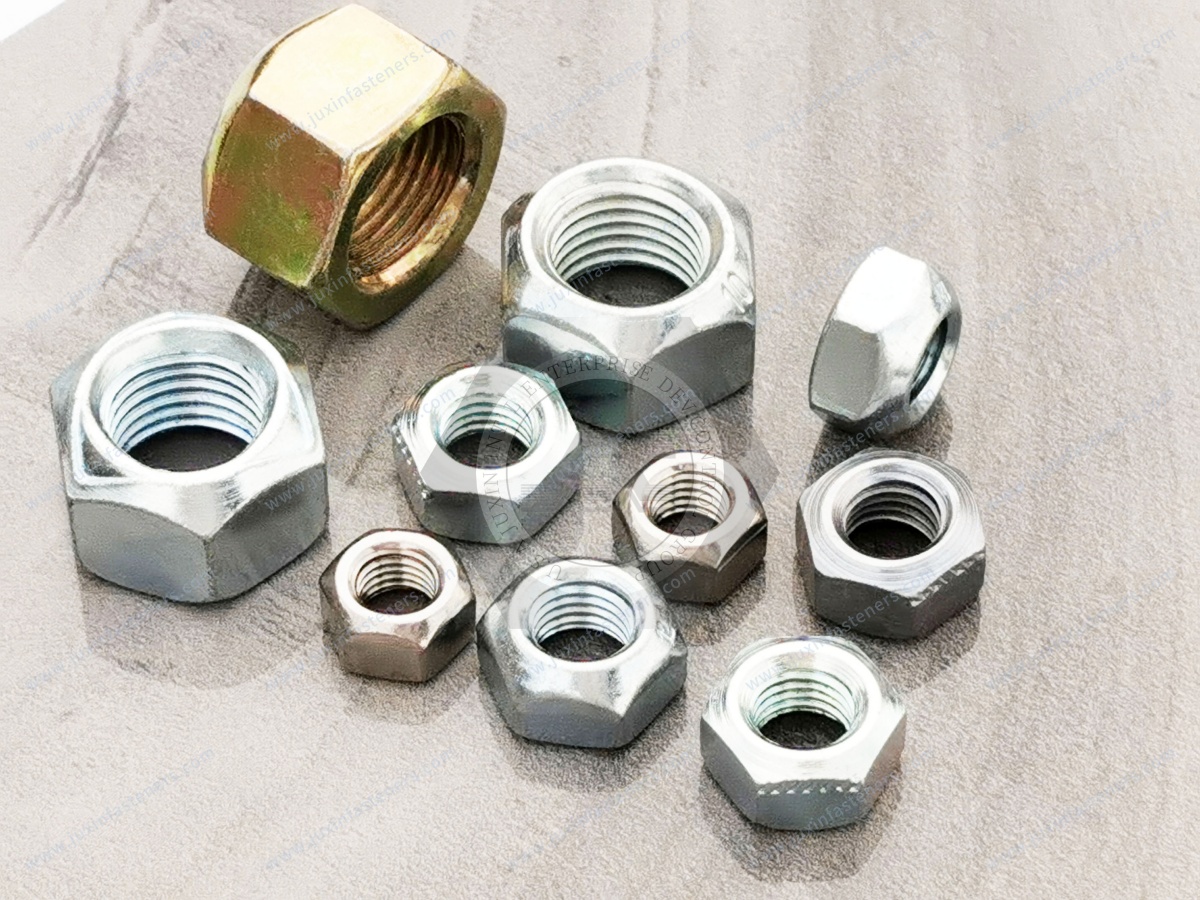
Build internal links from this page to relevant existing pages such as:
Industrial Nut Types & Selection Guide
High Strength Nuts & Bolt Compatibility
Hex Flange Nuts & Serrated Flange Lock Nuts
DIN 985 Nylon Insert Lock Nuts
All-Metal Lock Nuts
Custom Nuts & Special Nuts Made to Drawing
DIN 929 Hex Weld Nuts
DIN 928 Square Weld Nuts
Automotive Fastener Solutions
Stainless Steel Thread Galling Prevention
Fastener Coating Selection Guide
Use the existing indexed JUXIN FASTENERS URLs when implementing these internal links.
A reliable anti-loosening strategy starts by identifying why the joint is losing reliability.
The correct solution connects:
Joint Movement + Preload + Locking Mechanism + Bolt Compatibility + Temperature + Material + Coating + Friction + Assembly Process
JUXIN FASTENERS supports suitable requirements for nylon insert lock nuts, all-metal prevailing torque nuts, distorted-thread nuts,
serrated flange lock nuts, high-strength lock nuts and drawing-based custom locking nuts.
For design and structural engineers, provide the mating bolt specification, required nut mechanical properties, joint loading, temperature,
vibration conditions, service environment and assembly requirements.
For procurement managers, procurement development, strategic sourcing and supplier-development teams, provide the applicable standard or controlled drawing,
locking mechanism, material, coating, sample quantity, production quantity, annual demand, inspection requirements, documentation requirements and traceability requirements.
For second-source qualification, provide the current approved drawing and locking-performance requirements whenever possible.
The objective is not simply to purchase an “anti-loosening nut.”
The objective is to select a locking mechanism that addresses the actual loosening risk while remaining compatible with the bolt, preload, temperature, coating, assembly process and service environment.
Email: info@juxinfasteners.com
Website: www.juxinfasteners.com
Contact Us
Tel.:
+86 020 8621 0320
+86 020 3121 6067
E-mail:
Technical Support:
Navigation
SEND INQUIREY