
Call Us
+86 136 6007 9809
Call Us
+86 136 6007 9809

Oct. 12, 2023
Clamp-style shaft collars are mechanical components used to position, locate or retain components along a shaft.
Typical applications include positioning or supporting the axial location of:
bearings;
gears;
sprockets;
pulleys;
spacers;
rollers;
couplings;
machine components;
sensors;
and mechanical stops.
Unlike a conventional retaining ring installed into a machined groove, a clamp-style shaft collar typically grips the shaft by tightening one or more clamp screws around the collar body.
That difference creates an important engineering distinction:
Clamp-Style Shaft Collar → Frictional or Thread-Assisted Shaft Positioning
DIN 471 Retaining Ring → Groove-Based Axial Retention
The two product families can perform related axial-positioning functions, but they should not be treated as interchangeable.
For OEM engineers and procurement teams, shaft-collar selection should begin with the complete application:
Shaft Diameter + Shaft Surface + Required Axial Position + Axial Load + Shock / Dynamic Loading + Component Interface + Installation Access + Adjustment Requirement + Material + Finish
A clamp-style shaft collar is a ring-shaped component with a bore that fits around a shaft and a split or clamping feature that allows the collar to contract around the shaft when its screw is tightened.
Instead of driving a set screw directly into the shaft surface, the clamp screw creates circumferential clamping action around the shaft.
Depending on the design, clamp-style shaft collars can be used as:
axial stops;
component locators;
bearing-positioning elements;
spacer interfaces;
assembly reference points;
sensor or accessory mounts;
and adjustable shaft-positioning components.
They are widely used in machinery where components must be positioned along a shaft without requiring a retaining-ring groove at every location.
This is the most important terminology correction for this product family.
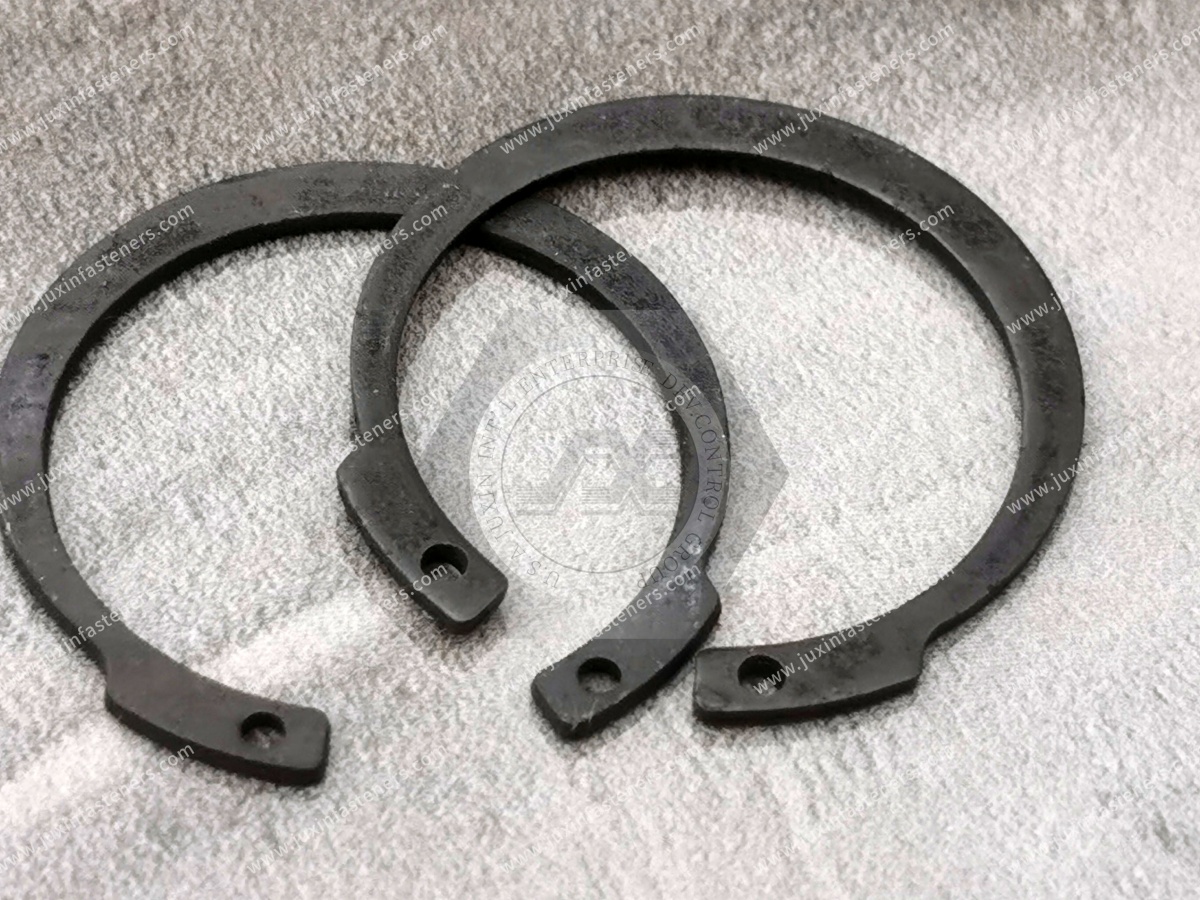
A retaining ring such as a DIN 471 external retaining ring is installed into a groove machined into the shaft.
The groove creates a positive axial retention feature.
A clamp-style shaft collar normally grips an ungrooved shaft through clamping action.
Therefore:
Retaining Ring → Groove Required
Clamp Shaft Collar → Clamp Around Shaft
DIN 471:2026-05 specifically covers retaining rings for shafts and their use in securing components such as rolling bearings while transmitting axial forces.
It is a separate fastening architecture from a clamp-style collar. (dinmedia)
This distinction matters during sourcing because replacing one architecture with the other can change:
shaft machining;
axial load path;
installation procedure;
serviceability;
adjustment;
and available axial space.
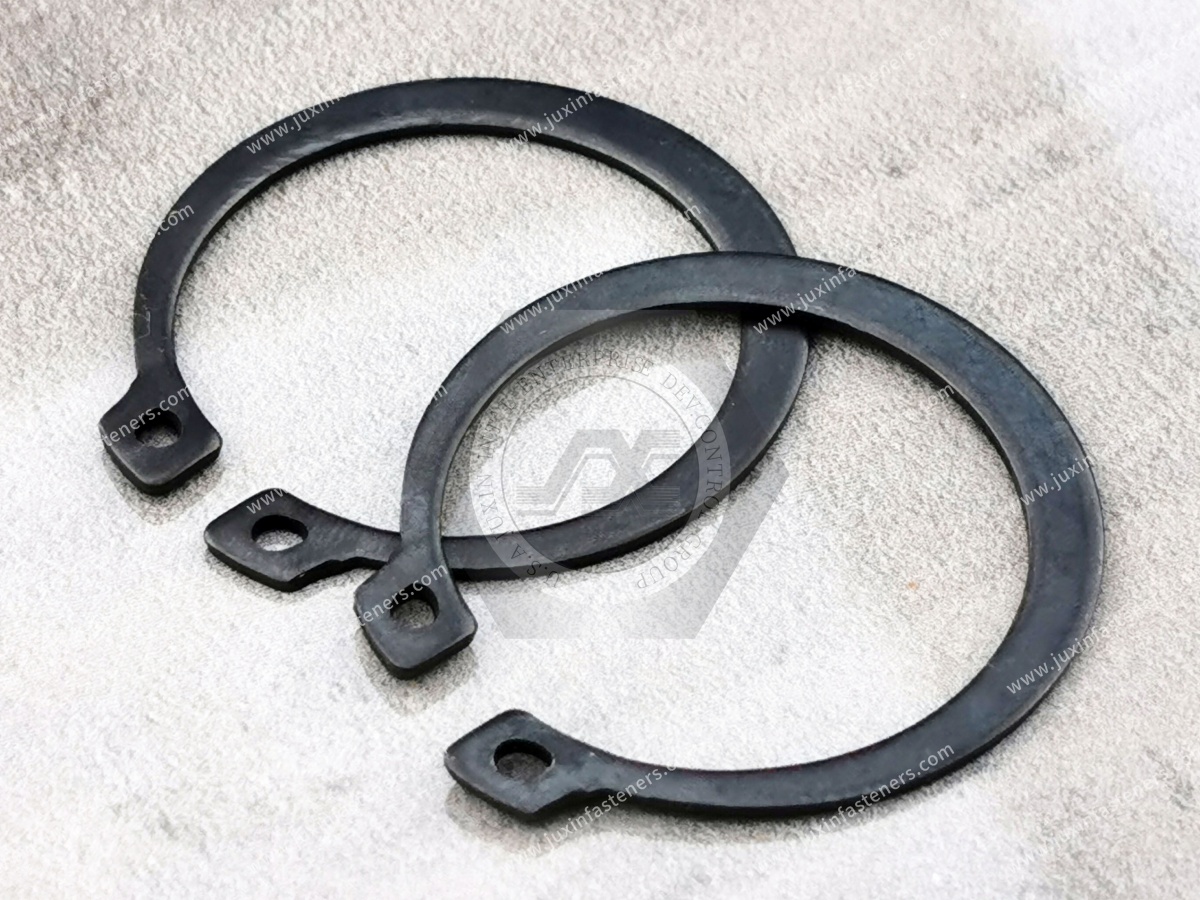
The fundamental load path is different.
For a grooved retaining ring:
Component → Retaining Ring → Shaft Groove → Shaft
For a smooth-bore clamp-style collar:
Component → Collar → Frictional Collar-to-Shaft Interface → Shaft
This leads to an important engineering rule:
Shaft Collar Holding Capacity ≠ Retaining Ring Groove Capacity
A clamp collar's axial holding capability depends on the complete clamping interface.
Relevant variables can include:
collar geometry;
clamp screw;
screw tightening condition;
shaft diameter;
shaft material;
collar material;
bore fit;
shaft surface condition;
friction;
lubrication or contamination;
axial load;
and shock loading.
No universal axial holding value should be assigned to all clamp-style shaft collars.
A one-piece clamp shaft collar normally has a single split in the collar body.
Tightening the clamp screw closes the split and creates clamping pressure around the shaft.
Potential advantages include:
relatively simple construction;
adjustable axial positioning;
installation without a shaft groove;
easier repositioning than many permanent retention methods;
and less localized shaft indentation than a conventional set-screw collar when properly selected and installed.
One-piece collars are commonly used where the collar can be slid onto the shaft from an accessible end.
However, installation access should be considered before choosing this design.
A two-piece clamp shaft collar consists of two mating collar halves tightened around the shaft.
Its most important practical advantage is installation architecture.
A two-piece collar can often be assembled around a shaft without sliding the collar over the shaft end.
This can be useful when:
the shaft end is inaccessible;
bearings are already installed;
gears or pulleys block axial installation;
the machine is being serviced;
or disassembly of surrounding equipment would be costly.
Therefore, the choice between one-piece and two-piece designs is not simply a strength comparison.
A useful question is:
Can the collar be installed from the shaft end, or must it be installed radially around an existing shaft?
For many applications, selection can begin with the following logic.
Choose a one-piece clamp collar when:
shaft-end installation is available;
compact construction is preferred;
adjustment is required;
and the design provides sufficient holding capability.
Consider a two-piece clamp collar when:
shaft-end access is unavailable;
the collar must be installed around an assembled shaft;
maintenance accessibility is important;
or removal without disturbing adjacent components is valuable.
Actual holding performance still depends on the specific design and operating conditions.
A set-screw shaft collar uses a screw that directly contacts the shaft.
This creates a highly localized contact point.
A clamp-style collar instead tightens around the shaft circumference.
That difference can matter where shaft surface condition and repositioning are important.
Set-screw collars may create:
indentation;
raised material;
localized shaft damage;
or a fixed witness mark.
Clamp-style collars can reduce direct point damage because the clamping force is distributed through the collar body rather than applied through one screw tip.
However:
Clamp Collar ≠ Automatically Non-Marring Under Every Condition
Shaft material, bore fit, clamping force, contamination and repeated movement still matter.
A smooth-bore clamp collar depends on friction between the collar bore and the shaft.
The shaft surface therefore becomes part of the retention system.
Factors can include:
surface roughness;
plating;
oil;
grease;
contamination;
corrosion;
hardness;
and wear.
For example, a collar tested on a clean dry shaft may not provide identical axial holding behavior on an oily shaft.
Therefore, supplier load data should only be applied when the relevant test conditions are understood.
The bore is not merely a clearance hole.
Bore size and tolerance influence:
assembly;
concentricity;
clamp travel;
contact;
and holding behavior.
If the bore is excessively large relative to the shaft, tightening may create undesirable distortion or insufficient interface control.
If the fit is too tight, installation and adjustment can become difficult.
For a custom shaft collar, the RFQ should therefore include:
nominal shaft diameter;
shaft tolerance;
required collar bore;
and any concentricity or runout requirements relevant to the assembly.
The clamp screw generates the force that closes the collar around the shaft.
Important variables can include:
screw size;
thread;
screw material;
property class where applicable;
head style;
available wrench access;
tightening torque;
lubrication;
and repeated service.
Changing the screw can change collar performance.
Therefore:
Same Collar Body + Different Clamp Screw ≠ Automatically Same Holding Performance
For second-source projects, clamp screw details should be treated as functional information.
There is no universal tightening torque for a clamp-style shaft collar.
The correct value depends on:
screw diameter;
thread;
screw material;
collar material;
lubrication;
coating;
thread engagement;
and collar design.
A supplier should not recommend a generic torque based only on shaft diameter.
If tightening torque is critical, it should be defined and validated for the actual collar assembly.
These functions should not be confused.
A collar may be used to resist axial movement along a shaft.
That does not automatically mean it is suitable for transmitting substantial rotational torque between a shaft and another component.
The engineering questions are different:
Axial Holding → Resistance to Sliding Along Shaft Axis
Torque Transmission → Resistance to Relative Rotation Around Shaft Axis
If the collar must transmit torque, that requirement should be explicitly stated.
Do not infer torque capacity from axial holding capability.
Clamp-style shaft collars are commonly considered as adjustable mechanical stops.
Potential applications include:
linear motion systems;
actuator travel limits;
conveyor shafts;
rollers;
guide shafts;
machine adjustments;
and fixture systems.
But a mechanical stop can experience impact.
Therefore, engineers should distinguish between:
static axial holding;
slowly applied axial load;
repeated stop impact;
and shock loading.
A collar that holds a static component may behave differently under repeated impact.
Clamp-style shaft collars can be used in some assemblies to establish or support the axial position of a bearing.
Potential functions may include:
locating a bearing inner ring;
establishing an assembly position;
providing an adjustable axial reference;
or supporting preload adjustment in an appropriate design.
However:
Shaft Collar ≠ Bearing Fit
and
Shaft Collar ≠ Automatic Bearing Preload Solution
Bearing preload depends on the complete bearing arrangement, including:
bearing type;
shaft fit;
housing fit;
shoulder geometry;
spacer system;
temperature;
required preload;
and operating speed.
If the collar contacts a bearing face, face geometry and runout may become critical.
When a shaft collar bears against a precision component such as a bearing inner ring, the collar face becomes a functional interface.
Engineers may need to consider:
face flatness;
face runout relative to the bore;
contact area;
edge clearance;
chamfers;
and surface finish.
A standard general-purpose collar should not automatically be treated as a precision bearing locknut or bearing-preload component.
Some applications use a collar with a threaded bore.
Instead of relying entirely on smooth-bore friction for axial positioning, the collar engages a threaded shaft.
This can be useful where the application requires:
fine axial adjustment;
positioning along a threaded shaft;
or a more positive axial relationship.
A clamp feature can then secure the threaded collar after adjustment.
Threaded clamp collars are particularly relevant where controlled axial positioning or preload adjustment is required.
Industry technical guidance also distinguishes their load path from smooth-bore collars, which rely primarily on friction. (Ruland)
A threaded shaft collar and a precision bearing locknut may look related, but they should not automatically be treated as equivalent.
Bearing locknuts can require tighter control of:
thread relationship;
face runout;
bearing contact;
preload adjustment;
and locking method.
If the application involves precision bearing preload, specify that requirement explicitly.
Clamp-style shaft collars may be used to position shaft-mounted components such as:
gears;
timing pulleys;
sprockets;
rollers;
and spacers.
The collar may act as an axial locator adjacent to the component.
However, the collar does not automatically transmit the component's operating torque.
For example, a pulley may still require:
key;
spline;
clamping hub;
interference fit;
or another torque-transmission feature.
The collar and torque-transmission architecture should be evaluated separately.
A spacer establishes distance between components.
A shaft collar establishes or supports a position by clamping or otherwise fixing itself to the shaft.
In some assemblies, a collar can function as an adjustable spacer reference.
But the two components should not automatically be treated as interchangeable.
The selection depends on whether the position must be:
fixed by geometry;
adjustable;
removable;
or retained against axial load.
DIN 471 retaining rings and clamp-style shaft collars solve related but different assembly problems.
Requires a shaft groove.
Advantages can include:
compact axial retention;
defined groove-based load path;
standardized geometry;
and no clamp screw.
The current DIN 471:2026-05 covers normal and heavy retaining rings for shafts and replaced DIN 471:2011-04. (dinmedia)
Typically does not require a retaining-ring groove.
Potential advantages include:
adjustable positioning;
repositioning;
custom axial location;
and service-friendly installation depending on design.
The decision should therefore begin with the shaft architecture.
A groove-based retaining ring may be preferable when:
the shaft can be machined with the required groove;
compact axial retention is required;
adjustment is unnecessary;
and the standardized retaining-ring architecture suits the load.
A clamp-style collar may be preferable when:
the shaft position must remain adjustable;
a groove is undesirable;
the component may need repositioning;
maintenance access matters;
or the design requires a removable axial stop.
Neither architecture is universally superior.
Some applications use collars on both sides of a component.
Examples may include:
rollers;
bearings;
spacers;
guides;
or adjustable components.
However, using two collars creates a tolerance and assembly question.
Engineers should consider:
axial clearance;
thermal expansion;
bearing requirements;
component movement;
and whether the component should be fully constrained.
Over-constraining a rotating or thermally expanding assembly can create unintended loads.
Common shaft collar material families can include appropriate:
carbon steel;
stainless steel;
aluminum;
and other engineered materials depending on the application.
Material selection should consider:
required holding behavior;
shaft material;
corrosion;
mass;
wear;
temperature;
thread strength;
and environment.
A lightweight aluminum collar and a steel collar of similar dimensions should not automatically be assumed to provide identical performance.
Stainless steel may be considered where corrosion resistance is important.
Potential applications include:
food-service equipment;
laboratory equipment;
medical equipment;
humid environments;
and selected outdoor machinery.
However:
Stainless Steel ≠ Corrosion-Proof
Grade, chloride exposure, temperature, surface condition and cleaning chemicals still matter.
For steel collars, potential finishes may include appropriate:
trivalent zinc;
zinc-nickel;
black zinc;
black oxide;
phosphate/oil;
or other customer-specified systems.
Stainless components may use passivation where appropriate.
Finish selection should consider:
corrosion environment;
bore dimensions;
thread friction;
clamp screw torque;
shaft interface;
appearance;
and restricted-substance requirements.
Hexavalent chromium should not be specified.
For a precision shaft collar, coating is not only a corrosion issue.
Coating on the bore can affect:
effective bore diameter;
fit;
assembly;
and friction.
For tight-tolerance applications, engineers should clarify:
whether the bore is coated;
whether masking is required;
and whether final bore dimensions apply before or after finishing.
This becomes particularly important in second-source qualification.
Clamp-style shaft collars are widely applicable to industrial machinery where shafts carry:
gears;
pulleys;
sprockets;
rollers;
bearings;
sensors;
and mechanical stops.
Potential applications include:
production machinery;
material-handling systems;
machine tools;
processing equipment;
and serviceable mechanical assemblies.
Automation equipment frequently requires adjustable component positioning.
Potential applications include:
robot peripheral equipment;
linear guide systems;
actuators;
sensor positioning;
conveyor systems;
fixtures;
grippers;
and automated assembly equipment.
Two-piece collars can be especially useful where equipment has already been assembled and shaft-end access is limited.
Conveyors contain numerous rotating shafts and rollers.
Shaft collars may be used to:
locate rollers;
position sprockets;
establish pulley positions;
retain spacers;
or create mechanical stops.
Shock and repeated operating loads should be considered separately from static holding.
Packaging machinery frequently requires:
rapid adjustment;
format changes;
sensor positioning;
guide adjustment;
roller positioning;
and removable machine components.
Clamp-style collars can be useful where axial position needs to be changed without machining new shaft grooves.
For washdown or food-related packaging equipment, material and finish requirements should be reviewed separately.
Machine tools can use shaft collars in:
positioning systems;
mechanical stops;
drive assemblies;
accessory shafts;
fixtures;
and maintenance systems.
Precision applications may require tighter control of:
bore;
face runout;
concentricity;
and shaft fit.
Clamp-style shaft collars may be used in automotive and EV production equipment such as:
automation lines;
fixtures;
conveyors;
robotics;
tooling;
inspection equipment;
and material-handling systems.
A generic shaft collar should not automatically be represented as an automotive safety-critical vehicle component.
Vehicle applications require program-specific validation.
Semiconductor manufacturing equipment contains:
precision automation;
positioning systems;
actuators;
handling equipment;
fixtures;
and serviceable mechanisms.
Potential shaft-collar applications may require special attention to:
cleanliness;
particles;
lubricant restrictions;
corrosion;
precision;
and material selection.
A standard industrial collar should not automatically be described as cleanroom- or vacuum-qualified.
Potential applications can include:
motor assemblies;
actuators;
mechanical drives;
cooling equipment;
adjustment mechanisms;
and equipment manufacturing systems.
A shaft collar should not automatically be treated as an electrical grounding or bonding component.
Clamp-style shaft collars are not generic server fasteners.
Relevant applications are more likely in supporting mechanical equipment such as:
cooling systems;
pumps;
fans;
actuators;
CDU equipment;
maintenance equipment;
and automated infrastructure.
The product should be connected to the actual shaft-positioning function rather than merely to the industry name.
Cooling Distribution Units and associated mechanical systems may contain:
pumps;
motors;
actuators;
valves;
fan systems;
and serviceable rotating equipment.
Shaft collars may be appropriate where rotating or linear components require controlled axial positioning.
They should not automatically be described as pressure-retaining or sealing components.
HVAC equipment contains:
fans;
blowers;
dampers;
actuators;
motors;
pumps;
and drive systems.
Clamp-style collars may provide adjustable shaft positioning in suitable mechanical assemblies.
Operating speed, vibration, corrosion and maintenance access should be considered.
Commercial food-service equipment contains many mechanical systems, including:
conveyor mechanisms;
dispensing systems;
refrigeration equipment;
mixers;
motors;
pumps;
rollers;
adjustment mechanisms;
and serviceable drive systems.
Clamp-style shaft collars may be useful where components require adjustable positioning on shafts.
Material and finish selection should consider:
moisture;
cleaning chemicals;
washdown exposure;
food-contact boundaries;
corrosion;
and service frequency.
A standard shaft collar should not automatically be described as food-contact compliant, hygienic-design certified or washdown-rated.
Potential non-implant applications may include:
laboratory automation;
diagnostic machinery;
sample-handling equipment;
adjustment systems;
carts;
and mechanical actuators.
Precision, corrosion and cleaning requirements should be specified by the customer.
A shaft collar itself does not establish medical-device certification or biocompatibility.
Precision instruments may require small shaft collars for:
axial stops;
encoder positioning;
sensor mounting;
adjustment mechanisms;
and controlled component location.
For these applications, bore tolerance and face geometry can be more important than maximum holding force.
Shaft collars may appear in:
equipment mechanisms;
actuators;
conveyors;
service equipment;
adjustment systems;
and manufacturing machinery.
Shock, contamination and corrosion should be considered.
A general-purpose clamp collar should not automatically be treated as a structural safety component.
Potential applications include suitable:
maintenance equipment;
actuators;
mechanical systems;
service mechanisms;
and manufacturing equipment.
Rail-specific vibration, fatigue, fire and safety requirements remain separate qualification issues.
Potential applications may include:
tooling;
ground-support equipment;
test fixtures;
laboratory systems;
automation;
and non-flight-critical mechanical equipment
where program requirements permit.
Generic industrial shaft collars should not be represented as flight-qualified without the required evidence.
The installation architecture and load path are different.
Bore fit, load, shaft surface and access also matter.
Oil, coating and roughness can influence friction-based holding.
These are separate requirements.
A one-piece collar may not be installable when the shaft end is blocked.
Torque depends on the actual screw, material, lubrication and collar geometry.
Static axial holding does not automatically predict repeated impact performance.
Precision bearing preload may require different geometry and tolerances.
Finish thickness can alter effective fit.
Small differences in bore, split geometry, screw and material can affect performance.
For replacement and second-source projects, JUXIN FASTENERS distinguishes among different sourcing objectives.
Critical dimensions and interfaces match the approved drawing.
Some non-critical dimensions may differ while the collar provides the required fit, positioning and assembly function after customer validation.
One or more features are intentionally changed, such as:
bore;
outside diameter;
width;
screw;
material;
or finish.
A new shaft collar is developed around the actual:
Shaft + Load + Position + Access + Environment
requirements.
Functional equivalence should not be assumed from appearance alone.
When the original drawing is unavailable, a physical sample can support development.
A practical workflow is:
Physical Sample → Dimensional Review → Functional Review → Critical Feature Identification → Material / Finish Information Review → Shaft Interface Confirmation → Drawing Confirmation → Manufacturing Feasibility → Prototype / Sample Development → Customer Validation → Production
A sample can help establish:
bore;
outside diameter;
width;
split geometry;
screw size;
visible finish;
and component interfaces.
But a physical sample alone may not reveal:
exact alloy chemistry;
heat treatment;
original screw torque;
required axial holding force;
original coating chemistry;
shock-load requirement;
or intended safety factor.
Application information should therefore be provided wherever possible.
Engineers may search:
clamp-style shaft collar;
one-piece vs two-piece shaft collar;
shaft collar vs retaining ring;
shaft collar axial holding force;
clamp collar vs set screw collar;
bearing shaft collar;
shaft positioning collar;
shaft collar bore tolerance.
Their main question is:
Which shaft-retention architecture fits the mechanical system?
Procurement and supplier-development teams may search:
shaft collar manufacturer;
custom shaft collar supplier;
clamp shaft collar manufacturer;
custom bore shaft collar;
stainless shaft collar supplier;
shaft collar from drawing;
shaft collar from sample;
shaft collar second source.
Their main question is:
Can another supplier reproduce the critical geometry and function reliably?
A strong B2B sourcing page should connect both search journeys.
For an efficient engineering review, provide as much of the following information as possible.
nominal shaft diameter;
shaft tolerance;
shaft material;
hardness where relevant;
surface finish;
coating;
lubrication condition.
bore diameter and tolerance;
outside diameter;
width;
one-piece or two-piece;
split geometry;
face requirements;
chamfers;
custom features.
screw size;
thread;
screw material;
head style;
tightening torque where controlled;
wrench-access limitations.
axial holding requirement;
static or dynamic loading;
shock loading;
torque-transmission requirement if any;
mechanical-stop function;
bearing-contact function;
adjustment requirement.
operating temperature;
corrosion exposure;
humidity;
chemicals;
washdown;
contamination restrictions.
collar material;
clamp-screw material;
surface finish;
corrosion requirement;
restricted-substance requirement.
sample quantity;
pilot quantity;
production quantity;
estimated annual usage;
packaging;
traceability requirements where specified;
target schedule;
and long-term supply requirement.
For OEM and second-source programs, procurement teams should evaluate capabilities such as:
drawing review;
bore and interface control;
machining feasibility;
material control;
thread inspection;
dimensional inspection;
finish control;
sample development;
high-volume production capability;
packaging;
change communication;
and long-term supply support.
Where axial holding or other mechanical performance is critical, the requirement and validation method should be defined by the customer or agreed during engineering review.
For suitable high-volume components, automatic optical sorting may be applicable to compatible externally measurable characteristics.
Optical sorting does not replace axial holding, torque, shock or complete assembly validation.
JUXIN FASTENERS supports OEM and custom industrial fastener and engineered component projects for equipment manufacturers, engineering teams, procurement organizations and global supply chains.
Clamp-style shaft collar projects can be reviewed from:
customer 2D drawings;
3D models where applicable;
physical samples;
shaft dimensions;
required bore;
custom geometry;
material requirements;
surface finishes;
application information;
and production quantities.
Custom projects may include suitable variations in:
bore;
outside diameter;
width;
one-piece or split architecture;
screw configuration;
material;
finish;
and application-specific geometry
where manufacturing feasibility permits.
Prototype or sample evaluation can be used before volume production so the customer can validate:
shaft fit;
installation;
positioning;
clamp-screw access;
component interface;
adjustment;
and required mechanical function.
A practical selection path is:
What component must be positioned on the shaft?
→ Does the design need a fixed groove-based stop or an adjustable collar?
→ If groove-based, should a retaining ring such as DIN 471 be evaluated?
→ If adjustable, is a clamp-style shaft collar appropriate?
→ Can the collar slide over the shaft end?
→ If not, is a two-piece collar required?
→ What is the shaft diameter and tolerance?
→ What is the shaft surface condition?
→ What axial load must the collar resist?
→ Are shock loads present?
→ Does the collar also need to transmit torque?
→ Does it contact a bearing or another precision component?
→ What clamp-screw access is available?
→ What material and finish are required?
→ Is the project an exact replacement, functional equivalent or custom design?
→ How will samples be validated in the actual assembly?
→ What production quantity and long-term supply requirements apply?
This changes the sourcing question from:
“Do you have this clamping retaining ring?”
to:
“What shaft-positioning architecture, bore fit and clamping design are required to retain this component under the actual axial load, shaft condition and service environment?”
That is a much clearer question for mechanical engineers, design engineers, procurement managers and supplier-development teams.
For clamp-style shaft collars, one-piece shaft collars, two-piece shaft collars, threaded collars, custom shaft-positioning components,
drawing-based parts, physical-sample development or second-source programs, send your available drawing, sample, shaft information, application, material, finish and quantity to:
JUXIN FASTENERS can review the available information and evaluate an appropriate sample-development and manufacturing path for your application.
 MORE NEWS
Sep. 27, 2026
Sep. 27, 2026
Sep. 27, 2026
Contact Us
Tel.:
+86 020 8621 0320
+86 020 3121 6067
E-mail:
Technical Support:
Navigation
SEND INQUIREY