Call Us
+86 136 6007 9809
Call Us
+86 136 6007 9809

Nov. 08, 2023
When an OEM assembly requires a reusable internal thread in thin sheet, tubing, hollow sections, or enclosed structures,
a closed-end rivet nut can provide blind-side installation while eliminating the open passage through the bottom of a conventional open-end threaded insert.
Also called a closed-end blind rivet nut, sealed rivet nut, closed-end nutsert, or sealing blind threaded insert, this fastener uses a closed metal bottom below the internal thread.
That feature can be valuable in equipment exposed to:
water and moisture;
dust;
dirt and debris;
oils or process contaminants;
outdoor environments;
sensitive internal equipment.
However, one engineering distinction is critical:
Closed-End Rivet Nut ≠ Automatically Waterproof Joint
The closed bottom removes one potential leakage path, but the interface between the rivet nut flange and the parent panel remains a separate sealing interface.
For this reason, engineers should evaluate a closed-end rivet nut as part of the complete fastening and sealing system.
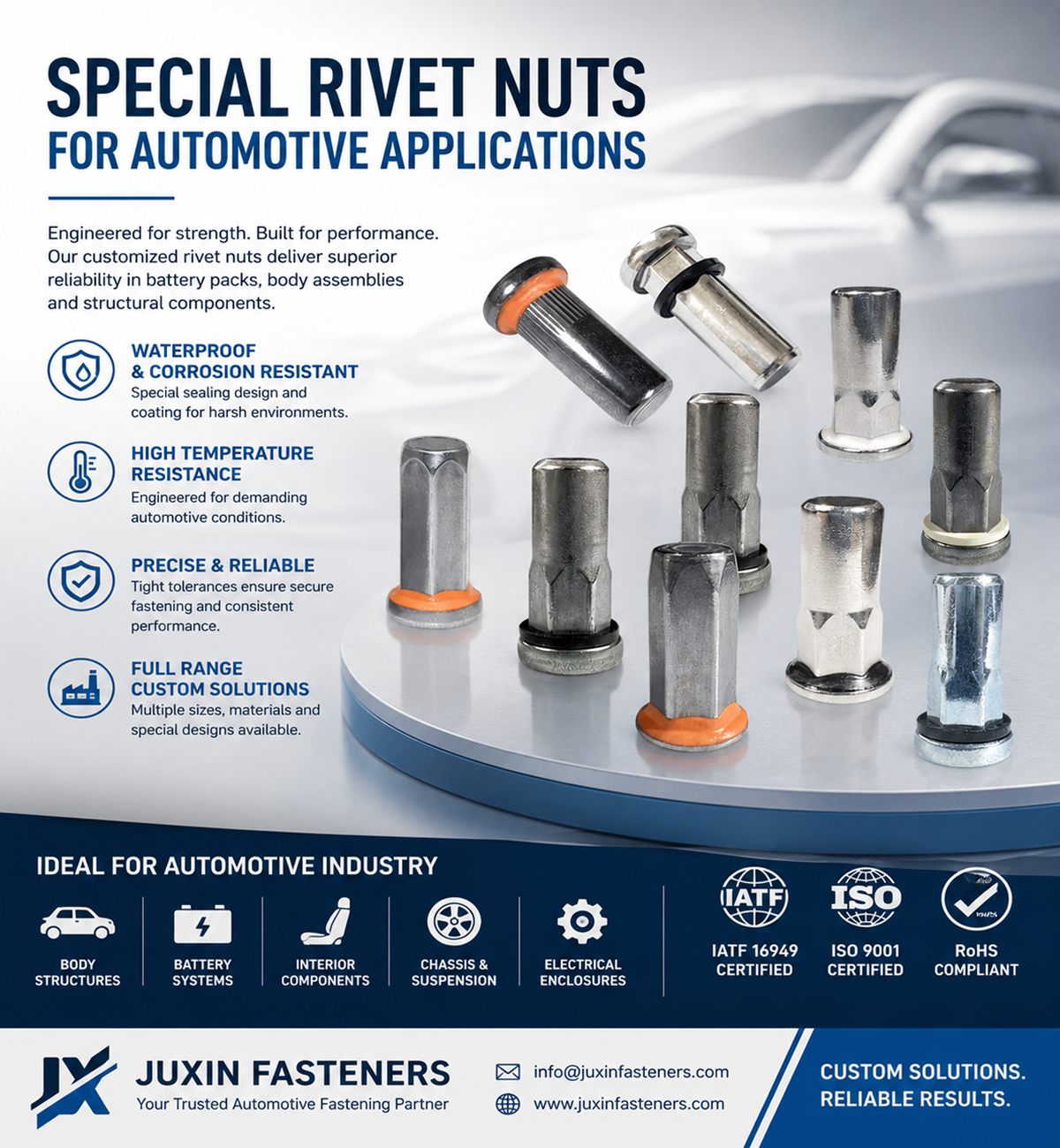
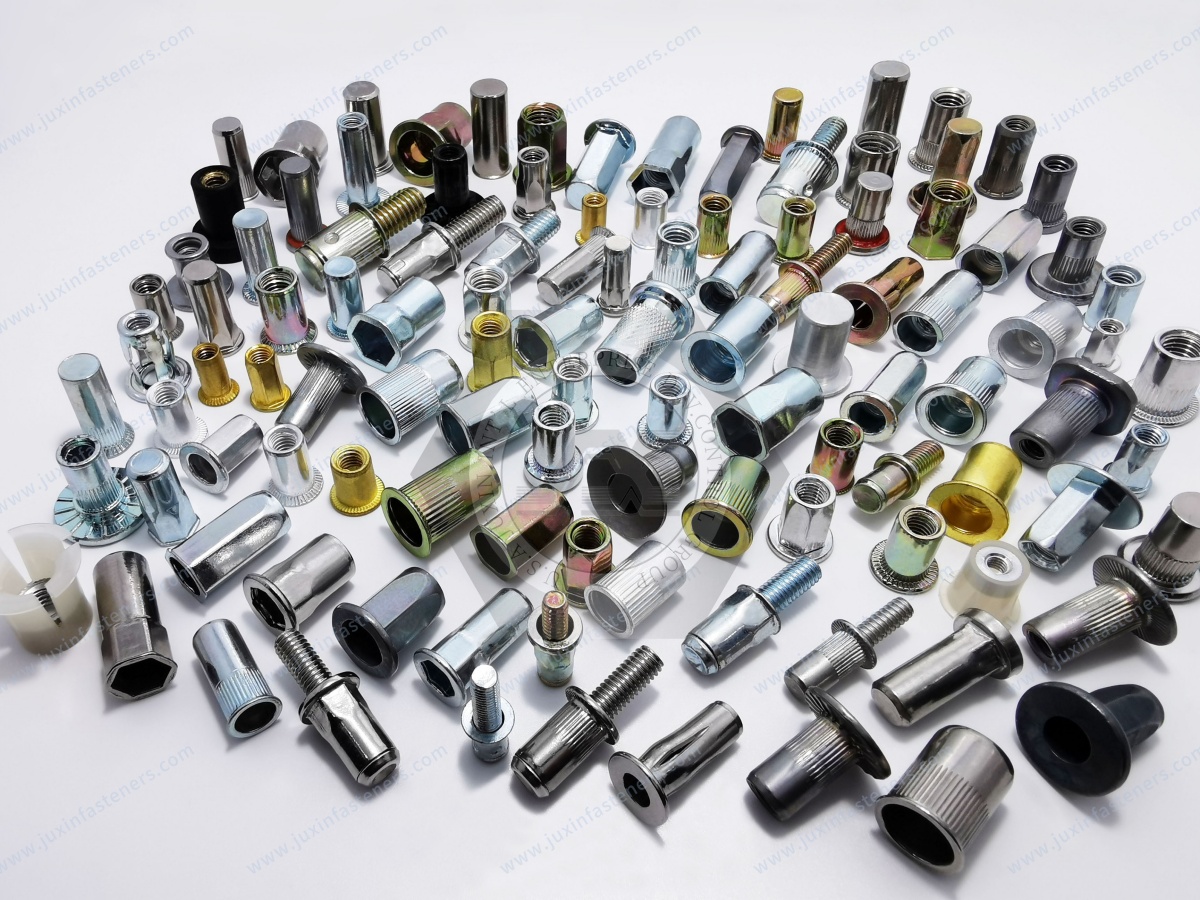
JUXIN FASTENERS supplies steel, stainless steel and aluminum closed-end rivet nuts, including round, knurled, hex-body, low-profile and project-specific configurations for global OEM applications.
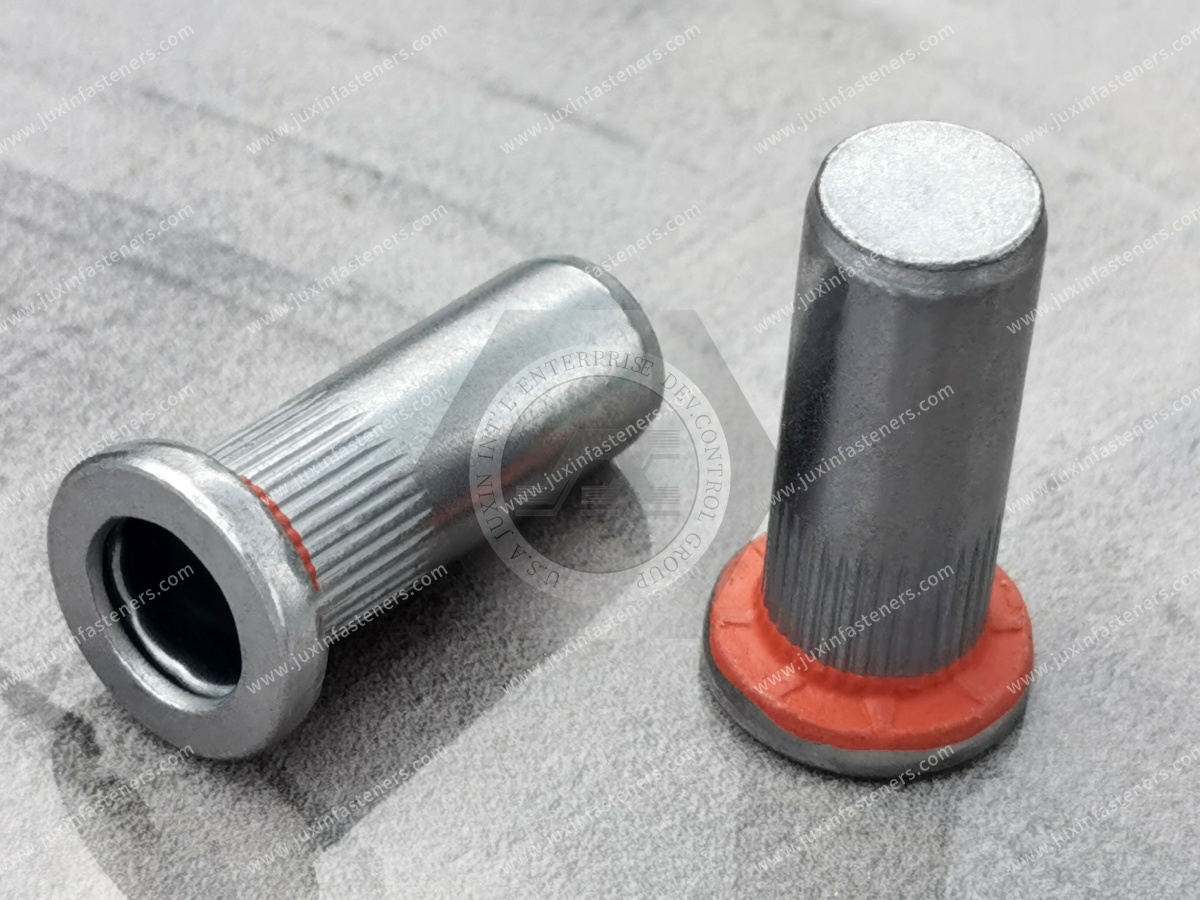
A closed-end rivet nut is an internally threaded blind fastener with a closed bottom at the end of its body.
It is installed into a prepared hole from one accessible side.
During setting, a controlled section of the body deforms behind the parent material, creating mechanical retention while leaving a reusable internal machine thread at the accessible side.
The closed-end construction differs from an open-end rivet nut because the internal threaded passage does not continue completely through the bottom of the insert.
This can help prevent direct passage of contaminants through the threaded bore.
The product therefore performs two different functions:
Blind Rivet Nut Function → Creates a reusable thread in thin material
Closed-End Function → Eliminates the open path through the bottom of the insert
These functions should be separated from the sealing performance of the complete assembly.
The primary structural difference is the bottom of the insert.
| Engineering Factor | Closed-End Rivet Nut | Open-End Rivet Nut |
|---|---|---|
| Bottom of insert | Closed | Open |
| Bolt extension through bottom | Restricted by closed end | Possible where geometry permits |
| Direct passage through threaded bore | Blocked at bottom | Open |
| Blind-side contamination barrier | Improved | Limited |
| Bolt-length flexibility | More restricted | Greater |
| Overall body length | Can be greater depending on design | Product-dependent |
| Complete joint automatically waterproof | No | No |
Open-end rivet nuts are highly suitable for many general industrial assemblies.
Closed-end designs become useful when eliminating the open threaded path provides functional value.
This is the most important selection issue for this product family.
Consider the possible paths around an installed rivet nut.
A closed bottom can block:
Leakage Path A → Through the internal threaded bore and out the bottom
But it does not automatically block:
Leakage Path B → Between the rivet nut flange and panel surface
or potential leakage associated with:
Leakage Path C → Hole condition, panel deformation, surface irregularity, or sealing-interface defects
Therefore:
Closed Bottom ≠ Complete Environmental Seal
A watertight or ingress-resistant assembly may require additional design features and validation.
Where environmental sealing is required, engineers should evaluate the complete interface.
Relevant variables can include:
flange geometry;
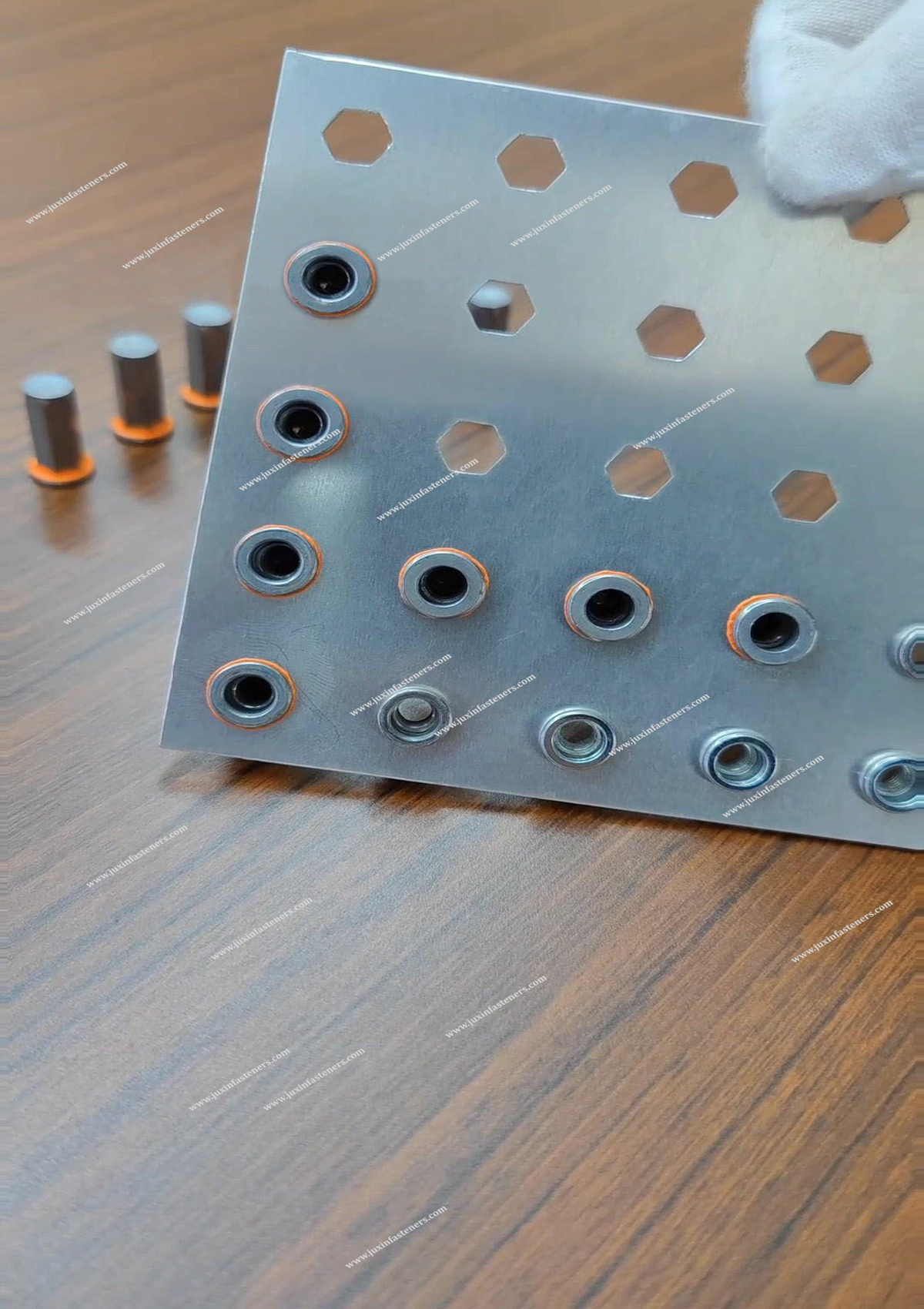
sealing element or under-head seal where applicable;
panel flatness;
hole dimensions;
surface finish;
coating;
setting condition;
seal compression;
operating temperature;
pressure differential;
chemical exposure;
environmental aging.
The correct solution is therefore application-specific.
A product described commercially as a waterproof rivet nut should still be evaluated against the actual assembly requirement.
These terms are sometimes used interchangeably, but technically they can describe different functions.
A closed-end rivet nut describes the metal-body configuration.
A sealed rivet nut may describe an assembly or product incorporating an additional sealing feature intended to control ingress around the panel interface.
A useful engineering distinction is:
Closed End → Controls passage through the bottom
Under-Flange / Interface Seal → Controls passage around the installation interface
For applications requiring environmental sealing, the designer may need both.
An ingress-protection requirement applies to the relevant enclosure or assembly—not simply to the loose rivet nut.
Therefore, installing a closed-end rivet nut does not by itself establish an IP rating.
Where equipment has a defined ingress-protection requirement, the installed fastening interface should be evaluated as part of the complete enclosure design and validation program.
This is particularly relevant to:
outdoor electrical cabinets;
EV battery enclosures;
industrial control equipment;
transportation equipment;
telecommunications enclosures.
The closed bottom creates another important design consideration: available internal depth.
With an open-end rivet nut, a sufficiently long bolt may extend beyond the threaded insert where assembly clearance permits.
A closed-end rivet nut limits that travel.
If the bolt is too long, it can bottom against the closed end before the joint reaches the intended clamp condition.
This can cause:
false torque indication;
incomplete clamping of the assembled parts;
damage to the insert;
damage to the bolt;
thread problems.
Therefore:
Bolt Length Must Be Checked Against Available Thread / Internal Depth
This is a practical difference between open-end and closed-end rivet nuts that should be reviewed during component substitution.
The closed bottom should not normally be treated as a positive stop for controlling bolt tightening.
Final assembly should be designed so that the bolt clamps the intended components correctly without relying on contact with the bottom of the rivet nut.
The joint should reach its intended clamp condition before the bolt bottoms inside the insert.
Closed-end construction does not change the fundamental grip-range requirement of a blind rivet nut.
The grip range defines the parent-material thickness range over which the rivet nut is designed to set correctly.
Selecting the wrong grip range can result in:
incomplete backside formation;
excessive deformation;
poor clamping;
reduced anti-rotation performance;
panel damage;
inconsistent sealing-interface compression.
For sealed applications, this becomes especially important because inconsistent setting can also affect the flange-to-panel interface.
A sealing element can only work correctly when the fastener is installed as intended.
Under-setting may produce:
insufficient mechanical retention;
inconsistent flange contact;
inadequate seal compression;
possible insert movement.
Over-setting may produce:
excessive panel deformation;
damaged sealing material;
thread distortion;
local surface irregularity.
Therefore:
More Setting Force ≠ Better Seal
The objective is controlled and repeatable installation.
The installation hole affects both mechanical performance and sealing behavior.
An oversized hole can contribute to:
reduced positioning accuracy;
lower rotational resistance;
increased interface area requiring sealing;
inconsistent installation.
An undersized hole can cause:
difficult insertion;
coating damage;
rivet nut deformation;
improper seating.
For environmentally exposed assemblies, the finished production hole should be considered—not only its nominal CAD dimension.
Coating buildup, burrs and manufacturing variation can affect the final interface.
Even a correctly designed sealing feature can perform poorly against an unsuitable surface.
Engineers should consider:
burrs;
scratches;
weld distortion;
coating thickness;
paint runs;
surface roughness;
panel curvature.
If the flange or sealing element cannot contact the panel consistently, environmental performance may become variable.
This is why sealing validation should use representative production panels whenever possible.
Closed-end geometry can be combined with different body designs.
Round-body versions use relatively simple round installation holes.
They can be appropriate where the required rotational resistance can be achieved with the selected body and installation system.
Knurling can increase interaction with the parent material and may improve rotational resistance in suitable applications.
Performance still depends on:
hole tolerance;
substrate;
grip range;
installation setting.
Hex-body versions engage a matching hexagonal hole and can provide strong geometric resistance to rotation.
They may be useful where the assembly requires:
Closed-End Protection + High Anti-Rotation
For broader anti-rotation design considerations, link internally to the JUXIN FASTENERS Hex Rivet Nut engineering article.
Closed-end rivet nuts can be produced in different head configurations depending on the product family.
These can include:
larger-flange designs;
standard heads;
small countersunk or reduced-profile heads;
application-specific configurations.
Head selection should consider:
available bearing area;
panel strength;
required surface projection;
sealing-interface design;
assembly clearance.
A smaller head reduces projection but also reduces available front-side bearing area.
For low-profile requirements, link to the JUXIN FASTENERS Small Countersunk Rivet Nut article.
Steel closed-end rivet nuts provide a useful combination of mechanical strength, manufacturing efficiency and cost.
Potential applications include:
automotive equipment;
industrial machinery;
fabricated sheet-metal assemblies;
electrical enclosures;
commercial equipment.
Possible surface treatments can include:
zinc plating;
zinc-nickel plating;
zinc-flake coating systems;
other project-specific finishes.
The finish should be selected according to the required corrosion performance and OEM specification.
Stainless steel can be useful where corrosion resistance is a major requirement.
Depending on product design and availability, materials can include:
304-type stainless steel;
316-type stainless steel.
Potential applications include:
outdoor equipment;
food-processing machinery;
chemical equipment;
marine-related environments;
transportation equipment;
high-humidity installations.
However, stainless steel may require greater setting capability than softer rivet nut materials.
Production tooling should therefore be reviewed before material substitution.
Aluminum closed-end rivet nuts may be considered where:
low weight matters;
lower setting force is beneficial;
service loads are compatible with the material.
Potential applications include:
transportation equipment;
lightweight structures;
electronic equipment;
aluminum assemblies.
Material compatibility, thread strength and service torque should still be evaluated.
Environmental protection involves more than choosing a corrosion-resistant rivet nut.
Where dissimilar metals are assembled in the presence of moisture or electrolytes, engineers should also consider material compatibility and the complete corrosion-control strategy.
The correct solution can depend on:
rivet nut material;
panel material;
coating system;
sealing;
environmental exposure.
For example, simply upgrading the rivet nut to stainless steel does not automatically optimize every joint if the surrounding panel and environment create other corrosion concerns.
Closed-end rivet nuts can be relevant where vehicle assemblies require blind threaded attachment combined with improved control of contamination or moisture paths.
Potential applications include:
body panels;
brackets;
interior structures;
electrical equipment;
equipment housings;
selected battery-system components.
Selection should be based on the actual environmental zone and OEM validation requirement.
Not every automotive rivet nut needs to be closed-end.
Battery enclosures make the distinction between closed-end and sealed assembly especially important.
A closed-end rivet nut can eliminate an open path through the bottom of the insert.
But battery-enclosure sealing can also depend on:
flange interface;
enclosure panel;
coatings;
sealing materials;
fastener setting;
bolt assembly;
surrounding joints.
Therefore, the rivet nut should be evaluated as one element of the enclosure sealing strategy.
Do not treat the fastener's closed bottom as proof of complete enclosure sealing performance.
Closed-end rivet nuts can be useful in:
control cabinets;
switchgear;
power-distribution equipment;
outdoor electronics;
industrial control enclosures;
telecommunications equipment.
The closed bottom can help reduce direct ingress through the threaded bore.
Where the enclosure has a defined environmental rating, however, the installed fastener interface should be validated as part of the enclosure system.
Potential applications include:
machine covers;
protective guards;
control panels;
equipment housings;
automation systems.
Closed-end designs may be useful where lubricants, cutting fluids, dirt or other contaminants should not pass directly through the threaded insert.
Chemical compatibility of any associated sealing material should be considered separately.
HVAC and refrigeration equipment can involve:
condensation;
outdoor exposure;
moisture;
temperature cycling.
Closed-end rivet nuts may be useful in suitable:
equipment housings;
service panels;
control boxes;
mounting structures.
For these applications, corrosion resistance and interface sealing may be equally important.
Potential applications include:
electrical cabinets;
interior equipment;
service panels;
equipment housings;
lighting assemblies;
transportation structures.
Project-specific requirements may include:
vibration;
corrosion;
traceability;
maintenance;
environmental protection;
fire and smoke requirements for associated non-metallic sealing components.
The applicable railway project specification should govern final selection.
Closed-end stainless steel rivet nuts may be considered for selected high-humidity or marine-related equipment.
However, the correct stainless grade, surrounding material, surface condition and exposure environment should all be evaluated.
The term stainless steel alone does not define the corrosion performance of the complete assembly.
Closed-end designs can be useful where designers want to avoid an open threaded passage into certain equipment zones.
Depending on the application, engineers may also need to consider:
cleanability;
corrosion resistance;
surface finish;
hygienic design requirements;
chemical cleaning exposure.
A closed-end rivet nut by itself should not be described as creating a hygienic joint unless the complete assembly has been designed and validated for that purpose.
The original decision should not be based only on sealing.
A weld nut can be appropriate where:
welding is already integrated into production;
the parent material is weldable;
the captive thread is installed before coating or finishing;
the joint design supports the welding process.
A closed-end rivet nut can be advantageous where:
only one side is accessible;
welding is undesirable;
heat input must be avoided;
installation occurs after fabrication or finishing;
a closed threaded bottom provides functional value.
Neither technology is universally superior.
The correct decision depends on the manufacturing process and joint requirements.
Press-in threaded fasteners can provide excellent captive threads in appropriate sheet materials.
They generally require suitable panel access and parent-material characteristics for installation.
Closed-end rivet nuts become useful where:
blind-side installation is required;
the structure is already enclosed;
the insert must be installed from one accessible side.
The manufacturing sequence should therefore be considered before choosing the fastening technology.
A practical decision path is:
Ask:
Is the goal to block the open threaded path?
Is moisture protection required?
Is dust exclusion required?
Is there a formal ingress requirement?
Is contamination control the real objective?
This determines whether a simple closed-end design is sufficient or whether an additional sealing feature is needed.
Specify:
metric or inch;
nominal diameter;
pitch or TPI;
thread requirement.
Specify:
material;
finished thickness;
coating;
required grip range.
Choose according to anti-rotation requirements:
round;
knurled;
half-hex;
full-hex;
other application-specific designs.
Consider:
bearing area;
surface projection;
sealing element;
panel condition.
Confirm that the selected bolt cannot bottom prematurely inside the closed insert.
Consider:
water;
dust;
oils;
chemicals;
humidity;
temperature;
corrosion.
Confirm that the selected material and size can be installed consistently.
Where sealing matters, test the actual installed joint—not merely the loose rivet nut.
Depending on the application, the drawing or specification should define:
internal thread;
thread tolerance;
closed-end configuration;
available internal depth where critical;
body geometry;
body dimensions;
overall length;
head diameter;
head thickness;
grip range;
installation-hole dimensions;
material;
surface treatment;
sealing feature where required;
dimensional tolerances;
burr requirements;
inspection requirements;
applicable international or customer specification.
If environmental sealing is critical, define the required assembly performance rather than simply writing:
“Waterproof rivet nut.”
For efficient quotation and engineering review, provide:
drawing or existing part specification;
thread size and pitch/TPI;
grip range;
panel material;
finished panel thickness;
installation-hole dimensions;
head style;
body style;
open/closed-end requirement;
material;
surface treatment;
required internal depth;
bolt size and length where relevant;
environmental exposure;
sealing requirement;
application;
prototype quantity;
production quantity;
annual demand;
inspection requirements;
documentation requirements;
packaging requirements.
If the project has a defined ingress or leakage requirement, include that information with the RFQ.
Useful supplier-development questions include:
Is the bottom physically closed?
Is there an additional under-flange sealing feature?
What grip range is proposed?
What installation hole is required?
What body geometry provides rotational retention?
What is the usable internal thread / depth?
What installation equipment is recommended?
What material and coating are supplied?
What inspection documentation is available?
Can samples be tested in the customer's actual panel?
What sealing validation, if any, applies to the proposed configuration?
These questions are more useful than simply asking whether the product is “waterproof.”
A useful validation setup should reproduce:
Production Panel + Finished Hole + Coating + Closed-End Rivet Nut + Seal if Used + Installation Tool + Setting Parameters + Mating Bolt
Where sealing performance matters, also reproduce relevant:
bolt tightening condition;
temperature;
pressure or spray exposure;
fluid or contaminant;
aging conditions required by the project.
The validation should answer the actual engineering question:
Does the installed joint meet the project's environmental requirement?
not merely:
Is the rivet nut closed at the bottom?
A sealing interface is highly dependent on the surrounding structure.
Changing from one production panel to another can alter:
flange seating;
local deformation;
hole fit;
seal compression;
rotational retention.
Likewise, coating thickness can change the final interface.
For this reason, approval testing should use representative production conditions wherever practical.
Standard closed-end rivet nuts should be evaluated first when they satisfy the project.
Custom development may become appropriate where the OEM requires:
special internal depth;
special grip range;
unusual body length;
custom head geometry;
sealing feature;
special anti-rotation body;
non-standard thread;
special material;
special coating;
restricted installation envelope.
The custom feature should solve a defined engineering requirement.
This article should occupy the search entity:
Closed-End Rivet Nut → Environmental Protection / Closed Threaded Passage
Link upward to:
Blind Rivet Nut Selection Guide — Article 6
for overall rivet nut selection.
Link laterally to:
Hex Rivet Nuts — Article 7
for anti-rotation selection.
Small Countersunk Rivet Nuts — Article 8
for low-profile requirements.
Small Countersunk Hex Rivet Nuts — Article 9
for combined low-profile and anti-rotation requirements.
Future related pages can cover:
sealed rivet nuts with under-flange sealing features;
stainless steel rivet nuts;
large-flange rivet nuts;
knurled rivet nuts;
rivet nuts for plastics and composites;
EV battery enclosure fastening solutions.
Alternative technology links should include:
Weld Nuts;
Cage Nuts;
Threaded Inserts;
Industrial Nut Selection Guide.
The cluster search path becomes:
Blind Thread Requirement → Environmental Exposure → Closed-End Rivet Nut → Sealing Requirement → Body / Head / Material → Product → RFQ
This keeps Article 10 distinct from the general rivet nut selection pages.
JUXIN FASTENERS supports OEM customers sourcing:
closed-end rivet nuts;
closed-end blind rivet nuts;
sealed rivet nut configurations;
steel closed-end rivet nuts;
stainless steel closed-end rivet nuts;
aluminum closed-end rivet nuts;
knurled closed-end rivet nuts;
hex-body closed-end rivet nuts;
low-profile closed-end rivet nuts;
custom blind threaded inserts.
Project review can include:
drawing evaluation;
thread requirements;
internal depth;
grip range;
head geometry;
body configuration;
installation-hole requirements;
parent material;
material and coating;
environmental requirements;
sealing requirements;
sample requirements;
inspection requirements;
production quantity;
packaging;
repeat OEM supply.
If your project requires closed-end rivet nuts, sealed rivet nuts, waterproof rivnuts, closed-end nutserts,
stainless steel closed-end rivet nuts or custom blind threaded inserts, send JUXIN FASTENERS your drawing and application requirements for review.
For faster evaluation, provide:
Thread + Panel Material + Finished Thickness + Grip Range + Hole + Head Style + Body Style
+ Material + Surface Treatment + Bolt Length + Environmental / Sealing Requirement + Quantity
If your project specifically requires a watertight or ingress-resistant threaded attachment,
provide the required assembly performance or applicable project specification.
This allows the fastening solution to be evaluated around the real leakage requirement instead of assuming that a closed-bottom rivet nut alone guarantees a waterproof joint.
JUXIN FASTENERS
Website: www.juxinfasteners.com
Email: info@juxinfasteners.com
Contact Us
Tel.:
+86 020 8621 0320
+86 020 3121 6067
E-mail:
Technical Support:
Navigation
SEND INQUIREY