
Call Us
+86 136 6007 9809
Call Us
+86 136 6007 9809

Nov. 09, 2023
In sheet metal assembly, creating a reliable threaded connection can be challenging, especially when the material is too thin for tapping or when access is available from only one side.
Two common fastening solutions are blind rivet nuts and press rivet nuts (self-clinching nuts). Although both products provide internal threads for screw fastening, their installation methods, application conditions, and performance advantages are different.
JUXIN FASTENERS provides professional OEM rivet nut solutions, including blind rivet nuts, hex rivet nuts, countersunk rivet nuts, closed-end rivet nuts, and custom fastening components for automotive, industrial equipment, electronics, and sheet metal manufacturing applications.
Understanding the differences between rivet nuts and press rivet nuts helps engineers select the most reliable fastening method for their products.
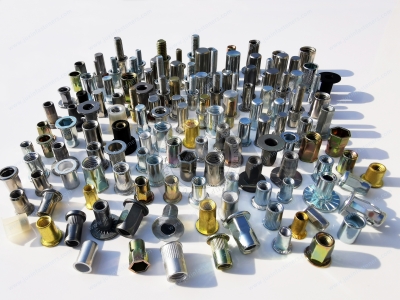
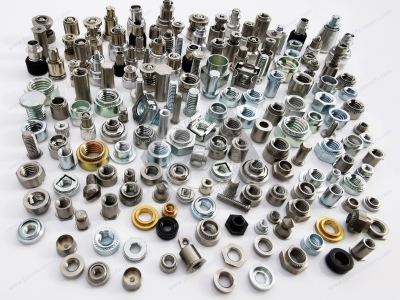
A blind rivet nut, also known as a threaded insert nut, rivnut, or blind nut, is a mechanical fastener designed to create a strong internal thread in thin sheet materials.
Unlike traditional nuts that require access from both sides, a blind rivet nut can be installed from one side only.
During installation, a special rivet nut tool pulls the threaded mandrel, causing the body of the rivet nut to expand behind the material. This creates a strong mechanical lock between the fastener and the sheet metal.
One-side installation
Suitable for thin sheet metal and hollow structures
No welding required
No heat damage to surrounding materials
Creates strong reusable threads
Suitable for maintenance and repeated assembly
Available in various materials and finishes
Blind rivet nuts are widely used as an alternative to welded nuts and tapped holes.
A press rivet nut, also called a self-clinching nut or clinch nut, is installed by pressing the nut into a pre-punched hole in sheet metal.
The special locking teeth or knurled features on the nut body penetrate into the sheet material. During pressing, the surrounding metal flows into the locking groove, creating a permanent mechanical connection.
Press rivet nuts require a suitable press machine or riveting equipment for installation.
Fast installation in high-volume production
Excellent resistance against rotation
Clean surface appearance
No additional welding process required
Ideal for automated sheet metal production
| Feature | Blind Rivet Nut | Press Rivet Nut |
|---|---|---|
| Installation Method | Installed with rivet nut tool | Installed by pressing equipment |
| Access Requirement | One-side installation | Requires access to pressing equipment |
| Application | Thin sheets, tubes, enclosed structures | Flat sheet metal production |
| Equipment | Manual, pneumatic, hydraulic rivet tools | Press machine required |
| Installation Flexibility | Excellent for complex structures | Best for mass production |
| Maintenance | Easy replacement and servicing | Permanent installation |
A blind rivet nut is recommended when installation conditions make press riveting unsuitable.
Typical situations include:
If the backside of the material cannot be reached, a blind rivet nut is the ideal solution.
Examples:
Closed profiles
Tubular structures
Equipment housings
Vehicle components
Finished assemblies
Press rivet equipment requires the workpiece to be positioned correctly.
However, many industrial components have:
Curved surfaces
Irregular shapes
Deep structures
Limited installation space
In these cases, blind rivet nuts provide greater installation flexibility.
Traditional welding nuts may cause:
Material deformation
Heat damage
Surface discoloration
Additional finishing requirements
Blind rivet nuts eliminate these problems because they are installed mechanically without heat.
For thin sheet metal, tapping threads directly may result in:
Weak thread engagement
Thread stripping
Reduced fastening strength
A rivet nut for sheet metal provides a stronger and more reliable threaded connection.
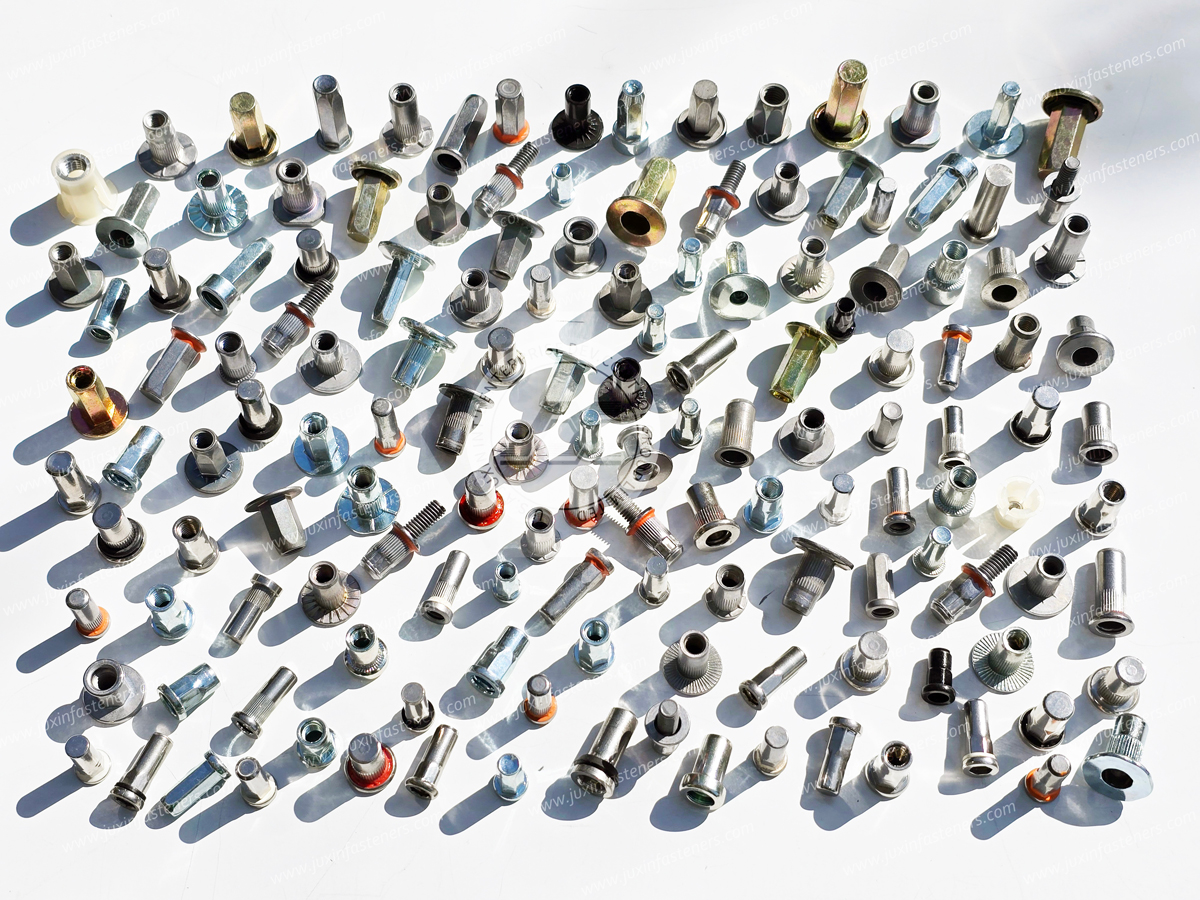
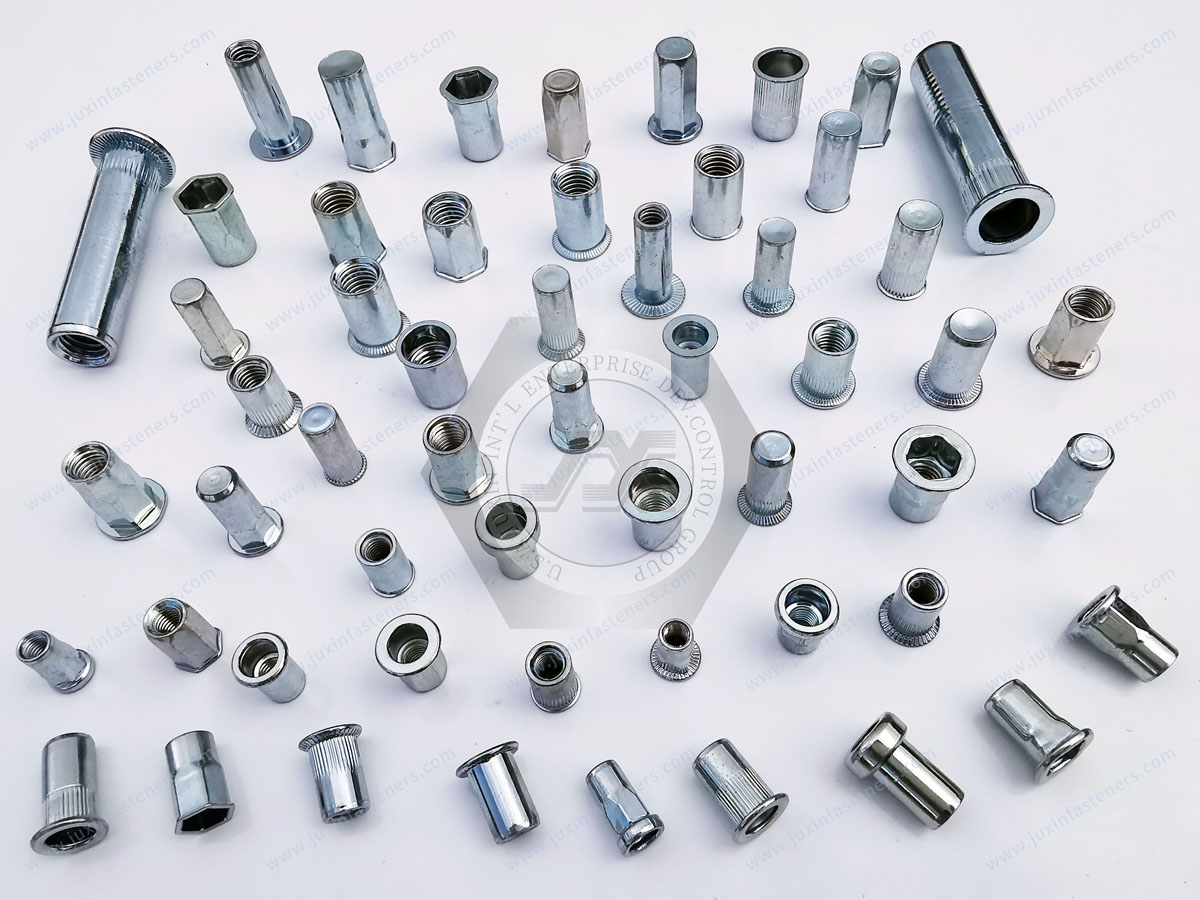
JUXIN FASTENERS manufactures various types of rivet nuts for different engineering requirements.
Flat head rivet nuts provide a larger bearing surface and excellent load distribution.
Common applications:
Automotive components
Industrial equipment
Sheet metal assemblies
Available materials:
Carbon steel
Zinc plated steel
Stainless Steel 304
Stainless Steel 316
Countersunk rivet nuts are designed for applications requiring a flush surface after installation.
Benefits:
Smooth appearance
Reduced interference
Suitable for finished surfaces
Applications:
Automotive interiors
Electronic housings
Precision equipment
Small countersunk rivet nuts are suitable for thin sheet materials where limited space is available.
They provide:
Compact installation
Reduced surface projection
Reliable threaded connection
Hex rivet nuts provide superior anti-rotation performance due to their hexagonal body design.
Advantages:
Higher torque resistance
Strong mechanical locking
Suitable for heavy-duty applications
Common sizes:
M3
M4
M5
M6
M8
M10
M12
JUXIN FASTENERS supplies custom blind rivet nuts in different materials to meet industrial requirements.
Suitable for:
General machinery
Industrial equipment
Automotive applications
Available finishes:
Zinc plating
Zinc nickel plating
Black oxide
Recommended for environments requiring corrosion resistance.
Materials:
Stainless Steel 304
Stainless Steel 316
Applications:
Marine equipment
Food processing machinery
Outdoor equipment
Medical devices
Lightweight and corrosion-resistant.
Applications:
Aerospace components
Transportation systems
Lightweight structures
Blind rivet nuts are widely used across many industries:
Applications include:
Interior panels
Battery systems
Vehicle brackets
Body structures
Used for:
Interior panels
Equipment mounting
Structural assemblies
Applications:
Control cabinets
Communication equipment
Electronic housings
Used for:
Metal panels
Equipment covers
Ventilation systems
Applications:
Decorative panels
Machine frames
Protective covers
Engineers should consider the following factors:
Select the correct rivet nut according to the sheet thickness range.
Consider whether access is available from both sides or only one side.
For high torque and vibration environments, hex rivet nuts may provide better performance.
Select suitable materials and surface treatments according to operating conditions.
JUXIN FASTENERS specializes in manufacturing OEM fastening solutions for global industrial customers.
Our product range includes:
Blind Rivet Nuts
Closed End Rivet Nuts
Hex Rivet Nuts
Countersunk Rivet Nuts
Threaded Inserts
Custom Screws and Nuts
We support customers with:
Engineering consultation
Custom dimensions
Material selection
Surface treatment solutions
Prototype development
Mass production
Whether you need standard rivet nuts or customized fastening components based on drawings, JUXIN FASTENERS provides reliable solutions for demanding industrial applications.
Looking for a reliable blind rivet nut manufacturer or custom rivet nut supplier?
Our engineering team can help you select the right fastening solution for your application.
Email: info@juxinfasteners.com
Website: www.juxinfasteners.com
JUXIN FASTENERS — Professional OEM Fastening Solutions for Global Manufacturing.
 MORE NEWS
Sep. 27, 2026
Sep. 27, 2026
Sep. 27, 2026
Contact Us
Tel.:
+86 020 8621 0320
+86 020 3121 6067
E-mail:
Technical Support:
Navigation
SEND INQUIREY