
Call Us
+86 136 6007 9809
Call Us
+86 136 6007 9809

Oct. 24, 2023
When an industrial threaded connection must prevent fluid or gas leakage, the first engineering question should not be:
“Which washer material should we buy?”
A better question is:
“What sealing mechanism is this joint designed to use?”
Bonded seals, solid copper or aluminum sealing washers, elastomer washers and O-rings can all appear in industrial fluid connections, but they do not create a seal in the same way.
Selecting between them requires understanding:
Joint Geometry + Fluid + Temperature + Pressure + Mating Surface + Material + Compression + Installation + Validation
This guide compares the major sealing approaches used around industrial fittings,
plugs, ports and fastened interfaces and explains how engineers and procurement teams can select and source the correct component.
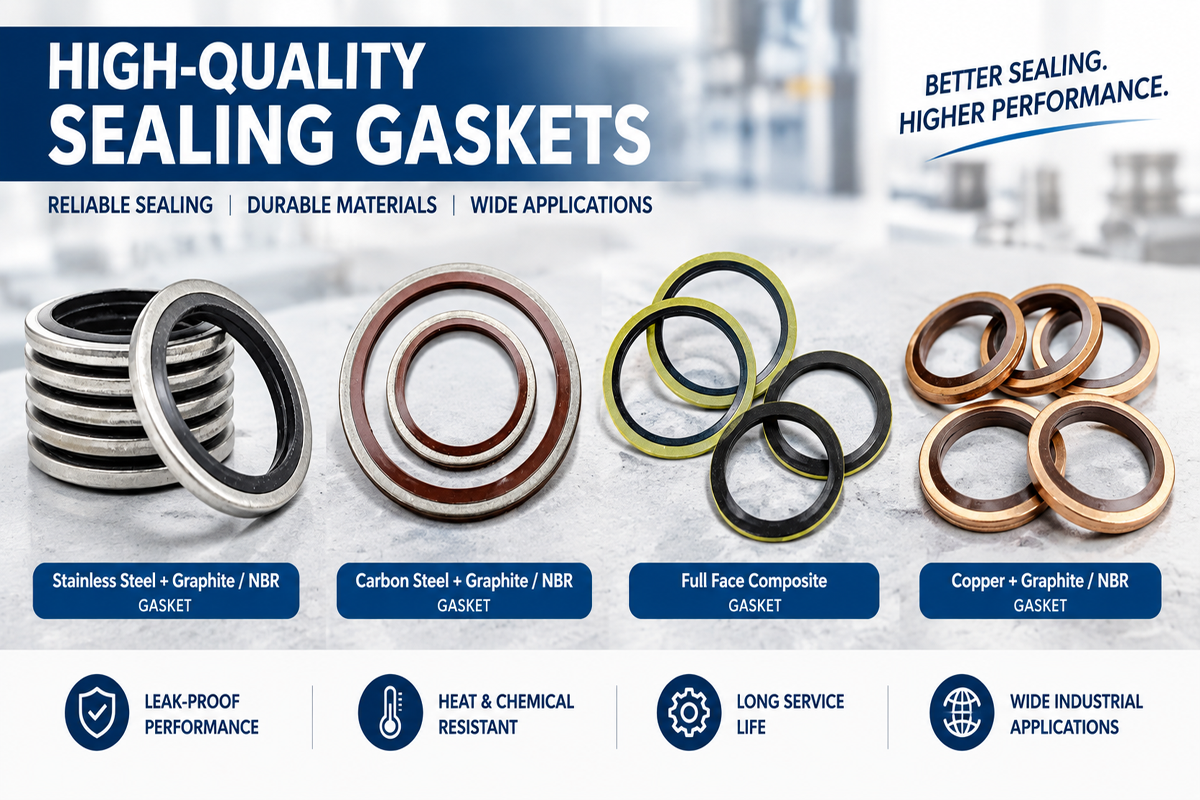
“Sealing washer” is a broad functional term.
It can refer to different washer-style components designed to create or support a seal.
A bonded seal is one specific sealing technology within this broader category.
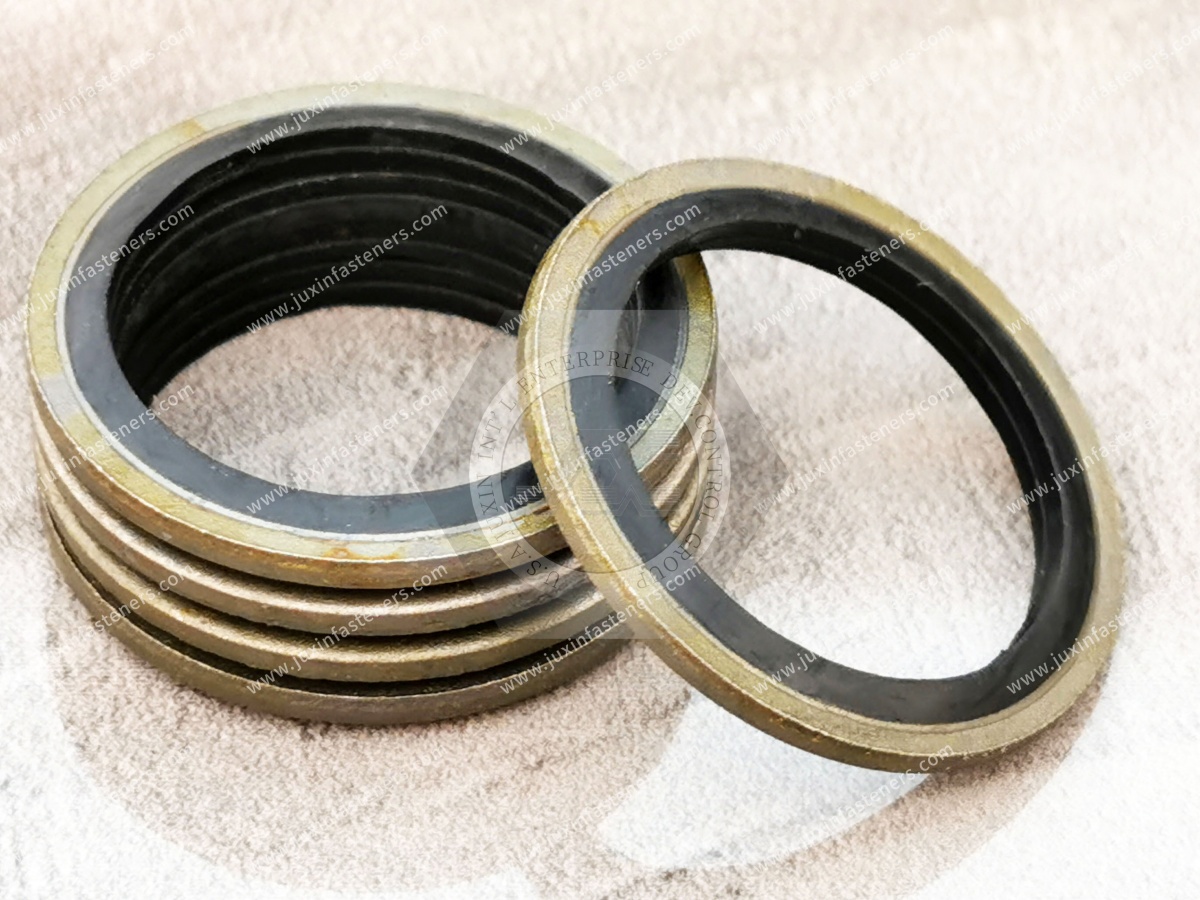
A typical bonded sealing washer combines:
a metal carrier
a bonded elastomeric sealing element
The elastomer provides compliant sealing contact while the metal portion supports and controls the sealing interface.
Other sealing washers may instead rely primarily on:
deformation of a solid metal
compression of an elastomer
application-specific polymer behavior
another engineered sealing mechanism
Therefore:
Bonded Seal = One Type of Sealing Washer
but
Not Every Sealing Washer = Bonded Seal
This distinction is useful when engineers specify components and when procurement teams search for equivalent or replacement parts.
A common sourcing mistake is to begin with a product catalog and choose whichever washer appears to match the thread size.
The better engineering sequence is:
Connection Type
↓
Required Sealing Mechanism
↓
Operating Media
↓
Temperature and Pressure Conditions
↓
Mating Surface Geometry
↓
Material Selection
↓
Component Dimensions
↓
Installation Requirements
↓
Validation
This reduces the risk of selecting a dimensionally compatible component that uses the wrong sealing principle.
Metal-bonded sealing washers combine structural metal support with an elastomeric sealing element.
They are commonly associated with static connections such as:
hydraulic fittings
threaded plugs
ports
manifolds
valves
pumps
stationary fluid connections
During installation, the elastomer is compressed against the mating interface while the metal carrier supports the assembly.
A bonded seal may be appropriate when:
the connection is designed for this sealing architecture
an elastomeric static sealing interface is required
the fitting or port geometry provides suitable support
the OEM drawing specifies a bonded sealing washer
a compact washer-style metal-elastomer seal is required
Typical engineering parameters include:
ID
OD
thickness
elastomer profile
metal carrier material
elastomer family or compound
hardness, where controlled
surface finish or coating
mating interface
operating media
Nominal thread size alone is not a complete specification.
A solid copper sealing washer uses a fundamentally different sealing mechanism.
It contains no bonded elastomer.
The joint relies on the interaction between the copper washer, mating surfaces and installation load to establish sealing contact.
Copper sealing washers may be used in selected:
fluid connections
plugs
fittings
machinery
equipment assemblies
depending on the design.
Copper offers useful material characteristics including formability and thermal conductivity.
However, these properties do not mean a copper washer is automatically suitable for every high-temperature, high-pressure or corrosive application.
The complete joint must be evaluated.
The primary distinction is:
Bonded Seal → Elastomeric sealing mechanism supported by metal
Solid Copper Washer → Metallic sealing mechanism
They should not be treated as interchangeable simply because their ID and OD are similar.
Aluminum sealing washers are another type of solid-metal sealing component.
Like copper washers, their function depends on the material, geometry, mating surfaces and joint design rather than a bonded elastomer.
An aluminum washer may be specified where its particular combination of:
density
formability
corrosion behavior
mating-material compatibility
joint requirements
is appropriate.
Copper-to-aluminum or aluminum-to-copper substitution should not be made solely on dimensional similarity.
Some sealing washers rely primarily on an elastomer rather than a metal carrier.
Possible elastomer families include:
NBR
FKM
EPDM
silicone
HNBR
other application-specific compounds
These materials can provide useful sealing behavior, but the absence of a metal carrier changes the mechanical behavior of the component.
An elastomer washer should be selected according to:
fluid
temperature
pressure
environmental exposure
hardness
geometry
compression
mating surfaces
“Rubber washer” is not an adequate engineering specification.
An O-ring represents another sealing architecture and should not be confused with a bonded sealing washer.
An O-ring normally operates in a designed gland or groove that controls its deformation.
Selection involves factors such as:
groove geometry
O-ring dimensions
elastomer
compression
clearances
fluid
temperature
pressure
static or dynamic conditions
A bonded seal integrates the elastomer with a metal carrier and is commonly installed at suitable washer-style interfaces.
An O-ring normally requires an engineered gland.
Therefore, replacing one technology with the other can require a change to the joint design.
The old assumption that bonded sealing washers can simply be categorized as both static and dynamic seals is misleading.
Bonded sealing washers are primarily intended for static sealing interfaces.
Examples include:
stationary fittings
plugs
ports
bolted interfaces
valve connections
manifold connections
Dynamic applications involve relative movement between sealing surfaces.
Examples include:
rotating shafts
reciprocating rods
moving pistons
Dynamic sealing introduces additional requirements such as:
friction
wear
lubrication
surface finish
velocity
motion cycle
A bonded washer that tolerates machine vibration is not automatically a dynamic seal.
Both may contain elastomer, but they behave differently.
The metal carrier provides mechanical support and helps control the installed sealing geometry.
The elastomer itself carries much more of the compression and deformation behavior.
This can influence:
load distribution
compression
extrusion behavior
dimensional stability
installation response
The correct technology depends on the joint design rather than simply the desired rubber material.
PTFE is used in various industrial sealing technologies because of its distinctive chemical, frictional and temperature-related material characteristics.
However, a PTFE washer and a metal-bonded elastomer seal are different technologies.
PTFE selection should consider:
media compatibility
deformation behavior
creep
joint loading
geometry
temperature
mating surfaces
A PTFE component should not automatically replace a bonded seal merely because chemical resistance is required.
This should not be treated as a primary function of a bonded sealing washer.
The purpose of the component is to create the required seal at an appropriate static interface.
Claims that a bonded sealing washer inherently reduces mechanical resistance, improves fluid flow or lowers equipment energy consumption are too broad without application-specific evidence.
The engineering objective should instead be:
Create a reliable sealing interface without compromising the joint.
No.
Bonded sealing washers are widely used in hydraulic and other pressurized systems, but the pressure capability of a particular connection cannot be determined from the product category alone.
Pressure performance can depend on:
elastomer
metal carrier
geometry
mating interface
fluid
temperature
compression
installation
fitting design
A generic pressure value should therefore not be applied to every bonded seal.
No.
Metallic sealing components can be appropriate for some elevated-temperature applications because they do not rely on an elastomer.
However, the actual capability still depends on:
metal material
material condition
joint design
mating surfaces
media
thermal cycling
installation
The decision should be based on the complete connection rather than the assumption that “metal equals high temperature.”
Fluid compatibility can eliminate otherwise attractive material options.
Examples may include:
hydraulic oils
lubricants
fuels
water
coolants
refrigerants
process chemicals
cleaning fluids
For elastomer-containing seals, compatibility with the elastomer must be evaluated.
For metal sealing washers, compatibility with the metal and mating materials must also be evaluated.
For a bonded seal, both parts matter:
Metal Compatibility + Elastomer Compatibility
Temperature affects:
elastomer stiffness
elasticity
aging
compression behavior
metal behavior
fluid properties
joint conditions
Therefore, a material's generic temperature capability does not automatically define the temperature capability of the complete sealing assembly.
The relevant question is not:
“What temperature can NBR handle?”
but:
“Is this specific NBR compound suitable for this fluid, temperature, pressure and seal geometry for the required service life?”
The sealing component must work with the geometry surrounding it.
Important factors include:
available sealing width
surface flatness
surface finish requirements
grooves
recesses
fitting geometry
support against extrusion
surrounding clearance
A joint designed for an O-ring gland cannot automatically accept a bonded washer.
Likewise, a flat interface designed around a metallic sealing washer should not automatically be converted to an elastomer washer without engineering review.
Regardless of technology, the mating surfaces matter.
Potential problems include:
scratches
burrs
dents
corrosion
contamination
coating damage
misalignment
Replacing the sealing washer without correcting the mating-surface problem may result in repeated leakage.
A practical decision process is:
Is it a:
threaded plug
hydraulic fitting
port
flange
bolted interface
custom connection?
If significant relative movement exists at the sealing interface, a bonded sealing washer may not be the appropriate technology.
Define the actual:
oil
fuel
water
coolant
gas
refrigerant
chemical
Separate normal conditions from peak or transient conditions.
Does the assembly already contain:
a flat sealing face
an O-ring groove
a bonded seal interface
a metallic washer interface
another sealing architecture?
Consider whether the joint requires:
metal-elastomer bonded sealing
solid-metal deformation
elastomer compression
O-ring gland sealing
another engineered solution
Only after the sealing architecture is understood should the engineer finalize:
metal
elastomer
polymer
hardness
coating or finish
Complete the required prototype, leakage or application-specific testing before production approval.
| Engineering Condition | Technology to Evaluate | Key Questions |
|---|---|---|
| Static threaded fluid connection | Bonded seal | Is the interface designed for controlled elastomer compression? |
| Existing metal-to-metal washer joint | Copper/aluminum or specified metal washer | What metal, geometry and installation load does the drawing require? |
| Designed elastomer compression interface | Elastomer washer | Is the material compatible with media and compression conditions? |
| Engineered groove or gland | O-ring | Are groove geometry and O-ring dimensions correctly defined? |
| Moving sealing interface | Dynamic seal technology | What motion, speed, lubrication and wear conditions apply? |
| Existing OEM assembly | Original specified technology | Has any proposed substitution been technically validated? |
This table is a screening framework, not a substitute for application engineering.
M12 does not define the complete sealing component.
A bonded seal, copper washer and elastomer washer use different sealing mechanisms.
“Use FKM” or “use copper” is premature if the sealing architecture has not been established.
Rotating and reciprocating interfaces require different engineering considerations.
The correct tightening condition belongs to the validated joint design.
“High pressure” is not a complete component specification.
Geometry, material and sealing mechanism also matter.
Once engineering has selected the sealing technology, procurement should translate the requirement into a controlled RFQ.
Depending on the product, include:
customer part number
2D drawing
existing supplier part number
applicable international or customer specification
inside diameter
outside diameter
thickness
sealing profile
dimensional tolerances
For bonded seals:
metal carrier
coating or finish
elastomer
hardness, where specified
For solid metal washers:
metal grade or specification
material condition, where controlled
finish
hardness, where applicable
For elastomer components:
elastomer family
compound specification
hardness
fluid or media
temperature
pressure
static or dynamic condition
mating material
environmental exposure
sample quantity
production quantity
annual usage
inspection requirements
documentation
packaging
When qualifying another supplier or another sealing technology, separate:
Dimensional Equivalence
from
Material Equivalence
from
Functional Equivalence
A candidate component may satisfy one and not the others.
For example:
A washer can match ID, OD and thickness but use a different elastomer.
A second component can use the same materials but have a different sealing profile.
A third can look identical but require different installation conditions.
This is why supplier qualification should be based on the complete engineering specification.
Custom manufacturing may be appropriate when the assembly requires:
non-standard dimensions
special sealing profile
application-specific metal
specific elastomer compound
special hardness
controlled coating
unusual mating geometry
OEM-specific tolerances
drawing-controlled features
A custom component should solve a defined engineering requirement rather than simply reproduce the appearance of an existing part.
For an existing application:
Existing Part → Drawing / Part Number / Sample → Identify Sealing Technology → Confirm Dimensions → Confirm Materials → Confirm Application → Sample → Validate → Production
For a new design:
Joint → Media → Temperature / Pressure → Static / Dynamic → Sealing Mechanism → Geometry → Materials → Prototype → Validation → Production
These two paths should not be confused.
Replacement sourcing begins from an established component.
New-product engineering begins from the functional requirements of the joint.
JUXIN FASTENERS supports industrial OEMs, equipment manufacturers and supply-chain teams with standard and custom fastening and sealing components.
Relevant projects may include:
metal-bonded sealing washers
metric bonded seals
copper bonded sealing washers
solid metal sealing washers
custom washers
made-to-drawing sealing components
industrial fasteners and engineered fastening components
For an existing component, send:
Drawing → Specification → Part Number → Physical Sample
For a new project, provide:
Joint → Sealing Mechanism → Dimensions → Metal → Elastomer → Fluid → Temperature → Pressure → Quantity → Validation Requirements
If the correct sealing technology has not yet been finalized, provide the joint and application information rather than selecting a washer solely from nominal size.
This gives engineering, procurement and supplier-development teams a stronger technical basis for evaluating the component before sample and production approval.
For standard, custom and made-to-drawing industrial sealing washer requirements, contact JUXIN FASTENERS.
Email: info@juxinfasteners.com
Website: www.juxinfasteners.com
 MORE NEWS
Sep. 27, 2026
Sep. 27, 2026
Sep. 27, 2026
Contact Us
Tel.:
+86 020 8621 0320
+86 020 3121 6067
E-mail:
Technical Support:
Navigation
SEND INQUIREY