
Call Us
+86 136 6007 9809
Call Us
+86 136 6007 9809

Sep. 11, 2023
SEMS screws are pre-assembled fasteners that combine a screw or bolt with one or more captive washers into a single assembly-ready component.
They are also commonly described as:
captive washer screws;
screw and washer assemblies;
pre-assembled screws;
captive washer bolts;
combination screw assemblies.
For engineers and procurement teams, the most important advantage of a SEMS fastener is not that every SEMS screw provides locking, vibration damping or higher clamp force.
Its primary advantage is assembly integration.
Instead of purchasing, handling and installing a screw and washer as separate loose components, the washer is retained on the fastener before final installation.
This can simplify production by reducing:
loose component handling;
washer omission;
incorrect washer installation;
line-side part complexity;
manual assembly steps.
The correct engineering question is therefore not simply:
“What washer should go under this screw?”
It is:
“Should the screw and required washer interface be supplied as one controlled assembly-ready fastener?”
A practical selection path is:
Assembly Requirement → Screw Geometry → Washer Function → Captive Configuration → Mechanical Properties
→ Material → Finish → Standard / Drawing → Assembly Validation → Packaging → RFQ
JUXIN FASTENERS supports OEM sourcing of screws, bolts, washers, SEMS-style captive washer assemblies and custom fastening components for industrial equipment,
automotive systems, electrical equipment, power electronics, HVAC, industrial automation, telecommunications equipment and other engineered assemblies.
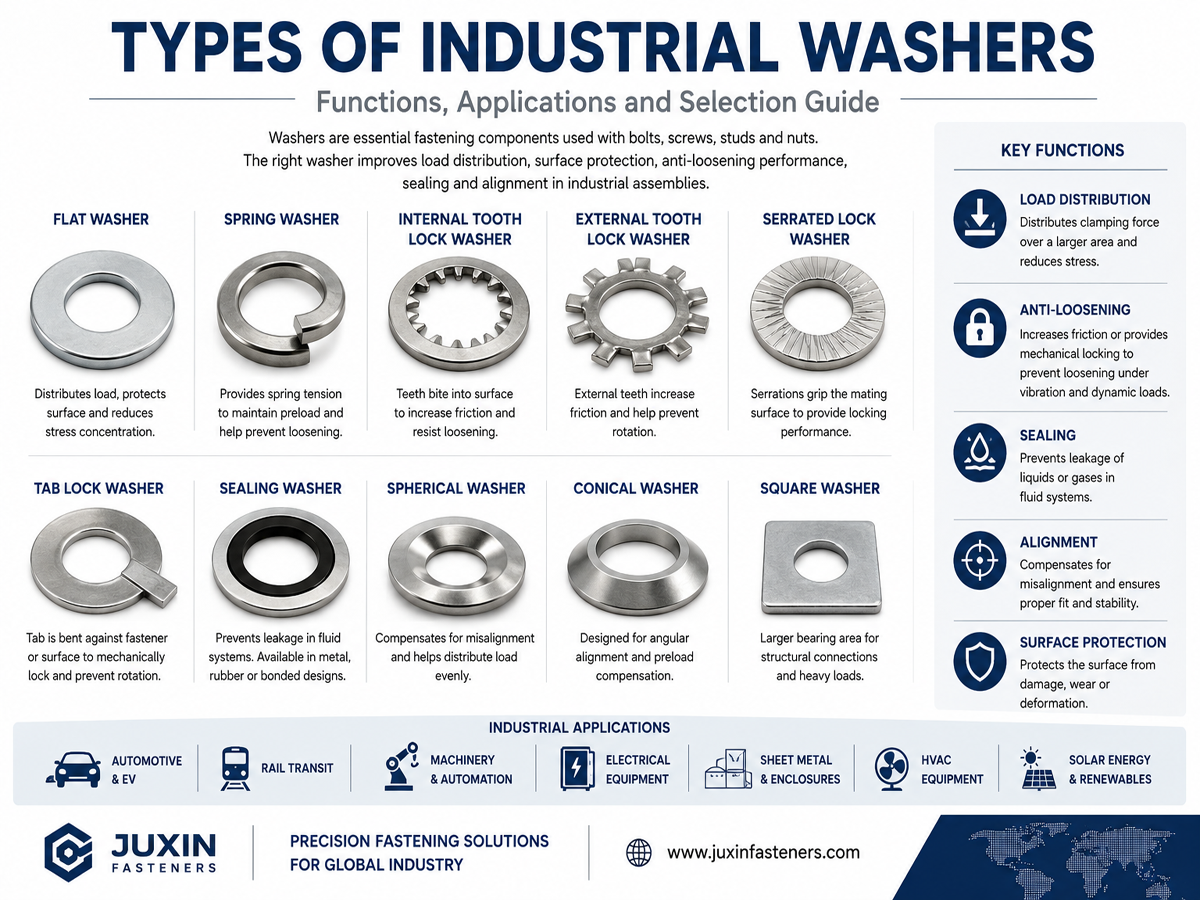
A SEMS screw is a screw or bolt supplied with one or more washers retained on the fastener so that the components remain together before installation.
The washer is captive.
Depending on the design, it can remain free to rotate while being prevented from separating from the screw.
This creates an integrated fastener assembly.
Instead of:
Screw + Loose Washer → Assembly Line
the manufacturer receives:
Pre-Assembled Screw-and-Washer Unit → Assembly Line
That distinction creates the primary manufacturing value of SEMS fasteners.
In North American fastener terminology, SEMS is a generic term used for screw-and-washer assemblies.
ASME B18.13 formally addresses screw and captive washer assemblies and recognizes SEMS as the generic U.S. term for this product family.
This terminology is particularly useful when sourcing from U.S. OEM drawings, distributor specifications or industrial fastener databases.
Searches can therefore include:
SEMS screw;
SEMS bolt;
SEMS fastener;
captive washer screw;
screw washer assembly.
This is one of the most important concepts for engineers and purchasing teams.
SEMS does not describe one universal washer function.
Different captive washer designs can be incorporated depending on the required assembly.
Examples can include:
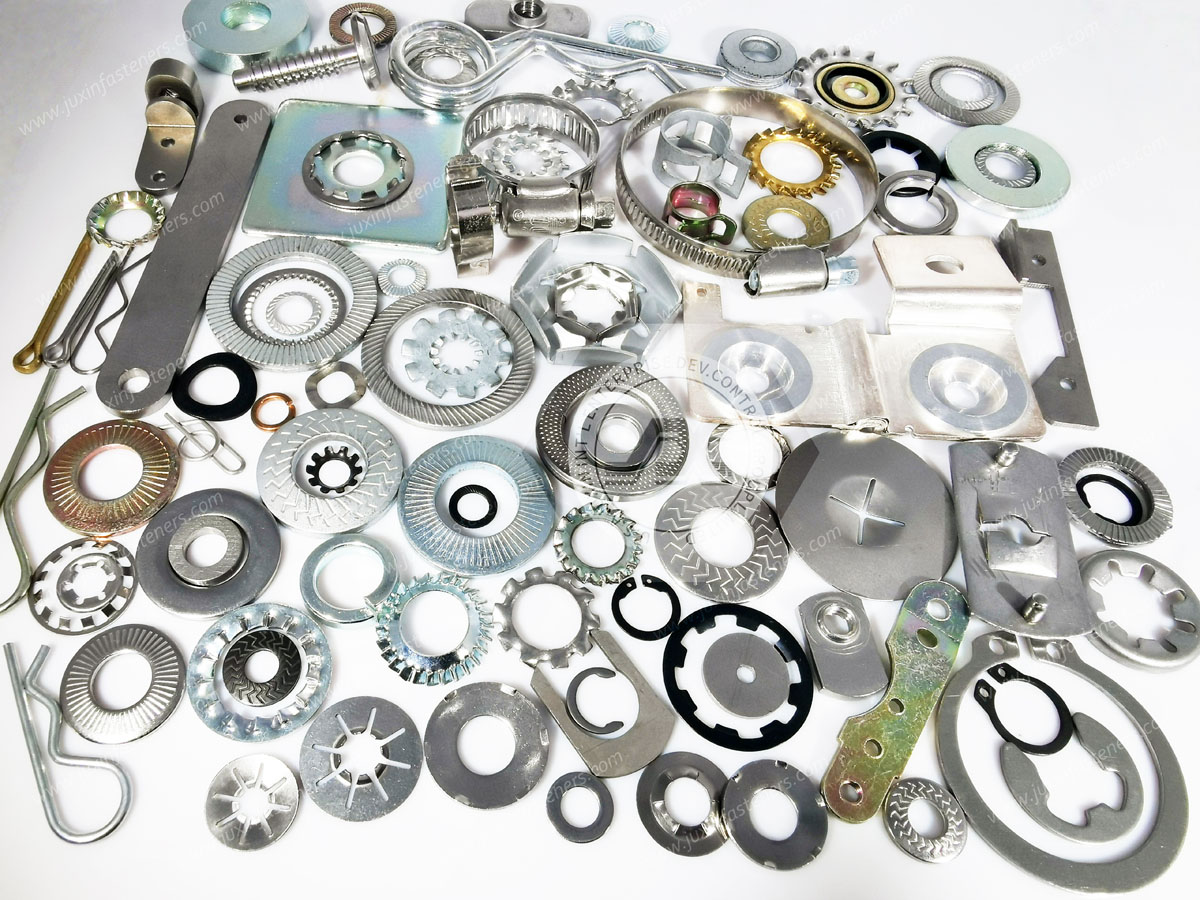
plain washers;
spring-lock washers;
tooth-lock washers;
conical washers;
other drawing-controlled washer configurations.
Therefore:
SEMS ≠ Automatically Locking Screw
The actual function depends on the washer and complete joint design.
The word captive describes retention.
It means the washer cannot normally separate from the screw before installation.
It does not automatically mean:
anti-loosening;
vibration resistance;
preload retention;
electrical grounding;
sealing.
These functions must be separately engineered.
This distinction prevents one of the most common specification mistakes in pre-assembled fasteners.
The main benefits are related to manufacturing and assembly control.
A SEMS fastener can help reduce:
loose-part handling;
part picking;
washer omission;
incorrect washer orientation;
dropped washers;
assembly-line component count.
For high-volume manufacturing, these advantages can be more commercially important than the cost of the washer itself.
Consider an assembly requiring:
one screw;
one washer.
Using separate components means production must manage two individual items.
Using a captive washer screw converts them into one line-side component.
At high production volumes, that can simplify:
material presentation;
operator handling;
feeder strategy;
inventory transactions;
assembly instructions.
This is one reason SEMS screws are common in production-oriented industries.
A loose washer can be forgotten during manual assembly.
If the washer performs an important bearing, spacing or surface-protection function, omission changes the joint.
With a properly designed captive washer assembly, the required washer arrives attached to the screw.
This creates a form of mechanical error prevention.
The washer cannot be accidentally left in the parts bin while the screw is installed.
In manufacturing engineering, error prevention is often more reliable when the product architecture makes the incorrect assembly difficult or impossible.
A captive washer can support this principle.
Instead of relying entirely on:
operator memory;
work instructions;
visual inspection
the washer is physically retained with the screw.
This can be particularly useful in repetitive OEM assembly.
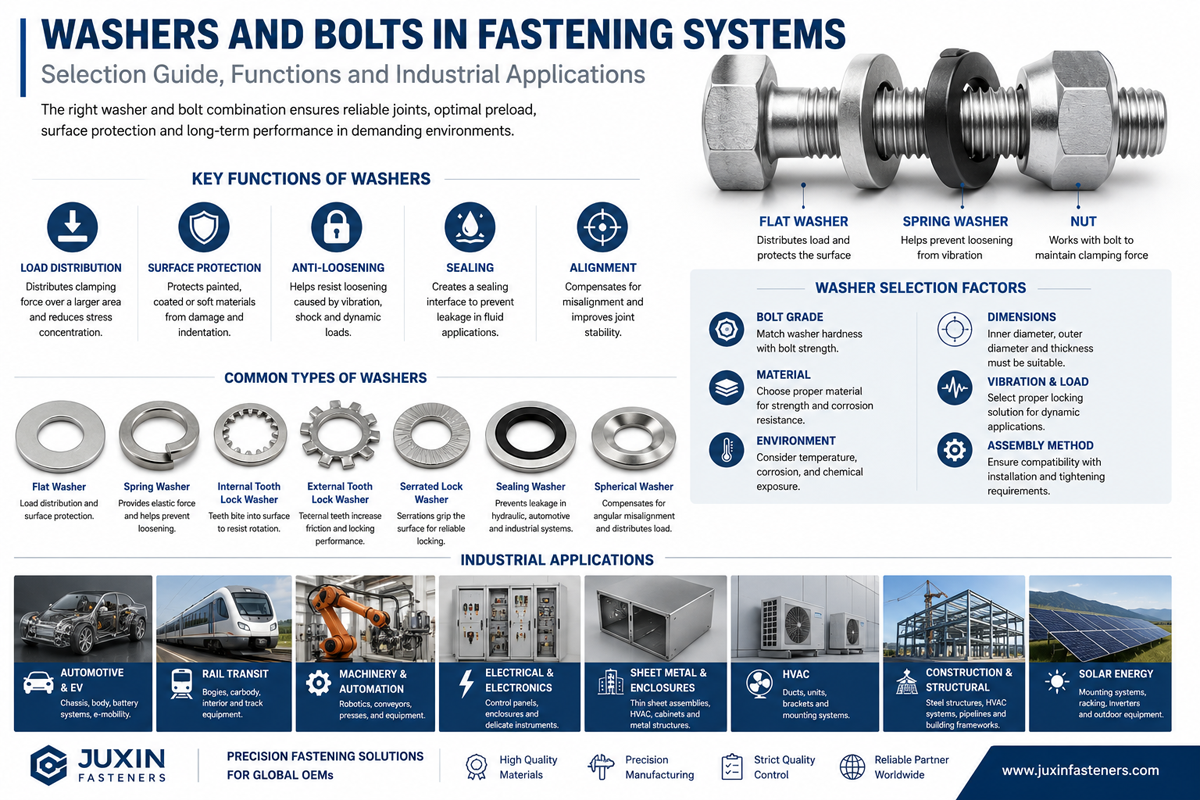
Pre-assembled screw-and-washer systems can be useful in automated or semi-automated production because fewer loose components need to be presented separately.
Potential advantages can include:
fewer part feeders;
fewer pick operations;
reduced washer handling;
simplified robotic or automatic screwdriving sequences.
However:
SEMS ≠ Automatically Automation-Compatible
Automation suitability depends on:
screw head geometry;
drive type;
washer diameter;
washer movement;
fastener length;
feeding orientation;
equipment design;
packaging.
The fastener should be evaluated with the actual assembly equipment.
A common manufacturing concept is to assemble the washer onto the screw blank before the final thread-forming operation.
The thread is then formed so that its major diameter prevents the washer from passing over the threaded portion.
The washer remains captive while retaining the intended movement defined by the product design.
Other manufacturing methods may be used depending on the fastener geometry and specification.
The key requirement is:
Retained Washer + Functional Screw Thread + Controlled Assembly
Captive does not necessarily mean fixed.
For many SEMS designs, the washer remains free to rotate.
This can be useful because the washer and screw do not need to behave as one rigid body.
ISO 10644, for example, defines captive plain washers that are prevented from disassembly while remaining free to rotate.
This is an important technical distinction:
Captive ≠ Rigidly Attached
ISO 10644:2009 provides an important international reference for metric screw-and-plain-washer assemblies made of steel.
Within its defined scope, it covers:
metric coarse threads;
M2 through M12;
flat seating heads;
steel screws;
property classes up to and including 10.9;
plain washer hardness classes 200 HV and 300 HV.
The washer is captive and free to rotate.
ISO 10644:2009 was reviewed and confirmed in 2024 and remains current.
The standard illustrates why a SEMS assembly is more than simply:
“Put a washer on a screw.”
The relationship between the screw and washer includes:
thread size;
head seating geometry;
screw mechanical properties;
washer hardness;
washer dimensions;
captive assembly.
These characteristics need to work together.
ISO 10644 includes captive plain washers in hardness classes:
200 HV;
300 HV.
This does not mean that one hardness class is universally better.
Washer hardness should be compatible with:
screw property class;
bearing interface;
applicable standard;
customer drawing.
The washer is part of the mechanical interface.
ISO 10644 covers screw property classes up to and including 10.9 within its scope.
This demonstrates an important engineering principle:
Washer Selection Must Be Compatible With Screw Mechanical Properties
A soft washer used beneath a highly loaded fastener can deform differently from a harder controlled washer.
Therefore, purchasing should not define only:
M6 SEMS Screw
without considering the required mechanical-property combination.
ISO 10673 provides requirements for plain washers intended for screw-and-washer assemblies.
It includes defined washer series within its scope.
This provides another useful standard reference when the washer geometry for a metric assembly needs to be controlled.
A washer used in a SEMS assembly should not be assumed equivalent to any loose commercial flat washer of similar nominal size.
For inch-series products, ASME B18.13 is an important reference.
The current published edition is ASME B18.13-2017 (R2022).
The standard covers general and dimensional data for screw and captive washer assemblies known as SEMS.
Its scope includes applicable:
screws;
tapping screws;
bolts;
captive washer configurations.
This makes ASME B18.13 particularly relevant for U.S. industrial and OEM sourcing.
Within its scope, ASME B18.13 addresses different SEMS configurations, including assemblies using:
helical spring-lock washers;
tooth-lock washers;
conical washers;
plain washers.
This reinforces a critical point:
SEMS identifies the pre-assembled fastener architecture.
The washer type determines its additional function.
Do not assume a metric SEMS screw and an inch SEMS screw follow the same dimensional system or standard.
For example:
Metric captive plain washer assembly → ISO 10644 may apply
Inch-series SEMS assembly → ASME B18.13 may apply
Customer drawings can also define proprietary or modified assemblies.
Procurement should identify the applicable standard before quotation.
A plain captive washer primarily provides a controlled bearing interface.
Potential functions can include:
load distribution;
surface protection;
increased bearing area.
It should not automatically be described as an anti-loosening washer.
Some SEMS assemblies use a helical spring-lock washer.
This may be required by:
existing drawings;
legacy equipment;
customer specifications.
However, the washer should not automatically be represented as providing reliable locking in every vibration environment.
For a deeper engineering analysis, see the JUXIN FASTENERS guide to spring washers and bolt loosening.
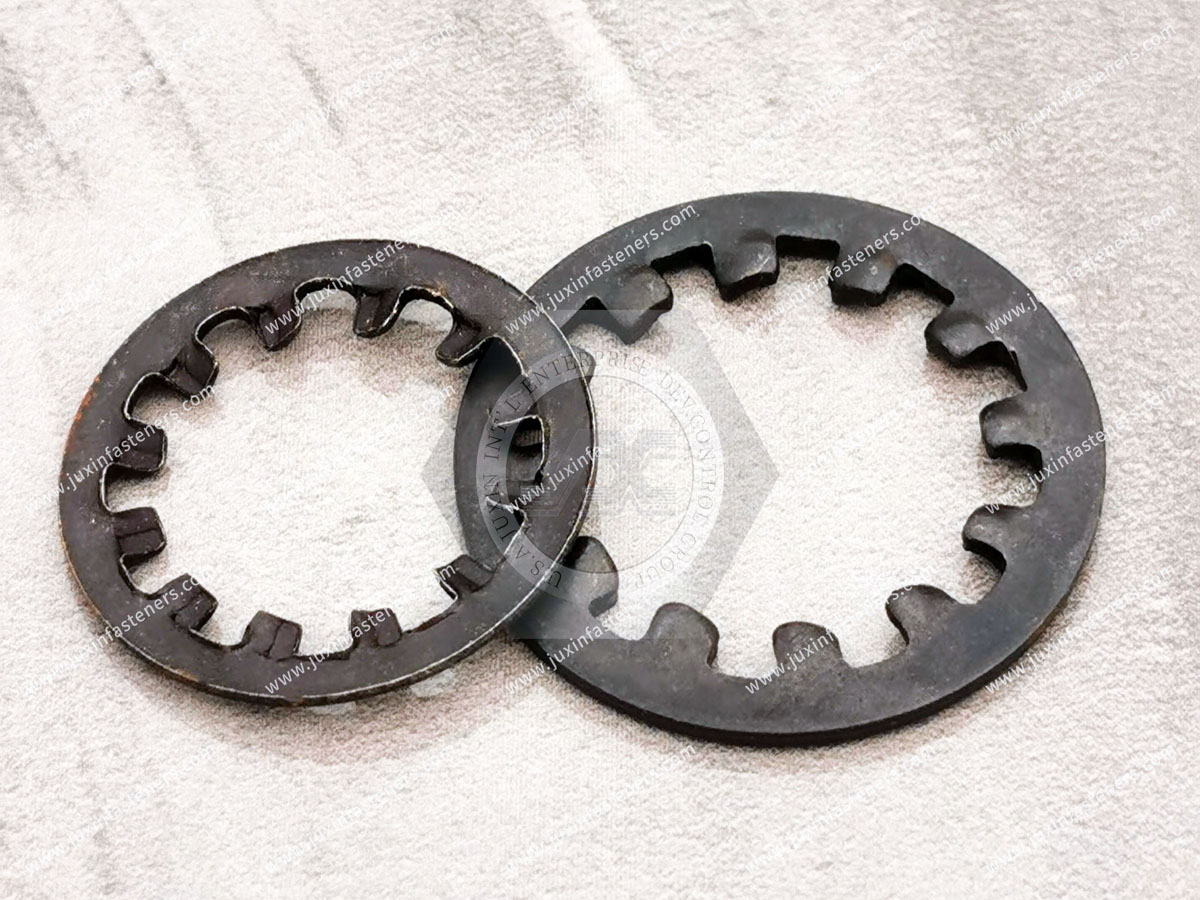
A tooth-lock washer uses teeth that interact with the adjacent bearing surfaces.
This can influence rotational resistance depending on:
washer design;
surface hardness;
coating;
parent material;
installation load.
The surface must be compatible with the tooth geometry.
A painted or corrosion-protected surface may be damaged if the teeth penetrate it.
Conical washers can also be incorporated into SEMS assemblies.
Their geometry can provide spring behavior within the fastening system.
However, a conical SEMS washer should not automatically be confused with:
DIN 6796;
DIN EN 16983 disc springs;
wedge-locking washers.
The applicable standard or drawing controls the actual product.
The original article suggested that washers inherently improve clamping force.
That is too broad.
Bolt or screw preload depends on the complete tightening system.
Important variables include:
tightening torque;
thread friction;
bearing friction;
material;
coating;
lubrication;
joint stiffness.
Adding a captive washer changes the bearing interface, but it does not automatically increase preload.
In torque-controlled assembly, friction at the bearing interface influences the relationship between applied torque and achieved preload.
A washer can change:
bearing friction;
contact geometry;
surface interaction.
Therefore, replacing:
Screw Only
with:
Screw + Captive Washer
can affect an established tightening process.
For critical assemblies, the complete joint should be validated.
A captive washer does not automatically absorb vibration energy.
A plain washer is not a vibration damper.
A spring washer is not automatically a damping element simply because it is elastic.
Therefore:
Captive Washer ≠ Vibration Damper
If vibration damping is required, it must be addressed as a separate engineering function.
Another important correction:
A screw becomes a SEMS screw because a washer is retained on it.
That does not automatically prevent rotational self-loosening.
If the joint requires anti-loosening performance, engineers should evaluate the actual mechanism.
Possible alternatives or additional strategies can include:
prevailing-torque locknuts;
all-metal locknuts;
nylon-insert locknuts;
thread-locking compounds;
dedicated locking washer systems;
positive mechanical locking where appropriate.
The old article suggested that a washer could prevent a loosened screw from completely disengaging.
That is generally incorrect.
The washer is captive on the screw.
The screw is not necessarily captive in the assembly.
If the screw fully disengages from its mating thread, the screw-and-washer assembly can still separate from the equipment unless another retention feature exists.
Therefore:
Captive Washer ≠ Captive Screw in the Final Product
This distinction is particularly important for service panels and equipment where loose fastener retention is required.
These terms should not be confused.
The washer is captive on the screw.
The complete screw is retained in the panel or equipment even when disengaged from its mating thread.
These solve different assembly problems.
A SEMS screw does not automatically satisfy a captive-panel-fastener requirement.
A flange screw integrates a larger bearing surface directly into the screw head.
A SEMS screw uses a separate washer retained on the screw.
Potential differences include:
bearing geometry;
washer movement;
surface interaction;
assembly architecture.
They should not be substituted without engineering review.
Both systems may provide a similar washer function after final tightening.
The manufacturing difference is component handling.
Production handles:
1 Screw + 1 Washer
Production handles:
1 Pre-Assembled Fastener
For high-volume assembly, this difference can be significant.
A serrated flange screw uses serrations integrated into the bearing face.
A SEMS assembly can use various washer types.
These are different locking and bearing architectures.
The correct choice depends on:
surface condition;
anti-rotation requirement;
serviceability;
joint design.
A nylon-insert locknut provides prevailing torque through the threaded interface.
A SEMS screw describes a captive washer architecture.
These features can coexist in a joint, but they perform different functions.
For prevailing-torque locking, see Nylon Insert Locknuts for Anti-Vibration Applications.
The strongest commercial case for SEMS fasteners often appears on the production floor rather than in a static fastener strength table.
Potential assembly benefits include:
fewer loose parts;
fewer picking operations;
reduced washer omission;
simpler work instructions;
simplified line-side inventory;
easier kit preparation.
Whether these benefits justify a change depends on production volume and assembly process.
A SEMS screw can cost more per fastener than a screw alone.
But procurement should consider:
Component Price ≠ Total Installed Cost
The complete cost can include:
screw price;
washer price;
purchasing transactions;
inventory handling;
picking;
feeding;
assembly labor;
dropped components;
rework;
washer omission.
For high-volume OEM manufacturing, assembly efficiency can materially affect the sourcing decision.
A useful commercial comparison is:
Option A
Loose screw + loose washer + two-component handling
versus:
Option B
Pre-assembled SEMS screw + one-component handling
The correct decision depends on actual production conditions.
This creates a stronger procurement business case than simply saying:
“SEMS screws are better.”
A pre-assembled fastener may allow an OEM to manage one purchased assembly instead of multiple separately issued components.
Potential benefits can include:
simplified BOM structure;
fewer line-side bins;
easier kitting;
reduced component mismatch.
However, whether the customer consolidates part numbers is controlled by its own PLM, ERP and quality systems.
A controlled SEMS assembly can reduce some assembly risks because the required washer is physically present.
However:
Pre-Assembled ≠ Zero Defect
Quality requirements may still include inspection of:
thread;
head geometry;
drive feature;
washer dimensions;
washer retention;
mechanical properties;
coating;
assembly configuration.
One functional characteristic of a SEMS product is that the washer remains captive before installation.
The assembly therefore needs sufficient retention to prevent unintended washer separation during:
packaging;
transportation;
feeding;
handling;
installation.
Retention requirements should follow the applicable standard or customer drawing.
Where the washer is intended to rotate freely, manufacturing must retain the washer without locking it rigidly against the screw.
This requires control of the relationship between:
thread major diameter;
washer hole;
unthreaded section;
under-head geometry.
The details depend on the specific product.
A common SEMS manufacturing sequence can involve:
Screw Blank → Washer Assembly → Thread Rolling → Captive Washer
Because the washer is installed before final thread formation, the finished thread can retain it.
This has important implications for custom design.
The washer cannot always simply be added to an already finished standard screw.
Custom captive washer assemblies may be required where the customer needs:
special head geometry;
non-standard washer diameter;
specific washer hardness;
special thread length;
shoulder geometry;
custom coating;
unique drive style;
customer-specific packaging.
For these projects, the screw and washer should be engineered as one manufactured assembly.
Depending on the applicable standard or customer drawing, SEMS assemblies can use different screw-head configurations.
Examples may include:
hex head;
hex flange-related designs;
pan head;
socket-based designs;
other customer-specific heads.
The exact head style should be specified rather than inferred from the term SEMS.
Potential drive systems can include:
Phillips;
Pozidriv where applicable;
hex socket;
hexalobular;
slotted;
combination drives;
customer-specific drive geometry.
Drive selection can affect:
torque transfer;
automated screwdriving;
accessibility;
tool engagement.
Depending on the product specification, SEMS assemblies can use:
metric machine screw threads;
inch machine screw threads;
tapping screw threads;
other drawing-controlled thread forms.
The thread must be compatible with the mating component.
For a metric OEM RFQ, procurement may need to define:
M size;
thread pitch;
screw length;
head type;
drive;
property class;
washer type;
washer hardness;
washer dimensions;
material;
finish.
Simply requesting:
M6 SEMS
is usually insufficient.
For U.S. inch-series applications, define where applicable:
nominal diameter;
threads per inch;
screw length;
head style;
drive;
mechanical grade;
washer type;
material;
finish;
ASME B18.13 requirement.
This allows the supplier to evaluate the actual assembly rather than guess from a generic product name.
SEMS assemblies can be produced from materials selected for the application and applicable specification.
Potential screw materials can include:
carbon steel;
alloy steel;
stainless steel.
Washer material must also be compatible with:
required hardness;
mechanical function;
corrosion environment;
mating surfaces.
The screw and washer do not necessarily require identical material properties.
Carbon and alloy steel assemblies are widely used in industrial equipment.
Depending on the required mechanical properties, projects may specify appropriate:
property class;
material condition;
heat treatment;
surface coating.
The exact requirement should follow the standard or customer drawing.
Stainless steel may be selected where corrosion resistance is important.
However:
Stainless Steel ≠ Corrosion-Proof
The grade should be selected according to:
environment;
chloride exposure;
temperature;
chemicals;
mating materials.
Do not specify only “stainless SEMS screw” where material grade matters.
Depending on material and project requirements, finishes can include suitable:
zinc-based coatings;
trivalent chromium passivation;
black oxide where appropriate;
other customer-specified coatings.
Surface treatment can affect:
corrosion behavior;
friction;
appearance;
tightening behavior.
Therefore coating is part of the fastener specification.
Where zinc-plated carbon-steel SEMS screws are required, environmentally compliant trivalent chromium passivation can be evaluated according to the customer specification.
The RFQ should define where applicable:
coating requirement;
corrosion-test requirement;
appearance requirement;
RoHS/REACH requirement.
Do not assume that all zinc finishes provide identical performance.
High-strength steel fasteners require appropriate process control where coating processes can introduce hydrogen.
Risk depends on:
fastener strength/hardness;
material condition;
cleaning process;
plating process;
applied stress.
There is no universal post-plating bake specification suitable for every SEMS fastener.
The applicable product and customer specification should control processing.
SEMS screws are well suited to manufacturing environments where repetitive screw-and-washer installation occurs.
Potential applications can include:
interior equipment;
electronic modules;
brackets;
auxiliary assemblies;
control units;
service components.
For automotive production, assembly efficiency can be a major sourcing driver.
Safety-critical joints require customer-specific engineering and qualification.
EV platforms contain many electronic and mechanical assemblies requiring repetitive screw installation.
Potential SEMS applications can include:
control modules;
auxiliary brackets;
power-electronics housings;
service panels;
thermal-management equipment.
A SEMS screw should not automatically be described as providing:
battery enclosure sealing;
electrical grounding;
EMI shielding;
IP protection.
Those functions require separately engineered features.
AI data centers and HPC systems contain large quantities of equipment assembled from:
racks;
power systems;
cooling equipment;
control enclosures;
server-related hardware;
auxiliary structures.
Pre-assembled fasteners can be useful where production or equipment assembly benefits from reduced loose-part handling.
The specific washer function still needs to be defined.
Potential applications include:
cabinet frames;
internal brackets;
equipment covers;
mounting structures;
control-panel hardware.
SEMS screws can simplify repetitive assembly.
However, a captive washer does not automatically establish an electrical bonding or grounding path.
Electrical requirements must be separately specified.

Telecommunications systems often use repetitive screw-and-washer assemblies in:
equipment racks;
cabinets;
enclosures;
communication hardware;
mounting structures.
Pre-assembled fasteners can help simplify production and service-part handling.
HVAC manufacturers can use SEMS screws in:
equipment housings;
control boxes;
brackets;
fan assemblies;
service panels.
The benefit may come from production efficiency rather than anti-vibration performance.
Where vibration locking is required, that requirement should be separately engineered.
Automation equipment can contain large numbers of screws in:
machine frames;
sensors;
control cabinets;
guards;
actuators;
robotic equipment.
Captive washer screws can reduce loose-part handling during production.
Automation suitability should be validated with the actual feeding and screwdriving equipment.
High-volume appliance assembly is another environment where pre-assembled fasteners can be commercially useful.
Applications can include:
housings;
brackets;
motor mounts;
internal frames;
control equipment.
The economic value increases when the assembly process repeatedly requires the same screw-and-washer combination.
SEMS screws may be used in non-sterile mechanical equipment assemblies such as:
diagnostic-equipment housings;
laboratory equipment;
carts;
covers;
internal brackets.
Generic industrial SEMS screws should not automatically be represented as:
medically certified;
sterile;
biocompatible;
cleanroom-qualified.
Those requirements must be separately specified.
Pre-assembled screw-and-washer fasteners can also be used in equipment assemblies where repetitive installation occurs.
However, structural connections require their own applicable engineering standards.
A generic SEMS screw should not be promoted as a structural bolting system without the required specification.
Engineers may search:
what is a SEMS screw;
SEMS screw meaning;
captive washer screw;
screw with captive washer;
SEMS screw design;
ISO 10644 SEMS screw;
ASME B18.13 SEMS;
SEMS screw vs flange screw;
captive washer screw for automation.
These queries indicate product-definition and assembly-design intent.
Purchasing and supplier-development teams may search:
SEMS screw manufacturer;
SEMS screw supplier;
captive washer screw manufacturer;
screw and washer assembly supplier;
ISO 10644 screw supplier;
ASME B18.13 SEMS supplier;
custom SEMS screw manufacturer;
OEM captive washer screw supplier.
These searches are much closer to commercial conversion.
Manufacturing engineers may search:
reduce washer assembly time;
prevent missing washers;
screw washer pre-assembly;
captive washer for automatic assembly;
SEMS screws for production line;
pre-assembled fasteners.
This search intent is particularly valuable because the buyer may not initially know the term SEMS.
The page should therefore capture both:
Product-Led Search
and:
Problem-Led Search
SEMS can be worth evaluating when:
every screw requires a washer;
washer omission creates quality problems;
assembly volume is significant;
operators handle many small washers;
line-side part complexity is high;
automatic or semi-automatic assembly is used;
washer orientation must be controlled;
service kits need pre-assembled components.
The business case should be based on the actual production process.
Loose washers may remain appropriate when:
production volume is low;
washer configuration changes frequently;
service technicians need independent washer replacement;
standard commodity components are preferred;
the washer must be installed separately for assembly reasons.
SEMS is not automatically the best solution for every application.
| Engineering / Manufacturing Need | Selection Direction |
|---|---|
| Reduce loose-part handling | Evaluate SEMS |
| Prevent washer omission | Evaluate captive washer screw |
| Need plain bearing washer | Evaluate plain washer SEMS |
| Need specified spring-lock washer | Evaluate applicable SEMS configuration |
| Need tooth interaction | Evaluate tooth-lock washer SEMS |
| Need conical washer behavior | Evaluate applicable conical washer SEMS |
| Metric captive plain washer | Check ISO 10644 scope |
| Inch screw-and-washer assembly | Check ASME B18.13 scope |
| Automated assembly | Validate feeding and drive compatibility |
| Need screw retained in panel | Evaluate captive panel screw, not only SEMS |
| Need vibration locking | Define dedicated locking requirement |
| Need electrical grounding | Define electrical interface separately |
Use recognized terms such as SEMS screw, screw and washer assembly or captive washer screw where appropriate.
Captive describes washer retention.
Locking is a separate function.
The washer is captive to the screw.
The screw is not necessarily captive to the panel.
For applicable ISO 10644 assemblies, washer hardness is part of the specification.
Head, drive, length, property class, washer type, washer geometry and finish also matter.
A washer is not automatically a vibration damper.
Preload depends on the complete tightening system.
A technically correct SEMS fastener may still require validation in automated feeding and screwdriving equipment.
Total installed cost can be more important than individual fastener price.
Bulk packaging, tangling, coating damage and feeder compatibility can affect production performance.
For technical and commercial evaluation by JUXIN FASTENERS, provide where applicable:
2D drawing;
3D model where relevant;
physical sample;
customer part number;
existing/reference part number;
SEMS / captive washer requirement;
ISO 10644 requirement where applicable;
ASME B18.13 requirement where applicable;
other applicable ISO, ASME/ANSI, DIN, EN, SAE or customer specification;
metric or inch system;
thread size;
thread pitch or TPI;
screw length;
head type;
head dimensions;
drive type;
screw property class or grade;
screw material;
washer type;
number of washers;
washer inside diameter;
washer outside diameter;
washer thickness;
washer hardness where applicable;
washer material;
washer rotation requirement;
washer retention requirement;
surface treatment;
coating thickness where specified;
trivalent chromium zinc requirement where applicable;
RoHS/REACH requirement where applicable;
corrosion-test requirement;
mating material;
mating thread;
tightening requirement;
lubrication condition where controlled;
vibration requirement where applicable;
operating temperature;
corrosion environment;
automated assembly requirement;
feeder requirement;
packaging requirement;
sample quantity;
production quantity;
annual demand;
inspection requirement;
labeling requirement;
customer-specific requirements.
A SEMS screw is a screw or bolt supplied with one or more captive washers as a pre-assembled fastener.
In U.S. fastener terminology, SEMS is the generic term used for screw-and-washer assemblies.
The washer is retained so it cannot normally be removed from the finished screw, but depending on the design it can remain free to rotate.
Not automatically.
SEMS describes the captive washer assembly.
Anti-loosening performance depends on the washer type and complete joint design.
ISO 10644 specifies metric steel screw-and-plain-washer assemblies within its scope, including coarse threads M2 through M12,
screw property classes up to 10.9 and captive plain washers in hardness classes 200 HV or 300 HV.
ASME B18.13 covers inch-series screw and captive washer assemblies commonly called SEMS.
Yes, depending on the applicable standard or customer drawing, SEMS assemblies can incorporate different washer configurations.
A SEMS screw has a washer captive on the screw.
A captive panel screw is designed so that the complete screw remains retained in the panel or equipment after disengagement.
A flange screw integrates its bearing surface into the head.
A SEMS screw uses a separate washer retained on the fastener.
They can be useful in automated production because they reduce loose-part handling, but the actual fastener must be validated with the feeding and screwdriving system.
Piece price may be higher than a screw alone, but total installed cost can be lower when washer purchasing, handling, picking and assembly operations are considered.
Custom screw-and-washer assemblies can be evaluated from the customer's drawing, sample, material, mechanical-property, washer, coating and production requirements.
A manufacturing engineer may begin with:
“Operators keep forgetting the washer.”
A procurement manager may begin with:
“Need screw with captive washer supplier.”
A mature sourcing process connects these searches:
Assembly Problem → Required Screw → Required Washer Function → Captive Architecture → Standard / Drawing
→ Mechanical Properties → Material & Finish → Production Validation → Packaging → Approved Part → Supplier RFQ
This is the commercial value of SEMS engineering.
It converts two separately handled components into one controlled assembly-ready fastener where the production process benefits from that integration.
JUXIN FASTENERS supports OEM sourcing of SEMS screws, captive washer screws, screw-and-washer assemblies, industrial washers, bolts,
nuts and custom fastening components for automotive equipment, EV systems, AI data centers, electrical equipment, telecommunications, HVAC, industrial machinery, automation, appliances and other engineered applications.
For general washer selection, see Industrial Washers: Types, Functions & Selection Guide.
For complete washer-and-bolt system engineering, see Washers and Bolts: Fastening Systems Selection Guide.
For spring-washer and vibration-loosening analysis, see Do Spring Washers Prevent Bolt Loosening?.
For prevailing-torque locking alternatives, see Nylon Insert Locknuts for Anti-Vibration Applications.
For SEMS screw and captive washer assembly RFQs, send your drawing, thread specification, head and drive type,
washer configuration, mechanical property requirement, material, finish, application, packaging requirement and estimated annual demand to:
The value of a SEMS screw is not simply that a washer sits under the screw head.
The value is that the correct washer is already retained on the correct fastener when the assembly reaches the production line.
 MORE NEWS
Sep. 25, 2026
Sep. 25, 2026
Sep. 25, 2026
Contact Us
Tel.:
+86 020 8621 0320
+86 020 3121 6067
E-mail:
Technical Support:
Navigation
SEND INQUIREY