Call Us
+86 136 6007 9809
Call Us
+86 136 6007 9809

Sep. 10, 2023
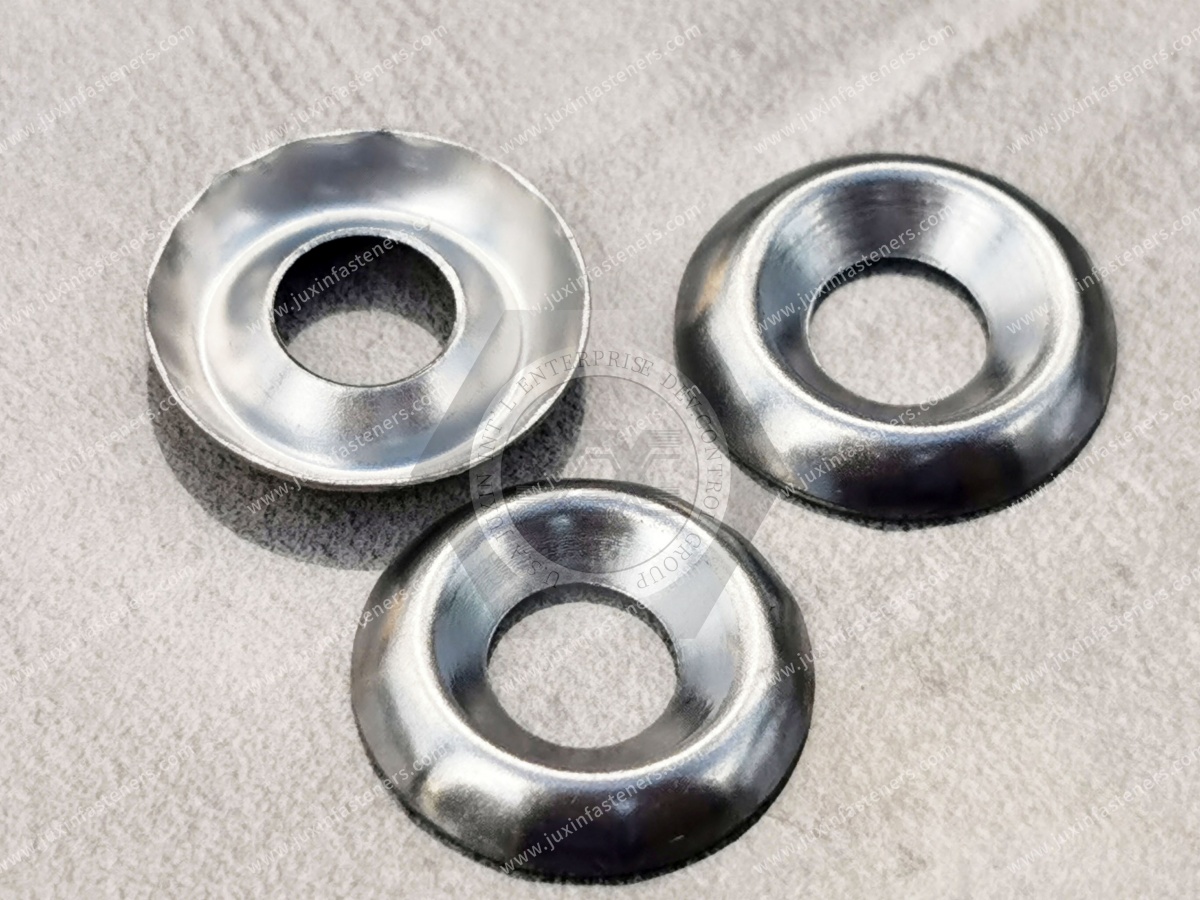
DIN 6796 conical spring washers are spring elements designed specifically for bolted connections.
Their engineering purpose is frequently misunderstood.
They are sometimes grouped with Belleville disc springs, split lock washers or generic “anti-vibration washers.”
Although these components can have similarities in appearance or terminology, they do not necessarily perform the same function.
A DIN 6796 conical spring washer is primarily used to introduce additional elastic behavior into an appropriate bolted joint and help
counteract clamp-force reduction associated with settlement of the connected components.
That is different from claiming that the washer will prevent every form of bolt loosening.
A useful engineering decision path is:
Preload-Loss Problem → Joint Loading → Bolt Property Class → Joint Elasticity → Washer Requirement → DIN 6796 Suitability → Material & Finish → Validation → Approved Specification
JUXIN FASTENERS supports OEM sourcing of conical spring washers, industrial washers, bolts, nuts,
screws and custom fastening components for machinery, automotive equipment, power systems, industrial automation, HVAC, heavy equipment and other engineered assemblies.
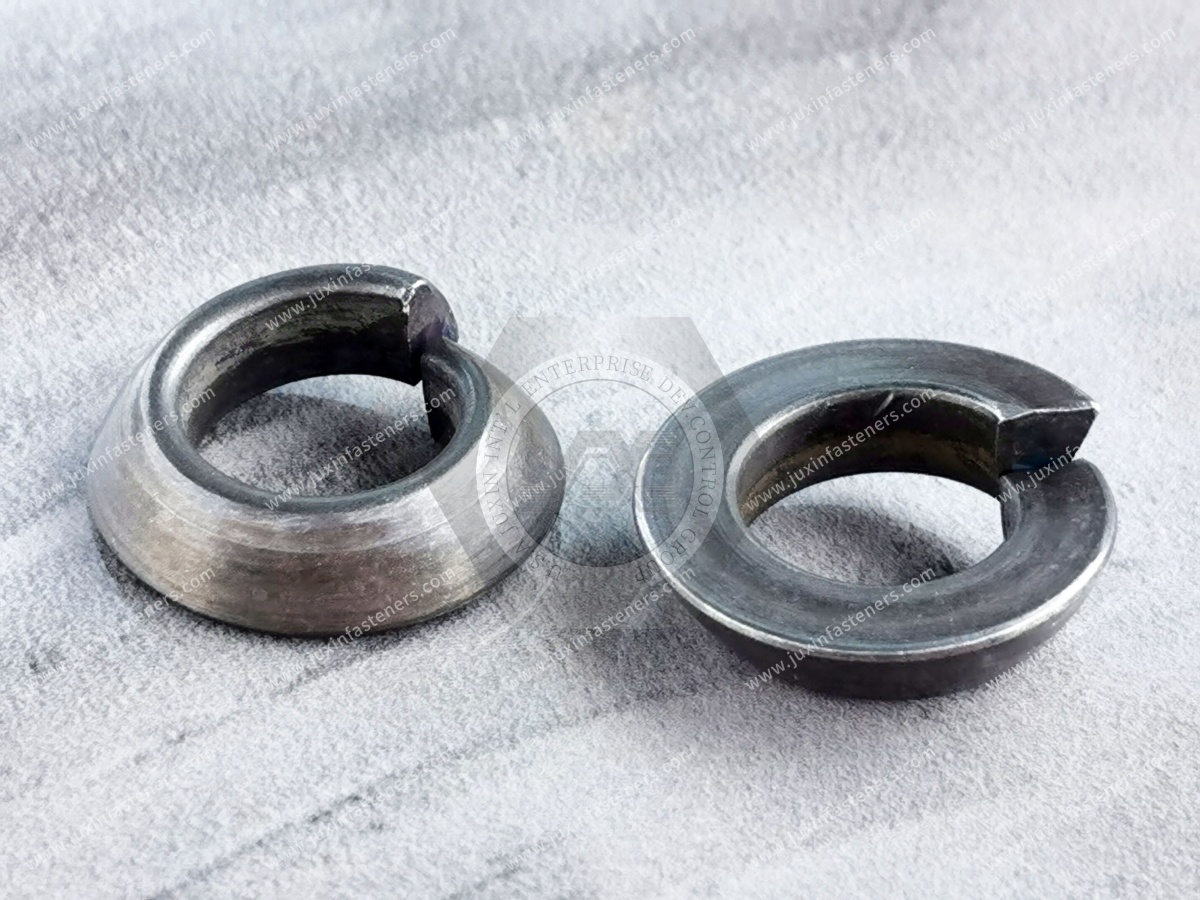
DIN 6796 specifies conical spring washers for bolted connections.
The washer has a conical geometry rather than the flat geometry of a conventional plain washer.
When compressed in an assembled joint, the washer behaves as a spring element.
Its purpose is to increase the elastic reserve of the fastening system so that a limited amount of settlement in the joint does not immediately produce the same degree of clamp-force loss that could occur in a less compliant joint.
This makes DIN 6796 particularly relevant to the engineering topic of:
Bolt Preload Retention
rather than simply:
Bolt Locking
DIN 6796:2009-08 is the current DIN standard for conical spring washers for bolted connections.
It replaced DIN 6796:1987-10.
This distinction matters when engineers or purchasing teams encounter older drawings.
A legacy drawing may reference an earlier edition, while a new sourcing project may specify the current DIN 6796 requirement.
The supplier should not silently reinterpret the customer's drawing.
These standards should not be treated as interchangeable.
Covers conical spring washers for bolted connections.
Covers quality requirements and dimensions for disc springs within its defined scope.
The engineering task is different.
A DIN EN 16983 disc spring may be selected from a required force-deflection characteristic and used individually or in engineered stacks.
A DIN 6796 washer is designed specifically around its function as a spring element in a bolted connection.
Therefore:
DIN 6796 Conical Spring Washer ≠ DIN EN 16983 Disc Spring
For detailed disc-spring engineering, force-deflection behavior and stacking, refer to the JUXIN FASTENERS disc spring engineering guide.
A purchasing request such as:
“Need Belleville washers for M12 bolts.”
can be ambiguous.
Does engineering require:
a DIN 6796 conical spring washer for a bolted joint;
a DIN EN 16983 disc spring;
a custom disc spring;
a serrated conical locking washer;
another locking system?
These products should not be substituted based only on visual similarity.
The correct standard or drawing should be established before quotation.
The washer begins with a conical free shape.
When the bolt or nut is tightened, axial force compresses the washer.
The washer then develops an elastic reaction force.
This additional spring element changes the elastic behavior of the assembled joint.
The key concept is:
Additional Elastic Travel
If the clamped components settle slightly after tightening, the spring washer can recover some of its deflection.
This can help maintain residual clamping force.
After a bolted connection is tightened, microscopic and macroscopic surface features at the interfaces can settle.
Potential interfaces include:
bolt-head bearing surface;
nut bearing surface;
washer interfaces;
coating interfaces;
clamped-part interfaces.
Settlement can reduce the effective compression of the joint.
As the joint shortens, bolt elongation can decrease.
That can reduce bolt preload.
This distinction is fundamental.
Clamp force decreases because the effective compressed length of the joint changes.
The bolt or nut may not rotate.
The bolt or nut rotates relative to the mating thread.
These are different mechanisms.
Therefore:
Preload Loss ≠ Always Bolt Rotation
A spring element that helps compensate for settlement should not automatically be described as a universal anti-rotation device.
Consider a simplified bolted connection.
The bolt behaves elastically as it is stretched.
The clamped components behave elastically as they are compressed.
If the clamped components settle, the amount of preload lost depends partly on the stiffness relationship within the joint.
Adding an appropriate spring element can increase the available elastic displacement.
That is one reason conical spring washers can be useful in selected bolted connections.
DIN 6796 is intended for conical spring washers used with bolts in the defined property-class range associated with the standard.
The standard is particularly connected with bolt property classes 8.8 through 10.9 according to the relevant ISO 898-1 framework.
This is not an arbitrary detail.
The washer and bolt operate as part of the same mechanical system.
A high-strength bolt can develop substantial preload.
The washer must therefore:
withstand the bearing conditions;
provide the intended spring behavior;
maintain the required mechanical properties;
avoid unacceptable permanent deformation.
A spring washer that deforms incorrectly under the fastener load cannot provide its intended elastic function.
Therefore:
Bolt Size Alone ≠ Complete Washer Specification
Bolt property class matters.
DIN guidance for this washer type warns that with lower bolt property classes, the washer can press into the associated bearing interface in a way that significantly reduces its intended securing effect.
This illustrates an important engineering principle:
Washer Selection Must Match the Fastener System
Procurement should not assume that a DIN 6796 washer is automatically suitable for every bolt of the same nominal diameter.
ISO 898-1 defines mechanical and physical properties for carbon and alloy steel bolts, screws and studs within its scope.
Property classes such as:
8.8;
10.9
describe fastener mechanical-property classifications.
However, bolt property class alone does not define:
joint preload;
tightening torque;
fatigue performance;
shear capacity of the complete joint;
corrosion resistance;
vibration resistance.
The complete joint still requires engineering evaluation.
DIN 267-26 provides technical specifications for conical spring washers made from spring steel for bolted connections.
It is an important companion reference within this product family.
For procurement and quality teams, this reinforces that a DIN 6796 washer is not defined only by outside diameter and thickness.
Technical delivery and performance requirements matter as well.
One of the useful engineering concepts associated with conical spring washers is residual spring force.
After defined loading and deformation conditions, the washer must retain sufficient spring behavior to continue performing its intended function.
This matters because:
Conical Shape Alone ≠ Functional Spring Washer
The component must retain the required elastic performance after loading.
If a spring washer undergoes excessive permanent deformation, its available spring travel can decrease.
That can reduce its ability to compensate for settlement.
Therefore, quality evaluation can involve more than dimensional inspection before installation.
The required spring behavior after loading is part of the functional consideration.
A conventional flat washer can provide:
bearing-load distribution;
surface protection;
controlled bearing interface.
But it does not provide the same intentional conical spring deflection as a DIN 6796 washer.
Therefore:
Flat Washer ≠ Conical Spring Washer
If the joint relies on elastic spring behavior, replacing the conical washer with a plain flat washer changes the mechanical system.
A conventional split/helical spring lock washer has a different geometry and different behavior.
DIN 6796 uses a conical spring geometry.
A split lock washer uses a split helical ring geometry.
They should not be considered equivalent simply because both are called spring washers.
A Belleville-type disc spring is commonly selected according to a required force-deflection characteristic.
Multiple disc springs can be arranged in:
series;
parallel;
combination stacks.
DIN 6796 conical spring washers are designed specifically for bolted connections within the scope of that standard.
Therefore, a complex engineered disc spring stack should not be replaced with DIN 6796 washers without engineering review.
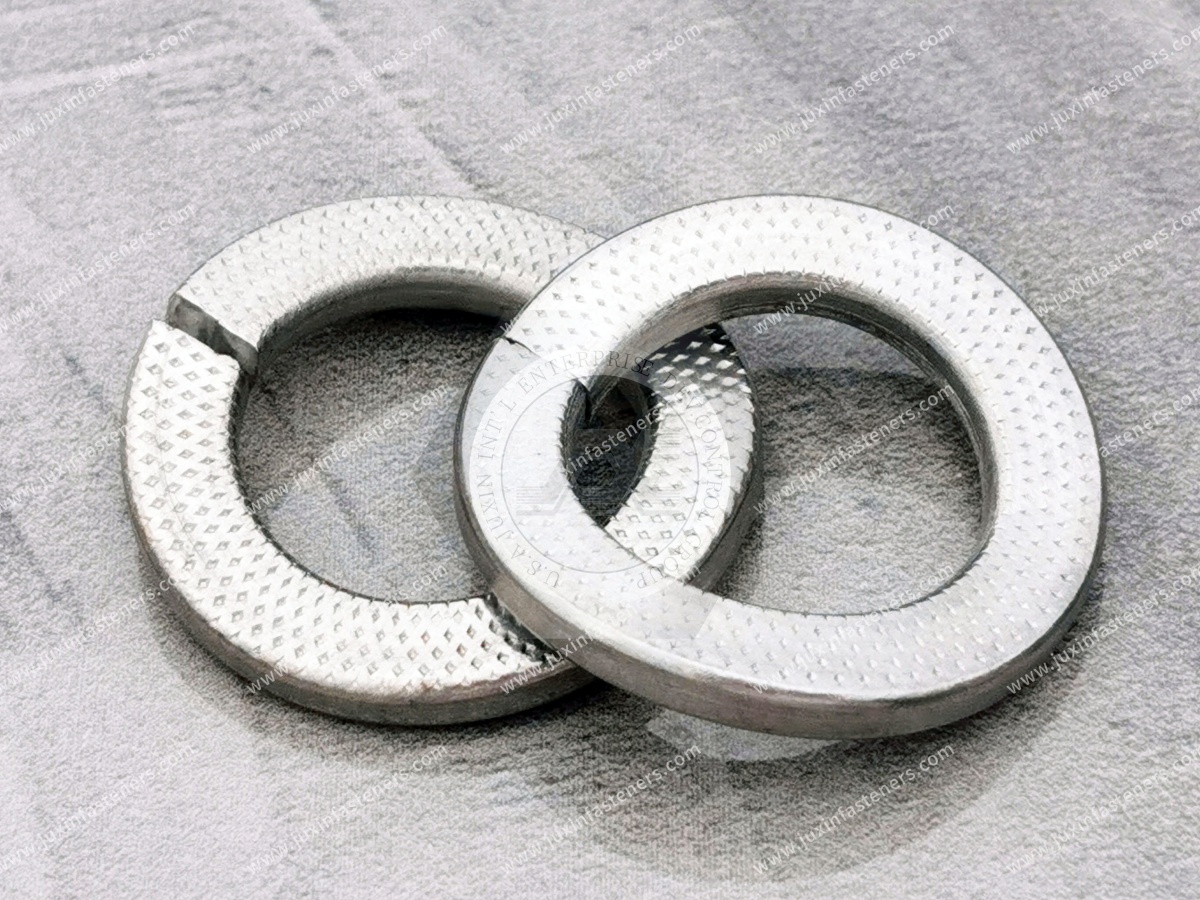
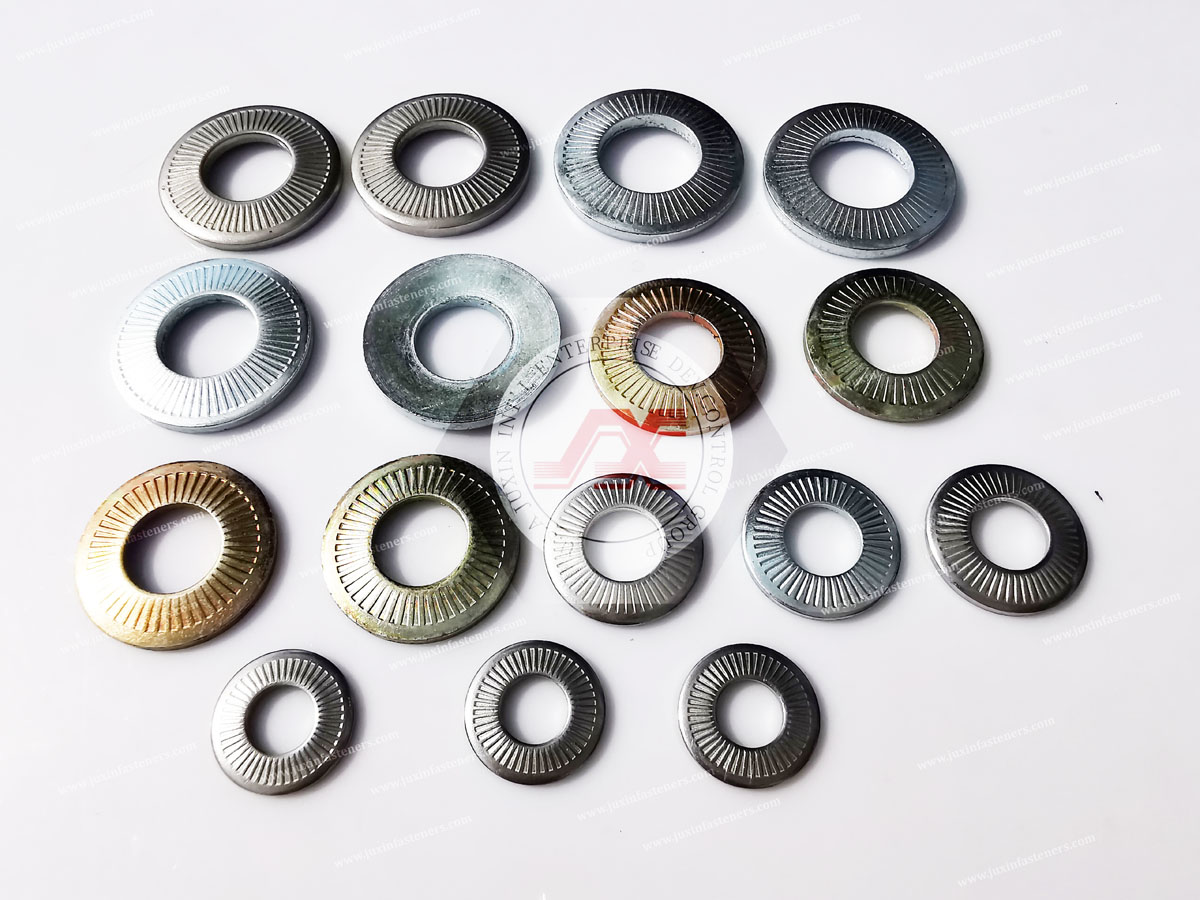
Some commercial conical locking washers include serrations or teeth.
DIN 6796 should not automatically be interpreted as requiring a serrated surface.
If serrations are required, the product drawing or applicable specification should identify them.
Therefore:
Conical Geometry ≠ Serrated Locking Geometry
Wedge-locking washer systems use a different principle.
They typically use paired washers with engineered cam geometry intended to resist rotational self-loosening.
DIN 6796 conical spring washers use elastic deformation to influence the joint's spring behavior.
Therefore:
Settlement Compensation ≠ Wedge Locking
These technologies address different engineering requirements.
This question needs a precise answer.
They can help counteract preload reduction caused by settlement in an appropriate bolted joint.
However, DIN guidance specifically warns that these spring elements do not provide effective protection against rotational loosening caused by alternating transverse loading.
That is a major limitation.
Therefore:
DIN 6796 Washer ≠ Universal Vibration-Locking Device
When a bolted joint experiences cyclic transverse forces, relative movement can develop between the clamped components.
If joint slip becomes sufficient, rotational self-loosening may occur.
That failure mechanism is different from simple settlement.
Increasing elastic reserve does not automatically eliminate transverse joint movement.
Engineers should therefore evaluate:
preload;
joint stiffness;
external transverse load;
interface friction;
clamp length;
joint geometry;
locking strategy.
DIN guidance indicates that these washers are intended for appropriate bolted joints dominated by axial loading rather than connections where alternating transverse loading is the primary loosening mechanism.
This provides a valuable application filter.
Before specifying DIN 6796, ask:
Is the problem primarily loss of clamp force through settlement, or rotational loosening caused by transverse joint movement?
The answer can lead to completely different fastening solutions.
Short bolted connections can have relatively limited elastic elongation compared with longer, more compliant fasteners.
A conical spring washer can add elastic displacement to the system.
This is one reason DIN 6796 washers can be relevant to certain short bolted connections.
The engineering objective is not simply to “lock the nut.”
It is to improve the elastic behavior of the assembled connection.
A simplified sequence can look like this:
Bolt Tightening → Initial Preload → Surface Settlement → Reduced Joint Thickness → Reduced Bolt Elongation → Reduced Clamp Force
With an appropriate conical spring washer:
Bolt Tightening → Washer Deflection → Settlement Occurs → Washer Recovers Some Deflection → Residual Clamp Force Can Be Better Maintained
This is a much more accurate explanation than:
“The washer bites into the surface and stops the nut turning.”
Temperature changes can alter dimensions within a bolted assembly.
Different materials may have different coefficients of thermal expansion.
A spring element can sometimes provide additional elastic travel that helps manage controlled dimensional changes.
However:
DIN 6796 Washer ≠ Automatic Thermal Compensation Solution
The expected temperature range, material combination and dimensional change must still be evaluated.
Some joints include materials that can change dimension under sustained load.
Examples can include certain:
polymers;
gasket materials;
soft intermediate layers;
coatings.
A spring element may help manage limited displacement.
But if creep or relaxation is substantial, the complete joint must be engineered around that behavior.
A washer cannot compensate for unlimited material deformation.
Gaskets can compress or relax after installation.
Conical spring elements may be considered where additional joint elasticity is useful.
However, sealing performance depends on the entire assembly:
gasket material;
gasket compression;
flange stiffness;
bolt preload;
temperature;
pressure;
surface finish.
A DIN 6796 washer alone does not guarantee leak-tightness.
This distinction must remain clear.
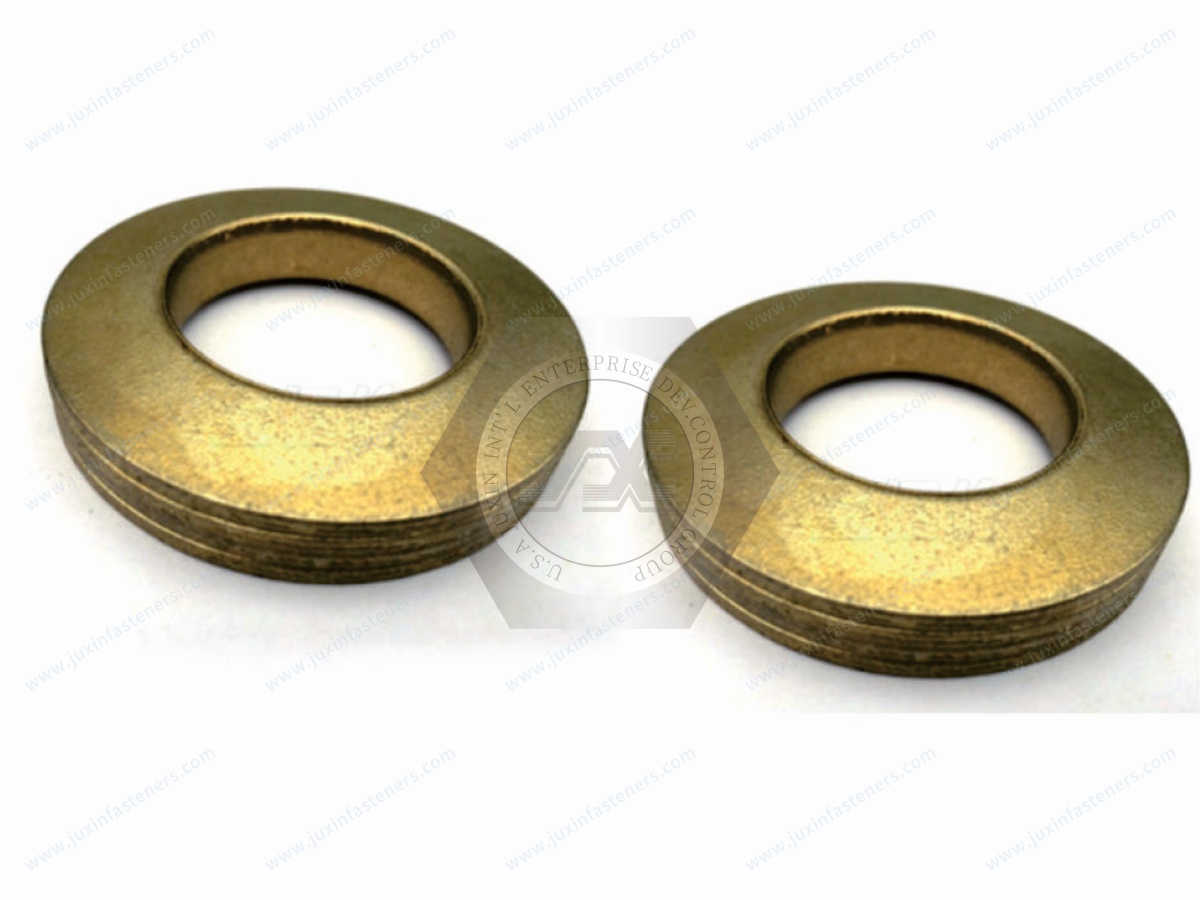
The washer produces a spring reaction.
The bolt develops tensile preload.
The joint includes multiple elastic components.
Therefore:
Washer Spring Force ≠ Automatically Total Bolt Preload
The interaction depends on the installed joint condition.
Another important distinction:
Installation Torque ≠ Direct Measurement of Clamp Force
Torque is affected by friction at:
threads;
bolt-head or nut bearing surface;
washer interfaces.
Changes in coating, lubrication and surface finish can alter the torque-preload relationship.
When a conical spring washer is introduced into an existing torque-controlled assembly, the complete tightening process should be reviewed.
The washer transfers load through its contact surfaces.
Engineers should consider:
parent-material hardness;
surface flatness;
coatings;
plating;
paint;
local bearing pressure.
A spring washer installed against an unsuitable soft surface may not behave as intended.
High-strength bolted joints can generate substantial bearing pressure.
The washer must maintain its functional geometry and mechanical properties under load.
This is why washer material and mechanical requirements cannot be separated from the bolt property class.
For broader washer-interface engineering, see the JUXIN FASTENERS industrial washer selection guide.
DIN 6796 conical spring washers are associated with spring materials capable of providing the required elastic performance.
For OEM projects, material selection should be controlled by:
applicable standard;
customer drawing;
required mechanical properties;
operating temperature;
corrosion environment;
surface treatment.
A generic material name should not replace the required specification.
Where corrosion-resistant material is required, the exact stainless or corrosion-resistant material specification should be defined.
“Stainless steel” alone is not a complete engineering specification.
Selection should consider:
corrosion environment;
chlorides;
temperature;
mating materials;
required spring properties.
Stainless steel is corrosion-resistant, not corrosion-proof.
Depending on material and project requirements, conical spring washers may use suitable surface treatments.
Possible project-controlled systems can include:
phosphate-based finishes;
zinc-based coatings;
mechanically applied coatings;
other specified protective systems.
The coating must be compatible with the spring material and required mechanical performance.
High-strength spring-steel components require careful consideration when electrochemical coating processes can introduce hydrogen.
Risk depends on factors including:
material strength;
hardness;
manufacturing condition;
coating process;
applied stress.
There is no universal baking recipe suitable for every spring washer.
Surface-treatment requirements should follow the material, process and customer specification.
Where neutral salt-spray testing is required, ASTM B117 can provide a standardized test method.
However:
Salt Spray Hours ≠ Direct Field Service Life
The RFQ should separately define:
coating system;
required test duration;
acceptance criteria.
DIN 6796-type conical spring washers can be evaluated in appropriate automotive equipment joints where controlled spring behavior and preload retention are required.
Potential non-safety-critical examples can include:
equipment brackets;
auxiliary assemblies;
mechanical mounts;
serviceable equipment.
Safety-critical automotive applications require customer-specific validation.
Generic DIN 6796 washers should not automatically be promoted for:
wheel joints;
steering;
brakes;
suspension;
crash-critical structures.
Construction, mining and agricultural equipment can experience:
shock;
vibration;
settlement;
thermal cycling;
repeated maintenance.
Where preload loss through settlement is a concern, conical spring washers may be evaluated as part of the bolted-joint system.
Where transverse self-loosening dominates, another locking strategy may be required.
Potential applications can include:
machine frames;
gearboxes;
pumps;
compressors;
motors;
mechanical equipment;
serviceable assemblies.
The correct washer depends on the joint problem.
A machine that “vibrates” does not automatically require DIN 6796.
Machine tools contain joints exposed to combinations of:
static preload;
cyclic loads;
vibration;
thermal change.
Conical spring washers may be useful where the specific bolted connection benefits from additional elasticity.
The joint should still be evaluated for rotational loosening separately.
HVAC equipment includes:
compressors;
fans;
pumps;
motors;
equipment frames;
service panels.
If the problem is settlement or limited clamp-force loss, additional joint elasticity may help.
If the problem is rotational loosening from transverse vibration, the locking strategy must address that mechanism.
Electrical equipment can experience thermal cycling as operating load changes.
Potential mechanical applications can include:
equipment frames;
transformers;
switchgear structures;
power conversion equipment;
electrical cabinets.
DIN 6796 washers may be evaluated where their mechanical spring function is relevant.
They should not automatically be described as:
electrical grounding devices;
EMI/RFI components;
busbar contact washers.
Electrical functions require separate specifications.
AI data centers and HPC infrastructure contain:
UPS equipment;
power conversion systems;
electrical enclosures;
cooling systems;
mechanical support structures.
Temperature changes and equipment vibration can affect some bolted assemblies.
Conical spring washers may be evaluated where controlled joint elasticity is required.
Their use should be based on the actual mechanical problem, not simply the industry name.
EV power electronics and thermal-management equipment contain numerous mechanical connections.
A conical spring washer may be considered where the mechanical joint requires controlled elastic behavior.
However, the washer should not automatically be presented as:
a battery sealing component;
an electrical contact spring;
a grounding component;
an EMI shielding solution.
Each of those functions requires separate engineering validation.
Wind and other renewable-energy equipment can contain mechanical assemblies exposed to:
cyclic loading;
thermal variation;
outdoor corrosion.
Conical spring washers may be relevant to selected equipment joints.
Critical structural connections require project-specific engineering and should not rely on generic product claims.
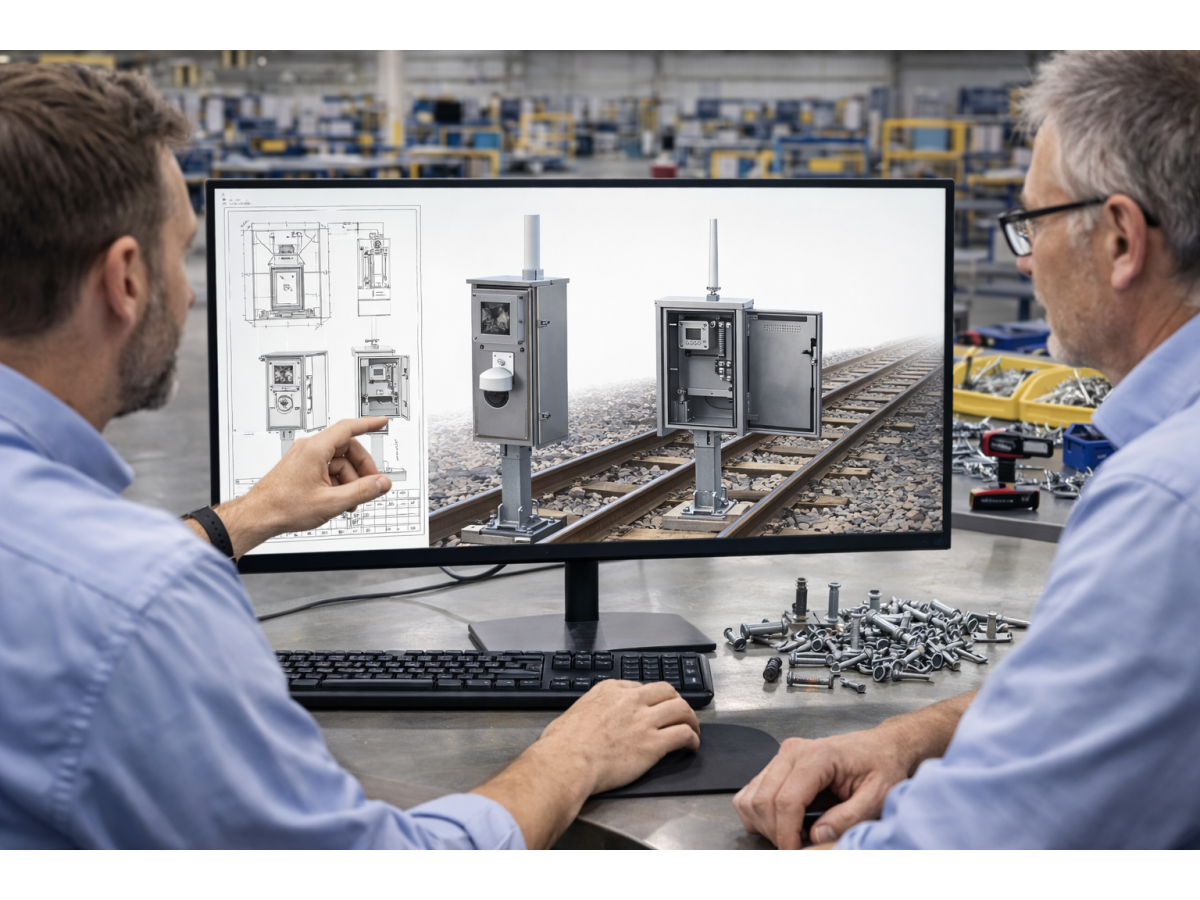
Railway equipment contains both ordinary mechanical fasteners and highly controlled safety-critical joints.
DIN 6796 washers may be used only where compatible with the applicable project drawing and engineering requirements.
Generic industrial supply should not be described as automatically railway-qualified.
Conical spring washers may be used in mechanical portions of:
diagnostic equipment;
laboratory machines;
equipment carts;
housings;
mechanical assemblies.
A generic washer should not automatically be described as:
medically certified;
sterile;
biocompatible;
cleanroom-qualified.
Those requirements must be separately specified.
Conical spring elements can be used in aerospace mechanisms when the exact component is manufactured and qualified to the applicable specification.
Generic DIN industrial washers should not automatically be promoted as flight-critical hardware.
Aerospace inquiries should begin with the customer's:
drawing;
material specification;
qualification requirements;
inspection requirements;
traceability requirements.
| Engineering Condition | Selection Direction |
|---|---|
| Need additional elasticity in bolted joint | Evaluate DIN 6796 |
| Settlement causing preload loss | Evaluate spring reserve and joint design |
| Short high-strength bolt | DIN 6796 may be relevant within standard scope |
| Bolt class 8.8–10.9 | Check DIN 6796 requirements and complete joint |
| Alternating transverse loading | Do not rely on DIN 6796 alone for rotational locking |
| Severe rotational self-loosening | Evaluate dedicated locking strategy |
| Soft bearing material | Check local bearing/deformation |
| Thermal dimensional change | Calculate expected movement |
| Gasket relaxation | Evaluate complete gasketed joint |
| Corrosive environment | Define material and coating |
| Safety-critical application | Project-specific validation required |
DIN 6796 does not provide universal protection against rotational loosening under alternating transverse loads.
DIN 6796 and DIN EN 16983 have different product scopes.
Bolt property class and joint conditions matter.
Settlement compensation is one of the main reasons to introduce a spring element into the joint.
A spring washer installed against an unsuitable surface may not perform as intended.
Spring force and rotational locking are different engineering functions.
A washer cannot correct an uncontrolled tightening process.
A visually similar washer may follow another standard or customer drawing.
Surface treatment can affect corrosion, friction and manufacturing risk.
Changing a washer can change the mechanical behavior of the complete joint.
Engineers may search:
DIN 6796 washer;
DIN 6796 application;
conical spring washer for bolts;
spring washer for high-strength bolts;
washer for bolt preload loss;
washer for joint settlement;
DIN 6796 vs Belleville washer;
DIN 6796 vs disc spring;
conical washer for 10.9 bolt;
how to maintain bolt preload.
These queries indicate a specific engineering problem rather than generic product discovery.
Purchasing and supplier-development teams may search:
DIN 6796 washer supplier;
DIN 6796 manufacturer;
conical spring washer manufacturer;
high-strength spring washer supplier;
OEM conical washer supplier;
spring steel washer manufacturer;
custom conical spring washer.
Procurement should confirm the engineering specification before supplier comparison.
Providing the standard greatly reduces ambiguity.
However, the supplier may still need:
nominal thread size;
bolt property class;
material requirement;
finish;
corrosion requirement;
quantity;
inspection requirement;
customer drawing.
For custom or modified parts, additional dimensional and performance information may be necessary.
For technical evaluation by JUXIN FASTENERS, provide where applicable:
2D drawing;
3D model where relevant;
physical sample;
customer part number;
DIN 6796 requirement;
applicable standard edition where controlled;
DIN 267-26 requirement where applicable;
nominal bolt size;
bolt property class;
bolt or screw standard;
mating nut specification;
washer inside diameter;
washer outside diameter;
washer thickness;
free height;
spring-force requirement where specified;
residual spring-force requirement where specified;
material;
material specification;
hardness requirement;
surface treatment;
coating thickness where specified;
trivalent chromium requirement where applicable;
RoHS/REACH requirement where applicable;
corrosion-test requirement;
parent material;
parent-material hardness where relevant;
parent-material thickness;
bearing-surface condition;
tightening requirement;
lubrication condition where controlled;
expected joint settlement;
external load direction;
vibration environment;
operating temperature;
corrosion environment;
disassembly requirement;
reuse requirement where applicable;
safety classification where applicable;
sample quantity;
production quantity;
annual demand;
inspection requirements;
packaging requirements;
labeling requirements;
customer-specific requirements.
DIN 6796 specifies conical spring washers for bolted connections.
The washer acts as an elastic spring element within the joint.
Yes. DIN 6796:2009-08 is the current edition listed by DIN.
No.
DIN 6796 applies to conical spring washers for bolted connections.
DIN EN 16983 covers disc springs within its defined scope.
No.
DIN 2093 was associated with disc springs and has been withdrawn in favor of the European DIN EN 16983 framework.
DIN 6796 remains a separate standard for conical spring washers for bolted connections.
The standard is intended for applications involving bolts in the property-class range 8.8 to 10.9 within its scope.
The complete joint still requires engineering evaluation.
It can help counteract clamp-force loss associated with settlement by adding spring behavior to an appropriate joint.
It should not be relied upon as effective protection against rotational self-loosening caused by alternating transverse loading.
The word “vibration” is too broad.
If vibration creates settlement, the spring element may help maintain clamp force.
If cyclic transverse loading causes rotational self-loosening, a dedicated locking strategy may be required.
Not automatically.
The two components have different mechanical functions.
Any substitution should be evaluated against the joint design.
Not automatically.
Their geometries and mechanical behavior are different.
DIN 6796 should not be treated as a general disc-spring stacking standard.
If an application requires a calculated spring stack with defined force and travel, a disc-spring design under the appropriate disc-spring framework may be more suitable.
DIN 6796 should not automatically be interpreted as a serrated washer specification.
If teeth or serrations are required, define the applicable product specification or drawing.
A valuable engineering search may begin with:
“Why is my bolt losing clamp force?”
The next step should not automatically be:
“Add a lock washer.”
A better path is:
Identify Preload-Loss Mechanism → Determine Whether Rotation Occurs → Evaluate Joint Stiffness → Check Bolt Property Class
→ Evaluate DIN 6796 Suitability → Define Material & Finish → Validate Joint → Approve Specification → Supplier RFQ
This connects engineering diagnosis directly to procurement.
JUXIN FASTENERS supports OEM sourcing of DIN 6796 conical spring washers, industrial washers, bolts, nuts,
screws and custom fastening components for machinery, automotive equipment, heavy equipment, electrical systems, power equipment, HVAC, industrial automation and other engineered assemblies.
For general industrial washer selection, see Industrial Washers: Types, Functions & Selection Guide.
For complete bolted-joint washer selection, see Washers and Bolts: Fastening Systems Selection Guide.
For high-strength bolt selection, see High-Strength Bolts & Nuts: Engineering Selection Guide.
For alternative rotational locking, see Nylon Insert Locknuts for Anti-Vibration Applications.
For DIN 6796 conical spring washer RFQs, send your drawing, nominal bolt size, bolt property class, applicable standard, material, finish, joint application and estimated demand to:
The key question is not simply:
“Do I need a spring washer?”
It is:
“Is my joint losing preload through settlement, or is the fastener rotationally loosening under transverse loading?”
That distinction determines whether a DIN 6796 conical spring washer is solving the right engineering problem.
 MORE NEWS
Sep. 25, 2026
Sep. 25, 2026
Sep. 25, 2026
Contact Us
Tel.:
+86 020 8621 0320
+86 020 3121 6067
E-mail:
Technical Support:
Navigation
SEND INQUIREY