
Call Us
+86 136 6007 9809
Call Us
+86 136 6007 9809

Aug. 12, 2026
DIN 985 Nylon Lock Nut vs ISO 7041: Complete Engineering Guide for Self-Locking Nut Selection
PART 2
Surface Finish Guide for DIN 985 Nylon Insert Lock Nuts
Surface treatment is a critical factor affecting the service life, corrosion resistance, appearance, and performance stability of DIN 985 nylon lock nuts.
For industrial OEM applications, selecting the correct coating is not only about appearance. Engineers must consider:
Corrosion environment
Salt spray requirements
Temperature resistance
Electrical conductivity
Chemical exposure
Assembly conditions
Customer specifications
Juxin Fasteners provides various surface finishing solutions for metric nylon insert lock nuts, supporting automotive, EV, industrial equipment, railway,
and machinery manufacturers worldwide.
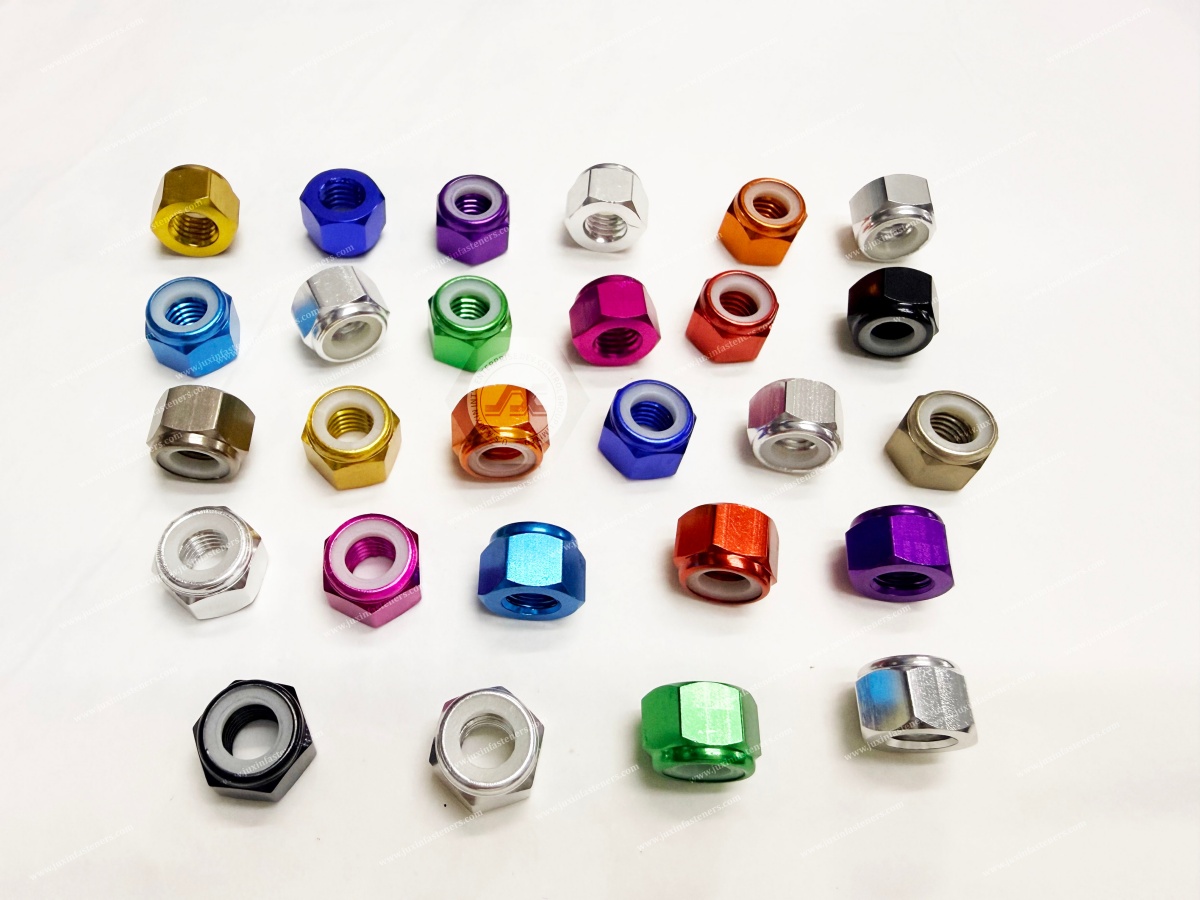
1. Zinc Plated Nylon Lock Nuts
Standard Solution for General Industrial Applications
Zinc plating is one of the most commonly used surface treatments for carbon steel DIN 985 lock nuts.
Advantages:
Cost-effective corrosion protection
Stable production process
Good appearance
Suitable for indoor and general outdoor applications
Typical applications:
Industrial machinery
Electrical cabinets
Mechanical equipment
General OEM assembly
Common options:
Zinc clear plating
Zinc blue plating
Zinc yellow plating
Zinc black plating
For standard industrial environments, zinc plated nylon lock nuts provide an excellent balance between performance and cost.
2. Zinc Nickel Plated Nylon Lock Nuts
High Corrosion Resistance Solution for Automotive and EV Applications
With increasing requirements from electric vehicle manufacturers and automotive OEMs, traditional zinc plating is sometimes insufficient.
Zinc nickel coating provides significantly improved corrosion resistance.
Typical performance:
720 hours salt spray resistance
Excellent chemical resistance
Better temperature stability
Suitable for harsh environments
Common applications:
EV battery systems
Automotive chassis components
Charging equipment
Outdoor industrial equipment
For automotive applications requiring long service life, zinc nickel plated DIN 985 nylon lock nuts are becoming a preferred solution.
3. Stainless Steel Passivation
Premium Corrosion Protection Solution
Stainless steel nylon lock nuts usually use:
SS304
SS316
After machining and production, passivation treatment improves corrosion resistance by removing free iron contamination from the surface.
Advantages:
Excellent corrosion resistance
No additional coating required
Suitable for clean environments
Long-term durability
Applications:
Food processing equipment
Medical devices
Marine equipment
Chemical machinery
4. Black Oxide Finish
Black oxide provides:
Black appearance
Mild corrosion protection
Reduced light reflection
Improved surface appearance
Common applications:
Precision machinery
Automotive interior components
Industrial equipment
For outdoor environments, black oxide usually requires additional oil or sealing treatment.
5. Customized Surface Treatment
According to customer requirements, Juxin Fasteners can provide:
PTFE coating
Geomet coating
Dacromet coating
Nickel plating
Special corrosion-resistant coatings
All products can be manufactured according to:
Customer drawings
OEM specifications
International standards
Material requirements
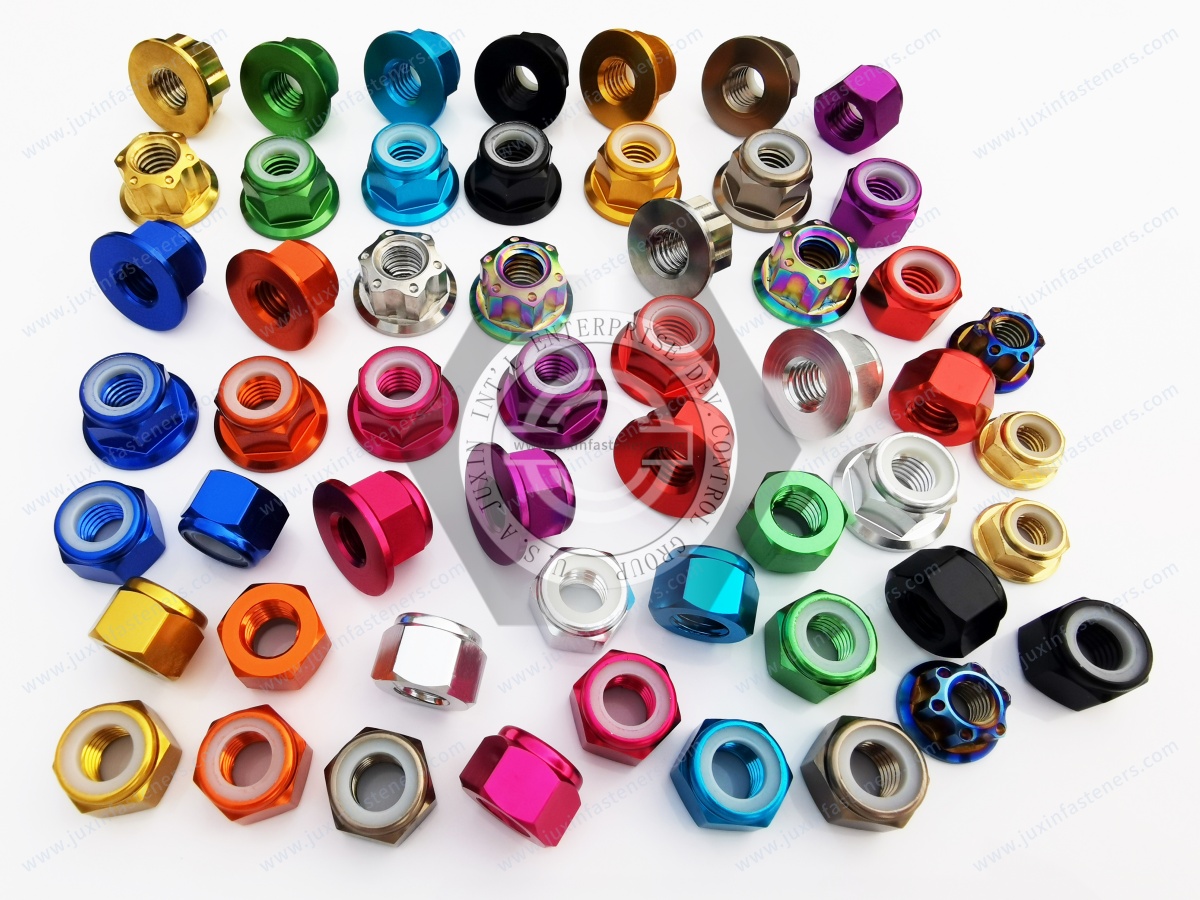
Manufacturing Process of DIN 985 Nylon Insert Lock Nuts
A professional nylon lock nut manufacturer must control every production stage to ensure consistent locking performance.
The manufacturing process includes:
Step 1: Raw Material Selection
Material selection directly affects mechanical performance.
Common materials:
Carbon Steel
For general industrial applications.
Stainless Steel
For corrosion-resistant applications.
Aluminum Alloy
For lightweight requirements.
Brass
For electrical applications.
Raw materials are inspected before production:
Chemical composition
Hardness
Surface quality
Material certificate verification
Step 2: Cold Forging Process
For high-volume production, cold forging is commonly used.
Advantages:
High production efficiency
Stable dimensions
Improved material strength
Reduced material waste
The steel wire is formed into hexagonal nut blanks through multiple forging stages.
Step 3: Thread Manufacturing
Threads are produced through:
Tapping process
Thread rolling process
Thread quality inspection includes:
Pitch accuracy
Thread gauge inspection
Surface quality
Common thread standards:
ISO Metric Thread
UNC Thread
UNF Thread
Customized thread requirements
Step 4: Nylon Insert Installation
The nylon locking ring is precisely installed into the nut.
The insert requires accurate control of:
Insert diameter
Insert position
Interference amount
Material quality
The nylon insert creates the required prevailing torque.
Step 5: Surface Treatment
After machining:
Products undergo selected surface treatment:
Zinc plating
Zinc nickel plating
Passivation
Nickel plating
Customized coating
Step 6: Quality Inspection
Professional inspection includes:
Dimensional Inspection
Checking:
Width across flats
Nut height
Thread dimensions
Mechanical Testing
Including:
Torque testing
Locking performance testing
Hardness testing
Corrosion Testing
Including:
Salt spray testing
Coating thickness testing
Juxin Fasteners provides inspection reports according to customer requirements.
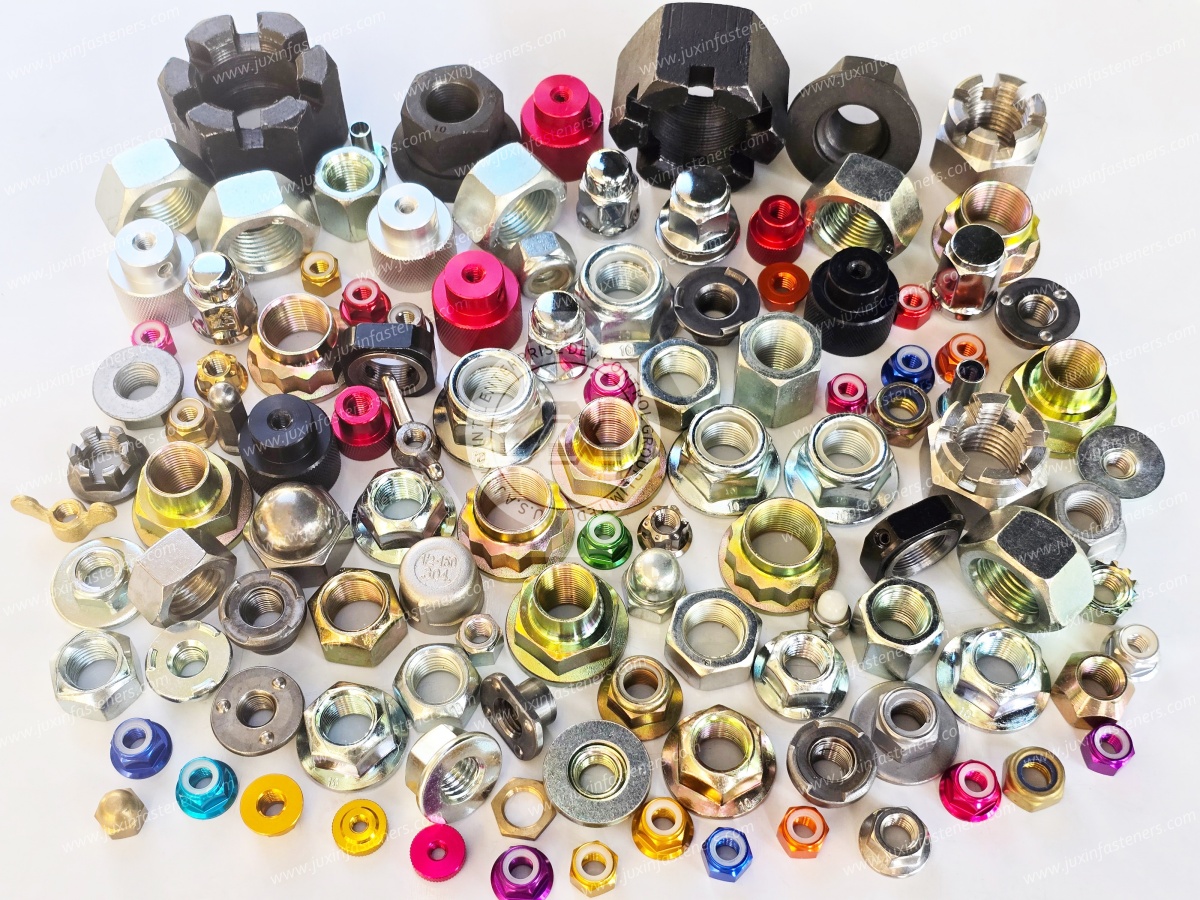
Working Principle of Nylon Insert Lock Nuts
How Does a DIN 985 Nylon Lock Nut Prevent Loosening?
A standard nut relies mainly on clamping force.
However, under vibration or dynamic loading, the bolt may experience:
Micro movement
Rotation force
Shock loading
Eventually, the nut may loosen.
A nylon insert lock nut solves this problem through a prevailing torque locking mechanism.
Engineering Structure Explanation
The structure contains three main components:
Nylon Locking Insert
↓↓↓
┌─────────────┐
│ Nylon Ring │
┌──┴─────────────┴──┐
│ │
│ Hex Nut Body │
│ │
│ Internal Thread │
└─────────┬─────────┘
│
│
Bolt
Locking Process
Step 1: Bolt Installation
The bolt enters the nut thread normally.
Step 2: Nylon Compression
When the bolt reaches the nylon insert area:
Nylon material deforms slightly
Pressure increases around bolt threads
Friction force increases
Step 3: Prevailing Torque Generation
The nylon insert creates resistance against rotation.
This additional friction prevents:
Self-loosening
Vibration loosening
Rotation under dynamic loads
Why Nylon Insert Lock Nuts Are Widely Used?
Compared with other locking methods:
Locking Method | Advantages | Limitations |
Nylon Insert Nut | Reusable, economical, easy installation | Temperature limitation |
Metal Lock Nut | High temperature resistance | Higher cost |
Spring Washer | Simple | Limited vibration resistance |
Thread Adhesive | Chemical locking | Requires curing time |
Welding | Permanent | Not reusable |
Industrial Applications of DIN 985 Nylon Lock Nuts
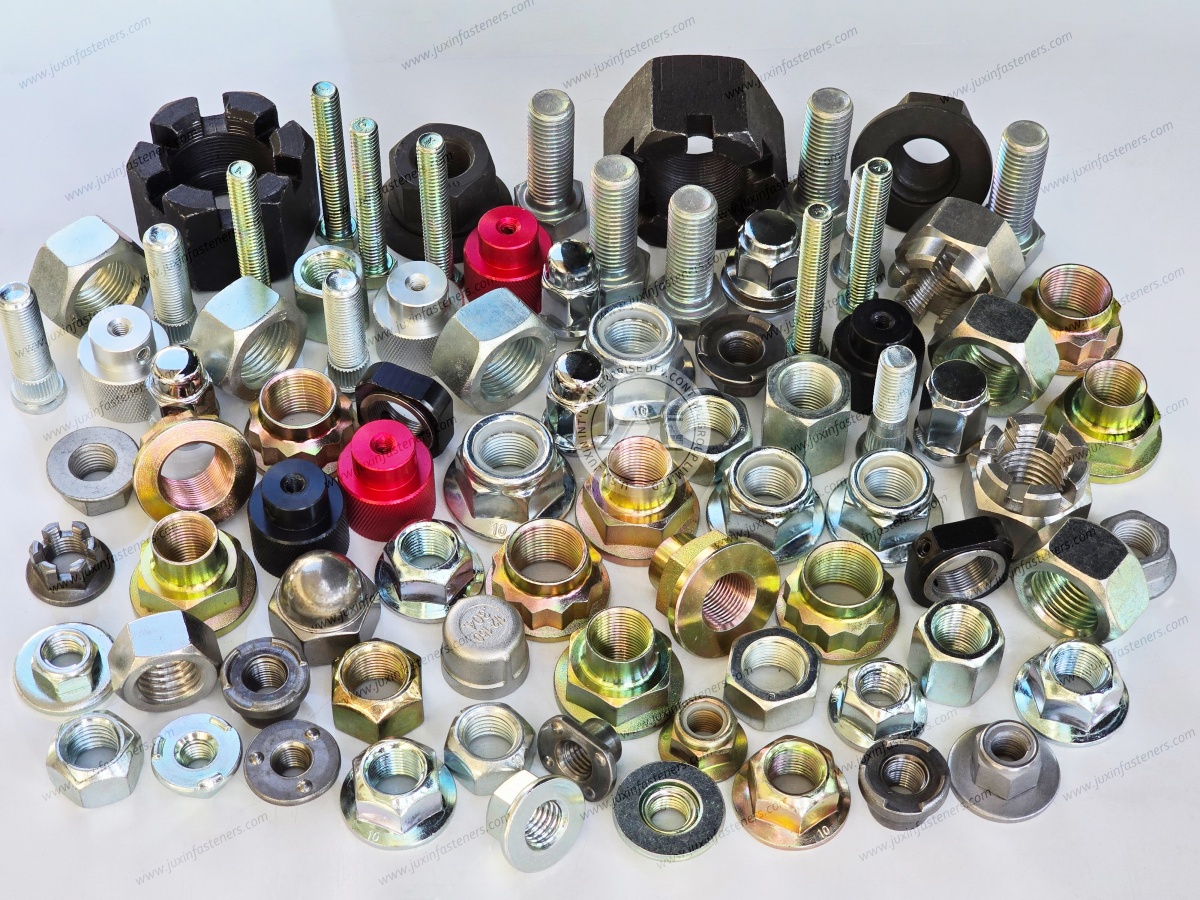
Juxin Fasteners supplies OEM nylon lock nut solutions for multiple industries.

1. Automotive Industry
Automotive manufacturing requires reliable fastening solutions under vibration and dynamic loads.
Applications:
Vehicle interior systems
Seat structures
Sunroof mechanisms
Roof racks
Chassis components
Brackets
Advantages:
Stable locking performance
Corrosion resistance
Automated assembly compatibility
Juxin Fasteners supports automotive supply chains including:
EV manufacturers
Automotive component suppliers
Tier 1 and Tier 2 suppliers
2. Electric Vehicle (EV) Industry
EV systems require lightweight and corrosion-resistant fastening solutions.
Applications:
Battery pack structures
Charging equipment
Electronic control systems
Vehicle accessories
Recommended solutions:
Zinc nickel plated nylon lock nuts
Stainless steel nylon lock nuts
Aluminum lock nuts
3. Electrical Cabinet Industry
Nylon lock nuts are widely used in:
Control cabinets
Distribution equipment
Electrical enclosures
Benefits:
Reliable vibration resistance
Good insulation compatibility
Easy maintenance
4. HVAC Equipment
Applications:
Air conditioning units
Ventilation systems
Cooling equipment
Requirements:
Corrosion resistance
Long-term stability
Easy installation

5. Industrial Machinery
Used in:
Automation equipment
Packaging machinery
Production lines
Machine frames
6. Railway Equipment
Rail transportation requires highly reliable fastening systems.
Applications:
Passenger equipment
Interior structures
Electrical systems
Supporting components
7. Medical Equipment
Applications:
Medical devices
Laboratory equipment
Diagnostic equipment
Preferred materials:
Stainless steel SS304
SS316
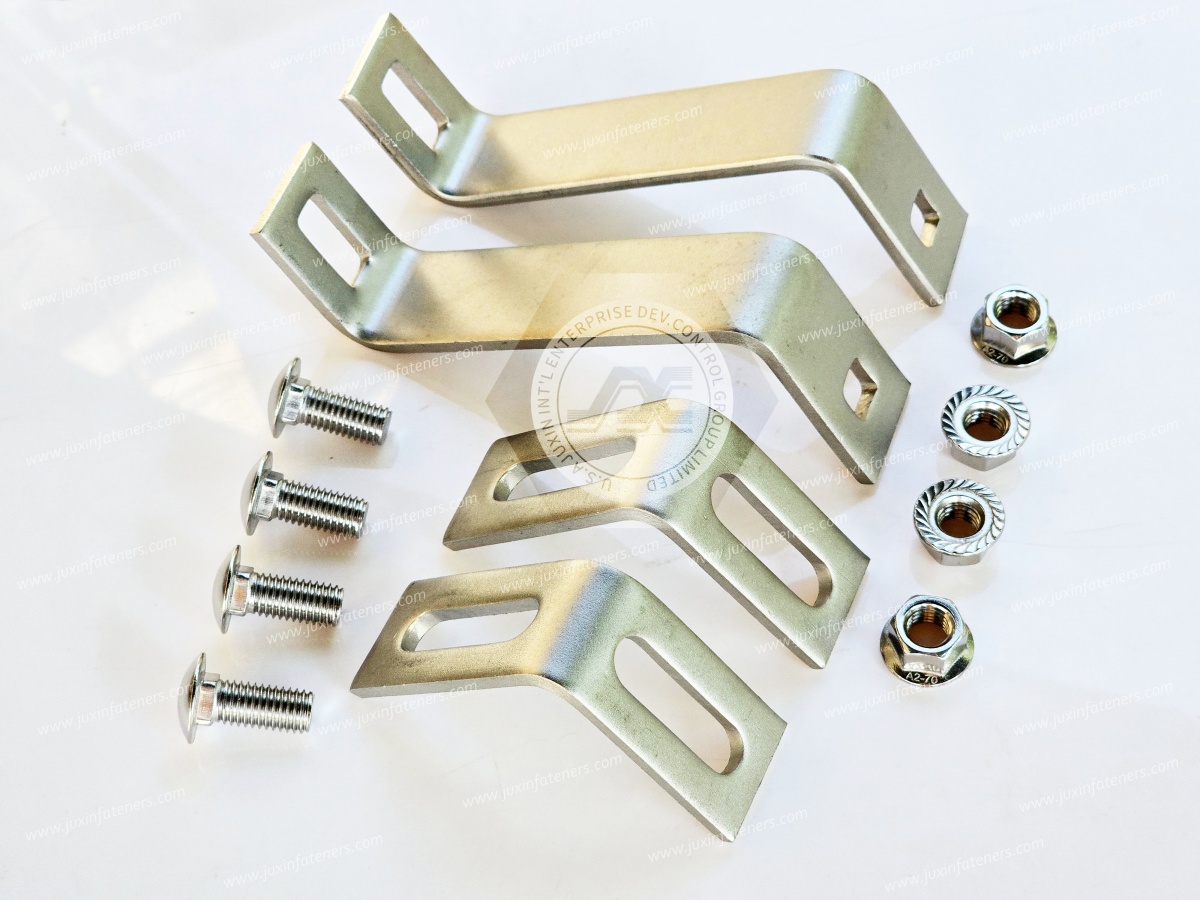
8. Solar Energy Systems
Applications:
Solar mounting structures
Electrical equipment
Outdoor support systems
Requirements:
Weather resistance
Long service life
9. Agricultural Machinery
Applications:
Tractors
Harvesting machines
Outdoor equipment
Advantages:
Vibration resistance
Dust and moisture resistance
10. Food Processing Equipment
Applications:
Food machinery
Stainless equipment
Packaging systems
Recommended:
SS304 nylon lock nuts
SS316 nylon lock nuts
11. Marine Equipment
Marine environments require:
High corrosion resistance
Long-term durability
Recommended:
Stainless steel DIN 985 lock nuts
Zinc nickel coated solutions
12. Communication Infrastructure
Applications:
Telecom cabinets
Outdoor equipment
Network systems
 MORE NEWS
Sep. 27, 2026
Sep. 27, 2026
Sep. 27, 2026
Contact Us
Tel.:
+86 020 8621 0320
+86 020 3121 6067
E-mail:
Technical Support:
Navigation
SEND INQUIREY