
Call Us
+86 136 6007 9809
Call Us
+86 136 6007 9809

Aug. 12, 2026
DIN 985 Nylon Insert Lock Nut vs ISO 7041: Which Self-Locking Nut Is Right for Your Application?
In modern industrial manufacturing, fastener reliability directly affects product safety, assembly efficiency, and long-term performance.
For applications exposed to vibration, repeated loading, temperature changes, and mechanical stress, standard hex nuts may gradually loosen during operation.
To solve this challenge, engineers often select nylon insert lock nuts, also known as self-locking nuts or prevailing torque nuts.
Among global fastening standards, DIN 985 nylon insert lock nut and ISO 7041 self-locking nut are two widely used solutions in automotive, machinery,
electrical equipment, railway systems, and industrial OEM applications.
Although these two standards appear very similar, there are important differences in dimensional control, international compatibility, application preference,
and engineering selection requirements.
Juxin Fasteners provides professional OEM DIN 985 nylon lock nuts, ISO standard self-locking nuts, and customized fastening solutions
for global manufacturers requiring stable quality, precise dimensions, and reliable supply capability.
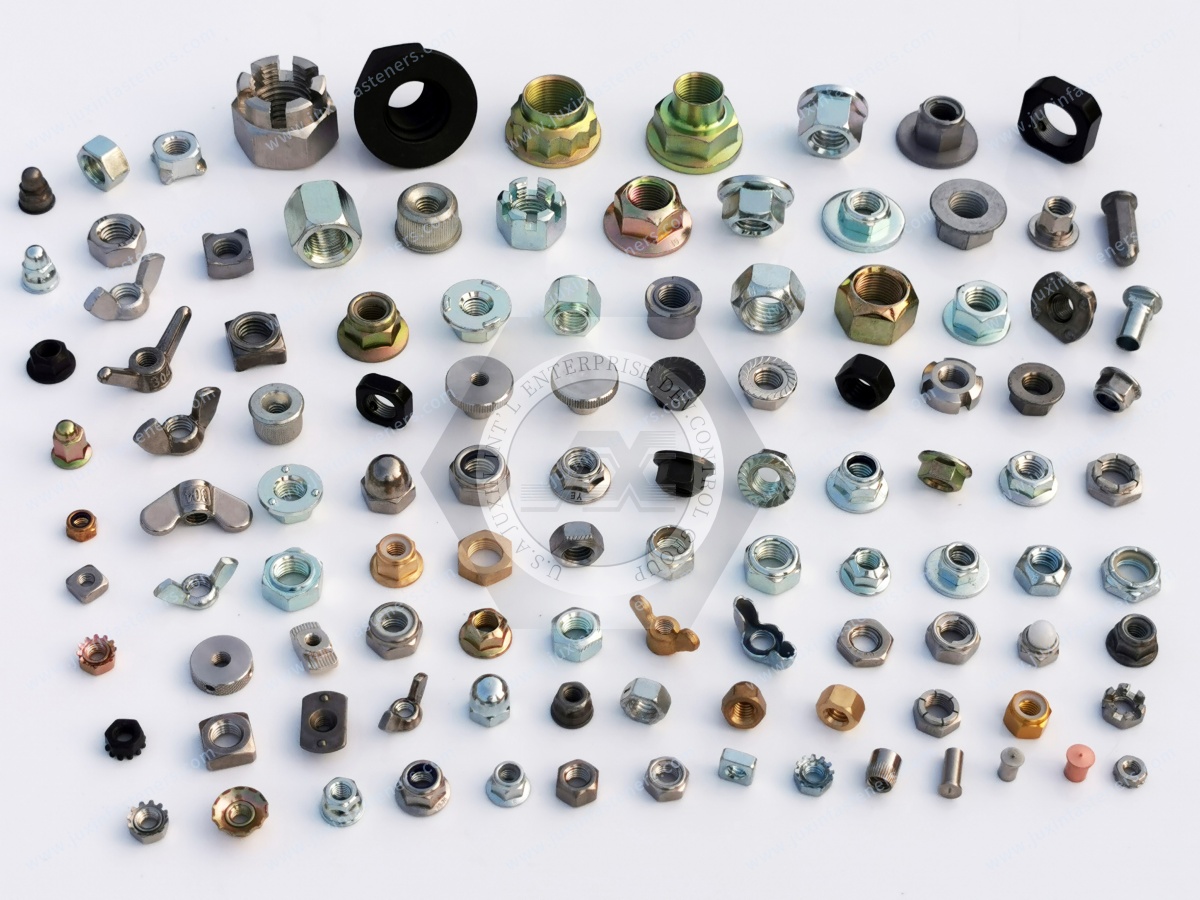
What Is a Nylon Insert Lock Nut?
A nylon insert lock nut is a mechanical fastening component designed to prevent loosening under vibration and dynamic loading.
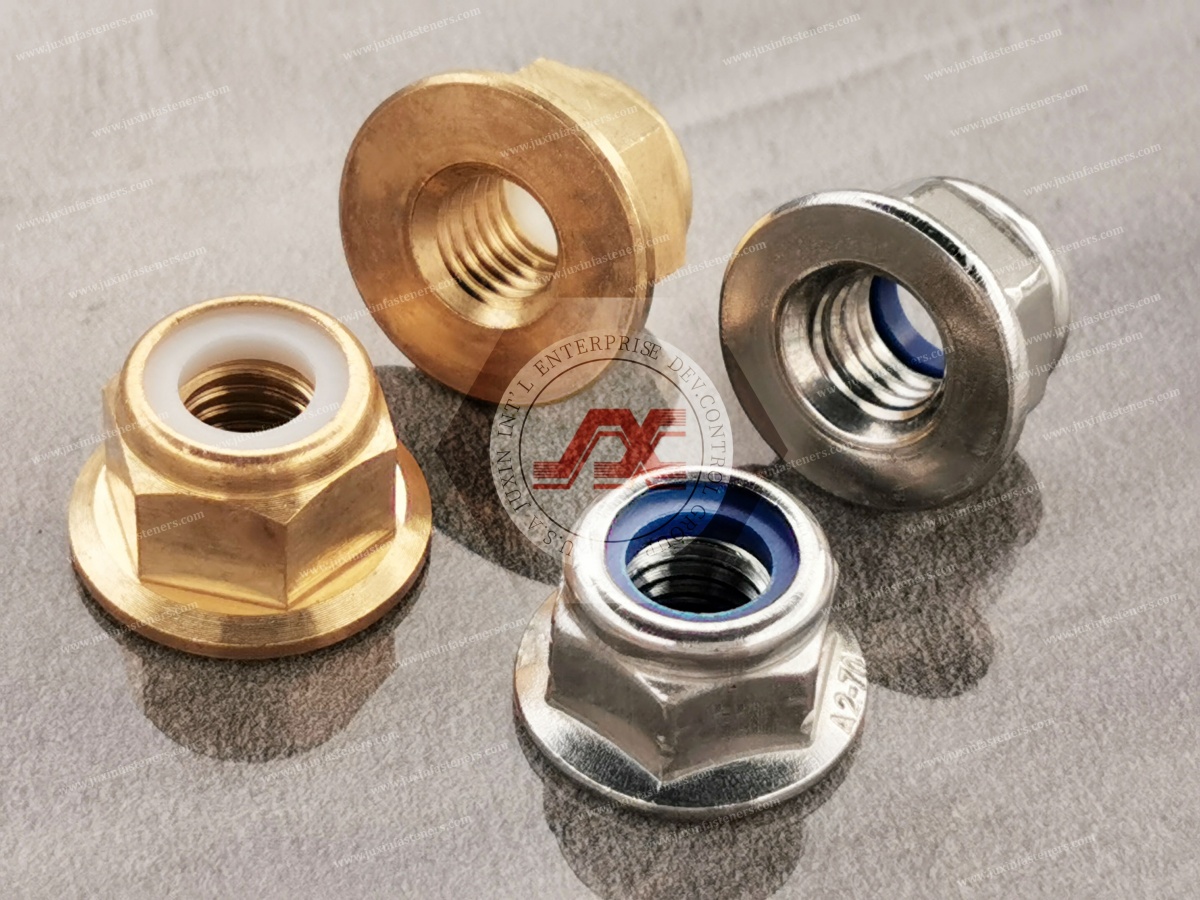
Unlike standard hex nuts, a nylon lock nut contains a precision-engineered nylon ring inserted into the upper section of the nut.
When the bolt passes through the nut, the thread compresses the nylon insert.
This creates additional friction between the bolt thread and nut thread, generating a prevailing torque locking effect.
The locking performance does not rely on adhesives, welding, or additional locking components.
The main advantages include:
Excellent vibration resistance
Reusable locking performance
Easy installation
No damage to bolt threads
Suitable for automated assembly
Cost-effective compared with metal locking solutions
Common names include:
Nylon insert nut
Nyloc nut
Self-locking hex nut
Prevailing torque nut
Nylon lock nut
DIN 985 Nylon Lock Nut Standard Overview
What Is DIN 985?
DIN 985 is a German industrial standard defining hexagon nuts with non-metallic locking elements.
The standard specifies:
Nut dimensions
Thread specifications
Height requirements
Nylon insert positioning
Mechanical performance requirements
DIN 985 nylon insert lock nuts are widely recognized in European engineering industries and remain popular in global OEM manufacturing.
Typical sizes include:
M3
M4
M5
M6
M8
M10
M12
M14
M16
M20
Common materials:
Carbon steel
Stainless steel SS304
Stainless steel SS316
Aluminum alloy
Brass
Typical surface treatments:
Zinc plated
Zinc nickel plated
Black zinc plated
Nickel plated
Passivation
Customized coatings
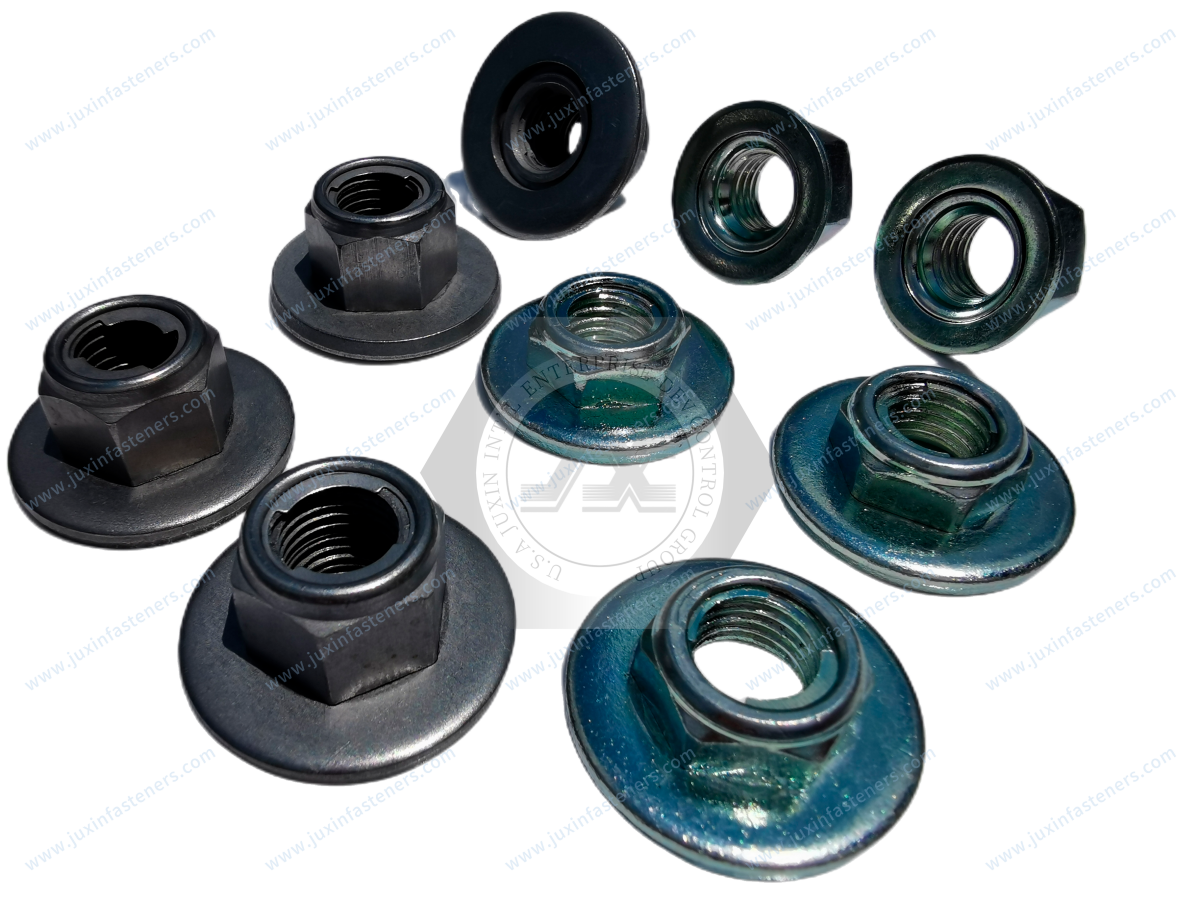
ISO 7041 Self-Locking Nut Standard Overview
What Is ISO 7041?
ISO 7041 is an international standard for hexagon nuts with non-metallic locking elements.
ISO standards are developed to provide global compatibility and simplify international supply chains.
Compared with DIN standards, ISO 7041 focuses more on worldwide standardization and interchangeability.
ISO 7041 self-locking nuts are commonly selected by:
International OEM manufacturers
Automotive suppliers
Export-oriented machinery companies
Multinational engineering projects
DIN 985 vs ISO 7041 Comparison Table
Item | DIN 985 | ISO 7041 |
Standard Origin | Germany DIN Standard | International ISO Standard |
Product Type | Nylon Insert Lock Nut | Nylon Insert Lock Nut |
Application | European OEM & Industrial | Global Manufacturing |
Thread Range | Metric Thread | Metric Thread |
Locking Method | Nylon Insert | Nylon Insert |
Material Options | Steel, Stainless Steel, Brass, Aluminum | Steel, Stainless Steel, Customized Materials |
Surface Treatment | Zinc, Zn-Ni, Nickel, Passivation | Zinc, Zn-Ni, Customized Coating |
Industry Usage | Automotive, Machinery, Equipment | Automotive, Export OEM, Global Projects |
Engineering Compatibility | High in European systems | High worldwide compatibility |
Key Engineering Difference Between DIN 985 and ISO 7041
Although DIN 985 and ISO 7041 are functionally similar, engineers should not assume they are always interchangeable.
The main considerations include:
1. Dimensional Tolerance
Different standards may have variations in:
Nut height
Across-flat dimensions
Nylon insert position
Thread engagement length
For precision assemblies, engineers should verify drawings and supplier inspection reports before replacement.
2. Customer Specification Requirements
Many OEM customers specify standards based on their internal engineering systems.
Examples:
Automotive manufacturers may require:
DIN 985 according to European drawing systems
International machinery companies may specify:
ISO 7041 for global sourcing compatibility
3. Application Environment
Selection depends on:
Temperature
Vibration level
Chemical exposure
Required locking force
Assembly method
For example:
Automotive engine components may require higher corrosion resistance and controlled torque performance.
Electrical cabinets may prioritize corrosion protection and insulation compatibility.
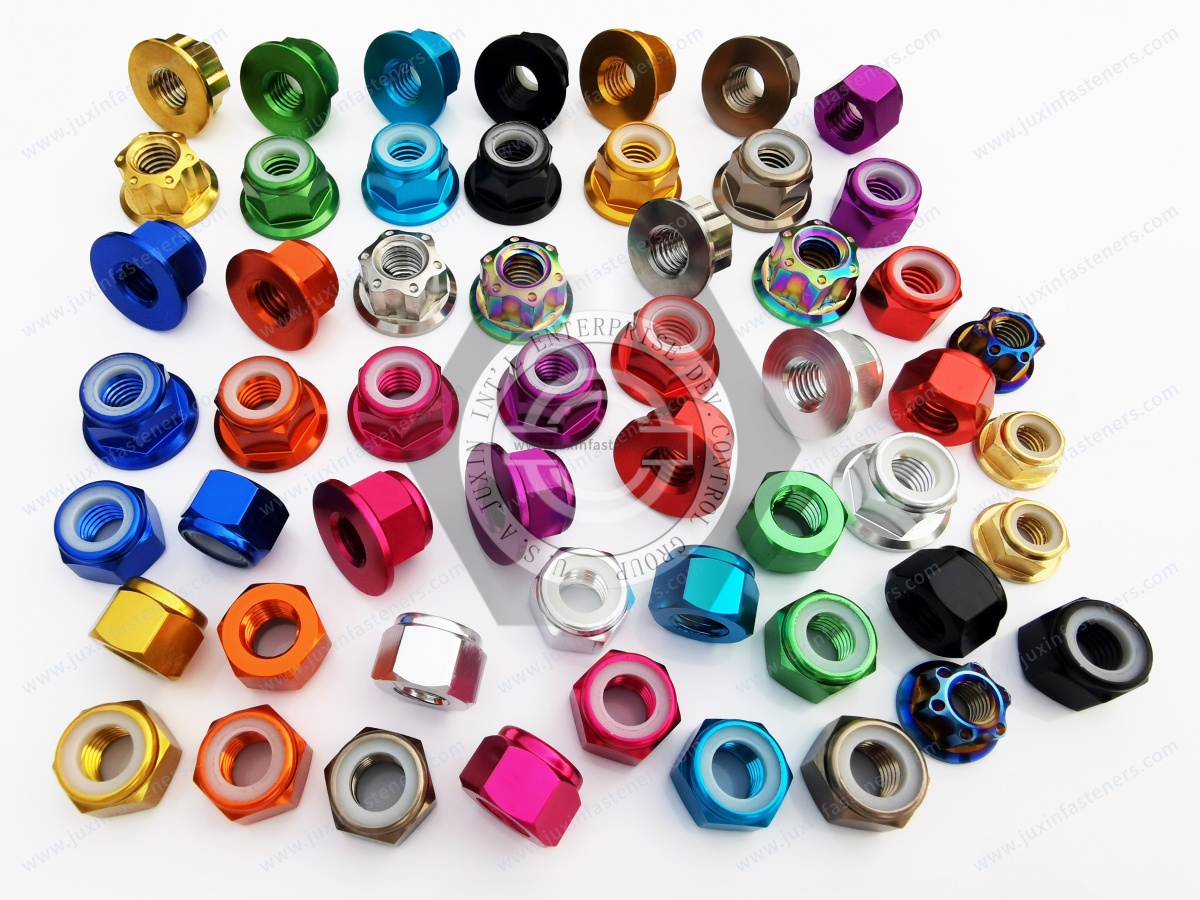
Materials and Mechanical Properties of Nylon Insert Lock Nuts
The performance of a nylon lock nut depends heavily on material selection.
Juxin Fasteners supplies multiple material options according to application requirements.
1. Carbon Steel Nylon Lock Nuts
Carbon steel is the most common material for general industrial applications.
Advantages:
High mechanical strength
Cost-effective
Suitable for mass production
Excellent machining performance
Common applications:
Machinery
Equipment frames
Industrial assembly
Typical grades:
Grade 6
Grade 8
Grade 10
2. Stainless Steel Nylon Lock Nuts
For corrosion-sensitive environments, stainless steel provides superior durability.
Available options:
SS304
Suitable for:
General outdoor applications
Food equipment
Electrical equipment
SS316
Recommended for:
Marine environments
Chemical equipment
High corrosion applications
Benefits:
Excellent corrosion resistance
Long service life
Clean appearance
3. Aluminum Nylon Lock Nuts
Lightweight fastening solutions are increasingly required in:
Electric vehicles
Aerospace equipment
Portable devices
Advantages:
Lightweight
Good corrosion resistance
Reduced assembly weight
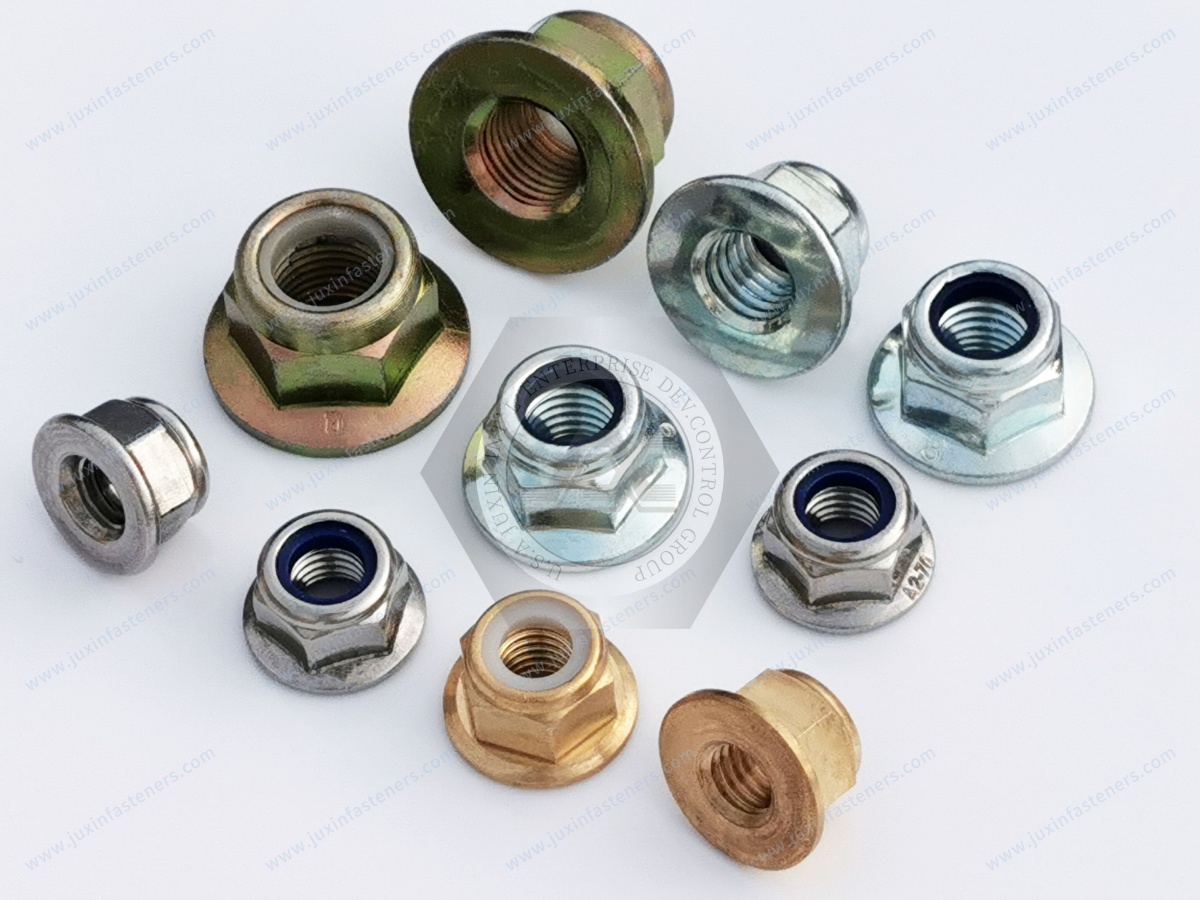
4. Brass Nylon Lock Nuts
Brass lock nuts are selected for:
Electrical applications
Conductive assemblies
Decorative equipment
Advantages:
Excellent conductivity
Anti-corrosion performance
Premium appearance
 MORE NEWS
Sep. 27, 2026
Sep. 27, 2026
Sep. 27, 2026
Contact Us
Tel.:
+86 020 8621 0320
+86 020 3121 6067
E-mail:
Technical Support:
Navigation
SEND INQUIREY