
Call Us
+86 136 6007 9809
Call Us
+86 136 6007 9809

Aug. 12, 2026
DIN 985 Nylon Lock Nut vs ISO 7041: Complete Engineering Guide for Self-Locking Nut Selection
Engineering Selection Guide for DIN 985 Nylon Insert Lock Nuts
Selecting the correct nylon insert lock nut requires more than simply matching the thread size.
Professional engineers must evaluate multiple factors including:
Mechanical load
Vibration level
Operating temperature
Corrosion environment
Material compatibility
Assembly method
Required service life
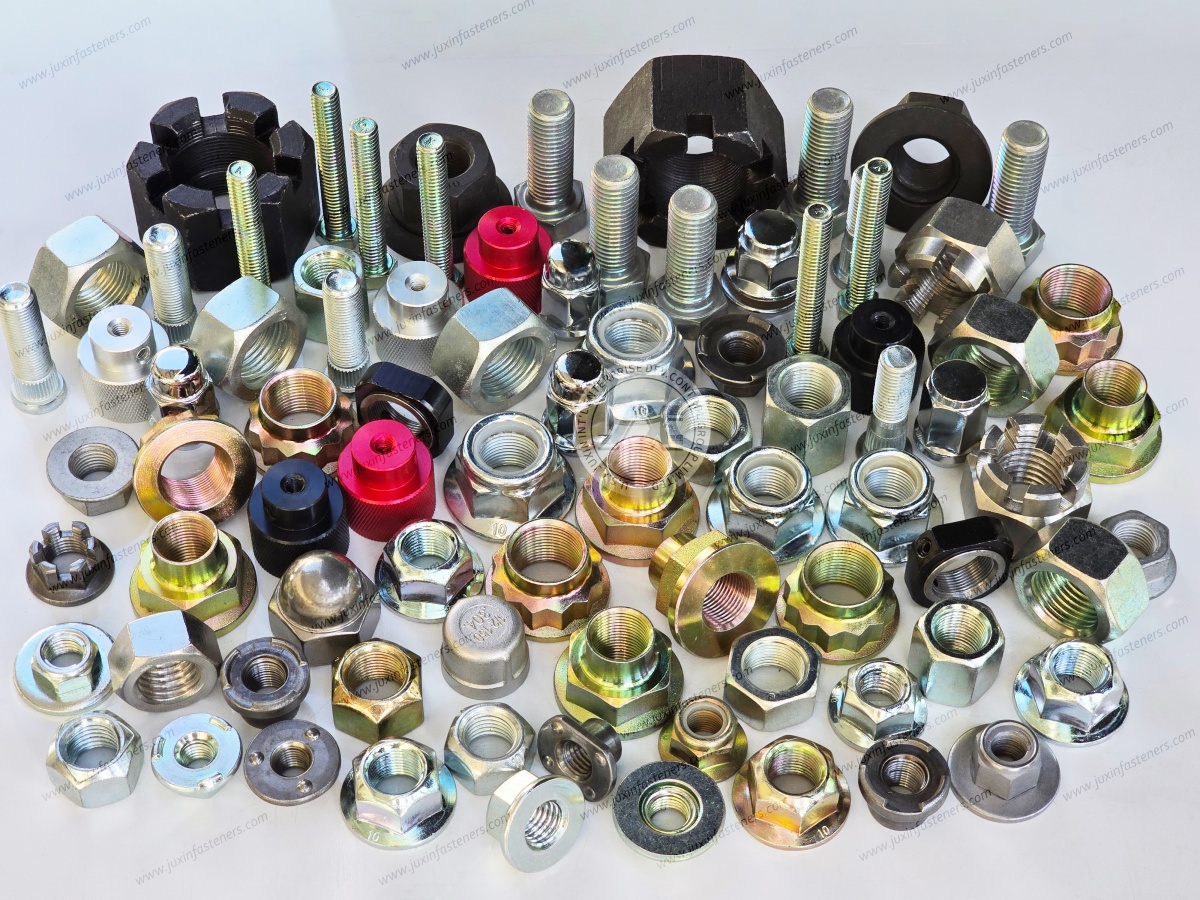
Juxin Fasteners works with OEM customers worldwide to provide customized DIN 985 nylon lock nut solutions based on actual application requirements.
1. Select the Correct Thread Specification
The first step is choosing the correct thread type.
Common options include:
Metric Thread
Most commonly used in global industrial manufacturing.
Examples:
M3 DIN 985 nylon lock nut
M4 DIN 985 nylon lock nut
M5 DIN 985 nylon lock nut
M6 DIN 985 nylon lock nut
M8 DIN 985 nylon lock nut
M10 DIN 985 nylon lock nut
M12 DIN 985 nylon lock nut
Inch Thread
Used mainly in North American markets.
Examples:
1/4-20 UNC nylon lock nut
5/16-18 UNC nylon insert nut
3/8-16 UNC lock nut
Before production, engineers should confirm:
Thread standard
Pitch
Bolt compatibility
Required thread engagement
2. Choose the Correct Material
Material selection depends on environmental requirements.
Carbon Steel
Recommended for:
General machinery
Industrial equipment
Indoor applications
Advantages:
High strength
Competitive cost
Suitable for mass production
Stainless Steel
Recommended for:
Outdoor equipment
Food machinery
Marine applications
Medical equipment
Advantages:
Corrosion resistance
Long service life
Clean appearance
Aluminum Alloy
Recommended for:
Lightweight structures
EV applications
Aerospace-related equipment
Advantages:
Weight reduction
Good corrosion resistance
3. Consider Operating Temperature
One important limitation of nylon insert lock nuts is temperature resistance.
Standard nylon inserts are generally suitable for normal industrial environments.
Engineers should consider:
Continuous operating temperature
Short-term temperature peaks
Chemical exposure
For high-temperature environments:
Alternative solutions may include:
All-metal lock nuts
Metal prevailing torque nuts
Special high-temperature locking systems
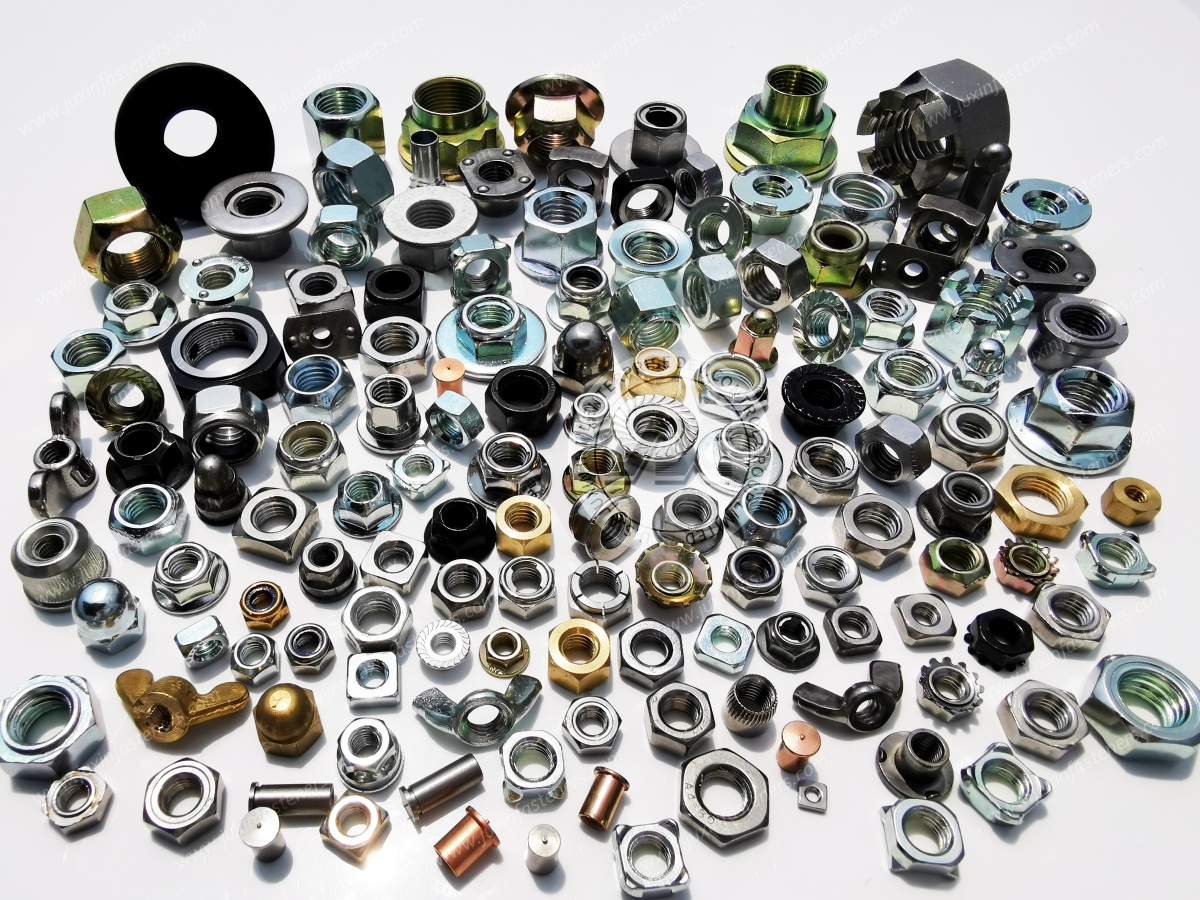
Juxin Fasteners can provide engineering recommendations according to application conditions.
4. Evaluate Vibration Conditions
Different industries experience different vibration levels.
Low Vibration Applications
Examples:
Electrical cabinets
Indoor equipment
Standard DIN 985 nylon lock nuts are usually sufficient.
Medium Vibration Applications
Examples:
Industrial machinery
Automation equipment
Recommended:
Higher grade materials
Controlled locking torque
Suitable surface treatment
High Vibration Applications
Examples:
Automotive
Railway
Heavy machinery
Engineers should consider:
Zinc nickel coating
Stainless steel material
Additional mechanical validation
5. Surface Treatment Selection Guide
Application Environment | Recommended Finish |
Indoor equipment | Zinc plating |
General outdoor equipment | Zinc plated + sealing |
Automotive components | Zinc nickel plating |
EV systems | Zinc nickel / stainless steel |
Marine environment | SS316 passivation |
Food equipment | SS304 / SS316 |
Chemical equipment | SS316 |
Installation and Torque Recommendations for Nylon Lock Nuts
Correct installation is essential to maintain locking performance.
Even the highest-quality DIN 985 self-locking nut may fail if incorrect installation methods are used.
1. Bolt and Nut Compatibility
Before assembly, confirm:
Matching thread specification
Correct bolt grade
Correct surface condition
The bolt should not have:
Damaged threads
Excessive coating thickness
Contamination
2. Recommended Installation Method
Typical installation steps:
Step 1
Align the bolt and nut correctly.
Avoid cross-threading.
Step 2
Hand-tighten the nut until the nylon insert contacts the bolt thread.
Step 3
Use a torque-controlled tool.
Avoid excessive tightening force.
Step 4
Verify final torque value according to engineering requirements.
3. Torque Considerations
The locking torque depends on:
Nut size
Thread specification
Material
Surface treatment
Number of reuse cycles
Example factors:
A stainless steel M6 nylon lock nut and a carbon steel M6 nylon lock nut may have different torque performance.
Therefore, engineers should always validate according to:
Product standard
Supplier test data
Actual assembly conditions
4. Reuse Recommendations
Nylon insert lock nuts are reusable in many applications.
However, repeated installation cycles may reduce:
Locking force
Prevailing torque
Recommended practice:
For critical safety applications:
Use a new lock nut after repeated removal
Follow customer engineering standards
Common Design Mistakes When Using Nylon Lock Nuts
Many fastening failures are not caused by product quality but by incorrect engineering selection.
Below are common mistakes found in industrial applications.
Mistake 1: Selecting the Wrong Thread Standard
A common problem is mixing:
Metric thread
UNC thread
UNF thread
Example:
Using an M6 nut with an inch-thread bolt can damage both components.
Solution:
Always confirm thread specifications before ordering.
Mistake 2: Ignoring Temperature Limitations
Standard nylon inserts are not designed for extremely high temperatures.
Incorrect applications may cause:
Nylon softening
Reduced locking performance
Fastener failure
Solution:
Evaluate operating temperature before selection.
Mistake 3: Choosing Insufficient Corrosion Protection
Using standard zinc plating in harsh environments may result in premature corrosion.
Examples:
Marine equipment
EV battery systems
Outdoor infrastructure
Solution:
Select:
Zinc nickel coating
Stainless steel materials
Mistake 4: Incorrect Torque Application
Over-tightening can damage:
Bolt threads
Nylon insert
Nut structure
Under-tightening may cause:
Reduced clamping force
Loosening risk
Solution:
Use controlled torque tools.
Mistake 5: Ignoring Bolt Compatibility
The locking performance depends on the interaction between:
Bolt thread
Nut thread
Nylon insert
Engineers should consider:
Bolt coating thickness
Bolt hardness
Thread tolerance
Mistake 6: Using Nylon Lock Nuts in Extreme Chemical Environments
Some chemicals may affect nylon performance.
Applications involving:
Strong acids
Solvents
High chemical exposure
Require material validation.
Mistake 7: Not Considering Assembly Automation
For high-volume production:
Engineers should consider:
Feeding system compatibility
Robot assembly requirements
Torque monitoring
Juxin Fasteners supports OEM customers requiring stable dimensions for automated production lines.
Professional FAQ: DIN 985 Nylon Lock Nut & ISO 7041
FAQ 1: What is a DIN 985 nylon lock nut?
A DIN 985 nylon lock nut is a hexagonal nut with a non-metallic nylon insert designed to prevent loosening caused by vibration and dynamic loads.
It creates additional friction between the bolt thread and nylon ring, generating a self-locking effect.
FAQ 2: What is the difference between DIN 985 and ISO 7041?
DIN 985 is a German standard, while ISO 7041 is an international standard.
Both define nylon insert lock nuts, but engineers should verify dimensional requirements and customer specifications before substitution.
FAQ 3: Are DIN 985 and ISO 7041 interchangeable?
In many applications they are functionally similar.
However, for OEM production, engineers should confirm:
Dimensions
Drawings
Customer requirements
Inspection standards
FAQ 4: Can nylon lock nuts be reused?
Yes, nylon lock nuts can often be reused.
However, repeated installation reduces prevailing torque.
For critical applications, replacement is recommended.
FAQ 5: What materials are available for DIN 985 nuts?
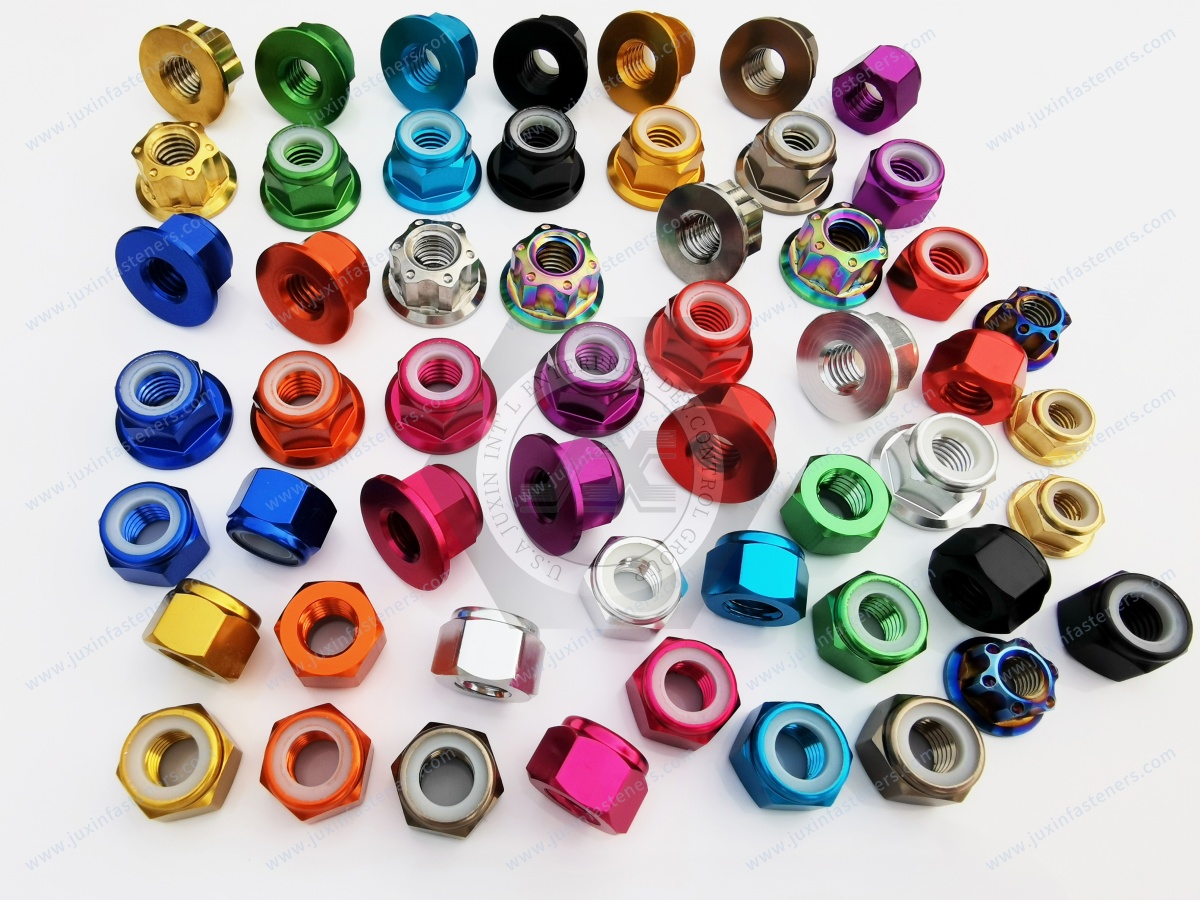
Common materials include:
Carbon steel
Stainless steel SS304
Stainless steel SS316
Aluminum alloy
Brass
FAQ 6: Are nylon lock nuts suitable for automotive applications?
Yes.
DIN 985 nylon lock nuts are widely used in automotive components including:
Seat systems
Sunroof assemblies
Brackets
Interior structures
FAQ 7: Can nylon lock nuts be used in EV applications?
Yes.
EV manufacturers often select:
Zinc nickel plated steel nuts
Stainless steel lock nuts
Lightweight aluminum solutions
for battery and vehicle systems.
FAQ 8: What surface treatment is best for outdoor applications?
For outdoor applications, recommended options include:
Zinc nickel plating
Stainless steel passivation
Customized corrosion-resistant coatings
FAQ 9: What is the maximum temperature for nylon lock nuts?
The suitable temperature range depends on nylon material type and application conditions.
Engineers should confirm actual temperature requirements before selection.
FAQ 10: Why does my nylon lock nut lose locking performance?
Possible reasons:
Excessive reuse
Incorrect torque
Wrong bolt compatibility
Temperature exposure
Chemical influence
FAQ 11: Do nylon lock nuts prevent vibration loosening?
Yes.
The nylon insert creates prevailing torque that improves resistance against vibration loosening.
FAQ 12: Can Juxin Fasteners manufacture custom nylon lock nuts?
Yes.
Juxin Fasteners provides:
OEM production
Custom drawings
Special materials
Customized coatings
Packaging solutions
 MORE NEWS
Sep. 27, 2026
Sep. 27, 2026
Sep. 27, 2026
Contact Us
Tel.:
+86 020 8621 0320
+86 020 3121 6067
E-mail:
Technical Support:
Navigation
SEND INQUIREY