
Call Us
+86 136 6007 9809
Call Us
+86 136 6007 9809

Sep. 16, 2023
Conical spring washers and Belleville disc springs share a similar basic feature: both use a conical metal geometry that deflects under axial load.
That visual similarity creates a common sourcing problem.
Engineers and purchasing teams may use terms such as:
conical spring washer;
Belleville washer;
Belleville spring;
disc spring;
conical washer;
DIN 6796 washer
as though they always describe the same component.
For engineering procurement, that assumption can be risky.
A DIN 6796 conical spring washer for bolted connections and an EN 16983 / EN 16984 disc spring can have different dimensional systems, design objectives, load-deflection requirements and application logic.
The first question should therefore not be:
“Do you need a Belleville washer?”
It should be:
“Does the assembly need a spring washer for a bolted joint, or an engineered disc spring with a defined force-deflection function?”
That distinction creates a more reliable selection path:
Application → Required Function → Bolted Joint or Spring System → Required Force → Required Deflection → Installation Envelope → Standard → Material → Stack Arrangement → Validation → RFQ
JUXIN FASTENERS supports industrial sourcing of conical spring washers, Belleville disc springs, wave washers, curved spring washers,
flat washers, locking washers and related fastening components for machinery, automotive and EV equipment, power systems,
industrial automation, energy equipment, HVAC, electrical systems and other engineered applications.
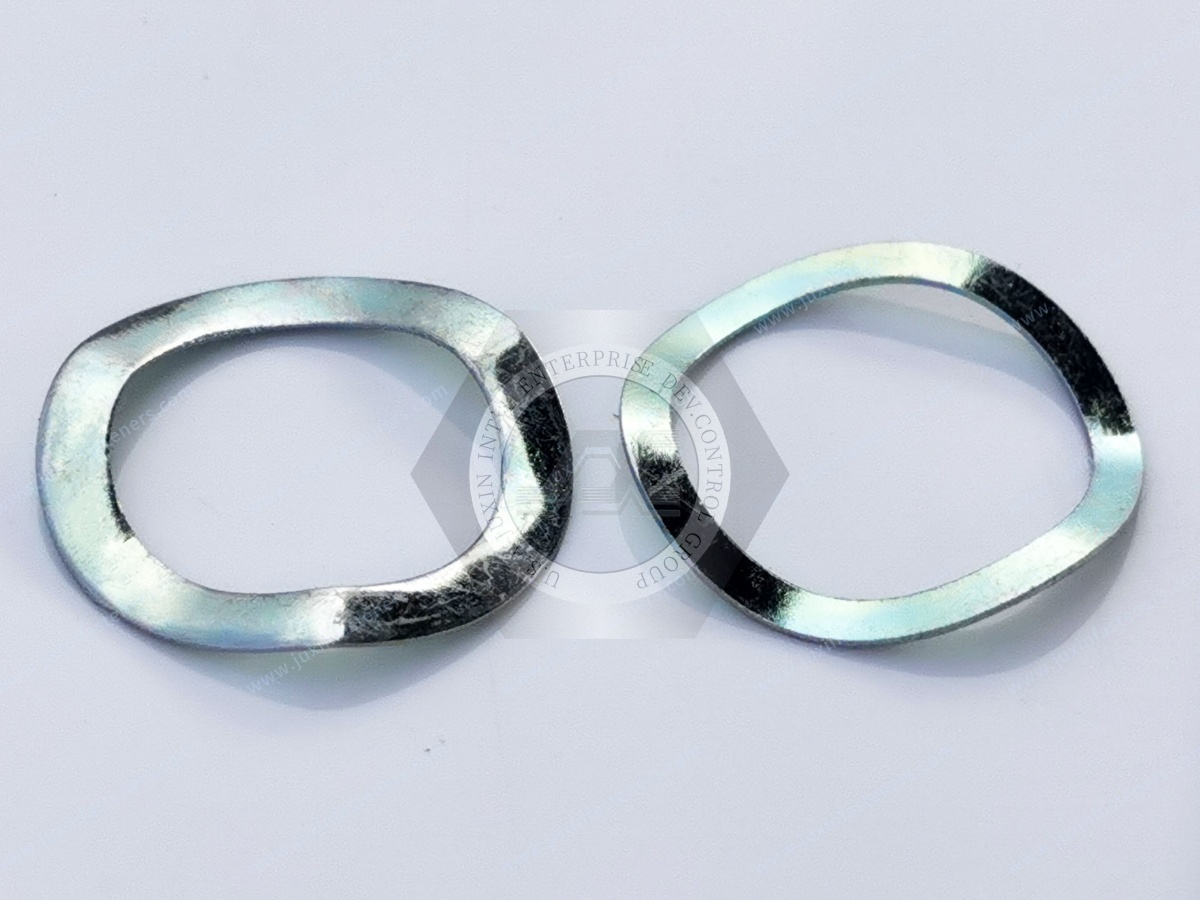
A conical spring washer is an annular metal component formed into a shallow cone.
When axial force is applied, the cone deflects toward a flatter condition.
The geometry creates spring reaction force.
In bolted joints, conical spring washers can add elasticity to the joint and may help compensate for limited settlement or embedment.
DIN 6796 is a current standard specifically titled:
Conical Spring Washers for Bolted Connections
That intended application is important.
DIN 6796 should therefore be understood primarily in the context of threaded fastening systems rather than as a generic specification for every disc spring.
A Belleville spring, commonly called a disc spring, is also a conical annular spring component.
Its geometry converts axial deflection into spring force.
Disc springs are especially useful where engineers require:
high axial force;
relatively small axial space;
controlled load-deflection behavior;
adjustable spring characteristics through stacking.
Belleville spring and disc spring are commonly used as equivalent terms in industrial spring engineering.
Current European disc-spring standards include EN 16983 for quality requirements and dimensions and EN 16984 for calculation.
Both products can look like:
Conical Ring + Central Hole
Both compress axially.
Both produce spring force.
Both may be casually called:
Belleville Washers
But engineering selection is based on function, not appearance.
A useful distinction is:
DIN 6796 → Conical Spring Washer for Bolted Connections
EN 16983 / EN 16984 → Disc Spring Engineering System
This distinction becomes especially important when force-deflection performance or spring stacking is part of the design.
DIN 6796:2009-08 remains a current DIN standard for conical spring washers used in bolted connections.
The product is intended to introduce spring behavior into a bolted joint.
Potential engineering objectives include:
increasing joint elasticity;
compensating for limited settlement;
helping manage preload loss associated with embedment;
maintaining an elastic reserve within the joint.
However:
DIN 6796 Washer ≠ Universal Anti-Loosening Device
The standard itself should not be interpreted as guaranteeing resistance to every vibration-induced rotational loosening mechanism.
DIN 267-26 remains current and provides technical specifications for spring-steel conical spring washers used in bolted connections.
For procurement involving DIN 6796-type components, applicable technical delivery requirements should therefore be reviewed together with the controlled customer specification.
DIN EN 16983:2017-09 is current.
It addresses quality requirements and dimensions for disc springs.
Its scope includes requirements relating to:
materials;
manufacturing;
dimensional tolerances;
spring-force tolerances;
relaxation;
fatigue behavior.
This makes it fundamentally different from a simple generic washer description.
A disc spring is an engineered spring component.
DIN EN 16984:2017-09 is also current.
It addresses disc-spring calculation and covers individual disc springs as well as stacks.
For engineers designing around required force and travel, this calculation framework is central to disc-spring selection.
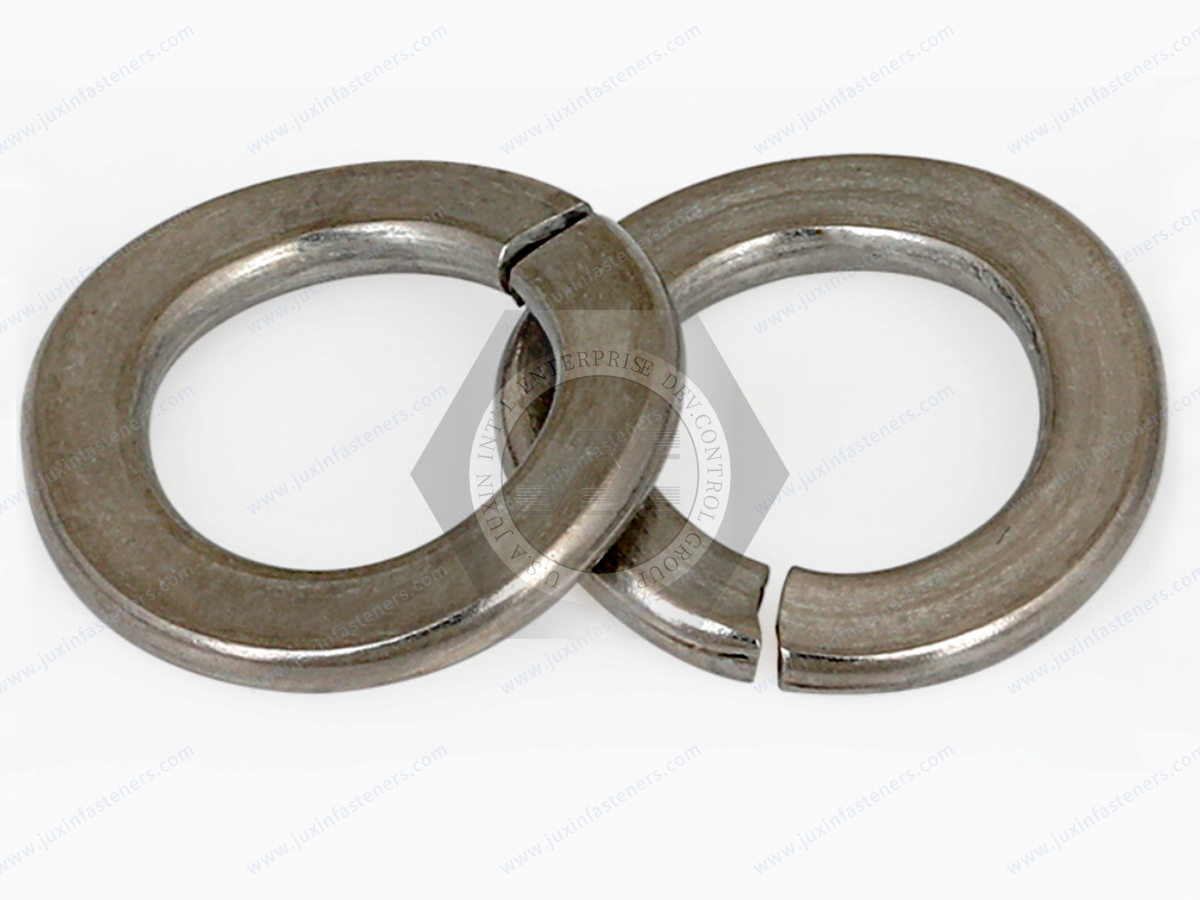
DIN 2093 was historically an important disc-spring standard.
DIN 2093:2013-12 is now withdrawn.
Current new-design work should therefore recognize the EN 16983 / EN 16984 framework rather than presenting DIN 2093 as the current primary European disc-spring standard.
Legacy drawings may still reference DIN 2093.
In those cases, procurement should determine whether the task is:
Legacy Replacement
or:
New Engineering Design
before changing the specification.
A practical engineering comparison is:
| Requirement | DIN 6796 Conical Spring Washer | Belleville Disc Spring |
|---|---|---|
| Primary context | Bolted connection | Engineered spring system |
| Conical geometry | Yes | Yes |
| Axial spring force | Yes | Yes |
| Settlement compensation | Relevant | Can be engineered |
| Defined load-deflection design | Limited by product specification | Core design requirement |
| Series stacking | Not primary selection method | Common |
| Parallel stacking | Not primary selection method | Common |
| Combination stacks | Not primary selection method | Common |
| High-force compact spring system | Limited role | Major application |
| European standard direction | DIN 6796 | EN 16983 / EN 16984 |
| Typical procurement input | Bolt size + joint requirement | Force + deflection + envelope |
The distinction is not that one is a spring and the other is not.
Both are springs.
The distinction is primarily the engineering system and intended function.
Suppose two parts have:
similar inside diameter;
similar outside diameter;
similar conical appearance.
They may still have very different:
thickness;
free height;
cone height;
spring force;
deflection;
stress;
fatigue behavior.
Therefore:
Similar Diameter ≠ Equivalent Spring
and:
Similar Appearance ≠ Approved Substitution
For a DIN 6796 washer, nominal bolt size can be an important starting point.
For a true disc spring, selection usually requires much more.
The engineer may need to define:
inside diameter;
outside diameter;
thickness;
free cone height;
required force;
required deflection;
available axial space;
dynamic or static loading;
material;
temperature;
corrosion environment.
This is why a procurement request such as:
“Need M16 Belleville washers.”
may still be incomplete.
When a disc spring is compressed, its axial force changes with deflection.
The relationship is influenced by:
outside diameter;
inside diameter;
thickness;
cone height;
material;
geometry.
Disc-spring load-deflection behavior is not always linear.
Current EN 16984-based engineering treats this relationship as a calculated spring characteristic.
Therefore:
Disc Spring Selection = Force + Deflection
not simply:
Disc Spring Selection = Diameter
The conical disc geometry allows substantial axial force to be generated with relatively limited travel.
This is one of the major reasons disc springs are used in compact high-load systems.
Typical application categories can include:
clutches;
brakes;
valves;
heavy machinery;
actuators;
preload systems;
energy equipment.
The actual spring must still be selected for the required force and travel.
One major difference between a simple conical spring washer application and an engineered disc-spring system is the ability to deliberately build stacks.
Disc springs can be arranged:
in series;
in parallel;
in combined series-parallel configurations.
This allows engineers to modify force and travel without completely changing the basic spring family.
In a series arrangement, adjacent disc springs alternate orientation.
Conceptually:
()()()
Series stacking primarily increases available deflection.
For identical idealized springs:
More Springs in Series → More Travel at Approximately the Same Individual-Spring Force
This can be useful where one disc spring does not provide enough axial movement.
In a parallel arrangement, springs face the same direction and nest together.
Conceptually:
(((
Parallel stacking primarily increases load capacity.
For identical idealized springs:
More Springs in Parallel → Higher Force at Approximately the Same Deflection
This can be useful where one disc spring cannot provide sufficient force.
Series and parallel groups can be combined.
This allows engineers to tailor both:
spring force;
spring travel.
The design can therefore be adapted to applications requiring more complex force-deflection behavior.
Real disc-spring stacks are not perfectly frictionless mathematical systems.
Nested parallel discs can interact through contact friction.
Guides, surfaces, lubrication and installation conditions can also affect behavior.
Therefore, simple series/parallel equations should be treated as initial engineering relationships rather than complete predictions of every real stack.
Stacks may require guidance by:
internal guide rod;
external guide sleeve;
another controlled geometry.
Adequate clearance and surface condition are important so the spring stack can deflect without unintended binding.
The actual guidance design depends on the spring system.
Wave washers also generate axial spring force.
However, wave washers and disc springs generally occupy different parts of the force-deflection design space.
Often selected for:
bearing preload;
axial play control;
tolerance compensation;
limited axial spring force.
Often selected for:
higher force;
compact high-load spring systems;
controlled load-deflection;
engineered stacking.
Therefore:
Wave Washer ≠ Belleville Disc Spring
DIN 137 A uses a bowed washer geometry.
It is a legacy spring-washer design.
A disc spring uses a conical geometry designed for different load-deflection behavior.
Therefore:
Bowed Washer ≠ Conical Disc Spring
A split lock washer has a helical split-ring geometry.
A disc spring is a continuous conical spring component.
Their functions and mechanical behavior are different.
Do not substitute between them based on the broad term “spring washer.”
Internal tooth washers use teeth at the interface to create engagement and rotational resistance.
Disc springs generate axial spring force through conical deflection.
Therefore:
Tooth Engagement ≠ Disc Spring Force
A flat washer primarily distributes bearing pressure and provides a controlled bearing interface.
A disc spring is designed to deform.
Therefore:
Flat Washer → Bearing Interface
Disc Spring → Elastic Force Element
A disc spring should not automatically replace a hardened flat washer where the primary requirement is bearing-area control.
Another important distinction is:
Disc Spring Force ≠ Automatically the Same as Bolt Preload
In a bolted assembly, clamp force depends on the entire joint system.
Relevant factors include:
bolt stiffness;
joint stiffness;
tightening method;
friction;
surface settlement;
disc-spring stiffness.
Adding a conical spring element changes the stiffness architecture of the joint.
It does not eliminate the need for proper preload engineering.
Some bolted joints contain relatively stiff fasteners and relatively short clamp lengths.
If surfaces settle, a small dimensional loss can cause a meaningful preload reduction.
Adding a spring element can increase elastic travel within the system.
Conceptually:
Small Settlement + Very Stiff Joint → Larger Clamp-Force Change
whereas an appropriately engineered elastic element may provide:
Small Settlement + Greater Elastic Travel → Smaller Clamp-Force Change
The actual result depends on the complete joint stiffness relationship.
Conical spring washers can help compensate for limited settlement or embedment in suitable bolted connections.
This is one of the legitimate engineering directions for DIN 6796.
But:
Settlement Compensation ≠ Unlimited Preload Maintenance
If the assembly experiences large creep, plastic deformation or joint separation, a washer cannot automatically preserve clamp force.
These terms should not be treated as identical.
Small dimensional changes associated with surface flattening and interface accommodation after tightening.
Time-dependent deformation under sustained load, often significant in polymers and some high-temperature applications.
A spring element may help accommodate limited dimensional change, but its ability to do so depends on available deflection and required force.
A bolted joint can lose preload without the nut rotating.
A joint can also experience rotational self-loosening under transverse movement.
These mechanisms require different engineering responses.
Therefore:
Conical Spring Washer ≠ Universal Vibration Lock
If rotational self-loosening is the primary problem, evaluate an appropriate locking strategy separately.
The old article described conical washers as vibration-damping and noise-reduction components.
That language is too broad.
A spring stores and returns mechanical energy.
A damper dissipates mechanical energy.
Therefore:
Elasticity ≠ Damping
A disc spring can influence the dynamic response of an assembly, but it should not automatically be marketed as a vibration damper.
Noise reduction may occur indirectly in a properly engineered mechanism—for example, by controlling clearance or maintaining contact.
But:
Disc Spring ≠ Generic Noise-Reduction Component
The claim should be tied to the actual assembly behavior.
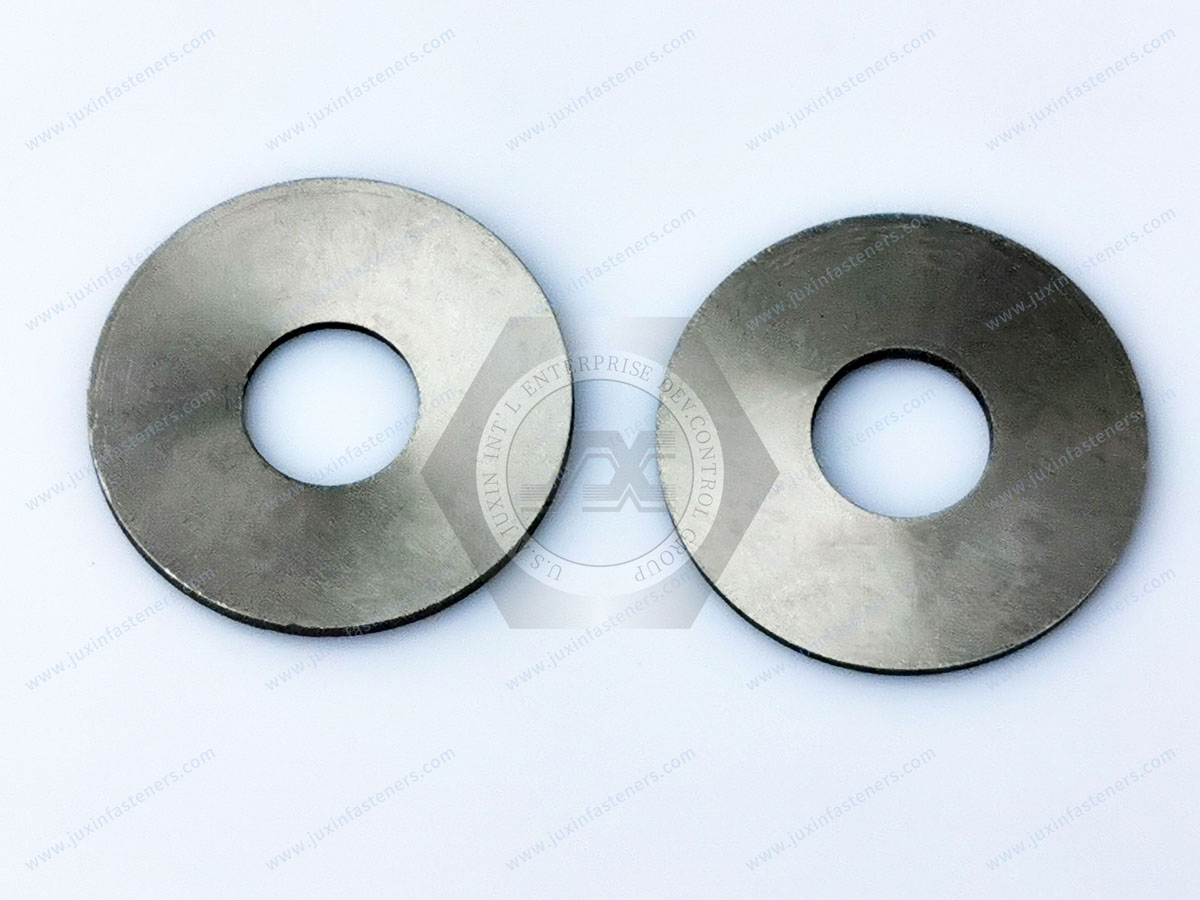
Disc springs are commonly manufactured from engineered spring materials.
Depending on the application, materials may include:
spring steels;
stainless spring steels;
high-temperature or corrosion-resistant alloys.
Material selection depends on:
required stress;
temperature;
corrosion environment;
fatigue requirement;
relaxation behavior;
manufacturing process.
Spring steel is widely used for disc springs because appropriate material condition and heat treatment can provide the elastic properties required for spring operation.
However, “spring steel” alone is not a complete procurement specification.
For controlled applications, the drawing or standard should define the relevant material requirement.
Stainless materials can be considered where improved corrosion resistance is required.
However:
Stainless Steel ≠ Corrosion-Proof
The appropriate alloy depends on:
environment;
temperature;
stress;
mating materials.
Temperature can affect:
elastic modulus;
strength;
relaxation;
corrosion;
fatigue.
A generic spring-steel disc spring should not automatically be described as suitable for high-temperature service.
The material must be selected for the operating temperature.
Depending on material and application, disc springs and conical washers may use different surface treatments.
Potential requirements can include:
corrosion protection;
friction control;
surface durability.
The finish should be specified from the actual environment and standard rather than assumed from product shape.
The old statement that heat-treated spring steel inherently provides corrosion resistance is incorrect.
Heat treatment and corrosion protection are separate issues.
A spring can have excellent mechanical properties while still requiring surface protection.
Therefore:
Heat Treatment ≠ Corrosion Coating
For high-hardness spring-steel components receiving certain electroplated coatings, hydrogen-embrittlement risk may require consideration.
Risk depends on:
material;
hardness;
cleaning process;
coating process;
applied stress.
Do not apply a universal plating or baking rule to every disc spring.
Disc springs can operate under static or dynamic loading.
For dynamic applications, fatigue becomes an important design factor.
EN 16983 includes fatigue-related requirements, while EN 16984 addresses calculation and design considerations.
The relevant operating conditions include:
minimum load;
maximum load;
deflection range;
stress range;
cycle requirement;
temperature.
Do not claim unlimited fatigue life.
Under sustained load, spring force can change over time.
Relaxation behavior depends on:
material;
stress;
temperature;
duration.
EN 16983 specifically includes permissible relaxation among the disc-spring quality considerations.
This is important for long-term preload applications.
A single disc spring has a conical orientation.
However, there is no universal statement that:
“The convex side must always face the load.”
Orientation depends on:
single-spring arrangement;
stack configuration;
load path;
assembly drawing.
For stacked springs, alternating and nested orientations are deliberately used to create different force-deflection characteristics.
Flattening a disc spring is not a universal installation target.
The working deflection should follow the spring design.
Excessive compression can:
increase stress;
reduce fatigue margin;
cause permanent set;
change spring performance.
The correct installation condition is based on required force and deflection.
A conical spring washer does not create a universal tightening torque.
Bolted-joint torque depends on:
fastener diameter;
thread pitch;
property class;
friction;
lubrication;
coating;
joint design;
target preload.
Therefore:
Washer Type ≠ Torque Specification
Disc springs can be used in selected automotive systems such as:
clutch mechanisms;
braking mechanisms;
valve systems;
actuator assemblies;
drivetrain components.
Application-specific validation and customer requirements still control component approval.
Potential applications include:
electric drive systems;
actuators;
braking mechanisms;
thermal-management equipment;
high-force mechanical assemblies.
The required spring function should determine the component—not the EV label itself.
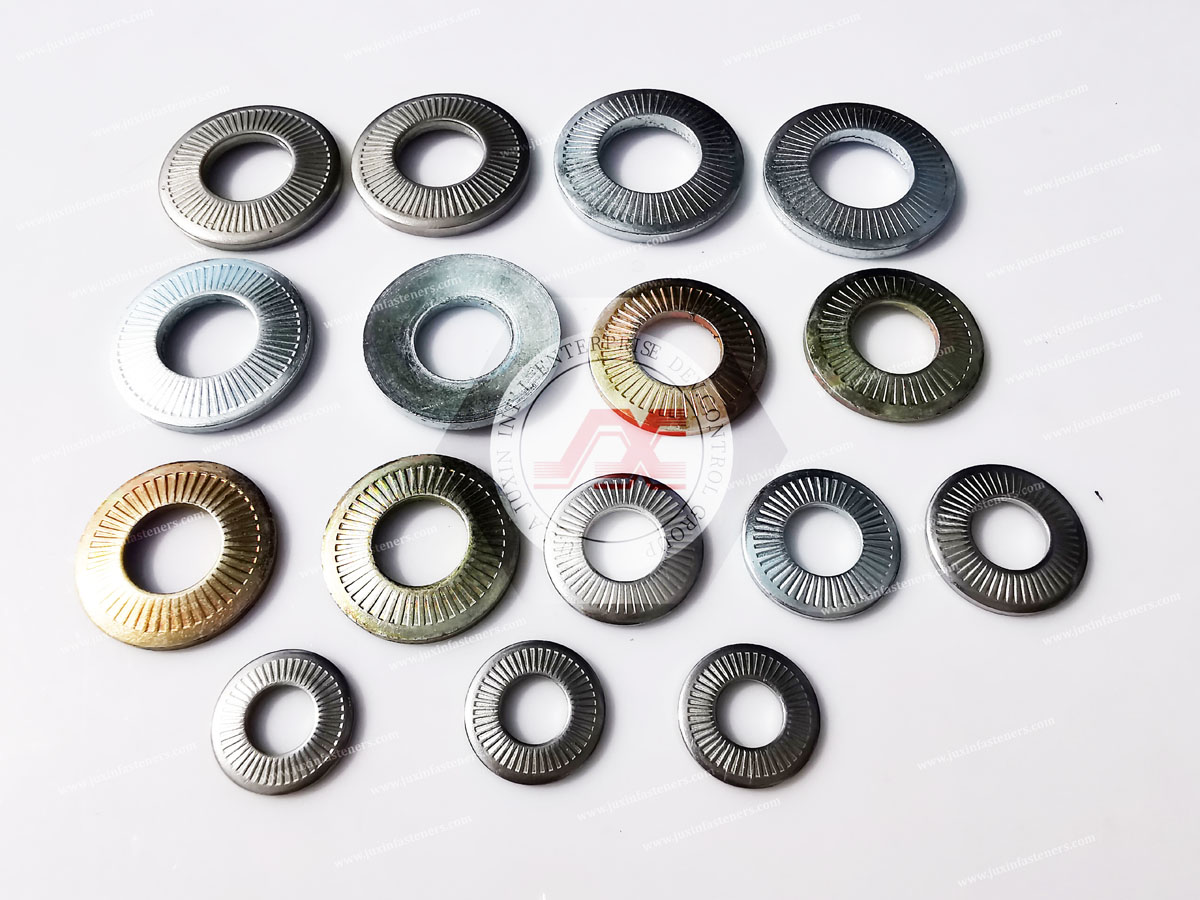
Disc springs are particularly useful in machinery requiring high force within restricted axial space.
Potential applications include:
presses;
clamping systems;
machine tools;
heavy equipment;
safety mechanisms;
overload systems.
The spring should be selected from actual load and travel requirements.
Disc springs can provide controlled force in valve mechanisms.
Potential functions include:
maintaining contact;
actuator loading;
return force;
pressure-related mechanical control.
The spring is not itself a fluid seal.
Disc springs may be used in selected pump mechanisms and bearing or seal-support assemblies.
However:
Disc Spring ≠ Pump Seal
The spring and sealing elements perform different functions.
Potential applications can include:
wind-energy systems;
power-generation machinery;
mechanical braking systems;
high-load fastening systems.
Material, fatigue and environmental requirements should be evaluated for the actual equipment.
Disc springs can be useful in selected wind-turbine mechanical systems requiring compact high-force spring elements.
Potential applications may involve:
braking;
clamping;
mechanical preload systems.
Offshore environments require appropriate corrosion engineering.
Disc springs can be used where controlled contact or clamping force is required in selected electrical assemblies.
Potential applications include:
switchgear mechanisms;
mechanical contact systems;
power equipment;
connection assemblies.
Electrical conductivity and grounding requirements must be specified separately.
In power-distribution systems, controlled spring force can help maintain selected mechanical or electrical contact interfaces.
However, generic disc springs should not automatically be described as:
grounding devices;
arc-control devices;
current-carrying components.
Those functions require separate electrical validation.
Disc springs may be relevant to mechanical systems inside:
cooling equipment;
pumps;
power equipment;
switchgear;
backup power systems;
high-load mechanical assemblies.
The appropriate engineering path remains:
Equipment Function → Required Force → Required Travel → Spring Selection
rather than selecting a spring simply because the end market is AI infrastructure.
Potential applications can include:
valves;
actuators;
compressors;
mechanical control assemblies.
A disc spring should not automatically be promoted as a refrigerant seal or vibration damper.
Potential disc-spring applications can exist in:
braking systems;
couplings;
mechanical actuators;
heavy-duty equipment assemblies.
Railway applications can have customer-specific validation and traceability requirements.
Disc springs can be used in aerospace engineering.
However, a generic industrial disc spring should not automatically be described as flight-qualified.
For aerospace inquiries, evaluate:
drawing;
material;
specification;
traceability;
testing;
approval requirements.
JUXIN FASTENERS should only quote applications that match its verified production and supply capability.
Potential applications include:
machinery;
lifting systems;
clamping mechanisms;
industrial equipment.
Do not interpret generic disc-spring capability as structural-building approval.
| Engineering Requirement | Typical Direction |
|---|---|
| Bolted joint needs limited elastic reserve | Evaluate DIN 6796 |
| Need compensation for limited settlement | Evaluate DIN 6796 / joint system |
| Need defined spring force and travel | Evaluate disc spring |
| Need high force in small axial space | Evaluate disc spring |
| Need more travel | Consider series disc-spring stack |
| Need more force | Consider parallel disc-spring stack |
| Need both more force and travel | Consider combination stack |
| Need bearing preload with lighter force | Evaluate wave washer |
| Need rotational locking | Use dedicated locking system |
| Need fluid sealing | Use dedicated sealing component |
| Legacy DIN 2093 drawing | Review legacy requirement and EN 16983/16984 transition |
| New European disc-spring design | Evaluate EN 16983 / EN 16984 |
Not every conical spring component is a DIN 6796 washer.
Their engineering contexts differ.
Force and deflection are essential.
Excessive deflection can increase stress and damage the spring.
The connected system determines the required force.
Elasticity and damping are different.
Rotational self-loosening requires separate evaluation.
Series and parallel arrangements produce different behavior.
Mechanical properties and corrosion resistance are separate issues.
Current European disc-spring work should recognize EN 16983 and EN 16984.
Engineers may search:
conical spring washer vs Belleville washer;
Belleville washer vs disc spring;
DIN 6796 vs disc spring;
conical washer load deflection;
Belleville spring load;
disc spring calculation;
disc spring series vs parallel;
disc spring stack design;
EN 16983 disc spring;
EN 16984 disc spring;
DIN 2093 replacement;
conical spring washer for bolted joint.
These queries indicate active engineering decisions rather than simple product browsing.
Procurement and supplier-development teams may search:
conical spring washer manufacturer;
DIN 6796 washer supplier;
Belleville washer manufacturer;
disc spring supplier;
EN 16983 disc spring supplier;
stainless Belleville washer;
custom disc spring manufacturer;
spring steel disc washer;
OEM disc spring supplier;
custom conical washer.
These queries are much closer to commercial sourcing.
For a DIN 6796 or similar bolted-joint washer, provide where applicable:
applicable standard;
nominal bolt size;
inside diameter;
outside diameter;
thickness;
material;
hardness where controlled;
finish;
bolt property class;
joint material;
target preload;
assembly environment;
temperature;
corrosion requirement;
drawing;
sample;
quantity;
estimated annual demand.
For an engineered disc spring, provide where applicable:
applicable standard;
drawing;
inside diameter;
outside diameter;
thickness;
free height;
required force;
required deflection;
working height;
minimum load;
maximum load;
static or dynamic application;
cycle requirement;
series-stack requirement;
parallel-stack requirement;
combination-stack requirement;
stack length;
guide diameter;
material;
temperature;
corrosion environment;
surface finish;
relaxation requirement;
fatigue requirement;
prototype quantity;
production quantity;
estimated annual demand;
inspection requirement;
load-deflection testing requirement;
packaging and labeling requirements.
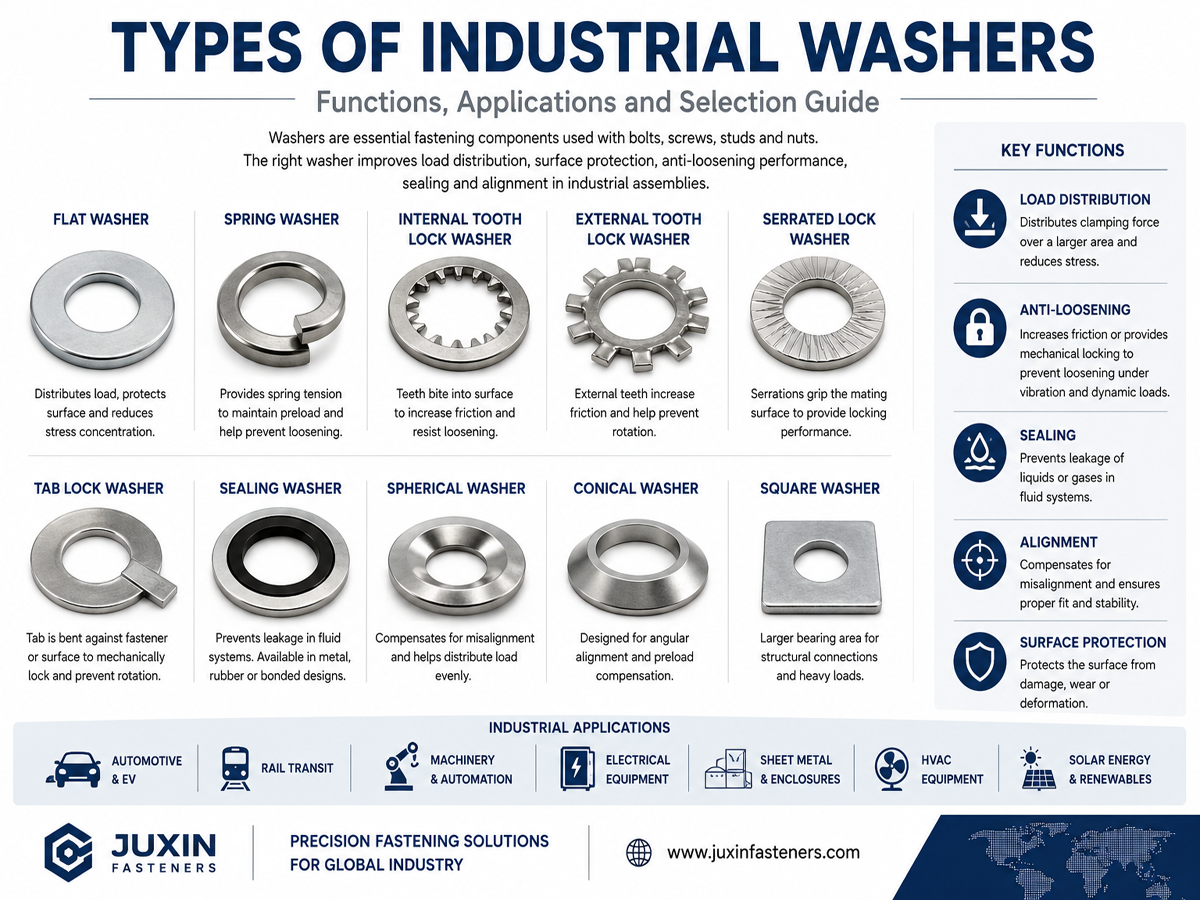
Belleville spring and disc spring are commonly used as equivalent terms for a conical disc spring.
The terminology overlaps commercially, but engineering specifications should distinguish a DIN 6796 conical spring washer for bolted connections from an EN 16983 / EN 16984 disc-spring system.
Yes. DIN 6796:2009-08 is currently listed by DIN Media as a current standard for conical spring washers for bolted connections.
No. DIN 2093:2013-12 is withdrawn.
Current European disc-spring work should reference EN 16983 for quality requirements and dimensions and EN 16984 for calculation, as applicable to the design.
EN 16983 defines quality requirements and dimensions for disc springs, including relevant material, manufacturing, dimensional, force, relaxation and fatigue requirements.
EN 16984 covers calculation of single disc springs and disc-spring stacks.
Series stacking increases total deflection while maintaining approximately the load characteristic of an individual identical spring, subject to real stack effects.
Parallel stacking increases load capacity while keeping approximately the deflection of an individual identical spring, subject to friction and real stack effects.
Yes. Combination stacks can be used to tailor both force and travel.
Do not assume universal anti-loosening performance. DIN 6796 conical spring washers can add elasticity and compensate for limited settlement, but rotational self-loosening requires separate evaluation.
Do not use complete flattening as a universal installation rule. Working deflection should follow the spring design and application requirements.
Not inherently. Springs store and return energy; damping is a different mechanical function.
Custom requirements can be evaluated from drawings, samples, dimensions, material, required load, deflection, stack arrangement, operating environment and production quantity.
A purchasing inquiry may begin:
“Please quote M20 Belleville washers.”
Before quoting an engineered solution, the supplier should determine:
Is This a DIN 6796 Bolted-Joint Washer?
or:
Is This a Disc Spring?
If it is a disc spring:
What Force Is Required?
At What Deflection?
What Axial Space Is Available?
Is One Spring Enough?
Does the Application Need Series Stacking?
Parallel Stacking?
Both?
What Material and Temperature Apply?
The commercial path becomes:
Product Name → Actual Function → Standard → Dimensions → Force → Deflection → Stack Architecture → Material → Environment → Prototype → Validation → Production RFQ
This prevents a visually similar conical component from being selected for the wrong mechanical function.
JUXIN FASTENERS supports OEM sourcing of conical spring washers, DIN 6796-type spring washers, Belleville disc springs, wave washers, curved spring washers,
flat washers, locking washers and related industrial fastening components.
Potential application sectors include:
industrial machinery;
automotive and EV equipment;
energy systems;
wind power;
electrical equipment;
power distribution;
automation;
pumps and valves;
HVAC equipment;
telecommunications;
rail equipment;
heavy equipment;
AI data center and HPC infrastructure.
For detailed disc-spring load, deflection and stacking engineering, refer to the JUXIN FASTENERS Disc Springs & Belleville Washers: Load, Deflection, Stacking & Selection Guide.
For DIN 6796 bolted-joint applications, refer to the JUXIN FASTENERS DIN 6796 Conical Spring Washers: Bolt Preload, Settlement & Selection Guide.
For lighter axial preload and tolerance-compensation applications, refer to the JUXIN FASTENERS Wave Spring Washers: Bearing Preload, Axial Play, Load-Deflection & Selection Guide.
For broader washer-family selection, see Industrial Washers: Types, Functions & Selection Guide.
For bolted-joint washer selection, see Washers and Bolts: Fastening Systems Selection Guide.
For locking requirements separate from spring-force requirements, see Nylon Insert Locknuts for Anti-Vibration Applications.
For OEM or custom conical spring washer and Belleville disc spring RFQs, send your drawing or sample, applicable standard,
dimensions, required force, deflection, stack arrangement, material, finish, operating conditions, quantity and estimated annual demand to:
When a drawing says “Belleville washer,” the product name alone is not enough.
The engineering question is:
Does the assembly need a conical washer for a bolted joint—or a calculated disc-spring system with a defined force-deflection characteristic?
 MORE NEWS
Sep. 27, 2026
Sep. 27, 2026
Sep. 27, 2026
Contact Us
Tel.:
+86 020 8621 0320
+86 020 3121 6067
E-mail:
Technical Support:
Navigation
SEND INQUIREY