
Call Us
+86 136 6007 9809
Call Us
+86 136 6007 9809

Sep. 17, 2023
Selecting a flat washer for a screw looks simple:
Choose the same nominal size as the screw.
For many basic assemblies, that may be the starting point.
For an engineered industrial joint, it is not the complete selection process.
The washer must work as part of a system involving:
Screw Head → Washer → Clearance Hole → Parent Material → Clamped Joint
A correctly selected flat washer can provide a controlled bearing surface, distribute clamp load over a larger area, bridge an appropriate clearance hole and help protect the mating surface.
An incorrectly selected washer can create a different problem.
The washer may be:
too small for the clearance hole;
too soft for the fastener and joint;
too thin for the required bearing condition;
too large for the available space;
incompatible with the surface finish;
unnecessary for the actual joint design.
For engineers and procurement teams, the better question is therefore not simply:
“What washer fits an M8 screw?”
It is:
“What washer geometry, hardness and material are appropriate for this M8 screw and this specific joint?”
JUXIN FASTENERS supports screws, bolts, flat washers, hardened washers, spring washers, locking fasteners,
SEMS screw-and-washer assemblies and custom fastening components for industrial OEM applications.
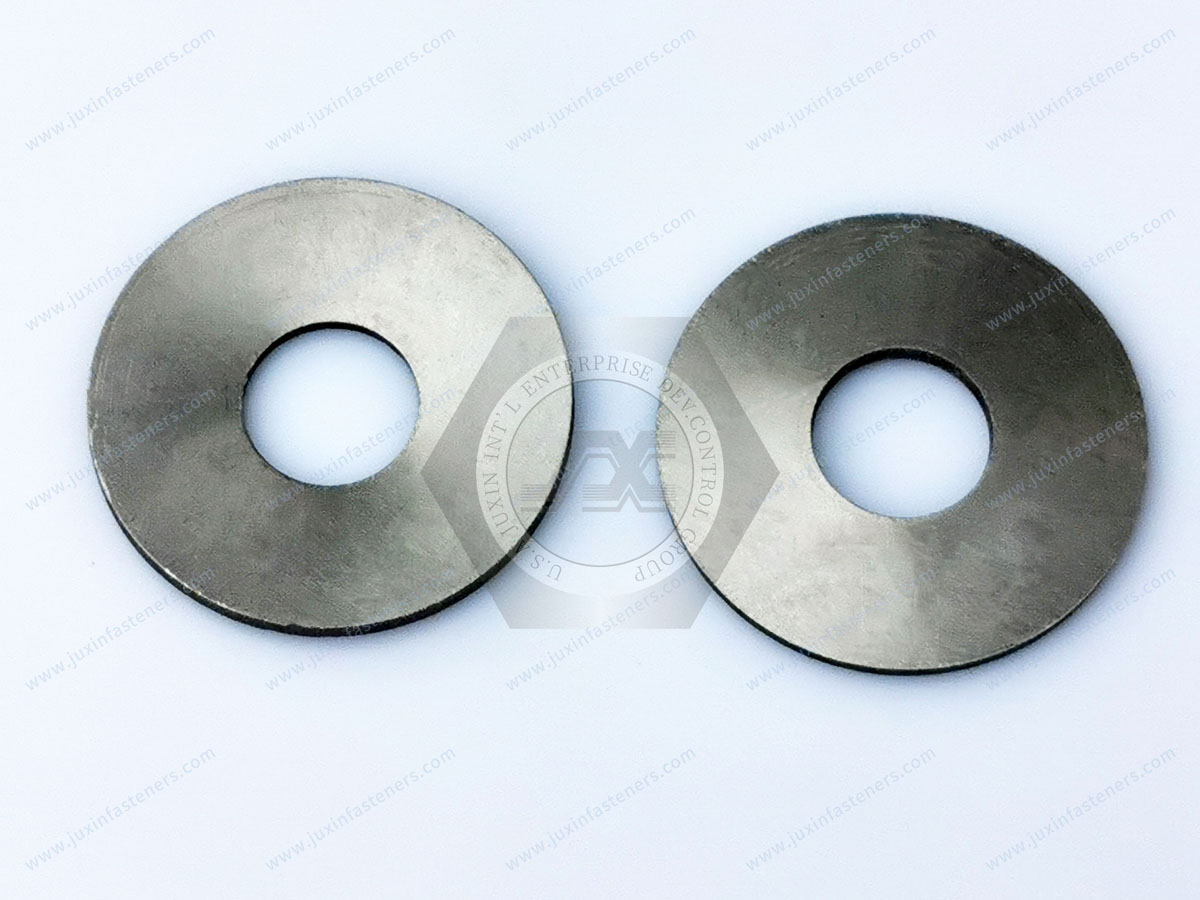
A flat washer is a relatively thin annular component installed beneath a screw head, bolt head or nut.
Its primary mechanical functions can include:
increasing bearing area;
distributing clamp load;
protecting the mating surface;
bridging an appropriate clearance hole;
providing a controlled bearing interface.
The actual requirement depends on the joint.
A flat washer should not automatically be assigned functions it was not designed to perform.
A plain flat washer does not inherently prevent threaded rotation.
Therefore:
Flat Washer → Bearing Function
not:
Flat Washer → Automatic Anti-Loosening Function
If the engineering problem is rotational self-loosening, evaluate an appropriate locking method separately.
A standard metal flat washer should not automatically be described as a sealing component.
If the joint must prevent leakage or moisture ingress, the design may require:
bonded sealing washer;
gasket;
O-ring;
elastomeric sealing element;
another validated sealing system.
Therefore:
Plain Washer ≠ Fluid Seal
and:
Plain Washer ≠ IP-Rated Joint
A screw head transfers clamp load into the mating surface through its bearing face.
Without a washer, the load enters the workpiece through the screw-head bearing area.
With an appropriately selected washer, the immediate bearing interface becomes larger.
Conceptually:
Screw Head → Washer → Larger Bearing Interface → Workpiece
This can be particularly useful when the mating material is relatively soft or the clearance hole is comparatively large.
Suppose an assembly uses an M8 screw.
That does not mean every washer sold for M8 provides the same joint behavior.
Different M8 washers may have different:
inside diameters;
outside diameters;
thicknesses;
hardness classes;
materials;
finishes;
dimensional standards.
The correct selection depends on the joint requirement.
The washer ID must allow assembly over the screw or bolt while remaining compatible with the required dimensional standard.
Too small:
The Washer Does Not Assemble Properly
Too large:
Bearing Geometry and Positioning May Change
Do not assume the washer hole should exactly equal the nominal thread diameter.
Standard washer dimensions include appropriate clearance.
Outside diameter determines how far the washer extends beyond the screw or bolt head.
A larger OD can increase the available bearing area.
This can be useful when clamping:
aluminum;
plastics;
composites where appropriate;
thin sheet;
coated panels;
components with relatively large clearance holes.
However:
Larger OD ≠ Automatically Better
The washer must still fit within the assembly envelope and provide appropriate stiffness.
Thickness affects washer rigidity and its ability to distribute load across the bearing interface.
A large-diameter washer that is too thin for the actual joint can deform.
This becomes particularly important where a washer is expected to bridge a larger clearance hole.
ISO 7093-1 specifically notes that large-series washers can be used where workpieces have large clearance holes, while washer thickness suitability should still be checked.
This is an important design principle:
Large OD Alone Does Not Guarantee Adequate Load Distribution
One of the most useful ways to think about flat-washer selection is through bearing area.
A washer increases the interface through which clamp load enters the parent material.
The engineering question becomes:
Can the mating surface support the resulting bearing pressure without unacceptable indentation or deformation?
That depends on both the washer and the parent material.
The same screw-and-washer combination can behave differently on:
hardened steel;
mild steel;
aluminum;
polymer;
composite;
thin sheet.
A washer that works well on one material may be inappropriate for another.
Therefore:
Fastener Selection Cannot Be Separated from Parent-Material Selection
When screws clamp relatively soft materials, local bearing pressure beneath the head or nut can cause:
indentation;
crushing;
creep;
permanent deformation.
A larger washer may help distribute load.
ISO 7093-1 large-series plain washers are specifically intended for applications including the clamping of soft material pieces.
However, washer diameter alone does not solve every soft-material problem.
The engineer must also consider:
washer thickness;
washer stiffness;
material creep;
required clamp load;
long-term temperature;
surface condition.
Plastic presents a particularly important case.
Many polymers can experience creep or stress relaxation under sustained compression.
A larger washer can reduce local bearing pressure, but it does not eliminate polymer creep.
Therefore:
Large Washer ≠ Permanent Preload Retention in Plastic
Joint geometry, material behavior and clamp load must be considered together.
Aluminum components can also benefit from appropriate bearing-area control.
Potential concerns include:
local indentation;
surface marking;
galvanic compatibility;
coating damage.
The washer material and finish should therefore be selected with the aluminum component and service environment in mind.
Thin sheet creates another selection problem.
The washer may need to provide sufficient bearing area without:
distorting the sheet;
interfering with nearby features;
bridging an unsupported region inadequately.
For sheet-metal assemblies, consider:
sheet thickness;
hole diameter;
edge distance;
washer OD;
washer thickness;
clamp load.
A larger washer does not automatically make a weak sheet-metal joint structurally stronger.
Clearance holes are often overlooked during washer procurement.
If the workpiece hole is relatively large compared with the screw head, the washer may need to bridge that opening.
The design should therefore consider:
Screw Diameter → Clearance Hole → Washer ID → Washer OD → Washer Thickness
not simply:
Screw Diameter → Washer Size
Slotted holes can require additional bearing-area consideration.
Depending on the joint design, a washer may need sufficient geometry to bridge the slot while remaining adequately supported.
Potential concerns include:
washer bending;
edge loading;
insufficient overlap;
assembly movement.
A standard normal-series washer may not always be appropriate.
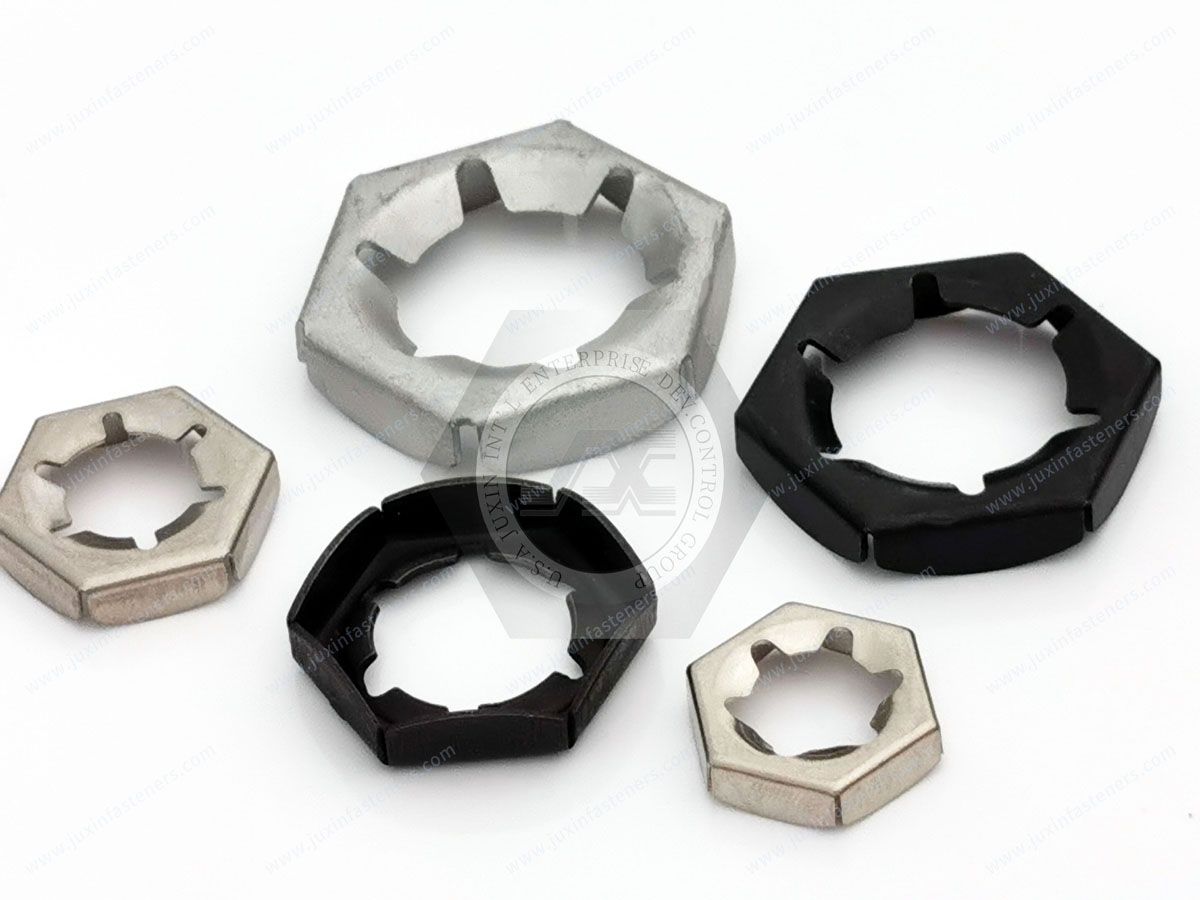
ISO 7089 defines normal-series, Product Grade A plain washers.
For metric industrial assemblies, this is an important standard reference.
ISO 7089 includes 200 HV and 300 HV hardness classes.
The appropriate hardness class depends on the fastener and joint specification.
Washer hardness is not merely a catalog detail.
A washer beneath a higher-strength fastener may need sufficient hardness to resist unacceptable local deformation.
Under ISO 7089, 200 HV and 300 HV washers have different intended fastener compatibility ranges.
This means procurement should not reduce the specification to:
“M12 Zinc Washer”
when the application actually requires controlled washer hardness.
A better specification may include:
M12 + ISO 7089 + Required Hardness Class + Material/Finish
If the washer is too soft relative to the bearing stresses in the joint, it may experience excessive indentation or deformation.
This can contribute to:
embedment;
dimensional loss;
preload reduction;
inconsistent bearing behavior.
Therefore:
Correct Diameter + Wrong Hardness = Potentially Wrong Washer
As fastener strength and target preload increase, washer selection becomes increasingly important.
Do not assume an ordinary soft commercial washer is appropriate simply because:
ID fits the bolt;
OD looks correct.
The washer must be compatible with the fastener and joint specification.
ISO 7093-1 defines large-series Product Grade A plain washers.
Compared with normal-series washers, the larger outside diameter can be useful when additional bearing area is required.
Typical engineering reasons include:
softer parent material;
larger clearance holes;
increased bearing-area requirement.
However, ISO 7093-1 also highlights the need to check washer thickness when bridging larger clearance holes.
Therefore:
Large-Series Washer = Larger Bearing Area
but not automatically:
Large-Series Washer = Unlimited Hole-Bridging Capability
A practical comparison is:
| Joint Requirement | Selection Direction |
|---|---|
| General metric bearing interface | Evaluate ISO 7089 normal series |
| Soft parent material | Evaluate larger bearing area |
| Larger clearance hole | Evaluate ISO 7093-1 and washer thickness |
| Limited radial space | Normal or small-series washer may be required |
| Higher fastener strength | Verify washer hardness |
| Cosmetic surface | Evaluate bearing pressure and surface protection |
| Thin sheet | Check OD, thickness and sheet deformation |
For inch-series industrial fastening systems, ASME B18.21.1 covers plain washers together with helical spring-lock and tooth-lock washer categories.
ASME B18.21.1 incorporates the earlier plain-washer content of ASME B18.22.1.
For procurement, do not automatically convert a metric washer specification into an inch washer based only on approximate diameter.
The dimensional systems and product definitions differ.
Two screws with the same thread size can have different head geometries.
Examples include:
hex head;
socket head;
button head;
pan head;
countersunk head;
flange head.
The washer must be compatible with the actual bearing face.
Therefore:
Same Thread Size ≠ Same Bearing Interface
A flat washer is commonly used beneath hex heads where the design requires:
greater bearing area;
surface protection;
controlled washer hardness;
clearance-hole bridging.
The actual need depends on the joint.
Socket-head fasteners may have a different bearing diameter from comparable hex-head fasteners.
Where a washer is required, confirm:
washer ID;
washer OD;
available radial clearance;
head-to-washer contact.
Do not assume a washer chosen for a hex-head bolt is automatically optimized for a socket-head screw.
Pan-head machine screws already provide a relatively broad head bearing surface compared with some other screw styles.
Whether a separate washer is required depends on:
mating material;
hole size;
surface protection;
assembly requirement.
A washer should be used because the joint needs it—not because every screw must have one.
Standard flat washers are generally not placed directly beneath a countersunk head in the same manner as under a conventional flat-bearing head.
Countersunk screws rely on a matching countersunk seating geometry.
If a special washer is required, it must be designed for that interface.
A flange screw incorporates an enlarged bearing surface beneath the head.
In some applications, this can reduce the need for a separate flat washer.
But:
Flange Screw ≠ Automatic Washer Replacement in Every Joint
The engineering team should still consider:
bearing area;
parent material;
hole geometry;
hardness;
surface requirements.
No.
Some joints can function correctly without a separate washer.
Examples may include assemblies using:
flange-head fasteners;
sufficiently large screw-head bearing surfaces;
hardened mating surfaces;
integrated captive-washer systems;
application-specific joint geometry.
The decision should follow the joint requirement.
A flat washer becomes more relevant when the design needs:
increased bearing area;
softer-material protection;
clearance-hole bridging;
controlled bearing surface;
compatible hardness beneath a high-strength fastener.
A flat washer and spring washer perform different primary functions.
Primarily provides a bearing interface.
Provides some form of elastic spring behavior depending on its geometry.
Do not assume adding a spring washer automatically creates a vibration-proof joint.
Traditional assemblies sometimes combine:
Joint Surface → Flat Washer → Spring Washer → Nut
But this is not a universal engineering rule.
Adding components changes:
joint stack height;
bearing interfaces;
friction;
settlement behavior;
stiffness.
Use the specified joint architecture rather than adding washers automatically.
Split spring-lock washers remain a recognized product family.
However, the word lock should not be interpreted as a guarantee of permanent locking under every service condition.
ASME B18.21.1 itself notes that “lock” is a historical generic product term rather than a guarantee of indefinite fixity.
For demanding transverse-vibration applications, evaluate the actual loosening mechanism.
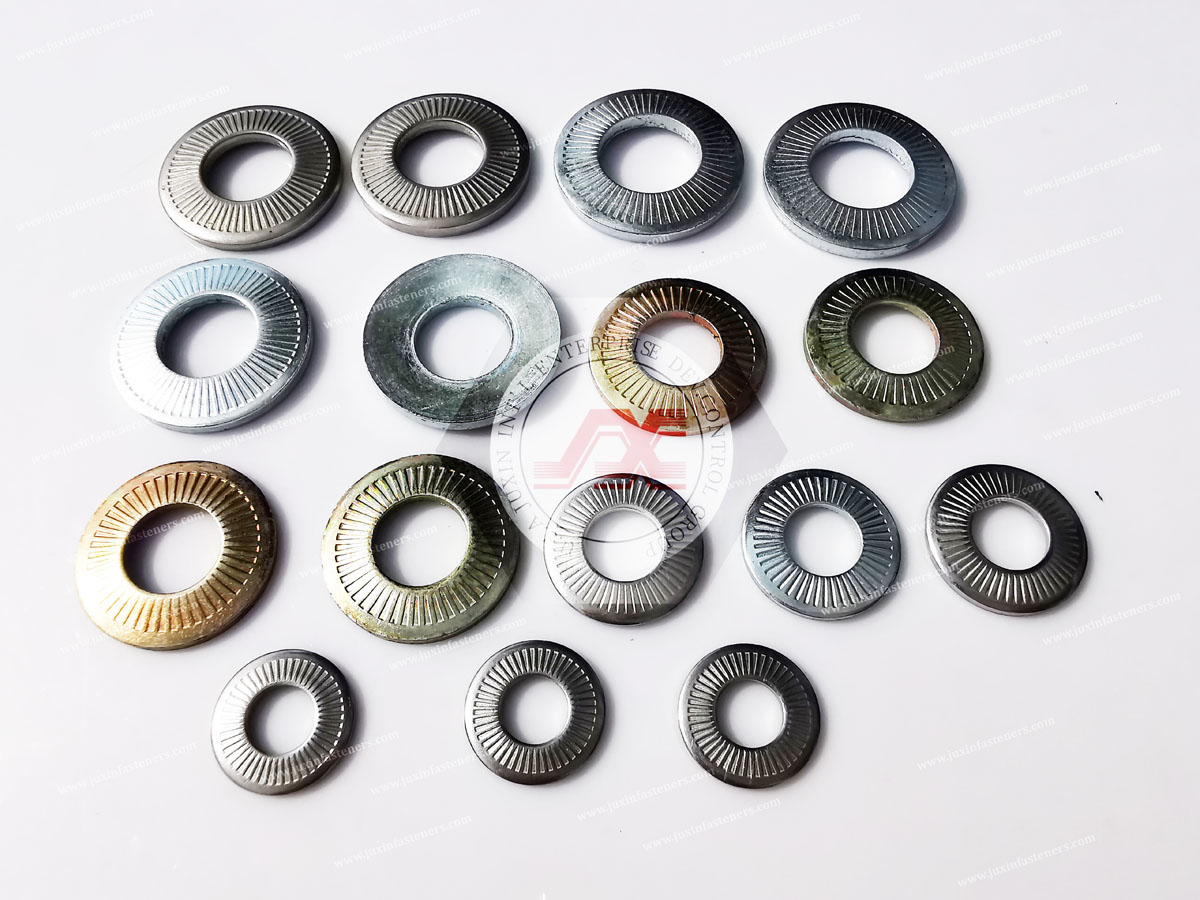
Internal tooth washers use teeth at the bearing interface.
Flat washers do not.
Therefore:
Flat Washer → Bearing Area
Internal Tooth Washer → Tooth Engagement / Interface Function
Do not substitute one for the other without understanding the design requirement.
Belleville or disc springs provide axial spring force through conical deflection.
Flat washers are not intended to provide the same spring behavior.
Therefore:
Flat Washer ≠ Disc Spring
Wave washers are elastic components commonly used for:
bearing preload;
axial play;
tolerance compensation.
Flat washers primarily provide a bearing interface.
These products should not be confused simply because both are called washers.
If the assembly must seal:
water;
oil;
hydraulic fluid;
air;
gas;
a dedicated sealing component should be specified.
A standard metal flat washer does not inherently provide fluid sealing.
Torque is an indirect method of creating bolt preload.
The torque-preload relationship is strongly affected by friction.
A washer can change the bearing interface beneath the rotating screw head or nut.
Therefore, changing:
washer material;
washer coating;
lubrication;
bearing surface;
may change tightening behavior.
Do not assume the same torque produces exactly the same preload after changing the washer interface.
During tightening, torque is consumed through several frictional interfaces.
These can include:
thread friction;
under-head friction;
nut-bearing friction;
washer-bearing friction.
For preload-sensitive assemblies, washer selection is therefore part of the tightening system.
Washers may be supplied in different finishes depending on:
corrosion environment;
mating material;
friction requirement;
appearance;
customer specification.
Potential finishes can include various zinc-based or other specified coatings where appropriate.
Do not select finish independently of the screw and service environment.
Stainless-steel fasteners and washers are widely used for corrosion-resistant assemblies.
However:
Stainless Steel ≠ Corrosion-Proof
The appropriate stainless grade depends on:
environment;
chlorides;
temperature;
mating materials.
Thread galling can also require consideration in stainless threaded assemblies.
For carbon-steel systems, coating compatibility can matter for:
corrosion protection;
appearance;
friction;
galvanic behavior.
A complete RFQ should identify both fastener and washer finish where controlled.
Using dissimilar metals in the presence of an electrolyte can create galvanic-corrosion concerns.
This may be relevant in assemblies involving:
aluminum;
stainless steel;
carbon steel;
copper alloys.
Material and coating selection should therefore consider the complete joint environment.
No universal rule says every plain flat washer must be discarded after one use.
Reuse depends on:
washer type;
material;
deformation;
corrosion;
coating condition;
application;
customer maintenance requirements.
Plain washers and engineered spring or locking washers should not be treated as though they have identical reuse criteria.
Replacement should be considered when the washer shows:
permanent deformation;
cracking;
excessive indentation;
corrosion;
damaged coating;
damaged locking features;
dimensional change.
Critical assemblies may also have customer-specific replacement rules.
Multiple loose flat washers should not be added casually to compensate for poor joint geometry.
However, saying that washers can never be stacked is also too broad.
If an engineered assembly deliberately specifies multiple washers, follow the drawing.
For an unplanned field modification, determine why additional thickness is needed before adding washers.
If the design requires significant spacing, a dedicated:
spacer;
sleeve;
bushing;
standoff
may provide a more controlled solution than an arbitrary stack of washers.
One common production problem is not washer performance.
It is handling.
A production line may need to manage:
One Screw + One Loose Washer
for every fastening point.
A SEMS screw combines the screw with one or more captive washers.
Potential manufacturing benefits can include:
fewer loose components;
reduced washer omission risk;
faster handling;
simplified kitting;
improved suitability for repetitive assembly.
For high-volume OEM production, the sourcing question can therefore evolve from:
“Which flat washer fits this screw?”
to:
“Should the screw and washer be supplied as a captive SEMS assembly?”
| Requirement | Loose Screw + Washer | SEMS Assembly |
|---|---|---|
| Easy component substitution | High | More controlled |
| Washer captive to screw | No | Yes |
| Loose-part handling | Required | Reduced |
| Risk of missing washer during assembly | Higher | Reduced |
| Flexible washer changes | Easier | Requires assembly specification |
| High-volume repetitive assembly | Possible | Often advantageous |
| Automated handling | Application-dependent | Can be advantageous |
The correct choice depends on production strategy.
Screws and flat washers can be used throughout automotive-related assemblies.
Potential applications include:
body hardware;
brackets;
electrical modules;
thermal-management equipment;
interior assemblies;
auxiliary systems.
Washer selection should follow:
parent material;
fastener strength;
coating;
bearing requirement;
customer specification.
Do not assume a standard washer automatically provides vibration locking.
Potential screw-and-washer applications include:
covers;
brackets;
equipment housings;
cooling-system hardware;
electrical component mounting.
Where sealing is required, specify a dedicated sealing architecture.
Where electrical grounding is required, validate the electrical interface separately.
AI infrastructure contains large quantities of:
server hardware;
racks;
cooling equipment;
pumps;
power-distribution equipment;
UPS systems;
electrical cabinets.
Screws and washers can appear throughout these assemblies.
The correct washer depends on the mechanical interface rather than the end-market label.
Flat washers may be used for:
equipment mounting;
brackets;
covers;
mechanical hardware.
However:
Flat Washer ≠ Automatic Grounding Washer
If electrical bonding is required, the electrical interface must be designed and validated for that purpose.
Power converters, inverters, UPS systems and DC power equipment contain numerous mechanical fastened interfaces.
Potential washer-selection issues include:
aluminum housings;
thin sheet;
electrical isolation;
thermal cycling;
corrosion.
Mechanical and electrical functions should be specified separately.
Screws and washers can be used in:
housings;
brackets;
fans;
blowers;
actuators;
control assemblies.
A standard flat washer does not automatically create an airtight or watertight connection.
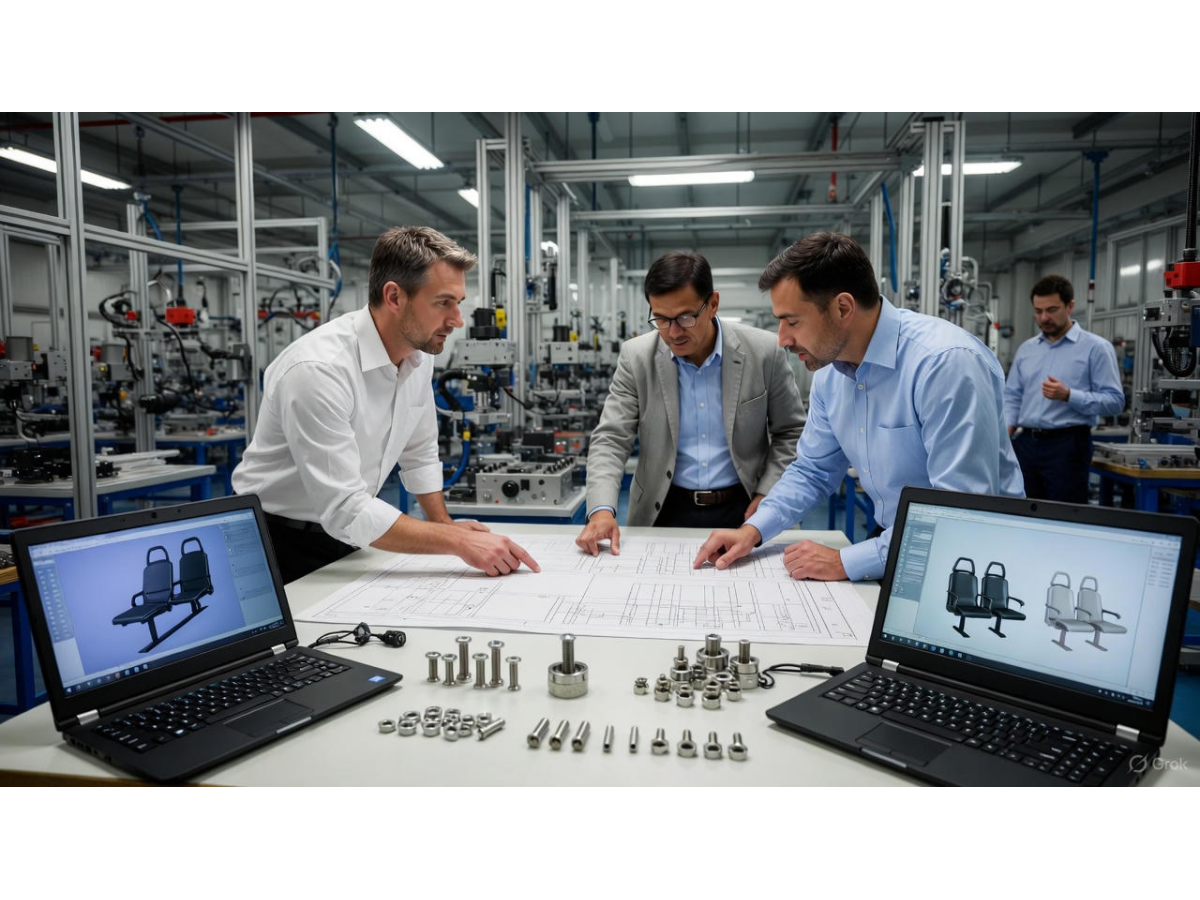
Automation systems commonly use screw-and-washer assemblies in:
frames;
guards;
sensor brackets;
actuators;
motor mounts;
control equipment.
High-volume repetitive assembly may also create a commercial case for SEMS screws.
Potential applications include:
cabinets;
enclosures;
cooling hardware;
mounting brackets;
equipment chassis.
Outdoor installations may require appropriate material and coating selection.
Potential non-sterile applications include:
diagnostic equipment housings;
laboratory instruments;
equipment carts;
internal brackets;
service panels.
Generic industrial screws and washers should not automatically be described as medical-grade, sterile or biocompatible.
Machinery may use screws, bolts and washers across:
guards;
housings;
covers;
brackets;
service assemblies;
mechanical modules.
Higher-load joints require appropriate consideration of:
fastener strength;
washer hardness;
parent material;
joint stiffness;
tightening method.
Screws and washers can be used in:
fabricated metal equipment;
HVAC installations;
service equipment;
cabinets;
non-structural assemblies.
Structural bolting applications can have dedicated standards and engineering requirements and should not be inferred from generic washer capability.
| Engineering Situation | Washer Decision |
|---|---|
| General metric screw joint | Evaluate ISO 7089 |
| Soft parent material | Consider larger bearing area |
| Large clearance hole | Evaluate ISO 7093-1 and thickness |
| Higher-strength screw | Verify washer hardness |
| Thin sheet | Check OD, thickness and sheet deformation |
| Limited radial space | Evaluate smaller OD / specific series |
| Cosmetic surface | Evaluate surface pressure and finish |
| Corrosive environment | Select compatible material/finish |
| Need sealing | Use dedicated sealing washer/system |
| Need anti-loosening | Use dedicated locking method |
| High-volume repetitive assembly | Evaluate SEMS screw |
| Inch-series assembly | Evaluate ASME B18.21.1 |
| Countersunk screw | Use compatible seating geometry |
| Flange screw | Determine whether separate washer is actually required |
Nominal size does not define bearing-area requirements.
A washer can fit dimensionally and still be mechanically inappropriate.
Thickness, stiffness and available space matter.
The washer must adequately interact with the actual hole geometry.
A plain washer does not inherently lock the thread.
Fluid sealing requires a suitable sealing system.
Local deformation can affect the joint.
Some fastener and joint geometries provide adequate bearing surfaces without one.
Use an engineered spacer when spacing—not bearing—is the real requirement.
For high-volume production, a captive SEMS assembly may be commercially more efficient than loose screws and washers.
Engineers may search:
what size washer for screw;
flat washer for M8 screw;
flat washer for high-strength bolt;
ISO 7089 washer;
ISO 7093-1 washer;
washer OD selection;
washer bearing area;
washer hardness for bolt;
flat washer for aluminum;
flat washer for plastic;
flat washer for large clearance hole;
does a screw need a washer;
flange screw vs flat washer;
washer under socket head screw.
These searches represent real joint-design decisions.
Procurement and supplier-development teams may search:
screw and washer supplier;
flat washer manufacturer;
screw washer manufacturer;
ISO 7089 washer supplier;
ISO 7093-1 washer supplier;
hardened washer supplier;
custom flat washer;
stainless screw and washer supplier;
OEM screw washer supplier;
SEMS screw manufacturer;
screw and captive washer supplier.
These queries indicate stronger commercial intent.
For technical and commercial evaluation by JUXIN FASTENERS, provide where applicable:
screw or bolt drawing;
washer drawing;
customer part number;
metric or inch system;
thread diameter;
thread pitch;
screw length;
screw head type;
screw property class or material;
washer standard;
washer ID;
washer OD;
washer thickness;
washer hardness class;
washer material;
screw finish;
washer finish;
parent material;
parent-material thickness;
clearance-hole diameter;
slot dimensions where applicable;
required bearing area;
target clamp load where controlled;
tightening method;
torque requirement where specified;
lubrication condition;
corrosion environment;
operating temperature;
sealing requirement;
electrical requirement;
locking requirement;
loose washer or captive SEMS requirement;
sample quantity;
prototype quantity;
production quantity;
estimated annual demand;
inspection requirement;
packaging requirement;
labeling requirement;
customer-specific requirements.
Its primary functions can include increasing bearing area, distributing clamp load, protecting the mating surface and bridging an appropriate clearance hole.
No. The need depends on screw-head geometry, parent material, hole geometry, bearing requirements and joint design.
Start with nominal screw size, then evaluate washer ID, OD, thickness, hardness, parent material and clearance-hole geometry.
ISO 7089 specifies normal-series Product Grade A plain washers and includes 200 HV and 300 HV hardness classes.
ISO 7093-1 specifies large-series Product Grade A plain washers. These are particularly relevant where softer materials are clamped or larger clearance holes require additional bearing area.
ISO 7089 is a normal-series plain washer standard, while ISO 7093-1 defines a large-series washer with a larger bearing footprint for appropriate applications.
Yes. Washer hardness can affect resistance to indentation and deformation and should be compatible with the fastener and joint requirements.
Not inherently. A flat washer primarily provides a bearing interface.
A standard plain metal washer should not be assumed to provide fluid sealing.
Not automatically. Determine whether the flange already provides adequate bearing area and whether another washer function is required.
A conventional flat washer is generally not used directly beneath a countersunk head in the same way as under a flat-bearing screw head. Use geometry designed for the countersunk interface where required.
Reuse depends on washer condition, application and customer requirements. Plain washers should not automatically be treated as single-use components.
Do not add washers casually to correct a spacing problem. If the design intentionally specifies multiple washers, follow the drawing. If significant spacing is required, evaluate a dedicated spacer or sleeve.
A SEMS screw is a preassembled screw with one or more captive washers, allowing the screw-and-washer combination to be handled as one component.
SEMS can be useful in repetitive OEM assembly where reducing loose-part handling and washer omission is valuable.
JUXIN FASTENERS can evaluate screw, bolt, flat washer, hardened washer, spring washer, locking-fastener and captive screw-and-washer requirements from drawings, samples and application specifications.
A procurement inquiry may begin:
“Please quote M8 screws with flat washers.”
That defines only part of the requirement.
A professional sourcing process should continue:
What Screw Head Is Used?
What Is the Screw Property Class or Material?
What Material Is Being Clamped?
How Thick Is the Parent Material?
What Is the Clearance-Hole Diameter?
Is Normal-Series Bearing Area Enough?
Would a Large-Series Washer Be More Appropriate?
What Washer Hardness Is Required?
What Coating or Material Is Needed?
Does the Joint Need Locking?
Does It Need Sealing?
Would a Captive SEMS Assembly Improve Production Efficiency?
The commercial sourcing path becomes:
Screw → Joint Material → Hole Geometry → Bearing Requirement → Washer Series → Washer Hardness → Material → Finish → Assembly Method → Prototype → Validation → Production RFQ
This is the difference between purchasing two loose pieces of hardware and specifying a reliable industrial fastening system.
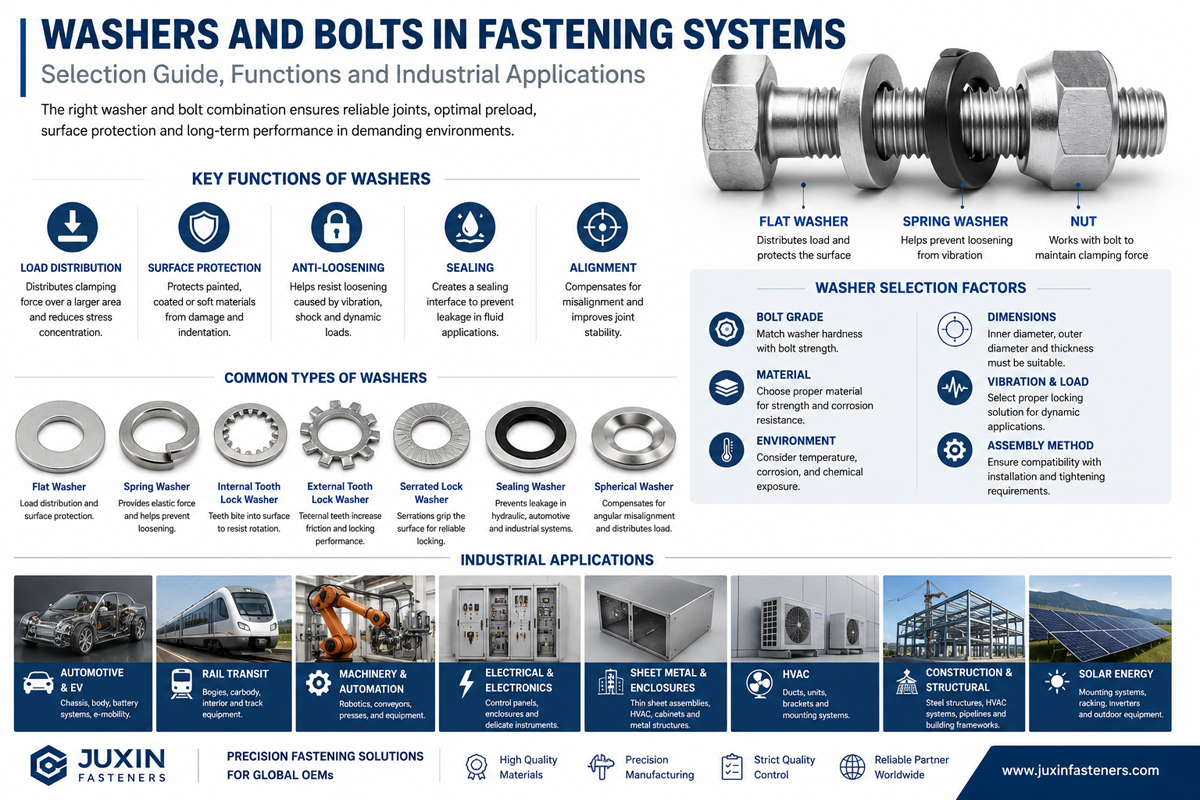
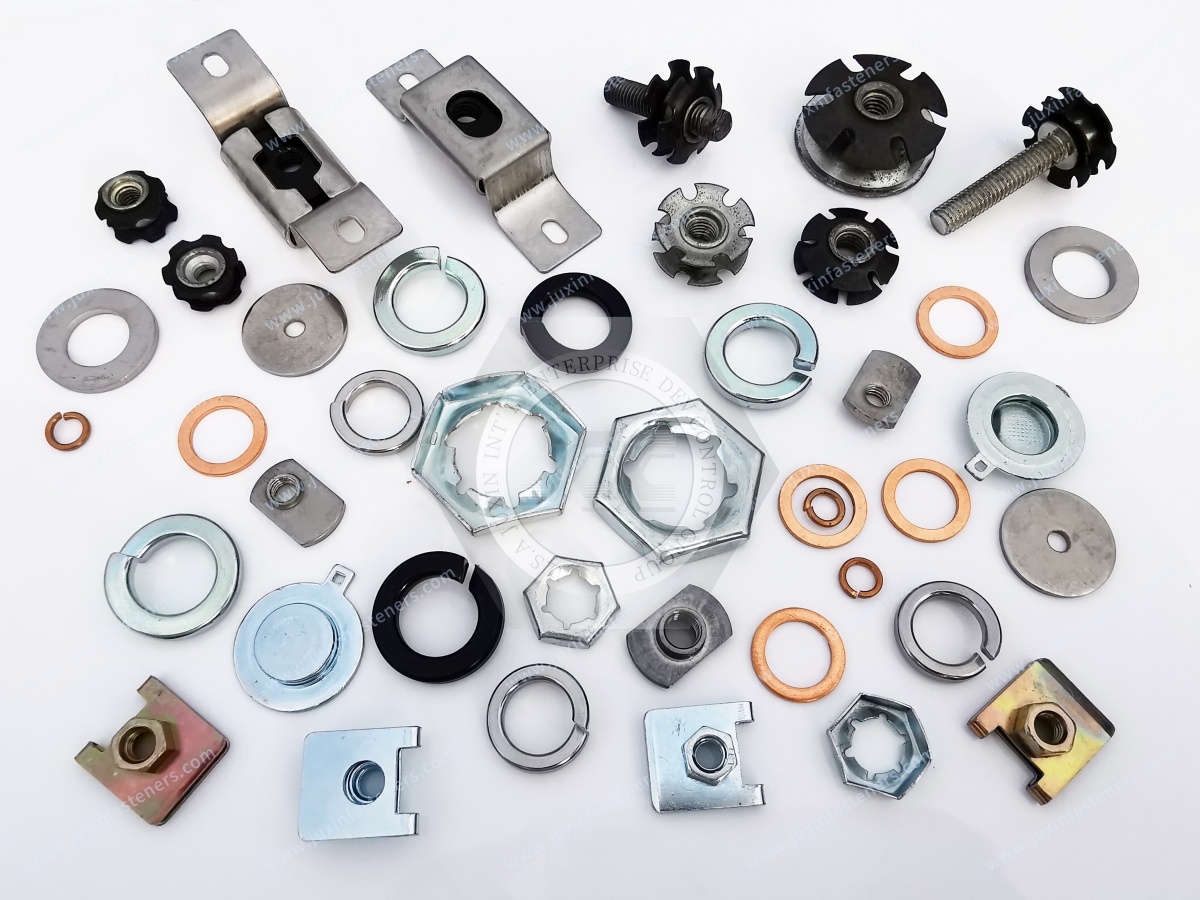
JUXIN FASTENERS supports OEM sourcing of screws, bolts, flat washers, hardened washers, spring washers, locking fasteners, SEMS screw-and-washer assemblies and custom fastening components.
Potential applications include:
automotive and EV equipment;
AI data center and HPC equipment;
electrical cabinets;
power electronics;
HVAC equipment;
industrial automation;
telecommunications equipment;
machinery;
heavy equipment;
medical and laboratory equipment;
fabricated metal assemblies.
For general washer-family selection, see Industrial Washers: Types, Functions & Selection Guide.
For flat-washer dimensions, bearing area and standard-series selection, refer to the JUXIN FASTENERS Flat Washer Selection Guide: Size, Bearing Area, ISO Standards & Industrial Applications.
For washer hardness and bolt compatibility, refer to the JUXIN FASTENERS Flat Washer Selection: Hardness, Bolt Grades & Industrial Applications.
For the engineering question of whether a washer is needed at all, refer to the JUXIN FASTENERS Do Bolts Need Washers? When to Use—and When Not to Use—Washers in Bolted Joints.
For flat and spring washer combinations, refer to the JUXIN FASTENERS Flat Washer + Spring Washer: Do You Need Both in a Bolted Joint?
For preassembled screw-and-washer systems, refer to the JUXIN FASTENERS SEMS Screws & Captive Washer Assemblies: Types, Standards, Design & OEM Sourcing Guide.
For broader bolt and washer engineering, see Washers and Bolts: Fastening Systems Selection Guide.
For high-strength fastening systems, see High-Strength Bolts and Nuts.
For OEM screw-and-washer RFQs, send your drawing or sample, screw specification, washer specification, parent material, hole geometry, material, finish, quantity and estimated annual demand to:
When selecting a flat washer for a screw, the most useful question is not:
“Which washer has the same nominal size?”
It is:
“What bearing interface does this screw-and-washer system need to create in the actual joint?”
 MORE NEWS
Sep. 27, 2026
Sep. 27, 2026
Sep. 27, 2026
Contact Us
Tel.:
+86 020 8621 0320
+86 020 3121 6067
E-mail:
Technical Support:
Navigation
SEND INQUIREY