
Call Us
+86 136 6007 9809
Call Us
+86 136 6007 9809

Sep. 19, 2023
A purchasing request that says:
“Please quote DIN 7603 copper washers.”
sounds specific.
For industrial sourcing, however, it may still be incomplete.
DIN 7603 covers sealing rings used in defined mechanical sealing interfaces. The standard contains different sealing-ring constructions and material options,
while individual sizes are defined by actual inside diameter, outside diameter and thickness rather than by a generic description such as “M12 copper washer.”
For engineers and procurement teams, the correct sourcing path is therefore:
Connection → DIN 7603 → Form → Nominal Size → ID / OD / Thickness → Material → Application → Validation → RFQ
JUXIN FASTENERS supports DIN 7603 copper sealing rings and drawing-based copper sealing washer requirements for industrial OEM, replacement and MRO applications.
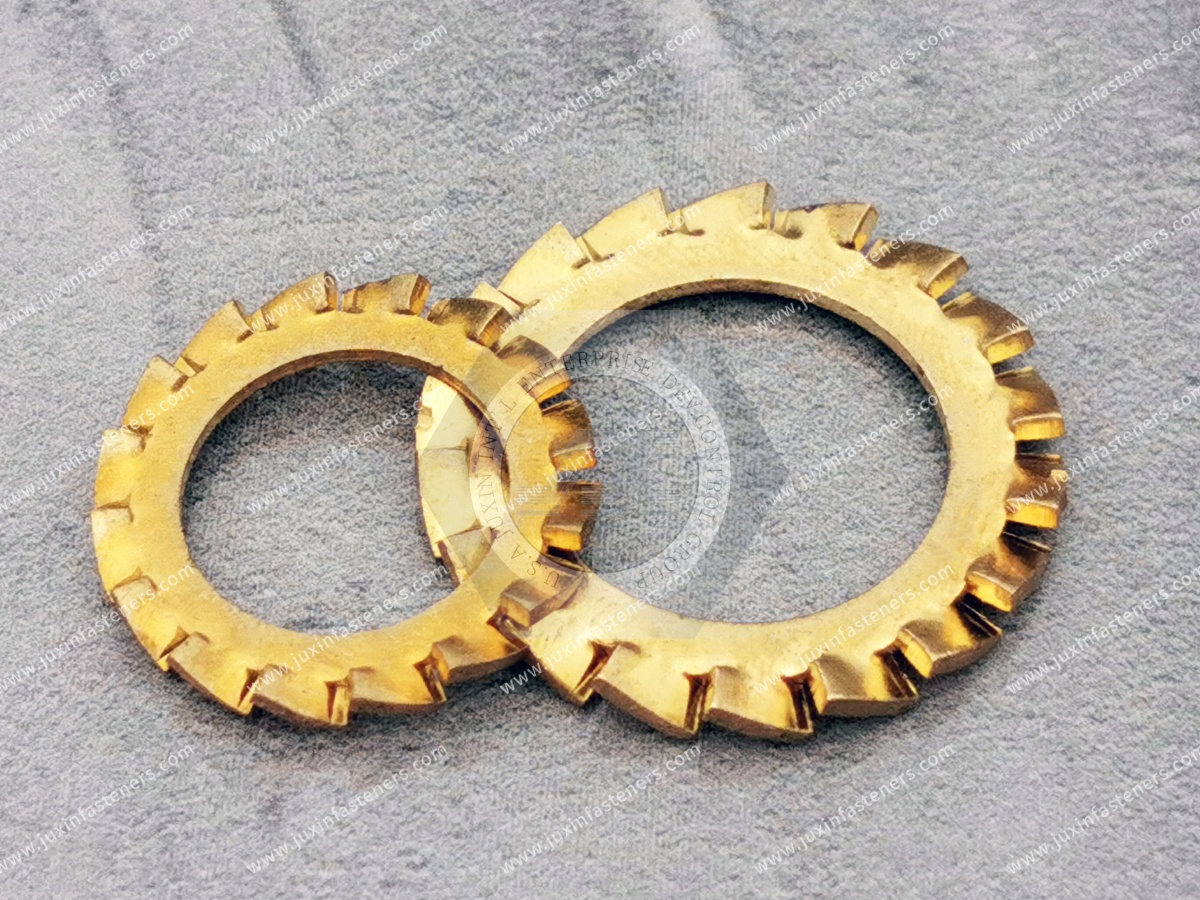
DIN 7603 is a German standard for sealing rings.
The current published edition is:
DIN 7603:2001-05 — Sealing Rings
The standard is associated with metallic and other sealing-ring configurations used with applications such as compression fittings and screw plugs.
This is an important distinction.
DIN 7603 should not be treated simply as:
“a standard for ordinary copper flat washers.”
Its engineering purpose is sealing.
Yes.
DIN 7603:2001-05 remains a current standard.
It replaced the previous DIN 7603:1994-11 edition.
This matters for engineers working with:
older machinery drawings;
legacy BOMs;
replacement parts;
MRO inventories;
long-life industrial equipment.
A drawing may reference an older edition even though the current standard has changed.
Therefore:
Legacy Drawing → Identify Edition → Compare Requirement → Engineering Review → Replacement Decision
Do not silently assume that an old callout and a current product are identical in every respect.
Visually, a solid DIN 7603 sealing ring can resemble a flat washer.
Functionally, however, it is intended as a sealing component.
That means engineers should distinguish between:
Plain Washer → Bearing / Load Distribution
and
DIN 7603 Sealing Ring → Static Sealing Interface
This difference affects material selection, surface requirements, assembly and replacement decisions.
Form A is one of the most commercially recognized DIN 7603 configurations.
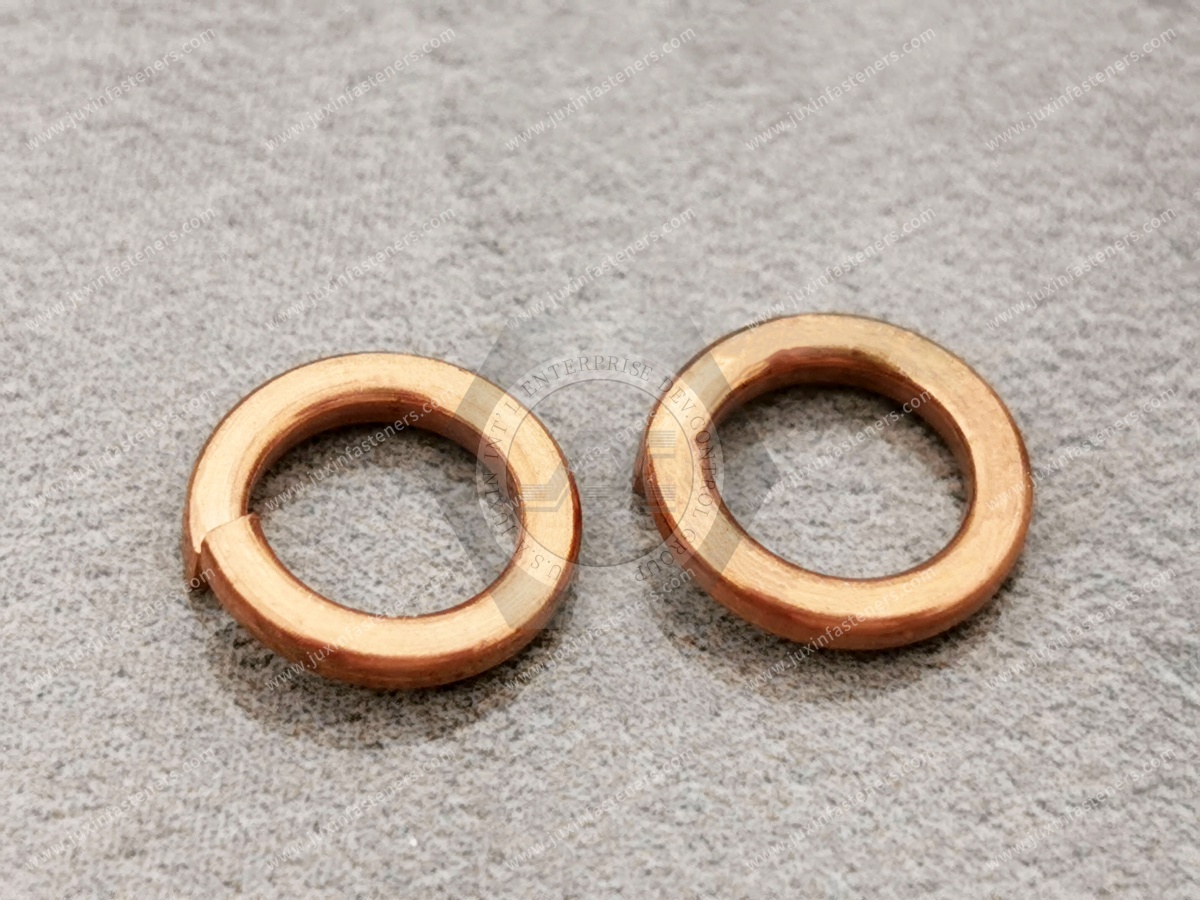
It is a solid, flat sealing ring.
Copper is one material commonly encountered for DIN 7603 Form A sealing rings.
A typical procurement description may therefore look like:
DIN 7603 A — Copper — [Nominal Size]
rather than simply:
Copper Washer
This additional information helps prevent incorrect substitutions.
Two components can have similar external appearance while serving different functions.
A generic copper flat washer may be selected for:
bearing area;
spacing;
electrical contact;
thermal interface.
A DIN 7603 Form A copper sealing ring is selected for a sealing interface.
Therefore:
Similar Geometry ≠ Same Functional Specification
DIN 7603 includes more than one sealing-ring construction.
Depending on the form and material, the sealing mechanism can differ.
This is why procurement should not remove the form designation from a controlled drawing or BOM.
For example, a solid flat sealing ring and a filled sealing ring should not be treated as interchangeable merely because their nominal ID and OD are similar.
A useful engineering distinction is:
Form A is a solid flat sealing ring.
Its sealing behavior depends on the interaction between:
ring material;
geometry;
sealing surfaces;
clamp load;
connection design.
Form C uses a different construction involving a metallic outer structure with filling material.
Its mechanical and sealing behavior therefore differs from a solid Form A ring.
This means:
DIN 7603 A ≠ DIN 7603 C
even if a catalog lists both under DIN 7603.
Consider a maintenance buyer who sends:
“Need DIN 7603, 18 × 22.”
The supplier still needs to know:
form;
material;
thickness;
application;
quantity;
customer-specific requirements.
A standard number alone does not always define the complete commercial part.
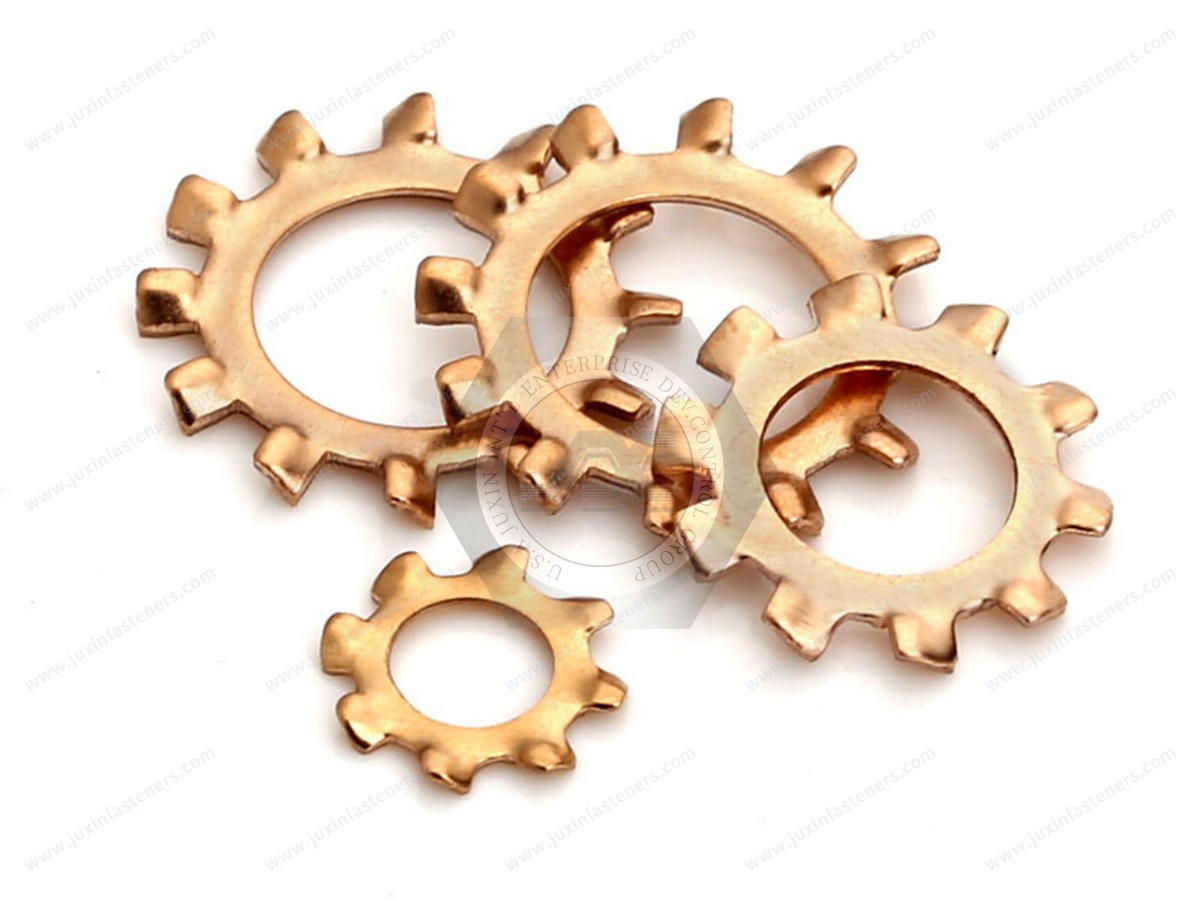
Copper is widely used for solid metallic sealing rings because suitable copper conditions can deform locally under compression.
In an appropriate connection:
Clamp Load → Controlled Copper Deformation → Surface Conformity → Static Seal
This does not mean copper itself guarantees sealing.
The complete interface remains responsible for performance.
Copper sealing behavior can depend on material condition.
A relatively soft copper condition can deform differently from work-hardened copper.
Therefore:
Same DIN Dimensions + Different Copper Condition ≠ Necessarily Same Sealing Behavior
Where material condition or hardness is controlled by the applicable specification or drawing, it should be included in procurement and inspection requirements.
“High-purity copper” is a marketing description, not necessarily a complete engineering specification.
A controlled sourcing requirement may need:
standard;
form;
material designation;
material condition;
dimensions;
application requirements.
If a customer drawing defines a specific copper grade, that requirement should control the RFQ.
DIN 7603 sizes are defined using sealing-ring dimensions rather than simply the nominal bolt diameter.
Key dimensions include:
inside diameter;
outside diameter;
thickness.
A useful commercial notation is therefore based on actual dimensions such as:
ID × OD × Thickness
rather than only:
M10
or
M12
This is an important procurement principle.
A threaded connection may use a DIN 7603 sealing ring, but the washer dimensions should not be guessed solely from thread diameter.
The correct ring depends on the designed sealing interface.
Therefore:
Thread Size → Check Connection → Check Standard Size → Select Ring
not:
Thread Size → Guess Washer
The inside diameter must accommodate the intended connection geometry while maintaining the designed sealing area.
If the ID is too small:
assembly may be impossible;
the ring may interfere with threads or fitting geometry.
If the ID is unnecessarily large:
sealing width may change;
ring positioning may become less controlled.
The outside diameter defines the outer boundary of the sealing ring.
It must be compatible with:
available sealing face;
fitting geometry;
adjacent components;
required contact area.
A larger OD is not automatically better.
Thickness can influence:
installed stack height;
deformation;
available material for conformity;
assembly geometry.
Changing thickness should not be treated as a harmless substitution.
Procurement systems often shorten part descriptions.
A BOM may contain a nominal size while the controlled drawing or standard defines the detailed geometry.
For replacement sourcing, verify actual dimensions before approving an alternative.
DIN 7603 sealing rings are commonly associated with screw-plug sealing interfaces.
A typical system can be represented as:
Screw Plug → DIN 7603 Sealing Ring → Machined Seating Surface → Housing
The sealing ring participates in a static interface between the plug and the mating component.
DIN 7603 sealing rings can also be used with appropriate fitting systems.
Potential industrial equipment includes:
hydraulic systems;
lubrication systems;
pumps;
compressors;
gearboxes;
machinery;
fluid-handling equipment.
However:
DIN 7603 Ring ≠ Universal Seal for Every Fitting
The connection must be designed for the sealing-ring system.
DIN 7603 sealing rings should be understood primarily as static sealing components.
They are not generic dynamic seals for:
rotating shafts;
reciprocating rods;
moving pistons.
Dynamic interfaces normally require dedicated seal systems.
A DIN 7603 copper ring cannot compensate for unlimited surface damage.
Potential problems include:
deep scratches;
corrosion;
dents;
burrs;
poor machining;
contamination.
Therefore:
New Ring + Damaged Seat = Possible Leakage
Replacing the ring repeatedly may not solve a damaged mating-surface problem.
Metallic sealing depends on contact between the sealing ring and mating faces.
Surface texture and machining direction can therefore influence the interface.
For controlled equipment, follow the applicable drawing, standard and equipment specification rather than assuming that any flat-looking surface is acceptable.
Before installation, the interface should be evaluated for contamination such as:
metal chips;
abrasive particles;
dirt;
old gasket material;
incompatible residues.
A small particle trapped beneath a metallic sealing ring can create a leak path.
A common search question is:
“What torque should I use for a DIN 7603 copper washer?”
There is no universal torque based only on the sealing ring.
Tightening requirements depend on the complete connection:
thread;
plug or fitting;
material;
lubrication;
mating component;
sealing-ring geometry;
target clamp load;
equipment specification.
Therefore:
DIN 7603 Size ≠ Universal Torque
If a metallic sealing connection leaks, applying additional torque without understanding the cause can damage:
threads;
plug;
fitting;
housing;
sealing face;
ring.
Leakage should be diagnosed systematically.
When a connection using a DIN 7603 sealing ring leaks, check:
Is DIN 7603 actually specified?
Is the required Form A, Form C or another specified configuration being used?
Verify:
ID;
OD;
thickness.
Confirm the specified sealing-ring material.
Where controlled, verify the required condition or hardness.
Inspect for:
scratches;
corrosion;
dents;
burrs.
Check both sides of the interface.
Inspect:
plug;
fitting;
threads;
housing.
Follow the approved equipment specification.
Determine whether the ring has already been compressed and whether reuse is permitted.
Reuse should not automatically be assumed.
A copper sealing ring can undergo permanent deformation during initial installation.
After disassembly, the ring may have:
changed thickness;
contact impressions;
work-hardened areas;
surface damage.
For a sealing-critical connection, follow the OEM or maintenance specification.
Where replacement is required after disassembly, install a new sealing ring.
Copper can be annealed metallurgically.
That does not mean uncontrolled field re-annealing is automatically an approved maintenance process.
Reheating can introduce uncertainty in:
final material condition;
oxidation;
cleanliness;
dimensional stability;
process repeatability.
For controlled industrial equipment, follow the approved maintenance procedure.
A generic copper crush washer may be manufactured to:
customer drawing;
OEM dimensions;
another specification.
DIN 7603 is a defined sealing-ring standard.
Therefore:
Copper Crush Washer ≠ Automatically DIN 7603
and
DIN 7603 Copper Ring ≠ Every Copper Crush Washer
This distinction is important for both SEO and procurement.
A copper flat washer can be used for:
bearing;
electrical contact;
spacing;
thermal interface.
A DIN 7603 copper ring is primarily associated with sealing.
If the engineering requirement is electrical conductivity rather than fluid sealing, a copper flat washer may be the more relevant product family.
A bonded seal typically combines:
Metal Ring + Elastomeric Sealing Element
This creates a different sealing mechanism from a solid copper DIN 7603 Form A ring.
Do not substitute one for the other without engineering review.
An O-ring is an elastomeric sealing component normally used in a designed groove or sealing geometry.
A DIN 7603 metallic sealing ring operates differently.
These sealing technologies are not automatically interchangeable.
DIN 7603 sealing rings can involve materials other than copper.
Material selection depends on the:
connection;
medium;
temperature;
mechanical requirements;
applicable specification.
Copper should not automatically replace aluminum or another specified material simply because the dimensions match.
Copper performs well in many environments but is not universally compatible with every fluid or chemical.
Before using a copper sealing ring, evaluate:
process medium;
lubricant;
fuel;
coolant;
chemical exposure;
temperature;
surrounding materials.
Material compatibility belongs to the system design.
Copper has useful corrosion resistance in many applications.
However, corrosion behavior depends on the environment.
Potential concerns can include:
aggressive chemicals;
galvanic coupling;
salt-containing environments;
specific process fluids.
Do not use “corrosion resistant” as a substitute for compatibility analysis.
DIN 7603 copper sealing rings can be relevant to appropriate static hydraulic interfaces such as:
screw plugs;
ports;
fittings;
service connections.
Pressure capability belongs to the complete connection.
A DIN 7603 ring alone should not be assigned a universal pressure rating.
Industrial lubrication equipment can contain multiple threaded plugs and fittings.
Potential applications include:
gearboxes;
bearing lubrication systems;
oil reservoirs;
pumps;
machine tools.
Where the original design specifies DIN 7603, replacement sourcing should preserve the controlled form, dimensions and material.
DIN 7603 sealing rings can be used in appropriate static connections in pumps and compressors.
Potential locations can include:
drain plugs;
fill plugs;
service ports;
lubrication connections.
They should not be confused with shaft seals or other dynamic sealing systems.
Gearboxes commonly contain threaded service interfaces.
Where metallic sealing rings are specified, replacement selection should consider:
plug geometry;
sealing face;
oil compatibility;
dimensions;
material.
Copper sealing rings are used in selected automotive fluid connections.
Potential applications can include:
lubrication systems;
drain plugs;
selected hydraulic interfaces;
other connections specifically designed for metallic sealing rings.
Safety-critical systems must follow the vehicle or equipment manufacturer's controlled requirements.
EVs still contain multiple fluid and thermal-management systems.
Potential metallic sealing-ring applications may exist in:
gear-reduction units;
thermal-management equipment;
pumps;
auxiliary systems.
Do not assume a copper DIN 7603 ring is appropriate for every EV coolant connection.
The fluid, mating materials and connection architecture must be confirmed.
DIN 7603 sealing rings can be relevant in:
CNC equipment;
automation machinery;
hydraulic power units;
presses;
material-handling equipment;
manufacturing machinery.
This creates useful search overlap between engineering replacement demand and OEM procurement.
Construction, mining and agricultural machinery use extensive hydraulic and lubrication systems.
DIN 7603 sealing rings may be relevant where the equipment design uses compatible static sealing interfaces.
Do not generalize them as structural fasteners.
Potential applications may exist in:
lubrication equipment;
hydraulic auxiliary systems;
pumps;
service connections.
Material and operating conditions should follow the equipment specification.
DIN 7603 sealing rings can be used only where the fitting architecture is designed for this type of metallic seal.
They should not automatically replace:
O-rings;
flare seals;
bonded seals;
brazed connections;
refrigerant-specific sealing systems.
Modern AI and HPC infrastructure uses extensive:
cooling systems;
pumps;
heat exchangers;
power equipment;
auxiliary mechanical systems.
DIN 7603 sealing rings may be relevant to selected industrial pump or equipment connections.
However:
Data Center Application ≠ Automatic DIN 7603 Requirement
The actual equipment drawing and fluid system determine the sealing architecture.
Copper should not be described as universally suitable for chemical service.
Before using a copper sealing ring in chemical equipment, confirm compatibility with:
process medium;
concentration;
temperature;
adjacent metals;
applicable safety requirements.
Marine environments introduce potential:
salt exposure;
galvanic corrosion;
moisture.
Copper material alone does not guarantee long-term compatibility.
The complete material system should be reviewed.
Copper sealing gaskets can exist in aerospace applications, but a generic DIN 7603 industrial sealing ring should not automatically be represented as aerospace-qualified hardware.
Aerospace parts may require:
dedicated aerospace standard;
customer drawing;
controlled material;
traceability;
inspection;
approved supplier requirements.
JUXIN FASTENERS can evaluate appropriate drawing-based industrial, MRO, tooling and ground-support requirements subject to customer specifications.
A washer that visually resembles a DIN 7603 ring is not automatically DIN 7603 compliant.
Conformity requires evaluation against the applicable requirements.
Therefore:
Looks Similar ≠ Standard Conformity
For production procurement, specify the standard explicitly where required.

Not every application fits a standard DIN 7603 size.
A customer may require:
special ID;
special OD;
different thickness;
nonstandard copper material;
controlled hardness;
special edge condition;
custom packaging.
In that case, a drawing-based custom sealing ring may be more appropriate.
If the required geometry does not correspond to DIN 7603, it may be better to specify:
Custom Copper Sealing Ring — Customer Drawing
rather than incorrectly describing the component as DIN 7603.
Correct product identification reduces procurement ambiguity.
For an older machine with a DIN 7603 callout:
Identify:
DIN edition;
form;
size;
material.
Confirm:
plug or fitting;
seating geometry;
available space.
Record:
ID;
OD;
thickness.
Remember that a used copper ring may already be deformed.
Do not rely solely on a used sample.
Avoid silent material substitution.
Evaluate assembly fit and sealing.
Lock the final drawing or standard callout before volume purchasing.
| Requirement | Engineering Check |
|---|---|
| Existing DIN 7603 drawing | Confirm edition, form, size and material |
| New screw-plug design | Confirm interface and applicable standard |
| Copper Form A ring | Verify dimensions and copper requirement |
| Filled sealing ring | Do not substitute solid Form A automatically |
| Unknown used sample | Identify geometry before sourcing |
| Leakage after replacement | Inspect mating surfaces and connection |
| Different material proposed | Review compatibility before substitution |
| Different thickness proposed | Review stack and sealing behavior |
| Hydraulic connection | Confirm fitting architecture |
| Dynamic shaft seal | DIN 7603 generally not the correct seal type |
| Custom dimensions | Use controlled drawing |
| Safety-critical equipment | Follow OEM-approved specification |
Different forms can represent different sealing constructions.
Thread size does not completely define the sealing ring.
DIN 7603 is not limited to one material.
Its engineering purpose is sealing.
The constructions and sealing behavior differ.
Thickness is part of the controlled geometry.
Previous installation can change the component.
The real problem may be the seat, material, dimensions or fitting.
A custom drawing should be identified accurately.
Industry qualification is a separate requirement.
Engineers and maintenance teams may search:
DIN 7603;
DIN 7603 A;
DIN 7603 copper washer;
DIN 7603 copper sealing ring;
DIN 7603 dimensions;
DIN 7603 Form A dimensions;
DIN 7603 Form C;
DIN 7603 material;
DIN 7603 sealing ring sizes;
DIN 7603 replacement;
DIN 7603 copper gasket;
DIN 7603 screw plug seal;
DIN 7603 fitting seal.
These searches often represent an active standard-identification or replacement task.
Procurement teams may search:
DIN 7603 supplier;
DIN 7603 manufacturer;
DIN 7603 A copper supplier;
copper sealing ring manufacturer;
DIN 7603 copper gasket supplier;
DIN 7603 washer supplier;
DIN 7603 OEM manufacturer;
custom copper sealing ring supplier;
DIN 7603 bulk supplier.
These queries carry strong commercial intent.
For technical and commercial evaluation by JUXIN FASTENERS, provide where applicable:
DIN 7603 callout;
standard edition if controlled;
Form A, C or other specified form;
nominal size;
inside diameter;
outside diameter;
thickness;
material;
copper requirement where applicable;
material condition;
hardness where controlled;
customer drawing;
sample;
customer part number;
plug or fitting type;
mating material;
sealing-face information;
operating medium;
operating temperature;
operating pressure;
tightening specification where controlled;
surface requirement;
cleanliness requirement;
inspection requirement;
documentation requirement;
sample quantity;
prototype quantity;
production quantity;
estimated annual demand;
packaging requirement;
labeling requirement;
customer-specific requirements.
DIN 7603 is a German standard for sealing rings used in defined static sealing interfaces.
Yes. DIN 7603:2001-05 is the current published edition.
It replaced DIN 7603:1994-11.
Not exclusively. DIN 7603 covers sealing rings and includes different forms and material possibilities. Copper is one important material used for selected configurations.
Form A is a solid flat sealing-ring configuration.
No. Although the geometry can look similar, DIN 7603 Form A is intended as a sealing ring.
Form C uses a different filled sealing-ring construction and should not automatically be replaced with solid Form A.
No. The standard is not limited to copper.
The actual standard size, form and dimensions should be identified. Bolt or thread size alone may be insufficient.
No. Tightening depends on the complete threaded connection and equipment specification.
Reuse should not automatically be assumed. Follow the equipment or OEM maintenance requirement.
Only if the engineering requirements are confirmed. Similar appearance does not establish standard conformity.
It can be relevant to compatible static fittings and screw-plug interfaces. It is not a universal hydraulic seal.
It is primarily associated with static sealing interfaces, not rotating or reciprocating dynamic seals.
JUXIN FASTENERS can evaluate DIN 7603 and drawing-based copper sealing-ring requirements according to form, dimensions, material, quantity and customer requirements.
A buyer may send:
“DIN 7603 copper washer, 50,000 pcs.”
That gives useful information, but not necessarily enough for production.
A professional supplier should determine:
Which DIN 7603 Form?
Which Nominal Size?
What ID?
What OD?
What Thickness?
Which Material?
What Material Condition?
What Connection Uses the Ring?
What Medium Is Being Sealed?
Is There an Existing Drawing?
Is This New Production or MRO Replacement?
Is the Standard Edition Controlled by the Customer?
The commercial path becomes:
Drawing / Connection → DIN 7603 → Form → Size → ID / OD / Thickness → Material → Application → Sample → Validation → Production RFQ
This process reduces the risk of purchasing a sealing ring that looks correct but does not match the intended interface.
JUXIN FASTENERS supports OEM and replacement sourcing of:
DIN 7603 sealing rings;
DIN 7603 Form A copper sealing rings;
copper sealing washers;
copper crush washers;
custom copper sealing rings;
metallic sealing washers;
custom stamped washer components.
Potential application sectors include:
industrial machinery;
hydraulic equipment;
lubrication systems;
pumps;
compressors;
gearboxes;
automotive and EV equipment;
construction machinery;
agricultural machinery;
power-generation equipment;
HVAC and thermal-management equipment;
AI data center cooling equipment;
industrial automation;
MRO and replacement programs.
For broader copper sealing engineering, refer to the JUXIN FASTENERS Copper Sealing Washers: Material, Annealing, Sealing Design & OEM Sourcing Guide.
For copper washers used primarily for electrical, bearing or thermal functions, refer to the JUXIN FASTENERS Copper Flat Washers: Electrical Contact, Material Selection & OEM Sourcing Guide.
For broader washer selection, see Industrial Washers: Types, Functions & Selection Guide.
For washer and bolt interface engineering, see Washers and Bolts: Fastening Systems Selection Guide.
For OEM or replacement DIN 7603 RFQs, send your standard callout, form, size, material, drawing or sample, application, quantity and estimated annual demand to:
For DIN 7603 sourcing, the most important question is not simply:
“Do you have this copper washer?”
It is:
“Which DIN 7603 form, size, material and sealing interface does the application actually require?”
 MORE NEWS
Sep. 27, 2026
Sep. 27, 2026
Sep. 27, 2026
Contact Us
Tel.:
+86 020 8621 0320
+86 020 3121 6067
E-mail:
Technical Support:
Navigation
SEND INQUIREY