
Call Us
+86 136 6007 9809
Call Us
+86 136 6007 9809

Nov. 02, 2023
Automotive fasteners are not a single product category. They are a system of threaded, welded, mechanically installed,
retaining and non-metallic components used throughout vehicle structures, powertrain-related assemblies, interiors, electrical systems, thermal-management equipment and electric-vehicle platforms.
Depending on the joint, the appropriate solution may be a high-strength bolt, flange nut, weld nut, weld screw, rivet nut,
self-clinching fastener, threaded insert, blind rivet, retaining clip, plastic fastener or custom drawing-based component.
For automotive design engineers, the challenge is therefore not simply finding a fastener with the correct diameter.
The real engineering sequence is:
joint function → load → substrate → assembly access → manufacturing process → fastening technology → material → surface treatment → locking strategy → validation
For procurement, supplier-development and supply-chain teams, another layer follows:
drawing control → supplier capability → sample validation → documentation → production consistency → second-source qualification → lifecycle supply
JUXIN FASTENERS supports global OEM, ODM, Tier 1, Tier 2 and industrial manufacturing customers with standard and custom automotive fasteners,
drawing-based components, weld fasteners, rivet nuts, threaded inserts, plastic fasteners, high-strength fasteners and precision machined components.
With more than 20 years of fastener industry experience, we support automotive sourcing projects based on customer drawings, specifications, samples and actual assembly requirements.
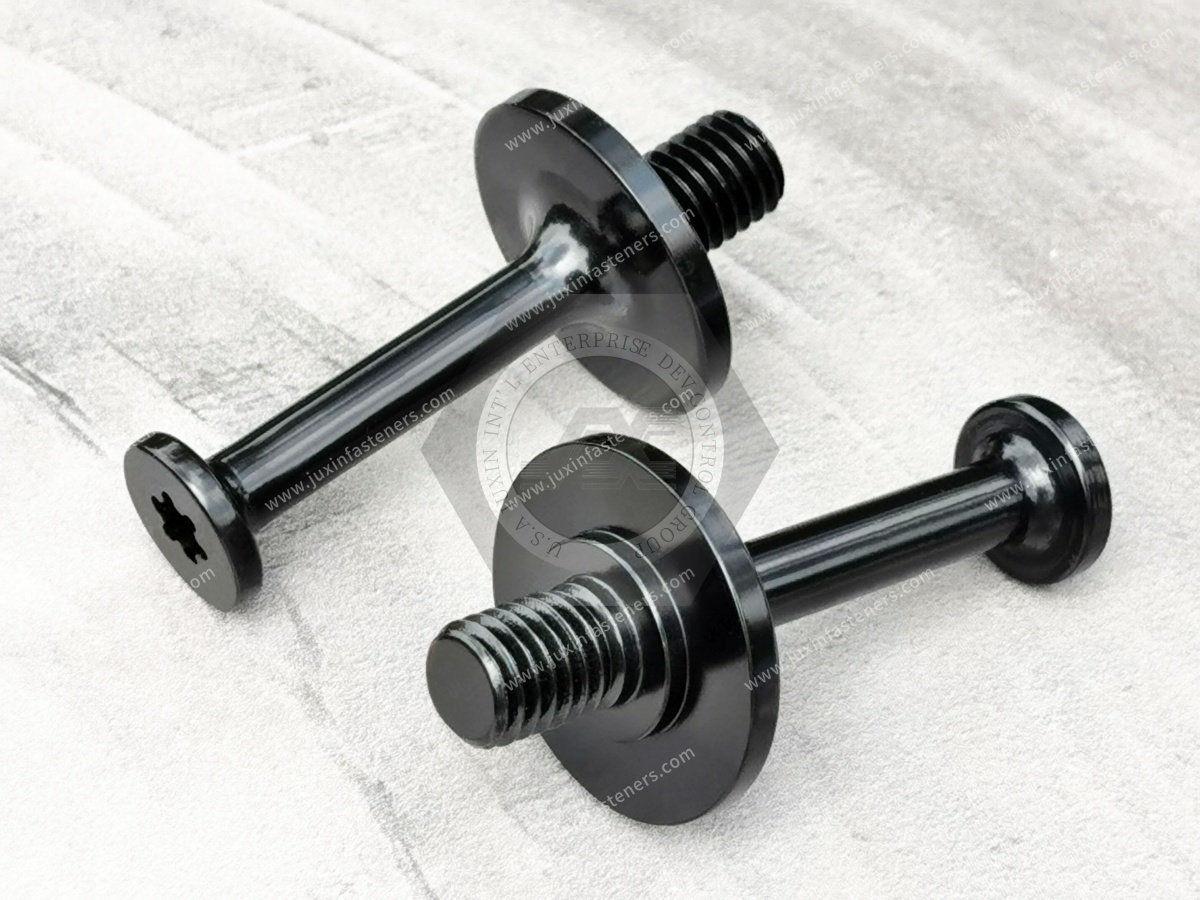
Automotive fasteners are components used to join, retain, position or support parts throughout a vehicle and its associated systems.
They include much more than conventional screws, bolts and nuts.
Common categories include:
Automotive bolts
Automotive screws
Flange bolts
Flange nuts
Lock nuts
Weld nuts
Weld screws
Weld studs
Rivet nuts
Blind rivets
Self-clinching fasteners
Threaded inserts
Retaining rings
Metal clips
Plastic clips
Nylon fasteners
Washers
Spacers
Pins
Custom cold-formed components
CNC machined components
The appropriate technology depends on what the joint needs to accomplish.
An automotive fastener should therefore be specified by function and assembly conditions, not simply by product name.
A useful automotive fastener selection process starts with the joint.
Determine whether the fastener primarily needs to:
Carry structural load
Clamp components
Position components
Retain a panel
Create a threaded attachment point
Allow future service
Support electrical equipment
Attach trim
Retain cables or hoses
Join thin sheet
Support a thermal-management component
Different functions lead to different fastening technologies.
Identify the substrates:
Carbon steel
High-strength steel
Stainless steel
Aluminum
Cast components
Engineering plastics
Composite structures
Mixed-material assemblies
Material combinations influence joint stiffness, corrosion strategy, installation method and fastener selection.
Assembly access immediately changes the solution space.
If both sides are accessible, a conventional bolt-and-nut joint may be practical.
Where only one side is accessible, engineers may evaluate technologies such as blind rivet nuts, blind rivets or application-specific inserts, depending on the required joint.
For fabricated automotive sheet metal, engineers may consider:
Weld nuts
Weld screws
Weld studs
Self-clinching fasteners
Rivet nuts
Other captive fastening systems
Each uses a different installation mechanism and has different design boundaries.
A permanent structural joint and a removable service cover should not automatically use the same fastening strategy.
Service frequency, tool access and replacement requirements should be considered during fastener selection.
Bolts and screws remain fundamental components in automotive assembly.
Depending on the application, products may include:
Hex bolts
Flange bolts
Machine screws
Thread-forming screws
Self-tapping screws
Shoulder screws
Special-head screws
High-strength bolts
Drawing-based cold-formed fasteners
Applications can range from brackets and equipment mounting to more demanding structural connections.
For applicable metric carbon- and alloy-steel fasteners, property classes such as 8.8, 10.9 or 12.9 may be specified according to the actual engineering requirements.
Higher property class is not automatically better.
Joint performance also depends on:
Clamp load
Joint stiffness
Mating thread
Bearing surface
Friction
Tightening method
Fatigue loading
Environment
Coating
Fastener strength should therefore be selected as part of the joint design.
Automotive nut systems include:
Hex nuts
Flange nuts
Prevailing-torque nuts
All-metal lock nuts
Nylon-insert lock nuts
Weld nuts
Cage or clip-style nuts
Custom nuts
The correct locking method depends on temperature, vibration, service requirements, mating fastener and joint design.
A nylon-insert lock nut, for example, should not automatically be selected for every vibration-sensitive automotive location.
Temperature, chemical exposure and reuse requirements may affect whether a polymer locking element is appropriate.
All-metal prevailing-torque designs may be considered for other operating conditions.
The locking strategy must match the actual assembly.
Weld nuts create a permanently attached female thread on compatible fabricated metal components.
Common configurations can include:
Hex weld nuts
Square weld nuts
Projection weld nuts
Custom weld nuts
They are frequently used where a threaded feature needs to be incorporated into a sheet-metal structure before final vehicle assembly.
Important engineering factors include:
Parent-sheet material
Sheet thickness
Nut material
Projection geometry
Welding process
Thread location
Coating
Weld validation
A weld nut should be treated as part of a welding system rather than simply as a standard nut.
Where the assembly requires a permanently attached male threaded feature, engineers may consider weld screws or weld studs.
Projection weld screws may be used in resistance-welding systems, while other weld-stud technologies can use different welding processes.
Potential automotive applications include:
Body structures
Brackets
Equipment mounting
Interior structures
Electrical modules
Underbody assemblies
Thermal-management hardware
Selection should account for the welding process, parent material, fastener geometry and downstream assembly.
For specialized projection-welding applications, engineers can also evaluate three-point weld screws and copper-plated weld screws according to the customer drawing and welding system.
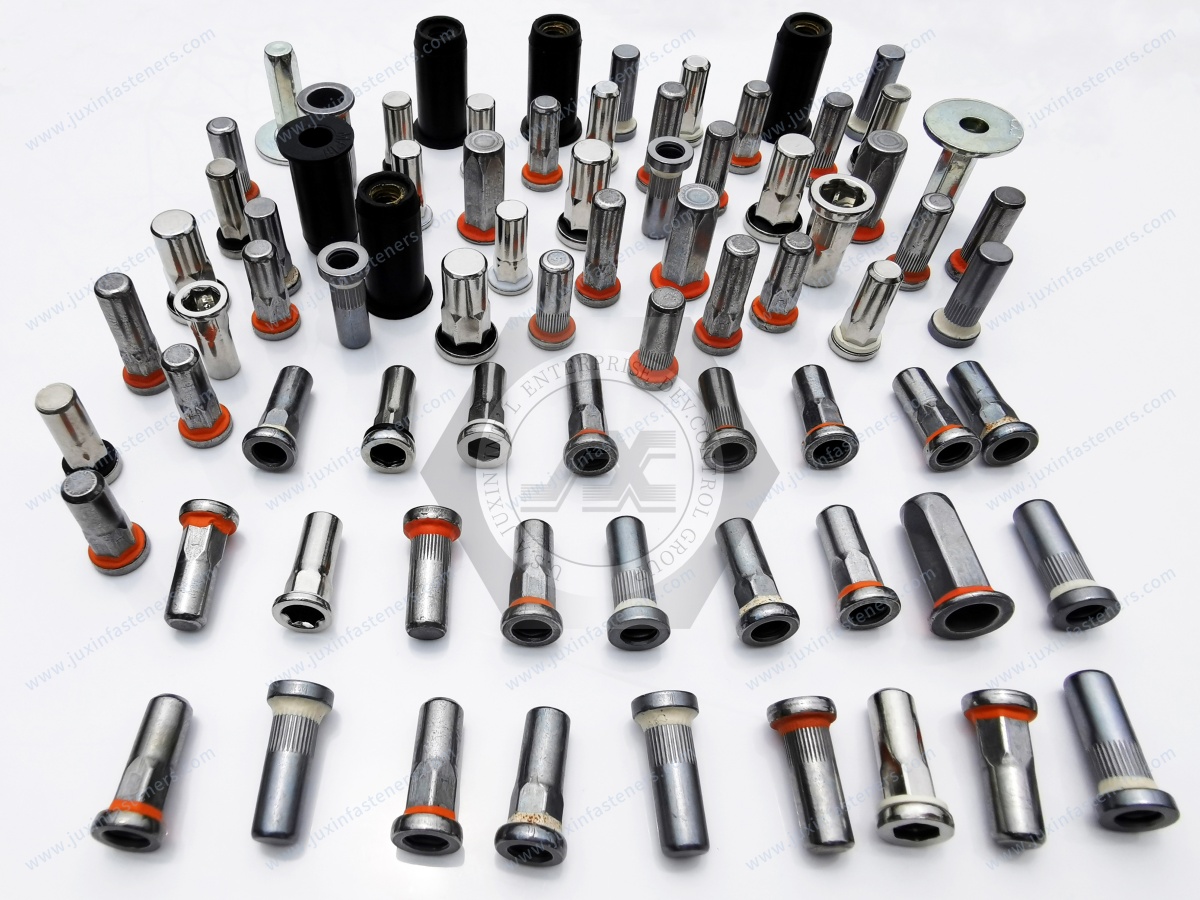
Blind rivet nuts create an internally threaded attachment point through mechanical deformation during installation.
Their most important advantage is not simply “high strength.”
It is their ability to create a threaded feature where the installation process may only have practical access from one side.
Automotive applications may include:
Sheet-metal brackets
Equipment mounting
Enclosures
Interior structures
Access panels
Electrical equipment
EV-related structures
Selection depends on factors such as:
Panel thickness
Grip range
Hole preparation
Body geometry
Head style
Material
Thread
Installation tooling
Anti-rotation requirement
Required joint performance
A closed-end rivet nut should not automatically be considered waterproof.
If sealing is required, the entire installed joint must be designed and validated for the required environmental condition.
Self-clinching fasteners can create retained threaded features in suitable sheet-metal structures through controlled press installation.
Products may include:
Self-clinching nuts
Self-clinching studs
Self-clinching standoffs
Other application-specific clinching fasteners
Their suitability depends on the panel material, hardness relationship, thickness, hole preparation and installation conditions.
They should not be confused with rivet nuts.
A rivet nut deforms its own body during installation.
A self-clinching fastener relies on controlled displacement of the surrounding panel material into the fastener's retention features.
The two technologies solve different engineering problems.
Blind rivets are useful where permanent mechanical joining is required and access to the far side of the assembly is restricted.
Depending on the application, engineers may evaluate:
Standard blind rivets
Structural blind rivets
Multi-grip designs
Application-specific blind rivets
Important selection factors include:
Joint stack thickness
Grip range
Rivet body material
Mandrel material
Hole size
Joint loading
Corrosion compatibility
Required retained-mandrel behavior
Installation equipment
A blind rivet and a rivet nut should not be treated as interchangeable.
A blind rivet primarily creates a permanent mechanical joint; a rivet nut creates a reusable internal thread.
Non-metallic fasteners play an important role in vehicle interiors, electrical systems, cable management, trim and lightweight assemblies.
Products can include:
Plastic clips
Push rivets
Panel retainers
Cable clips
Nylon screws
Nylon nuts
Plastic washers
Spacers
Insulating components
Materials may include PA6, PA66 and other engineering polymers depending on the application.
However, selecting an automotive plastic fastener requires more than specifying “nylon.”
Engineers should consider:
Temperature
Moisture absorption
Creep
Stress relaxation
Chemical exposure
UV exposure where applicable
Flammability requirement where applicable
Installation force
Retention force
Long-term dimensional behavior
PA66, for example, should not automatically be described as suitable for every under-hood, electrical or EV application.
The actual grade and service environment matter.
This is particularly important for design engineers.
Polyamide materials can absorb moisture from the environment, which can change dimensional and mechanical behavior.
Polymeric fasteners can also experience creep and stress relaxation under sustained loading.
Therefore, a nylon fastener that performs well during initial assembly may require additional engineering consideration if it is expected to maintain significant clamp load over long periods.
Plastic fasteners are particularly effective when their material behavior matches the intended function—for example, retention, positioning, insulation or lightweight attachment.
They should not automatically be used as direct substitutes for metal structural fasteners.
Automotive assemblies also rely on components whose primary purpose is retention rather than threaded clamping.
Examples include:
Retaining rings
Spring clips
Metal panel clips
Shaft retainers
Push-on retainers
Special stamped components
These parts may control axial movement, hold panels or position components during assembly.
Selection depends on the actual groove, shaft, panel or mating geometry and the expected loads.
Not every automotive fastening or retention component can be efficiently produced as a standard cold-formed fastener.
CNC machining may be appropriate for:
Low-volume development parts
Precision pins
Shafts
Spacers
Bushings
Special threaded components
Complex non-standard geometry
For production sourcing, the manufacturing process should be selected according to geometry, material, tolerances and annual volume.
A component suitable for CNC machining during prototype development may later require another production process when volume increases.
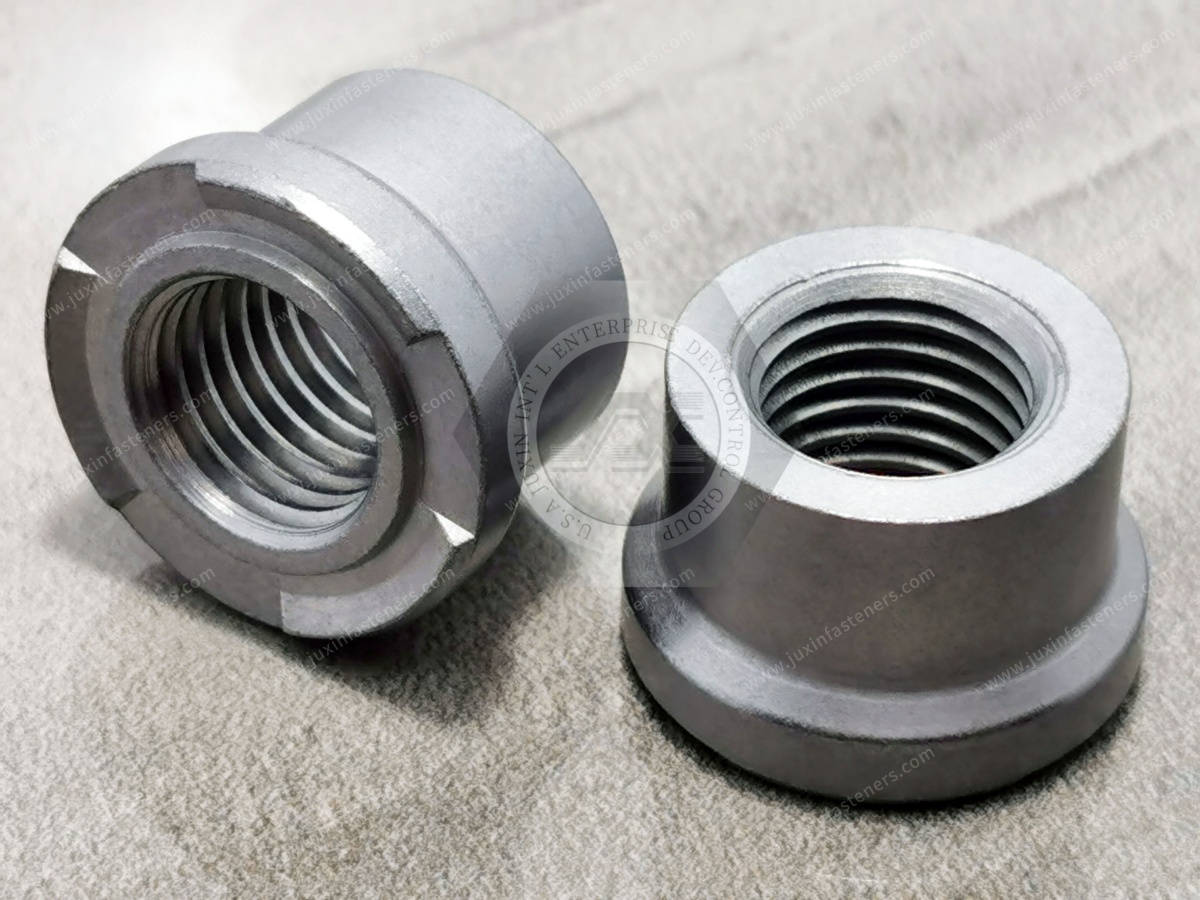
Surface treatment affects more than appearance.
Depending on the fastener and application, engineers may consider systems such as:
Zinc-based coatings
Zinc-nickel coatings
Zinc-flake systems
Phosphate-based systems
Black finishes
Nickel-based finishes
Application-specific topcoats
The correct coating depends on:
Corrosion environment
Fastener material
Required friction behavior
Tightening strategy
Thread dimensions
Electrical requirements
Temperature
Mating materials
Customer specification
A coating should therefore be selected as part of the joint system.
Zinc-nickel coating systems are used in certain automotive applications where the specified corrosion and surface-performance requirements make them appropriate.
However, “zinc-nickel” alone is not a complete specification.
Engineers and purchasing teams may need to define:
Coating system
Thickness requirement
Passivation or topcoat
Friction requirements
Corrosion-test method
Acceptance criteria
Appearance where relevant
For high-strength steel fasteners, the manufacturing and coating process should also consider hydrogen-embrittlement risk where applicable.
Automotive fastener sourcing often focuses heavily on strength and corrosion resistance, but friction can be equally important in torque-controlled threaded joints.
Applied torque is distributed among:
Thread friction
Bearing-surface friction
Useful bolt tension
Changes in coating or lubricant can therefore change the relationship between tightening torque and achieved preload.
For this reason, changing a fastener's surface treatment may require engineering review even if the dimensions and material remain unchanged.
A visually similar coating is not automatically functionally equivalent.
Automotive assemblies experience vibration, but there is no single “anti-vibration fastener” suitable for every joint.
Resistance to loosening can depend on:
Preload
Joint stiffness
Transverse movement
Thread friction
Bearing surfaces
Locking mechanism
Temperature
Material behavior
Assembly accuracy
Possible solutions may include appropriate prevailing-torque nuts, mechanical locking features, thread-locking systems or joint redesign.
Spring washers or other individual components should not automatically be assumed to solve every vibration-loosening problem.
Modern vehicle structures increasingly combine different materials.
When dissimilar metals are electrically connected and exposed to an electrolyte, galvanic interaction may contribute to corrosion.
This is particularly relevant when combining fasteners with:
Aluminum structures
Carbon steel
Stainless steel
Coated sheet
Other metallic components
Engineers should evaluate the entire material stack:
fastener material + coating + substrate + mating component + environmental exposure
This is often more useful than asking which fastener material has the highest corrosion resistance in isolation.
Electric vehicles change the location and nature of many fastening requirements, but there is no universal category called an “EV fastener.”
Different EV systems create different engineering requirements.
Fasteners may be required in:
Battery-pack structures
Battery trays
Electrical enclosures
Thermal-management systems
Power electronics
Inverters
Charging equipment
Cable-management systems
Structural brackets
Electronic control equipment
The fastening solution should be selected according to the specific subsystem.
Battery-related sheet-metal structures may require threaded attachment points where welding is undesirable or where assembly access favors mechanical installation.
Rivet nuts can be considered in suitable designs.
Possible requirements include:
Controlled grip range
Anti-rotation geometry
Material compatibility
Corrosion protection
Sealing features
Assembly access
Serviceability
Closed-end construction and under-head sealing features can support certain sealing strategies, but they do not automatically establish an IP rating.
The complete enclosure must be tested according to the applicable sealing requirement.
Thermal-management equipment can include liquid-cooling components, pumps, brackets, heat exchangers, cold plates and supporting structures.
Fastener selection may need to consider:
Thermal cycling
Dissimilar materials
Corrosion
Vibration
Service access
Clamp-load retention
Sealing interfaces
The fastener should be selected together with the thermal and structural design rather than as an isolated commodity.
Some EV and automotive-electronics assemblies require electrical isolation.
Plastic or non-conductive components may be useful in appropriate locations, but material selection must consider mechanical and environmental requirements.
Conversely, some assemblies require intentional electrical bonding.
The fastening strategy must therefore first determine whether the joint needs to be:
electrically isolated, electrically bonded, or electrically neutral in function.
The same fastener solution cannot be assumed appropriate for all three requirements.
Automotive lightweighting is a system-level engineering problem.
Reducing the mass of an individual fastener is useful only if the resulting joint continues to meet its structural, fatigue, corrosion, assembly and service requirements.
Possible lightweighting strategies may include:
Optimizing fastener geometry
Reducing unnecessary part count
Using appropriate aluminum components
Using plastic fasteners in non-structural functions
Selecting more efficient joining technologies
Redesigning the assembly interface
The objective should be lower system mass without compromising required joint performance.
For a new sheet-metal assembly, engineers can use the following decision logic.
Consider a weld nut where the materials and manufacturing process are suitable.
Consider a weld screw or appropriate weld stud.
Consider a rivet nut where the panel and load requirements are compatible.
Consider a self-clinching fastener where panel material, hardness and thickness are suitable.
Consider an appropriate blind rivet.
Consider an appropriate plastic or metal clip according to the environment and retention requirement.
This decision framework prevents fundamentally different fastening technologies from being treated as interchangeable.
Understanding failure modes helps engineers and sourcing teams define better specifications.
Possible contributors include inadequate engagement, unsuitable mating material, dimensional issues or excessive assembly load.
Potential causes include insufficient preload, transverse movement, friction variation or unsuitable locking strategy.
Cyclic loading, stress concentration and inappropriate preload can contribute to fatigue problems.
Material selection, coating, environmental exposure and galvanic interaction can influence corrosion behavior.
Certain high-strength steel fasteners can require special consideration when exposed to relevant manufacturing and coating processes.
Sustained loading and temperature can cause time-dependent deformation in polymer components.
Incorrect hole preparation, grip range, body geometry or installation can contribute to loss of anti-rotation performance.
Projection geometry, parent material and welding parameters can influence weld integrity.
Failure analysis should therefore examine the complete joint and manufacturing process, not just the fastener.
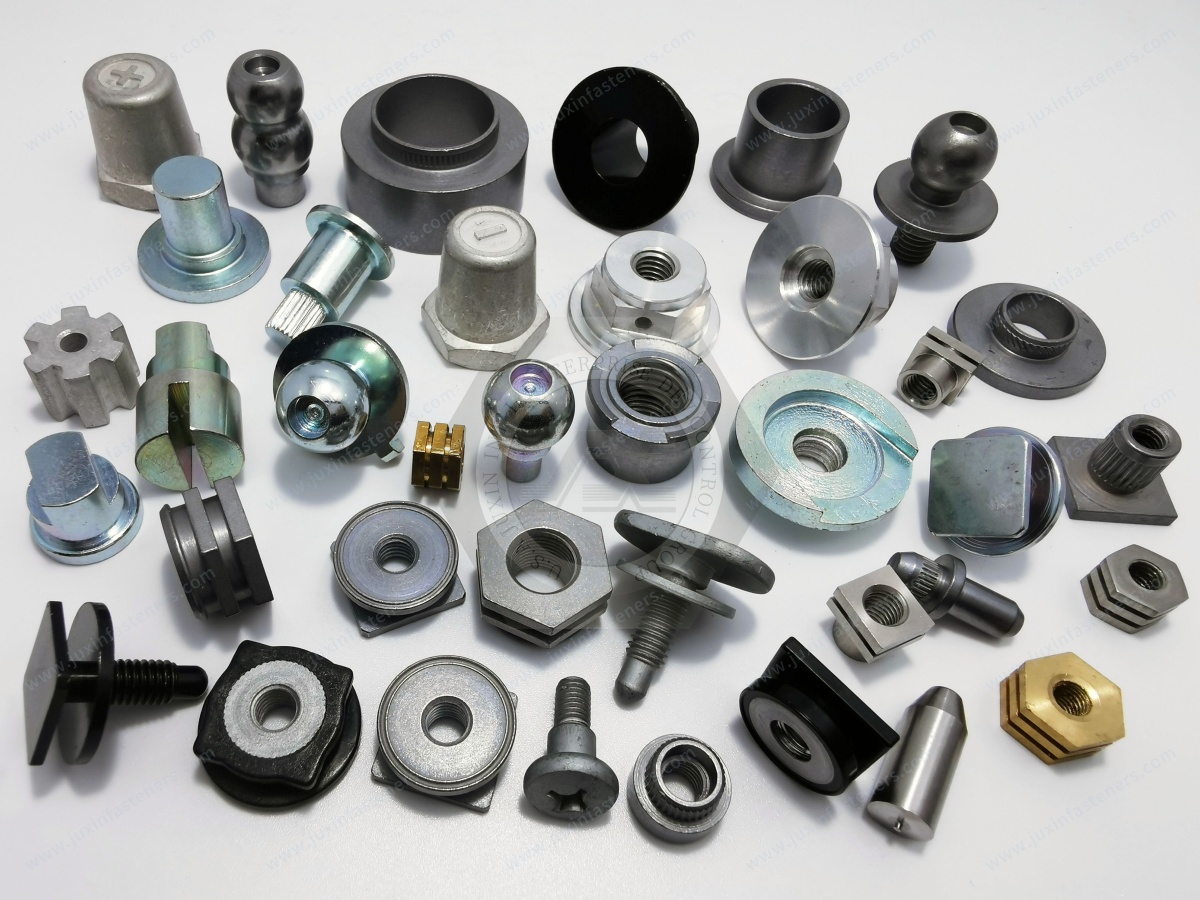
Standard fasteners remain appropriate for many automotive applications.
Custom fasteners become valuable when the assembly requires:
Non-standard geometry
Special head configuration
Integrated washer or flange
Special shoulder
Controlled under-head features
Unique thread
Special locking geometry
Customer-specific material
Customer-specific coating
Tight packaging envelope
Part consolidation
Existing OEM component replacement
Custom fasteners should solve a real assembly or supply-chain problem rather than being specified unnecessarily.
For custom automotive components, JUXIN FASTENERS can review:
2D engineering drawings
3D models
Physical samples
Material specifications
Surface-treatment requirements
Critical tolerances
Assembly information
Functional requirements
Depending on geometry and volume, suitable production routes may involve processes such as:
Cold forming
Thread rolling
Stamping
CNC machining
Plastic molding
Appropriate secondary processing
Surface finishing
The manufacturing route should be selected according to the actual component rather than forcing every custom part into one process.
A component manufactured successfully as a prototype is not automatically optimized for high-volume production.
During industrialization, engineering and sourcing teams should review:
Manufacturing process
Tooling
Critical characteristics
Process capability requirements
Inspection method
Material supply
Surface treatment
Packaging
Annual volume
Production consistency
This is especially important for custom cold-formed, stamped or molded components where production tooling may differ substantially from prototype methods.
Automotive supply chains often require alternative-source development for risk reduction, capacity planning or commercial reasons.
A second-source project should begin with controlled technical information.
Collect:
Current drawing
Current revision
Material specification
Coating specification
Existing sample
Functional requirements
Determine which dimensions or properties directly affect assembly and performance.
A supplier should understand whether the component is cold formed, machined, stamped, molded, welded or produced through another process.
Prototype or pre-production samples should be evaluated against the agreed specification.
Dimensional conformity alone may not establish functional equivalence.
Approved requirements should become the basis for ongoing manufacturing and inspection.
This creates a stronger sourcing process than qualifying an automotive fastener solely by appearance and unit price.
Procurement teams evaluating an automotive fastener supplier should look beyond the catalog.
Depending on the project, useful evaluation criteria include:
Ability to understand engineering drawings
Material control
Critical-dimension control
Thread inspection
Surface-treatment control
Functional validation
Sample development
Change control
Lot identification or traceability requirements
Inspection documentation
Packaging control
Production-volume support
The exact supplier-qualification requirements should follow the customer's own quality system and the risk level of the component.
A detailed RFQ allows engineering and procurement teams to receive more accurate technical feedback and quotations.
Where available, provide:
2D drawing
3D model
Existing physical sample
Part number
Product type
Thread specification
Dimensions
Material
Property class where applicable
Surface treatment
Critical tolerances
Mating components
Assembly method
Application
Operating environment
Vibration requirements
Temperature conditions
Corrosion requirements
Electrical requirements where relevant
Required testing
Required documentation
Sample quantity
Production quantity
Estimated annual demand
Packaging requirements
For an existing OEM component, providing both the drawing and physical sample can improve alternative-source technical review.
Automotive manufacturing uses many technologies, including bolts, screws, nuts, weld fasteners, rivet nuts,
blind rivets, self-clinching fasteners, threaded inserts, retaining clips and plastic fasteners.
The correct choice depends on the subsystem and joint requirements.
There is no universal answer.
Vibration resistance depends on joint preload, stiffness, movement, locking mechanism, material and assembly process.
The fastening system should be selected for the actual load case.
Not automatically.
Stainless steel can provide useful corrosion performance in suitable environments, but mechanical requirements, galling, galvanic interaction, cost and mating materials also need to be considered.
Depending on the battery-pack design, fastening technologies may include bolts, screws, rivet nuts, weld fasteners, blind rivets, inserts, sealing fasteners, clips and custom components.
There is no single universal EV battery fastener.
JUXIN FASTENERS supports drawing- and sample-based custom fastener projects. The appropriate manufacturing process depends on the component geometry, material, tolerances and required production volume.
The most effective automotive fastening strategy does not begin by asking:
“Which fastener should we buy?”
It begins by defining:
What does this joint need to do, how will it be assembled, and what must it withstand?
From there, the engineering path becomes:
joint function → load → substrate → access → assembly process → fastening technology → material → coating → locking strategy → validation
The sourcing path then becomes:
drawing → supplier review → sample → validation → production approval → supply-chain control
This combined engineering and procurement approach is particularly important for custom automotive fasteners, EV fastening systems and second-source development.
JUXIN FASTENERS supports OEM, Tier 1, Tier 2 and industrial customers with custom automotive bolts, screws,
nuts, weld fasteners, rivet nuts, threaded inserts, self-clinching fasteners, blind rivets, plastic fasteners, retaining components and precision custom parts.
For a new automotive project, existing-part replacement or alternative-source program, send your engineering drawing, 3D model, physical sample or technical specification for review and quotation.
JUXIN FASTENERS
FASTENING SOLUTIONS FOR GLOBAL OEMS
Website: www.juxinfasteners.com
Email: info@juxinfasteners.com
 MORE NEWS
Sep. 27, 2026
Sep. 27, 2026
Sep. 27, 2026
Contact Us
Tel.:
+86 020 8621 0320
+86 020 3121 6067
E-mail:
Technical Support:
Navigation
SEND INQUIREY