
Call Us
+86 136 6007 9809
Call Us
+86 136 6007 9809

Sep. 13, 2026
Industrial original equipment manufacturers (OEMs), Tier-1 sub-assembly providers,
and specialized vehicle developers managing complex mechanical bills of materials frequently encounter requirements that cannot be satisfied by standard catalog components.
When a joint assembly requires a non-standard outer diameter, specialized inner clearance, defined thickness, unique cutout, special profile,
or application-specific spacing function, a standard off-the-shelf flat washer may not provide the required interface.
Executing successful custom washer sourcing therefore requires more than finding a supplier with a similar catalog part.
It requires a structured process that connects engineering requirements with manufacturing methods, tooling considerations, material selection,
inspection requirements, production volumes, and commercial procurement.
Transitioning from a prototype shim design to repeat or higher-volume production also requires procurement teams to understand how tooling investment,
batch production planning, material selection, dimensional tolerances, surface treatment, inspection, and packaging can influence the final sourcing decision.
JUXIN FASTENERS is an OEM-oriented supplier of customer-specific, non-standard, and application-specific automotive fastening and precision metal components.
Custom components can be evaluated according to customer drawings, specifications, material requirements, mating interfaces, application conditions, and production requirements.
This guide explains the engineering specifications, tooling considerations, production planning,
inspection requirements, and procurement workflows that engineering and sourcing teams should consider when sourcing custom metal washers,
stamped shims, precision spacing washers, and related drawing-based components.
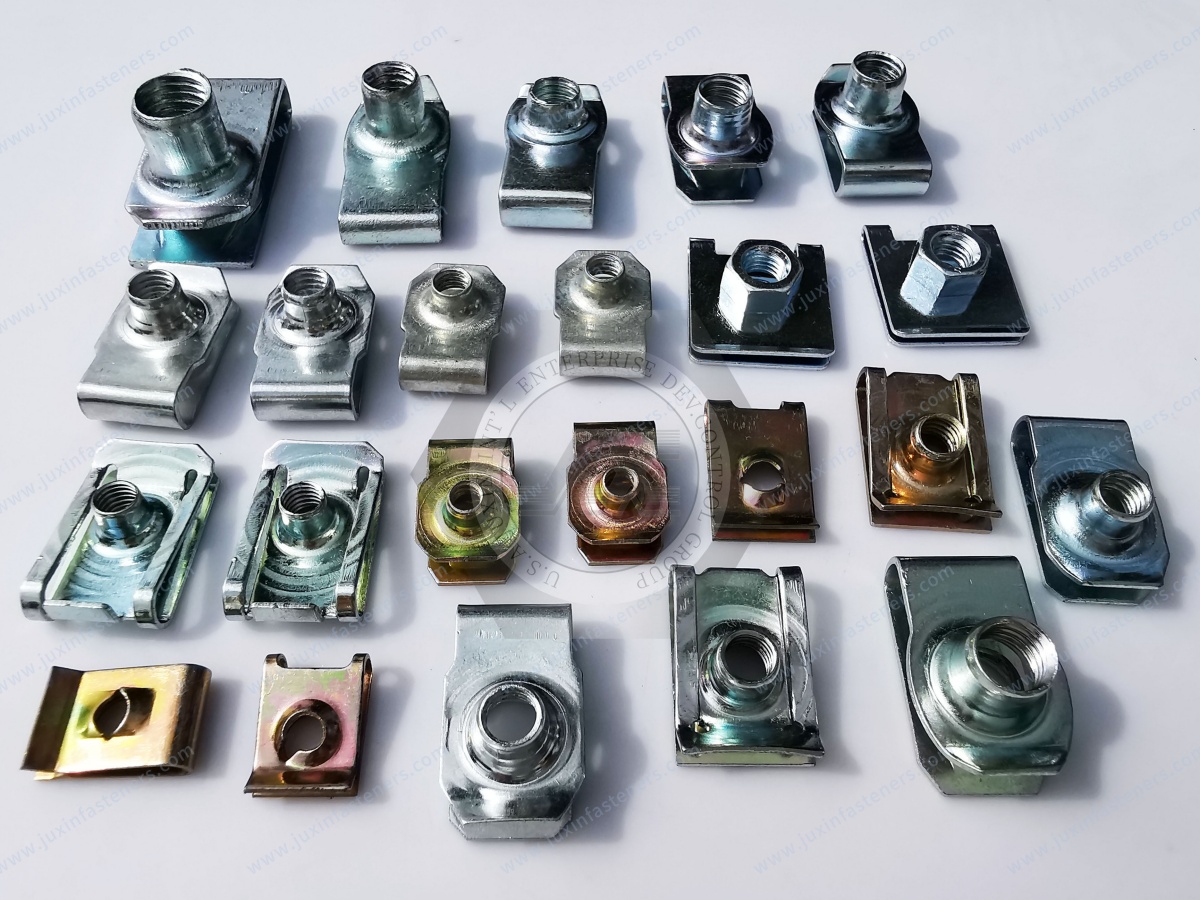
Custom washer sourcing is the engineering and procurement workflow used to identify, evaluate, quote, qualify,
and purchase drawing-specific or application-specific washers and precision spacing components that do not correspond directly to a standard catalog specification.
These components may include:
Custom flat washers
Precision shims
Spacer washers
Stamped metal washers
Special-profile washers
Washers with non-standard ID and OD combinations
Washers with defined thickness requirements
Washers with slots, tabs, cutouts, or other application-specific geometry
Spring washers where the required design corresponds to a spring-type function
Other customer-specific thin metal components used for spacing, positioning, load distribution, retention, or interface control
Unlike purchasing a standard ISO or DIN washer directly from a catalog, custom washer sourcing normally requires evaluation of the engineering drawing, material,
geometry, manufacturing route, production quantity, inspection requirements, packaging, and commercial conditions.
For OEM applications, the most useful starting point is therefore not simply:
“Can you supply this washer?”
A more complete sourcing question is:
“Can the supplier manufacture this drawing-specific component consistently according to the required geometry, material, surface condition, inspection requirements, quantity, and delivery requirements?”
For broader supplier qualification principles, see Custom Automotive Component Sourcing: Supplier Evaluation Protocol.
Standard flat washers are widely used to provide an interface between a fastener and a mating component.
Depending on the joint design, a washer may contribute to load distribution, spacing, surface protection, positioning, or interface control.
However, automotive and industrial assemblies often contain packaging constraints that make a standard catalog washer unsuitable.
Examples include:
Restricted installation space
Non-standard bolt or screw geometry
Specific inner diameter requirements
Specific outer diameter requirements
Controlled thickness or stack-up requirements
Offset mounting interfaces
Clearance around adjacent components
Slots or cutouts required for mating geometry
Weight or package-space considerations
Application-specific positioning or spacing requirements
A custom washer can therefore become part of the joint architecture rather than simply a commodity accessory.
For example, a precision shim may be used to establish a defined spacing relationship between two components.
A special-profile washer may provide a particular interface around a bracket or mounting feature. A stamped component may combine a washer-like function with additional tabs, slots, or locating features.
This is why washer sourcing should begin with the joint function and mating interface, rather than only the nominal washer dimensions.
For applications involving chassis and undercarriage assemblies, the washer may also need to be evaluated together with rivet nuts,
bolts, brackets, and other fastening components. See Automotive Chassis & Undercarriage Fastening: Rivet Nuts, Alloy Fasteners & OEM Sourcing Guide for a broader application perspective.
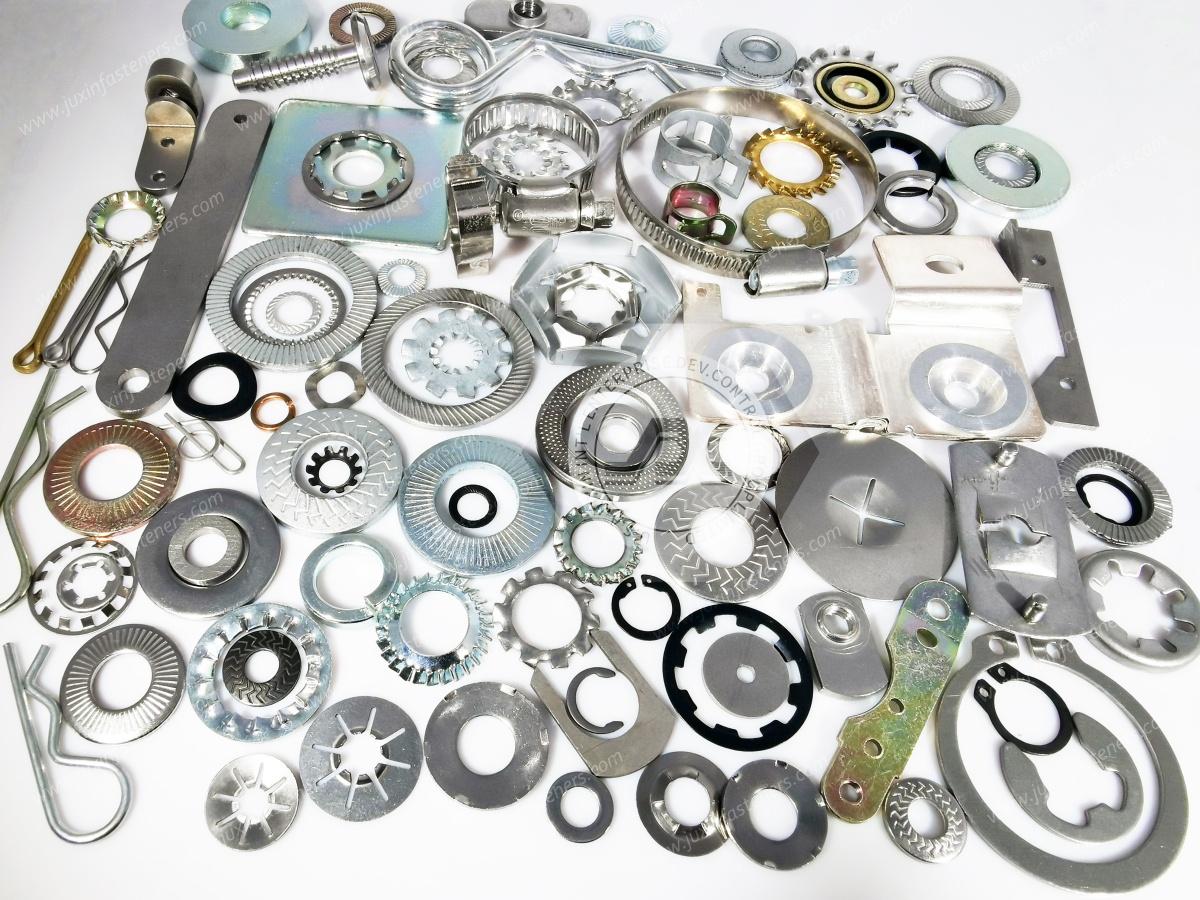
Procuring non-standard precision washers requires a deeper technical review than purchasing standard catalog hardware.
Before transmitting a Request for Quotation (RFQ), engineering and sourcing teams should review several core specification parameters.
The drawing should clearly define the dimensional characteristics relevant to the application, including:
Inner diameter (ID)
Outer diameter (OD)
Material thickness
Overall profile
Slots or cutouts
Notches or tabs
Flatness where relevant
Parallelism where relevant
Concentricity or positional relationships where functionally important
Edge condition where relevant
Not every dimension requires the same level of control.
A useful RFQ should distinguish between critical-to-function characteristics and general dimensions so that the supplier can understand which features have the greatest influence on the finished assembly.
This principle is also important when comparing CNC-machined components and other precision metal parts. See CNC Automotive Part Sourcing: Engineering Specifications & RFQ for a broader drawing-to-RFQ framework.
Material selection should be based on the actual application rather than simply choosing the lowest-cost material.
Depending on the component and customer specification, custom washers may be produced from material families such as:
Carbon steel
Alloy steel
Stainless steel
Aluminum alloys
Copper or copper alloys
Other specified metals
Where the material specification includes a particular grade, temper, hardness condition, or mechanical requirement,
this should be clearly identified in the approved drawing or purchasing specification.
For thin stamped components, material condition can influence forming behavior and final geometry.
Procurement teams should therefore avoid changing the material specification solely to obtain a lower unit price without engineering approval.
Where material documentation is required, the RFQ should also clearly state the required documentation and acceptance criteria.
Depending on the application, the washer may require a specified surface treatment or coating.
Potential treatment families may include:
Zinc-based coatings
Passivation for applicable stainless steel components
Zinc-Nickel Alloy coatings where specified
Other customer-specified corrosion-protection or functional treatments
The actual treatment should be selected according to the material, application environment, mating components, assembly process, and customer specification.
For tight interfaces, coating or treatment buildup may also need to be considered because the finished surface condition can influence ID, OD, thickness, friction, or mating clearance.
Surface treatment should therefore be treated as part of the engineering specification rather than added as an afterthought after the washer has already been quoted.
The sourcing package should also identify relevant application conditions.
Depending on the component, these may include:
Temperature exposure
Moisture
Road salts or other corrosive environments
Contact with oils or fluids
Galvanic interaction with dissimilar metals
Installation environment
Service-access requirements
Repeated assembly or service conditions
The purpose is not to assign a universal performance rating to the washer, but to give the supplier enough information to evaluate material and surface-treatment compatibility.
A frequent challenge during custom washer procurement is the difference between what engineering needs to control and what procurement needs to manage commercially.
Engineering teams typically focus on:
Dimensional accuracy
Thickness and stack-up
Material specification
Flatness where functionally important
Mating interface
Joint geometry
Surface condition
Functional characteristics
Inspection requirements
For a precision shim, for example, thickness may directly influence the relationship between mating components.
For a custom washer, ID and OD may be more important because they define clearance or interface geometry.
The engineering objective is therefore to identify the characteristics that matter to the actual assembly.
Procurement and sourcing teams typically need to evaluate:
Tooling cost
Tooling amortization
Unit price
Minimum order quantity
Production quantity
Annual demand
Prototype and sample costs
Lead time
Packaging
Delivery schedule
Payment and commercial conditions
Supplier capacity and continuity
The procurement objective is to understand the total commercial structure rather than simply comparing one unit-price number.
For a broader quality and supplier-control perspective, see Custom Metal Component Quality & Inspection Requirements.
The most effective sourcing process connects these two perspectives before the RFQ is released.
Engineering defines:
What must the component do?
Procurement evaluates:
How can the required component be manufactured and supplied at the required volume and commercial structure?
A successful custom washer RFQ should allow both questions to be answered from the same technical baseline.
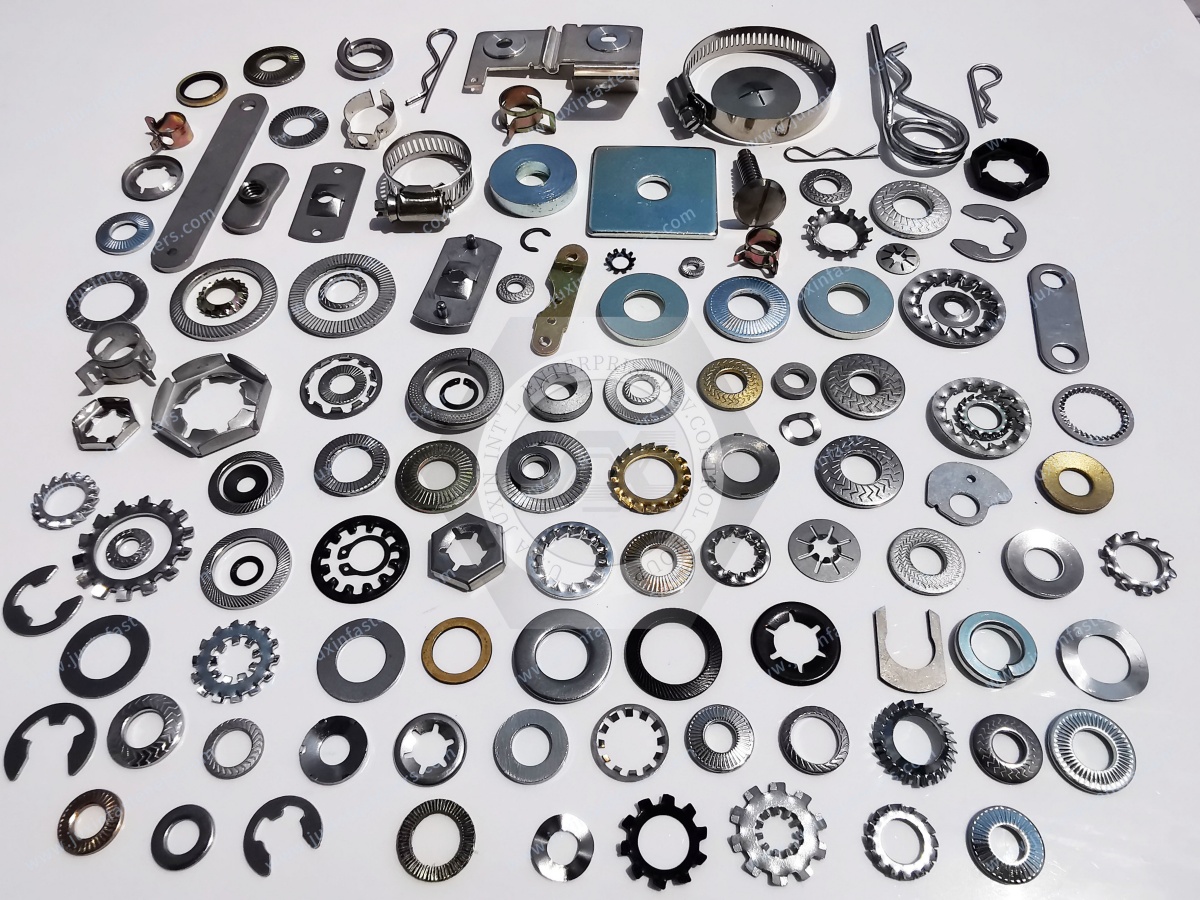
Tooling cost is one of the most important commercial considerations when sourcing custom stamped washers and shims.
Depending on the geometry, material, thickness, production quantity, dimensional requirements, and manufacturing route, a custom washer may require dedicated tooling or another production setup.
Potential manufacturing approaches may include:
Dedicated blanking or stamping tooling
Progressive stamping tooling for suitable high-volume geometries
Laser cutting for certain prototype or lower-volume requirements
Other application-specific cutting or forming processes
The appropriate manufacturing route should be determined by the actual part geometry, material, production volume, dimensional requirements, and supplier process capability.
For prototypes or limited pilot quantities, a production route that minimizes dedicated tooling investment may sometimes be commercially attractive.
Laser cutting or other flexible processes may be considered for suitable geometries when the primary objective is to validate:
Part geometry
Mating interface
Thickness
Assembly fit
Material selection
Initial application performance
However, the prototype manufacturing method does not necessarily need to be the same as the final serial-production method.
When annual demand becomes substantial, dedicated tooling may become commercially attractive because the tooling investment can be distributed across a larger number of components.
For suitable geometries, stamping can provide an efficient production route for repeat quantities.
The important procurement question is therefore not simply:
“How much is the tooling?”
It is:
“How does the tooling investment affect the total cost structure across the expected production volume and program life?”
Procurement teams may encounter different commercial structures, such as:
Tooling paid separately
Tooling included in initial development cost
Tooling amortized into unit pricing
Tooling cost distributed across an agreed production quantity
Customer-owned tooling arrangements where applicable
The commercial structure should be clearly documented before purchase approval.
A supplier comparison should therefore separate:
Tooling Cost + Part Cost + Development Cost + Inspection / Documentation Cost + Packaging + Logistics
rather than comparing only the nominal unit price.
Incomplete RFQ packages can create quotation delays, technical assumptions, pricing revisions, and avoidable communication cycles.
For faster and more comparable supplier quotations, procurement teams should assemble a complete RFQ package.
The drawing should define the relevant:
ID
OD
Thickness
Profile
Cutouts
Flatness
Tolerances
Surface requirements
Applicable drawing standards
ISO, DIN, ASME/ANSI, EN, SAE, ASTM, or another standard should only be referenced where it is actually part of the customer specification.
Identify:
Material grade
Material family
Temper or condition where relevant
Mechanical requirements where applicable
Material documentation requirements
If material certification or test documentation is required, state this in the RFQ rather than assuming it will automatically be included.
Clearly specify:
Coating or treatment type
Applicable areas
Appearance requirements where relevant
Functional requirements
Thickness requirements where applicable
Corrosion-protection requirements where specified
Clearly identify the dimensions that have a direct influence on assembly function.
These may include:
ID
OD
Thickness
Slot width
Cutout position
Flatness
Position of locating features
Mating-interface dimensions
This allows suppliers to align manufacturing and inspection resources with the actual engineering priorities.
The RFQ should distinguish between:
Prototype quantity
Sample quantity
Pilot quantity
Initial production quantity
Annual forecast
Expected repeat-order volume
Production volume can significantly influence tooling and manufacturing-route decisions.
Specify whether the project requires:
Dimensional inspection reports
Material documentation
Surface-treatment documentation
Hardness testing where applicable
Functional inspection
Certificate of Conformance
Lot identification
Batch traceability
Other customer-defined quality records
The supplier should be evaluated against the requirements actually specified for the project.
Packaging requirements may include:
Corrosion protection
Bulk packaging
Layer separation
Partitioning
Counting requirements
Labeling
Lot identification
Customer-specific packaging
Thin washers and shims can be particularly sensitive to nesting, scratching, deformation, and mixing of different specifications,
so packaging should be considered as part of the sourcing plan rather than only a logistics detail.
Custom washers and precision shims rarely operate in isolation.
Within complex vehicle and industrial assemblies, washers can work together with:
Bolts
Screws
Nuts
Rivets
Rivet nuts
Weld nuts
Pins
Shafts
Brackets
Bushings
Spacers
Other application-specific components
For example, a washer may form part of a chassis mounting interface, while a precision spacer or shim may be associated with a pivoting or positioning mechanism.
In automotive sunroof systems, precision spacing and interface components may need to be considered together with shafts, pins, guides,
brackets, and other mechanism components. See Automotive Sunroof Systems: Fastening Engineering, Precision Shafts & OEM Sourcing Guide.
Similarly, wiper systems can involve washers and other fastening components around pivot and linkage interfaces.
See Automotive Wiper Systems: Fastening Engineering, Stainless Steel Rivets & OEM Sourcing.
In seat systems, washers can also form part of mounting and mechanism interfaces where thickness, geometry, material,
and surface condition must be evaluated together with the mating hardware. See Automotive Seat Systems: Fastening Engineering, High-Strength Hardware & OEM Sourcing Guide.
Enterprise supply-chain teams may also evaluate whether several related precision components can be sourced through a coordinated supplier relationship.
For example, a project may contain:
Custom washers
Custom bolts
Rivet nuts
Weld fasteners
CNC-machined shafts
Pins
Bushings
Plastic retainers
Supplier consolidation can simplify communication and delivery coordination when the supplier has the appropriate manufacturing routes for the individual components.
However, consolidation should not replace technical qualification.
Each component still needs to be evaluated against its own drawing, material, manufacturing route, inspection requirements, and application.
Procurement and engineering teams can encounter avoidable problems when sourcing custom shims and washers.
A washer specified only by inside and outside diameter may still be unsuitable if thickness, flatness, material, surface treatment, or profile requirements are not defined.
For precision shims, thickness can influence the assembled stack-up and relative position of mating components.
A nominal thickness alone may therefore be insufficient where the assembly has a defined dimensional relationship.
For tight interfaces, the finished coating or treatment condition can influence dimensions and mating clearance.
The supplier should understand whether the drawing defines dimensions before or after treatment and which surfaces are functionally important.
Changing from one material family or grade to another may influence forming behavior, mechanical properties, corrosion behavior, galvanic compatibility, and finished geometry.
Material substitutions should therefore be evaluated against the approved engineering requirements.
A lower unit price may not represent a lower total procurement cost if another quotation includes different tooling assumptions,
inspection scope, packaging, material documentation, or development costs.
The RFQ should clarify:
Who pays for tooling
Who owns the tooling
Whether tooling is amortized
How tooling maintenance is handled where applicable
What happens if annual volumes change
A supplier should manufacture against the correct approved drawing revision.
When a drawing changes, procurement and engineering teams should establish how the revision is communicated and how existing tooling, inventory, work-in-process, and future production are handled.
A prototype may use a flexible manufacturing method while the final production route may use dedicated tooling or another process.
The sourcing team should therefore evaluate the transition from prototype to production rather than assuming the initial sample route will remain unchanged.
JUXIN FASTENERS positions itself as an OEM-oriented supplier of customer-specific, non-standard, and application-specific fastening and precision metal components.
For custom washer and shim requirements, the sourcing process can begin with the customer's:
2D engineering drawing
3D CAD data where available
Material specification
Surface-treatment requirement
Application information
Mating-component information
Production quantity
Inspection requirements
Packaging requirements
Depending on the component geometry and production requirements, the appropriate manufacturing route may involve stamping,
CNC machining, or another suitable process.
The objective is not to force every washer into one manufacturing method. The objective is to evaluate the component against its actual geometry, material, quantity, tolerance requirements, and production conditions.
A practical engineering review can follow this sequence:
Customer Drawing → Mating Interface → Joint Function → Material → Geometry → Manufacturing Route → Tooling → Surface Treatment → Inspection → Packaging → Production Requirements
This approach allows engineering and procurement teams to discuss the component from both technical and commercial perspectives.
For supplier qualification, the sourcing process can then be connected to Automotive Fastener Supplier Evaluation Framework, where engineering competence,
manufacturing-route suitability, material control, quality verification, supply continuity, and commercial communication are evaluated as part of supplier selection.
A custom washer should not automatically be treated as a commodity item simply because the component is geometrically simple.
A thin circular washer may still have customer-specific requirements for:
Material
Thickness
Flatness
Surface treatment
ID / OD
Profile
Packaging
Inspection
Traceability
Annual volume
Drawing revision
The commercial value of the sourcing relationship therefore comes from controlling the complete specification rather than simply producing a metal ring.
Custom washer sourcing is the engineering and procurement workflow used to identify, evaluate, quote, qualify,
and purchase drawing-specific or application-specific washers, shims, spacer washers, and related precision metal components.
Tooling amortization determines how an upfront tooling investment is distributed across the expected production volume.
This can influence the effective unit cost and the overall commercial structure of stamped custom washers.
Dedicated tooling may become commercially appropriate when the component geometry is suitable for stamping and the expected production volume justifies the tooling investment.
The decision depends on geometry, material, tolerances, production volume, program duration, and the selected manufacturing route.
Yes. Depending on the geometry and production requirements, a prototype may be produced using a more flexible manufacturing route,
while higher-volume production may use dedicated tooling or another more suitable production method.
A useful RFQ package should include the approved engineering drawing, material specification, relevant tolerances, surface treatment,
critical-to-function dimensions, prototype and production quantities, inspection requirements, packaging requirements, and drawing revision information.
Engineering teams generally focus on geometry, material, dimensional requirements, mating interfaces, and functional characteristics.
Procurement teams additionally evaluate tooling cost, unit pricing, production volumes, lead time, packaging, supplier continuity, and commercial terms.
The most effective sourcing process connects both perspectives through one approved technical specification.
Thickness can affect the assembled dimensional stack-up and the relative position of mating components.
Where a shim performs a spacing or positioning function, the required thickness tolerance should therefore be defined according to the actual assembly requirement.
Surface treatment should be defined according to the material, application environment, mating materials, assembly conditions, corrosion requirements,
and customer specification. Where dimensional interfaces are tight, the effect of the finished treatment on relevant dimensions should also be considered.
No. A meaningful comparison should also consider tooling structure, material, manufacturing route, inspection scope, documentation, packaging,
production quantity, lead time, supplier continuity, and other customer-defined requirements.
JUXIN FASTENERS evaluates customer drawings, material specifications, application conditions, production requirements,
and other agreed specifications for customer-specific and non-standard fastening and precision metal components.
For a custom washer, shim, spacer washer, or other drawing-based precision metal component, the RFQ can be evaluated around the complete requirement rather than a unit-price-only quotation.

If your project requires a custom washer, precision shim, stamped metal component, or other non-standard precision hardware,
provide the engineering drawing or specification together with the material, surface-treatment, quantity, inspection, and packaging requirements where available.
JUXIN FASTENERS can review the requirement and evaluate the appropriate sourcing and production considerations.
Email: info@juxinfasteners.com
Website: www.juxinfasteners.com
 MORE NEWS
Sep. 22, 2026
Sep. 22, 2026
Sep. 22, 2026
Contact Us
Tel.:
+86 020 8621 0320
+86 020 3121 6067
E-mail:
Technical Support:
Navigation
SEND INQUIREY