
Call Us
+86 136 6007 9809
Call Us
+86 136 6007 9809

Sep. 16, 2023
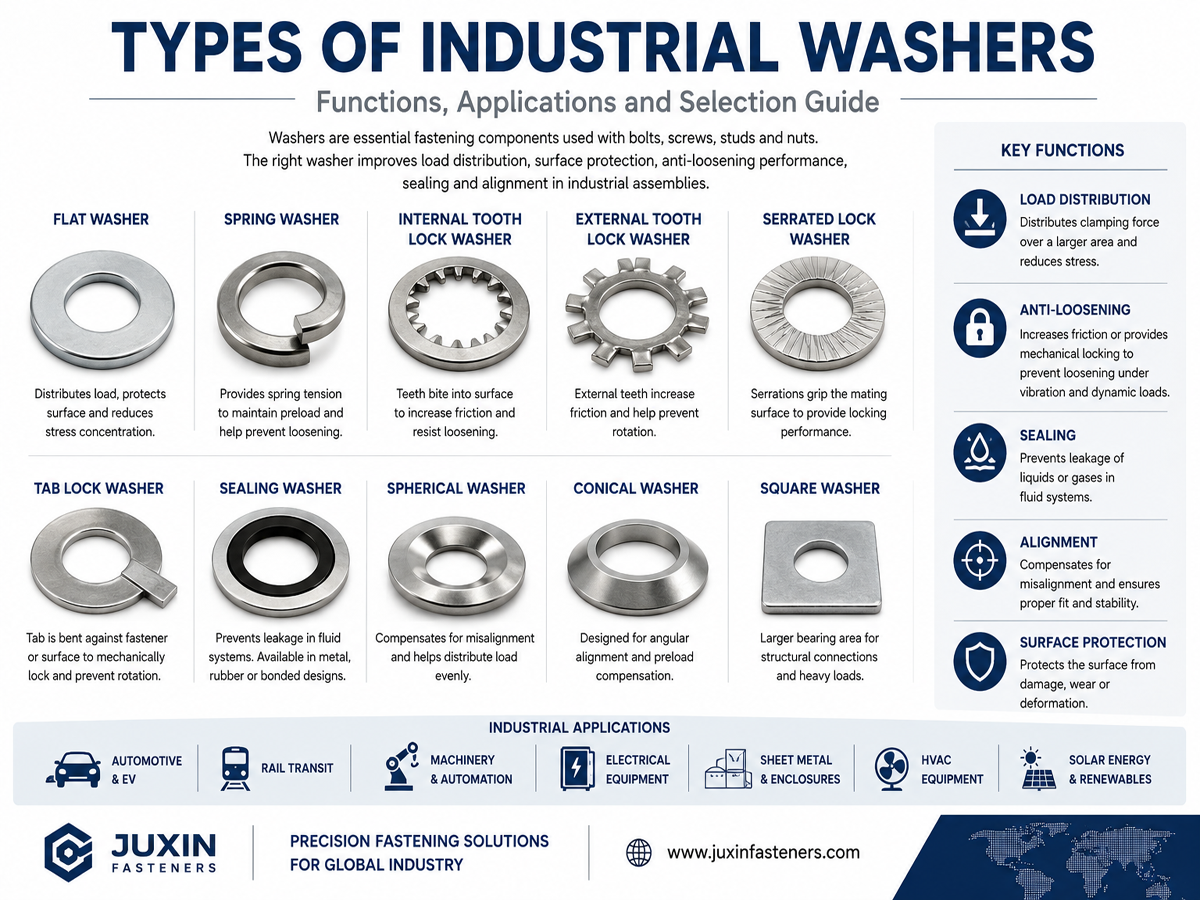
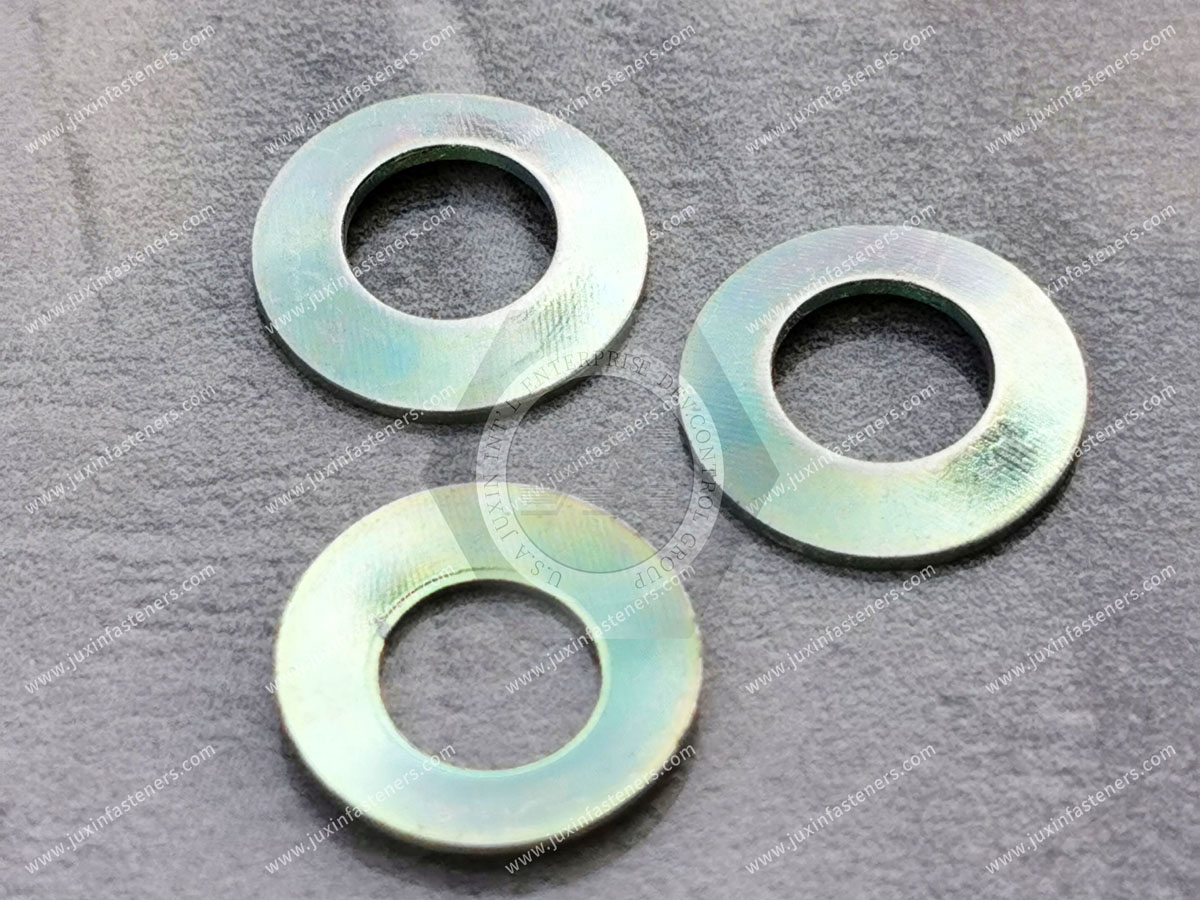
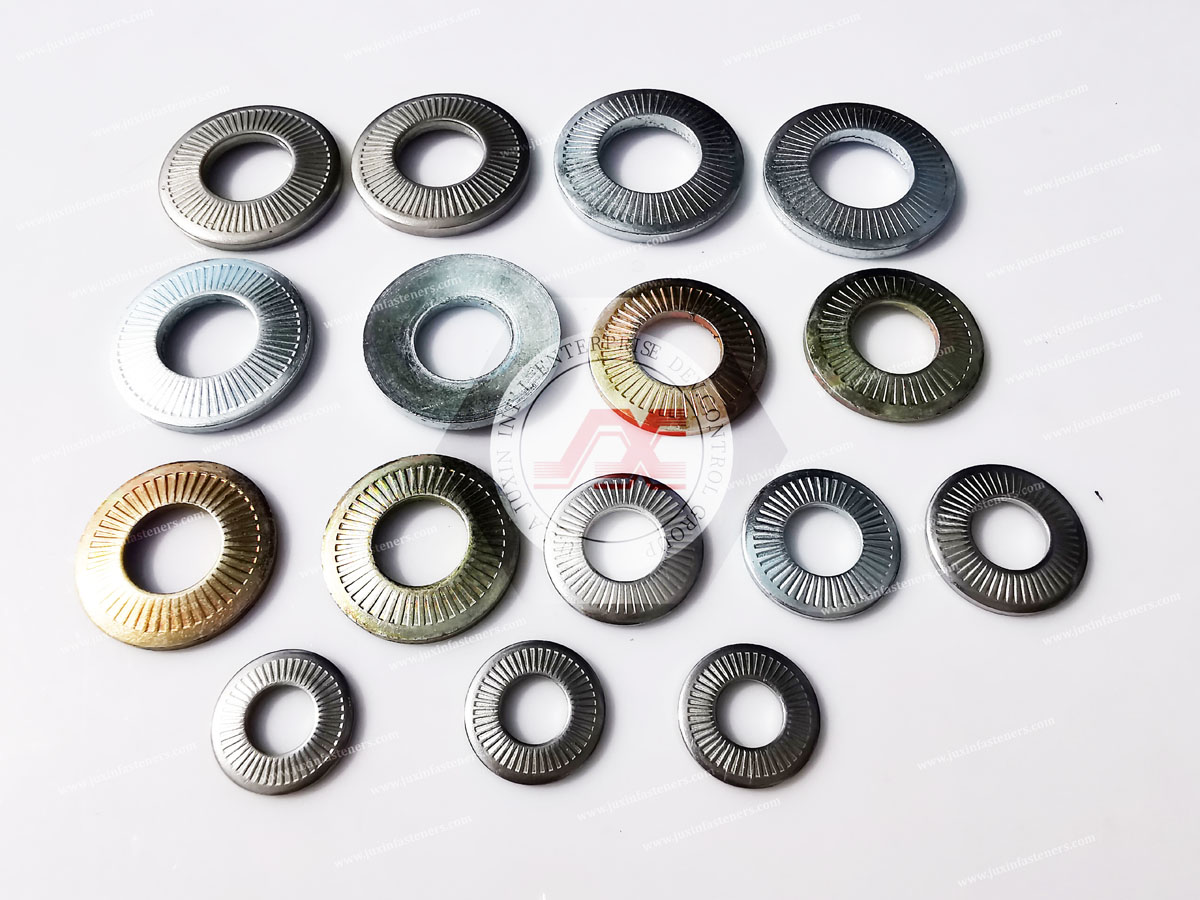
DIN 137 A curved spring washers are thin elastic washers formed into a bowed or curved shape to provide limited axial spring action when compressed in an assembly.
They are commonly searched as:
DIN 137 A washers;
DIN 137A spring washers;
curved spring washers;
bowed spring washers;
curved washers Form A;
DIN 137 Form A washers.
The most important engineering distinction is:
DIN 137 A is a bowed spring washer—not a tube saddle washer, sealing washer or conventional split lock washer.
Its curved geometry provides elastic deflection as the washer is compressed.
This can be useful in selected light-duty and compact assemblies where some axial compliance is required.
However, the washer should not automatically be described as:
vibration-proof;
a vibration damper;
a hydraulic seal;
a gas seal;
a universal anti-loosening device;
a substitute for a Belleville disc spring.
DIN 137 A has also been withdrawn without replacement, although DIN 137 A-type washers remain commercially available and continue to appear on legacy drawings, bills of materials and MRO requirements.
For engineers and procurement teams, the practical decision path is:
Assembly Requirement → Axial Compliance → Fastener Size → Washer ID/OD → Thickness → Free Height → Material → Finish → Existing Drawing → Validation → OEM / MRO RFQ
JUXIN FASTENERS supports sourcing of curved spring washers, wave washers, disc springs, flat washers,
lock washers and related custom fastening components for industrial equipment, electrical assemblies, automation, machinery and other engineered applications.
DIN 137 A defines a Form A curved or bowed spring washer geometry.
In its unloaded condition, the washer is not flat.
Instead, the washer body is formed into a smooth curved profile.
When axial force is applied, the washer deflects toward a flatter condition.
That deformation creates spring reaction force.
The basic operating sequence is:
Unloaded Curved Shape → Axial Compression → Elastic Deflection → Spring Reaction
This is fundamentally different from a plain washer.
The word saddle-shaped can create confusion because “saddle washer” is also widely used for shaped washers designed to fit round tubes.
For DIN 137 A, the clearer international terminology is:
Curved Spring Washer
or:
Bowed Spring Washer
Therefore:
DIN 137 A Bowed Spring Washer ≠ Round-Tube Saddle Washer
The two components solve different engineering problems.
DIN 137 A is a legacy standard that has been withdrawn without replacement.
However, DIN 137 A-type washers remain commercially available.
This is important for:
existing industrial equipment;
legacy OEM drawings;
replacement parts;
maintenance;
spare-parts programs;
customer-controlled assemblies.
Therefore:
Withdrawn Standard ≠ Product No Longer Available
But it also means a new design should not automatically adopt DIN 137 A simply because an old machine used it.
Industrial machinery can remain in operation for decades.
An existing drawing may still specify:
DIN 137 A M4
or:
DIN 137 A M8
A maintenance buyer is usually not researching spring-washer theory.
The buyer may simply need a compatible replacement.
This creates commercial search intent around:
DIN 137 A dimensions;
DIN 137 A M4;
DIN 137 A M6;
DIN 137 A M8;
DIN 137 A M10;
DIN 137 A replacement;
DIN 137 A supplier;
DIN 137 A stainless steel;
DIN 137 A zinc plated.
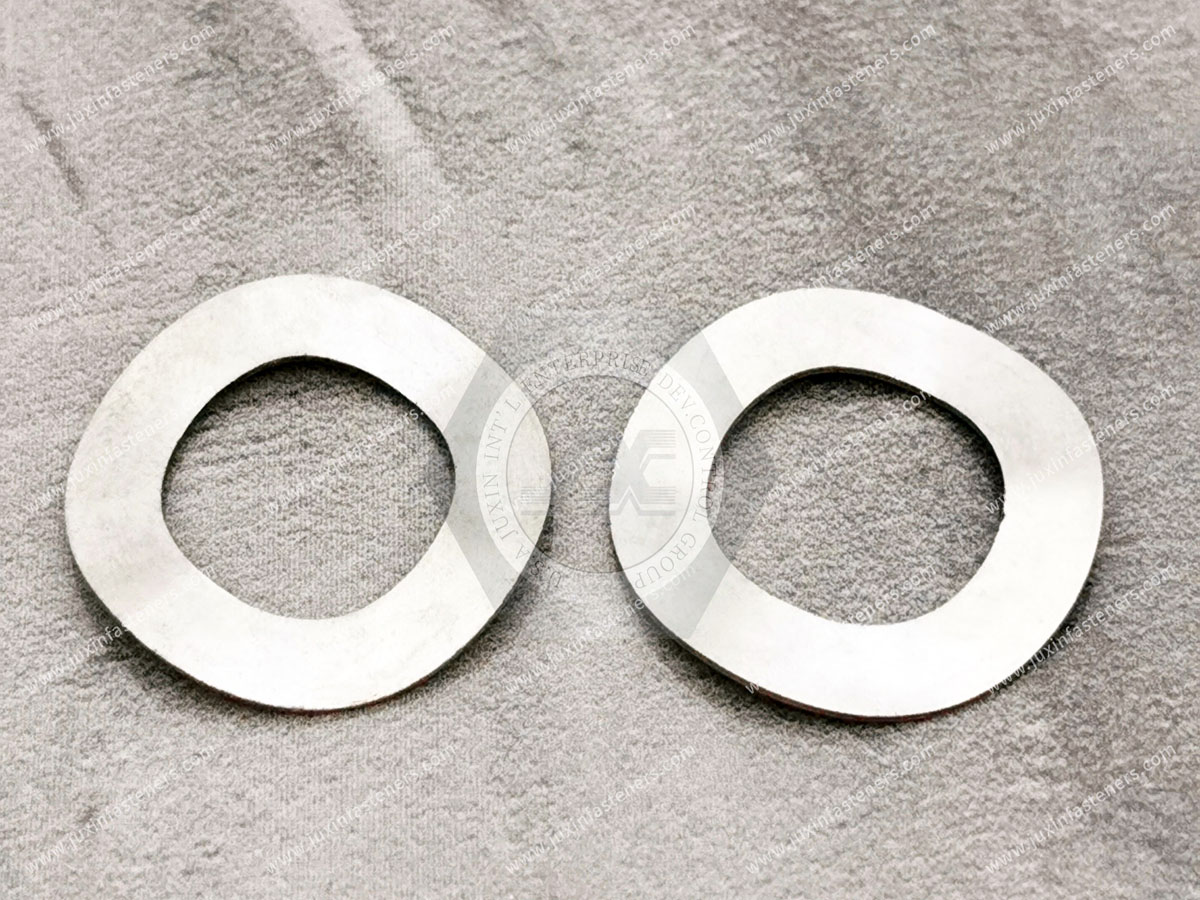
DIN 137 historically includes two commonly recognized spring-washer geometries:
Form A → Curved / Bowed
Form B → Waved
These are not simply two names for the same component.
Uses a bowed or curved washer body.
Uses a wave-shaped profile with multiple changes in curvature.
The different geometries produce different load-deflection behavior and packaging characteristics.
Therefore:
DIN 137 A ≠ DIN 137 B
A supplier should not substitute one for the other without engineering approval.
The washer begins with an unloaded height greater than its base material thickness.
When compressed axially, its curvature decreases.
The washer resists this deformation.
This produces a spring reaction.
The behavior depends on:
washer diameter;
thickness;
free height;
material;
material condition;
amount of compression.
This is why DIN 137 A selection involves more than nominal bolt diameter.
For a flat washer:
Thickness ≈ Axial Stack Contribution
For a curved spring washer, the situation is different.
The unloaded washer has a free height, commonly identified as h.
The relationship between:
thickness s;
free height h;
installed height
influences how much elastic deflection is available.
Therefore:
DIN 137 A Size ≠ Only ID + OD
Free height matters.
Common DIN 137 A dimensional data include the following nominal values:
| Screw Size | Inside Diameter d1 | Outside Diameter d2 | Thickness s | Free Height h |
|---|---|---|---|---|
| M2 | 2.2 mm | 4.5 mm | 0.3 mm | 0.5–1.0 mm |
| M2.5 | 2.8 mm | 5.5 mm | 0.3 mm | 0.55–1.1 mm |
| M3 | 3.2 mm | 6.0 mm | 0.4 mm | 0.65–1.3 mm |
| M3.5 | 3.7 mm | 7.0 mm | 0.4 mm | 0.7–1.4 mm |
| M4 | 4.3 mm | 8.0 mm | 0.5 mm | 0.8–1.6 mm |
| M5 | 5.3 mm | 10.0 mm | 0.5 mm | 0.9–1.8 mm |
| M6 | 6.4 mm | 11.0 mm | 0.5 mm | 1.1–2.2 mm |
| M7 | 7.4 mm | 12.0 mm | 0.5 mm | 1.2–2.4 mm |
| M8 | 8.4 mm | 15.0 mm | 0.5 mm | 1.7–3.4 mm |
| M10 | 10.5 mm | 18.0 mm | 0.8 mm | 2.0–4.0 mm |
These dimensions are useful for identification and legacy sourcing.
Production procurement should still be controlled by the applicable drawing, approved specification or verified sample.
An RFQ such as:
“Need M6 curved spring washers.”
provides only part of the specification.
Engineering should also consider:
inside diameter;
outside diameter;
thickness;
free height;
material;
finish;
application.
A generic curved washer with an M6 clearance hole is not automatically DIN 137 A.
This is one of the most important technical distinctions.
A curved spring washer develops reaction force when compressed.
But:
Washer Spring Force ≠ Bolt Preload
Bolt preload can be much larger and depends on:
bolt stiffness;
joint stiffness;
tightening method;
thread friction;
bearing friction;
fastener geometry.
The presence of a curved spring washer does not mean the washer independently controls the total joint preload.
A curved spring washer introduces an elastic element into the assembly.
This can provide limited compliance as:
components settle;
tolerances accumulate;
small axial movement occurs.
However, the available force and travel are determined by the actual washer design.
Therefore:
Elastic Compliance ≠ Unlimited Preload Compensation
Spring action and damping are different physical behaviors.
A spring primarily stores and returns mechanical energy.
A damper dissipates energy.
DIN 137 A should therefore not automatically be described as:
Vibration Damping Washer
unless the complete assembly has been specifically evaluated for such behavior.
A common historical assumption is:
Spring Washer = Anti-Loosening Washer
That is too broad.
Rotational self-loosening of threaded joints depends on factors such as:
transverse movement;
preload;
joint stiffness;
friction;
fastener geometry;
external loading.
DIN 137 A can provide spring compliance.
That does not automatically mean it will prevent rotational self-loosening in severe vibration.
These should be separated.
Clamp force decreases.
Potential causes include:
embedment;
creep;
relaxation;
thermal effects.
The screw or nut rotates relative to the mating thread.
A spring washer and an anti-rotation system are not necessarily the same solution.
The curved spring-steel geometry does not inherently create a fluid or gas seal.
Therefore:
DIN 137 A ≠ Hydraulic Sealing Washer
DIN 137 A ≠ Pneumatic Sealing Washer
DIN 137 A ≠ Bonded Sealing Washer
A pressure-containing connection requires an appropriate sealing element and validated joint design.
A DIN 137 A washer may be present near a hydraulic or pneumatic component without being the component responsible for sealing.
The actual seal may come from:
O-ring;
gasket;
bonded sealing washer;
metal sealing geometry;
thread seal;
another engineered sealing system.
Do not attribute sealing performance to the curved spring washer unless the specific assembly establishes that function.
A flat washer provides a substantially flat bearing interface.
DIN 137 A introduces elastic curvature.
Therefore:
Flat Washer → Bearing Interface
DIN 137 A → Elastic Curved Interface
Their functions are different.
A conventional split spring washer uses a helical split-ring geometry.
DIN 137 A uses a continuous bowed profile.
Therefore:
DIN 137 A ≠ Split Spring Washer
Their load-deflection and contact behavior differ.
This is a much closer comparison.
Both are elastic washers.
However:
DIN 137 A → Bowed / Curved Form
DIN 137 B → Waved Form
Wave washers can also exist under other dimensional and application specifications.
Selection should be based on the required force, deflection, installation space and interface.
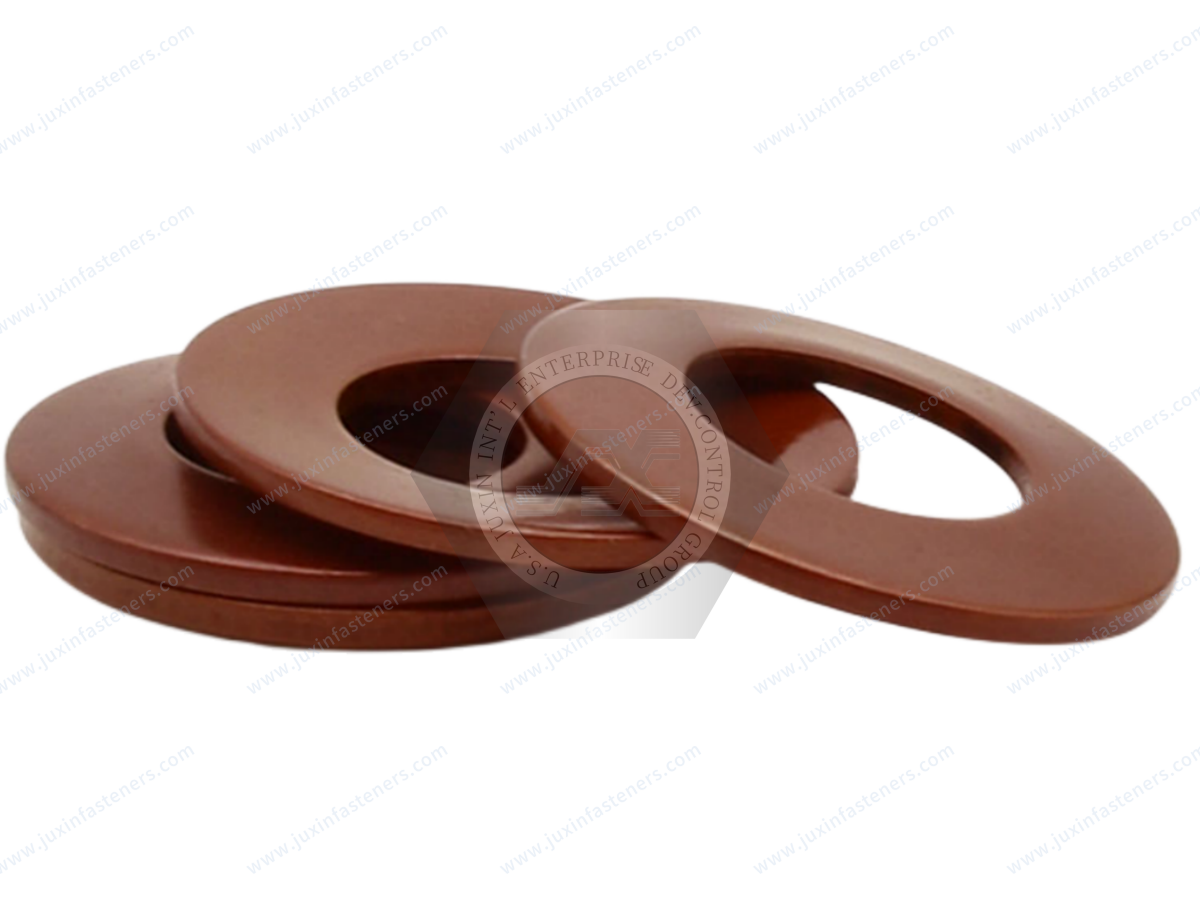
A Belleville washer is a conical disc spring.
It is designed around a more specific load-deflection relationship and can be used individually or in stacks depending on the spring system.
DIN 137 A is a thin bowed spring washer.
Therefore:
DIN 137 A ≠ Belleville Disc Spring
For applications requiring engineered spring force and deflection, a disc-spring system may be more appropriate.
DIN 6796 defines conical spring washers for bolted connections.
This is another different component family.
DIN 6796 washers and DIN 137 A bowed washers differ in:
geometry;
dimensions;
spring behavior;
intended joint function.
Do not substitute between them based only on nominal bolt size.
The word saddle creates one of the largest sourcing risks.
A tube saddle washer is shaped to fit a cylindrical tube.
DIN 137 A is bowed to provide spring action.
Therefore:
Tube Saddle Washer → Geometry Adaptation
DIN 137 A → Elastic Deflection
These should occupy different product categories and different RFQs.
An internal tooth washer uses formed teeth or serrations at the bearing interface.
DIN 137 A has no such internal-tooth locking geometry.
Therefore:
DIN 137 A ≠ DIN 6798 J
The two legacy DIN washer types solve different tasks.
DIN 137 A-type curved spring washers can be considered in selected applications involving:
light-duty assemblies;
smaller fasteners;
soft mating materials;
compact axial space;
limited elastic take-up;
existing legacy designs.
The actual suitability depends on the assembly.
One recognized use of DIN 137 A bowed spring washers is fastening relatively lightweight components against softer materials.
The curved washer can provide an elastic interface while the fastener is tightened.
Potential examples can include selected:
covers;
panels;
equipment housings;
lightweight brackets;
electrical assemblies.
The parent material and clamp-load requirement still need evaluation.
DIN 137 A-type washers may appear in:
electrical cabinets;
equipment housings;
control devices;
small mechanical assemblies.
Their spring behavior can be useful where limited axial compliance is required.
They should not automatically be described as:
grounding washers;
EMI washers;
electrical contact washers.
Those are separate functions.
Small bowed spring washers can be relevant to selected:
instrument housings;
equipment panels;
mounting hardware;
adjustment assemblies.
For sensitive electronics, the actual force applied to the component should be considered.
Existing machinery can contain DIN 137 A washers in:
guards;
covers;
control assemblies;
accessory hardware;
light mechanical connections.
MRO demand can continue long after DIN 137 itself has been withdrawn.
Automation equipment may use small spring washers in:
sensor hardware;
control assemblies;
covers;
brackets;
accessory components.
Again, the design requirement should control selection rather than a generic “anti-vibration” claim.
Potential uses can include selected:
control hardware;
light brackets;
electrical assemblies;
equipment covers.
DIN 137 A should not be treated as a sealing component in refrigerant, water or air-pressure connections.
Potential applications include:
racks;
cabinets;
equipment enclosures;
mounting hardware.
For outdoor equipment, material and corrosion protection require separate consideration.
DIN 137 A-type washers may appear in legacy or selected auxiliary vehicle-related assemblies.
However, a generic DIN 137 A washer should not automatically be promoted for:
wheel joints;
suspension joints;
steering joints;
safety-critical chassis joints.
Application-specific engineering requirements control those connections.
Potential applications can exist in:
electrical cabinets;
power-conversion equipment;
cooling-equipment controls;
auxiliary hardware.
The relevant question is whether the individual joint requires limited spring compliance—not whether the end application is called an AI data center.
Spring steel is a common material for DIN 137 A washers.
Commercial DIN 137 A products continue to be supplied in spring steel.
The spring material supports the elastic behavior of the formed washer.
For procurement, define:
material requirement;
hardness where controlled;
surface treatment;
dimensional requirement.
Stainless versions are also commercially available, including products manufactured from spring stainless materials.
These can be considered where corrosion resistance is important.
However:
Stainless Steel ≠ Corrosion-Proof
Grade, environment and mating materials still matter.
Zinc-coated spring-steel DIN 137 A products are also commercially available.
Where electroplated coatings are applied to hardened or spring-steel components, hydrogen-embrittlement risk may need to be considered depending on:
hardness;
material condition;
cleaning;
coating process;
applied stress.
ISO 4042 provides relevant guidance for electroplated fastener coating systems and hydrogen-embrittlement considerations within its scope.
The DIN 137 A geometry does not automatically define every commercial finish requirement.
Depending on the application, sourcing requirements can include:
plain;
zinc plated;
mechanical zinc coating;
stainless;
another customer-specified finish.
The RFQ should state the required finish rather than assuming it from the DIN number.
Do not state that every DIN 137 A washer provides excellent corrosion resistance.
Corrosion behavior depends on:
base material;
coating;
coating thickness;
environment;
mating materials.
A plain spring-steel washer and a stainless washer do not provide the same environmental performance.
Before installation, verify:
DIN 137 A → Form A → Curved/Bowed
Do not confuse it with:
DIN 137 B wave washer;
split spring washer;
DIN 6796 conical spring washer;
DIN 6798 serrated washer;
tube saddle washer.
Check:
fastener size;
inside diameter;
outside diameter;
thickness;
free height.
For replacement work, compare the proposed washer with the original drawing or sample.
Before assembly, check for:
cracks;
permanent flattening;
severe corrosion;
damaged edges;
incorrect geometry.
A washer that has already lost its intended free height may no longer behave like the original component.
Install the washer in the location defined by the drawing or approved assembly procedure.
Do not invent a universal “saddle direction” rule.
The washer's function comes from its bowed geometry and compression within the intended joint.
Avoid vague instructions such as:
“Tighten moderately.”
Fastener tightening should follow the assembly requirement.
Torque depends on:
fastener size;
property class;
friction;
lubrication;
coating;
joint design.
DIN 137 A does not define a universal bolt-tightening torque.
The purpose of an elastic washer is related to its deflection behavior.
Do not create a universal rule that every DIN 137 A washer must be tightened completely flat.
The installed condition depends on:
assembly design;
required force;
available travel;
original specification.
For an existing legacy assembly, follow the drawing or equipment requirement.
Avoid generic rules such as:
“Compress the washer by 50%.”
or:
“Compress to 70% of free height.”
without product-specific engineering data.
Required compression depends on the actual spring geometry and assembly requirement.
DIN 137 A dimensions alone should not be used to invent a precise spring force.
If force-deflection performance is critical, obtain or validate:
force at specified deflection;
installed height;
material condition;
tolerance;
fatigue requirement where relevant.
For precision spring applications, a dedicated disc spring or wave spring may provide a better-defined engineering solution.
The phrase:
“High fatigue resistance”
should not be used as a universal product guarantee.
Fatigue behavior depends on:
stress range;
material;
manufacturing process;
deflection;
number of cycles;
environment.
If the washer experiences repeated cyclic movement, fatigue performance should be evaluated for the actual duty cycle.
Do not automatically assume unlimited reuse.
After service, inspect:
free height;
permanent set;
corrosion;
cracks;
deformation.
If the washer has taken permanent set, its spring behavior may differ from the original condition.
For controlled maintenance, replacement can provide a more predictable component condition.
When DIN 137 A appears on an old drawing, two situations should be separated.
If the machine is operating successfully and the task is replacement:
Match the controlled legacy requirement.
If the assembly is being redesigned:
Re-evaluate the actual spring and locking requirement.
A withdrawn standard should not automatically be carried into a new design without review.
There is no universal one-for-one replacement simply because DIN 137 A was withdrawn.
Depending on the actual engineering task, alternatives might include:
wave washer;
disc spring;
DIN 6796 conical spring washer;
plain washer plus another locking system;
another custom spring component.
The correct alternative depends on whether the original washer was intended to provide:
axial compliance;
limited take-up;
spring force;
anti-loosening;
another function.
DIN 137 B is waved rather than bowed.
Even if nominal fastener sizes overlap, its:
OD;
thickness;
free height;
load-deflection behavior
can differ.
Engineering approval should control any substitution.
DIN 6796 conical spring washers are designed for a different bolted-joint role.
Their geometry and mechanical behavior are different from DIN 137 A.
A nominal M8 DIN 6796 washer is not automatically a replacement for an M8 DIN 137 A washer.
Belleville disc springs are selected around load and deflection.
A disc spring with a similar bore diameter can generate very different force from a DIN 137 A bowed washer.
Therefore:
Similar ID ≠ Equivalent Spring
| Engineering Requirement | Selection Direction |
|---|---|
| Existing drawing specifies DIN 137 A | Source compatible bowed Form A washer |
| Need limited axial compliance | DIN 137 A-type washer may be evaluated |
| Need wave-shaped spring response | Evaluate wave washer / DIN 137 B-type geometry |
| Need engineered higher spring load | Evaluate disc spring |
| Need conical washer for bolted connection | Evaluate DIN 6796 |
| Need strong anti-rotation performance | Evaluate dedicated locking method |
| Need fluid sealing | Use engineered sealing component |
| Need tube-curvature interface | Use tube saddle washer |
| Need electrical contact teeth | Evaluate toothed/contact washer |
| Severe cyclic loading | Validate fatigue performance |
| New design using withdrawn standard | Review alternative spring architecture |
DIN 137 A is a bowed spring washer.
It does not inherently seal liquids or gases.
Spring action and damping are different.
Elastic compliance is not the same as rotational locking.
Bowed and waved geometries differ.
A Belleville washer is a conical disc spring.
Free height and thickness also matter.
Installed deflection must follow the actual design.
Coating performance must match the environment.
Legacy sourcing and new engineering are different tasks.
Engineers may search:
DIN 137 A;
DIN 137 A curved spring washer;
DIN 137 A bowed washer;
DIN 137 A dimensions;
DIN 137 A vs DIN 137 B;
DIN 137 A replacement;
DIN 137 A withdrawn;
curved spring washer load;
bowed spring washer function;
DIN 137 A M6 dimensions;
DIN 137 A M8 dimensions.
These searches typically indicate standard identification, replacement or spring-selection intent.
Purchasing teams may search:
DIN 137 A supplier;
DIN 137 A manufacturer;
DIN 137 A M6 supplier;
DIN 137 A M8 supplier;
DIN 137 A M10 supplier;
bowed spring washer supplier;
curved spring washer manufacturer;
DIN 137 A spring steel;
DIN 137 A stainless steel;
DIN 137 A zinc plated;
legacy DIN washer supplier.
These searches are close to sourcing and RFQ intent.
For technical and commercial evaluation by JUXIN FASTENERS, provide where applicable:
original drawing;
physical sample;
customer part number;
DIN 137 A callout;
nominal fastener size;
inside diameter d1;
outside diameter d2;
material thickness s;
free height h;
installed height where controlled;
required force at deflection where controlled;
material;
spring-steel requirement;
stainless-steel grade where applicable;
hardness where specified;
surface finish;
zinc-plating requirement where applicable;
coating specification;
RoHS/REACH requirement where applicable;
corrosion requirement;
mating fastener;
fastener property class where relevant;
mating material;
assembly function;
operating temperature;
cyclic loading requirement;
sample quantity;
replacement quantity;
production quantity;
estimated annual demand;
inspection requirement;
packaging requirement;
labeling requirement;
customer-specific requirements.
DIN 137 A is the legacy designation for a Form A curved or bowed spring washer.
It has historically been described using terms related to curved or saddle-shaped geometry, but curved spring washer or bowed spring washer is clearer in international industrial sourcing.
It should not be confused with a saddle washer for round tubes.
DIN 137 A has been withdrawn without replacement.
DIN 137 A-type products nevertheless remain commercially available for legacy and replacement requirements.
DIN 137 A is bowed or curved.
DIN 137 B uses a waved profile.
It is commonly grouped with spring washers and historically used in fastening applications, but its elastic behavior should not be interpreted as guaranteed anti-loosening performance in every joint.
Do not assume so.
Severe vibration-induced self-loosening may require another locking mechanism.
Not automatically.
Elastic spring behavior and vibration damping are different properties.
No inherent fluid-sealing capability should be assumed from DIN 137 A geometry.
Use a dedicated sealing system where pressure sealing is required.
No.
DIN 137 A is bowed; a Belleville washer is a conical disc spring.
Not automatically.
The geometries and intended mechanical behavior differ.
Spring-steel versions are common, and stainless spring-material versions are also commercially available.
Specify the required material in the RFQ.
Reuse should not be assumed automatically. Inspect free height, permanent set, corrosion and deformation, and follow the equipment or customer requirement.
A buyer may begin with:
“Need DIN 137 A M8 washers.”
A professional sourcing process should continue:
Is This for Existing Equipment or a New Design?
Then:
What Are the Original ID and OD?
What Is the Material Thickness?
What Is the Free Height?
Spring Steel or Stainless?
What Surface Finish?
What Function Is the Washer Performing?
Is Spring Force Critical?
Does the Assembly Actually Need Anti-Loosening, or Only Axial Compliance?
The sourcing path becomes:
Legacy Drawing → Washer Geometry → ID / OD → Thickness → Free Height → Material → Finish → Functional Review → Sample / Validation → Production RFQ
This prevents a bowed spring washer from being incorrectly replaced by another component simply because both products are sold under the broad category of “spring washers.”
JUXIN FASTENERS supports OEM and MRO sourcing of DIN 137 A-type curved spring washers, wave washers, disc springs, plain washers, locking washers, bolts,
nuts, screws and custom fastening components for industrial machinery, electrical equipment, automation, HVAC, telecommunications and other engineered assemblies.
For broader washer-family selection, see Industrial Washers: Types, Functions & Selection Guide.
For general washer-and-bolt engineering, see Washers and Bolts: Fastening Systems Selection Guide.
For higher-load conical spring washer applications, refer to the JUXIN FASTENERS DIN 6796 Conical Spring Washers: Bolt Preload, Settlement & Selection Guide.
For disc-spring load, deflection and stacking selection, refer to the JUXIN FASTENERS Disc Springs & Belleville Washers: Load, Deflection, Stacking & Selection Guide.
For anti-loosening applications requiring a prevailing-torque solution, see Nylon Insert Locknuts for Anti-Vibration Applications.
For DIN 137 A replacement or OEM RFQs, send your drawing or physical sample, nominal size, ID, OD, thickness, free height, material, finish, application, quantity and estimated annual demand to:
DIN 137 A should not be selected simply because an assembly needs a “spring washer.”
The real engineering question is whether the joint requires the limited axial compliance of a bowed spring washer—and whether a legacy
DIN 137 A geometry remains the right solution for that application.
 MORE NEWS
Sep. 27, 2026
Sep. 27, 2026
Sep. 27, 2026
Contact Us
Tel.:
+86 020 8621 0320
+86 020 3121 6067
E-mail:
Technical Support:
Navigation
SEND INQUIREY