
Call Us
+86 136 6007 9809
Call Us
+86 136 6007 9809

Sep. 14, 2023
Saddle washers are specialized fastening components designed to create a more suitable interface between a bolt, screw or nut assembly and a curved surface such as a round tube or pipe.
Unlike a conventional flat washer, a tube saddle washer has a shaped seating surface that follows—or approximately matches—the curvature of the cylindrical component.
This creates an important geometric transition:
Flat Fastener Bearing Interface → Saddle Washer → Curved Tube Surface
Saddle washers are commonly used in applications involving:
round tubes;
tubular frames;
pipe supports;
equipment handles;
furniture frames;
machine guards;
railing-related assemblies;
display systems;
tubular equipment structures;
fabricated tube assemblies.
However, the term saddle washer is also used for several different product designs.
For engineering and procurement teams, the first task is therefore to identify the actual function.
Is the washer intended to:
Support a Fastener on a Curved Tube?
Space Two Tubes?
Connect Two Round Tubes?
Provide an Elastomeric Sealing Interface?
These are not the same engineering task.
For round-tube fastening, a practical selection path is:
Tube Geometry → Tube OD → Saddle Radius → Joint Orientation → Bolt Size → Washer Height → Material → Load & Environment → Prototype → Validation → OEM RFQ
JUXIN FASTENERS supports sourcing and customization of plastic and nylon saddle washers, specialty washers, spacers,
plastic fastening components and custom mechanical parts for industrial equipment, automation, electrical equipment, HVAC, telecommunications, automotive-related equipment and fabricated assemblies.
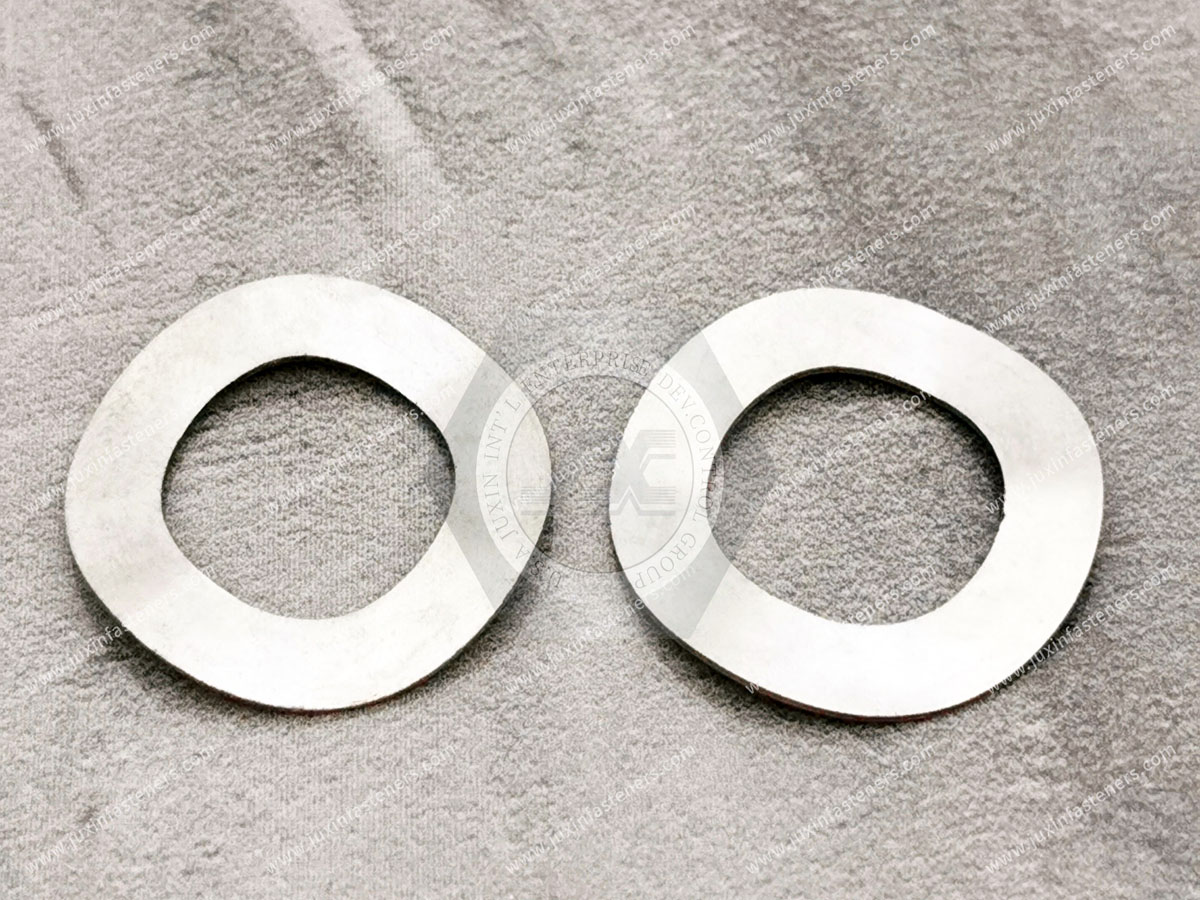
A saddle washer is a washer or spacer with at least one surface shaped to fit a curved or cylindrical mating surface.
In a common tube-fastening design:
one side interfaces with the curved tube;
the opposite side provides a more suitable interface for the fastener or adjacent component;
a central clearance hole allows a screw or bolt to pass through.
This geometry helps bridge the mismatch between:
Flat Fastener Geometry
and:
Round Tube Geometry
That is the primary engineering function of a tube saddle washer.
A conventional flat washer is designed around a substantially flat bearing surface.
When placed directly against a round tube, the washer may contact the tube over a relatively limited region.
Depending on the assembly, this can create:
unstable seating;
concentrated contact pressure;
washer rocking;
tube-surface marking;
inconsistent assembly position.
A correctly selected saddle washer creates a shaped interface that better conforms to the tube.
Therefore:
Flat Washer + Round Tube ≠ Automatically an Ideal Bearing Interface
For a curved tube interface, the washer radius should be compatible with the tube outside diameter.
For a nominally circular tube:
Tube OD → Tube Radius → Saddle Radius
For example, a washer designed around a particular tube-diameter range may have a curved recess selected to provide a practical seating interface for that range.
The exact fit depends on the washer design and permitted tolerance.
This is why saddle washers are frequently specified by both:
Fastener Size + Tube Diameter
rather than fastener size alone.
An RFQ that says:
“Need M6 saddle washers.”
does not define the curved interface.
The supplier still needs to know:
tube outside diameter;
washer hole diameter;
washer outside dimensions;
saddle radius;
washer height;
material;
joint orientation.
Two saddle washers can both accept an M6 fastener while being designed for completely different tube diameters.
Therefore:
Same Bolt Size ≠ Same Saddle Washer
Commercial tube saddle washers are commonly organized around defined tube-OD ranges.
For example, industrial nylon saddle washers are available for tube ranges such as approximately:
12–14 mm;
15–17 mm;
18–20 mm;
24–26 mm;
27–29 mm;
depending on the product series.
These examples demonstrate an important sourcing principle:
The tube diameter is part of the washer specification.
Commercial products are available with curved seating profiles specifically designed around cylindrical sections.
The washer does not necessarily need to behave like a precision bearing shell around the complete tube circumference.
Its purpose is to create an appropriate local interface.
However, excessive radius mismatch can produce poor seating.
The washer may contact the tube primarily near the edges of the curved recess.
The contact can become concentrated toward another region of the interface.
The washer can provide a more stable seating geometry across the intended contact area.
The acceptable fit depends on:
washer material;
tube material;
clamp load;
washer dimensions;
assembly requirement.
A common saddle washer has:
One Curved Surface + One Opposing Bearing Surface
This configuration is useful when a fastener or adjacent flat component needs to interface with one round tube.
Typical design concept:
Bolt / Screw → Saddle Washer → Round Tube
or the equivalent arrangement defined by the assembly.
Some saddle washers incorporate curved recesses on both sides.
These can be used where the component forms an interface between two tubular members.
Commercial double-sided saddle washers are available for different tube diameters and bolt sizes.
The orientation of the two curved surfaces determines the intended tube arrangement.
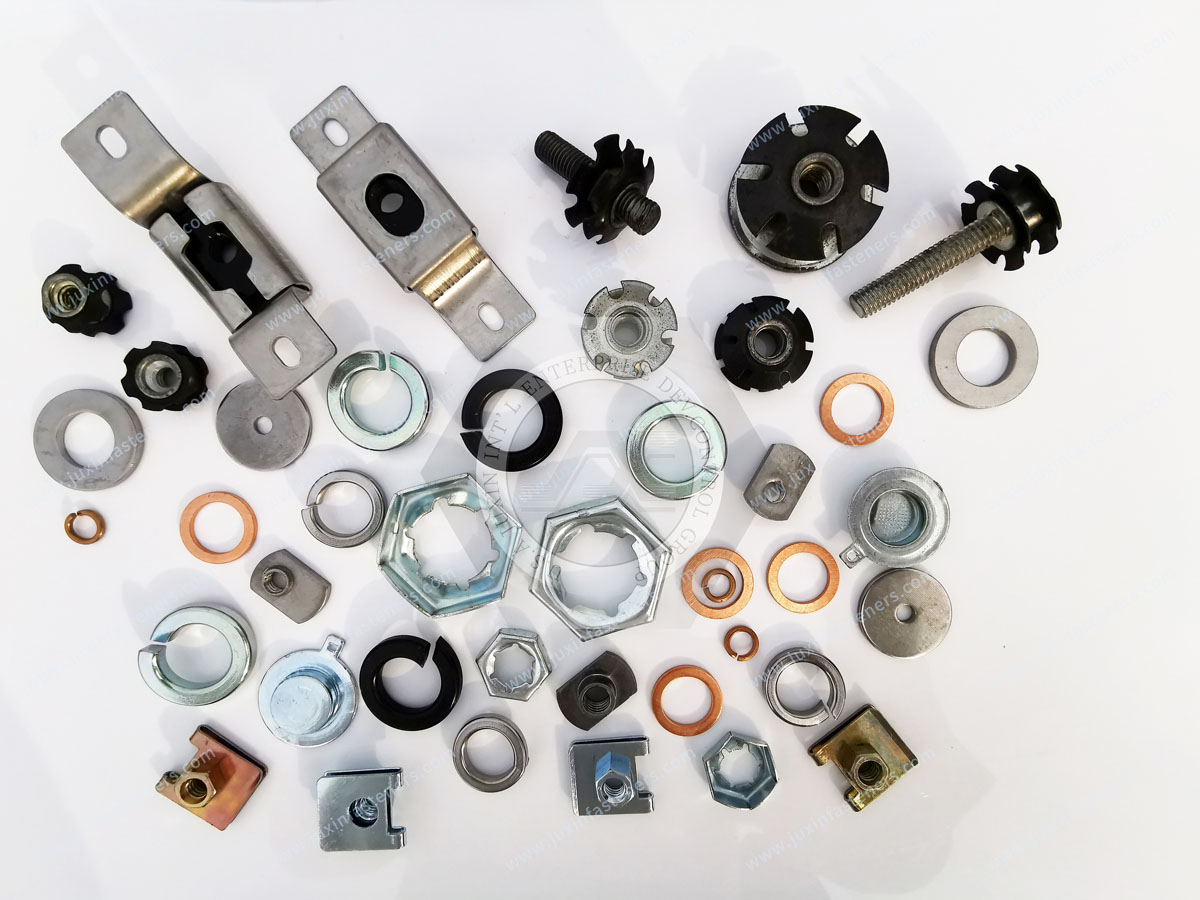
When both curved recesses are aligned in the same direction, the washer or spacer can support an assembly involving two parallel tubular surfaces.
This can be useful in selected:
tubular frames;
furniture structures;
guards;
display assemblies;
equipment structures.
The actual load path must still be evaluated by the designer.
Another configuration uses two curved recesses positioned approximately 90° to each other.
This creates a convenient geometry for connecting two round tubes at right angles.
Commercial double saddle washers are specifically available for 90° round-tube connections.
This produces a useful design architecture:
Round Tube A → Double Saddle Washer → Round Tube B
with the washer helping establish the relative tube geometry.
The terms can overlap commercially.
Some products function primarily as:
curved washers;
tube spacers;
tube assembly washers;
shaped standoffs.
The correct terminology depends on the actual geometry and function.
For RFQ purposes, a drawing is more reliable than relying only on the product name.
A flat washer generally assumes a flat bearing interface.
A saddle washer provides a shaped interface for a curved surface.
Therefore:
Flat Washer → Flat Bearing Interface
Saddle Washer → Curved Bearing Interface
They should not be treated as geometrically equivalent.
Not every concave or curved washer is a tube saddle washer.
Concave washers can be designed for different functions and mating geometries.
A saddle washer for round tubing is specifically selected around a cylindrical mating surface.
Therefore, the RFQ should identify:
tube OD;
curved radius;
washer geometry.
Spherical washer systems are another category entirely.
They are commonly used where angular misalignment between fastener bearing surfaces must be accommodated.
A tube saddle washer instead conforms to a cylindrical surface.
Therefore:
Saddle Washer ≠ Spherical Washer
Their engineering functions are different.
A Belleville washer or disc spring is designed around elastic load-deflection behavior.
A tube saddle washer is primarily a geometry-adaptation component.
Therefore:
Saddle Geometry ≠ Spring Function
A saddle-shaped surface should not automatically be described as providing spring preload.
The old assumption that a saddle washer provides anti-loosening because of its shape is not generally correct.
A tube saddle washer does not automatically act as:
split spring washer;
disc spring;
locking washer;
prevailing-torque element.
Its primary purpose is geometric support at the curved interface.
If anti-loosening is required, evaluate the locking mechanism separately.
This distinction is particularly important.
Some products called saddle washers incorporate:
metal reinforcement;
EPDM;
rubber;
another elastomer.
Those products can be designed around sealing applications.
But a nylon, PE or metal tube saddle washer does not become a sealing washer merely because it has a curved shape.
Therefore:
Saddle Washer ≠ Automatically Sealing Washer
Commercial saddle-washer products also exist in metal-and-elastomer configurations.
For example, industrial products are available using aluminum together with EPDM compounds for specific sealing-related applications.
In those designs, sealing behavior depends on:
elastomer compound;
hardness;
geometry;
compression;
fastener;
mating surface;
environment.
The sealing function should be validated as a system.
A washer alone should not be described as creating a universally:
Leak-Free
or:
Pressure-Tight
connection.
For fluid systems, sealing performance can depend on:
pressure;
temperature;
fluid compatibility;
elastomer;
surface finish;
compression;
joint geometry.
A tube-support saddle washer and a hydraulic sealing washer are different engineering products.
A rigid or semi-rigid saddle washer should not automatically be described as damping vibration.
Vibration damping requires energy dissipation.
A polymer component may affect interface behavior, but this should not be converted into an unsupported general claim of vibration damping.
If vibration isolation is required, select and validate an appropriate isolation system.
Likewise, a saddle washer does not inherently prevent threaded fastener rotation.
If the assembly is exposed to vibration, engineers may need to evaluate:
prevailing-torque locknuts;
all-metal locknuts;
nylon-insert locknuts;
engineered locking washers;
thread-locking compounds;
positive mechanical locking.
The curved washer and the locking system can perform separate functions.
Nylon is widely used for tube saddle washers.
Commercial products are available in nylon for multiple tube and fastener sizes.
Potential advantages of nylon can include:
low mass;
corrosion resistance;
electrical insulation;
reduced marking of selected surfaces;
manufacturability into complex curved geometry.
However, nylon behavior depends on:
grade;
temperature;
moisture;
load;
time.
Polymer components can experience creep or stress relaxation under sustained load.
Therefore:
Nylon Saddle Washer ≠ Permanent Rigid Metal Bearing Surface
Where significant clamp load must be maintained over long periods, engineers should evaluate:
polymer grade;
washer geometry;
operating temperature;
sustained compression;
joint stiffness.
This is especially important when the polymer washer lies directly in the clamp-load path.
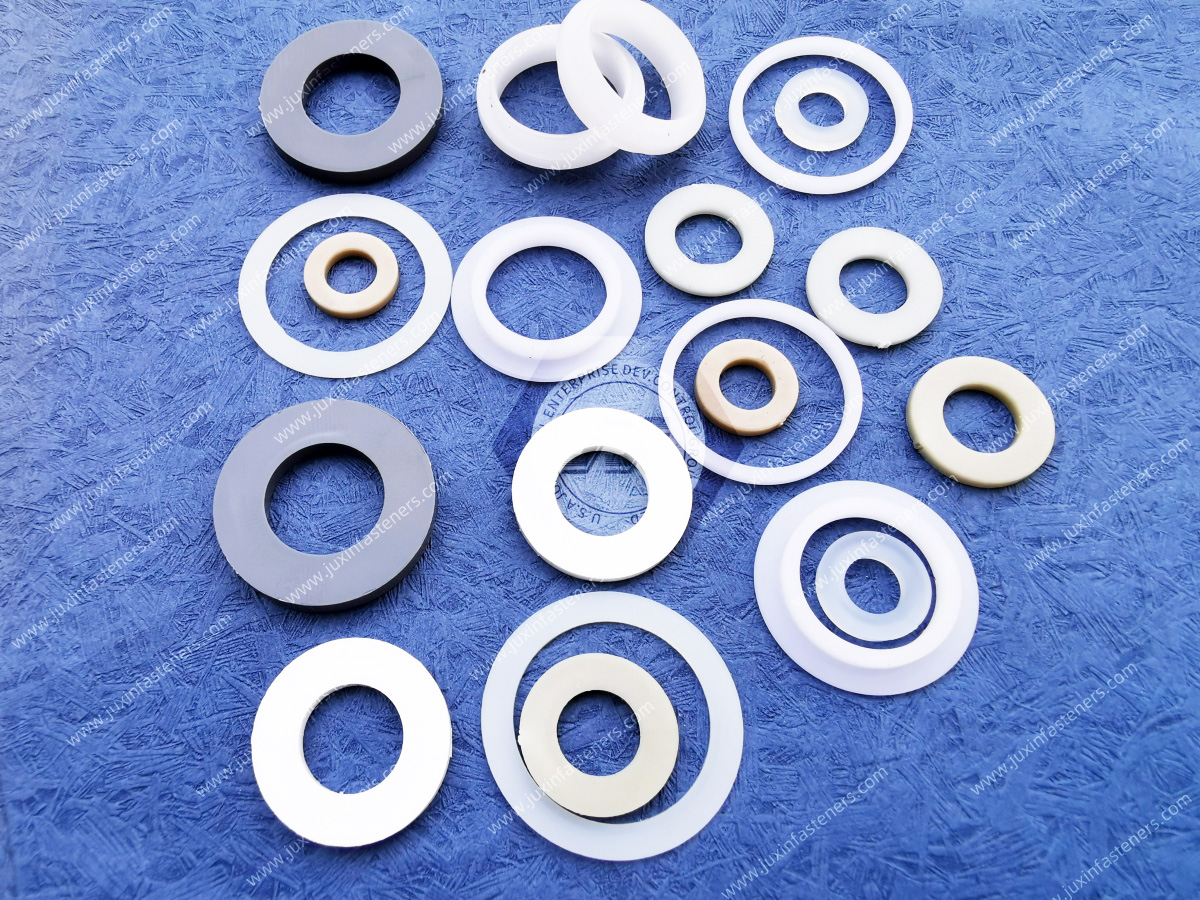
Both PA6 and PA66 can be used in industrial plastic components.
The appropriate material depends on the required:
mechanical behavior;
moisture response;
temperature;
chemical environment;
dimensional stability.
Do not specify simply:
“Nylon”
when the material grade matters to the application.
PE saddle washers are also commercially available, including double-sided tube-connection products.
Polyethylene can be useful in selected applications where:
low weight;
corrosion resistance;
formed geometry
are important.
Again, grade and service conditions should be considered.
POM can be considered for selected custom washer or spacer applications where dimensional stability and mechanical behavior make it suitable.
The final choice depends on:
geometry;
load;
environment;
manufacturing process.
Material selection should follow the actual engineering requirement.
Metal saddle washers can also be produced where higher stiffness or another mechanical property is required.
Potential materials can include, depending on design:
carbon steel;
stainless steel;
aluminum.
The material should not be selected independently of the tube.
Consider:
tube material;
clamp load;
corrosion;
surface marking;
galvanic interaction;
washer geometry.
Stainless steel can be appropriate for selected corrosive environments.
However:
Stainless Steel ≠ Corrosion-Proof
The stainless grade and environment still matter.
Direct contact with other metals should also be evaluated where galvanic effects are relevant.
Aluminum can provide a lightweight metallic option for selected designs.
But alloy, strength, corrosion and deformation must be evaluated.
Do not treat all aluminum saddle washers as mechanically interchangeable.
The same saddle washer can behave differently on:
carbon-steel tube;
stainless-steel tube;
aluminum tube;
painted tube;
powder-coated tube;
plastic tube.
The designer should consider both the washer and the mating tube.
A saddle washer can improve the local contact geometry.
It does not automatically prevent a thin-wall tube from crushing or ovalizing under excessive clamp load.
Engineers should consider:
tube OD;
wall thickness;
tube material;
clamp load;
washer footprint;
internal support where applicable.
Therefore:
Better Curved Contact ≠ Unlimited Clamp Load
Some saddle washer designs act as both:
Curved Interface + Spacer
The washer height can control:
stand-off distance;
component spacing;
bolt grip length;
tube-to-component clearance.
Commercial saddle washer ranges can include multiple heights for the same general tube size.
This makes height another important RFQ parameter.
Some commercial saddle washers specify a tube offset dimension.
This defines how the washer geometry positions the fastener or adjacent component relative to the tube surface.
Where assembly position matters, this dimension should be included in the drawing.
The central hole should be selected around the intended fastener.
Common commercial saddle washers are available with clearance holes suitable for sizes such as:
M5;
M6;
M8;
M10;
depending on product family.
But again:
Bolt Hole Size Alone Does Not Define the Saddle Washer
Tube geometry remains essential.
A saddle washer can be useful in a single-bolt tube assembly by providing a shaped local seat.
However, the complete joint must still resist any relevant:
rotation;
sliding;
bending;
pull-through.
The washer should not be expected to replace the structural design of the connection.
A common use case involves attaching a component to a round tube while the fastener requires a more controlled bearing interface.
The saddle washer can bridge:
Curved Tube → Fastener Interface
Potential applications include:
brackets;
guards;
accessories;
equipment mounts.
Double-sided saddle washers can provide a shaped spacer between two round tubes.
Depending on the geometry, the tubes can be:
parallel;
perpendicular;
another controlled arrangement in a custom design.
This can simplify fabrication where welding is undesirable or removable assembly is preferred.
Saddle washers are particularly relevant to tubular products such as:
chairs;
tables;
display systems;
equipment stands;
carts;
frames.
Polymer saddle washers can help create repeatable interfaces between tubular members.
Industrial machine guards frequently use round-tube frames.
Saddle washers or curved spacers can support:
bracket mounting;
frame connections;
accessory installation.
The complete guard system must still meet its applicable design and safety requirements.
Automation equipment can use round tubing in:
sensor supports;
equipment frames;
protective structures;
accessory mounts.
Custom saddle washers can provide a practical interface without requiring every mating component to be machined with a curved surface.
Potential applications include:
carts;
racks;
tubular handles;
equipment frames;
protective rails.
The required washer material and geometry depend on actual load and environment.
Round tubes and pipes appear throughout HVAC systems.
Saddle washers can be relevant to selected:
support structures;
equipment frames;
mounting hardware;
guards.
Do not confuse these mechanical tube-support components with pressure-containing pipe seals.
Polymer saddle washers can be useful in selected electrical-equipment structures where:
round tubing;
isolation;
lightweight fastening;
surface protection
are relevant.
However:
Nylon Saddle Washer ≠ Automatically Certified Electrical Insulator
The actual polymer grade and applicable electrical requirements must be specified.
Potential applications can include:
antenna-support accessories;
equipment frames;
tubular mounts;
communication-equipment structures.
Outdoor use requires appropriate evaluation of:
UV exposure;
temperature;
moisture;
material grade.
Potential non-safety-critical applications can include:
equipment brackets;
tubular accessories;
manufacturing fixtures;
carts;
auxiliary structures.
A generic saddle washer should not automatically be described as qualified for safety-critical vehicle joints.
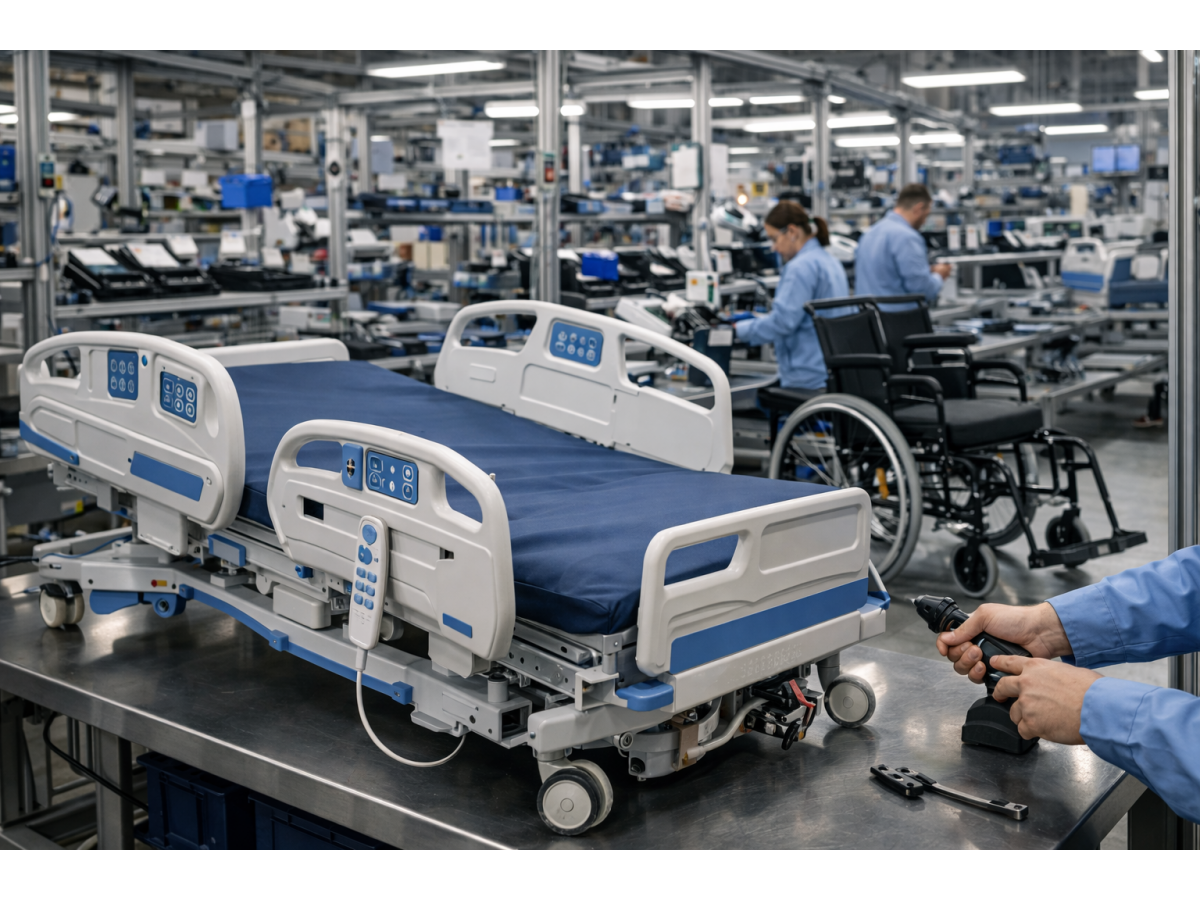
Polymer saddle washers may be used in appropriate non-sterile equipment such as:
carts;
instrument frames;
equipment stands;
tubular support structures.
Generic industrial plastic components should not automatically be described as:
sterile;
biocompatible;
medical-grade;
cleanroom-qualified.
Modern AI data centers contain substantial cooling and mechanical infrastructure.
Saddle washers may be relevant to selected:
tube-support structures;
equipment frames;
auxiliary mounting systems;
cooling-equipment hardware.
The product should be selected from the actual mechanical interface rather than from the industry category alone.
Outdoor saddle washers require attention to:
UV exposure;
moisture;
temperature cycling;
corrosion;
polymer aging.
A generic nylon or PE grade should not automatically be assumed suitable for long-term outdoor use.
If UV performance is required, specify the actual material requirement.
Chemical compatibility depends on:
polymer family;
exact material grade;
concentration;
temperature;
exposure duration.
Do not describe a plastic saddle washer as universally chemical-resistant.
| Engineering Condition | Selection Direction |
|---|---|
| Flat component mounted to round tube | Single-sided saddle washer |
| Two parallel round tubes | Evaluate parallel double saddle washer |
| Two round tubes at 90° | Evaluate 90° double saddle washer |
| Need electrical isolation | Evaluate suitable polymer grade |
| Need high stiffness | Evaluate metal or higher-stiffness material |
| Thin-wall tube | Check local crushing/ovalization |
| Outdoor exposure | Specify UV/environmental material requirement |
| Long-term polymer compression | Evaluate creep/stress relaxation |
| Need pressure sealing | Use a dedicated sealing system |
| Need anti-loosening | Specify locking method separately |
| Need vibration isolation | Use engineered damping/isolation component |
| Special tube diameter | Consider custom saddle radius |
This defines the curved mating surface.
This determines how the washer interfaces with the tube.
This must match the intended bolt or screw system.
This can affect spacing and bolt grip length.
This determines available bearing footprint and packaging clearance.
Together these define far more than:
“M6 Saddle Washer.”
Tube diameter is equally important.
Curvature is primarily a geometric interface feature.
Tube saddle washers and sealing saddle washers are different products.
Anti-loosening requires a defined locking mechanism.
Polymer creep and stress relaxation can matter.
A thin tube can deform under clamp load.
Poor radius matching can reduce seating quality.
They solve different assembly geometries.
UV and environmental exposure should be considered.
Pressure sealing requires a dedicated engineered sealing system.
Engineers may search:
saddle washer;
saddle washer for round tube;
curved washer for pipe;
washer for round tube;
nylon saddle washer;
tube assembly washer;
curved spacer for tube;
double saddle washer;
saddle washer M6;
saddle washer tube diameter;
saddle washer radius;
tube connector washer.
These searches usually indicate a geometry or assembly problem.
Purchasing and supplier-development teams may search:
saddle washer manufacturer;
nylon saddle washer supplier;
tube saddle washer supplier;
custom saddle washer;
plastic saddle washer manufacturer;
round tube washer supplier;
double saddle washer supplier;
OEM plastic washer manufacturer.
The commercial requirement should define both the fastener and tube geometry.
For technical and commercial evaluation by JUXIN FASTENERS, provide where applicable:
2D drawing;
3D model;
physical sample;
customer part number;
application;
single-sided or double-sided geometry;
parallel or 90° tube arrangement;
tube outside diameter;
tube wall thickness;
tube material;
tube coating;
saddle radius;
washer inside diameter;
clearance-hole diameter;
washer outside diameter;
washer height;
tube offset where applicable;
bolt or screw size;
bolt length;
fastener material;
washer material;
PA6 requirement where applicable;
PA66 requirement where applicable;
PE requirement where applicable;
POM requirement where applicable;
stainless steel requirement where applicable;
color;
UV requirement;
flame-rating requirement where applicable;
operating temperature;
chemical exposure;
outdoor exposure;
clamp-load requirement where known;
sealing requirement, if any;
electrical-isolation requirement, if any;
sample quantity;
production quantity;
estimated annual demand;
dimensional inspection requirements;
packaging requirements;
labeling requirements;
customer-specific requirements.
A saddle washer is a shaped washer or spacer with a curved surface designed to interface with a round tube, pipe or other cylindrical surface.
It helps create a more suitable bearing or spacing interface between a fastener assembly and a curved tube.
Yes. Round-tube assembly is one of the common applications for curved saddle washers. Commercial products are specifically offered around defined tube-diameter ranges.
Start with tube outside diameter and joint geometry, then define saddle radius, bolt clearance hole, washer height, material and service environment.
Not by bolt size alone.
An M6 saddle washer designed for one tube diameter may not fit another tube correctly.
Yes. Nylon saddle washers are widely available for round-tube fastening applications.
Yes. PE is used in some commercial double-sided tube saddle washers and spacers.
Double-sided saddle washers can be designed for tube-to-tube interfaces, including parallel and 90° arrangements.
Not automatically.
A curved tube saddle washer primarily provides a geometric interface. Specify a separate locking method if anti-loosening performance is required.
Not automatically.
Some specially designed metal-and-elastomer saddle washers can serve sealing-related applications, but an ordinary tube saddle washer is not inherently a pressure seal.
Do not assume a general saddle washer provides engineered vibration damping.
If vibration isolation is required, select an appropriate damping or isolation component.
A flat washer can physically fit some assemblies, but it does not provide the same curved seating geometry on a round tube.
Custom requirements can be evaluated from a drawing, 3D model or physical sample, including tube diameter, saddle radius, fastener hole, height, material and production quantity.
An engineer may begin with:
“I need a washer for a round tube.”
The next question should be:
What Is the Tube Outside Diameter?
Then:
What Is the Saddle Radius?
Single-Sided or Double-Sided?
Parallel or 90° Tube Connection?
What Bolt Size?
What Washer Height?
What Material?
What Clamp Load?
Indoor or Outdoor?
Does the Joint Need Locking, Sealing or Electrical Isolation?
The complete commercial path becomes:
Tube Geometry → Saddle Radius → Fastener Geometry → Material → Environment → Prototype → Assembly Validation → Approved Part → Production RFQ
That converts a generic plastic washer inquiry into a controlled OEM component specification.
JUXIN FASTENERS supports OEM sourcing and customization of saddle washers, nylon washers, plastic spacers, plastic fasteners, specialty washers,
bolts, screws, nuts and custom mechanical components for industrial equipment, tubular frames, automation, electrical equipment, HVAC, telecommunications, automotive-related equipment and other engineered assemblies.
For broader washer-family selection, see Industrial Washers: Types, Functions & Selection Guide.
For general washer-and-bolt engineering, see Washers and Bolts: Fastening Systems Selection Guide.
For plastic and nylon fastening applications, see Automotive Plastic Fasteners Guide.
For anti-loosening requirements that are separate from the saddle-washer function, see Nylon Insert Locknuts for Anti-Vibration Applications.
For saddle washer OEM RFQs, send your drawing, 3D model or sample, tube OD, tube wall thickness, saddle radius, fastener size, washer ID/OD/height, material,
environment, quantity and estimated annual demand to:
The most important dimension of a saddle washer is not necessarily the bolt size.
It is the geometry of the curved surface the washer must fit.
 MORE NEWS
Sep. 25, 2026
Sep. 25, 2026
Sep. 25, 2026
Contact Us
Tel.:
+86 020 8621 0320
+86 020 3121 6067
E-mail:
Technical Support:
Navigation
SEND INQUIREY