
Call Us
+86 136 6007 9809
Call Us
+86 136 6007 9809

Sep. 16, 2023
Wave spring washers are compact elastic components designed to generate axial spring force when compressed.
Unlike flat washers, wave washers have a formed wavy profile. As the washer is compressed between two surfaces, the waves deflect and generate an axial reaction force.
This makes wave spring washers particularly useful where engineers need:
bearing preload;
axial play control;
tolerance compensation;
component retention;
limited axial movement;
light-to-moderate spring force;
compact axial packaging.
A useful engineering model is:
Free Wave Height → Axial Compression → Elastic Deflection → Controlled Axial Force
Wave washers are widely used in bearing assemblies and other applications where a conventional coil spring would require too much axial space.
Current industrial manufacturers identify bearing preload, tolerance compensation and controlled axial load as core wave-washer applications.
However, wave spring washers should not automatically be described as:
sealing washers;
metal O-rings;
waterproof washers;
hydraulic seals;
gas seals;
universal anti-loosening washers;
vibration-proof fasteners.
Their primary engineering function is controlled elastic axial loading.
JUXIN FASTENERS supports standard and custom wave spring washers, spring washers, disc springs, flat washers,
locking washers and related fastening components for electric motors, industrial machinery, automation, automotive-related equipment, electrical equipment,
HVAC systems, telecommunications equipment and other engineered assemblies.
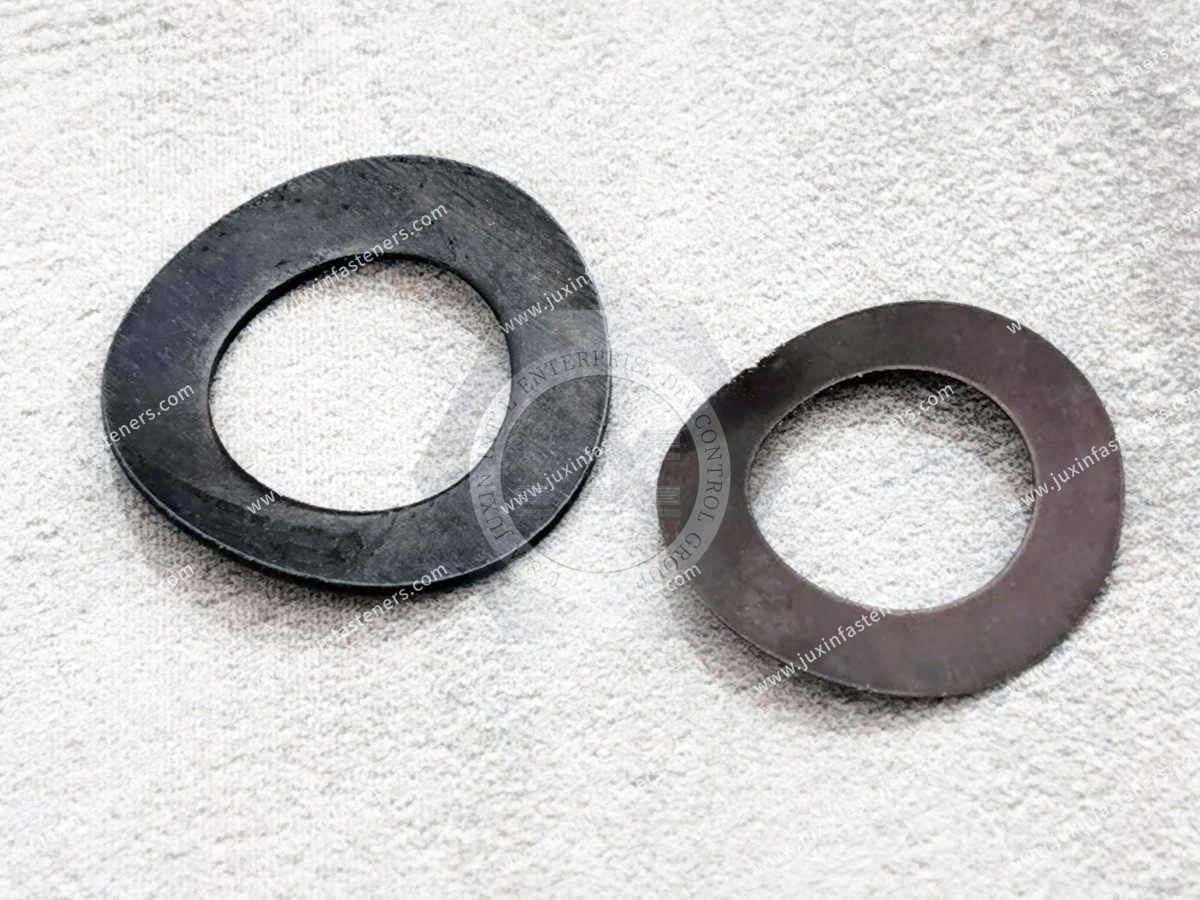
A wave spring washer is a thin annular spring component formed with one or more waves around its circumference.
In the unloaded condition, its overall free height is greater than the material thickness.
When an axial load compresses the washer, the wave peaks deflect.
This creates spring force.
The operating principle is:
Wave Geometry + Material + Deflection → Axial Spring Force
For engineering selection, this relationship matters much more than simply identifying the nominal bolt size.
A flat washer primarily provides a bearing interface.
A wave washer provides elastic movement.
Therefore:
Flat Washer → Bearing / Load Distribution Function
Wave Washer → Axial Spring / Compensation Function
They should not be treated as interchangeable simply because both have an annular washer shape.
A conventional compression spring requires axial installation height.
A wave washer produces spring action from a relatively thin annular component.
This can make it attractive where:
radial space is available;
axial space is restricted;
the required spring travel is moderate;
the required force is compatible with the washer design.
Industrial wave-washer manufacturers specifically identify limited-space spring applications as a major advantage.
Wave spring washers are frequently used to apply an axial load to bearings.
A typical concept is:
Housing → Wave Washer → Bearing Race → Bearing Assembly
The washer deflects as the bearing is installed and provides axial spring force against the appropriate bearing race.
Commercial load-rated wave washers are specifically engineered for bearing preload and tolerance-stack compensation.
Depending on bearing type and system design, controlled preload can help manage:
axial clearance;
end play;
component positioning;
operating noise;
assembly tolerance.
The correct preload depends on the bearing and machine design.
Therefore:
More Preload ≠ Better Bearing Performance
Excessive preload can increase:
friction;
temperature;
stress;
wear.
Insufficient preload may leave excessive clearance or allow undesirable axial movement.
The washer must therefore be selected around the required load-deflection condition.
These are different engineering concepts.
An axial force intentionally applied to a bearing arrangement.
Clamp force created by tightening a threaded fastener.
A wave washer may preload a bearing without being responsible for the primary bolt preload of the surrounding assembly.
Therefore:
Wave Washer Spring Force ≠ Bolt Clamp Load
This distinction is important when specifying the washer.
Wave washers are useful for taking up small axial gaps caused by:
component tolerances;
machining variation;
bearing position;
housing variation;
thermal dimensional change.
Instead of using a completely rigid spacer, the wave washer can provide an elastic interface.
The design concept becomes:
Tolerance Stack → Available Gap → Wave Washer Deflection → Axial Reaction Force
A wave washer has a defined working range.
It cannot compensate for arbitrary dimensional variation.
If the assembly gap varies too widely, the washer may experience:
insufficient compression at one tolerance extreme;
excessive compression at another.
This makes tolerance-stack analysis important.
A wave washer's free height is the overall axial height before installation.
Free height influences available deflection.
Procurement should therefore not specify only:
ID + OD + Thickness
A more complete specification may require:
ID + OD + Thickness + Free Height + Working Height + Required Load
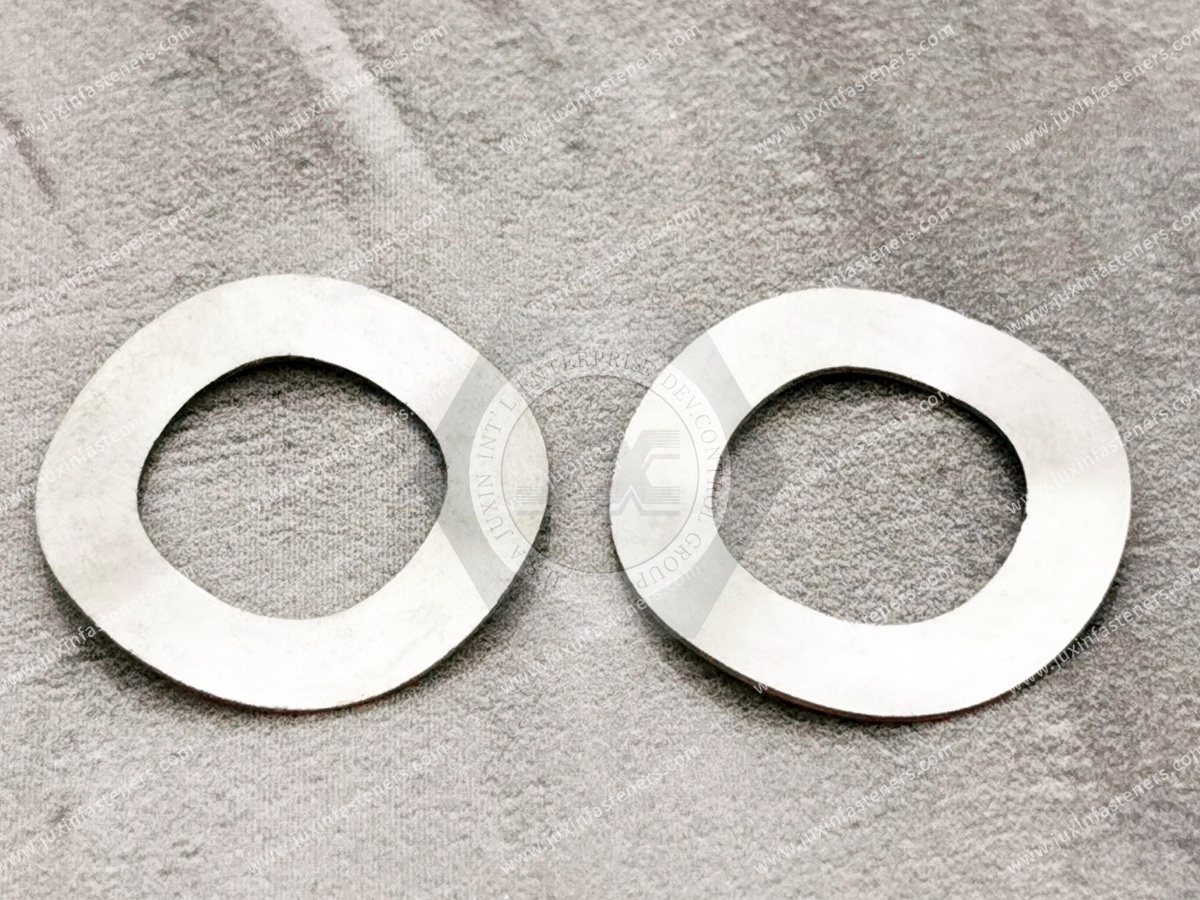
The critical condition is often the washer's installed or working height.
Suppose the washer has a defined free height.
When assembled, the available cavity compresses it to a lower height.
The difference between those conditions produces deflection.
Conceptually:
Deflection = Free Height − Installed Height
The actual force generated at that deflection depends on the washer geometry and material.
For an engineered spring washer, the most useful performance question is not:
“Is this an M20 wave washer?”
It is:
“What axial force does this washer produce at the required installed height?”
Wave washers are spring elements, so load-deflection behavior is central to correct selection.
Seastrom, for example, describes wave spring washers by their load capacity and deflection behavior rather than simply by nominal diameter.
Within the intended operating range, spring rate describes the relationship between force and deflection.
Conceptually:
Spring Rate = Change in Force / Change in Deflection
The actual curve depends on:
washer geometry;
number and shape of waves;
thickness;
material;
heat treatment;
OD and ID.
Do not invent a spring rate from bolt size alone.
Wave washers can use different numbers of waves.
Depending on the product family, designs may include:
single-wave or bowed forms;
three-wave washers;
multi-wave washers;
custom wave patterns.
Wave geometry affects:
spring force;
available travel;
load distribution;
working height.
Therefore:
Same ID and OD ≠ Same Spring Performance
DIN 137 Form B is associated with waved spring washers.
Commercial DIN 137 B washers continue to be available in metric sizes.
The geometry differs from DIN 137 Form A.
DIN 137 B uses multiple wave crests, while Form A uses a simpler bowed or curved geometry.
This distinction connects directly to the previous JUXIN FASTENERS spring-washer engineering page.
Curved / Bowed Spring Washer
Waved Spring Washer
Therefore:
DIN 137 A ≠ DIN 137 B
A legacy drawing specifying Form A should not automatically be converted to Form B without engineering review.
Both are spring elements, but their geometry and typical load-deflection behavior differ.
Uses waves around the circumference.
Typically useful where relatively compact spring travel and controlled axial loading are required.
Uses a conical disc geometry.
Disc springs can be configured for substantially different force-deflection requirements and can be stacked in series, parallel or combination arrangements.
Therefore:
Wave Washer ≠ Belleville Washer
A wave washer may be considered when the application needs:
limited axial space;
moderate spring travel;
bearing preload;
axial clearance compensation;
tolerance take-up;
relatively light or moderate axial spring force.
The actual selection must be based on product data.
A disc spring may be more appropriate when the application requires:
higher axial force;
engineered stacking;
specific load-deflection behavior;
greater control of spring architecture.
Do not choose between wave and Belleville washers solely from available diameter.
A coil spring generally requires more axial installation space.
A wave washer provides spring behavior in a flatter package.
This makes wave washers attractive in:
bearing housings;
motors;
gear assemblies;
compact mechanical equipment;
instruments.
However, a coil spring may provide greater travel depending on the design.
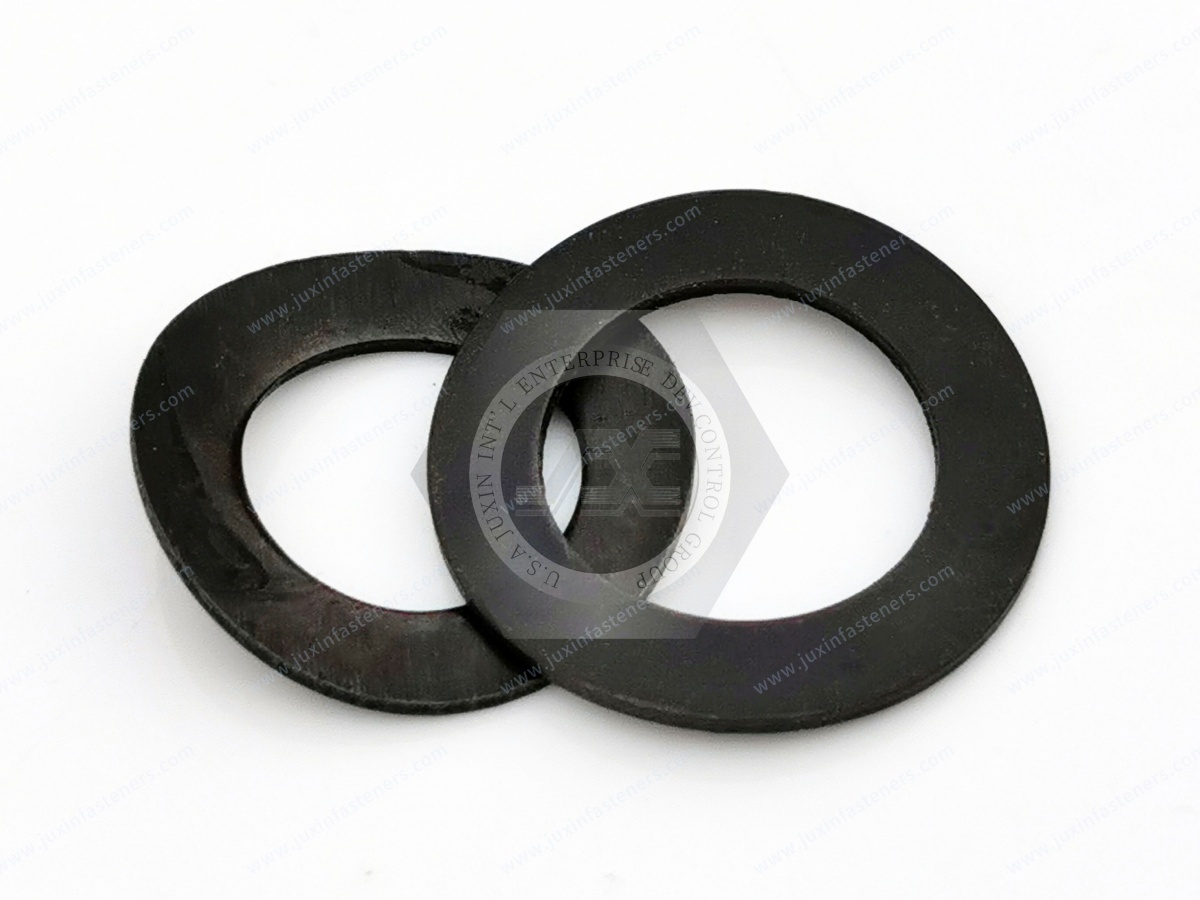
A flat washer should not be expected to provide meaningful controlled spring travel.
A wave washer should not automatically be expected to provide the same rigid bearing interface as a flat washer.
Their primary functions differ.
A split lock washer uses a helical split-ring geometry.
A wave washer uses elastic waves.
Therefore:
Wave Washer ≠ Split Lock Washer
A wave washer should not automatically be selected as a replacement for a split lock washer.
Internal tooth washers use teeth to interact with the mating interface.
Wave washers use elastic deflection.
Therefore:
Tooth Geometry → Interface Engagement
Wave Geometry → Axial Spring Force
These solve different engineering tasks.
The old description of wave washers as metal O-rings should be removed.
Metal O-rings are specialized sealing components designed for fluid or gas sealing systems.
Wave spring washers are mechanical spring components.
A similar circular appearance does not make them functionally equivalent.
Therefore:
Wave Spring Washer ≠ Metal O-Ring
The wave profile does not inherently provide fluid sealing.
Do not assume that a wave washer prevents:
oil leakage;
hydraulic-fluid leakage;
refrigerant leakage;
compressed-air leakage;
water ingress.
Those functions require a suitable sealing system.
Likewise, a metal wave washer does not automatically create an IP-rated or waterproof interface.
Ingress protection is a property of the complete enclosure or assembly.
If water sealing is required, specify:
gasket;
O-ring;
bonded sealing washer;
elastomer seal;
another validated sealing system.
The old claim that wave washers improve hydraulic or refrigeration energy efficiency by preventing leakage should also be removed.
A standard wave spring washer should not be assigned a sealing function that it was not designed to perform.
Wave washers can maintain contact and provide axial spring compliance in dynamic assemblies.
Some suppliers also describe vibration or shock-related benefits in appropriate applications.
However:
Spring Compliance ≠ Guaranteed Vibration Damping
A spring stores and releases energy.
A damping element dissipates energy.
The terms should not be used interchangeably.
Wave washers should not automatically be promoted as preventing threaded fastener rotation.
If a bolted joint has a genuine self-loosening problem, evaluate the locking requirement separately.
Potential solutions may include:
prevailing-torque locknuts;
all-metal locknuts;
nylon-insert locknuts;
wedge-locking systems;
thread-locking compounds;
positive mechanical locking.
A wave washer can push axially against a component.
That does not automatically prevent a nut from rotating.
This is an important Information Gain point:
Axial Spring Force ≠ Rotational Locking Mechanism
Spring steel is commonly used for wave washers.
Its mechanical properties can support elastic deflection when the material and forming process are appropriately controlled.
For procurement, define where relevant:
material specification;
hardness or material condition;
heat treatment;
dimensions;
load-deflection requirement;
finish.
Do not simply specify “high-strength steel” without defining the engineering requirement.
Stainless spring materials are also used.
Industrial suppliers list stainless steel wave washers alongside carbon/spring-steel versions.
Stainless can be considered where corrosion resistance is required.
However:
Stainless Steel ≠ Corrosion-Proof
The actual alloy and environment still matter.
Copper-alloy spring materials can be used for selected wave washer applications.
The appropriate choice depends on:
spring properties;
electrical requirements;
corrosion environment;
temperature;
application.
Do not assume every copper-alloy wave washer provides the same spring performance as steel.
Depending on material and application, wave washers may be supplied with:
plain finish;
zinc coating;
phosphate;
black oxide;
passivated stainless surface;
another specified finish.
The finish should be selected according to the material and service environment.
Where hardened or high-strength spring-steel components receive electroplated coatings, hydrogen-embrittlement risk may need to be evaluated.
The risk depends on:
material strength/hardness;
cleaning process;
plating process;
stress condition.
There is no universal post-plating baking recipe that should be invented for every wave washer.
Bearing preload is one of the strongest commercial-intent directions for this page.
Wave washers are used in applications such as:
electric motors;
gearboxes;
pumps;
small drives;
rotating equipment;
precision mechanisms.
The washer can apply axial force to the appropriate bearing race while accommodating dimensional variation.
Electric motors frequently require control of bearing position and axial clearance.
A wave washer can be positioned within the bearing stack to provide controlled axial force.
Potential objectives include:
managing end play;
maintaining bearing contact;
compensating tolerance variation.
The correct force must follow the motor and bearing design.
Compact gear and drive assemblies can use wave washers where axial component movement must be controlled.
Potential locations include:
bearing stacks;
shaft assemblies;
gear positioning systems.
Wave washers should be selected from the actual force and displacement requirement.
Wave washers can be used in selected pump mechanical assemblies for:
bearing preload;
shaft component positioning;
tolerance compensation.
They should not automatically be described as pump seals.
The spring and sealing systems perform different functions.
Automation equipment can use wave washers in:
servo-related mechanical assemblies;
actuators;
small gear mechanisms;
sensor mechanisms;
precision mounts.
Their compact axial height can be useful where packaging space is limited.
Potential applications can include:
compact joint mechanisms;
bearing assemblies;
actuator systems;
positioning mechanisms.
The spring requirement should be validated against the actual load and motion cycle.
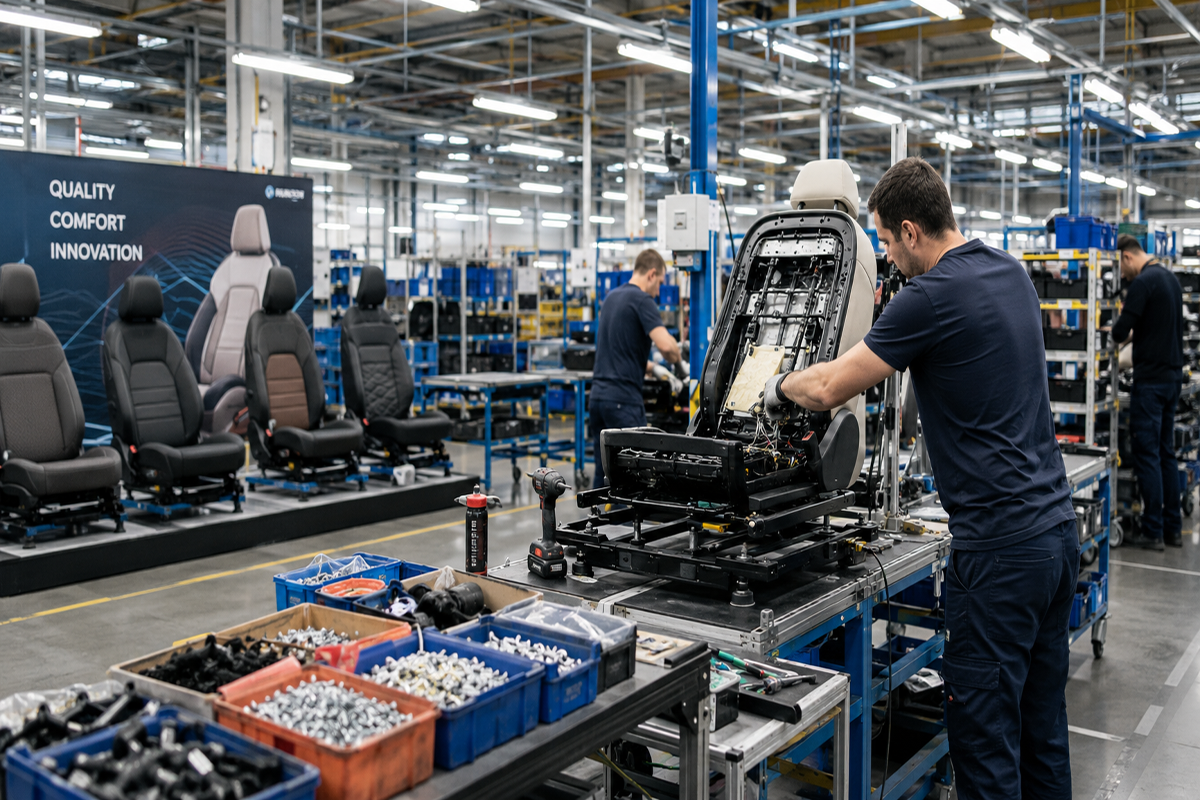
Wave washers can be found in selected:
motor assemblies;
actuator mechanisms;
gearbox components;
auxiliary drive systems;
seat and adjustment mechanisms;
other precision mechanical assemblies.
A generic wave washer should not automatically be promoted for safety-critical steering, suspension or braking applications without the applicable qualification.
Electric vehicles contain many motors, actuators, pumps and power-management assemblies.
Wave washers may therefore be relevant to selected:
electric motor bearing systems;
pumps;
actuators;
thermal-management equipment;
auxiliary mechanisms.
The application—not the EV label—determines the washer specification.
AI data centers use substantial cooling, power-conversion and electrical infrastructure.
Wave washers can be relevant to selected:
fan and blower motors;
pumps;
cooling equipment;
power-conversion hardware;
auxiliary electromechanical assemblies.
Again, the correct search path is:
Mechanical Function → Axial Load Requirement → Washer Selection
rather than selecting a washer merely because the end market is AI infrastructure.
Wave washers may be used in selected:
blower motors;
fan motors;
actuator mechanisms;
equipment drives.
They should not be described as refrigerant seals.
Potential applications include:
motors;
switches;
actuators;
control mechanisms;
electromechanical assemblies.
Where electrical conductivity or insulation is important, those properties must be specified separately.
Wave washers can be used in selected:
cooling fans;
small motors;
adjustment mechanisms;
equipment hardware.
Outdoor exposure may require appropriate material and finish selection.
Potential non-sterile applications can include:
diagnostic equipment mechanisms;
laboratory instruments;
motor assemblies;
equipment positioning mechanisms.
Generic wave washers should not automatically be described as:
medical-grade;
sterile;
biocompatible;
cleanroom-certified.
A professional specification begins with:
What Force Is Required?
Then:
At What Installed Height?
Then:
How Much Deflection Is Available?
Only after these questions should the designer finalize:
ID;
OD;
thickness;
wave geometry;
material.
This is much more reliable than selecting from nominal diameter alone.
For bearing applications:
Define:
bearing type;
bearing OD;
bearing race to be loaded;
allowable preload.
Measure:
washer ID requirement;
maximum OD;
available axial space.
Evaluate the minimum and maximum installed gap.
Determine acceptable axial load across the tolerance range.
Choose a washer capable of providing the required load-deflection behavior.
Verify:
preload;
bearing temperature;
axial play;
noise;
wear;
washer set;
fatigue behavior where relevant.
Consider an assembly where housing depth, bearing width and cover position all have dimensional tolerances.
The installed wave washer height will vary.
Therefore its generated force will also vary.
A professional design must evaluate:
Minimum Stack Condition
and:
Maximum Stack Condition
The washer should remain within an acceptable operating region across both.
Different materials can expand by different amounts as temperature changes.
A wave washer may provide limited compliance that helps accommodate dimensional change.
However:
Wave Washer ≠ Unlimited Thermal Compensation
The required travel and force still need to remain within the washer's working range.
If a wave washer is compressed beyond its intended elastic range, it may take a permanent set.
This can reduce:
free height;
available deflection;
spring force.
For this reason, “tighten until completely flat” should not be treated as a universal installation rule.
For many annular multi-wave washers, there is no universal rule such as:
“The wave side must face the bearing.”
The geometry is not comparable to a one-sided sealing lip.
Installation should follow:
drawing;
assembly design;
supplier guidance.
A wave washer should operate within the intended deflection range.
Excessive compression can cause:
permanent set;
excessive stress;
reduced spring performance;
fatigue damage.
Do not define compression using an arbitrary percentage without product data.
Before assembly, check:
seating surfaces;
burrs;
contamination;
corrosion;
washer damage.
The washer should be able to deflect without unintended interference.
For replacement applications, compare the old washer with the specified free height.
A heavily flattened washer may have lost part of its spring function.
Do not automatically assume a wave washer can be reused indefinitely.
After service, inspect:
free height;
cracks;
corrosion;
permanent deformation;
wear.
For controlled maintenance programs, replacement may provide more predictable spring behavior.
| Engineering Requirement | Selection Direction |
|---|---|
| Light/moderate bearing preload | Evaluate wave spring washer |
| Need axial end-play control | Evaluate wave washer |
| Need tolerance compensation | Evaluate wave washer load-deflection range |
| Very limited axial space | Wave washer may be advantageous |
| Higher axial spring force | Evaluate Belleville/disc spring |
| Large spring travel | Evaluate alternative spring architecture |
| Need fluid sealing | Use dedicated sealing component |
| Need waterproofing | Use validated enclosure/sealing system |
| Need rotational locking | Use dedicated anti-loosening method |
| Legacy DIN 137 B drawing | Match controlled Form B requirement |
| Legacy DIN 137 A drawing | Do not substitute Form B automatically |
| Critical spring force | Specify load at installed height |
They are different product families.
Wave geometry does not inherently seal fluid.
Ingress protection requires a sealing system.
Axial spring force is not rotational locking.
Load-deflection and installed height matter.
Free height determines available spring travel.
Installed height can vary across the assembly tolerance range.
This may exceed the intended elastic operating range.
Their geometries differ.
Geometry, thickness, material and wave pattern all matter.
Engineers may search:
wave spring washer;
wave washer;
bearing preload washer;
bearing wave washer;
wave washer load deflection;
wave washer spring rate;
wave washer for ball bearing;
axial preload washer;
end play washer;
tolerance compensation washer;
DIN 137 B washer;
wave washer vs Belleville washer;
wave washer vs disc spring.
These searches indicate a spring-selection or assembly-design problem.
Procurement and supplier-development teams may search:
wave washer manufacturer;
wave spring washer supplier;
bearing preload washer supplier;
DIN 137 B supplier;
stainless steel wave washer;
spring steel wave washer;
custom wave washer;
precision wave washer manufacturer;
wave washer OEM supplier.
These queries are much closer to RFQ intent.
For technical and commercial evaluation by JUXIN FASTENERS, provide where applicable:
2D drawing;
3D model where available;
physical sample;
customer part number;
applicable standard;
DIN 137 B requirement where applicable;
inside diameter;
outside diameter;
material thickness;
free height;
installed working height;
required load at working height;
required deflection;
acceptable load range;
wave count;
wave geometry;
bearing dimensions where applicable;
bearing type;
bearing preload requirement;
tolerance stack;
axial clearance requirement;
material;
spring-steel requirement;
stainless-steel grade where applicable;
copper-alloy requirement where applicable;
hardness or material condition where controlled;
heat-treatment requirement where applicable;
surface finish;
corrosion requirement;
operating temperature;
cyclic-loading requirement;
expected cycle life where controlled;
sample quantity;
production quantity;
estimated annual demand;
inspection requirement;
load-deflection test requirement where applicable;
packaging requirement;
labeling requirement;
customer-specific requirements.
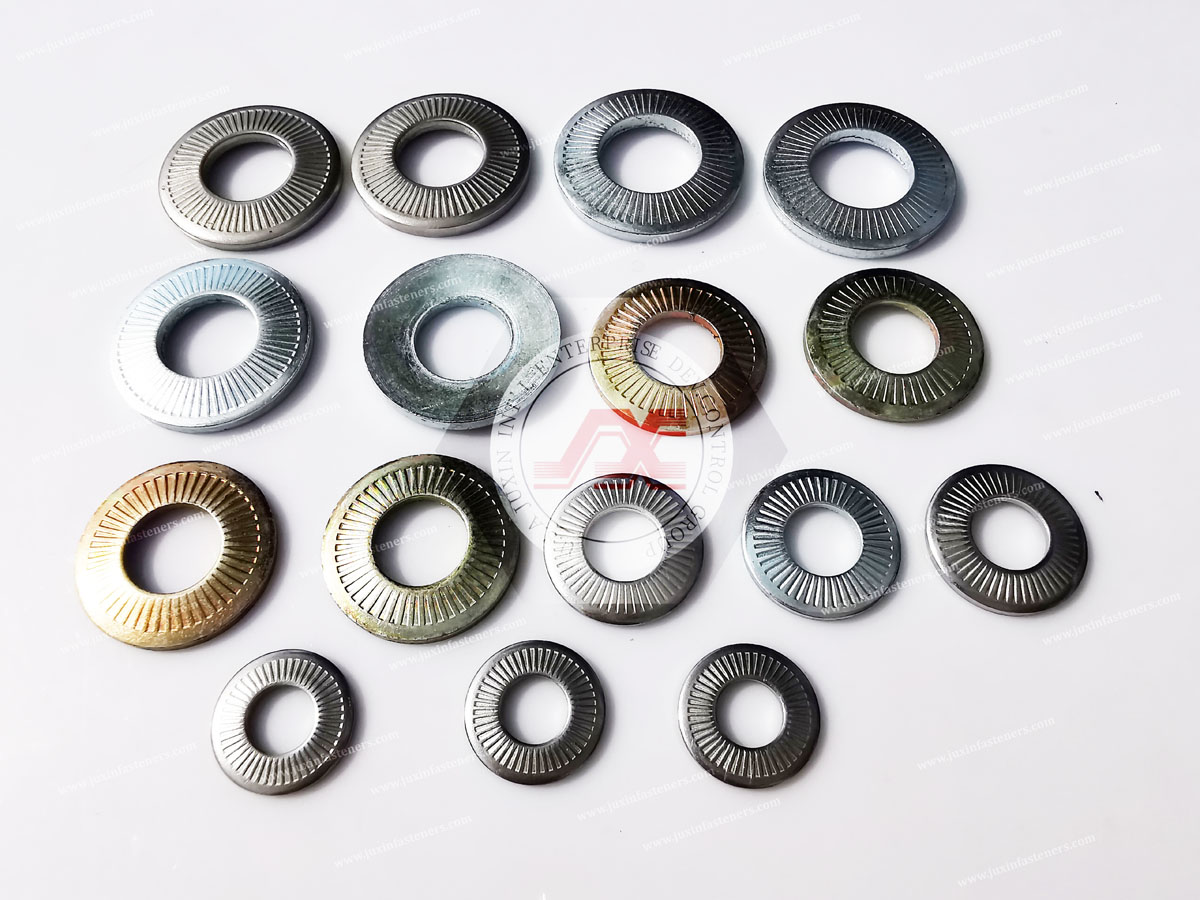
A wave spring washer is a thin annular spring component formed with waves that deflect under axial compression and generate spring force.
Common applications include bearing preload, axial play control, tolerance compensation and compact spring loading.
Yes. Bearing preload is one of the established applications of wave spring washers.
DIN 137 Form B refers to a waved spring-washer configuration. Commercial DIN 137 B products continue to be available.
DIN 137 A uses a curved or bowed profile, while DIN 137 B uses a multi-wave profile.
Not necessarily.
A wave washer primarily provides axial spring force. It should not automatically be treated as a rotational locking system.
No inherent fluid-sealing capability should be assumed.
No. A metal O-ring is a specialized sealing component; a wave washer is a spring element.
Its elastic compliance can influence dynamic behavior, but spring action should not automatically be equated with engineered vibration damping.
A wave washer uses a waved profile and is often selected for moderate spring loading and limited axial space.
A Belleville washer uses a conical disc geometry and can be configured for different force-deflection requirements.
It may accommodate limited axial dimensional variation if the required movement remains within its designed working range.
Start with required axial force, installed height, available deflection and installation envelope. Then select ID, OD, thickness, wave geometry, material and finish.
That is usually insufficient for an engineered spring application.
Load-deflection performance and working height can be more important than nominal bolt size.
Custom requirements can be evaluated from drawings, samples and engineering requirements including ID, OD, thickness, free height, working height, material and required load-deflection behavior.
A buyer may initially ask:
“Can you quote an M8 wave washer?”
The engineering questions should continue:
What Is the Washer Actually Doing?
Is It Preloading a Bearing?
Taking Up End Play?
Compensating a Tolerance Stack?
Then:
What Is the Available ID and OD?
What Is the Free Height?
What Is the Installed Height?
What Axial Force Is Required at That Height?
What Is the Minimum and Maximum Assembly Gap?
What Material and Finish Are Required?
The sourcing path becomes:
Assembly Function → Required Axial Force → Available Deflection → Installation Envelope → ID / OD → Free Height → Working Height
→ Material → Finish → Prototype → Load-Deflection Validation → Production RFQ
That is the difference between buying a washer by diameter and sourcing an engineered spring component.
JUXIN FASTENERS supports OEM and industrial sourcing of wave spring washers, DIN 137 B-type wave washers, curved spring washers,
disc springs, flat washers, lock washers and related custom fastening components.
Applications can include electric motors, bearing assemblies, industrial machinery, automation, pumps, gear systems, electrical equipment,
HVAC equipment, telecommunications systems, automotive-related equipment and other engineered assemblies.
For broader washer selection, see Industrial Washers: Types, Functions & Selection Guide.
For washer-and-bolt system engineering, see Washers and Bolts: Fastening Systems Selection Guide.
For anti-loosening requirements that are separate from axial spring loading, see Nylon Insert Locknuts for Anti-Vibration Applications.
For higher-load conical spring applications, refer to the JUXIN FASTENERS Disc Springs & Belleville Washers: Load, Deflection, Stacking & Selection Guide.
For legacy bowed spring washers, refer to the JUXIN FASTENERS DIN 137 A Curved Spring Washers: Design, Selection, Load Behavior & Replacement Guide.
For wave spring washer OEM RFQs, send your drawing or sample, ID, OD, thickness, free height, installed height, required axial force, material, finish, application, quantity and estimated annual demand to:
A wave washer should not be selected simply because an assembly needs “a spring washer.”
The better engineering question is:
How much axial force is required, at what installed height, across what tolerance range?
 MORE NEWS
Sep. 27, 2026
Sep. 27, 2026
Sep. 27, 2026
Contact Us
Tel.:
+86 020 8621 0320
+86 020 3121 6067
E-mail:
Technical Support:
Navigation
SEND INQUIREY