
Call Us
+86 136 6007 9809
Call Us
+86 136 6007 9809

Oct. 10, 2023
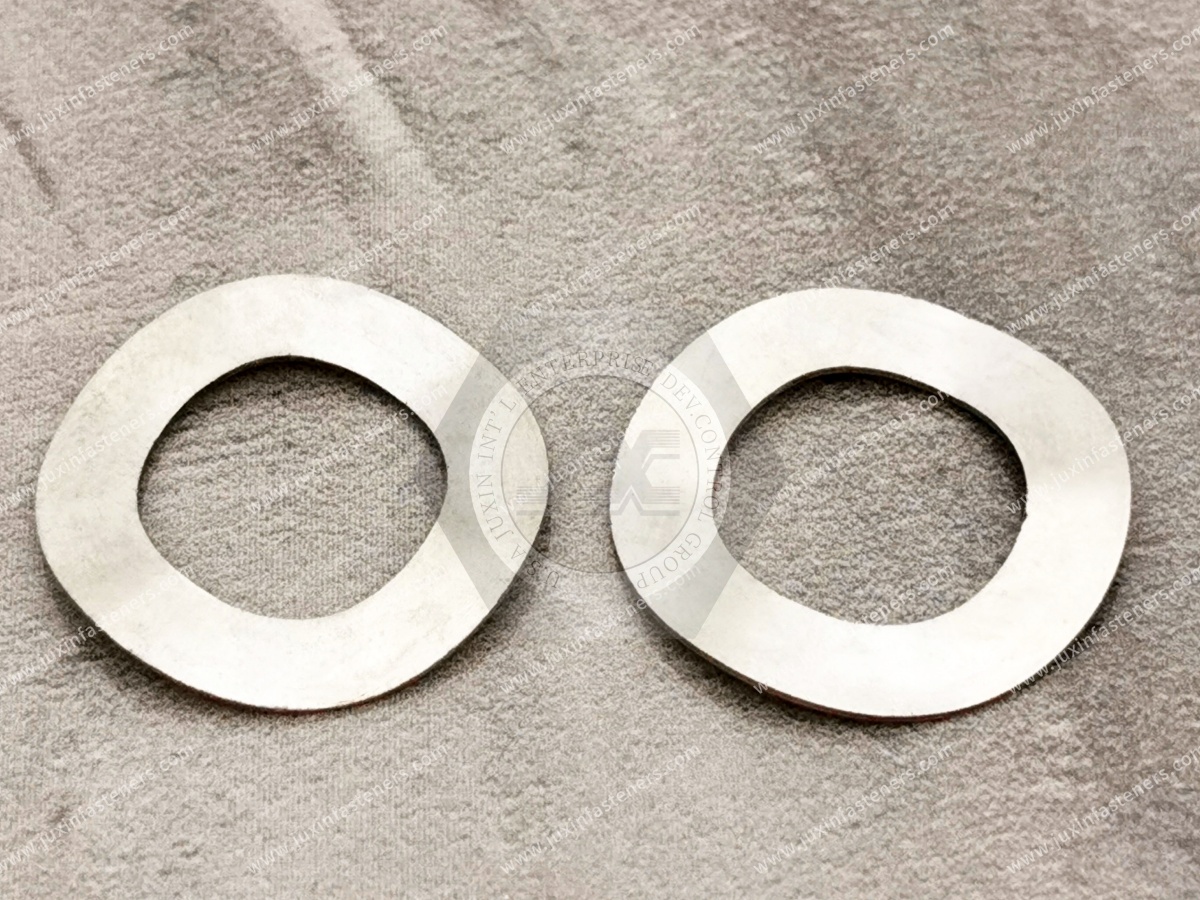
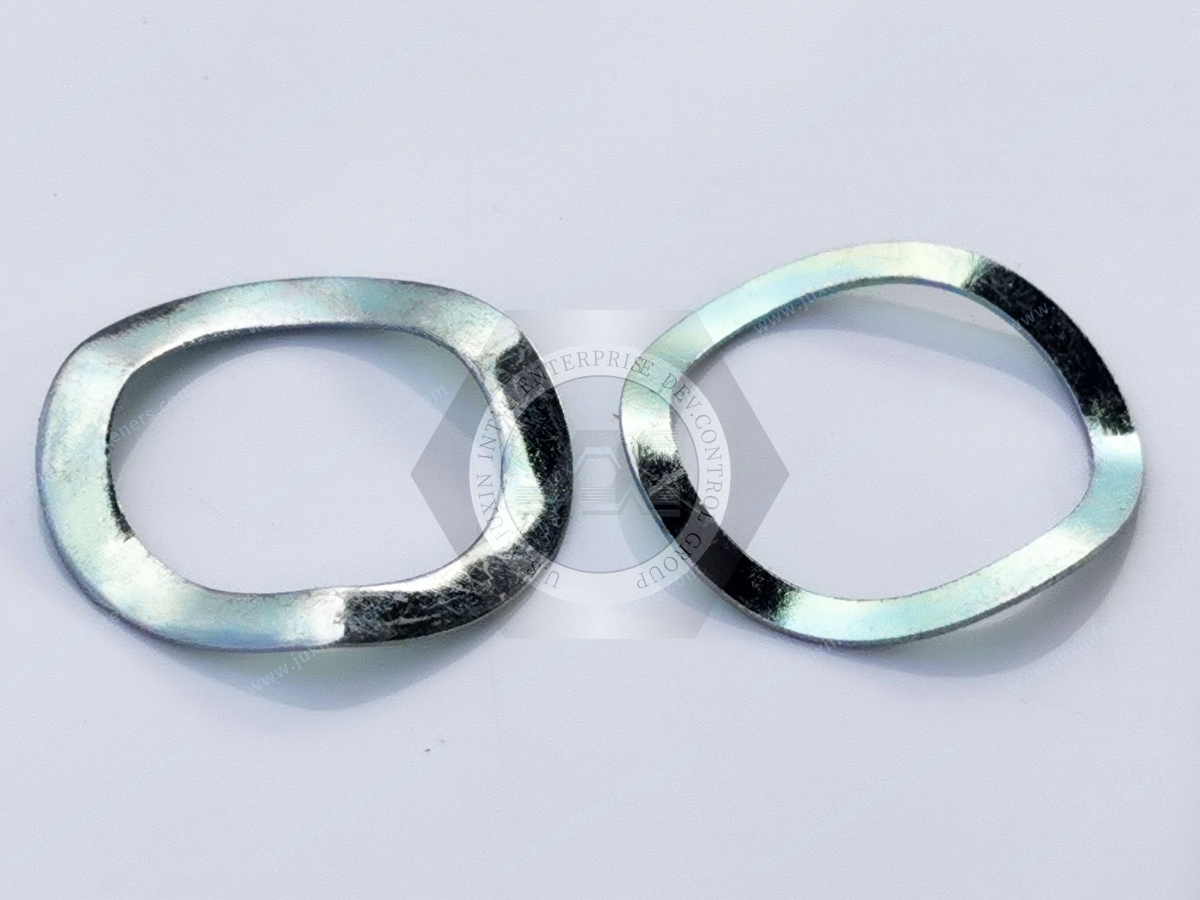
DIN 137A saddle spring washers are curved elastic washers used in bolted assemblies where a compact spring element is required to provide limited axial deflection and help accommodate dimensional changes within the joint.
They are also searched as saddle washers, curved spring washers, spring tension washers and elastic washers.
Their curved geometry allows the washer to flatten elastically as the fastener is tightened.
This spring action can help accommodate limited joint settlement, tolerance variation or dimensional change while maintaining an elastic reaction force within the assembly.
However, a DIN 137A saddle spring washer should not automatically be treated as a high-performance anti-loosening device.
In severe transverse-vibration applications, rotational loosening can require a different locking technology such as a prevailing-torque lock nut or wedge-locking washer system.
Understanding this distinction is essential for engineers selecting fastening components.
JUXIN FASTENERS supplies DIN 137A saddle spring washers together with disc springs, safety washers, wedge-lock washers, lock nuts, high-strength bolts and other industrial fastening components for OEM applications.
For specifications, drawings and RFQs, contact info@juxinfasteners.com.
A DIN 137A saddle spring washer is an elastically formed washer with a curved or saddle-like profile.
When compressed between the fastener and joint surface, the washer deflects.
The resulting elastic reaction provides a spring effect within the bolted assembly.
The product may be searched under terms including:
DIN 137A saddle spring washer
DIN 137A washer
saddle washer
curved spring washer
spring tension washer
elastic washer
spring washer for bolts
preload compensation washer
For engineering procurement, the DIN designation, nominal size, material and finish should be used to define the component.
The most useful way to understand a DIN 137A washer is to view it as a small elastic element in the joint stack.
As the washer is compressed, it stores elastic energy.
If the joint experiences a small dimensional change, the washer can recover part of its deflection.
This behavior can help accommodate limited changes caused by:
joint settlement;
tolerance variation;
thermal expansion and contraction;
surface embedding;
small assembly movements.
This does not mean the washer creates constant clamp load under all conditions.
The available compensation is limited by its geometry, material and working deflection.
"Spring washer" and "lock washer" are often used interchangeably in commercial descriptions.
From an engineering perspective, that can be misleading.
Two different problems should be separated:
Loss of preload occurs when the clamped joint becomes dimensionally shorter because of settlement, creep, embedding, relaxation or thermal effects.
Rotational self-loosening occurs when the nut or bolt rotates relative to the mating thread, often under transverse movement.
A spring element may help compensate for some loss of joint thickness.
That does not automatically mean it can prevent rotational self-loosening under severe vibration.
This distinction is fundamental to reliable bolted-joint design.
A fastener does not need to rotate for clamp force to decrease.
Preload can fall because of:
surface embedding;
gasket compression;
coating settlement;
polymer creep;
thermal expansion mismatch;
component relaxation.
The nut may remain in exactly the same angular position while the joint loses clamp load.
A spring washer can add compliance to the joint and may help accommodate a limited amount of dimensional change.
This is a different engineering function from mechanically preventing nut rotation.
When a DIN 137A saddle washer is tightened, its curved profile is progressively flattened.
The washer therefore generates an elastic reaction force.
Its behavior can be described conceptually through a load-deflection relationship.
As deflection increases, the washer develops increasing reaction force until its useful elastic range is approached.
The exact load-deflection behavior depends on factors including:
washer geometry;
thickness;
material;
hardness;
heat treatment;
installed compression.
Therefore, selecting a spring washer solely by nominal bolt diameter does not fully define its mechanical behavior.
A flat washer primarily distributes bearing load.
A spring washer adds elastic deflection.
That additional movement can become valuable when the assembly is expected to experience small changes in joint thickness.
The key engineering question is therefore not simply:
"How strong is the washer?"
It is:
"How much useful elastic deflection is available at the required load?"
This is the principle that separates spring-component selection from ordinary washer selection.
DIN 137A washers are compact components.
Their available deflection is therefore limited.
If an assembly requires substantial spring travel or accurately controlled load over a larger displacement, another spring solution may be more appropriate.
Possible alternatives include:
Belleville disc springs;
disc spring stacks;
wave springs;
coil springs;
engineered spring assemblies.
A DIN 137A washer should be selected when its compact geometry and limited spring travel match the actual requirement.
A flat washer is primarily used to provide a bearing surface and distribute load beneath a bolt head or nut.
DIN 137A adds elastic behavior.
Primarily provides:
load distribution;
surface protection;
bearing-area control.
Adds:
elastic deflection;
limited preload compensation;
spring compliance within the joint stack.
The products therefore serve different primary functions.
These two products address different engineering problems.
DIN 137A provides spring action through elastic deformation.
DIN 25201-type wedge-lock washer pairs use cam geometry to resist rotational loosening under transverse movement.
Consider when:
limited elastic compensation is needed;
compact spring action is useful;
small dimensional changes are expected.
Consider when:
severe transverse vibration is the primary concern;
rotational self-loosening must be addressed;
a validated wedge-locking mechanism is required.
The two technologies should not be marketed as equivalent anti-loosening solutions.
DIN 9250 safety washers belong to another locking-washer category.
Their locking interface and intended function differ from the elastic saddle geometry of DIN 137A.
DIN 137A should therefore occupy its own engineering position within a fastening system:
compact spring compliance and limited preload compensation.
This separation also helps procurement teams avoid substituting components merely because they are all sold under the broad term "lock washer."
Belleville or conical disc springs can provide significantly more engineered spring capability.
They can be selected and arranged according to specific load and deflection requirements.
Depending on design, disc springs can also be stacked to modify spring behavior.
DIN 137A saddle washers are generally simpler compact spring elements.
packaging space is limited;
spring travel requirements are modest;
the assembly needs a simple elastic washer.
load-deflection behavior is critical;
greater spring force is required;
larger controlled deflection is needed;
spring stacks are required.
For demanding preload-management applications, disc spring engineering may provide better control.
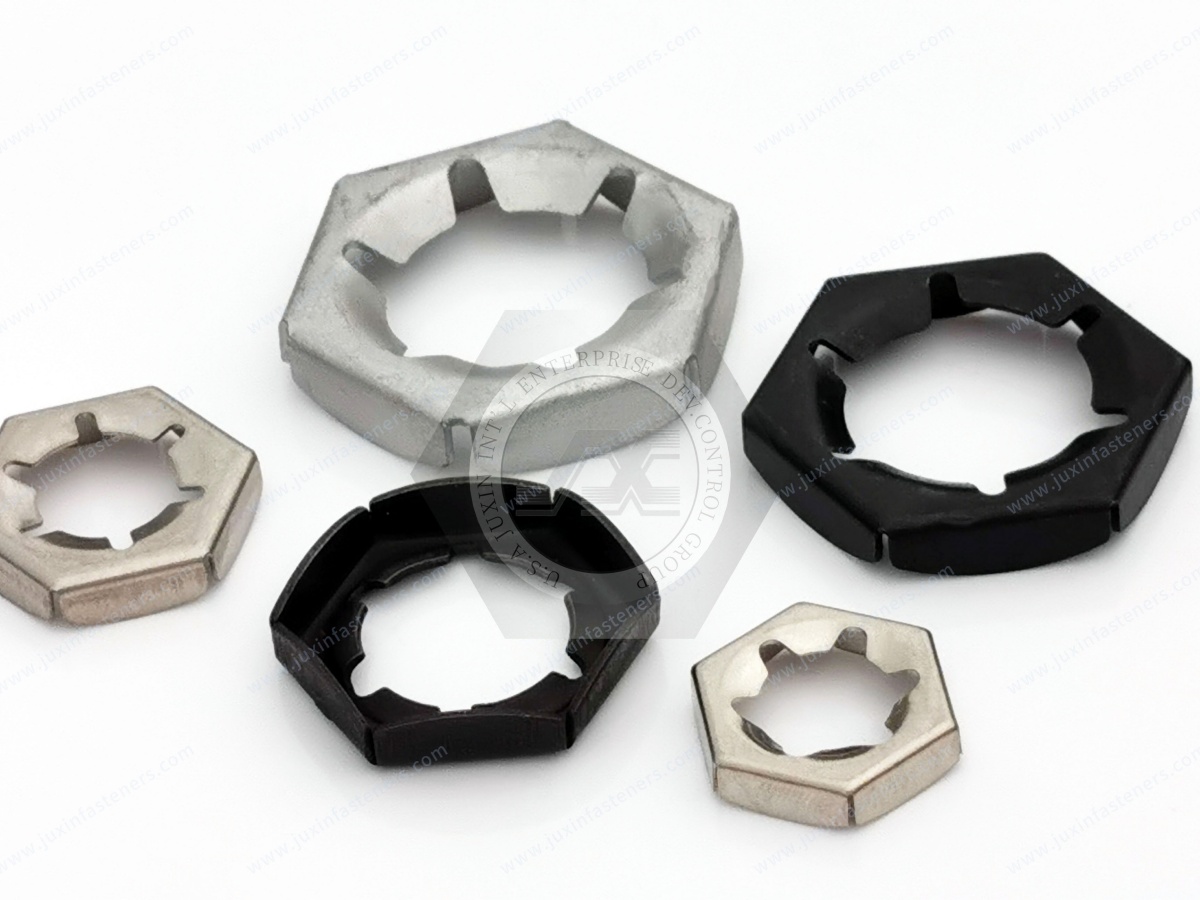
Prevailing-torque lock nuts create rotational resistance at the thread.
Examples include:
all-metal lock nuts;
nylon-insert lock nuts;
formed-thread locking nuts.
DIN 137A operates through elastic washer deformation.
These are fundamentally different mechanisms.
If the primary requirement is resistance to nut rotation, a prevailing-torque nut may be more appropriate.
If the requirement is limited elastic compensation within the joint, DIN 137A may be relevant.
Some spring-washer descriptions focus heavily on increasing friction.
Friction certainly influences bolted-joint behavior, but relying on undefined "extra friction" is not a robust engineering specification.
Friction can vary with:
coating;
lubrication;
surface roughness;
material;
contamination.
A better engineering approach is to define what the washer is expected to accomplish:
spring deflection;
preload compensation;
bearing support;
rotational locking.
Then select the component designed for that function.
DIN 137A saddle spring washers require material capable of elastic deformation and recovery.
Spring-capable steel is commonly appropriate.
Depending on the application and applicable specification, corrosion-resistant material options may also be considered.
Important material characteristics include:
elastic behavior;
strength;
hardness;
fatigue resistance;
corrosion resistance;
temperature capability.
The material should be specified according to the applicable DIN requirement or customer drawing rather than substituted solely by appearance or generic material family.
Carbon spring steel can provide the combination of strength and elasticity required for spring washer applications.
Its final performance depends on:
material composition;
forming process;
heat treatment;
hardness;
washer geometry.
For corrosion-sensitive environments, an appropriate protective finish may be required.
Stainless steel may be considered where corrosion resistance is important.
Potential applications include:
humid industrial environments;
foodservice equipment;
cooling systems;
outdoor equipment;
selected chemical environments.
However, changing from carbon spring steel to stainless steel can change mechanical spring behavior.
Material substitution should therefore be reviewed against both corrosion and elastic-performance requirements.
Spring behavior depends on material properties as well as geometry.
Two washers with identical dimensions but different materials may not provide identical load-deflection behavior.
This means:
same size does not necessarily mean same spring performance.
For engineered applications, material changes should therefore be validated rather than treated as purely commercial substitutions.
Carbon steel saddle spring washers can use protective surface treatments according to application requirements.
Potential systems include:
phosphate finishes;
zinc-based coatings;
zinc-flake coatings;
other engineered protective finishes.
The finish should be selected according to:
corrosion requirement;
operating environment;
dimensional considerations;
friction behavior;
environmental compliance.
A spring washer changes shape during installation.
Coating thickness and flexibility can therefore matter.
An unsuitable coating may:
crack during deflection;
flake from the surface;
change contact conditions;
influence friction.
For precision applications, surface treatment should be considered part of the functional component specification.
High-hardness spring steel components require appropriate consideration when electroplated or subjected to certain chemical pretreatment processes.
Hydrogen introduced during processing can create embrittlement risk in susceptible hardened steels.
For such components, coating-process selection and any required embrittlement-relief controls should follow the applicable material, coating and customer specifications.
This issue can be more important than simply selecting the coating with the longest salt-spray result.
Terms such as "zinc plated" do not fully define corrosion performance.
Where corrosion resistance matters, procurement should identify:
coating system;
applicable test method;
required corrosion performance;
environmental compliance;
appearance requirements where relevant.
This gives suppliers a measurable specification.
Real bolted surfaces are not perfectly smooth.
After tightening, microscopic surface peaks can flatten under load.
Coatings and softer materials can also settle.
The total joint thickness can therefore decrease slightly after assembly.
This is called embedding or settlement.
Even a small dimensional change can reduce bolt preload when the joint is very stiff.
Adding an elastic spring element can increase system compliance and may help reduce sensitivity to limited settlement.
Bolted-joint behavior depends on the relative stiffness of:
the bolt;
clamped components;
any spring elements.
A conventional stiff bolted joint can lose a significant portion of preload after a small amount of joint settlement.
Adding spring compliance changes this relationship.
However, the washer must have sufficient usable deflection at the relevant load.
Simply placing a spring-shaped washer into the joint does not guarantee meaningful preload compensation.
Different materials expand by different amounts as temperature changes.
Assemblies containing combinations such as:
steel bolts;
aluminum structures;
copper components;
polymer components
can experience changing clamp conditions during thermal cycling.
A spring element may help accommodate some dimensional variation.
However, temperature capability, relaxation and material behavior must all be considered.
DIN 137A should not be treated as a universal solution for large thermal movements.
Polymer components can creep under sustained compressive load.
This can reduce joint thickness over time.
A spring element may provide some compensation, but the correct solution depends on:
polymer type;
temperature;
clamp pressure;
creep rate;
required service life.
In many polymer assemblies, load-spreading features, compression limiters, inserts or redesigned joint architecture may also be necessary.
The washer alone should not be expected to solve excessive polymer creep.
DIN 137A spring washers can be considered in suitable mechanical assemblies within:
electrical cabinets;
control equipment;
communication systems;
electronic enclosures;
power-conversion equipment.
Where the joint carries electrical current, additional requirements apply.
Electrical contact resistance, temperature rise, material compatibility and surface finish should be evaluated separately.
A mechanical spring washer is not automatically an approved electrical contact solution.
AI data-center infrastructure contains:
power distribution equipment;
cooling systems;
pumps;
fans;
electrical cabinets;
server-support structures.
DIN 137A saddle spring washers may be relevant in suitable mechanical assemblies where compact elastic compensation is useful.
For power and cooling equipment, thermal cycling and long-term joint stability may be more important than simply describing the environment as "high vibration."
Liquid-cooling infrastructure can experience:
pump vibration;
thermal cycling;
pressure variation;
repeated operating cycles.
A spring washer may be used in appropriate mechanical joints, but sealing integrity should be addressed by the sealing system itself.
DIN 137A is not a sealing washer.
For flange or manifold joints, gasket behavior, bolt preload and thermal expansion must be considered together.
Power-electronics equipment can experience significant temperature cycling.
Potential mechanical applications include:
inverter structures;
converter assemblies;
equipment frames;
heat-sink mounting;
auxiliary mechanical connections.
Where thermal interfaces are sensitive to clamp force, the required load-deflection behavior should be engineered carefully.
A disc spring or another controlled spring system may sometimes be preferable to a simple saddle washer.
Potential applications can include suitable non-safety-critical:
brackets;
actuator systems;
pump assemblies;
thermal-management equipment;
electrical enclosures;
auxiliary mechanical systems.
Automotive applications require the relevant OEM validation and quality requirements.
DIN 137A should not automatically be described as suitable for safety-critical chassis, braking or steering joints merely because vibration is present.
DIN 137A saddle spring washers may be used in:
machine assemblies;
equipment brackets;
motors;
pumps;
automation systems;
adjustment mechanisms.
The washer is most relevant where limited spring compliance contributes to the intended joint behavior.
Rail systems experience vibration, thermal changes and long service cycles.
DIN 137A washers may be used in suitable approved assemblies, but rail applications should follow the applicable system and customer requirements.
Where severe transverse vibration is the dominant risk, engineers should evaluate whether a more dedicated anti-loosening system is required.
HVAC equipment contains fans, pumps, compressors, actuators and thermal systems.
Thermal cycling and equipment vibration can influence joint behavior.
DIN 137A may provide compact spring action in suitable mechanical connections.
The actual selection should be based on the required load and deflection rather than simply the industry name.
Precision manufacturing equipment can require stable mechanical assemblies with controlled tolerances.
Potential applications include:
equipment frames;
automation modules;
covers;
brackets;
mechanical positioning systems.
Where dimensional stability is critical, engineers should consider whether the elastic movement of a spring washer is beneficial or whether a rigid precision interface is preferred.
DIN 137A washers should be installed according to the approved assembly design and applicable standard.
Engineers should confirm:
correct nominal size;
correct orientation where applicable;
compatible bearing surface;
required tightening procedure;
intended washer deflection.
The goal is not simply to "flatten the washer as much as possible."
The installed condition should remain consistent with the intended spring function.
A spring washer derives its function from elastic deflection.
If it is compressed beyond its useful elastic range or permanently flattened, its ability to provide spring compensation can be reduced.
This is an important design distinction.
The washer should operate within the range intended by its geometry and material.
Adding a spring washer does not eliminate the need for a controlled tightening process.
Bolt preload remains a fundamental part of joint performance.
Installation torque may be influenced by:
thread friction;
bearing friction;
coating;
lubrication;
washer interface.
For engineered assemblies, the tightening method should be validated with the complete fastener stack.
The washer contacts the nut or bolt head and the clamped surface.
If the mating surface is very soft, local deformation can occur.
This can contribute to:
settlement;
embedding;
surface damage.
For aluminum, polymer or coated interfaces, bearing pressure should therefore be considered.
A flat washer or other load-spreading element may sometimes be needed as part of the joint architecture.
Repeated compression can affect spring components.
Whether a DIN 137A washer may be reused should depend on:
applicable specification;
permanent deformation;
corrosion;
surface damage;
loss of spring geometry;
application criticality.
Critical assemblies should not assume unlimited reuse.
DIN 137A may be appropriate when:
compact spring action is required;
limited axial deflection is useful;
small joint-thickness changes are expected;
installation space is restricted;
a standardized saddle spring washer fits the assembly.
Another technology may be more appropriate when:
severe transverse vibration is causing rotational loosening;
large spring travel is required;
precisely controlled spring force is necessary;
very high spring loads are required;
positive mechanical locking is required;
electrical contact performance is the primary function.
Possible alternatives include:
wedge-lock washers;
prevailing-torque lock nuts;
DIN 9250 safety washers;
Belleville disc springs;
disc spring stacks;
wave springs;
engineered locking systems.
Before specifying a DIN 137A saddle spring washer, engineers should confirm:
nominal thread size;
bolt or screw strength;
required preload.
clamped materials;
surface hardness;
expected settlement;
thermal movement;
available axial space.
required elastic deflection;
approximate working load;
need for preload compensation.
temperature;
corrosion;
chemicals;
humidity.
vibration direction;
load cycling;
shock.
If rotational self-loosening is the dominant failure mode, evaluate a dedicated locking system rather than assuming DIN 137A will solve the problem.
For procurement teams, a spring washer should not be evaluated only by:
diameter;
thickness;
price.
Functional consistency depends on:
material;
hardness;
heat treatment;
formed geometry;
dimensional control;
surface treatment.
Supplier qualification should therefore consider whether the manufacturer can control the characteristics responsible for spring behavior.
Depending on the applicable standard and customer requirements, inspection may include:
outside diameter;
inside diameter;
thickness;
free height or formed geometry;
material;
hardness;
heat-treatment condition;
coating;
surface condition.
Where spring performance is critical, dimensional inspection may be supplemented by functional load-deflection verification according to the applicable specification.
Two washers can appear dimensionally similar while behaving differently under compression because of differences in:
material;
heat treatment;
hardness;
forming.
For demanding applications, load-deflection behavior can therefore provide more useful information than appearance alone.
This is especially relevant when qualifying a new supplier or changing material.
For an accurate quotation and technical review, provide:
DIN 137A designation
nominal fastener size
required dimensions
material
hardness or mechanical requirements where specified
surface treatment
corrosion requirement
expected working load if known
required spring deflection if applicable
operating temperature
joint materials
annual demand
order quantity
inspection requirements
functional test requirements
documentation requirements
packaging
target delivery schedule
For non-standard spring washers, provide a 2D drawing and required load-deflection characteristics where available.
JUXIN FASTENERS supports industrial OEM and supply-chain customers requiring spring, locking and preload-management components.
Our portfolio includes:
DIN 137A saddle spring washers
disc spring washers
Belleville-type spring components
DIN 9250 safety washers
DIN 25201 wedge-lock washer systems
DIN 7967 self-locking counter nuts
nylon-insert lock nuts
all-metal lock nuts
flange lock nuts
high-strength bolts and nuts
custom stamped components
This broader portfolio allows engineers to select a fastening technology according to the actual failure mechanism.
If the problem is joint settlement, a spring element may help.
If the problem is rotational loosening, a locking mechanism may be required.
If the problem is large controlled spring movement, a disc spring or engineered spring system may be more appropriate.
This engineering distinction can prevent unnecessary component substitutions and improve supplier communication.
It is a curved elastic washer designed to provide spring deflection within a bolted assembly.
It can provide spring compliance within the joint, but it should not automatically be treated as a high-performance anti-loosening solution for severe transverse vibration.
Preload loss can occur without fastener rotation because of settlement, creep, relaxation or thermal effects. Rotational loosening involves relative rotation of the threaded fastener.
Its elastic deflection may help accommodate limited dimensional changes, but the available compensation is finite and depends on the washer's load-deflection behavior.
No. Both provide spring action, but their geometries and load-deflection capabilities differ. Belleville disc springs are generally used where more engineered spring performance is required.
No. DIN 137A provides elastic spring action. Wedge-lock washers use cam geometry to resist rotational loosening.
Not automatically. Material changes can alter spring behavior as well as corrosion resistance.
The installed condition should remain within the intended functional range. Permanently flattening or over-compressing a spring component can reduce its spring function.
No. The joint still requires an appropriate tightening strategy to establish the intended preload.
Provide the DIN designation, size, material, finish, quantity, operating environment and any functional spring or inspection requirements.
The most useful way to specify DIN 137A is not to ask:
"Will this washer stop my bolt from loosening?"
The better engineering question is:
"What failure mechanism am I trying to control?"
If clamp force is declining because of limited settlement or dimensional change, spring compliance may be useful.
If the nut is rotating because of severe transverse vibration, a dedicated mechanical locking system may be required.
If substantial controlled spring movement is required, a Belleville disc spring or another engineered spring system may be more appropriate.
For design and reliability engineers, separating these mechanisms leads to better bolted-joint decisions.
For procurement and supplier-development teams, it prevents technically different washer technologies from being treated as interchangeable commodities.
JUXIN FASTENERS supplies DIN 137A saddle spring washers, spring washers, disc springs, safety washers, wedge-lock washers, lock nuts and other vibration-resistant fastening components for automotive and EV equipment, industrial machinery, AI data-center cooling, power electronics, HVAC, rail and other OEM applications.
For quotation, specification review or application support, send your drawing, required size, material, finish and expected quantity to:
Previous: DIN 2093 Disc Springs
Next: Aluminum CNC Parts
 MORE NEWS
Sep. 27, 2026
Sep. 27, 2026
Sep. 27, 2026
Contact Us
Tel.:
+86 020 8621 0320
+86 020 3121 6067
E-mail:
Technical Support:
Navigation
SEND INQUIREY