
Call Us
+86 136 6007 9809
Call Us
+86 136 6007 9809

Oct. 15, 2023
DIN 472 retaining rings are internal retaining rings designed for axial retention of components installed inside bores and housings.
Also known as DIN 472 internal circlips, retaining rings for bores, internal snap rings or bore retaining rings, they engage a machined circumferential groove inside the housing and create a removable mechanical shoulder.
Typical applications include retaining bearings, bushings, sleeves, pistons and other mechanical components that must be positioned axially inside a bore.
For engineers and procurement teams, however, selecting a DIN 472 retaining ring involves more than matching a ring to a nominal bore diameter.
The performance of the complete retention system depends on the relationship between:
DIN 472 Retaining Ring + Bore Groove + Housing Material + Retained Component + Axial Load + Installation Method + Operating Environment
This system-level approach is particularly important in automotive and EV assemblies, industrial machinery, rail transit, robotics,
HVAC equipment, electrical equipment, telecommunications equipment, semiconductor equipment, food-service equipment, medical equipment, construction machinery and precision mechanical systems.
A DIN 472 retaining ring is a spring retaining component intended for installation in an internal groove machined into a bore.
During installation, the ring is compressed so that its outside diameter becomes small enough to enter the bore. Once positioned at the groove, the installation force is released and the ring expands outward into the groove.
The installed ring then acts as an axial stop for the retained component.
A simplified load path is:
Retained Component → DIN 472 Ring → Groove Face → Housing
This is the primary function of the retaining ring.
A DIN 472 retaining ring should therefore be understood as an axial retention component, not as a sealing element, gasket, vibration isolator or substitute for a dedicated sealing system.
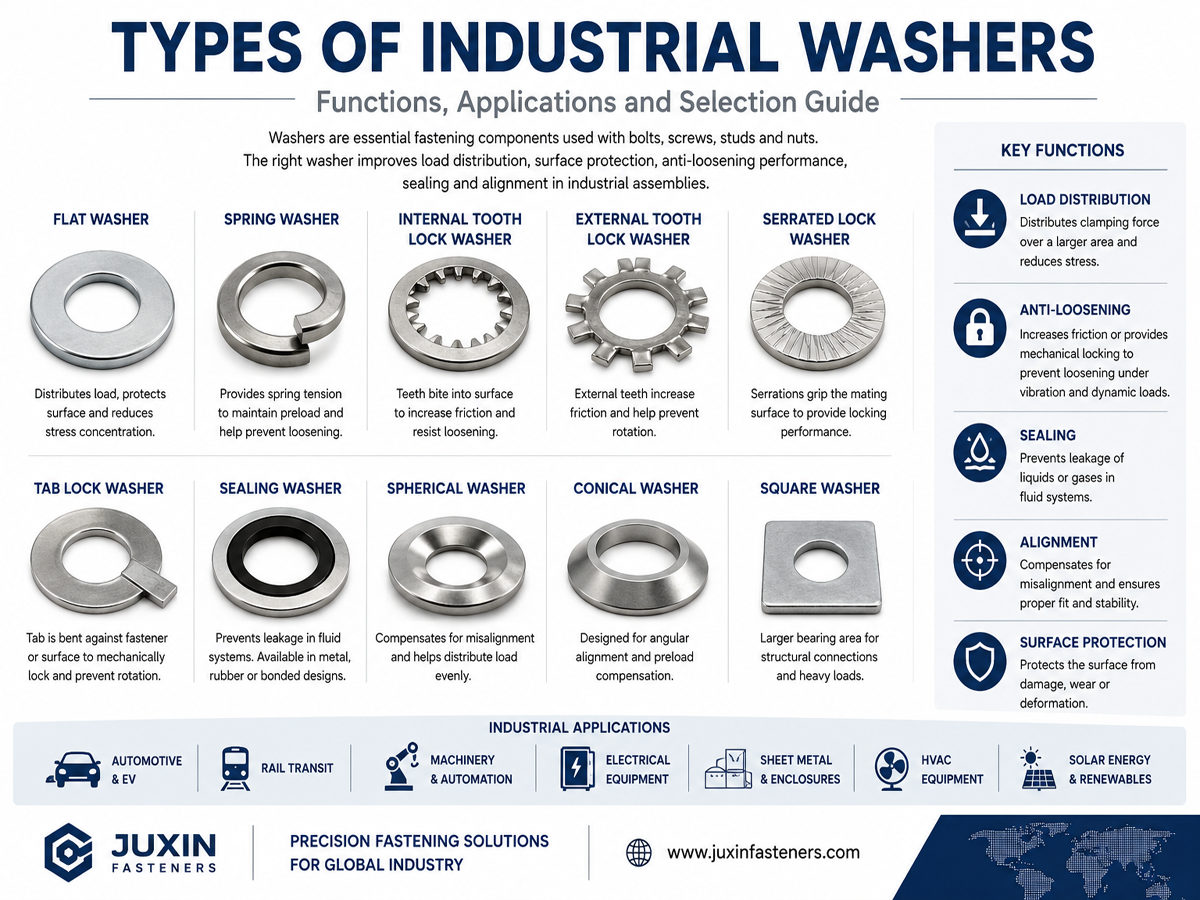
“Internal retaining ring” is a broad product category.
“DIN 472 retaining ring” identifies a particular standardized family of retaining rings for bores.
This distinction matters.
A component may function as an internal retaining ring without necessarily conforming to DIN 472. OEM assemblies can also use:
Standard DIN 472 retaining rings
Modified standard retaining rings
Customer-specific internal circlips
Special-material retaining rings
Special-finish retaining rings
Custom retaining rings for non-standard grooves
Therefore:
Internal Retaining Ring ≠ Automatically DIN 472
If an OEM drawing specifies DIN 472, sourcing should follow the applicable standard and drawing requirements.
If the component is drawing-controlled, the approved drawing remains the primary purchasing reference.
DIN 472 retaining rings are designed for bores.
External retaining rings are designed for shafts.
The basic distinction is:
DIN 472 Internal Ring → Groove Inside Bore
External Retaining Ring → Groove Around Shaft
During installation, a DIN 472 ring is compressed inward. An external retaining ring is expanded outward to pass over a shaft before seating into its shaft groove.
Confusing these two product families can lead to incorrect groove design, installation tooling and purchasing specifications.
Once installed correctly, the ring sits within the internal groove and projects into the bore.
When the retained component moves axially toward the ring, it contacts the exposed portion of the ring.
The load then travels through:
Component Contact Surface → Ring → Groove Wall → Housing
This means the allowable axial load of the complete assembly is not determined solely by the strength of the retaining ring.
The groove and housing must also support the transferred load.
A frequent engineering mistake is to treat a retaining-ring load value as the allowable axial load of the entire assembly.
In practice, two different limitations may exist:
Ring Capacity
The ring itself must resist deformation or displacement under the applied axial load.
Groove Capacity
The housing material and groove geometry must withstand the load transferred through the ring.
The practical retention capability of the assembly can therefore be limited by:
Retaining-ring deformation
Groove-edge deformation
Housing material strength
Insufficient groove engagement
Component contact geometry
Installation damage
Excessive axial load
For critical applications, both ring and groove conditions should be evaluated.
A buyer may request:
“DIN 472 retaining ring for a 40 mm bore.”
That information identifies an important dimensional starting point, but it does not completely define the application.
Engineering review may also require:
Groove diameter
Groove width
Groove position
Housing material
Retained component
Axial load
Required axial clearance
Operating temperature
Corrosion environment
Installation access
Service requirements
Two assemblies with the same nominal bore size can have different functional requirements.
For OEM sourcing, the drawing should therefore be reviewed whenever available.
The internal groove is a functional part of the retention system.
Important groove characteristics include:
Groove diameter
Groove width
Groove location
Groove edge condition
Distance from the housing end
Housing wall thickness
Manufacturing tolerance
Surface condition
Where DIN 472 is specified, the applicable standard dimensions and tolerances should be used together with the engineering requirements of the assembly.
The groove should not be designed independently from the selected retaining ring.
Groove width influences both ring seating and axial movement.
A groove that is too narrow may cause:
Difficult installation
Incomplete seating
Ring distortion
Excessive interference
A groove that is unnecessarily wide can contribute to:
Increased axial movement
Reduced positional control
Unwanted component clearance
The complete axial stack should therefore be considered.
This may include:
Housing Shoulder + Bearing/Bushing + Spacer + DIN 472 Ring + Groove Position + Manufacturing Tolerances
The retaining ring creates an axial stop, but it does not automatically eliminate all assembly clearance.
DIN 472 rings may be installed into housings manufactured from different materials, including suitable:
Carbon steels
Alloy steels
Stainless steels
Aluminum alloys
Cast materials
Other engineered metals
The same retaining ring can behave differently when installed in housings with different mechanical properties.
A relatively soft housing material may allow groove deformation before the retaining ring reaches its own mechanical limit.
For applications with significant axial load, engineers should therefore consider:
Ring Strength + Groove Geometry + Housing Material
as a combined system.
Bearing retention is one of the most common applications for DIN 472 internal circlips.
A typical arrangement may be:
Housing Shoulder → Bearing Outer Ring → DIN 472 Retaining Ring
The shoulder establishes the bearing position from one side, while the retaining ring creates the opposing axial stop.
This compact architecture can simplify machining and assembly compared with some threaded retention systems.
However, engineers should evaluate several details.
Bearings commonly have edge chamfers or radii.
The contact between the bearing and retaining ring should therefore be reviewed to ensure that the intended load-bearing surfaces interact correctly.
The tolerance stack between the housing shoulder, bearing width, groove location and retaining ring affects the final axial clearance.
Some bearing systems require controlled axial movement rather than rigid retention at both ends.
The retaining-ring arrangement must therefore be considered as part of the complete bearing design.
The ring must remain accessible for assembly and, where required, future servicing.
DIN 472 internal retaining rings are typically installed using appropriate internal circlip pliers or production tooling compatible with the ring design.
A typical process is:
Verify the correct ring specification.
Inspect the bore and groove.
Check the groove for burrs, contamination or damage.
Compress the retaining ring with appropriate tooling.
Insert the ring into the bore.
Position it at the groove.
Release the compression force in a controlled manner.
Confirm that the ring has fully expanded into the groove.
Verify seating before the assembly enters service.
High-volume OEM production may use dedicated fixtures, guided installation tooling or automated assembly equipment.
A retaining ring must be compressed during installation, but excessive compression can permanently alter its geometry.
Potential consequences include:
Permanent deformation
Reduced elastic recovery
Distorted ring shape
Incomplete groove engagement
Difficult installation
Reduced retention reliability
Installation tooling should therefore control the amount of deformation required to pass the ring through the bore.
One of the most important assembly controls is confirming that the ring has fully entered the groove.
Partial seating can occur because of:
Incorrect ring size
Incorrect groove dimensions
Burrs
Surface contamination
Coating buildup
Ring deformation
Tool misalignment
Depending on production requirements, groove seating may be checked using:
Visual inspection
Tactile verification
Dimensional inspection
Assembly fixtures
Automated vision inspection
Functional testing
Critical assemblies may require a defined verification method within the production control plan.
Retaining rings require materials capable of controlled elastic deformation and recovery.
Depending on the specified product and application, suitable material families can include:
Carbon spring steels
Alloy spring steels
Stainless steels
Application-specific spring materials
Material selection should consider:
Elastic behavior
Mechanical strength
Fatigue conditions
Heat-treatment response
Corrosion environment
Operating temperature
Installation deformation
Customer specification
Material grade and hardness should be confirmed against the applicable standard, approved drawing or customer requirement rather than assumed from product appearance.
Spring steel is widely used for retaining rings because appropriate grades can provide the elasticity and strength required for repeated controlled deformation during installation and reliable groove engagement.
Depending on the environment, spring-steel retaining rings may also require a suitable surface treatment for corrosion protection.
Material, heat treatment, hardness and finish should be treated as part of the product specification.
Stainless steel internal retaining rings may be selected for applications requiring improved corrosion resistance.
Potential applications include:
Food-service equipment
Medical and laboratory equipment
HVAC systems
Outdoor equipment
Telecommunications equipment
Electrical equipment
Instruments and meters
Selected semiconductor equipment
However:
Stainless Steel ≠ Universal Corrosion Resistance
The correct stainless steel grade depends on exposure to moisture, chlorides, cleaning chemicals, temperature and other environmental factors.
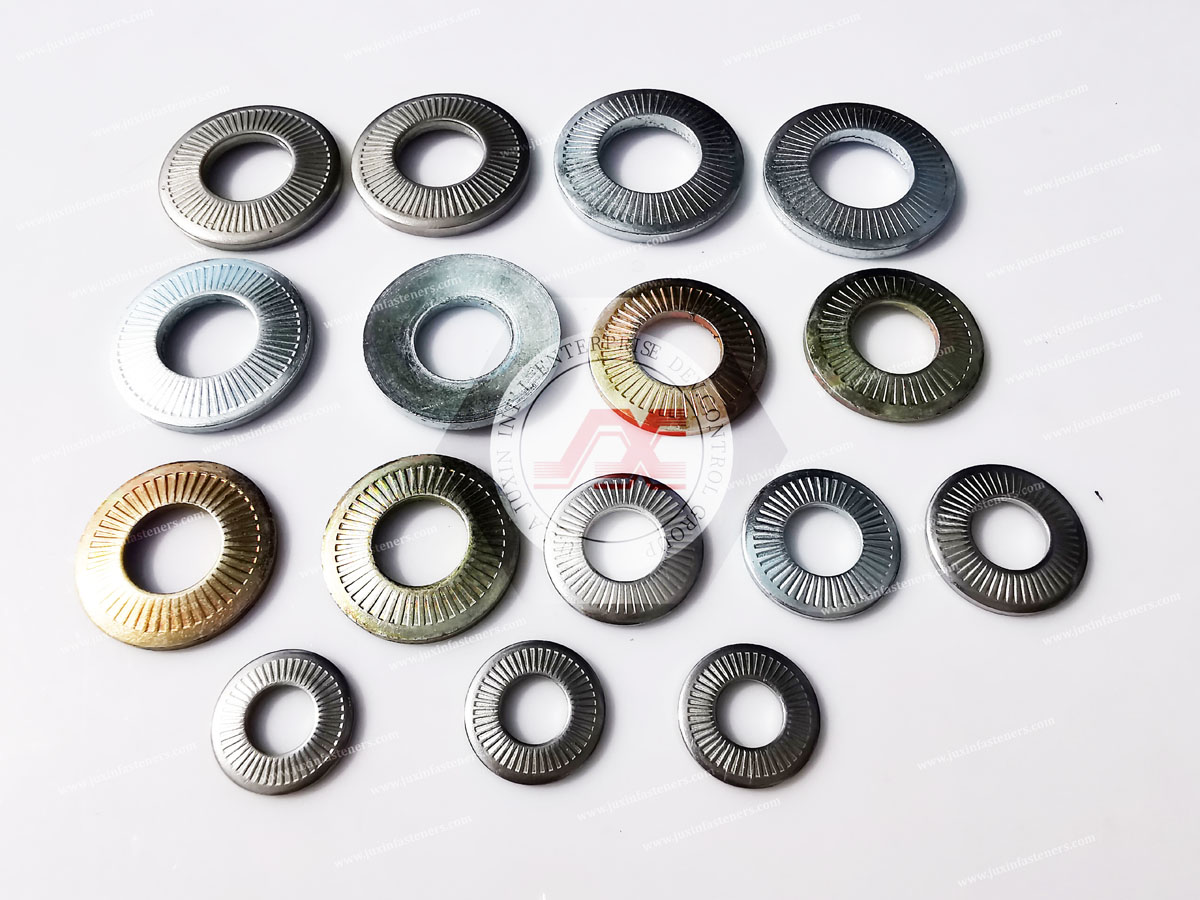
Spring-steel retaining rings can be supplied with different surface-protection systems depending on the product specification and service environment.
Potential finish families may include suitable:
Phosphate and oil systems
Black finishes
Zinc-based coatings
Zinc-nickel systems
Engineered coating systems
The correct surface treatment depends on factors including:
Corrosion requirement
Base material
Ring hardness
Coating process
Dimensional tolerance
Installation deformation
Hydrogen-embrittlement risk where applicable
Customer restricted-substance requirements
A coating should not be selected only because it is commonly used on another fastener.
Retaining rings operate within controlled dimensional interfaces.
Coating thickness can influence:
Ring thickness
Surface friction
Installation behavior
Groove fit
Seating
Removal
For precision applications, a change in surface treatment may therefore require dimensional and assembly review.
This is especially important when replacing an existing ring with a second-source product.
A DIN 472 retaining ring may receive corrosion protection, but the retaining ring itself is not a fluid or gas seal.
It should not be used as a substitute for:
O-rings
Radial seals
Gaskets
Mechanical seals
Dedicated sealing systems
If an assembly requires both axial retention and sealing, these should normally be treated as separate engineering functions unless the complete system has specifically been designed otherwise.
DIN 472 retaining rings may be used in suitable mechanical assemblies involving:
Bearings
Pumps
Motors
Actuators
Gear mechanisms
Seat mechanisms
Auxiliary systems
Manufacturing equipment
In EV-related equipment, internal retaining rings may also be used in suitable motor, pump, thermal-management and manufacturing assemblies.
Selection should be based on actual load, environment, assembly method and customer requirements.
The fact that a retaining ring is dimensionally compliant with a standard does not by itself establish qualification for an automotive program.
DIN 472 retaining rings can be considered for suitable mechanical assemblies within:
Door mechanisms
Actuators
Bearings
Pumps
Motors
Auxiliary machinery
Maintenance equipment
Manufacturing tooling
Project-specific requirements for fatigue, vibration, documentation and qualification remain dependent on the actual rail application.
Industrial machinery uses internal retaining rings in a wide range of assemblies.
Examples include:
Bearings
Bushings
Pistons
Rollers
Sleeves
Gear mechanisms
Pumps
Compressors
Machine tools
Packaging machinery
Processing equipment
For machinery exposed to cyclic loading, the load spectrum and groove condition should be considered rather than selecting solely by nominal bore diameter.
Potential applications include:
Servo-related mechanical assemblies
Actuators
Rotary joints
Gear mechanisms
Grippers
Positioning systems
Conveyor equipment
Automated production tooling
High-cycle applications may require additional consideration of fatigue, assembly consistency and groove quality.
DIN 472 internal circlips may be used in mechanical components within:
Fans
Blowers
Motors
Pumps
Compressors
Actuators
Valve mechanisms
Cooling equipment
Environmental conditions such as condensation, outdoor exposure and temperature should be considered when selecting material and finish.
High-density AI computing infrastructure is increasing demand for supporting cooling and thermal-management equipment.
DIN 472 retaining rings may be used where appropriate within mechanical components such as:
Pumps
Motors
Fans
Cooling distribution units
Actuators
Valve mechanisms
Liquid-cooling equipment
The retaining ring should be specified according to its actual mechanical load and environmental conditions rather than the data-center application label alone.
Internal retaining rings may be used in suitable mechanical and electromechanical components associated with:
Actuators
Motors
Fans
Switch mechanisms
Mechanical interlocks
Cabinet hardware
Control equipment
DIN 472 retaining rings provide mechanical retention. They should not automatically be described as electrical grounding components.
Potential mechanical applications include:
Antenna adjustment mechanisms
Base-station equipment
Cooling systems
Motors
Actuators
Outdoor communication equipment
Mechanical positioning systems
For outdoor telecommunications equipment, corrosion resistance and long-term environmental exposure may influence material and coating selection.
DIN 472 retaining rings may be used in suitable mechanical assemblies within:
Automation systems
Robotics
Handling equipment
Pumps
Actuators
Motion-control systems
Positioning mechanisms
A standard industrial DIN 472 ring should not automatically be represented as cleanroom-, vacuum- or semiconductor-process-qualified.
Those requirements must be specified and validated separately.
Potential applications include mechanical assemblies in:
Commercial mixers
Dispensing equipment
Refrigeration equipment
Pumps
Motors
Conveyors
Food-processing machinery
Where washdown, humidity or cleaning chemicals are involved, material and finish selection should reflect the actual environment.
Standard DIN 472 conformity does not itself establish food-contact compliance.
DIN 472 retaining rings can be considered for suitable non-implant mechanical assemblies in:
Diagnostic equipment
Laboratory automation
Sample-handling systems
Pumps
Motors
Actuators
Positioning mechanisms
Projects may require customer-specific controls for material, cleanliness, documentation, traceability and dimensional consistency.
DIN 472 conformity alone does not establish medical-device qualification.
Small internal retaining rings can provide compact axial retention within:
Measurement equipment
Sensors
Mechanical indicators
Precision instruments
Adjustment mechanisms
Bearing assemblies
Tolerance stack-up and axial clearance may be particularly important in these applications.
DIN 472 retaining rings may be used in appropriate secondary mechanical systems involving:
Pumps
Gear mechanisms
Actuators
Control mechanisms
Auxiliary machinery
Where high axial loads or safety-critical retention are involved, the complete assembly should be evaluated rather than relying solely on standard designation.
Suitable applications may include:
Ground-support equipment
Test equipment
Tooling
Laboratory systems
Manufacturing automation
Non-flight-critical mechanical equipment
unless a specific aerospace program provides additional qualification requirements.
DIN 472 dimensional conformity should not be represented as aerospace qualification.
Understanding failure modes provides useful information for both engineering selection and supplier qualification.
Possible causes include:
Incorrect ring
Incorrect groove dimensions
Excessive axial load
Inadequate groove support
Housing deformation
Partial installation
Ring damage
Possible causes include:
Housing material too soft for the load
Insufficient edge support
Excessive axial loading
Incorrect groove geometry
Unfavorable component contact
Possible causes include:
Burrs
Contamination
Incorrect dimensions
Coating buildup
Installation damage
Tool misalignment
Possible causes include:
Groove width
Groove position
Ring thickness
Bearing width
Spacer dimensions
Housing tolerances
Assembly stack-up
Possible causes include:
Incorrect material
Unsuitable coating
Moisture
Chlorides
Cleaning chemicals
Surface damage
Failure analysis should therefore examine the entire retention system rather than only the ring.
A standard DIN 472 retaining ring is often the preferred solution when the housing has been designed around the standard interface.
A custom internal retaining ring may become relevant when the project requires:
Non-standard bore geometry
Special groove dimensions
Restricted installation space
Modified ring thickness
Special material
Special surface finish
Modified installation features
Customer-specific geometry
The sourcing team should clearly identify whether the project requires:
Standard DIN 472 Part
or
DIN 472-Based Modified Part
or
Fully Custom Internal Retaining Ring
These are not automatically interchangeable sourcing categories.
Second-source projects often begin with an existing part number, drawing or physical sample.
The objective should first be defined.
The new supplier follows the approved drawing and specified characteristics.
Some non-critical details may differ, subject to customer engineering review and validation.
Material, finish or geometry is intentionally changed.
A new retaining-ring solution is developed around the actual bore, groove, component and load requirements.
This distinction helps avoid the common procurement mistake of treating visual similarity as engineering equivalence.
Where the original drawing is unavailable, a physical sample can support technical evaluation.
A practical development route may include:
Sample → Dimensional Inspection → Application Review → Groove Review → Material / Finish Evaluation → Drawing Confirmation → Prototype → Assembly Test → Production
A physical sample can reveal:
Geometry
Thickness
Free diameter
Installation features
Visible finish
But it may not reveal:
Original material specification
Heat-treatment requirement
Hardness requirement
Coating specification
Required axial load
Fatigue target
Original standard designation
For this reason, sample-based sourcing should include as much application information as possible.
DIN 472 attracts both technical and commercial search intent.
DIN 472 retaining ring dimensions
DIN 472 groove dimensions
internal circlip groove design
DIN 472 axial load
retaining ring for bearing housing
internal circlip installation
DIN 472 material
Their core question is:
Will this ring and groove safely retain the component in my housing?
DIN 472 retaining ring supplier
DIN 472 circlip manufacturer
stainless steel DIN 472 retaining rings
internal retaining ring manufacturer
custom retaining ring supplier
DIN 472 second source
retaining rings from drawing
Their core question is:
Can this supplier consistently manufacture the required ring and support qualification, samples and volume production?
A successful industrial sourcing program must answer both questions.
For faster engineering review and quotation, provide as much information as possible.
DIN 472 designation where known
Customer part number
2D drawing
3D model where relevant
Physical sample where available
Nominal bore diameter
Groove diameter
Groove width
Groove location
Housing material
Housing hardness where relevant
Housing wall thickness where relevant
Bearing, bushing, sleeve, piston or other component
Component dimensions
Contact geometry
Required axial clearance
Expected axial load
Static or dynamic loading
Shock
Vibration
Required service life
Required material
Hardness requirement where specified
Surface finish
Corrosion requirement
Restricted-substance requirements
Operating temperature
Humidity
Outdoor exposure
Chlorides
Cleaning chemicals
Other environmental conditions
Sample quantity
Pilot quantity
Production quantity
Estimated annual demand
Packaging
Traceability
Delivery schedule
For OEM, Tier-1, Tier-2 and industrial second-source programs, supplier evaluation may include capabilities relevant to the project such as:
Engineering drawing review
Tooling control
Forming-process control
Material control
Heat-treatment control where applicable
Dimensional inspection
Surface-treatment control
Prototype development
Production consistency
Automatic optical sorting where applicable
Packaging
Lot identification
Change management
Long-term supply support
Automatic sorting can support inspection of suitable externally measurable characteristics in high-volume production.
It does not replace material verification, mechanical testing or application validation where these are required.
JUXIN FASTENERS supports industrial customers with standard, drawing-based and custom retaining-ring projects for
OEM manufacturing, procurement, strategic sourcing, supplier development and engineering applications.
DIN 472 and internal retaining-ring projects can be evaluated from:
Standard designation
Engineering drawing
Physical sample
Bore and groove dimensions
Material requirement
Surface-finish requirement
Application information
Production-volume requirement
For new sourcing or second-source development, the project can first be classified as:
Standard DIN 472 → Exact Replacement → Functional Equivalent → Modified Design → Custom Retaining Ring
Samples can then be evaluated in the actual assembly before volume production where required.
A practical decision path is:
Is the required component specifically DIN 472?
→ What component must be retained?
→ What is the nominal bore size?
→ What groove dimensions are specified?
→ What is the housing material?
→ What axial load reaches the ring?
→ What component surface contacts the ring?
→ What axial clearance is acceptable?
→ What installation access is available?
→ Is future disassembly required?
→ What material and surface finish are required?
→ What corrosion, temperature and vibration conditions apply?
→ Is the standard DIN 472 configuration suitable?
→ Does the project require an exact replacement or modified/custom solution?
→ How will samples be validated?
→ What is the production quantity and estimated annual demand?
This transforms a basic purchasing request such as:
“Please quote DIN 472 retaining rings.”
into a more useful OEM sourcing specification:
“Please evaluate this DIN 472 retaining ring, bore groove, material and finish for the required axial retention and production conditions.”
For DIN 472 retaining rings, internal circlips, bore retaining rings, spring steel retaining rings, stainless steel retaining rings,
drawing-based components, sample development or second-source programs, send your available drawing, standard designation, sample, bore and groove information, material, finish, application requirements and quantity to:
JUXIN FASTENERS can review the available technical information and evaluate an appropriate manufacturing and sample-development path for your project.
 MORE NEWS
Sep. 27, 2026
Sep. 27, 2026
Sep. 27, 2026
Contact Us
Tel.:
+86 020 8621 0320
+86 020 3121 6067
E-mail:
Technical Support:
Navigation
SEND INQUIREY