
Call Us
+86 136 6007 9809
Call Us
+86 136 6007 9809

Jun. 23, 2024
Hexagon Head Bolts for Industrial Applications: Industry Selection and OEM Fastening Solutions
Hexagon head bolts, also known as hex bolts or hex head bolts, are widely used in industrial equipment, machinery and removable structural assemblies.
Their six-sided external heads allow installation using suitable wrenches and sockets,
while their standardized dimensions make them practical for a broad range of OEM fastening requirements.
However, selecting an industrial hexagon head bolt requires more than choosing the correct diameter and length.
An automotive equipment assembly, an industrial gearbox, an EV battery enclosure and a marine machinery installation may all use hex head bolts, but their mechanical,
environmental and production requirements can differ significantly.
A suitable fastening solution must account for the complete joint, including bolt material, property class, thread engagement, mating components,
tightening method, corrosion protection and service conditions.
JUXIN FASTENERS supplies industrial threaded fasteners and drawing-based custom fastening components for international OEM customers.
This guide focuses on application-specific hex bolt selection across major industrial sectors, helping engineers,
manufacturing teams and procurement managers translate operating requirements into clear fastening specifications.
What Are Hexagon Head Bolts?
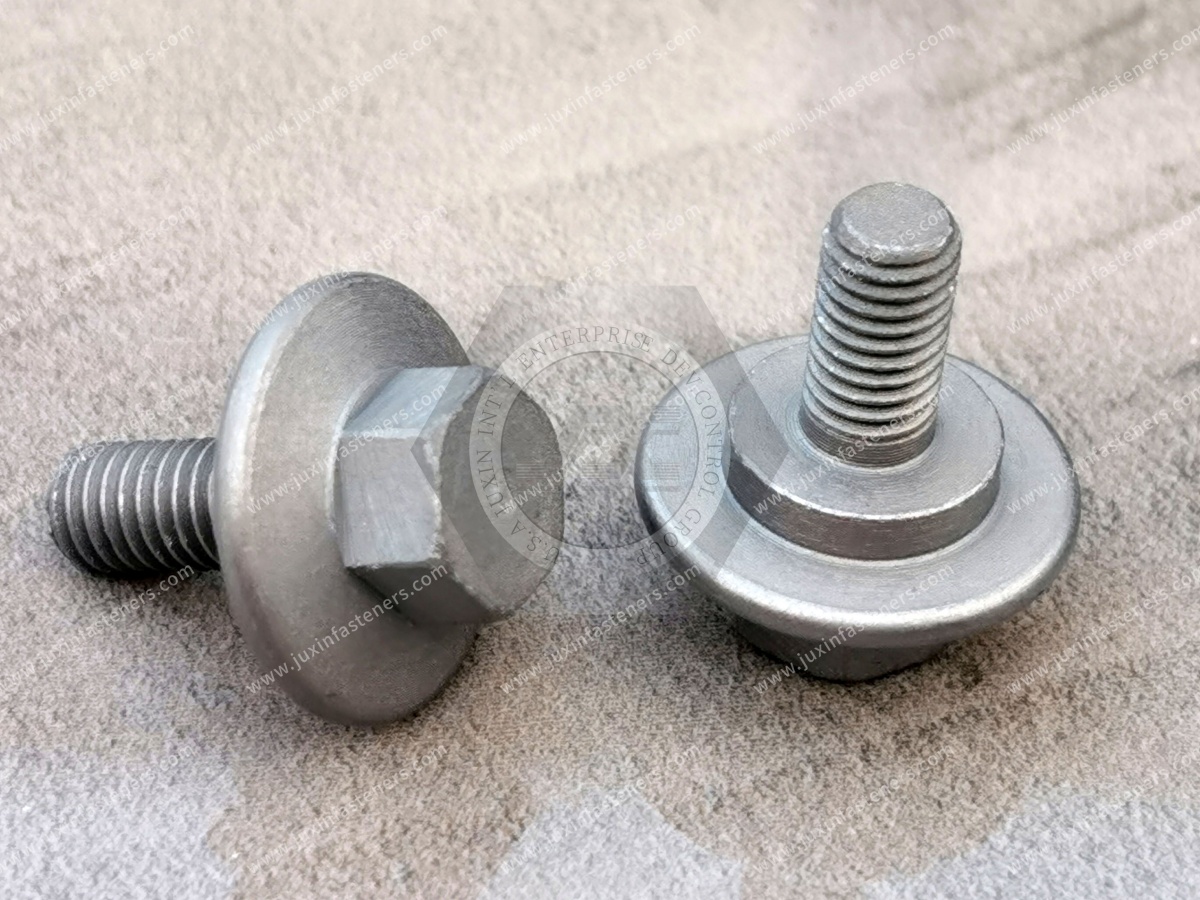
A hexagon head bolt is an externally threaded fastener with a six-sided head designed for engagement by an appropriate wrench or socket.
Depending on the joint, it may be installed with a compatible nut or directly into a tapped component.
Common configurations include:
Fully threaded hex head screws
Partially threaded hex head bolts
High-strength industrial hex bolts
Stainless steel hex bolts
Custom hex head bolts
Metric and Unified inch-series hex bolts
The correct specification depends on the application.
Common International Standards
For applicable metric products:
ISO 4014 — partially threaded hexagon head bolts
ISO 4017 — fully threaded hexagon head screws
ISO 898-1 — mechanical properties of applicable carbon steel and alloy steel fasteners
ISO 3506-1 — mechanical properties of applicable stainless steel fasteners
For applicable inch-series products:
ASME B18.2.1 — dimensional requirements for specified square and hex bolts and screws
ASME B1.1 — Unified inch screw threads
SAE J429 — mechanical requirements for applicable inch-series fasteners
These standards should be applied according to the actual product specification.
Important Thread Compatibility Note
Metric, UNC, UNF, BSW and BSF threads are different systems.
A similar nominal diameter does not establish interchangeability.
The exact thread designation and tolerance must be confirmed.
Why Industry-Specific Hex Bolt Selection Matters
A bolt that performs satisfactorily in one industrial application may be unsuitable in another.
For example:
An indoor machinery bolt may not require the same corrosion protection as a marine equipment bolt.
A high-strength steel bolt may be unsuitable for a joint with weak mating threads.
An EV battery enclosure may require attention to electrical isolation and thermal expansion.
A railway maintenance assembly may require additional vibration and inspection considerations.
A structural steel connection may require a qualified bolting assembly rather than an ordinary industrial hex bolt.
Therefore, industry selection should begin with the actual operating conditions.
Industrial Hex Bolt Selection Matrix
| Industry | Main engineering concern | Selection priority |
|---|---|---|
| Automotive equipment | Vibration, dynamic loading, production consistency | Property class, tightening control, coating |
| EV battery equipment | Thermal cycling, enclosure integrity, electrical interfaces | Joint design, corrosion, isolation requirements |
| Industrial machinery | Repeated loading, maintenance, alignment | Preload, thread engagement, service access |
| Construction machinery | Shock, contamination, corrosion | Mechanical properties, locking strategy |
| Structural steel | Connection qualification and installation | Approved structural bolting specification |
| Marine machinery | Moisture, chlorides, galvanic corrosion | Material and coating compatibility |
| Railway-related equipment | Vibration, fatigue, maintenance | Application approval, inspection requirements |
| Electrical equipment | Enclosure assembly, grounding, thermal effects | Material, clearance, tightening consistency |
This framework supports initial selection but does not replace application-specific engineering approval.
Automotive Manufacturing: Hex Head Bolt Applications
Automotive manufacturing involves assemblies exposed to vibration, temperature changes, repeated loading and high-volume production requirements.
Hex head bolts may be used in suitable:
Equipment mounting brackets
Engine-related assemblies
Transmission-related equipment
Auxiliary chassis components
Manufacturing fixtures
Automotive production equipment
Engineering Selection Considerations
Dynamic Loading
Automotive assemblies may experience cyclic loads.
The joint should be designed to avoid unintended separation and unfavorable fatigue conditions.
Preload Control
Correct tightening is essential where the connection relies on clamping force.
The selected tightening process must account for coating and friction conditions.
Corrosion Protection
Coatings should be selected according to the specified exposure and environmental requirements.
Production Consistency
For high-volume manufacturing, dimensional consistency and compatible tightening conditions are important.
When Higher-Strength Bolts Are Appropriate
Metric property classes such as 8.8 and 10.9 may be relevant to certain automotive equipment designs.
However, higher strength does not automatically improve every joint.
The correct class must be selected according to the approved engineering requirements.
Safety-Critical Automotive Applications
Steering, braking, suspension and other safety-critical systems require specific design approval and validation.
A general industrial bolt must not be described as automatically suitable for these applications.
EV Battery Packs and Electric Vehicle Equipment
Electric vehicle equipment introduces additional mechanical and environmental considerations.
Potential applications include:
Battery equipment frames
Battery enclosure brackets
Charging equipment
Electric motor mounting assemblies
Auxiliary power electronics structures
Production and testing equipment
Thermal Expansion
Battery enclosures may combine materials with different coefficients of thermal expansion.
Temperature changes can affect joint loading and clamping behavior.
Electrical Isolation
Metal fasteners conduct electricity.
Where electrical isolation is required, an approved insulating component or fastening arrangement must be specified.
Corrosion and Material Compatibility
Dissimilar materials and moisture exposure may create galvanic corrosion risks.
Production Assembly
Battery-related assemblies may require controlled tightening and documented inspection.
Important Limitation
A hex head bolt alone does not establish compliance with EV battery safety or electrical requirements.
The complete equipment design must be evaluated.
Construction and Structural Steel Applications
Hex head bolts are used in construction equipment and selected structural assemblies.
However, ordinary industrial hex bolts and qualified structural bolting assemblies must be distinguished.
General Construction Equipment
Applications may include:
Equipment frames
Noncritical brackets
Service panels
Construction machinery
Temporary equipment fixtures
Structural Steel Connections
Buildings, bridges and other engineered structures may require specific structural bolting standards and installation procedures.
For certain applications, ASTM F3125/F3125M may be relevant to the specified high-strength structural bolting assembly.
The exact project specification governs selection.
Why Ordinary Hex Bolts Are Not Automatically Structural Bolts
Structural applications may require:
Specific bolt and nut combinations
Approved washers
Defined mechanical properties
Installation procedures
Inspection requirements
Traceability or documentation
An ordinary hex head bolt should not be substituted for a specified structural bolting assembly without approval.
Engineering Decision
For structural steel projects, procurement should obtain the approved bolting specification before requesting a quotation.
Industrial Machinery and Equipment Manufacturing
Industrial machinery is a major application area for hexagon head bolts.
Typical equipment includes:
CNC machining centers
Industrial automation systems
Agricultural machinery
Mining machinery
Hydraulic equipment
Packaging machinery
Industrial production lines
Mechanical Loading
Machinery joints may experience tension, shear, vibration and repeated loading.
The joint design should reflect the actual load path.
Installation Access
The hexagonal head requires suitable clearance for the installation tool.
This is particularly important where bolts are located close to equipment housings or moving components.
Maintenance
Removable hex bolt connections may simplify servicing where access is properly designed.
Production Engineering
For OEM manufacturing, the installation process should define:
Bolt identification
Thread compatibility
Tightening procedure
Tooling requirements
Inspection method
Rework instructions
Common Machinery Fastening Problem
A bolt may reach the specified tightening torque without achieving the intended preload if the joint contains excessive friction, interference or bottoming in a blind hole.
The assembly should therefore be evaluated beyond the torque reading alone.
Heavy Equipment and Mining Machinery
Heavy equipment may experience shock loading, vibration, contamination and demanding service conditions.
Applications include suitable assemblies on:
Excavators
Loaders
Crushers
Conveyors
Industrial gearboxes
Hydraulic equipment
Selection Priorities
Mechanical property class
Joint stiffness
Thread engagement
Corrosion protection
Locking requirements
Inspection accessibility
Why High Strength Alone Is Not Enough
A stronger bolt cannot compensate for insufficient thread engagement or an unsuitable mating component.
The joint must be designed as a system.
Marine Engineering and Shipbuilding Equipment
Marine environments may expose fasteners to moisture, salt spray, chlorides and dissimilar metals.
Potential applications include:
Marine machinery
Port equipment
Shipboard auxiliary equipment
Coastal industrial equipment
Selected offshore machinery assemblies
Material Selection
Suitable stainless steel or coated steel may be considered depending on the environment.
However, no single material is appropriate for every marine application.
Stainless Steel Considerations
Stainless steel selection should consider:
Chloride exposure
Crevice corrosion
Mechanical properties
Thread galling
Galvanic compatibility
Coated Steel Considerations
The coating system should be evaluated for the specified corrosion environment and tightening requirements.
Galvanic Corrosion
When dissimilar metals are electrically connected in the presence of an electrolyte, galvanic corrosion may occur.
The complete assembly should be evaluated.
Important Engineering Principle
A salt-spray test result does not directly establish a universal outdoor service life.
Actual performance depends on the environment and system design.
Rail Transportation and Railway-Related Equipment
Railway-related equipment may require reliable fastening under vibration, cyclic loading and maintenance conditions.
Potential applications include:
Maintenance equipment
Auxiliary machinery
Electrical equipment enclosures
Station equipment
Service structures
Suitable transportation-related assemblies
Engineering Considerations
Vibration and fatigue
Mechanical strength
Environmental exposure
Inspection access
Approved maintenance procedures
Safety-Critical Rail Applications
Track systems, rolling stock and other safety-critical railway assemblies may require specific standards, qualifications and approved components.
General industrial hex bolts are not automatically suitable.
Energy Storage and Power Distribution Equipment
Hex head bolts may be used in mechanical assemblies associated with:
Energy storage system enclosures
UPS equipment
Power distribution cabinets
Electrical support frames
Charging infrastructure
Industrial power conversion equipment
Mechanical and Electrical Requirements
In these applications, engineers should distinguish between mechanical fastening and electrical connection requirements.
A mechanical bolt may provide clamping force without necessarily meeting the requirements for a current-carrying electrical joint.
Thermal Cycling
Equipment may experience temperature changes that influence joint behavior.
Electrical Clearance
Fastener placement must not compromise required electrical clearances or insulation arrangements.
Corrosion Protection
Coatings and materials should be selected according to the installation environment.
Solar and Wind Equipment
Hex head bolts may be used in suitable auxiliary equipment and mounting assemblies.
However, primary structural and highly loaded wind turbine connections require project-specific engineering specifications.
Material Selection Across Industries
Material selection should reflect the actual joint requirements.
Carbon Steel Hex Bolts
Commonly used in general industrial equipment.
The required mechanical properties should be specified.
Alloy Steel Hex Bolts
May be selected for higher-strength applications where the required properties can be achieved.
Stainless Steel Hex Bolts
May be selected where corrosion resistance is important.
The actual stainless grade and property class must be specified.
Special Materials
Selected brass, aluminum, titanium or engineering polymer fasteners may be considered for drawing-based applications.
Their suitability depends on mechanical loading, environmental conditions and manufacturing feasibility.
Material Selection Table
| Material category | Typical consideration | Main limitation |
|---|---|---|
| Carbon steel | General industrial strength and cost | Corrosion protection |
| Alloy steel | Higher-strength applications | Heat treatment and joint design |
| Stainless steel | Corrosion-resistant applications | Galling, grade selection |
| Brass | Selected electrical and instrument assemblies | Lower mechanical strength than many steels |
| Aluminum alloy | Weight-sensitive applications | Strength and thread behavior |
| Titanium alloy | Specialized weight and corrosion requirements | Cost, galling and qualification |
| Engineering polymer | Insulation or chemical compatibility | Creep, temperature and load capacity |
Surface Treatments for Industrial Hex Bolts
Surface treatment affects corrosion resistance, appearance and assembly performance.
Common options for technical evaluation include:
Zinc plating
Zinc-nickel plating
Zinc-flake coatings
Black oxide
Phosphate-based treatments
Plain finish
Other treatments may be considered where specified and feasible.
Zinc Plating
May be appropriate for selected general industrial environments.
Its performance depends on coating thickness, passivation and exposure.
Zinc-Nickel Coating
May be considered where the project requires a qualified corrosion protection system.
The actual coating specification should be defined.
Zinc-Flake Coatings
May be relevant to certain corrosion-resistant fastening applications.
The complete coating system and installation requirements should be evaluated.
Coating Standards
ISO 4042 may be applicable to specified electroplated fasteners.
ISO 10683 may be applicable to specified non-electrolytically applied zinc-flake coatings.
Hydrogen Embrittlement Risk
Certain high-strength steel fasteners may be susceptible to hydrogen embrittlement under particular manufacturing and service conditions.
Coating and processing requirements should be selected accordingly.
Coating and Tightening
Surface treatments can change the friction conditions of a bolted joint.
A coating substitution may therefore require tightening validation.
How to Select a Hexagon Head Bolt for an Industrial Application
A practical selection process begins with the complete assembly.
Define the Joint Function
Determine whether the bolt is intended to:
Maintain clamping force
Support a removable connection
Resist externally applied loads
Secure an equipment enclosure
Connect mechanical components
Identify the Operating Conditions
Consider:
Static and dynamic loading
Vibration
Temperature
Corrosion exposure
Maintenance frequency
Electrical requirements
Choose the Thread System
Specify the exact metric or inch-series thread designation.
Select Material and Mechanical Properties
Use the applicable engineering specification.
Determine Bolt Geometry
Review:
Diameter
Length
Threaded length
Grip length
Head dimensions
Installation clearance
Specify the Surface Treatment
Select a coating compatible with the environment and tightening process.
Define Installation and Inspection
Identify the approved tightening procedure and acceptance criteria.
Confirm Supplier and Production Requirements
Specify samples, inspection documentation, annual volume and delivery needs.
Common Failure Risks in Industrial Hex Bolt Applications
Insufficient Preload
May allow joint movement or separation.
Thread Stripping
May result from inadequate engagement or unsuitable mating materials.
Fatigue Failure
May occur under cyclic loading and unfavorable joint conditions.
Corrosion
May reduce serviceability or mechanical performance.
Galling
May affect certain threaded material combinations.
Incorrect Thread System
May cause assembly damage or rejection.
Coating-Related Tightening Variation
May affect clamp-load consistency.
Incorrect Bolt Length
May cause bottoming or insufficient engagement.
Engineering Recommendation
Fastener failures should be investigated at the joint and process level.
Replacing a bolt with a higher property class is not necessarily an effective corrective action.
Production Management: From Engineering Drawing to Assembly Line
For production managers, a technically suitable fastener must also support repeatable manufacturing.
Assembly Efficiency
Tool access and fastener presentation influence installation time.
Tightening Consistency
The tightening method should account for the joint and friction conditions.
Inspection
Critical dimensions and assembly requirements should be identified.
Rework
The process should define how nonconforming fasteners and damaged threads are handled.
Production-Line Considerations
| Production concern | Potential problem | Recommended action |
|---|---|---|
| Wrong thread designation | Cross-threading | Verify drawing and incoming inspection |
| Inconsistent coating | Variable tightening behavior | Control approved coating specification |
| Incorrect bolt length | Bottoming or poor engagement | Check assembly stack |
| Limited tool access | Slow installation | Review joint layout |
| Damaged threads | Scrap or rework | Improve handling and inspection |
| Mixed property classes | Mechanical performance risk | Control identification and purchasing |
| Poor packaging | Handling inefficiency | Specify suitable packaging |
OEM Procurement and Supplier Development
Purchasing teams should not evaluate hex bolts by unit price alone.
A suitable supplier must be able to address the actual engineering specification and production requirements.
Key Procurement Questions
Is the required standard clearly identified?
Are the thread and dimensional requirements complete?
Is the property class or grade specified?
Is the coating compatible with the application?
Are inspection requirements defined?
Are samples needed for approval?
What MOQ and lead time apply?
Is annual volume known?
Are packaging and identification requirements documented?
Supplier Substitution
An alternative supplier should be evaluated against the complete approved specification.
Similar appearance does not establish interchangeability.
Total Procurement Cost
Purchasing decisions should consider:
Unit price
Installation cost
Inspection cost
Rework risk
Inventory requirements
Delivery reliability
Maintenance needs
Custom Hex Head Bolts for OEM Projects
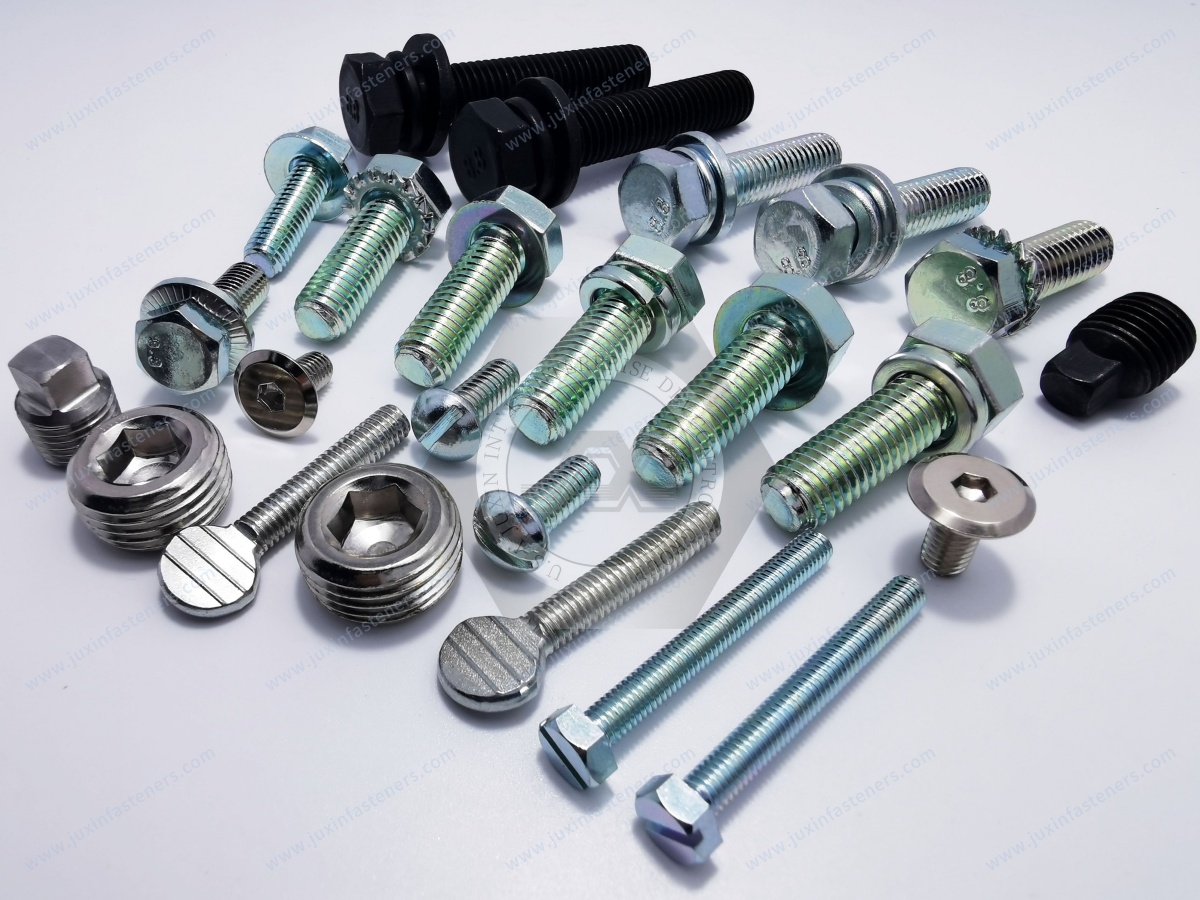
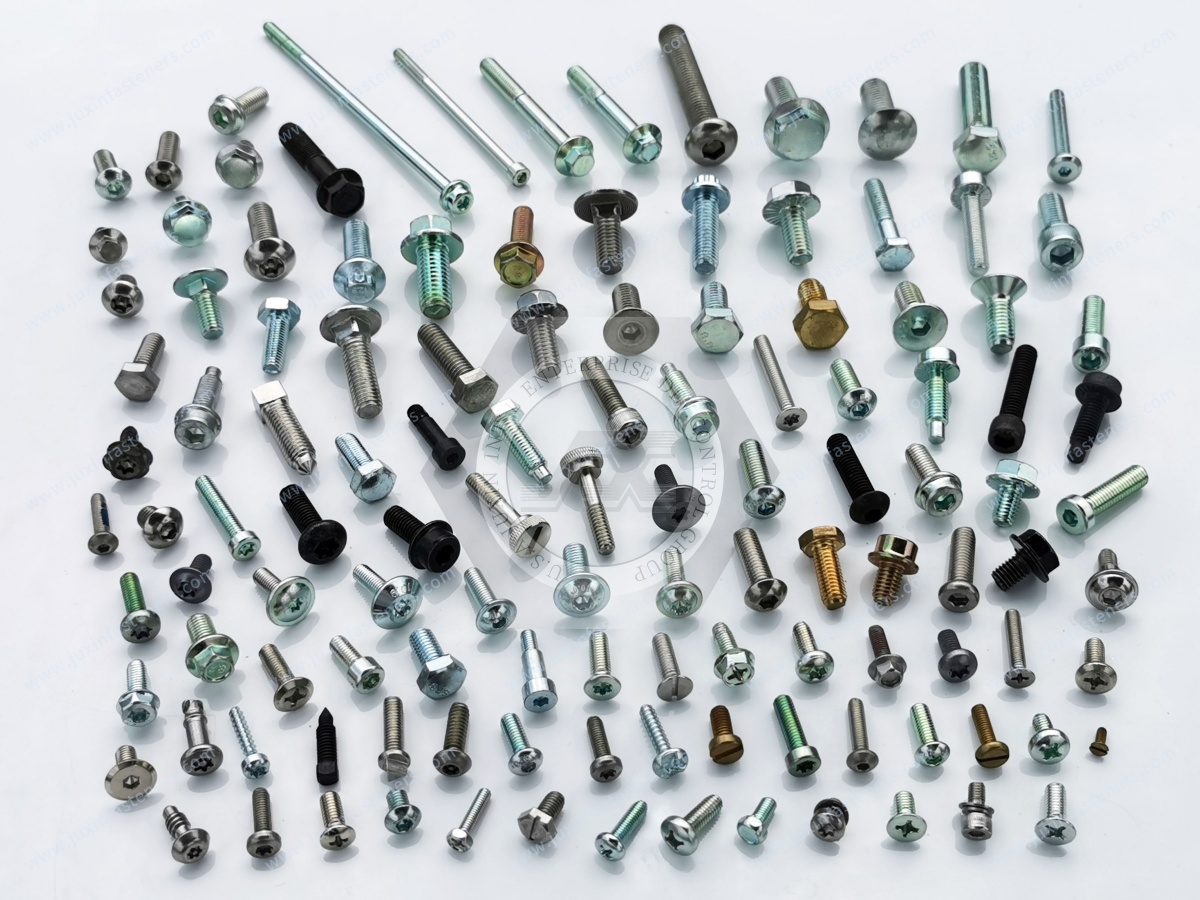
JUXIN FASTENERS supports drawing-based inquiries for industrial hex bolts and custom fastening components.
Possible custom requirements include:
Special lengths
Nonstandard thread lengths
Custom shank dimensions
Special head geometry
Selected materials
Specified mechanical properties
Drawing-defined coatings
Packaging requirements
Manufacturing feasibility, tooling, MOQ and lead time depend on the individual drawing and project requirements.
What Should Be Included in an OEM RFQ?
A complete RFQ should include:
2D drawing or applicable standard
Thread designation
Diameter and length
Full or partial thread
Material
Property class or grade
Surface finish
Assembly application
Required inspection
Sample quantity
Annual purchasing volume
Target delivery schedule
Providing this information helps reduce clarification time and supports a more accurate quotation.
Frequently Asked Questions
What industries commonly use hexagon head bolts?
Hexagon head bolts are used in industrial machinery, automotive equipment, EV-related assemblies, construction machinery,
electrical equipment, marine machinery and many other industrial applications.
Are hexagon head bolts suitable for heavy-duty applications?
They may be suitable when the complete joint and specified fastener meet the required mechanical and environmental conditions.
What is the difference between metric and UNC hex bolts?
They use different thread systems and are not interchangeable.
Are property class 10.9 bolts equivalent to SAE Grade 8 bolts?
No. They belong to different standards and must be evaluated according to their actual specifications.
Can ordinary industrial hex bolts be used in structural steel connections?
Not automatically. Structural applications may require specially specified and qualified bolting assemblies.
Which coating is best for marine applications?
There is no universal answer. Material and coating selection depends on chloride exposure, mechanical requirements and corrosion compatibility.
Can hex bolts be used in EV battery equipment?
Yes, in suitable mechanical assemblies, subject to engineering approval and any applicable electrical requirements.
Does a higher-strength bolt always improve joint reliability?
No. Joint design, preload, thread engagement and mating components also determine performance.
Can JUXIN FASTENERS provide custom hex head bolts?
Drawing-based inquiries can be reviewed for materials, dimensions, manufacturing feasibility and quotation.
JUXIN FASTENERS: Industrial Hexagon Head Bolts and OEM Fastening Solutions
JUXIN FASTENERS supplies industrial threaded fasteners and custom fastening components for international OEM and industrial customers.
Relevant products include:
Metric hex head bolts
High-strength industrial bolts
Custom hex head bolts
CNC-machined threaded components
Industrial locking nuts
Weld studs
Self-clinching studs
Other drawing-based fastening components
Product specifications, material options, coating requirements, MOQ and lead time are confirmed according to each project.
Request an Industrial Hex Head Bolt RFQ
Are you selecting fasteners for industrial machinery, EV equipment, marine machinery, power distribution equipment or another OEM assembly?
JUXIN FASTENERS welcomes technical and purchasing inquiries from design engineers, mechanical engineers, manufacturing engineers,
production managers, purchasing managers and supplier development teams.
Please provide:
2D drawing or standard + thread designation + diameter + length + material + property class + coating + industry application
+ inspection requirements + sample quantity + annual volume + delivery schedule
Our team can review the drawing, discuss suitable product options, confirm sample arrangements and provide quotation information.
Company: JUXIN FASTENERS
Website: https://www.juxinfasteners.com/
Email: info@juxinfasteners.com
Send your industrial hex head bolt drawings and RFQ to JUXIN FASTENERS for technical evaluation and quotation.
Contact Us
Tel.:
+86 020 8621 0320
+86 020 3121 6067
E-mail:
Technical Support:
Navigation
SEND INQUIREY



