
Call Us
+86 136 6007 9809
Call Us
+86 136 6007 9809

Sep. 24, 2023
SN 70093 toothed contact washers are specialized fastening components used where a bolted joint must provide a defined
mechanical interface together with electrical contact between conductive components.
They may also be searched or described as:
SN 70093 contact washers;
toothed contact washers;
grounding contact washers;
electrical contact washers;
locking edge washers;
serrated grounding washers;
earth connection washers;
electrical bonding washers.
Unlike a conventional flat washer, an SN 70093 contact washer incorporates surface features intended to interact with the mating surfaces during tightening.
In appropriate equipment designs, these features can penetrate or displace certain surface layers and contribute to a conductive metal-to-metal interface.
However, this distinction is critical:
Coating Penetration ≠ Automatically Verified Grounding
A grounding or bonding connection is an electrical system function.
The washer is one component in that system.
The complete connection should therefore be considered as:
Fastener + Contact Washer + Cable Lug or Conductive Component + Substrate + Surface Finish + Clamp Load + Electrical Path + Environment
For electrical engineers, enclosure designers and OEM procurement teams, this system-level approach is more useful than specifying a generic “grounding washer.”
SN 70093 is a Siemens specification associated with toothed contact washers used in electrical and mechanical assemblies.
Current Siemens equipment documentation continues to specify SN 70093 contact washers in grounding and conductive mounting arrangements.
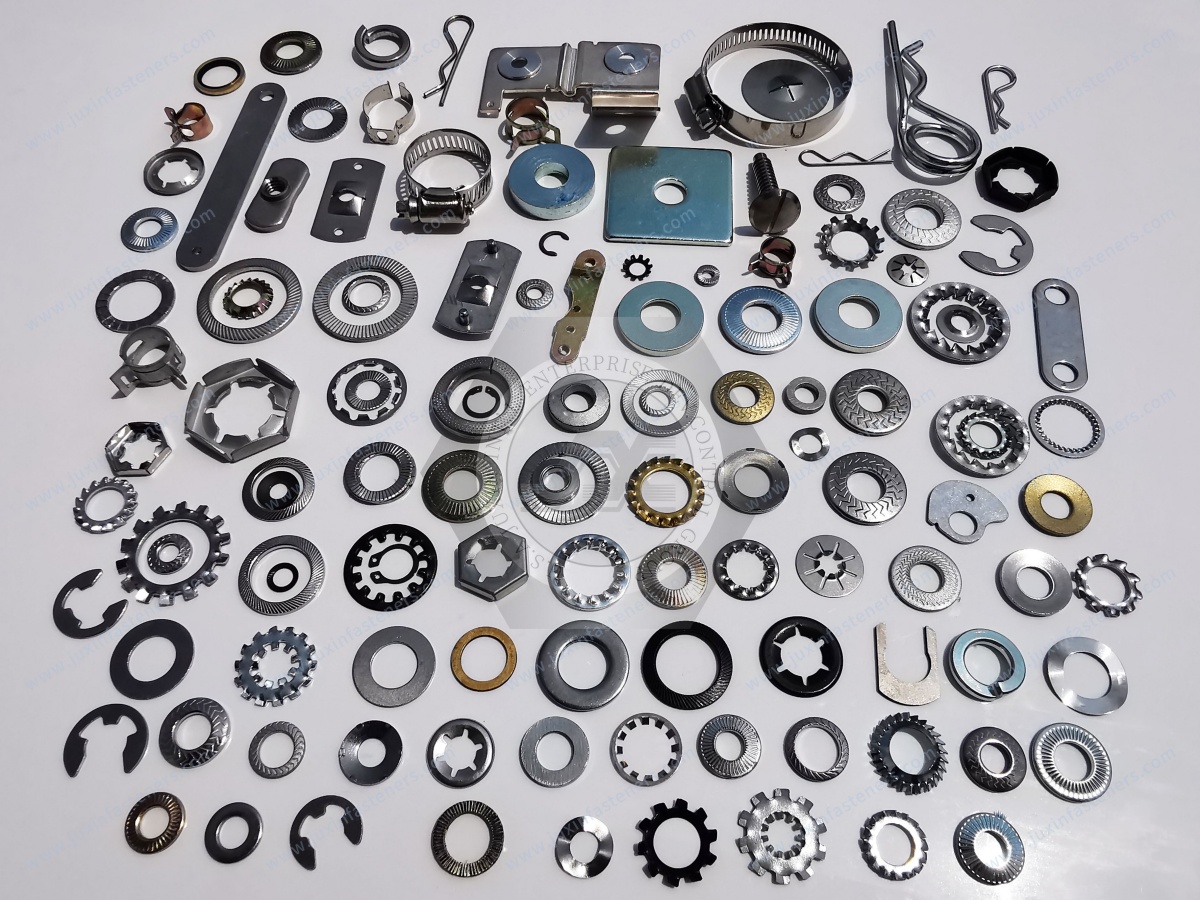
A typical toothed contact washer can incorporate:
a conical or spring-type washer body;
a ribbed or serrated contact surface;
multiple teeth or contact features on the opposite side.
The exact geometry must follow the applicable specification or controlled drawing.
The original article described this product as:
“DIN 6795 Grounding Lock Washer.”
That description should not be used as the primary technical standard reference unless an OEM drawing independently defines such a requirement.
For this product family, the verified industrial specification is:
SN 70093
For OEM sourcing, the safest approach is therefore to use:
SN 70093 Toothed Contact Washer
rather than treating an unverified DIN 6795 designation as an international DIN standard.
These two washer families should not be confused.
NF E25-511 covers serrated conical washers for bolted joints.
The engineering emphasis is on the mechanical bolted-joint interface.
SN 70093 toothed contact washers are used where contact geometry is intended to support a defined conductive interface in suitable assemblies.
The engineering emphasis can include:
electrical contact;
coating penetration;
conductive connection;
mechanical fastening interface.
Therefore:
Similar Washer Shape ≠ Same Functional Specification
Many industrial electrical assemblies use painted, powder-coated or otherwise finished metal components.
These finishes can provide important:
corrosion protection;
appearance;
environmental protection.
But some coatings are electrically insulating or can increase resistance between joined metal components.
Where the equipment design requires an electrically conductive bolted interface, this creates a design challenge.
A toothed contact washer can provide concentrated contact features that interact with the surface during tightening.
As the fastener is tightened, the contact features are loaded against the mating surface.
Depending on the:
tooth geometry;
washer hardness;
substrate material;
coating;
coating thickness;
clamp force,
the teeth may penetrate or displace part of the surface layer and contact the conductive substrate.
This can help create an electrical contact path.
But the result depends on the complete interface.
Commercial SN 70093 toothed contact washers are commonly associated with a six-tooth contact geometry.
The teeth are distributed around the washer to create multiple localized contact points.
For sourcing purposes, tooth geometry should not be assumed from the phrase “grounding washer” alone.
The RFQ should identify the actual:
SN 70093 designation;
size;
drawing;
tooth configuration;
material;
finish.
These words are often mixed together in fastener marketing.
From an engineering perspective, they can describe different functions.
Provides a conductive connection associated with electrical safety and fault-current management.
Creates electrical continuity between conductive parts.
Connects conductive parts to reduce potential differences.
May be used for equipment operation, signal reference, noise control or another functional purpose.
A contact washer can be part of one of these systems.
It does not define the entire system.
This is one of the most important procurement boundaries for this product.
A supplier can provide a washer to the required specification.
But the washer alone cannot establish that the final equipment complies with the applicable electrical safety requirements.
System compliance depends on the complete:
conductor;
terminal;
connection;
fastener;
enclosure;
current path;
electrical design;
applicable equipment standard.
A tooth visibly penetrating paint does not prove that the connection has acceptable electrical performance.
The resulting contact may still depend on:
contact area;
oxide films;
contamination;
substrate conductivity;
clamp force;
corrosion;
environmental exposure.
Therefore:
Visible Metal Contact ≠ Verified Electrical Performance
Where electrical bonding performance is important, the resistance across the connection may be a functional characteristic.
A reliable connection requires more than simply making initial contact.
Engineers may need to consider whether the interface remains stable after:
thermal cycling;
vibration;
corrosion exposure;
service;
aging.
The appropriate acceptance requirement depends on the equipment and governing specification.
A protective-earth connection may need to carry electrical current under fault conditions.
That requirement cannot be derived from washer dimensions alone.
The complete current path may include:
cable;
cable lug;
fastener;
washer;
substrate;
enclosure structure.
Therefore:
Contact Washer Size ≠ Fault-Current Rating
The old article stated that the claws simply penetrate paint or oxide layers and create reliable grounding.
That claim is too absolute.
Actual penetration depends on:
coating chemistry;
coating thickness;
coating hardness;
tooth geometry;
substrate hardness;
clamp load.
A washer that penetrates one powder coating may behave differently on another finish.
Powder-coated electrical cabinets are a common example.
The coating can electrically isolate two steel components.
Where the equipment design specifically calls for a toothed contact washer, its teeth may locally break through the coating and establish conductive contact with the substrate.
The connection should still be validated according to the equipment requirements.
Paint systems vary significantly in:
thickness;
hardness;
adhesion;
chemistry.
Do not assume that one contact-washer design will produce identical results across all painted surfaces.
Zinc-coated surfaces present a different interface from painted steel.
The coating itself is metallic, but:
oxides;
surface condition;
passivation;
contamination
can affect electrical contact.
The complete joint should still follow the approved equipment design.
Aluminum introduces additional considerations.
Potential issues include:
surface oxide;
indentation;
galvanic interaction;
local coating damage;
corrosion environment.
A contact washer qualified on coated carbon steel should not automatically be treated as equivalent on aluminum.
Stainless steel forms a passive surface film.
Electrical and mechanical behavior can differ from carbon steel.
Material compatibility, contact design and environment should therefore be considered rather than assuming that stainless steel automatically provides superior electrical contact.
For OEM sourcing, use the material required by:
SN 70093;
customer drawing;
approved OEM specification.
Avoid substituting regional material designations as though they were globally interchangeable.
Finished washer behavior depends on more than raw material chemistry.
Where the washer has a conical spring form, its mechanical behavior depends on:
material;
hardness;
thickness;
geometry;
forming;
heat treatment.
These factors influence how the washer reacts as the bolted joint is tightened.
The tooth features must interact with the mating surface as intended.
If the washer is too soft relative to the interface, the teeth may deform rather than engage effectively.
If the interface is soft, the teeth may produce excessive indentation.
Therefore the washer and substrate should be treated as a material pair.
The washer itself may require corrosion protection.
The selected finish must be compatible with:
electrical contact function;
mechanical function;
environment;
OEM specification.
A coating that substantially insulates the required contact interface may conflict with the intended electrical function unless the contact geometry and system specification account for it.
Electrical contact washers often create a deliberate local break in a protective coating.
That can improve electrical contact.
But it can also expose base metal.
This creates a fundamental tradeoff:
Electrical Contact vs Local Corrosion Protection
The joint must be designed so that both requirements are adequately managed.
Where the washer teeth expose the substrate, moisture or contaminants may reach the local metal surface.
Potential corrosion behavior depends on:
substrate;
washer material;
coating system;
humidity;
salt exposure;
chemicals;
galvanic combination.
Therefore long-term electrical reliability should not be judged only from the initial installation.
Salt-spray testing can provide a controlled corrosion comparison when required.
It should not be presented as a direct prediction of real-world service life.
Field corrosion depends on the actual:
environment;
temperature;
moisture;
contaminants;
coating damage;
material combination.
For susceptible hardened spring-steel washers, processes capable of introducing hydrogen require appropriate process control.
Risk depends on:
material;
hardness;
coating process;
hydrogen exposure;
service stress.
A generic statement such as “zinc plated with dehydrogenation” is not sufficient to define the complete risk-control strategy.
The original article marketed the product as providing both strong anti-loosening and grounding.
These functions should be separated.
The washer geometry can affect:
bearing friction;
interface engagement;
spring response.
But electrical contact performance does not automatically prove resistance to rotational loosening.
Likewise:
Electrical Contact ≠ Thread Locking
A toothed interface may increase local resistance to relative movement.
However, bolt loosening depends on the complete joint.
Relevant factors include:
preload;
transverse displacement;
thread friction;
bearing friction;
joint stiffness;
service loads.
Do not describe an SN 70093 contact washer as universally vibration-proof.
The teeth require sufficient mechanical loading to interact with the mating surface as designed.
The fastener creates that loading.
Therefore contact performance can depend on the approved tightening process.
Installation torque is only an indirect method of generating bolt preload.
The resulting clamp force depends heavily on friction.
Relevant variables include:
thread condition;
lubrication;
fastener coating;
washer finish;
mating surface.
Therefore:
Same Torque ≠ Automatically Same Contact Pressure
There is no universal torque for an SN 70093 washer based only on nominal size.
For example, a specific Siemens equipment manual may specify a particular torque for a particular M12 grounding connection.
That torque belongs to that complete assembly.
It should not be copied and applied universally to every M12 SN 70093 washer.
This distinction is extremely important in supplier documentation.
SN 70093 contact washers may have functionally different surfaces.
The toothed side must be oriented according to the controlled assembly specification.
Where teeth are intended to engage the equipment housing, they must face the designated contact surface.
Do not create a universal installation instruction independent of the actual washer geometry and equipment drawing.
A grounding connection may contain more than the contact washer.
Depending on the OEM design, the assembly can include:
bolt;
contact washer;
cable lug;
plain washer;
spring element;
nut;
conductive substrate.
The sequence matters.
Changing the order of components can alter:
electrical contact;
friction;
load distribution;
clamp force;
serviceability.
Production assembly should follow the approved drawing or work instruction.
SN 70093 contact washers can be used in equipment grounding arrangements involving cable lugs.
In such a joint, the electrical path may depend on multiple interfaces.
For example:
Ground Conductor → Cable Lug → Fastened Interface → Conductive Equipment Structure
Every interface must support the intended function.
Industrial electrical cabinets often contain multiple:
panels;
doors;
frames;
brackets;
mounting structures.
Where the design requires electrical continuity between these parts, contact washers may form part of the bonding architecture.
However, the complete bonding path must be engineered.
A cabinet door may have:
hinges;
paint;
seals;
removable hardware.
Do not assume that mechanical hinges or a toothed washer automatically provide the required protective bonding.
Follow the equipment electrical design.
Potential applications include specified:
grounding terminals;
frame connections;
panel connections;
cable-lug interfaces;
conductive mounting joints.
This makes SN 70093 contact washers particularly relevant to industrial electrical equipment.
Current Siemens documentation demonstrates the use of SN 70093 contact washers in switchgear and circuit-breaker grounding arrangements.
This is a strong example of why the washer should be understood as part of a defined equipment-level electrical connection rather than simply a generic “anti-loosening washer.”
Potential applications can include specified conductive joints in:
switchboards;
distribution cabinets;
control systems;
industrial power equipment.
Applicable electrical standards and OEM specifications still govern the complete assembly.
Modern data centers contain extensive:
electrical distribution equipment;
UPS systems;
power conversion equipment;
switchgear;
cooling-control equipment;
equipment cabinets.
Contact washers may be relevant where the approved equipment design requires conductive bolted interfaces.
However, the washer should not automatically be described as a:
busbar fastener;
high-current connector;
EMI solution.
Those functions require separate engineering.
Potential applications include:
outdoor cabinets;
equipment racks;
radio equipment housings;
conductive frame connections.
Environmental exposure can make corrosion control particularly important.
Automation equipment often contains:
control cabinets;
drives;
power supplies;
machine frames;
enclosure assemblies.
Where conductive bonding between metal parts is required, an approved contact-washer system may be appropriate.
Rail systems can require carefully controlled electrical bonding and grounding.
Potential applications may exist in:
electrical cabinets;
auxiliary equipment;
equipment enclosures.
However, an SN 70093 washer alone does not establish rail qualification.
Program-specific electrical, mechanical and environmental requirements remain applicable.
Potential applications may include:
control cabinets;
drive equipment;
electrical enclosures;
auxiliary assemblies.
Safety-critical grounding must follow the applicable equipment requirements.
Electrical cabinets used in water-treatment facilities may encounter:
humidity;
condensation;
chemicals;
corrosive environments.
A contact washer can contribute to the electrical connection, but material and coating selection become especially important.
Contact washers may be used in appropriate electrical or mechanical equipment assemblies.
However, use in medical equipment does not automatically imply:
medical-device certification;
patient-protection compliance;
biocompatibility;
cleanroom suitability.
Those requirements must be addressed separately.
A plain washer primarily provides a bearing interface.
It does not intentionally create coating-penetrating electrical contact.
An SN 70093 toothed contact washer has additional contact geometry for a different functional purpose.
An NF E25-511 serrated conical washer is primarily specified as a serrated conical washer for bolted joints.
An SN 70093 toothed contact washer is associated with contact and grounding applications where its tooth geometry can contribute to a conductive interface.
Do not substitute one for the other solely because both have serrations.
External- or internal-tooth star washers can also create localized surface contact.
However, geometry, dimensions, spring behavior and specification differ.
Similar Teeth ≠ Equivalent Product
A welded or mechanically installed grounding stud provides a defined attachment point.
A contact washer may be used as part of the connection.
These components can complement each other rather than being alternatives.
A grounding strap creates a flexible conductive path between components.
A contact washer operates at a bolted interface.
Different applications may require one or both.
A newly assembled joint may have low electrical resistance.
Long-term behavior can change due to:
corrosion;
thermal cycling;
vibration;
relaxation;
service disturbance.
Therefore:
Initial Continuity ≠ Lifetime Connection Reliability
After disassembly, the original contact interface may have changed.
The washer may show:
tooth deformation;
coating damage;
permanent set;
corrosion.
The substrate may also have a previous tooth impression.
Do not automatically assume that unlimited washer reuse will reproduce the original electrical interface.
For equipment requiring periodic maintenance, the OEM should define whether the contact washer must be:
replaced;
inspected;
reused under defined conditions.
The decision belongs to the controlled equipment maintenance specification.
Possible causes include:
teeth did not penetrate the required layer;
insufficient clamp force;
wrong orientation;
contamination;
incorrect washer;
insulating coating;
poor substrate contact.
Potential contributors include:
inadequate contact area;
oxide formation;
corrosion;
insufficient preload;
contamination;
surface degradation.
Potential contributors include:
exposed substrate;
moisture;
galvanic material combination;
unsuitable finish;
environmental contamination.
Potential causes can include:
unsuitable washer material;
excessive load;
incompatible substrate;
manufacturing issue.
A harder or thicker coating may resist the intended tooth engagement.
The solution should not automatically be higher torque.
Increasing torque can create other joint problems.
The complete interface should be reviewed.
This illustrates the difference between electrical and mechanical functions.
Possible causes include:
inadequate preload;
transverse joint movement;
incorrect tightening;
relaxation;
inappropriate locking strategy.
A separate mechanical locking solution may be required depending on the assembly.
Two washers may share the same:
nominal size;
inside diameter;
outside diameter.
But differ in:
tooth geometry;
hardness;
finish;
free height.
Therefore:
Dimensional Fit ≠ Electrical Equivalence
Is the connection intended for:
protective earth;
bonding;
equipotential connection;
functional grounding;
another conductive function?
Confirm whether the drawing requires:
SN 70093;
an OEM specification;
another approved contact-washer design.
Specify:
nominal diameter;
thread;
bolt/screw type;
mating nut or thread.
Control:
inside diameter;
outside diameter;
thickness;
free height;
tooth configuration;
serration geometry.
Identify whether the washer contacts:
housing;
frame;
cable lug;
bracket;
another conductive component.
Specify:
carbon steel;
stainless steel;
aluminum;
another material.
Identify:
powder coat;
paint;
zinc coating;
plating;
bare metal;
another finish.
Use the approved assembly torque or tightening method.
Where applicable, specify:
continuity;
resistance;
current requirement;
applicable equipment-level acceptance criteria.
Consider:
humidity;
condensation;
temperature;
salt;
chemicals;
outdoor exposure.
Where electrical performance is critical, evaluate the actual production-intent:
Fastener + Washer + Cable Lug/Component + Substrate + Coating + Tightening Process
Once validated, control the configuration in:
drawings;
BOM;
assembly instructions;
supplier requirements.
Engineers may search:
SN 70093 contact washer;
grounding washer for painted steel;
toothed washer electrical contact;
grounding washer powder coating;
contact washer resistance;
electrical bonding washer;
SN 70093 installation.
Their fundamental question is:
Will this interface provide the electrical contact required by my equipment design?
Procurement and supplier-development teams may search:
SN 70093 washer supplier;
grounding contact washer manufacturer;
toothed contact washer OEM;
SN 70093 second source;
electrical contact washer supplier;
locking edge washer supplier.
Their fundamental question is:
Can another supplier reproduce the approved geometry, material, finish and contact behavior?
For an existing SN 70093 application, supplier qualification should consider:
controlled drawing;
current part number;
approved sample;
dimensions;
tooth geometry;
material;
hardness where specified;
finish;
application.
Where electrical performance is critical, the customer should validate the replacement in the actual joint.
A replacement washer that looks identical may change:
coating penetration;
electrical resistance;
tightening behavior;
corrosion performance.
Therefore:
Supplier Cross-Reference ≠ Automatic Drop-In Approval
Installing a sample and confirming that the bolt tightens proves only basic mechanical fit.
It does not automatically establish:
contact resistance;
fault-current performance;
corrosion durability;
long-term bonding reliability.
Production validation should match the actual equipment requirement.
For an accurate quotation or second-source evaluation, provide where applicable:
SN 70093 designation;
existing part number;
existing supplier reference;
customer drawing;
approved sample;
nominal fastener size;
bolt/screw specification;
mating nut/thread;
washer inside diameter;
washer outside diameter;
thickness;
free height;
number of teeth;
tooth geometry;
serration geometry;
material;
hardness requirement where specified;
surface finish;
substrate material;
substrate coating;
coating thickness where relevant;
cable-lug details where applicable;
washer orientation;
assembly stack;
tightening torque or method;
electrical function;
electrical acceptance criteria where specified;
environmental requirement;
corrosion requirement;
service/reuse requirement;
inspection requirement;
documentation requirement;
sample quantity;
pilot quantity;
production quantity;
annual demand;
packaging requirement.
SN 70093 is a Siemens specification associated with toothed contact washers used in defined conductive and grounding interfaces.
No. They are different specifications and should not automatically be treated as interchangeable.
Yes, “grounding washer” is a common commercial search term. “SN 70093 contact washer” is more precise when that specification is required.
The old page used DIN 6795 terminology. For this article,
JUXIN FASTENERS recommends using the verified SN 70093 specification or the actual customer drawing rather than presenting DIN 6795 as the governing international standard.
Its contact features can penetrate or displace suitable surface layers during tightening and help establish conductive contact with the substrate.
No. The washer is one part of the grounding or bonding system. The complete electrical path must satisfy the applicable equipment requirements.
It may penetrate suitable coatings depending on tooth geometry, coating properties, substrate and clamp load. This should be validated for the actual interface.
No. Electrical performance must be evaluated according to the applicable connection requirement.
Do not assume universal anti-loosening performance. Electrical contact and rotational locking are different functions.
Potentially, but oxide behavior, indentation, corrosion and material compatibility require consideration.
No. Material selection depends on the controlled specification, electrical interface, spring requirements and corrosion environment.
Reuse should follow the equipment maintenance specification. Tooth deformation, coating damage and changes to the original contact surface can affect reassembly.
It can be part of a protective-earth connection where the equipment design specifies it, but the washer alone does not establish system compliance.
Provide the specification or drawing, size, material, finish, substrate/coating information, application, existing part reference and required quantity.
JUXIN FASTENERS supports OEM and industrial sourcing for fastening and electrical-equipment components including:
SN 70093 toothed contact washers;
electrical contact washers;
grounding washers;
serrated conical washers;
spring washers;
retaining rings;
self-clinching fasteners;
weld nuts;
weld studs;
blind rivet nuts;
threaded inserts;
drawing-based stamped components;
CNC-machined components.
For an existing SN 70093 washer requirement, provide:
controlled drawing;
existing supplier part number;
approved sample where available;
material;
finish;
quantity;
annual demand.
For an engineering-driven grounding or bonding application, also provide:
fastener specification;
substrate material;
coating;
cable-lug/interface details;
tightening method;
electrical requirement;
environmental conditions.
For OEM quotations, sample evaluation, second-source qualification or supplier-development projects, contact:
The correct engineering question is not simply:
“Does this grounding washer have teeth?”
It is:
“Does the complete bolted interface establish and maintain the electrical path required by the equipment design?”
A more reliable sourcing pathway is:
Electrical Function → Governing Specification → Fastener → Contact Washer → Conductive Interface
→ Substrate → Coating → Tightening Process → Electrical Validation → Environmental Validation → Controlled Specification → RFQ
That approach provides a stronger basis for specifying SN 70093 contact washers than relying on generic claims such as “automatic grounding” or “vibration-proof.”
 MORE NEWS
Sep. 27, 2026
Sep. 27, 2026
Sep. 27, 2026
Contact Us
Tel.:
+86 020 8621 0320
+86 020 3121 6067
E-mail:
Technical Support:
Navigation
SEND INQUIREY