
Call Us
+86 136 6007 9809
Call Us
+86 136 6007 9809

Sep. 27, 2023
DIN 9250 stainless steel safety washers are mechanical locking washers designed to increase resistance to rotational loosening in bolted joints exposed to vibration,
shock, cyclic loading and repeated operational movement.
For engineers and sourcing teams, however, specifying a locking washer should involve more than selecting a washer by thread diameter.
Joint preload, mating-surface material, surface hardness, friction conditions, vibration direction, temperature,
corrosion exposure and maintenance requirements can all influence whether a locking washer provides the required joint reliability.
JUXIN FASTENERS supplies DIN 9250 stainless steel safety washers and other vibration-resistant fastening components for industrial OEM,
equipment manufacturing and engineered assembly applications. Material, dimensions,
production requirements, inspection criteria and packaging can be reviewed against customer drawings and procurement specifications.
For RFQ and technical review, contact info@juxinfasteners.com.
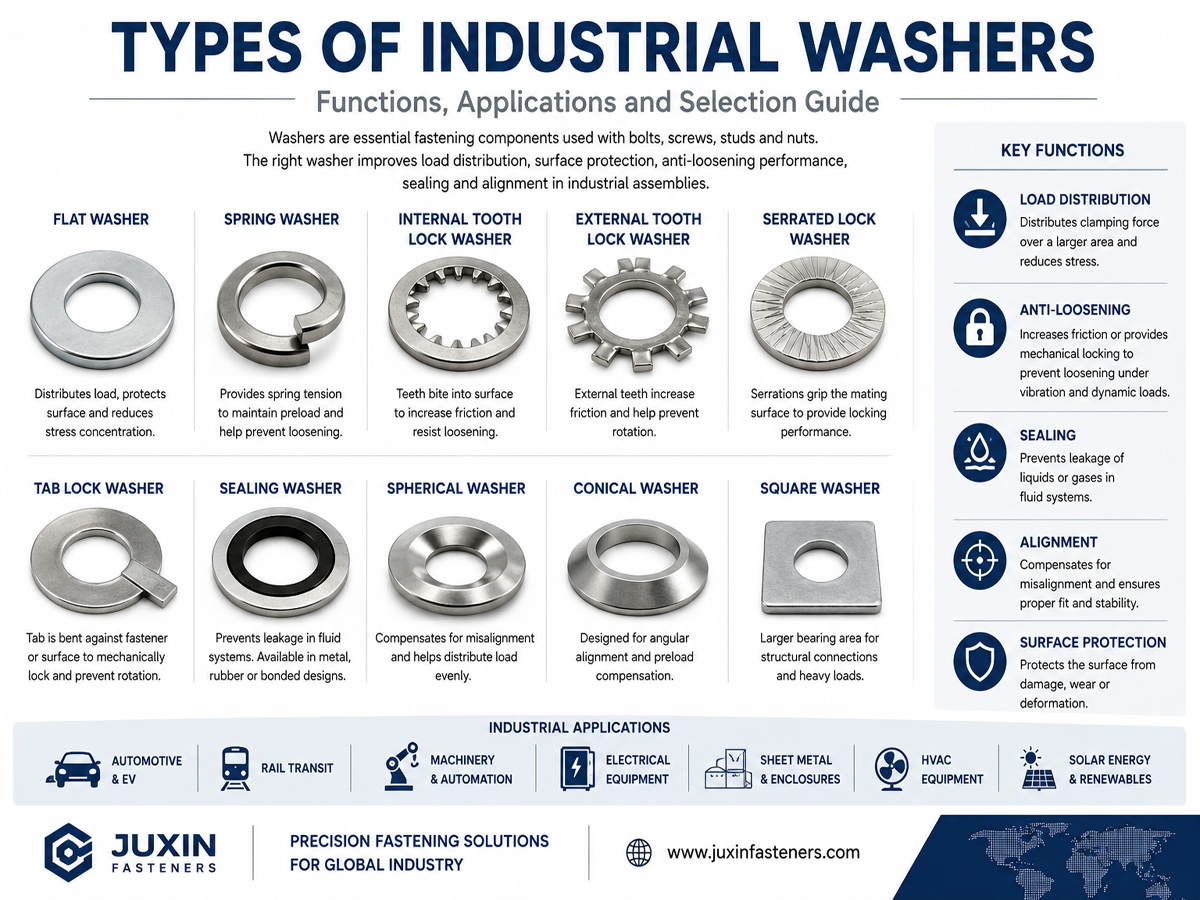
DIN 9250 safety washers are locking elements used beneath bolt heads or nuts to help resist unintended rotational loosening.
They are commonly searched and specified using terms such as:
DIN 9250 safety washer
DIN 9250 lock washer
stainless steel safety washer
toothed safety washer
anti-loosening washer
vibration-resistant washer
locking washer for bolted joints
The washer geometry is designed to create mechanical interaction and increased resistance at the interfaces of a tightened bolted joint.
This distinguishes a safety washer from a conventional flat washer, whose primary functions normally include load distribution and protection of the mating surface.
It is also important to distinguish DIN 9250 safety washers from wedge-lock washer systems. Although both product families may be used to address fastener loosening,
their geometry and locking mechanisms are not interchangeable. Engineers should therefore specify the required washer standard or approved drawing rather than sourcing solely by the generic term "lock washer."
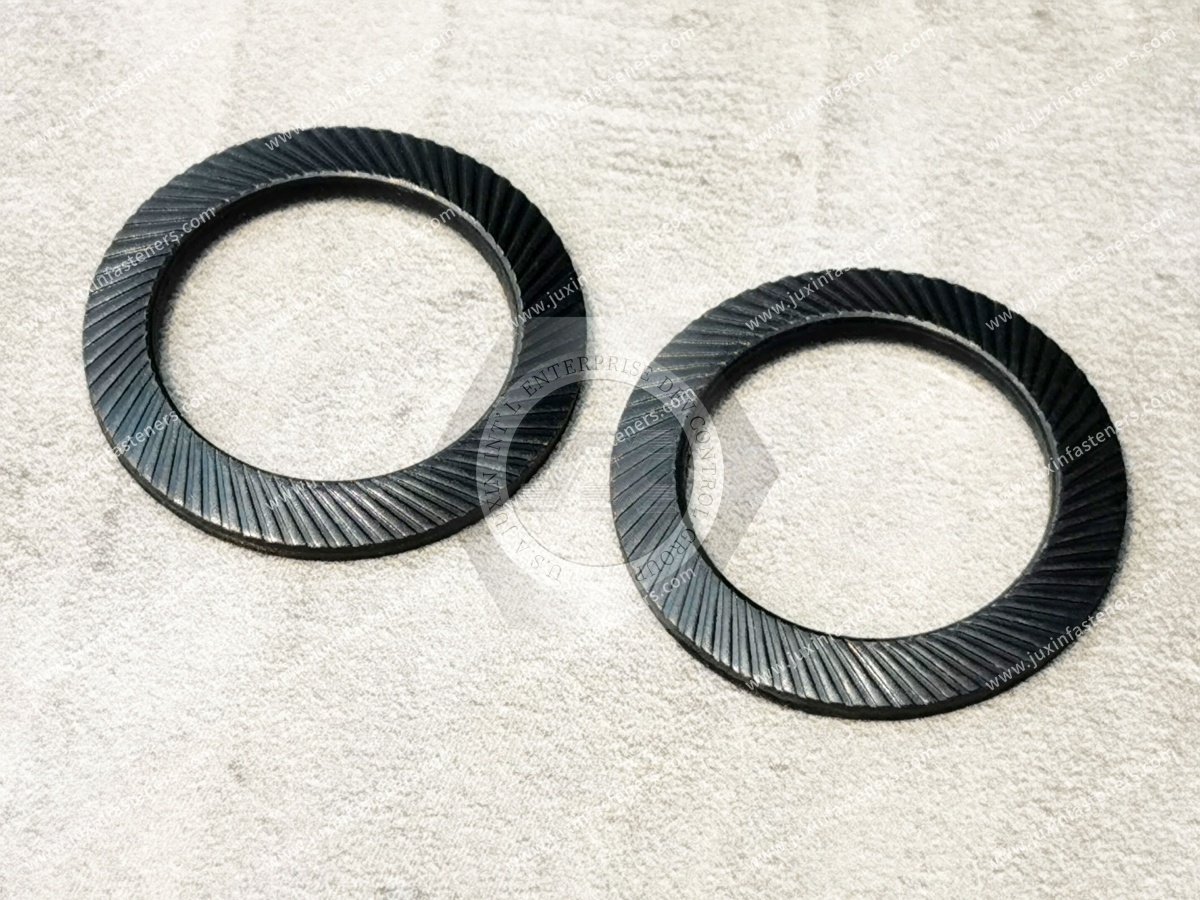
A properly tightened bolt develops preload, producing clamp force between the joined components.
The reliability of the connection depends on retaining sufficient clamp load throughout operation.
Loosening risk can increase when a joint experiences:
transverse vibration
repeated shock loading
cyclic external loads
settlement or embedding of mating surfaces
thermal expansion and contraction
insufficient installation preload
excessive variation in tightening friction
soft or deformable joint materials
repeated equipment start-stop cycles
A critical engineering distinction is that rotational loosening and preload loss are not always the same failure mechanism.
A locking washer may help resist relative rotation of a nut or bolt head, but it cannot automatically compensate for every cause of clamp-load loss.
Joint settlement, gasket creep, plastic deformation, thermal effects or an incorrectly selected bolt can reduce preload even when visible nut rotation has not occurred.
This distinction matters when engineers investigate recurring field failures.
The locking performance of a DIN 9250 safety washer depends on the interaction between its formed locking geometry, the fastener bearing surface and the mating component.
When the joint is tightened, the washer interfaces create resistance to relative rotational movement.
Under operating vibration or dynamic loading, this additional mechanical resistance helps reduce the tendency of the fastener to rotate loose.
The effectiveness of the connection nevertheless depends on the complete joint system, not the washer alone.
Engineers should evaluate:
Bolt preload
A locking element cannot replace correct bolt tension. Insufficient preload can allow joint movement and significantly increase loosening risk.
Mating-surface hardness
The washer must interact appropriately with the surface beneath the bolt head or nut. Very soft, coated or easily damaged surfaces require additional consideration.
Surface condition
Paint, thick coatings, soft plating, contamination or lubricants can alter friction and interface behavior.
Joint stiffness
A stiff metal-to-metal joint behaves differently from a joint containing polymers, gaskets, insulation or compressible materials.
Loading direction
Transverse cyclic movement is particularly important when evaluating self-loosening risk.
Temperature
Thermal cycling can change preload through differential expansion, material relaxation and changes in joint stiffness.
For critical joints, locking washer selection should therefore form part of the overall bolted-joint design rather than being treated as an isolated component decision.
Stainless steel versions are particularly useful when corrosion resistance is required in addition to mechanical locking performance.
Common stainless steel selections may include austenitic stainless steel grades such as A2/304-type or A4/316-type materials, depending on the approved product specification and application requirements.
A2-type stainless steel is commonly considered for general industrial applications where good atmospheric corrosion resistance is required.
Typical environments may include:
industrial machinery
electrical equipment
indoor manufacturing systems
foodservice equipment
transportation equipment
general outdoor assemblies with controlled exposure
A4/316-type stainless steel may be considered where greater resistance to aggressive environmental exposure is required.
Applications can include:
marine-related equipment
coastal installations
chemical-processing equipment
outdoor energy systems
high-humidity environments
equipment exposed to certain chlorides or industrial contaminants
Material designation alone should not be used as a guarantee of suitability for every corrosive environment.
Chemical concentration, temperature, chloride exposure, galvanic couples and cleaning processes should be evaluated before final material approval.
One useful sourcing distinction is that corrosion resistance and locking performance are separate engineering requirements.
Selecting stainless steel solely because the assembly is considered "high performance" can be unnecessary or, in some joints, technically undesirable.
Engineers should ask two separate questions:
What mechanical locking behavior does the joint require?
What material and corrosion resistance does the operating environment require?
For dry indoor machinery, an appropriately engineered carbon or alloy steel locking component may be suitable.
For outdoor, marine, chemical, food equipment or other corrosion-sensitive applications, stainless steel may provide a more appropriate material solution.
This separation between locking function and environmental material requirement helps prevent over-specification and unnecessary procurement cost.
Another common specification mistake is evaluating only the washer material.
A stainless steel washer may be installed with:
a stainless steel bolt
a carbon steel nut
a coated steel bracket
an aluminum housing
a painted structural component
The corrosion behavior of the assembly can therefore differ substantially from that of the washer tested independently.
For mixed-metal assemblies, engineers should consider:
galvanic compatibility
trapped moisture
drainage
chloride exposure
coating damage during installation
electrical conductivity requirements
long-term maintenance conditions
This is particularly important in EV equipment, energy systems, outdoor electrical enclosures and aluminum structures.
Anti-loosening components are sometimes treated as universal remedies for bolted-joint problems. They are not.
A DIN 9250 safety washer should not be expected to correct:
an undersized bolt
insufficient tightening torque or preload
excessive joint settlement
severe gasket creep
polymer relaxation
damaged threads
incorrect thread engagement
unsuitable bolt property class
severe thermal mismatch
poorly designed bearing surfaces
If a bolted joint repeatedly loses clamp force, engineers should identify the actual failure mechanism before changing the washer.
For example, a connection that loses preload because a polymer component creeps under sustained compression may require a sleeve,
compression limiter, redesigned joint geometry or different fastening strategy rather than simply a more aggressive locking washer.
That distinction can prevent repeated field failures and unnecessary component changes.
No single anti-loosening technology is ideal for every assembly.
Consider when a compact mechanical locking element is required and the joint design is compatible with the washer's locking interfaces.
Common in many general-purpose assemblies, but their suitability should be evaluated carefully for joints exposed to demanding transverse vibration.
Useful where teeth can engage the mating surface and where surface marking is acceptable.
Primarily selected where spring characteristics, load compensation or preload behavior are important. Their function should not automatically be equated with that of a locking washer.
Nylon-insert or all-metal lock nuts provide resistance through prevailing torque and can be appropriate where nut-based locking is preferred.
These use a different locking principle and may be considered for demanding vibration applications where their specific performance characteristics are required.
Chemical locking can be effective in suitable assemblies but introduces considerations including curing, cleanliness, temperature resistance, disassembly and maintenance.
The correct solution depends on the failure mode, operating environment, assembly process and service requirements.
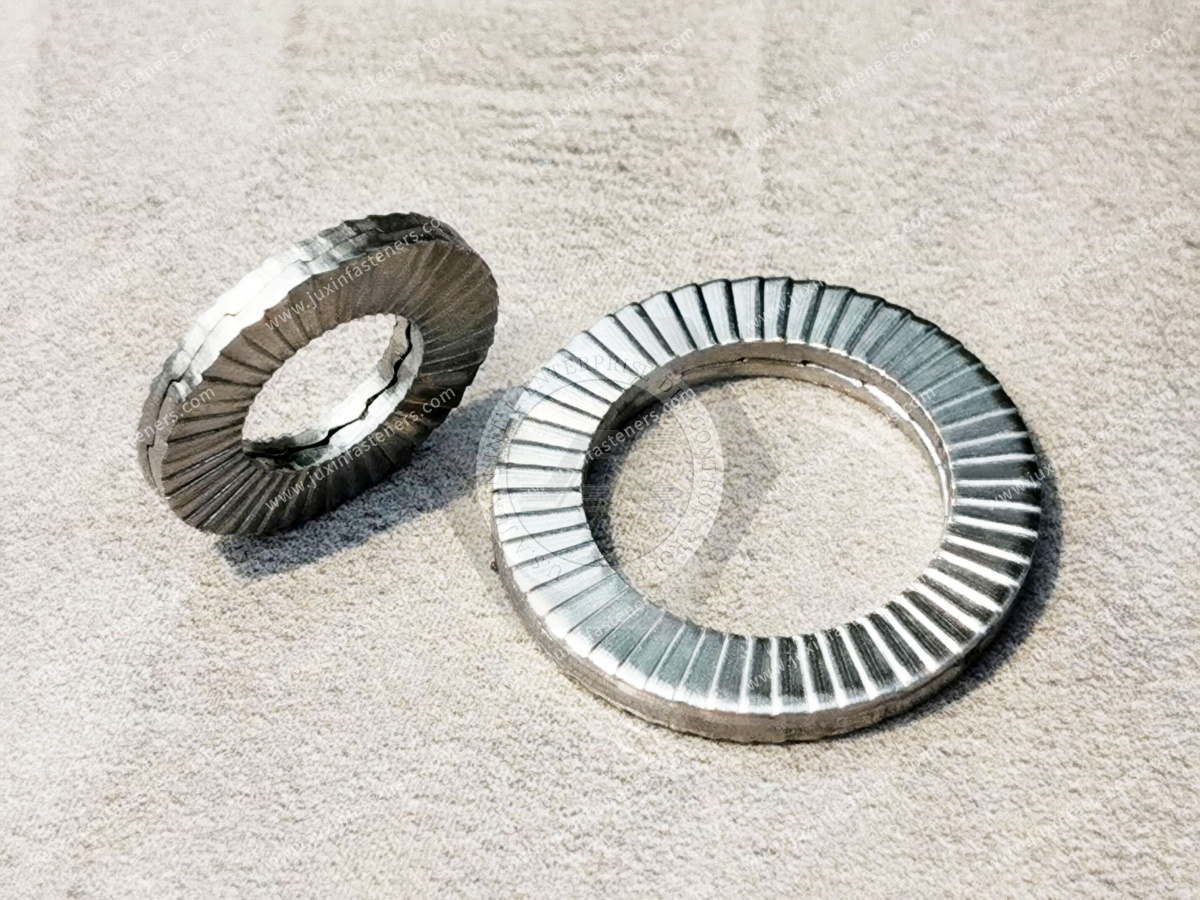
A locking washer does not eliminate the need for controlled tightening.
Installation torque remains an important process variable because it is used to generate bolt preload. The relationship between torque and preload depends heavily on friction.
Factors affecting the torque-preload relationship include:
bolt and nut material
thread condition
lubrication
coating
surface finish
washer interface
installation speed
reuse
prevailing torque from other locking elements
For safety-critical or high-performance joints, tightening specifications should be established by the responsible engineering team and validated for the actual fastener system.
The presence of a DIN 9250 washer should therefore not be interpreted as permission to ignore torque control.
Before installation, confirm that the washer size, material and geometry correspond to the approved bolt or nut and assembly specification.
The bearing surfaces should be suitable for the washer design and free from conditions that could prevent proper seating.
During assembly:
Verify the correct washer orientation according to the approved DIN 9250 configuration or product drawing.
Ensure the washer sits correctly beneath the bolt head or nut.
Confirm that the mating surface is compatible with the locking geometry.
Apply the specified tightening procedure.
Avoid uncontrolled substitutions between different types of locking washers.
Inspect the assembled joint where required by the quality plan.
Pneumatic, electric, hydraulic or manual tightening equipment may be used depending on the assembly process, but the tightening method should be capable of meeting the required joint specification.
Locking washers depend on interface behavior, which means the mating surface can be just as important as the washer itself.
A washer that performs effectively against a hard metallic surface may behave differently against:
aluminum
painted sheet metal
zinc-coated components
polymers
composite materials
soft decorative finishes
If the washer damages or embeds excessively into a soft surface, clamp-load behavior may change.
Conversely, if the mating surface prevents sufficient engagement, the expected locking effect may be reduced.
Design engineers should therefore review the washer together with the actual joint materials and surface treatments.
Extra care is required.
Polymer and composite components can experience creep, stress relaxation, local crushing and surface damage under concentrated fastener loads.
Direct installation of an aggressive locking washer onto a plastic component may therefore be inappropriate.
Depending on the application, the joint may require:
a metallic insert
compression limiter
load-spreading washer
metal sleeve
reinforced boss
redesigned bearing interface
For assemblies involving plastic, the primary engineering question is often not simply "Which locking washer should we use?" but rather "How should clamp load be transferred through the polymer without losing preload?"
JUXIN FASTENERS also supplies threaded inserts and custom fastening components for plastic assemblies where a more complete joint solution is required.
DIN 9250 stainless steel safety washers can be used in machinery, motors, pumps, production equipment, automation systems and mechanical assemblies exposed to repeated vibration.
Potential connection points include:
equipment frames
motor mounting
brackets
guards
drive systems
vibration-exposed accessories
Vehicle assemblies experience vibration, shock, thermal cycling and environmental exposure.
Potential applications include non-permanent bolted connections in:
brackets
auxiliary structures
thermal-management equipment
electrical equipment
battery-related supporting systems
production tooling and manufacturing equipment
Fasteners used in automotive production should always follow the OEM or Tier-1 approved specification and validation requirements.
Power distribution, industrial electrification, UPS systems and power electronics contain bolted mechanical connections exposed to equipment vibration and thermal cycling.
Stainless steel locking components may be considered where corrosion resistance and serviceability are also required.
Electrical contact joints require additional engineering consideration because electrical resistance, surface pressure, thermal cycling and conductivity requirements can affect fastener selection.
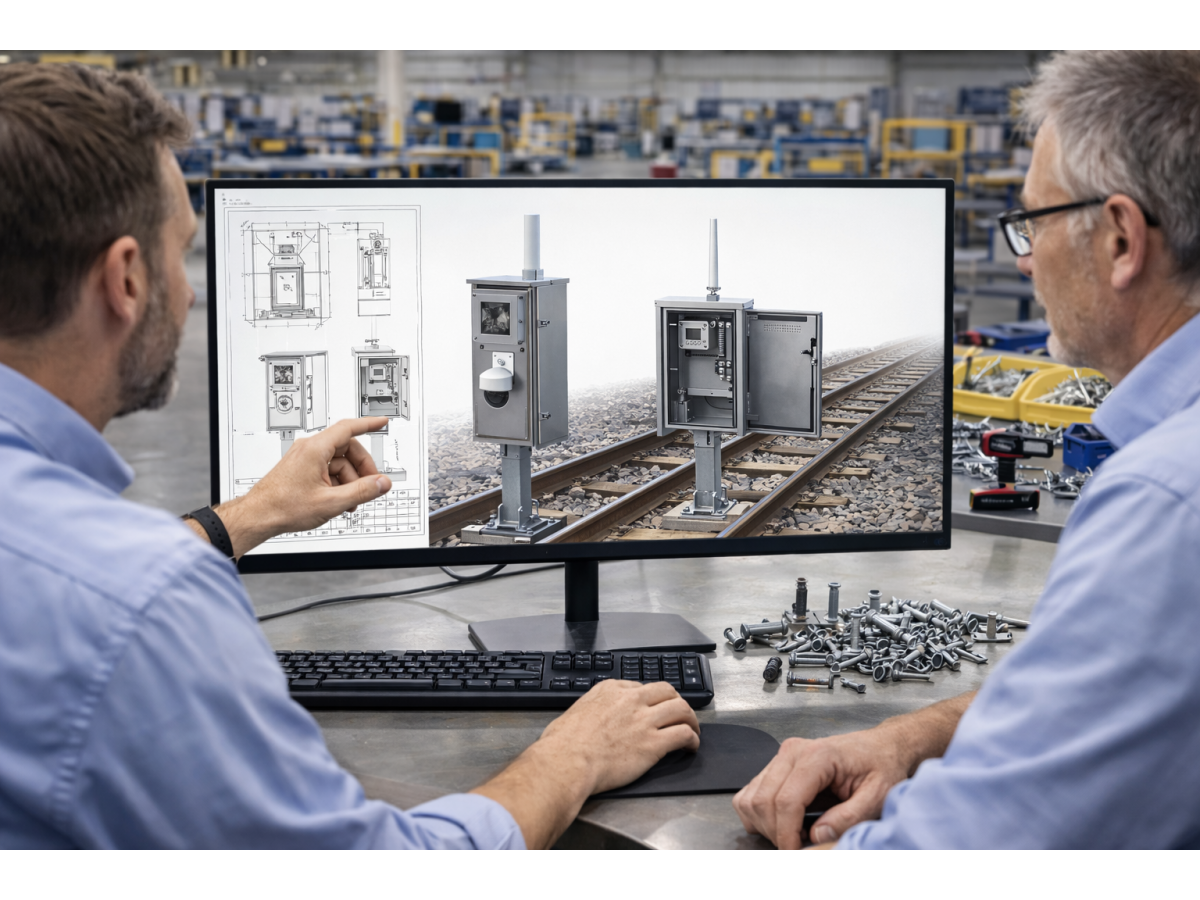
Data-center infrastructure increasingly combines high-density electrical systems, cooling equipment, pumps, manifolds, racks and mechanical support structures.
Vibration-resistant fasteners can be relevant to:
cooling equipment
pump assemblies
CDU structures
equipment frames
electrical cabinets
power-distribution hardware
auxiliary mechanical systems
The locking strategy should be selected according to the actual equipment design rather than applying one washer type across every connection.
Battery energy storage systems combine structural frames, battery enclosures, HVAC systems, electrical equipment and outdoor cabinets.
Fasteners may encounter:
vibration during transportation
thermal cycling
outdoor humidity
maintenance operations
long service intervals
Stainless steel locking washers can form part of the joint design where these conditions justify their use.
Renewable-energy installations frequently require long service life under outdoor exposure.
Applications may include:
equipment housings
electrical enclosures
inverter assemblies
control equipment
auxiliary structures
maintenance-access connections
Corrosion environment and joint loading should be assessed before material selection.
Rail equipment experiences persistent vibration and repeated dynamic loading.
Mechanical locking components may therefore be considered for appropriate equipment and structural subassemblies subject to the applicable engineering and railway requirements.
Fans, pumps, compressors, heat exchangers, liquid-cooling systems and associated frames can transmit vibration into bolted assemblies.
The locking method should be selected together with the expected vibration amplitude, maintenance interval and corrosion environment.
Stainless steel fasteners are frequently selected for foodservice equipment because of corrosion resistance and cleaning requirements.
Applications can include:
equipment frames
stainless steel panels
support structures
refrigeration equipment
commercial kitchen machinery
The selected stainless steel grade should match the cleaning chemicals and operating environment.
For strategic sourcing and supplier qualification, price per washer should not be the only purchasing criterion.
Procurement teams should confirm:
applicable standard or customer drawing
thread/bolt size
washer dimensions
stainless steel grade
hardness or mechanical requirements where specified
surface/passivation requirements
dimensional tolerances
inspection requirements
lot traceability requirements
packaging specification
annual demand
forecast and delivery schedule
For OEM and Tier-1 sourcing programs, documentation requirements should be communicated during RFQ rather than after production begins.
Locking washer consistency depends on more than nominal diameter.
Production and incoming inspection may need to control characteristics such as:
inside diameter
outside diameter
thickness
formed geometry
flatness or profile requirements
material
hardness where applicable
surface condition
The exact inspection plan should follow the relevant standard, approved drawing and customer-specific requirements.
For high-volume OEM programs, inspection scope can be agreed according to drawing characteristics, application risk and customer quality requirements.
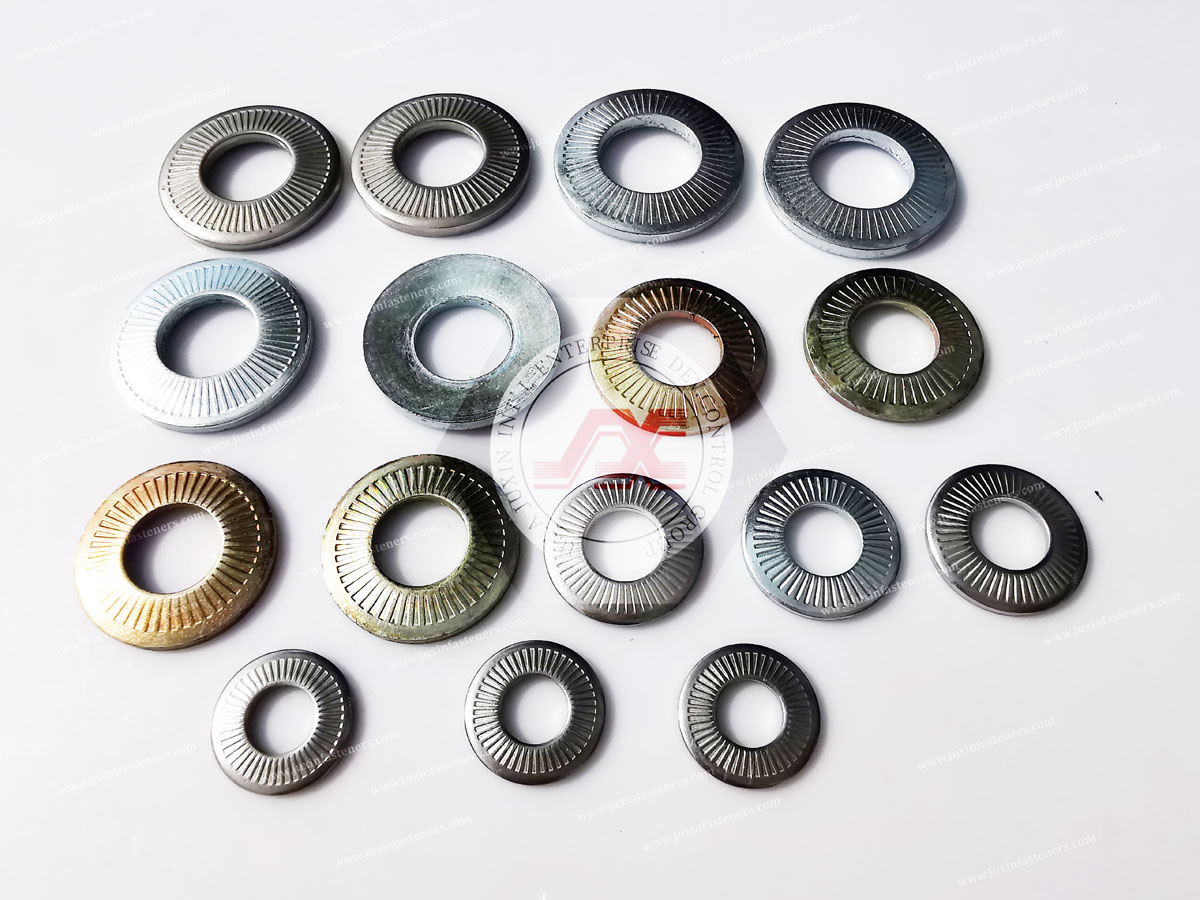
A standard DIN washer is not automatically the best solution for every assembly.
A custom component may be justified when the application requires:
non-standard inside or outside diameter
unusual bearing area
specific thickness
special material
controlled interface geometry
unique corrosion protection
compatibility with a proprietary assembly
integration with another fastening function
In other applications, the better solution may not be a custom washer at all. A prevailing-torque nut, self-clinching fastener, threaded insert, weld fastener or redesigned joint may provide a more robust fastening architecture.
This is why JUXIN FASTENERS approaches locking components as part of the complete assembly rather than treating every RFQ as an isolated washer purchase.
To obtain an accurate technical and commercial quotation, provide as much of the following information as possible:
DIN 9250 designation or applicable drawing
bolt/thread size
washer dimensions
stainless steel grade
required quantity
annual usage
application
mating-surface material
operating temperature
corrosion environment
surface or passivation requirement
inspection/documentation requirements
packaging requirements
target delivery schedule
For custom or application-specific projects, a 2D drawing, 3D model or existing sample can help accelerate engineering review.
JUXIN FASTENERS supports industrial OEM and supply-chain customers requiring standard and custom fastening components for engineered assemblies.
Our broader fastening portfolio allows sourcing teams to evaluate DIN 9250 stainless steel safety washers alongside related components such as:
spring and disc spring washers
stainless steel washers
prevailing-torque lock nuts
all-metal lock nuts
nylon-insert lock nuts
self-clinching fasteners
blind rivet nuts
weld nuts
threaded inserts for plastics
custom bolts and nuts
CNC-machined fastening components
This is particularly useful when an OEM project contains multiple fastening technologies and the purchasing team wants to consolidate technical communication, inspection requirements and supply-chain management.
It is used as a mechanical locking element in bolted connections where resistance to unintended rotational loosening is required.
No. They should not automatically be treated as equivalent products. Their geometries and locking mechanisms differ. The specified standard, drawing and required joint performance should determine product selection.
No locking washer can correct every joint failure mechanism. Performance depends on preload, joint stiffness, mating surfaces, vibration, temperature and installation conditions.
The appropriate material depends on the corrosion environment. A2/304-type stainless steel is widely used for general corrosion resistance,
while A4/316-type stainless steel may be preferred for more aggressive environments. Final selection should consider the complete exposure conditions.
No. Correct tightening remains essential because bolt preload is a fundamental part of bolted-joint performance.
The joint requires additional engineering review. Plastics may creep or suffer local surface damage. Inserts, compression limiters, sleeves or load-spreading components may be more appropriate depending on the assembly.
Provide the standard or drawing, size, material, quantity, application, operating environment, quality requirements, packaging requirements and delivery expectations.
The best anti-loosening solution is not simply the washer with the most aggressive locking geometry.
It is the fastening system that maintains the required joint performance under the actual combination of preload, vibration, mating materials, temperature, corrosion and service conditions.
For engineers, that means evaluating the complete bolted joint.
For procurement and supplier-development teams, it means sourcing against clearly defined dimensional, material, quality and application requirements rather than purchasing by a generic "lock washer" description.
JUXIN FASTENERS supplies DIN 9250 stainless steel safety washers, industrial locking fasteners, spring washers, lock nuts and custom fastening components for OEM and engineered industrial applications.
For quotation, drawing review or fastening application support, send your specification, drawing and expected quantity to:
 MORE NEWS
Sep. 27, 2026
Sep. 27, 2026
Sep. 27, 2026
Contact Us
Tel.:
+86 020 8621 0320
+86 020 3121 6067
E-mail:
Technical Support:
Navigation
SEND INQUIREY