
Call Us
+86 136 6007 9809
Call Us
+86 136 6007 9809

Jul. 04, 2024
By Juxin Fasteners Fastening Solutions Engineering Team
In high-stress manufacturing environments and field maintenance, broken bolts and sheared studs cause critical operational downtime. Extracting a snapped fastener without damaging the parent workpiece threads requires specialized engineering techniques. One of the most effective, field-proven methods for extracting broken bolts is welding a heavy-duty nut—specifically a hexagon weld nut (DIN 929)—onto the exposed or recessed bolt shank.
Beyond broken fastener extraction, hexagon weld nuts serve as permanent, high-strength threaded anchors in sheet metal fabrications, structural chassis, and automated assemblies. This comprehensive technical guide covers broken bolt extraction via welding, DIN 929 standards, installation protocols, and multi-industry application solutions.
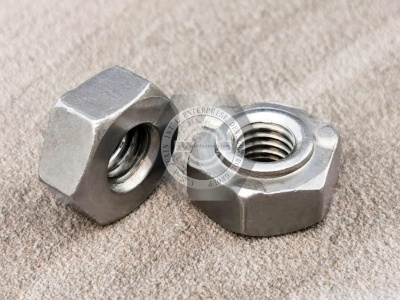
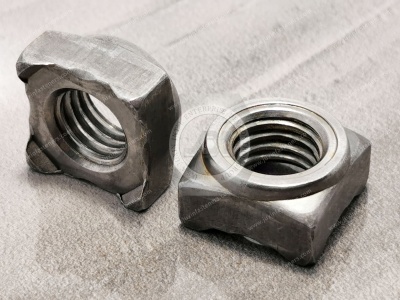
When a bolt shears off flush or below the surface of a housing or chassis, standard screw extractors often fail or snap inside the hole, worsening the damage. Welding a nut onto the sheared bolt shank provides two key mechanical advantages: high-torque mechanical grip and thermal shock that breaks rust or threadlock bonds.
Surface Cleaning: Clean the sheared surface of the broken bolt using a wire wheel or rotary burr to expose bare metal and ensure proper electric arc grounding.
Selecting the Extraction Nut: Choose a carbon steel or stainless steel hex nut (preferably an M8 to M12 size depending on the bolt diameter) that allows direct access to the center of the broken shank.
Centering & Welding: Center the nut directly over the broken shank. Using a MIG (GMAW) or TIG (GTAW) welder, strike the arc inside the nut's center, welding directly onto the bolt top. Fill the internal nut cavity completely with weld metal to fuse the nut body with the bolt.
Thermal Expansion & Shock: Allow the weld pool to cool naturally for 2 to 3 minutes. The rapid heat expansion followed by contraction shatters micro-rust bonds and degrades pre-applied threadlockers.
Backing Out the Fastener: Fit a socket wrench over the newly welded nut. Gently apply counterclockwise torque, rocking back and forth until the broken bolt unthreads smoothly.
A hexagon weld nut (standardized under DIN 929) is a specialized threaded fastener engineered for resistance spot welding or projection welding onto sheet metal plates and structural enclosures. Unlike standard nuts that rely on surface friction, weld nuts create a permanent, non-removable fusion joint with the base metal.
Three Precision Weld Projections (Nodes): Located on the bottom face, these projections concentrate electrical current and clamping pressure during resistance welding, melting uniformly to secure the nut without thermal thread distortion.
Positioning Pilot / Round Tab: A precision circular shoulder centers the nut into pre-drilled or laser-cut sheet metal holes, maintaining exact concentricity during automated assembly.
Anti-Annealing Thread Geometry: Specially designed to resist high welding heat without thread annealing or losing dimensional tolerance class.
At Juxin Fasteners, our DIN 929 hexagon weld nuts are manufactured from high-weldability materials, offering uniform weld strength, excellent surface finish, and zero CO2/flux fumes during resistance welding.
Executive Standard: DIN 929 / ISO Equivalent
Thread Sizes: M3, M4, M5, M6, M8, M10, M12, M14, M16, M18, M20, M22, M24, M27, M33, M36, M39, M42, M48, M52, M56, M60, M64
Thread Pitches: 0.5, 0.7, 0.8, 1.0, 1.25, 1.5, 1.75, 2.0 mm (Coarse and Fine Pitch Options)
Material Options: Low-Carbon Weldable Steel (Class 8 / Class 10), Stainless Steel (A2-70 / SUS304, A4-80 / SUS316)
To achieve high structural integrity and clean cosmetic appearance during volume production, follow these installation protocols:
Surface Preparation: Ensure the parent sheet metal is clean and free of grease, zinc plating, or rust before positioning the nut.
Equipment Setup: Utilize capacitive discharge spot welders, AC resistance welding equipment, or gas-shielded arc systems. Calibrate welding current, electrode force, and weld time to match the nut and plate thickness.
Positioning: Insert the nut's positioning tab into the pre-punched hole on the base metal to lock alignment.
Preheating (Thick Materials): For heavy structural plates, preheating the joint area adjacent to the weld prevents thermal shock cracking and improves weld penetration.
Resistance Projection Welding: Apply electrode force and initiate the current pulse. The three projections melt simultaneously, producing a clean, high-strength bond without thread distortion.
Post-Weld Inspection: Allow the joint to cool naturally. Inspect for complete projection collapse, zero spatter inside threads, and thread clearance using a standard gauge.
Hexagon weld nuts are widely deployed across industries requiring high-vibration resistance, high pull-out torque, and permanent blind-threaded fasteners:
| Industry Sector | Application & Solution Integration |
| Automotive / EV / Battery Pack | Critical anchor points for seat belts, chassis frame beams, transmission housings, and EV battery module support structures. |
| Aerospace & Rail Transit | Used in rail transit bogie frames, car body structural beams, and interior sub-assemblies subject to severe dynamic stress. |
| Electrical Cabinets & HVAC | Secures internal mounting plates, busbar supports, and structural framing inside IP-rated sheet metal enclosures and HVAC units. |
| Medical Equipment & Robotics | Precision stainless steel weld nuts deliver clean, non-corrosive threaded points inside medical diagnostic chassis and robotic frames. |
| Construction, Machinery & Sheet Metal | Applied across heavy construction equipment frames, industrial molds, machinery guards, and sheet metal enclosures. |
| Marine & Heavy Transport | Stainless steel DIN 929 weld nuts provide rust-free, permanent fastening points in marine structure fabrications. |
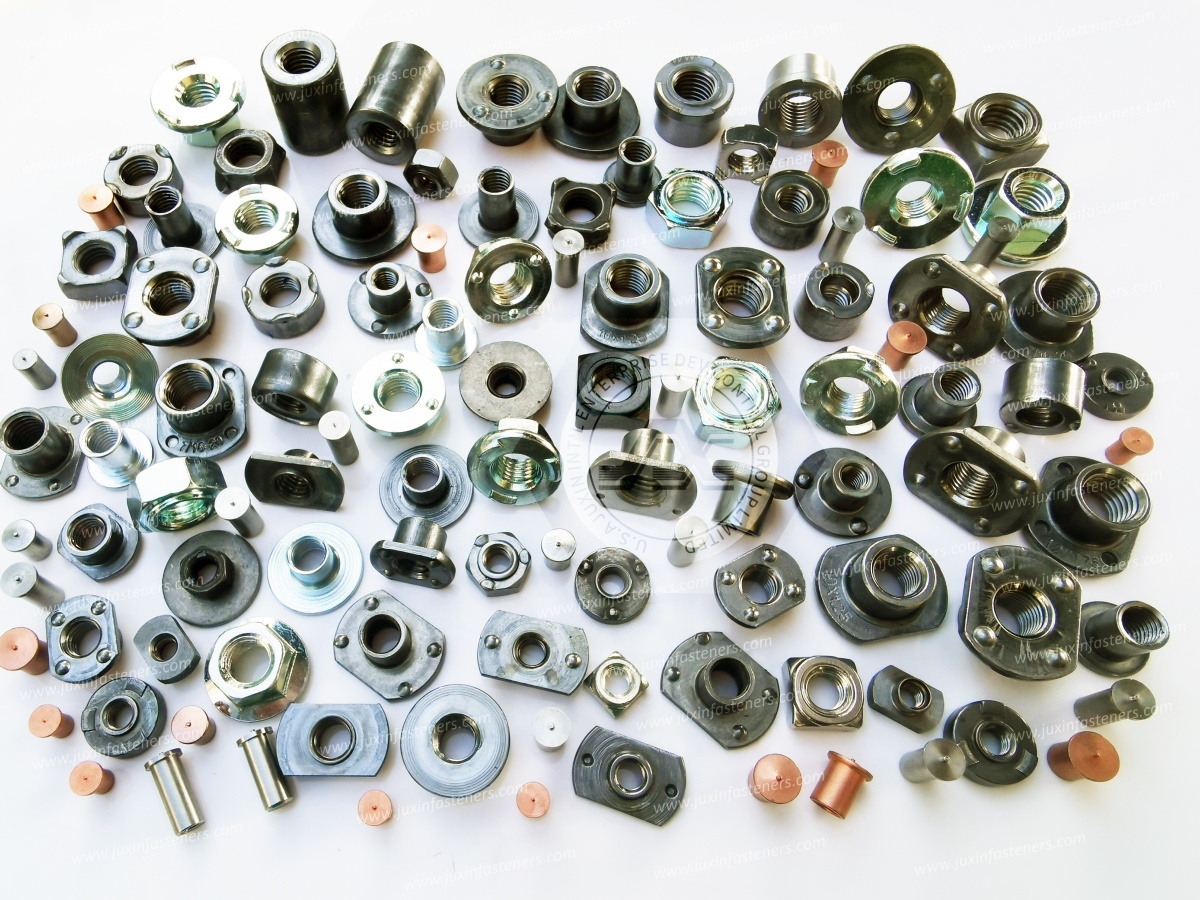
Whether you require standard DIN 929 hexagon weld nuts, custom weld studs, or engineering technical support for broken bolt removal and thread design, Juxin Fasteners is your reliable enterprise partner.
Email:
Website:
 MORE NEWS
Sep. 27, 2026
Sep. 27, 2026
Sep. 27, 2026
Contact Us
Tel.:
+86 020 8621 0320
+86 020 3121 6067
E-mail:
Technical Support:
Navigation
SEND INQUIREY