
Call Us
+86 136 6007 9809
Call Us
+86 136 6007 9809

Oct. 10, 2023
Disc spring washers, widely known as Belleville washers, Belleville springs, conical disc springs or conical spring washers,
are compact axial spring elements designed to generate substantial spring force within a relatively short installation height.
Their conical geometry distinguishes them from ordinary flat washers and many conventional spring washers.
When compressed axially, a disc spring changes shape and develops a restoring force.
By controlling its geometry, material, operating deflection and stacking arrangement, engineers can use disc springs for applications such as:
axial preload;
preload compensation;
bearing preload;
movement accommodation;
overload protection;
shock-energy management;
valve and actuator mechanisms;
clutch and brake assemblies;
tooling;
and compact spring systems.
The key engineering advantage is not simply that a Belleville washer is “strong.”
It is that a disc spring can provide a useful force–deflection relationship within limited axial space.
For OEM sourcing, however, specifying only an outer diameter and material is rarely enough.
A technically complete disc-spring project should consider:
Geometry + Required Force + Required Deflection + Working Position + Static or Dynamic Duty + Stack Arrangement + Guidance + Material
+ Temperature + Environment + Surface Condition + Manufacturing Tolerances + Validation Requirements
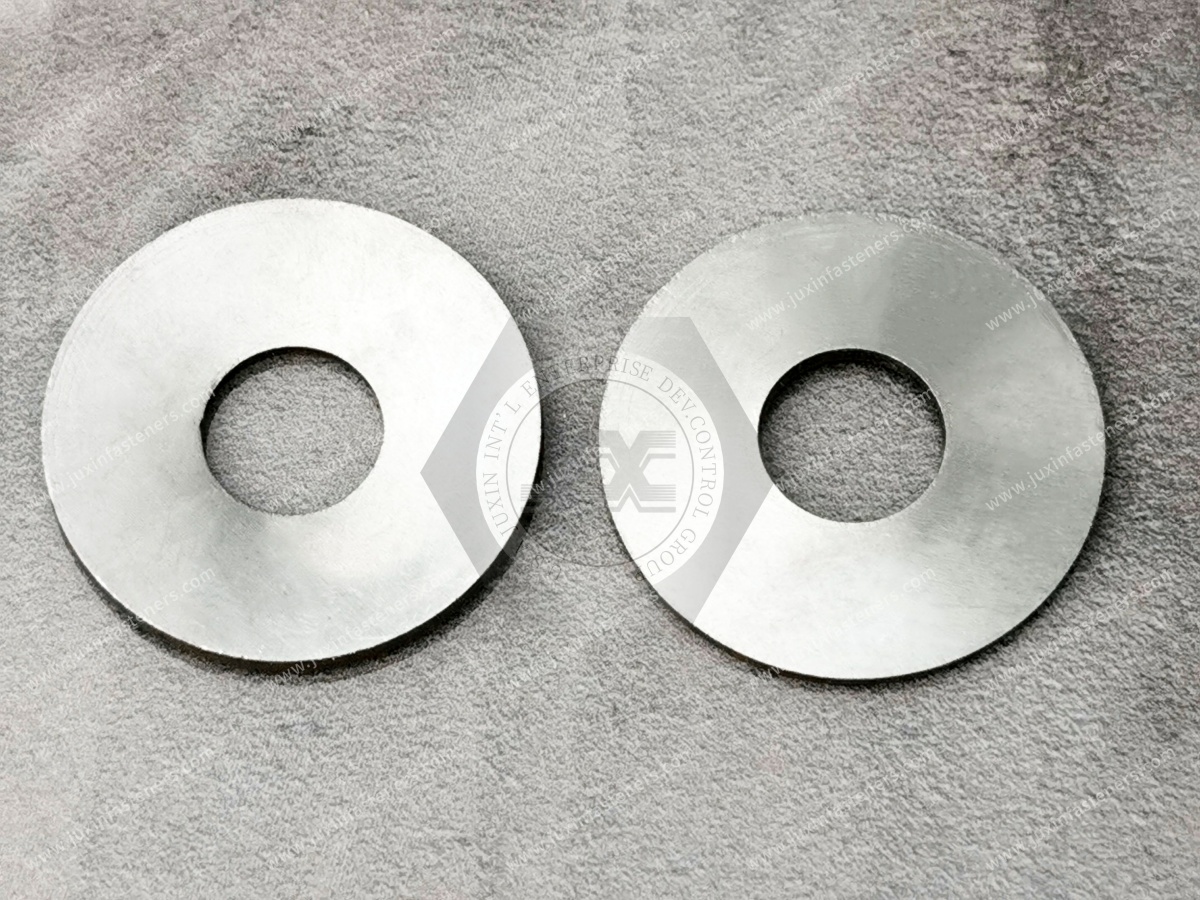
A disc spring is an annular spring element with a conical form.
Its fundamental geometry is commonly described using dimensions such as:
Outside diameter
Inside diameter
Material thickness
Free height
Cone height
and the resulting deflection from the free position under axial load.
When an axial force is applied, the conical profile moves toward a flatter condition.
The resulting elastic deformation creates spring force.
This means a disc spring should not be treated merely as a washer placed under a bolt head.
It is a spring element whose geometry determines mechanical behavior.
In industrial sourcing, these terms frequently overlap:
disc spring;
disc spring washer;
Belleville washer;
Belleville spring;
conical spring washer;
conical disc spring.
However, engineers and procurement teams should pay attention to the intended function.
Some products sold commercially as “Belleville washers” are intended primarily as spring elements with defined force–deflection behavior.
Other conical washers may be selected mainly for maintaining elastic load in a bolted assembly.
A visually similar conical shape does not automatically mean the parts have identical spring characteristics.
For replacement or second-source projects, compare the functional requirements, not only the product name.
For European and international OEM projects using standardized disc springs, the current standards framework should be checked carefully.
The older DIN 2093 designation is still widely encountered in legacy drawings, catalogs and installed equipment.
However, new specifications should reference the applicable current standard requirements rather than assuming every historical DIN 2093 callout remains current.
For standardized European disc springs, relevant requirements include:
EN 16983 / DIN EN 16983 — Disc springs: Quality specifications and dimensions
EN 16984 / DIN EN 16984 — Disc springs: Calculation
The applicable drawing, customer specification and current standard edition should always control the project.
Legacy drawings referencing DIN 2093 should not be silently changed by a supplier.
Instead, the sourcing team should identify the historical requirement and confirm the intended current replacement or equivalence path with the customer.
When axial force is applied to a disc spring:
the conical profile begins to deflect;
stresses develop throughout the disc;
the cone height decreases;
the spring produces an opposing axial force.
The relationship between force and deflection is not automatically identical to that of a conventional helical compression spring.
The curve depends strongly on the disc geometry.
Important geometric relationships include:
outside-to-inside diameter relationship;
thickness;
free cone height;
operating deflection;
support conditions;
and material properties.
This allows disc springs to be engineered for different load–deflection behavior within compact spaces.
A flat washer primarily distributes bearing pressure, provides a seating surface or separates contacting components.
A disc spring provides elastic axial deflection.
Therefore:
Flat Washer → Primarily Load Distribution / Seating
Disc Spring → Controlled Elastic Axial Force and Deflection
A flat washer should not be substituted for a disc spring when the assembly requires a defined spring characteristic.
Likewise, a disc spring should not automatically replace a flat washer where broad bearing-area distribution is the primary requirement.
The phrase “spring washer” covers several different fastener and spring products.
Some conventional spring washers are intended for bolted-joint applications.
A disc spring can instead be designed as a true mechanical spring element with a defined load–deflection characteristic.
The engineering question should therefore be:
Does the assembly need a spring element with controlled axial force and travel, or simply a washer feature within a bolted connection?
This distinction prevents product-name confusion during sourcing.
This requires careful engineering language.
A disc spring can provide elastic compliance in a bolted assembly and may help maintain clamp load when the joint experiences dimensional changes caused by:
embedding;
settling;
thermal expansion;
gasket behavior;
component movement;
or other sources of displacement.
However:
Disc Spring Force ≠ Automatic Thread Locking
A Belleville washer should not automatically be described as a vibration-proof locking washer.
Threaded-joint loosening depends on the complete joint, including:
bolt preload;
joint stiffness;
transverse movement;
friction;
bearing surfaces;
thread geometry;
vibration;
external loading;
locking method;
and installation procedure.
If resistance to self-loosening is a critical requirement, it should be evaluated as a bolted-joint design problem, not assumed from the presence of a disc spring.
This distinction is especially important when engineers are selecting between disc springs, locking washers, prevailing-torque fasteners and other preload or locking strategies.
One of the principal reasons to use a disc spring is the ability to generate substantial axial force over a relatively short spring height.
This can be useful where a conventional coil spring would require too much axial installation space.
Applications may include:
compact machinery;
valves;
bearing systems;
clutches;
brakes;
actuators;
tooling;
power equipment;
and constrained mechanical assemblies.
The required force must still be calculated for the actual disc geometry and operating position.
Disc spring behavior can be changed through geometry and stacking.
This allows engineers to design systems around requirements such as:
high force with short travel;
increased travel;
controlled preload;
movement compensation;
and specific force progression.
The exact force–deflection curve should be calculated or validated for the selected geometry rather than inferred from appearance.
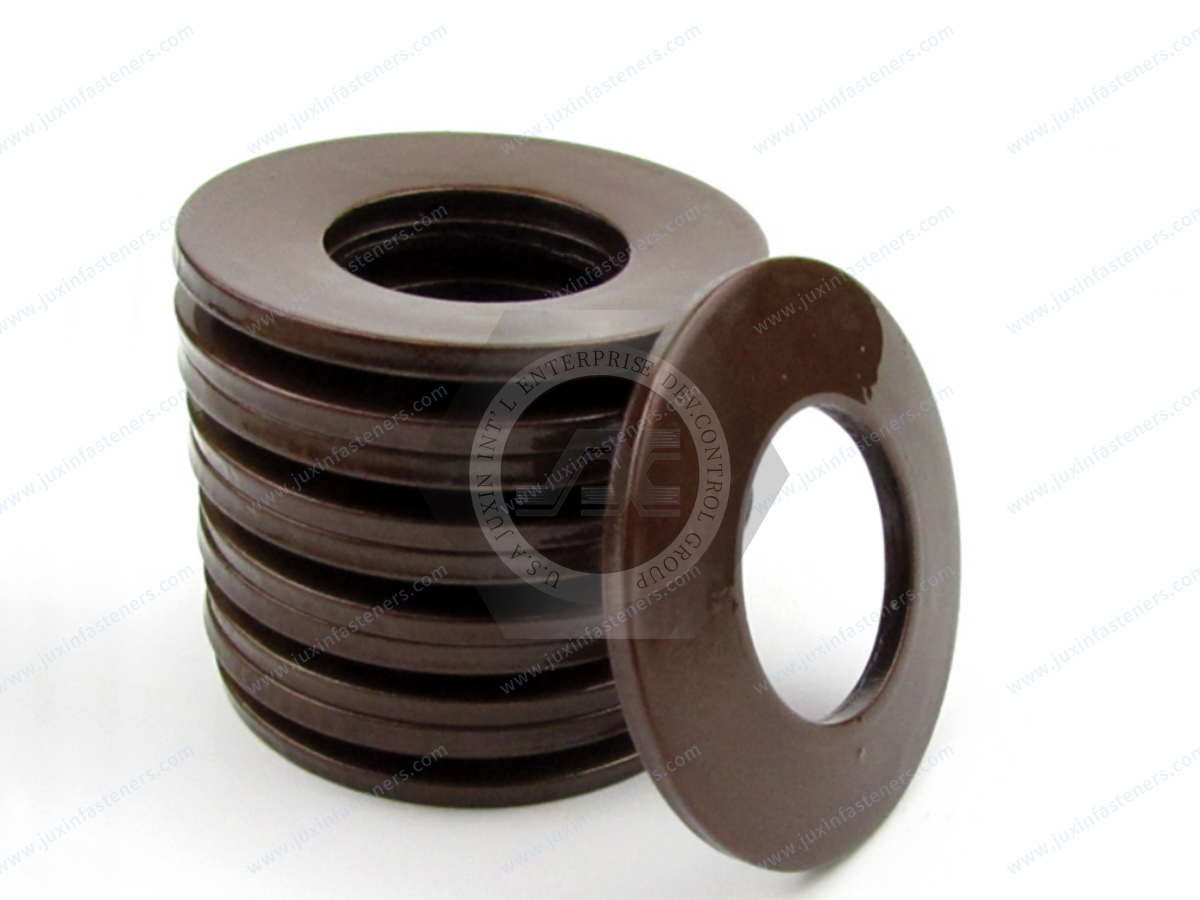
Disc springs can be used individually or arranged in stacks.
This is one of their most useful engineering characteristics.
Common configurations include:
single disc;
series stack;
parallel stack;
and combined series/parallel arrangements.
Each configuration changes the system behavior.
Understanding stacking is essential for disc-spring selection.
In a series arrangement, neighboring discs face opposite directions.
Conceptually, series stacking is used when the assembly needs more total deflection.
For identical discs under idealized conditions:
the force requirement remains associated with the individual disc behavior;
total available deflection increases with the number of discs in series.
In real assemblies, friction, tolerances and guidance influence actual behavior.
In a parallel arrangement, discs are nested in the same direction.
Conceptually, parallel stacking is used when the assembly needs higher force at a similar nominal deflection.
For identical discs under idealized conditions:
the forces contributed by the parallel discs combine;
nominal deflection remains related to the individual-disc deflection.
Real parallel stacks also introduce contact friction between discs.
Series and parallel groups can be combined when the system requires both:
increased force;
and increased travel.
This gives engineers considerable flexibility.
However, increasing the number of discs also increases the importance of:
friction;
alignment;
guidance;
tolerance accumulation;
lubrication where specified;
stack length;
and assembly control.
Therefore, a large disc-spring stack should not be designed only by multiplying ideal single-disc values.
Friction is one of the most important differences between a theoretical disc-spring stack and a real assembly.
Contact can occur:
between nested discs;
between disc edges and guidance surfaces;
between the stack and support surfaces.
Friction can create hysteresis between loading and unloading.
This means:
Loading Curve ≠ Necessarily Unloading Curve
For applications where precise force response matters, friction should be included in the engineering evaluation.
Lubrication, surface condition, finish and guidance should be selected according to the application and design requirements rather than applying one universal lubricant recommendation to every disc-spring system.
Disc-spring stacks may require guidance to remain aligned during compression and release.
Depending on the design, guidance may be provided by:
an internal guide;
an external guide;
a shaft;
a sleeve;
or another mechanical feature.
The guide should allow the spring to move without unacceptable binding while maintaining adequate alignment.
Engineering considerations include:
radial clearance;
surface condition;
wear;
lubrication where applicable;
stack length;
operating speed;
contamination;
and temperature.
Too little clearance can cause binding.
Excessive clearance can permit misalignment.
The correct relationship depends on the actual spring system.
The spring should operate within its intended working range.
If the stack or individual disc is forced against unintended mechanical constraints, local stresses and wear conditions may change.
Designers should distinguish among:
spring guidance;
travel limitation;
mechanical stop;
overload protection;
and spring support.
These functions should not be assumed to be interchangeable.
A major selection question is whether the spring will operate primarily under:
static load;
occasional movement;
repeated cyclic loading;
or highly dynamic service.
Static applications may focus more heavily on:
required force;
relaxation;
temperature;
dimensional stability;
and long-term preload.
Dynamic applications require additional attention to:
stress range;
working deflection;
number of cycles;
fatigue;
surface condition;
edge condition;
friction;
guidance;
and operating frequency.
A disc spring that is acceptable for a static preload application should not automatically be assumed suitable for high-cycle dynamic service.
The old assumption that disc springs automatically provide “excellent fatigue resistance” is too broad.
Fatigue performance depends on:
material;
heat treatment;
surface condition;
geometry;
stress level;
stress range;
operating deflection;
manufacturing quality;
shot peening or other processes where specified;
environment;
and cycle requirements.
For cyclic applications, engineers should define the expected duty rather than simply request a “high-fatigue disc spring.”
Useful RFQ information may include:
minimum operating load;
maximum operating load;
minimum deflection;
maximum deflection;
expected cycle count;
operating frequency;
and temperature.
Disc springs under sustained load can experience changes in spring force over time.
The amount depends on factors such as:
material;
stress;
temperature;
time;
heat treatment;
and operating condition.
This is particularly important where the spring is used to maintain long-term preload.
A supplier should not quote a universal relaxation percentage without knowing the applicable spring design and service conditions.
The old article divided disc springs into universal temperature categories such as 150°C, 300°C and 600°C.
That is not a reliable way to specify a disc spring.
Temperature capability depends on the complete material and performance requirement.
Elevated temperature can influence:
elastic modulus;
spring force;
relaxation;
creep;
oxidation;
corrosion;
fatigue;
and surface treatment.
Therefore, the RFQ should specify the actual operating and peak temperature, not merely ask for a “high-temperature Belleville washer.”
Disc springs can be manufactured from different spring materials depending on:
required force;
stress;
fatigue requirement;
temperature;
corrosion;
magnetic requirements where relevant;
availability;
and cost.
Spring steels are widely used for industrial disc springs where appropriate mechanical properties and environmental protection can be achieved.
For international OEM sourcing, material should be specified by the customer's required international material designation or drawing requirement rather than by legacy local material names.
Stainless grades may be considered where corrosion resistance is important.
Possible grades depend on the mechanical and environmental requirements.
However:
Stainless Steel ≠ Corrosion-Proof
The actual grade, stress condition, temperature, chloride exposure and surface condition still matter.
Materials such as Inconel 718 or other high-performance alloys may be considered for specialized high-temperature, corrosion or mechanical environments where justified by the application.
Material selection should be based on engineering requirements rather than simply choosing the highest-cost alloy.
Specialty applications may use copper-based or other elastic alloys where electrical, corrosion, nonmagnetic or environmental requirements justify them.
Exact alloy selection should be defined by the customer drawing or engineering requirement.
Surface treatment may be required for carbon-steel disc springs.
Depending on material and application, potential approaches may include suitable:
zinc-based finishes;
zinc-nickel systems;
phosphate/oil systems;
mechanically applied coatings;
non-electrolytic coating systems;
stainless-steel passivation;
or other customer-specified treatments.
Finish selection should consider:
corrosion environment;
fatigue sensitivity;
hydrogen-embrittlement risk where applicable;
dimensional effect;
friction;
contact between stacked discs;
operating temperature;
and customer restricted-substance requirements.
Hexavalent chromium should not be specified.
Color alone is not a technical coating specification.
Disc springs are frequently considered where bearings require controlled axial preload.
Potential engineering objectives include:
accommodating dimensional variation;
maintaining contact;
compensating for thermal movement;
reducing sensitivity to small axial changes;
and maintaining a designed axial force range.
The correct spring characteristic depends on the bearing system.
A disc spring should not be selected from bearing diameter alone.
Engineers should define:
preload requirement;
available axial space;
working deflection;
thermal movement;
bearing arrangement;
rotation-related constraints;
and expected life.
Valves and actuators can require compact axial spring force for:
preload;
return force;
pressure compensation;
overload behavior;
or actuator mechanisms.
Disc springs can be useful because substantial axial force can be generated within a compact envelope.
However, valve applications may involve:
elevated temperature;
pressure;
corrosive media;
cycling;
and critical reliability requirements.
The actual spring design should therefore be based on the valve's operating conditions.
Clutch and brake mechanisms may use disc springs where compact spring force and controlled axial movement are required.
These are dynamic applications and may involve demanding:
fatigue;
temperature;
wear;
load;
and cycle requirements.
A generic industrial disc spring should not automatically be represented as suitable for safety-critical brake or clutch service without application-specific engineering and validation.
Industrial machinery is one of the broadest application areas for Belleville washers and disc springs.
Potential uses include:
preload mechanisms;
clamping systems;
overload devices;
tool-holding mechanisms;
bearing systems;
actuator assemblies;
vibration-related mechanical systems;
and compact force-control mechanisms.
For machine-tool applications, stiffness, positioning and repeated loading may be particularly important.
Automation equipment may use disc springs in:
mechanical grippers;
clamping mechanisms;
overload protection;
fixture systems;
tooling;
actuator assemblies;
and compact preload systems.
Where robotic motion creates repeated cycles, fatigue and working deflection become more important than simply specifying maximum static force.
Disc springs may be used in suitable automotive and EV mechanical assemblies involving:
preload;
clamping;
actuators;
bearing systems;
braking or clutch-related mechanisms;
tooling;
production equipment;
and other compact spring functions.
The exact application determines whether automotive-specific qualification or additional testing is required.
A generic disc spring should not automatically be described as automotive-qualified.
Energy storage, electrical and power equipment can include mechanical assemblies that require:
preload;
contact-force management;
movement compensation;
overload protection;
and compact spring systems.
Potential equipment may include:
switchgear;
power electronics;
energy-storage cabinets;
electrical connection mechanisms;
and serviceable mechanical assemblies.
Where the spring is part of an electrical contact system, mechanical spring force and electrical performance should be evaluated separately.
Disc springs are not primarily “server fasteners,” so this industry should only be connected where the mechanical function is genuine.
Potential applications may arise in supporting infrastructure such as:
power distribution equipment;
UPS systems;
cooling equipment;
CDU mechanical systems;
pumps;
valves;
actuators;
clamping mechanisms;
and selected power-electronics assemblies.
The correct search and engineering relationship is therefore:
Disc Spring → Mechanical Preload / Force Compensation / Valve or Equipment Function
not simply:
Disc Spring → AI Server
This distinction keeps industry targeting technically credible.
Semiconductor manufacturing equipment contains precision mechanisms, actuators, valves, tooling and automation systems where compact spring force may be useful.
Potential applications may include:
preload mechanisms;
clamping systems;
motion-control assemblies;
equipment valves;
tooling;
and mechanical overload protection.
Where vacuum, cleanroom, contamination or process compatibility is required, those conditions must be separately specified and validated.
Rail equipment may use disc springs in appropriate mechanical, braking, suspension-related, electrical or equipment mechanisms.
Program-specific fatigue, vibration, fire, environmental and safety requirements should be evaluated separately.
Generic industrial disc springs should not be represented as rail-qualified without the required evidence.
HVAC and industrial cooling equipment contains:
valves;
compressors;
pumps;
actuators;
bearing systems;
and mechanical control assemblies.
Disc springs may provide compact preload or force compensation in suitable mechanisms.
For data-center liquid-cooling and CDU equipment, the same principle applies: the disc spring should be tied to the actual mechanical function rather than added merely as an industry keyword.
Suitable non-implant applications may include:
laboratory equipment;
diagnostic machinery;
mechanical actuators;
equipment clamping systems;
and instrument mechanisms.
Material, cleaning environment and application requirements should be defined by the customer.
The disc spring itself does not establish medical-device certification, sterilization compatibility or biocompatibility.

Commercial food-service equipment contains many mechanical systems beyond the visible enclosure.
Potential disc-spring applications may occur in suitable:
dispensing mechanisms;
valve assemblies;
clamping mechanisms;
door or latch systems;
adjustment mechanisms;
refrigeration equipment;
commercial cooking equipment;
and food-service production machinery.
For example, a valve, actuator or mechanical adjustment system may require compact axial spring force where installation space is limited.
However, a standard disc spring should not automatically be described as:
food-contact compliant;
hygienic-design certified;
washdown-rated;
or compatible with all cleaning chemicals.
The actual location, material, finish and cleaning environment must be defined.
Construction equipment can contain:
braking mechanisms;
clamping systems;
hydraulic equipment;
actuators;
overload mechanisms;
and bearing assemblies.
These applications may involve shock, contamination, temperature variation and high mechanical loads.
Material and fatigue requirements should be defined from the actual duty cycle.
Information Gain becomes especially important when moving beyond a catalog description.
Potential problems include:
Operating outside the intended deflection range can create excessive stress or undesirable spring behavior.
A series/parallel arrangement assembled incorrectly may produce a completely different force–deflection characteristic.
Nested discs can introduce friction and hysteresis.
Poor guidance can cause uneven contact or undesirable loading.
The support interface can influence loading and wear.
A material suitable at room temperature may not maintain the required spring behavior at elevated temperature.
Corrosion can affect surfaces and fatigue-sensitive regions.
Dynamic applications require control of the working stress range.
Long-term static loading, especially at elevated temperature, can reduce spring force.
Two disc springs with similar outside and inside diameters may have very different load–deflection characteristics because thickness, free height, material and manufacturing requirements differ.
Procurement teams sometimes receive an RFQ containing only:
“Belleville washer, same as sample.”
That is not enough for reliable second sourcing.
A replacement should be evaluated against:
outside diameter;
inside diameter;
thickness;
free height;
cone height;
required force at defined deflection;
working deflection range;
material;
heat-treatment requirement where specified;
surface finish;
static or dynamic duty;
fatigue requirement where applicable;
operating temperature;
corrosion environment;
stack arrangement;
guidance;
and mating interfaces.
Second-source projects should distinguish among four objectives.
Critical dimensions match the approved drawing or defined requirement.
Some non-critical dimensions may differ while the required spring function and assembly remain acceptable after customer validation.
The customer intentionally changes geometry, material, finish or spring characteristic.
A new disc spring or stack is developed around the required force–deflection behavior and equipment envelope.
A functional equivalent should not be assumed from appearance alone.
A physical sample can support development where the original drawing is unavailable.
A practical workflow is:
Physical Sample → Dimensional Review → Functional Review → Critical Feature Identification → Material / Finish Information Review
→ Drawing Confirmation → Manufacturing Feasibility → Prototype / Sample Development → Customer Validation → Production
For disc springs, sample review can identify geometric features such as:
outside diameter;
inside diameter;
thickness;
free height;
overall form;
and visible finish.
However, a physical sample alone may not establish:
exact alloy chemistry;
heat treatment;
original spring-force tolerance;
fatigue requirement;
relaxation requirement;
original operating stress;
or complete coating chemistry.
For a reliable replacement, the customer should provide known functional requirements whenever possible.
Disc-spring searches typically divide into two different tasks.
Engineers may search:
how Belleville washers work;
disc spring load deflection;
series vs parallel Belleville washers;
disc spring preload;
disc spring fatigue;
bearing preload Belleville washer;
disc spring stack calculation;
disc spring relaxation;
disc spring guide clearance;
high-temperature disc springs.
The engineering page must therefore explain why the spring behaves as it does and what variables control the result.
Procurement teams may search:
disc spring manufacturer;
Belleville washer supplier;
custom Belleville washers;
custom disc spring manufacturer;
DIN EN 16983 disc spring supplier;
disc spring second source;
Belleville washer from drawing;
custom disc spring from sample;
high-volume disc spring supplier.
The commercial page must therefore explain what information is needed to quote and qualify the part correctly.
A strong B2B page should answer both search journeys without turning into keyword stuffing.
For a technically useful quotation, provide as much of the following information as available.
Outside diameter
Inside diameter
Thickness
Free height
Cone height where specified
Drawing tolerances
Edge or profile requirements where applicable
Required force
Deflection at the specified force
Minimum and maximum working position
Static or dynamic application
Required cycle life where applicable
Relaxation requirement where applicable
Single disc
Series stack
Parallel stack
Combined stack
Number of discs
Available installation length
Guidance method
Required material specification
Stainless or spring steel requirement
High-temperature alloy requirement where applicable
Magnetic requirements where relevant
Coating or passivation requirement
Corrosion requirement
Restricted-substance requirement
Lubrication requirement where specified
Normal operating temperature
Peak temperature
Corrosive media
Humidity
Chemical exposure
Indoor or outdoor service
Bearing preload
Valve
Actuator
Clutch
Brake
Overload protection
Clamping
Machinery
Electrical equipment
or another defined function
Sample quantity
Pilot quantity
Production quantity
Estimated annual usage
Packaging requirements
Traceability requirements where specified
Target schedule
Long-term supply requirement
Procurement teams should evaluate more than unit price.
Depending on the project, relevant supplier capabilities may include:
engineering drawing review;
material control;
manufacturing feasibility;
heat-treatment control;
dimensional inspection;
spring-force requirements;
surface-finish control;
sample development;
production capacity;
lot consistency;
packaging;
change communication;
and long-term supply capability.
Where the customer requires specific force–deflection, fatigue, relaxation or other mechanical performance, the requirement and validation method should be clearly defined.
Do not assume that a visually matching washer is functionally equivalent.
JUXIN FASTENERS supports industrial fastener and engineered component projects for OEM manufacturers, equipment builders, procurement teams and global supply chains.
Disc spring washer projects can be reviewed from:
customer 2D drawings;
3D models where applicable;
physical samples;
dimensional requirements;
target material;
surface finish;
application information;
spring-force requirements supplied by the customer;
stack requirements;
and production quantities.
Custom development may include different dimensions, materials and finishes where manufacturing feasibility and application requirements permit.
The appropriate manufacturing route depends on:
geometry;
material;
tolerance;
spring-performance requirements;
heat treatment;
surface finish;
secondary processes;
tooling;
and production quantity.
For suitable high-volume fastener or component programs, automatic optical sorting may be applicable to compatible externally measurable characteristics.
Optical sorting should not be treated as a substitute for force–deflection or fatigue validation.
A disc-spring project can be reduced to a practical decision path:
What function must the spring perform?
→ What force is required?
→ At what deflection or working position is that force required?
→ How much axial space is available?
→ Is one disc sufficient or is a stack required?
→ If stacked, is the requirement higher force, more travel or both?
→ Is the application static or cyclic?
→ What fatigue or relaxation requirement applies?
→ How will the spring or stack be guided?
→ What operating temperature applies?
→ What corrosion or chemical environment applies?
→ Which material is appropriate?
→ What surface treatment is required?
→ Does an existing standard size meet the requirement?
→ Is this an exact replacement, functional equivalent or custom design?
→ How will samples be validated in the actual assembly?
→ What annual production quantity and supply requirements apply?
This changes the sourcing question from:
“What size Belleville washer do you have?”
to:
“What disc-spring geometry and material can provide the required force–deflection behavior in the available assembly space and operating environment?”
That is the more useful question for mechanical engineers, design engineers, procurement managers and supplier-development teams.
For disc spring washers, Belleville washers, conical spring washers, replacement disc springs, custom dimensions,
drawing-based parts or second-source projects, send your available drawing, physical sample, required force/deflection information, material, finish, application and quantity to:
JUXIN FASTENERS can review the available information and evaluate an appropriate sample-development and manufacturing path for your disc spring washer project.
Previous: Disc Spring vs DIN 6796 Conical Spring Washer
Next: DIN 2093 Disc Springs
 MORE NEWS
Sep. 27, 2026
Sep. 27, 2026
Sep. 27, 2026
Contact Us
Tel.:
+86 020 8621 0320
+86 020 3121 6067
E-mail:
Technical Support:
Navigation
SEND INQUIREY