
Call Us
+86 136 6007 9809
Call Us
+86 136 6007 9809

Oct. 11, 2023
Serrated conical spring washers combine two mechanical features in one compact component:
Conical Elastic Geometry + Serrated Contact Surface
That combination makes them relevant to industrial bolted connections where engineers are evaluating both elastic behavior and resistance to relative movement at the washer interface.
They are sometimes described using overlapping names such as:
serrated conical spring washers;
serrated spring washers;
toothed conical washers;
serrated disc washers;
serrated Belleville washers;
toothed Belleville washers;
conical lock washers;
spring lock washers.
However, these terms are not always technically interchangeable.
A critical distinction is:
A standard conical spring washer does not automatically have serrations, and a serrated conical washer is not automatically a DIN 6796 washer.
For engineers and procurement teams, the correct selection should therefore begin with the joint function rather than the product nickname.
The complete engineering relationship is:
Bolt / Nut + Washer Geometry + Serration Geometry + Mating Surface + Clamp Load + Friction + Coating + External Loading + Assembly Method
Understanding that system is more useful than simply asking for a “butterfly washer” or “anti-loosening disc washer.”
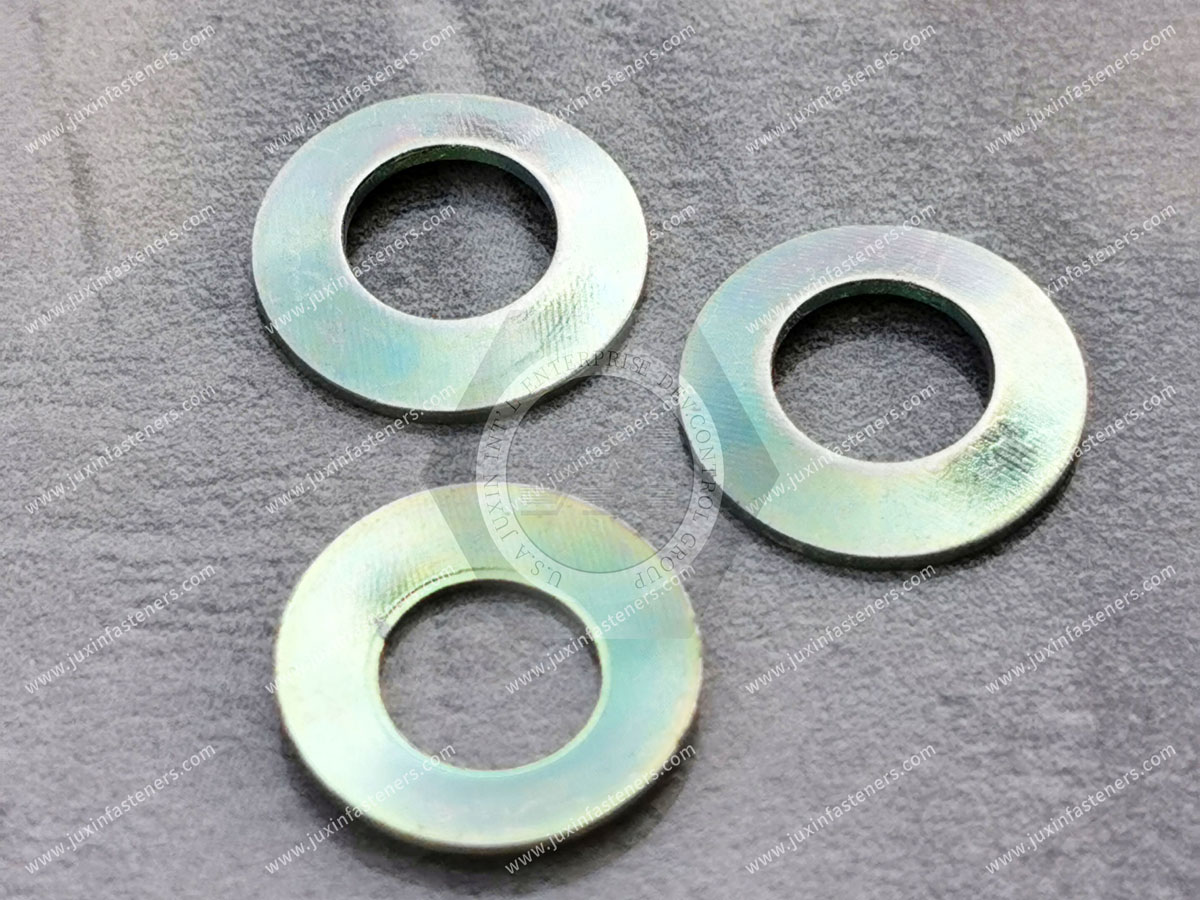
A serrated conical spring washer is an elastic washer with a conical or dished body and engineered surface features such as teeth or serrations.
Depending on the design, the conical body provides axial elastic deflection while the serrated surface interacts mechanically with the mating surface.
These are two different functions.
The conical geometry can provide:
axial elastic deflection;
spring reaction force;
additional elastic travel within the joint;
and a different load–displacement relationship from a flat washer.
The serrations may provide local contact features that interact with the mating surface.
Depending on geometry, material and installation, the serrations may:
increase resistance to relative rotation;
create localized surface engagement;
penetrate or displace certain surface finishes;
or modify the frictional interface.
Therefore:
Spring Action ≠ Serration Action
Both must be evaluated separately.
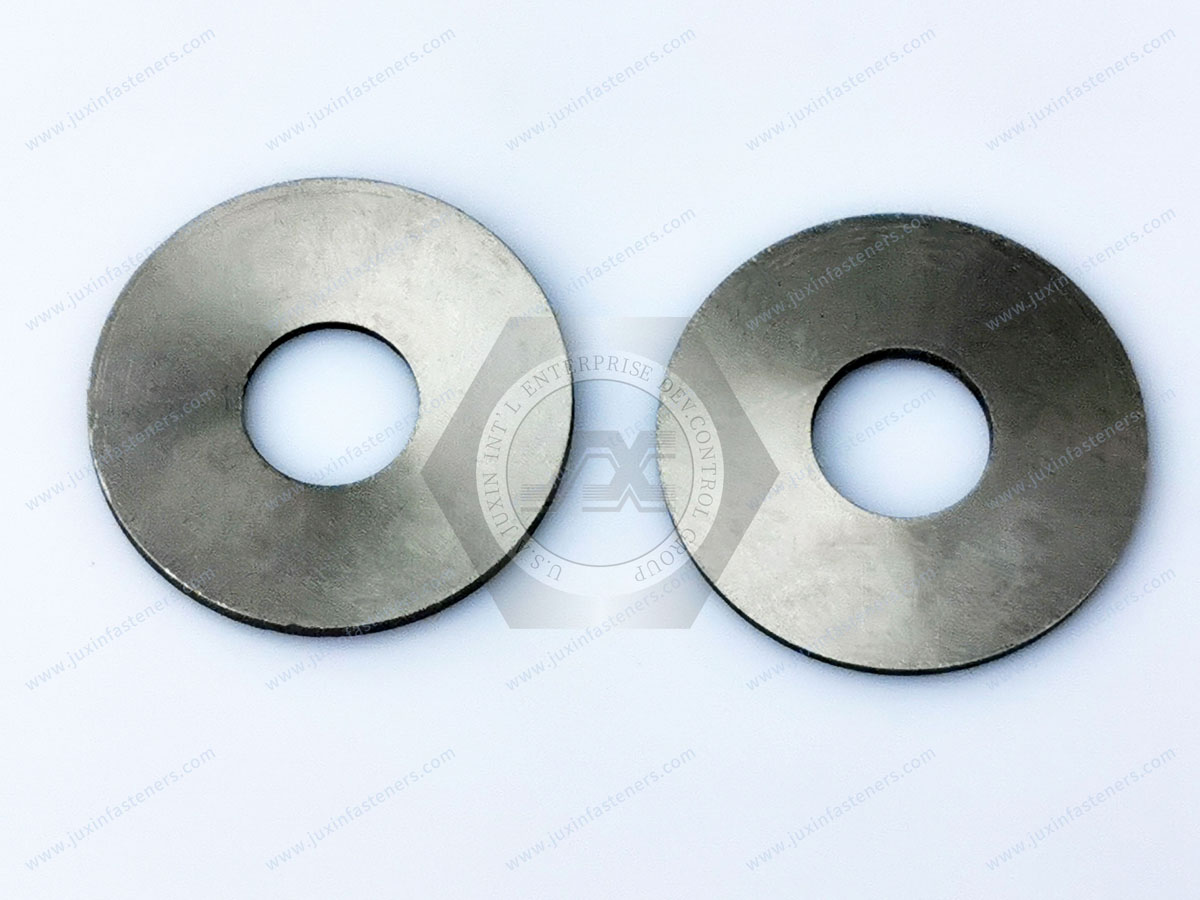
No—not automatically.
A true disc spring, often called a Belleville spring, is primarily a mechanical spring element designed around controlled force and deflection.
A serrated conical washer is generally selected in the context of a bolted connection and includes a surface-engagement feature.
The engineering questions are different.
For a disc spring:
What force is required at what deflection?
For a serrated conical washer:
What does the washer need to do within this bolted interface, and are the serrations compatible with the mating surfaces?
A visually similar conical shape does not make the two products functionally equivalent.
Not necessarily.
DIN 6796 covers conical spring washers for bolted connections.
That does not mean every serrated or toothed conical washer sold in the market is manufactured to DIN 6796.
A custom serrated washer may have:
different tooth geometry;
different inside or outside diameters;
different thickness;
different cone height;
different material;
different hardness;
different surface finish;
and different intended locking behavior.
Therefore, a procurement specification should not simply state:
“DIN 6796 serrated washer”
unless the product actually complies with the applicable standard and the additional serrated features are clearly defined.
A useful distinction is:
DIN 6796 Conical Spring Washer → Standardized Elastic Washer for Bolted Connections
Serrated Conical Washer → Conical Elastic Washer + Defined Serrated Surface Feature
The second product may be standard, proprietary or custom depending on its geometry.
For second-source projects, the serration profile can be just as important as the overall washer dimensions.
True disc springs should be evaluated under the applicable disc-spring standards framework.
The older DIN 2093 designation remains common on legacy drawings, but it has been withdrawn.
Current European disc-spring requirements use:
EN 16983 / DIN EN 16983 — Disc Springs: Quality Specifications and Dimensions
and
EN 16984 / DIN EN 16984 — Disc Springs: Calculation
This is another reason not to combine disc springs, DIN 6796 washers and serrated locking washers into one generic product category.
Serrations change the interface between the washer and the mating component.
A smooth washer contacts the surface differently from a washer containing multiple raised teeth or ribs.
Depending on the design, serrations can create concentrated local contact.
That may be useful where additional resistance to relative rotation is desired.
But the same mechanism can also create engineering trade-offs.
The serrations may interact with:
zinc plating;
paint;
powder coating;
anodizing;
soft aluminum;
stainless steel;
hardened steel;
composite surfaces;
plated fastener heads;
and other mating materials.
This leads to an important selection principle:
A serrated washer cannot be evaluated independently from the surface it contacts.
Bolted-joint problems are frequently grouped under the word “loosening.”
That can hide different failure mechanisms.
Clamp load can decrease because of:
embedding;
settling;
gasket compression;
creep;
thermal movement;
surface deformation;
or other dimensional changes.
The bolt or nut may rotate relative to the joint under certain dynamic conditions, particularly where transverse movement occurs.
These are not the same problem.
Therefore:
Elastic Compliance → Can Influence Preload Response
while
Serrated Surface Engagement → Can Influence Interface Resistance
Neither statement means the washer automatically makes the joint vibration-proof.
Procurement teams frequently receive requests such as:
“Need anti-loosening washer for M10 bolt.”
That does not define the engineering requirement.
The supplier still needs to know:
What type of loosening is occurring?
Is clamp load being lost without rotation?
Is the bolt rotating?
Is transverse vibration present?
What is the mating surface?
Is the surface coated?
Can the surface tolerate indentation?
Will the joint be disassembled repeatedly?
What preload is required?
What bolt property class is used?
Is electrical continuity important?
The correct washer depends on these answers.
Not all serrated washers have the same tooth form.
Relevant features may include:
number of serrations;
tooth height;
tooth angle;
radial position;
inner or outer serrations;
tooth direction;
contact diameter;
sharpness;
hardness;
and orientation relative to the washer body.
These features can affect how the washer interacts with the mating surface.
For custom or second-source projects, a supplier should not assume that matching:
outside diameter;
inside diameter;
thickness;
and material
is sufficient.
Serration geometry can be a critical functional feature.
Some washer designs place teeth closer to the inside diameter.
Others use serrations toward the outer contact region.
Still others use different patterns or multiple contact features.
These geometries should not be reduced to a universal rule such as:
“Inner teeth are for small screws and outer teeth are for large bolts.”
The actual function depends on:
fastener head or nut geometry;
washer dimensions;
mating surface;
tooth design;
load;
and intended locking mechanism.
The approved drawing or validated sample should control the geometry.
The old rule that the concave side must always face the joint and the convex side must always face the nut is too broad for all serrated conical washer designs.
Orientation can affect:
spring deflection;
tooth engagement;
contact diameter;
bearing surface;
and installation.
Some designs may be directional.
Others may have serrations on one side or both sides.
Therefore:
Do not apply a universal orientation rule to every serrated conical washer.
Follow the product drawing, supplier specification or validated assembly requirement.
Serrations work through local surface interaction.
This means mating-surface hardness can influence performance.
A tooth contacting:
soft aluminum;
mild steel;
hardened steel;
stainless steel;
painted steel;
plated steel;
or anodized aluminum
may behave differently.
If the mating surface is too soft, excessive indentation or surface damage may occur.
If the surface is very hard relative to the serration, the expected engagement may be reduced.
For critical applications, mating material and surface condition should therefore be included in the engineering review.
Serrated washers can interact aggressively with surface coatings.
Possible effects include:
local coating penetration;
scratching;
coating displacement;
exposure of base metal;
local corrosion initiation;
debris generation;
and changes in friction.
This can be either intentional or undesirable depending on the application.
For example, a designer may want controlled metallic contact in a specific assembly.
In another assembly, preserving a decorative or corrosion-protective coating may be more important.
Therefore:
Coating Damage Is Not Automatically a Benefit or a Defect
It depends on the intended function.
Because serrations can penetrate some coatings, they are sometimes associated with electrical contact.
However:
Serrated Washer ≠ Automatically Qualified Grounding Washer
and
Serrated Washer ≠ Automatically EMI Bonding Hardware
Electrical performance depends on:
contact material;
coating;
oxide layers;
contact pressure;
current requirement;
corrosion;
environmental exposure;
assembly geometry;
and applicable electrical requirements.
If grounding or bonding is required, the complete assembly should be validated for that function.
Aluminum creates a particularly important interface question.
The engineer should consider:
aluminum alloy;
hardness;
anodizing;
coating;
local bearing stress;
galvanic compatibility;
serration penetration;
and repeated assembly.
A serrated steel washer can interact very differently with aluminum than with hardened steel.
Do not assume that a washer validated on a steel joint will behave identically on aluminum.
Stainless-steel interfaces introduce another set of considerations.
These can include:
hardness relationship;
galling in associated threaded interfaces;
surface damage;
corrosion;
contact condition;
and material compatibility.
If a stainless washer is required, the exact stainless grade and mechanical requirements should be defined rather than specifying only “stainless steel.”
A serrated washer can alter the mating surface during tightening.
After removal, the next installation may contact:
the original tooth impressions;
partially damaged coating;
a shifted contact position;
or a changed bearing surface.
Therefore, reuse should not be assumed.
Whether a washer can be reused depends on:
washer design;
tooth condition;
mating surface;
customer specification;
service requirement;
and validation.
For maintenance-intensive equipment, this question should be considered during initial design.
Serrations and coatings influence friction.
Friction influences the relationship between installation torque and achieved bolt preload.
Therefore:
Changing Washer Type Can Change Torque–Preload Behavior
even when:
bolt size;
bolt material;
and nominal tightening torque
remain unchanged.
This is especially important when replacing:
a smooth washer with a serrated washer;
one coating with another;
one supplier with another;
or one serration geometry with another.
A second source should not be approved only because the dimensions fit.
Serrated conical washers may appear in high-load bolted assemblies.
However, a washer should not automatically be recommended solely because the bolt is property class 8.8, 10.9 or 12.9.
The complete joint still matters.
Engineering should consider:
bolt diameter;
preload;
joint stiffness;
mating materials;
bearing surfaces;
friction;
coating;
dynamic loading;
temperature;
and failure mode.
High Bolt Strength ≠ Automatic Washer Requirement
A common reason for considering serrated washers is vibration.
But “vibration” itself is not a complete design requirement.
Engineers should ask:
Is the vibration axial or transverse?
Is joint slip occurring?
Is the bolt rotating?
Is preload being lost without rotation?
What is the vibration amplitude?
What external loads act on the joint?
Is repeated service required?
A washer that performs acceptably in one vibration condition may not solve another.
For severe loosening problems, the entire locking strategy should be evaluated.
These products should not be confused.
A wedge-locking washer system uses a different mechanical locking principle.
A serrated conical washer combines conical elasticity with surface interaction.
Therefore:
Serrated Conical Washer → Elasticity + Surface Engagement
Wedge-Locking System → Different Locking Architecture
The correct solution depends on the joint failure mode.
A conventional internal-tooth or external-tooth lock washer may not have the same conical spring geometry as a serrated conical washer.
Therefore, even when both products have teeth, they can differ in:
elastic behavior;
bearing geometry;
tooth position;
washer height;
surface engagement;
and applicable standard.
Do not substitute based only on the presence of teeth.
A true disc spring is selected around spring performance.
A serrated conical washer is selected around a bolted-joint interface.
A useful decision rule is:
Need Controlled Spring Force / Travel? → Disc Spring
Need Conical Washer Behavior in a Bolted Joint? → DIN 6796-Type Selection
Need Conical Elasticity Plus Serrated Interface? → Evaluate Serrated Conical Washer
Need Severe Rotational Locking? → Evaluate the Complete Locking Strategy
Potential washer materials depend on product design and application.
Spring steels are common where high elastic behavior and suitable heat treatment are required.
Stainless materials may be considered for corrosion-sensitive applications where the required mechanical behavior can be achieved.
Special alloys may be required for unusual:
temperature;
corrosion;
mechanical;
or environmental conditions.
Material selection should be based on the actual requirement rather than generic claims such as “high-strength steel” or “long-life spring steel.”
Depending on the product and application, potential finishes may include suitable:
trivalent clear zinc;
trivalent yellow zinc;
black zinc;
zinc-nickel;
phosphate/oil systems;
non-electrolytic coating systems;
and stainless passivation.
Hexavalent chromium should not be specified.
Finish selection should consider:
corrosion environment;
friction;
serration function;
fatigue sensitivity;
hydrogen-embrittlement risk where applicable;
mating material;
electrical requirements;
temperature;
and restricted-substance requirements.
The coating should not be specified by color alone.
For hardened spring-steel components, hydrogen embrittlement can become relevant depending on:
material strength or hardness;
manufacturing process;
cleaning;
electroplating;
applied stress;
and service conditions.
There is no universal baking time or temperature suitable for every serrated washer.
The material, coating process and customer requirements should control the risk-management plan.
Temperature capability depends on:
material;
heat treatment;
stress;
coating;
relaxation;
corrosion;
and required spring behavior.
Generic claims such as:
“-200°C to 600°C”
should not be assigned to an unspecified serrated washer.
The RFQ should instead state:
normal operating temperature;
peak temperature;
exposure duration;
and required mechanical function.
Industrial machinery contains numerous bolted assemblies exposed to:
vibration;
repeated loading;
machine movement;
thermal changes;
and maintenance.
Potential applications for suitable serrated conical washers may include:
equipment housings;
machine frames;
drive systems;
accessory mounting;
guarding hardware;
mechanical modules;
and serviceable equipment assemblies.
The washer should be selected according to the actual joint rather than applied generically to every machinery bolt.
Machine tools can create vibration and cyclic mechanical loading.
Potential washer applications may occur in:
machine subassemblies;
accessory mounting;
guards;
mechanical modules;
and equipment structures.
For precision equipment, surface damage and changes in preload may be as important as resistance to movement.
Automotive and EV equipment includes many different bolted interfaces.
Potential applications may include suitable:
mechanical equipment;
electronic housings;
power equipment;
charging systems;
accessory structures;
manufacturing tooling;
and serviceable assemblies.
A generic serrated washer should not automatically be represented as automotive-qualified, safety-critical or vibration-certified.
The applicable vehicle program and joint requirements should control validation.
Battery and energy-storage systems contain:
electrical equipment;
control modules;
structural enclosures;
power electronics;
cooling equipment;
and serviceable mechanical assemblies.
Serrated washers may be considered in appropriate mechanical joints.
However, they should not automatically be treated as:
battery structural fasteners;
grounding devices;
sealing components;
or electrical-contact components
without specific engineering validation.
Electrical and power equipment may contain bolted connections where designers evaluate both mechanical retention and electrical interfaces.
Potential applications include:
equipment frames;
mechanical supports;
power modules;
switchgear mechanisms;
electrical cabinets;
and service structures.
If serrations intentionally penetrate a coating, the consequences for both corrosion protection and electrical contact should be evaluated.
Serrated conical washers should not be presented as generic “AI server washers.”
Credible applications may occur in supporting infrastructure such as:
UPS equipment;
PDU equipment;
power-conversion systems;
cooling equipment;
CDU assemblies;
pumps;
mechanical frames;
and selected service equipment.
The product should be tied to an actual bolted-joint requirement.
Cooling Distribution Units and liquid-cooling infrastructure contain:
pumps;
valves;
control equipment;
frames;
power systems;
and serviceable mechanical assemblies.
Suitable serrated washers may be considered where the bolted-joint design requires their specific combination of elasticity and surface engagement.
They are not pressure-sealing components.
Semiconductor equipment includes precision automation, mechanical frames, valves, motion systems and serviceable equipment.
Potential applications may exist in appropriate bolted assemblies.
However, serrated contact may generate surface damage or particles, making the interface especially important in contamination-sensitive environments.
Cleanroom or vacuum compatibility should never be assumed.
Robotics and automation systems may expose joints to:
acceleration;
deceleration;
repeated movement;
machine vibration;
and maintenance cycles.
Potential applications include suitable:
controller structures;
machine modules;
fixtures;
peripheral equipment;
guarding;
and mechanical assemblies.
Dynamic performance should be validated for the actual joint.
Rail equipment operates under vibration and long service cycles.
Serrated conical washers may be considered for appropriate mechanical or equipment joints.
Rail-specific vibration, fatigue, fire and safety requirements remain separate qualification requirements.
HVAC systems contain:
fans;
compressors;
pumps;
valves;
drives;
control equipment;
and equipment frames.
Suitable serrated washers may be considered in mechanical bolted joints where their interface characteristics are appropriate.
They do not automatically provide sealing, waterproofing or vibration certification.
Commercial food-service equipment contains:
refrigeration equipment;
cooking systems;
dispensing equipment;
mechanical drives;
pumps;
valves;
electrical compartments;
service panels;
and equipment frames.
Suitable serrated conical washers may be used in non-food-contact mechanical assemblies where the bolted-joint design benefits from their characteristics.
However, serrations can damage protective coatings and create exposed metal surfaces.
This should be considered where equipment is exposed to:
moisture;
cleaning chemicals;
washdown;
condensation;
or corrosive food-service environments.
A standard serrated washer should not automatically be described as food-contact compliant, hygienic-design certified or washdown-rated.
Potential applications may exist in non-patient-contact:
diagnostic machinery;
laboratory equipment;
carts;
mechanical equipment;
and serviceable assemblies.
Repeated cleaning and corrosion requirements should be considered.
The washer itself does not establish medical certification, biocompatibility or sterilization compatibility.
Construction and off-highway equipment may expose joints to:
shock;
vibration;
dirt;
moisture;
corrosion;
and high mechanical loads.
Serrated conical washers may be considered where appropriate to the actual joint.
They should not automatically be represented as structural-connection hardware without applicable engineering qualification.
Potential applications may include suitable:
tooling;
ground-support equipment;
test equipment;
electronics enclosures;
and non-flight-critical assemblies.
Generic industrial serrated washers should not be represented as flight-qualified or aerospace-certified without the required evidence.
DIN 6796 does not automatically define every serrated geometry.
Spring-system design and bolted-joint washer design are different Search Tasks.
The complete joint determines loosening behavior.
Serrations interact directly with material, hardness and coating.
Tooth penetration can alter corrosion protection.
Repeated installation may change both washer teeth and mating surface.
Friction changes can alter achieved preload.
The term is too ambiguous for reliable OEM sourcing.
“Butterfly washer” is sometimes used informally for dished or conical washer products.
However, the term does not reliably define:
geometry;
standard;
serrations;
material;
spring characteristic;
or locking principle.
It can therefore remain as a semantic search term, but it should not be the primary technical specification.
For RFQ purposes, use a drawing, standard designation or defined geometry.
A second-source serrated washer should be reviewed beyond nominal diameter.
Critical features may include:
outside diameter;
inside diameter;
thickness;
free height;
conical geometry;
serration count;
tooth geometry;
tooth location;
tooth direction;
hardness;
material;
finish;
mating surface;
installed condition;
and intended joint function.
A washer that looks similar can produce a different interface because of small changes in serration geometry.
Critical dimensions and serration features match the approved requirement.
Some non-critical dimensions may differ while the required installation and joint function remain acceptable after validation.
One or more features are intentionally changed, such as:
tooth geometry;
material;
finish;
or overall dimensions.
A new serrated washer is developed around the actual joint.
Functional equivalent does not mean visually similar.
Where the original drawing is unavailable, a physical sample can support development.
A practical workflow is:
Physical Sample → Dimensional Review → Serration Review → Functional Review → Critical Feature Identification → Material / Finish Information Review → Drawing Confirmation → Manufacturing Feasibility → Prototype / Sample Development → Customer Validation → Production
A sample can help identify:
outside diameter;
inside diameter;
thickness;
free height;
tooth pattern;
visible finish;
and overall geometry.
However, a physical sample alone may not reveal:
exact alloy chemistry;
heat treatment;
hardness profile;
original coating chemistry;
spring-force requirement;
original tightening torque;
fatigue requirement;
or intended locking performance.
Customer application information remains important.
Engineers may search:
serrated conical spring washer;
serrated Belleville washer;
toothed Belleville washer;
serrated washer vibration;
serrated washer preload;
serrated washer coating damage;
serrated washer reuse;
DIN 6796 serrated washer;
serrated washer vs wedge lock washer.
Their question is:
What mechanical principle does this washer use, and is it compatible with my joint?
Procurement teams may search:
serrated spring washer manufacturer;
serrated conical washer supplier;
custom serrated washer;
toothed Belleville washer supplier;
spring washer from sample;
serrated washer second source;
custom locking washer manufacturer.
Their question is:
Can another supplier reproduce the critical geometry and function reliably?
Both search journeys should lead toward a technically complete RFQ.
Provide:
outside diameter;
inside diameter;
thickness;
free height;
conical profile;
serration pattern;
tooth count where controlled;
tooth geometry where controlled;
and drawing tolerances.
Provide:
bolt or screw diameter;
thread system;
property class where relevant;
head or nut geometry;
and tightening method.
Provide:
material;
hardness where relevant;
coating;
paint;
powder coating;
anodizing;
plating;
or bare-metal condition.
Define whether the concern is:
preload loss;
rotational loosening;
vibration;
settlement;
thermal movement;
repeated disassembly;
electrical contact;
or another condition.
Provide:
operating temperature;
corrosion exposure;
humidity;
chemicals;
cleaning environment;
indoor/outdoor use;
and dynamic loading.
Specify:
required material;
surface finish;
corrosion requirement;
restricted-substance requirement;
and any controlled friction condition.
Include:
sample quantity;
pilot quantity;
production quantity;
estimated annual usage;
packaging;
traceability requirements where specified;
target schedule;
and long-term supply requirements.
Procurement and supplier-development teams should evaluate:
drawing interpretation;
serration-form control;
material control;
heat-treatment control where applicable;
dimensional inspection;
surface-finish control;
manufacturing consistency;
sample development;
high-volume capability;
packaging;
change communication;
and long-term supply support.
For suitable high-volume products, automatic optical sorting may be applicable to compatible externally measurable characteristics depending on geometry.
Optical inspection cannot by itself validate complete vibration, torque–preload or bolted-joint performance.
JUXIN FASTENERS supports industrial fastener and engineered washer projects for OEM manufacturers, equipment builders, procurement teams and global supply chains.
Serrated conical spring washer projects can be reviewed from:
customer 2D drawings;
3D models where applicable;
physical samples;
standard references;
custom dimensions;
serration geometry;
material requirements;
surface finishes;
mating-surface information;
application requirements;
and production quantities.
For existing parts, the first step is to identify whether the component is:
a DIN 6796 conical spring washer;
a true disc spring;
a serrated conical washer;
a conventional toothed lock washer;
or another custom elastic washer.
This prevents a visually similar but mechanically different product from being selected as a replacement.
Prototype or sample evaluation can then be used before volume production so the customer can verify:
fit;
washer orientation;
serration engagement;
mating-surface condition;
installation;
tightening behavior;
disassembly;
and functional performance in the actual joint.
A practical decision path is:
What problem is occurring in the bolted joint?
→ Preload loss, rotation, vibration, settlement or another condition?
→ Does the assembly need elastic compliance?
→ Does it also need serrated surface engagement?
→ What surface will the serrations contact?
→ Can that surface tolerate indentation or coating penetration?
→ Is electrical contact required or should coating remain intact?
→ Will the joint be repeatedly disassembled?
→ What bolt and nut are used?
→ What preload and tightening method apply?
→ What material and finish are required?
→ Is the existing component actually DIN 6796, a disc spring or a custom serrated washer?
→ Is the sourcing goal an exact replacement, functional equivalent or redesign?
→ How will samples be validated in the real assembly?
→ What production and long-term supply requirements apply?
This changes the purchasing question from:
“Do you have this butterfly washer?”
to:
“What conical spring and serration geometry is required for this specific bolted interface, mating surface and service condition?”
That is a much more useful question for mechanical engineers, design engineers, procurement managers and supplier-development teams.
For serrated conical spring washers, serrated Belleville washers, toothed conical washers, custom spring washers, physical-sample development,
drawing-based components or second-source programs, send your available drawing, sample, mating-surface information, material, finish, application and quantity to:
JUXIN FASTENERS can review the available information and evaluate an appropriate sample-development and manufacturing path for your washer project.
 MORE NEWS
Sep. 27, 2026
Sep. 27, 2026
Sep. 27, 2026
Contact Us
Tel.:
+86 020 8621 0320
+86 020 3121 6067
E-mail:
Technical Support:
Navigation
SEND INQUIREY