
Call Us
+86 136 6007 9809
Call Us
+86 136 6007 9809

Jun. 12, 2024
Electrical Enclosure Cover Screws, Panel Fasteners and Protective Bonding Guide
Electrical distribution boxes, industrial control cabinets and power equipment enclosures use multiple fastening arrangements to secure covers,
removable panels, mounting brackets and internal components.
Although these fasteners may appear similar, their functions can differ significantly.
An electrical enclosure cover screw may need to retain a removable panel while maintaining the compression of a gasket.
A cabinet door fastening arrangement must allow reliable opening and closing.
A protective bonding connection must maintain electrical continuity through an approved conductive path.
Selecting these components requires more than matching screw diameter and length.
Design engineers must consider panel geometry, thread engagement, sealing requirements, material compatibility and maintenance access.
Manufacturing engineers and production managers must evaluate installation consistency, tooling, assembly time and the risk of damaged threads or missing fasteners.
Procurement and supplier-development teams must ensure that replacement components meet the approved drawings and can be supplied consistently for OEM production.
JUXIN FASTENERS supplies industrial screws, nuts, sheet metal fastening components and drawing-based threaded parts for electrical equipment manufacturers.
This guide focuses on enclosure covers, removable panels, cabinet hardware and protective bonding rather than busbar electrical joints or explosion-protected enclosure constructions.
What Are Electrical Enclosure Cover Screws Used For?
Electrical enclosure cover screws secure removable or fixed enclosure components.
Typical applications include:
Distribution box covers
Control cabinet access panels
Electrical equipment housing covers
Internal mounting brackets
Removable service panels
Selected door-mounted components
Their mechanical functions may include retaining a panel, maintaining joint alignment and supporting the specified gasket compression.
Important Engineering Distinction
A cover screw is not automatically an electrical grounding component.
Mechanical retention, environmental sealing and protective bonding must be evaluated according to their individual functions.
Fixed Covers vs. Frequently Removed Panels
One of the most important selection decisions is whether a panel is intended to remain assembled or be opened regularly.
Fixed or Infrequently Removed Covers
A conventional machine screw may be appropriate where the design provides suitable thread engagement and access.
Frequently Removed Service Panels
Repeated maintenance introduces additional concerns:
Lost screws
Damaged internal threads
Cross-threading
Incorrect screw replacement
Extended service time
Captive screw arrangements or other retained fastening systems may be considered where compatible with the equipment design.
Engineering Recommendation
Determine the expected maintenance frequency before selecting the cover fastening arrangement.
Captive Panel Screws for Electrical Enclosures
Captive panel screws are designed to remain retained by the panel or an associated retaining component when disengaged from the mating thread.
Potential benefits include:
Reduced risk of loose hardware during maintenance
More convenient panel removal
Improved fastener accountability
Reduced likelihood of using an incorrect replacement screw
Engineering Considerations
Panel thickness
Retention method
Screw travel
Mating thread
Available clearance
Installation method
Important Limitation
Not every conventional machine screw can be converted into a captive screw without changing the panel design.
A drawing-based captive fastening arrangement requires technical feasibility review.
Panel Thickness and Thread Engagement
Electrical enclosures frequently use formed sheet metal panels.
Thin sheet metal may not provide sufficient material for reliable direct tapping.
The appropriate fastening method depends on:
Panel material
Sheet thickness
Required mechanical loading
Access to the reverse side
Installation process
Maintenance frequency
Alternative Threaded Fastening Components
For suitable applications, engineers may consider:
Self-Clinching Nuts
Provide an internal thread in compatible sheet metal when the required material and installation conditions are satisfied.
Blind Rivet Nuts
Provide a threaded attachment point where access is available from only one side.
Weld Nuts
May be suitable where the panel material and manufacturing process permit welding.
Clip-On Nuts
May be useful for certain sheet metal edges or panel arrangements.
Cage Nuts
May be appropriate for selected cabinet and equipment mounting systems.
JUXIN FASTENERS supplies these industrial fastening product families for OEM applications.
Important Engineering Principle
These fastening methods are not directly interchangeable.
Hole geometry, sheet thickness, installation access and load requirements must be checked individually.
Screw Head Selection for Enclosure Covers
The screw head affects installation access, bearing contact, appearance and maintenance.
Pan Head Machine Screws
Pan head screws may be used for general cover and panel fastening.
Relevant product dimensions depend on the selected standard and screw configuration.
Engineering Considerations
Head clearance
Drive recess
Bearing surface
Installation tooling
Hexagon Socket Screws
Hexagon socket screws may be selected where suitable tool access is available.
ISO 4762 is relevant to certain hexagon socket head cap screws.
Engineering Considerations
Head height
Socket engagement
Panel clearance
Mating thread strength
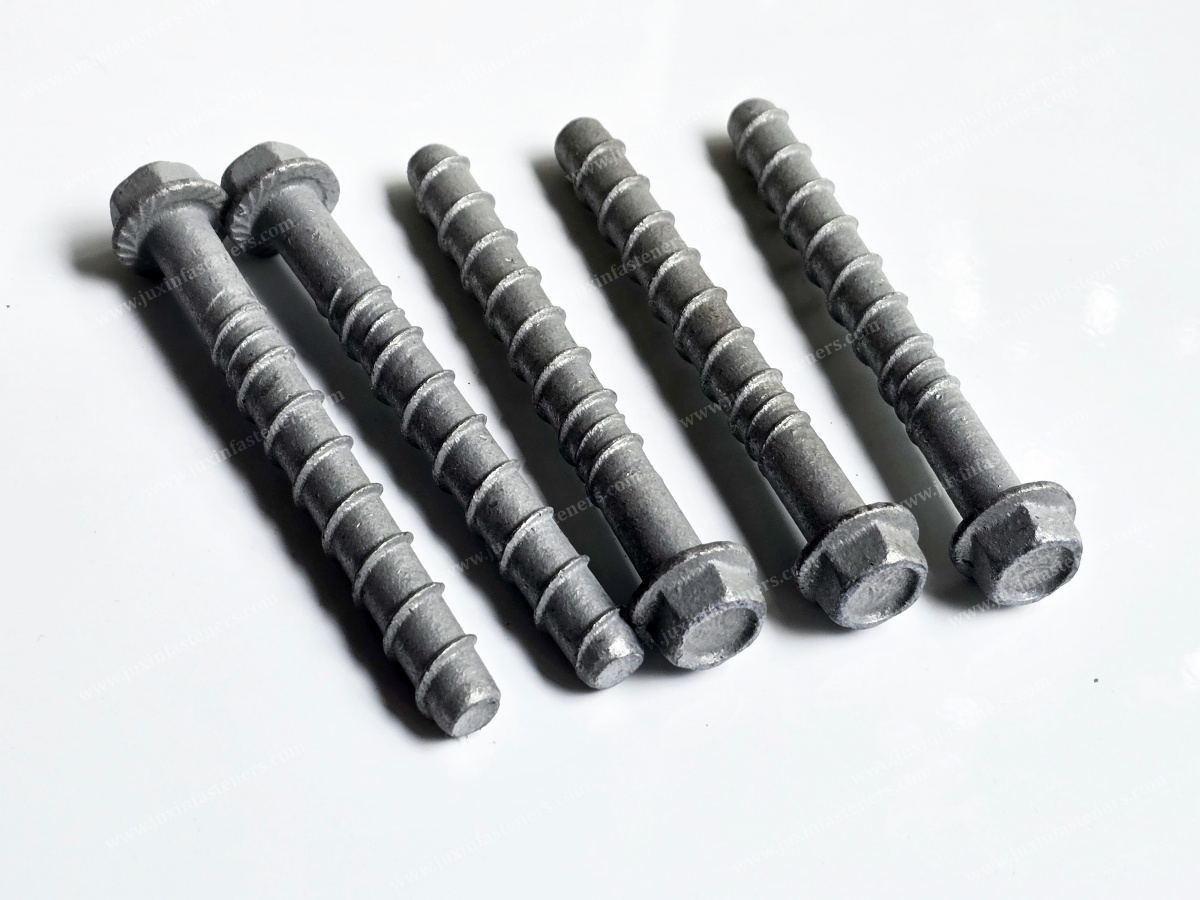
Flange Head Screws
Flange head screws provide an integrated bearing surface.
Potential benefits include distributing contact pressure over a larger area and reducing the number of separate components in certain assemblies.
Important Limitation
An integrated flange does not automatically eliminate the need for a washer or provide adequate bearing support for every panel.
The actual joint geometry must be evaluated.
Serrated Flange Screws: Benefits and Limitations
Serrated flange screws incorporate teeth or serrations on the bearing surface.
These features may influence resistance to rotation under certain conditions.
However, their behavior depends on the actual joint and mating surface.
Engineering Considerations
Panel material
Surface coating
Bearing pressure
Joint preload
Vibration
Maintenance requirements
Important Engineering Limitation
Serrated flange screws should not automatically be described as universally vibration-proof.
Their serrations may damage paint or other protective coatings.
Production Recommendation
Use serrated flange screws only where the joint design permits their bearing surface characteristics.
Cover Screws and Gasket Compression
Many electrical enclosures use gaskets to help achieve their specified environmental protection.
The cover fastening system can influence gasket compression.
Engineering Considerations
Cover stiffness
Fastener spacing
Gasket material
Compression requirements
Panel flatness
Tightening sequence
Important Engineering Principle
Increasing tightening torque does not automatically improve enclosure sealing.
Excessive tightening may distort a thin cover or overcompress a gasket.
Engineering Recommendation
Follow the enclosure manufacturer's approved gasket and fastening design.
Ingress Protection and Enclosure Screws
Electrical enclosure protection against ingress of solid objects and water may be classified according to IEC 60529.
Important Technical Distinction
An IP rating applies to the evaluated enclosure configuration, not independently to a generic screw.
Changing the cover screws, gasket or fastening arrangement may affect the enclosure's validated performance.
Engineering Recommendation
Do not claim that an individual screw provides an IP65, IP66 or other enclosure rating.
Screw Spacing and Panel Distortion
The number and location of cover fasteners influence how loads are distributed across the panel.
Potential problems include:
Uneven gasket compression
Local panel bending
Excessive stress around holes
Cover misalignment
Engineering Recommendation
Consider cover stiffness, fastener spacing and tightening sequence together.
Protective Bonding Fasteners for Electrical Cabinets
Protective bonding connections help maintain electrical continuity between specified conductive parts and the protective circuit.
Potential locations include:
Cabinet frames
Metal doors
Removable panels
Protective conductor terminals
Dedicated bonding points
Important Engineering Distinction
A mechanically secure screw connection is not automatically a verified protective bonding connection.
Grounding Screws: Color and Function
Some grounding screws use green identification.
However, color alone does not establish the mechanical or electrical suitability of a connection.
Engineering Considerations
Approved terminal arrangement
Contact surface condition
Conductor attachment
Mechanical retention
Electrical continuity
Corrosion exposure
Important Limitation
A green screw should not be assumed to satisfy every electrical equipment grounding requirement.
Painted Enclosures and Electrical Contact
Electrical cabinets often have painted or powder-coated surfaces.
Protective coatings may interfere with electrical contact where the design requires metal-to-metal continuity.
Engineering Recommendation
Use the equipment manufacturer's approved bonding arrangement.
Do not assume that tightening a serrated screw through paint automatically produces a compliant protective bonding connection.
Cabinet Doors and Bonding Conductors
A hinged metal cabinet door may require a defined protective bonding arrangement.
The design may include a dedicated bonding conductor or other approved continuity method.
Important Engineering Principle
A mechanical hinge or door screw should not automatically be relied upon as the protective bonding path.
Relevant Electrical Assembly Standards
IEC 61439-1 and the applicable product-specific parts of the IEC 61439 series address low-voltage switchgear and controlgear assemblies.
IEC 60529 addresses enclosure ingress protection classifications.
Important Distinction
Fastener dimensional conformity does not independently establish compliance of the complete electrical enclosure or assembly.
Material Selection for Electrical Enclosure Screws
Material selection should reflect both the operating environment and the mechanical requirements.
Carbon Steel Screws
Carbon steel screws may be suitable for selected indoor and industrial equipment applications.
Relevant mechanical property requirements for applicable carbon steel and alloy steel fasteners may reference ISO 898-1.
Engineering Considerations
Required mechanical properties
Corrosion protection
Thread performance
Cost
Production requirements
A2 Stainless Steel Screws
A2 stainless steel fasteners may be considered for selected general industrial environments.
ISO 3506 provides relevant mechanical property requirements for applicable stainless steel fasteners.
Engineering Considerations
Corrosion exposure
Mechanical property class
Thread galling
Material compatibility
A4 Stainless Steel Screws
A4 stainless steel fasteners may be considered for certain more demanding corrosive environments.
Important Limitation
A4 stainless steel does not provide universal corrosion resistance in every marine or chemical environment.
Engineering Recommendation
Select the material according to the actual environmental conditions and approved component specification.
Stainless Steel Galling During Assembly
Stainless steel threaded components can experience galling.
Potential contributing factors include:
Thread condition
Material pairing
Installation speed
Contact pressure
Surface condition
Production Recommendation
Evaluate approved lubrication, coating or installation controls where galling is a concern.
Zinc-Plated Electrical Enclosure Screws
Zinc plating may provide economical corrosion protection for suitable carbon steel screws.
Engineering Considerations
Coating thickness
Thread fit
Environmental exposure
Assembly friction
Appearance
Zinc-Nickel-Coated Screws
Zinc-nickel coatings may be specified where enhanced corrosion protection is required.
Important Limitation
The coating system and actual test requirements must be defined.
A general statement of improved corrosion resistance does not establish a guaranteed service life.
Black Oxide Screws
Black oxide may be used where appearance or controlled-use requirements justify its selection.
Important Limitation
Black oxide alone generally provides limited corrosion protection.
Galvanic Corrosion in Mixed-Material Cabinets
Electrical enclosures may combine:
Stainless steel screws
Aluminum housings
Zinc-coated steel panels
Carbon steel brackets
Dissimilar metal combinations may create corrosion concerns in suitable environmental conditions.
Engineering Recommendation
Evaluate the complete material pairing and exposure environment.
Vibration and Panel Fastener Loosening
Industrial electrical equipment may experience vibration from nearby machinery or during transportation.
Potential concerns include:
Loss of clamping force
Panel movement
Fastener loosening
Thread damage
Engineering Considerations
Joint stiffness
Installation preload
Locking method
Panel material
Service loading
Important Engineering Distinction
A serrated flange screw, higher-strength bolt or fine-pitch thread does not automatically prevent loosening.
Engineering Recommendation
Select the retention method according to the actual joint requirements.
Thread-Locking Options
Depending on the application, an approved design may use:
Prevailing-torque nuts
Thread-locking features
Suitable locking components
Other validated retention methods
Important Limitation
A thread-locking feature must be compatible with the materials, temperature, installation process and maintenance requirements.
Repeated Maintenance and Thread Damage
Frequently opened electrical cabinets are vulnerable to damage from repeated assembly.
Common problems include:
Cross-threading
Stripped internal threads
Incorrect replacement screws
Damaged drive recesses
Lost hardware
Engineering Recommendation
For frequently serviced panels, consider captive fasteners or durable threaded attachment points where compatible with the design.
Screw Length Selection
Screw length should accommodate:
Cover thickness
Gasket arrangement where applicable
Washer thickness
Mating component
Required thread engagement
Internal clearance
Important Failure Risk
A screw may bottom out in a blind hole before the intended clamping condition is achieved.
Engineering Recommendation
Check the complete dimensional stack-up.
Metric and Inch Thread Selection
Common metric sizes for electrical enclosure applications may include M3, M4, M5, M6 and M8.
However, the correct size depends on the approved equipment design.
Metric threads may reference applicable ISO metric thread specifications.
Unified inch threads may reference ASME B1.1.
Important Compatibility Rule
Metric, UNC, UNF, BSW and BSF thread systems must not be treated as directly interchangeable.
Production Assembly Considerations
Manufacturing engineers and production managers should evaluate:
Fastener feeding
Tool access
Tightening procedure
Panel positioning
Fastener identification
Inspection
Rework requirements
Production Recommendation
Select a fastening arrangement that supports repeatable assembly without compromising the approved equipment design.
Assembly Error Prevention
Potential production errors include:
Incorrect screw length
Wrong material
Missing washers
Cross-threading
Incorrect tightening
Wrong fastener at a bonding point
Production Recommendation
Use controlled part numbers, clear work instructions and appropriate inspection methods.
Common Electrical Enclosure Fastening Problems
| Problem | Potential cause | Engineering response |
|---|---|---|
| Cover loosening | Insufficient retention or joint relaxation | Review approved fastening arrangement |
| Panel distortion | Excessive tightening or inadequate support | Review bearing pressure and panel stiffness |
| Gasket leakage | Uneven compression or incorrect assembly | Verify cover and gasket design |
| Stripped threads | Inadequate engagement or excessive torque | Review mating thread and installation |
| Corrosion | Material or coating mismatch | Review environmental compatibility |
| Bonding failure | Inadequate conductive connection | Verify approved protective bonding path |
| Lost service screws | Non-retained hardware | Consider compatible captive fastening |
Industrial Control Cabinet Applications
Potential applications include:
PLC cabinets
Machine control enclosures
Automation equipment
Industrial electrical panels
Engineering Considerations
Maintenance access
Mechanical retention
Protective bonding
Assembly efficiency
Power Distribution Equipment
Potential applications include:
Distribution boxes
Switchboard covers
Electrical cabinet panels
Equipment access covers
Engineering Considerations
Cover fastening
Gasket compression
Approved bonding connections
Component identification
Renewable Energy Equipment
Potential applications include:
Solar inverter enclosures
Energy storage control cabinets
Power conversion equipment
EV charging equipment housings
Engineering Considerations
Outdoor corrosion exposure
Maintenance access
Panel retention
Material compatibility
Factory Automation Equipment
Potential applications include:
Robotic control cabinets
Machine electrical housings
Industrial automation panels
Engineering Considerations
Vibration
Repeated service
Installation access
Production consistency
Outdoor and Coastal Enclosures
Potential applications include:
Outdoor electrical cabinets
Coastal control equipment
Industrial monitoring enclosures
Engineering Considerations
Corrosion exposure
Galvanic compatibility
Gasket condition
Service requirements
OEM Drawing Requirements
For accurate technical review and quotation, provide:
Fastener drawing
Thread designation
Head and drive design
Screw length
Material
Mechanical property requirements
Surface treatment
Panel thickness
Mating threaded component
Inspection requirements
For protective bonding components, include the approved electrical connection requirements.
For frequently removed panels, identify the maintenance and retention requirements.
Supplier Qualification and Second-Source Development
Procurement teams should evaluate:
Technical Conformity
Drawing accuracy
Material specification
Thread dimensions
Mechanical properties
Coating
Installation compatibility
Production Compatibility
Assembly tooling
Fastener identification
Packaging
Quality consistency
Change control
Commercial Requirements
MOQ
Annual purchasing volume
Lead time
Sample requirements
Delivery schedule
Important Procurement Principle
A replacement fastener that fits the hole is not automatically an approved substitute.
Frequently Asked Questions
What screws are used for electrical distribution box covers?
The approved enclosure design may specify pan head screws, flange head screws, socket screws or captive fastening arrangements.
Are stainless steel screws better for outdoor electrical cabinets?
They may offer useful corrosion resistance, but the correct grade and joint design depend on the environment and mechanical requirements.
Do serrated flange screws prevent loosening?
Not universally. Their performance depends on the complete joint.
Can serrated screws be used for electrical grounding?
Only where the complete protective bonding arrangement has been designed and verified for that purpose.
Does a green screw automatically meet grounding requirements?
No. Color alone does not establish electrical bonding performance.
Can a cover screw maintain an enclosure's IP rating?
The complete enclosure, gasket and fastening arrangement must be evaluated. A screw alone does not have an enclosure IP rating.
What fasteners are suitable for thin sheet metal cabinets?
Depending on the design, self-clinching nuts, blind rivet nuts, weld nuts, clip-on nuts or other suitable components may be considered.
When should captive panel screws be used?
They may be useful where panels are opened frequently and loose hardware must be controlled.
Can M4 screws replace M5 screws?
No. The thread dimensions differ and the complete connection must be evaluated.
What information should be included in an OEM electrical enclosure fastener RFQ?
Provide drawings, material, thread, coating, panel thickness, mating component, quantities and inspection requirements.
JUXIN FASTENERS: Electrical Enclosure Screws and Sheet Metal Fastening Components
JUXIN FASTENERS supplies industrial fasteners and drawing-based components for electrical equipment OEMs.
Relevant product families include:
Machine screws
Hexagon socket screws
Flange head screws
Stainless steel threaded fasteners
Carbon steel screws
Self-clinching nuts
Blind rivet nuts
Weld nuts
Cage nuts
Clip-on nuts
Custom threaded components
Captive fastening arrangements and special protective bonding hardware should be reviewed against customer drawings and project requirements before confirming supply feasibility.
Request an OEM Electrical Enclosure Fastener RFQ
Are you sourcing electrical enclosure cover screws, removable panel fasteners, stainless steel cabinet screws or sheet metal threaded components for industrial equipment production?
JUXIN FASTENERS welcomes inquiries from electrical equipment manufacturers, mechanical and electrical design engineers,
manufacturing engineers, production managers and global procurement teams.
For an efficient technical and commercial review, provide:
Drawing + thread size + head design + material + surface treatment + panel thickness + mating thread + required quantity + delivery schedule
For protective bonding applications, include the approved connection design and verification requirements.
For frequently serviced covers, identify any captive retention or maintenance requirements.
Company: JUXIN FASTENERS
Website: https://www.juxinfasteners.com/
Email: info@juxinfasteners.com
Send your electrical enclosure cover screw drawings and OEM RFQ requirements to JUXIN FASTENERS for technical review and quotation.
Contact Us
Tel.:
+86 020 8621 0320
+86 020 3121 6067
E-mail:
Technical Support:
Navigation
SEND INQUIREY



