
Call Us
+86 136 6007 9809
Call Us
+86 136 6007 9809

Jun. 12, 2024
Explosion-Proof Enclosure Bolts: Ex d Fasteners, Materials and OEM Selection Guide
Explosion-proof electrical enclosures are used in industrial environments where flammable gases, vapors or combustible dust may create hazardous conditions.
These enclosures can contain electrical connections, control equipment, switching devices and instrumentation.
Fasteners used in such equipment may serve important mechanical and protection-related functions.
For certain flameproof enclosures, cover bolts form part of an assessed construction that must maintain the required joint geometry and mechanical integrity.
The correct explosion-proof enclosure bolts cannot therefore be selected only by nominal thread size, material or corrosion resistance.
Design engineers must consider the enclosure protection concept, approved drawings, thread engagement, mechanical properties and installation requirements.
Manufacturing engineers and production managers must ensure that the specified fasteners are consistently installed without damaging the enclosure or its critical joints.
Procurement teams must maintain component traceability and avoid unapproved substitutions.
JUXIN FASTENERS supplies industrial bolts, stainless steel screws, alloy steel fasteners and drawing-based threaded components for OEM evaluation.
This guide explains the engineering and purchasing considerations for fastening components used in explosion-protected electrical enclosures.
What Are Explosion-Proof Enclosure Bolts?
Explosion-proof enclosure bolts are fastening components used in electrical equipment designed for installation in potentially explosive atmospheres.
Depending on the equipment construction, fasteners may secure:
Flameproof enclosure covers
Electrical junction box housings
Terminal compartment covers
Mechanical mounting brackets
Enclosure accessories
Internal support components
Important Engineering Distinction
Not every bolt installed on explosion-protected equipment performs the same function.
A cover bolt that is part of a flameproof enclosure construction may have different requirements from a general-purpose bracket screw installed on the same equipment.
The approved equipment documentation determines the applicable requirements.
Explosion-Protected Equipment and International Standards
Relevant standards may include:
IEC 60079-0
General requirements for equipment intended for explosive atmospheres.
IEC 60079-1
Requirements for equipment protection by flameproof enclosures, designated Ex d.
IEC 60079-7
Requirements for equipment protection by increased safety, designated Ex e.
Other parts of the IEC 60079 series may apply depending on the protection concept.
Important Technical Distinction
These standards address explosion-protected equipment and its construction.
They do not mean that an ordinary bolt manufactured to an ISO or DIN dimensional standard is independently certified for use in any Ex enclosure.
ATEX and IECEx
ATEX and IECEx are associated with conformity assessment and certification arrangements for relevant explosion-protected equipment.
Important Limitation
A standard industrial fastener should not be advertised as ATEX-certified or IECEx-certified unless a specific certification basis supports that claim.
JUXIN FASTENERS does not claim that every supplied industrial bolt is independently certified for explosion-protected equipment.
Ex d Flameproof Enclosure Fasteners
Ex d equipment is designed so that an internal explosion can be contained by the enclosure, with flame transmission controlled through the assessed construction and flameproof joints.
Cover fasteners may contribute to maintaining the required enclosure assembly.
Engineering Considerations
Approved fastener specification
Fastener mechanical properties
Thread engagement
Joint geometry
Cover alignment
Enclosure material
Installation instructions
Important Engineering Principle
An Ex d enclosure bolt is not simply a corrosion-resistant or high-strength screw.
Its suitability depends on the approved equipment design.
Flameproof Joint Geometry
Flameproof joints are critical features of Ex d enclosures.
Depending on the equipment construction, relevant joint features may include:
Flange geometry
Joint length
Joint gap
Surface condition
Threaded joint geometry
Cover alignment
Important Technical Distinction
The fastening system and the flameproof joint must be considered together.
Changing the bolt specification or installation arrangement may affect the assessed construction.
Engineering Recommendation
Do not modify a flameproof enclosure joint or its fasteners without approval from the responsible equipment manufacturer and any required conformity assessment.
Ex e Increased Safety Enclosure Fasteners
Ex e equipment uses a different protection concept from Ex d.
Fasteners may be used to maintain:
Enclosure assembly
Mechanical security
Required environmental protection
Terminal and component mounting
Protective connections where applicable
Important Distinction
Ex e enclosure fasteners should not automatically be specified using Ex d cover-bolt requirements.
The applicable IEC 60079 requirements and approved equipment documentation govern selection.
Ex t Equipment for Combustible Dust Atmospheres
Some explosion-protected enclosures are designed for combustible dust atmospheres using protection by enclosure.
The applicable requirements depend on the equipment's protection concept and certification.
Engineering Considerations
Enclosure integrity
Environmental sealing
Fastener retention
Installation instructions
Maintenance requirements
Important Limitation
An enclosure suitable for a particular gas atmosphere is not automatically suitable for every combustible dust environment.
Ex d Cover Bolts vs. General Industrial Bolts
| Selection factor | Ex d cover fastener | General industrial bolt |
|---|---|---|
| Primary application | Part of an assessed enclosure construction | General mechanical connection |
| Material | As specified in approved documentation | Selected for mechanical and environmental requirements |
| Mechanical properties | Must match approved requirements | Selected according to joint design |
| Thread engagement | Controlled by approved enclosure design | Determined by mechanical joint requirements |
| Replacement | Requires confirmation against approved specification | Subject to normal engineering qualification |
| Coating changes | May require equipment-level review | Requires mechanical and corrosion compatibility review |
Engineering Recommendation
Never assume that a visually identical standard bolt is an approved Ex d replacement.
Stainless Steel Bolts for Explosion-Protected Enclosures
Stainless steel fasteners may be selected for corrosion-exposed equipment when permitted by the approved design.
Common stainless steel fastener material groups include A2 and A4.
ISO 3506 provides relevant mechanical property requirements for applicable corrosion-resistant stainless steel fasteners.
A2 Stainless Steel Fasteners
A2 stainless steel is commonly associated with certain austenitic stainless steel compositions, including those broadly comparable with 304-type materials.
Potential Applications
Indoor industrial enclosures
Selected outdoor installations
General corrosion-exposed equipment
Engineering Considerations
Mechanical property class
Environmental exposure
Thread galling
Compatibility with enclosure materials
Important Limitation
A2 stainless steel should not automatically replace an approved alloy steel Ex d cover bolt.
A4 Stainless Steel Fasteners
A4 stainless steel is commonly associated with molybdenum-containing austenitic stainless steel compositions, including materials broadly comparable with 316-type stainless steel.
Potential Applications
Coastal industrial equipment
Chemical processing environments
Outdoor electrical enclosures
Engineering Considerations
Chloride exposure
Chemical compatibility
Mechanical properties
Approved fastener specification
Important Limitation
A4 stainless steel does not provide universal resistance to all chemicals or marine environments.
316L Stainless Steel
316L stainless steel has a lower-carbon composition than conventional 316-type material.
However, the designation 316L alone does not establish a fastener's mechanical property class or suitability for a particular Ex enclosure.
Engineering Recommendation
Specify the actual material standard, fastener property requirements and approved application.
High-Strength Steel Bolts for Flameproof Enclosures
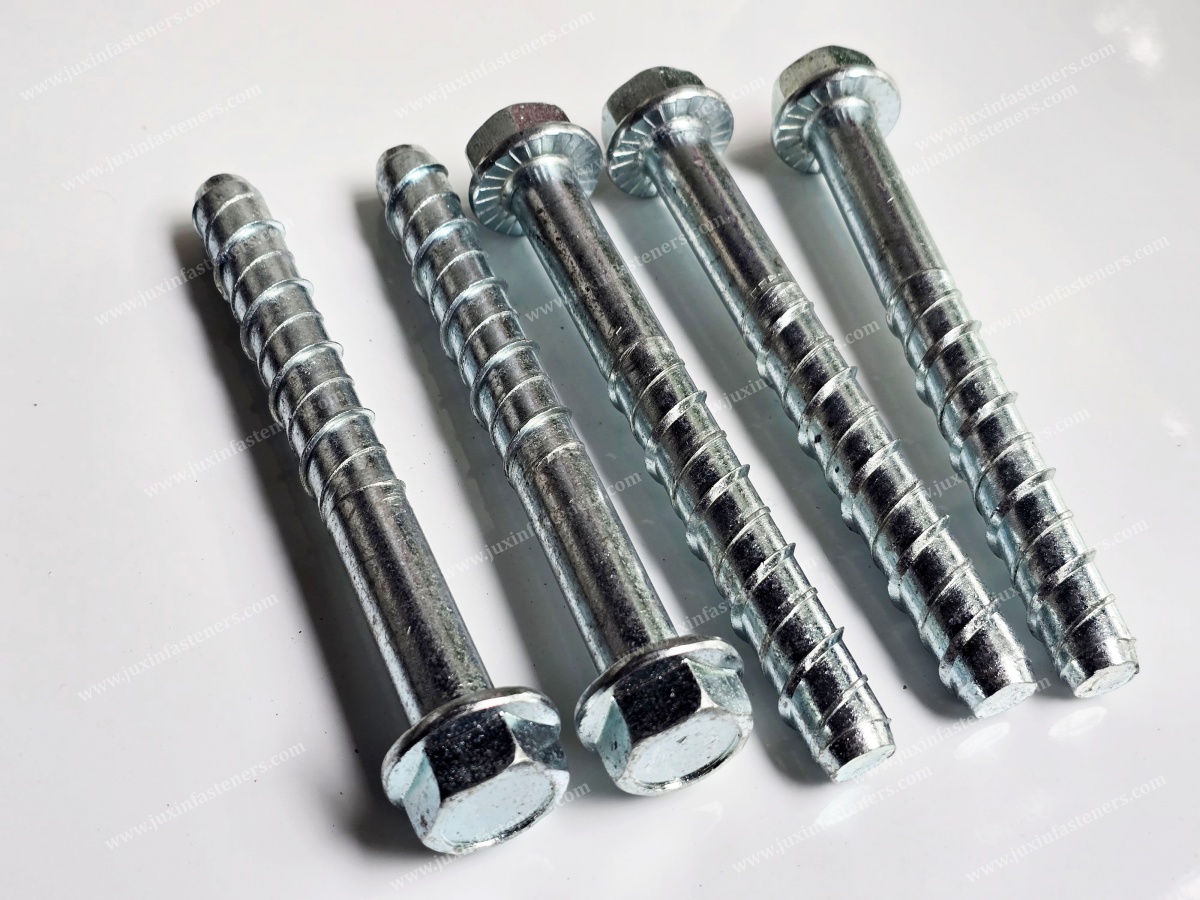
Some equipment designs may require high-strength steel fasteners.
Relevant mechanical property requirements for applicable carbon steel and alloy steel fasteners may reference ISO 898-1.
Engineering Considerations
Mechanical property class
Tensile strength
Proof-load requirements
Thread condition
Coating
Environmental exposure
Important Engineering Distinction
A property class 10.9 bolt is not automatically suitable for an Ex d enclosure.
A stronger replacement can still be unacceptable if its geometry, material behavior or other characteristics differ from the approved design.
Flange Head Bolts
Flange head bolts provide an integrated bearing surface.
They may be useful for selected industrial equipment assemblies.
Potential Applications
Motor assemblies
Pump equipment
Mechanical brackets
Structural supports
Important Limitation
An integrated flange does not automatically eliminate the need for washers in every approved design.
A flange bolt must not replace a specified Ex d cover bolt unless the substitution has been approved.
Hexagon Socket Screws
Hexagon socket screws may be used where the equipment design requires their head geometry and tool access.
ISO 4762 is relevant to certain hexagon socket head cap screws.
Engineering Considerations
Head dimensions
Socket engagement
Mechanical property class
Tool clearance
Thread engagement
Important Recommendation
Confirm the complete screw specification rather than selecting by head type alone.
Thread Design for Explosion-Proof Enclosure Bolts
Common nominal metric thread sizes encountered in industrial equipment include:
M4
M5
M6
M8
M10
M12
However, these sizes are not universal recommendations for Ex enclosures.
Engineering Selection Factors
Approved thread designation
Pitch
Thread tolerance
Engagement length
Enclosure material
Bolt length
Fastener mechanical properties
Important Engineering Principle
The approved equipment drawing determines the acceptable thread and fastener configuration.
Metric and Inch Thread Compatibility
Metric fasteners may use applicable ISO metric thread specifications.
Unified inch threads may be specified under ASME B1.1.
Important Compatibility Rule
Metric, UNC, UNF, BSW and BSF thread systems are not directly interchangeable.
A similar nominal diameter does not establish thread compatibility.
Fine Threads and Vibration
Fine-pitch threads may be selected for particular design requirements.
However, fine threads should not automatically be described as providing superior vibration resistance or guaranteed locking performance.
Engineering Recommendation
Evaluate joint preload, loading conditions and the approved fastening arrangement.
Thread Engagement in Enclosure Covers
Thread engagement is especially important where fasteners are installed into tapped enclosure material.
Relevant factors include:
Fastener material
Internal thread material
Thread pitch
Engagement length
Joint loading
Approved equipment design
Important Failure Risk
Insufficient engagement or damaged internal threads may compromise the intended mechanical connection.
Engineering Recommendation
Follow the approved thread engagement and installation requirements.
Bolt Length and Bottoming Risk
An incorrect bolt length may cause:
Insufficient engagement
Interference with internal components
Bottoming in a blind hole
Incomplete clamping
Engineering Recommendation
Verify bolt length against the approved enclosure drawing and tolerance stack-up.
Surface Treatments for Explosion-Proof Enclosure Bolts
Surface treatments may be used to improve corrosion resistance or achieve other specified characteristics.
However, coating changes can influence:
Thread fit
Friction
Tightening behavior
Dimensional compatibility
Environmental performance
Important Engineering Principle
A coating that improves corrosion resistance is not automatically approved for an existing Ex enclosure design.
Zinc Plating
Zinc plating may provide economical corrosion protection for suitable carbon steel fasteners.
Engineering Considerations
Coating thickness
Thread fit
Environmental exposure
Fastener strength
Applicable process requirements
Zinc-Nickel Plating
Zinc-nickel coatings may be specified where particular corrosion performance is required.
Engineering Considerations
Coating specification
Process control
Friction characteristics
Hydrogen embrittlement risk where applicable
Compatibility with the approved fastener design
Important Limitation
Do not assume a universal corrosion-performance rating without a defined coating specification and test method.
Zinc-Flake Coatings
Zinc-flake systems may be used for selected industrial fasteners.
Engineering Considerations
Coating thickness
Thread dimensions
Friction characteristics
Environmental exposure
Approved product requirements
Important Recommendation
A zinc-flake-coated fastener must be evaluated before replacing an existing approved enclosure bolt.
Stainless Steel Passivation
Passivation may be specified for certain stainless steel fasteners.
ASTM A967/A967M is relevant to specified chemical passivation treatments for stainless steel parts.
Important Limitation
Passivation does not replace correct stainless steel grade selection.
Hydrogen Embrittlement Considerations
Certain high-strength steel fasteners may be susceptible to hydrogen embrittlement associated with particular manufacturing or coating processes.
Engineering Considerations
Fastener hardness
Material strength
Plating process
Post-treatment requirements
Applicable specifications
Important Recommendation
Evaluate hydrogen embrittlement risk when specifying coated high-strength fasteners.
Tightening Torque for Ex Enclosure Bolts
The required tightening procedure depends on the approved equipment design.
Relevant factors include:
Fastener size
Material
Mechanical property class
Coating
Friction
Joint geometry
Enclosure material
Important Engineering Principle
A general-purpose torque chart must not automatically be used for an Ex d cover bolt.
Manufacturing Recommendation
Follow the equipment manufacturer's specified tightening procedure.
Overtightening Risks
Excessive tightening may contribute to:
Thread damage
Fastener damage
Enclosure deformation
Joint distortion
Undertightening Risks
Insufficient tightening may prevent the cover from achieving the intended assembled condition.
Engineering Recommendation
Use the approved installation tools and procedures.
Vibration and Fastener Retention
Explosion-protected equipment may operate near:
Pumps
Compressors
Motors
Industrial machinery
These environments may introduce vibration.
Engineering Considerations
Joint preload
Mechanical loading
Fastener retention
Maintenance access
Approved locking arrangement
Important Limitation
An ordinary split spring washer does not automatically provide reliable anti-loosening performance.
Engineering Recommendation
Use the fastener retention method specified by the equipment manufacturer.
Corrosion and Material Compatibility
Explosion-protected enclosures may be exposed to:
Humidity
Salt-containing atmospheres
Chemical contaminants
Outdoor weather
Industrial cleaning agents
Engineering Considerations
Fastener material
Enclosure material
Coating
Galvanic compatibility
Maintenance conditions
Important Engineering Distinction
Corrosion resistance and explosion-protection suitability are separate requirements.
Both must be satisfied.
Galling in Stainless Steel Threads
Stainless steel fasteners may experience thread galling.
Potential contributing factors include:
Material pairing
Installation speed
Thread condition
Surface treatment
Contact pressure
Engineering Recommendation
Use only approved lubrication or surface treatments where they are permitted by the equipment design.
Explosion-Proof Enclosure Assembly Quality Control
Production managers should establish controlled assembly processes.
Relevant controls may include:
Correct fastener part number
Material identification
Thread verification
Fastener length
Coating specification
Installation tooling
Tightening instructions
Inspection records
Important Production Principle
A mechanically acceptable assembly is not automatically a verified explosion-protected enclosure.
The complete equipment must meet the applicable protection requirements.
Fastener Replacement and Maintenance
Maintenance personnel may need to replace damaged or missing enclosure fasteners.
Important Engineering Recommendation
Use the replacement fastener specification identified by the equipment manufacturer.
Do not substitute a bolt based only on:
Nominal diameter
Similar appearance
Stainless steel material
Higher strength class
Corrosion-resistant coating
Important Safety Distinction
Unauthorized replacement may invalidate the assessed enclosure construction or create unsafe conditions.
Second-Source Qualification for Ex Enclosure Fasteners
Supplier-development teams may seek alternative fastener sources for:
Supply continuity
Lead-time improvement
Cost control
OEM production planning
However, a second-source fastener must be evaluated against the approved design.
Technical Qualification Factors
Drawing conformity
Material
Mechanical properties
Thread dimensions
Head geometry
Length
Surface treatment
Inspection requirements
Important Procurement Principle
A second-source supplier does not automatically provide an approved replacement merely because the fastener dimensions match.
The responsible equipment manufacturer must authorize any required change.
Common Explosion-Proof Enclosure Fastener Problems
| Problem | Possible contributing factor | Engineering response |
|---|---|---|
| Damaged cover threads | Incorrect installation or thread mismatch | Verify approved thread and procedure |
| Incomplete cover clamping | Incorrect length or tightening | Review drawing and assembly |
| Corrosion | Unsuitable material or coating | Evaluate environmental compatibility |
| Galling | Stainless steel thread interaction | Review approved installation method |
| Fastener loosening | Joint loading or inadequate retention | Review approved fastening arrangement |
| Joint distortion | Excessive tightening or incorrect fastener | Verify assembly requirements |
| Unapproved substitution | Incomplete supplier qualification | Apply OEM change control |
Explosion-Proof Fasteners for Oil and Gas Equipment
Potential equipment includes:
Hazardous-area junction boxes
Electrical control enclosures
Instrumentation housings
Offshore electrical equipment
Engineering Considerations
Approved protection concept
Corrosion exposure
Mechanical loading
Maintenance requirements
Chemical Processing Equipment
Potential applications include:
Hazardous-area control cabinets
Instrumentation enclosures
Electrical junction boxes
Engineering Considerations
Chemical compatibility
Enclosure protection concept
Material selection
Approved replacement parts
Mining Equipment
Potential applications include:
Underground electrical equipment
Industrial control enclosures
Machinery instrumentation
Important Limitation
Mining applications may require equipment and certification requirements different from those for other hazardous areas.
Marine and Offshore Equipment
Potential applications include:
Offshore control enclosures
Marine instrumentation
Electrical junction boxes
Engineering Considerations
Chloride exposure
Galvanic corrosion
Material compatibility
Maintenance conditions
Food and Pharmaceutical Facilities
Some facilities may contain areas classified because of combustible dust or flammable substances.
Potential applications include:
Hazardous-area instrumentation
Process control enclosures
Electrical junction boxes
Important Engineering Distinction
A hygienic stainless steel fastener specification does not automatically establish suitability for explosion-protected equipment.
Industrial Automation
Potential equipment includes:
Hazardous-area control systems
Instrumentation enclosures
Industrial monitoring equipment
Engineering Considerations
Approved enclosure construction
Mechanical reliability
Maintenance access
Component identification
OEM Procurement Requirements
When requesting a quotation for explosion-proof enclosure fasteners, provide:
Approved fastener drawing
Equipment model or reference
Protection concept where relevant
Thread designation
Head geometry
Length
Material
Mechanical property class
Coating
Inspection requirements
Annual purchasing volume
Important Recommendation
Identify whether the fastener is part of the approved explosion-protection construction.
This information affects the qualification and substitution process.
Fastener Quality Control and Traceability
A component inspection plan may include:
Material verification
Dimensional inspection
Thread inspection
Mechanical property verification
Coating inspection
Lot identification
The actual inspection requirements should be established by the customer specification.
Important Responsibility Distinction
Fastener conformity does not independently establish compliance of the complete explosion-protected equipment.
Frequently Asked Questions
What bolts are used in explosion-proof distribution boxes?
The approved enclosure design may specify stainless steel, alloy steel or other suitable fasteners.
The exact material, geometry and mechanical properties depend on the equipment construction.
Are stainless steel bolts automatically suitable for Ex d enclosures?
No. Stainless steel fasteners must match the approved equipment specification.
Can a 10.9-grade bolt replace an existing Ex d cover bolt?
Not automatically. Higher mechanical strength alone does not establish suitability.
Are Ex d and Ex e fastener requirements identical?
No. The protection concepts and relevant equipment requirements differ.
Can zinc-nickel-coated bolts be used in explosion-proof equipment?
Only where the coating and complete fastener specification are permitted by the approved design.
Are fine-pitch threads better for vibration resistance?
Not universally. Vibration performance depends on the complete joint and retention arrangement.
Can a standard industrial fastener supplier provide bolts for Ex equipment OEMs?
Potentially, when the supplied components meet the approved specifications and the responsible equipment manufacturer completes the necessary qualification.
Does ISO 3506 certification mean a stainless steel bolt is IECEx approved?
No. ISO 3506 addresses relevant stainless steel fastener mechanical properties and does not independently certify explosion-protected equipment.
Can replacement bolts be selected by measuring the original fastener?
Measurement alone is insufficient. The approved replacement specification must be confirmed.
What information is required for an Ex enclosure bolt RFQ?
The approved drawing, material, thread, mechanical property requirements, coating, inspection requirements and purchasing quantity.
JUXIN FASTENERS: Drawing-Based Explosion-Proof Enclosure Fastener Supply
JUXIN FASTENERS supplies industrial threaded fasteners and custom components for OEM applications.
Relevant product families include:
Stainless steel hexagon bolts
Alloy steel screws
Hexagon socket head cap screws
Flange head bolts
Custom threaded components
Drawing-based fastening parts
For explosion-protected equipment, the customer must identify the approved fastener specification and any applicable certification-related requirements.
JUXIN FASTENERS can review component drawings and discuss manufacturing and supply feasibility.
Important Qualification Statement
JUXIN FASTENERS does not represent a generic industrial bolt as an independently approved explosion-proof fastener without supporting qualification documentation.
The equipment manufacturer remains responsible for confirming the suitability of components within the certified equipment design.
Request an Explosion-Proof Enclosure Bolt OEM RFQ
Are you sourcing approved replacement bolts, stainless steel enclosure screws or custom threaded components for explosion-protected electrical equipment manufacturing?
JUXIN FASTENERS welcomes inquiries from:
Hazardous-area equipment OEMs
Electrical enclosure manufacturers
Mechanical design engineers
Manufacturing engineers
Production managers
Procurement specialists
Supplier-development teams
For an efficient technical and commercial review, please provide:
Approved drawing + equipment application + fastener dimensions + material + mechanical property requirements + coating + inspection requirements + purchasing quantity
For Ex d cover bolts, include the applicable approved equipment fastener specification and any restrictions on substitution.
Company: JUXIN FASTENERS
Website: https://www.juxinfasteners.com/
Email: info@juxinfasteners.com
Send your explosion-proof enclosure fastener drawings and OEM RFQ requirements to JUXIN FASTENERS for technical review and quotation.
Contact Us
Tel.:
+86 020 8621 0320
+86 020 3121 6067
E-mail:
Technical Support:
Navigation
SEND INQUIREY



