
Call Us
+86 136 6007 9809
Call Us
+86 136 6007 9809

Jun. 12, 2024
High-Strength Bolt Assembly: Preload, Torque Control and OEM Reliability Guide
High-strength bolts and screws are widely used in automotive systems, industrial machinery, transportation equipment and other mechanical assemblies where joint reliability is important.
However, selecting a high mechanical property class does not automatically produce a reliable bolted connection.
The performance of a high-strength fastening system depends on the interaction between the fastener, mating components, joint geometry, tightening process and service loads.
A property class 10.9 bolt installed with insufficient preload may loosen or experience excessive cyclic loading.
A property class 12.9 screw installed under unsuitable friction conditions may be overloaded during tightening.
Even when the fastener itself meets its specified mechanical properties, the assembled joint can still fail.
For design engineers, the central challenge is to establish a suitable load path and clamping arrangement.
For manufacturing engineers and production managers, the challenge is to reproduce the approved assembly condition consistently across production batches.
For procurement and supplier-development teams, the challenge is to source fasteners with controlled dimensions, materials, mechanical properties, coatings and installation compatibility.
JUXIN FASTENERS supplies industrial high-strength bolts, screws and drawing-based threaded components for OEM applications.
This guide explains practical engineering considerations for high-strength bolt assembly, preload control, torque management, coating selection and fastener reliability.
What Are High-Strength Fasteners?
High-strength fasteners are threaded components specified to meet defined mechanical property requirements for demanding mechanical connections.
Common product forms include:
Hexagon head bolts
Hexagon head screws
Hexagon socket head cap screws
Flange head bolts
Automotive fastening components
Custom threaded fasteners
For applicable metric carbon steel and alloy steel fasteners, ISO 898-1 defines mechanical property requirements.
Common ISO property classes include:
8.8
10.9
12.9
For applicable inch-series externally threaded fasteners, SAE J429 defines separate mechanical and material requirements, including Grade 5 and Grade 8.
Important Engineering Distinction
ISO property classes and SAE grades are different specification systems.
A property class 10.9 bolt should not automatically be substituted for a SAE Grade 8 bolt, or vice versa.
Thread dimensions, mechanical requirements, head geometry and applicable product standards must all be verified.
Understanding ISO Property Classes 8.8, 10.9 and 12.9
ISO property classes describe specified mechanical properties for applicable fasteners.
The first number relates to nominal tensile strength.
The second number, in combination with the first, relates to the nominal yield-strength ratio used in the designation.
The actual acceptance requirements are defined by the applicable standard.
| ISO property class | Nominal tensile strength represented by designation | Typical engineering consideration |
|---|---|---|
| 8.8 | 800 MPa | General high-strength mechanical joints |
| 10.9 | 1,000 MPa | Higher-strength joints requiring appropriate preload control |
| 12.9 | 1,200 MPa | High-strength applications requiring careful design and process control |
Important Limitation
These nominal designation values are not a substitute for the detailed mechanical property requirements, size-dependent provisions and test methods in ISO 898-1.
Higher Strength Does Not Always Mean Better Joint Performance
A higher fastener strength class may allow different joint design options.
However, it does not automatically improve:
Fatigue life
Vibration resistance
Corrosion resistance
Joint stiffness
Clamp-load retention
Engineering Recommendation
Select the fastener property class according to the actual joint requirements rather than choosing the highest available grade.
ISO Metric Bolts vs. SAE Inch-Series Bolts
Metric fasteners commonly use ISO metric thread specifications.
Unified inch-series fasteners may use UNC or UNF threads specified under ASME B1.1.
Relevant inch-series fastener dimensions may be covered by applicable ASME product standards.
Important Compatibility Rule
Metric and Unified inch threads are not directly interchangeable.
BSW and BSF are also separate thread systems.
A nominal diameter conversion is only a dimensional reference and does not establish thread compatibility.
Why Bolt Preload Matters
Bolt preload is the tensile force developed in the bolt during tightening.
This preload produces a corresponding clamping action across the joint.
In a properly designed preloaded connection, the clamping force helps maintain contact between the joined components.
Depending on the joint design, this may help resist:
Joint separation
Relative movement
Loosening
Excessive alternating bolt loading
Important Engineering Principle
The objective is not simply to tighten the bolt as much as possible.
The objective is to achieve the approved preload range without damaging the fastener or joint.
Bolt Preload vs. Tightening Torque
Tightening torque is the rotational moment applied to the fastener.
Preload is the resulting tensile force in the bolt.
They are related but are not the same quantity.
A simplified engineering relationship is often expressed as:
T = K × F × d
Where:
T = tightening torque
K = empirical torque coefficient or nut factor
F = target bolt preload
d = nominal bolt diameter
This simplified relationship illustrates why torque depends on the assumed friction conditions.
It is not a universal tightening specification.
Important Engineering Limitation
The value of K is not constant across all fasteners, coatings, lubricants or joint configurations.
A generic torque value cannot guarantee a particular preload.
How Friction Affects Bolt Assembly
During tightening, a substantial portion of the applied torque is consumed by friction.
Relevant friction locations include:
Thread contact surfaces
Bolt-head or nut bearing surfaces
Friction can change because of:
Surface coating
Lubrication
Material pairing
Surface finish
Washer arrangement
Installation condition
Practical Engineering Example
Two bolts with identical dimensions and mechanical property classes may develop different preload values under the same tightening torque if their coating or lubrication conditions differ.
Manufacturing Recommendation
Treat coating and lubrication as controlled assembly variables.
Dry vs. Lubricated Bolt Tightening
A dry fastener and a lubricated fastener can behave differently during tightening.
Lubrication may reduce friction and increase the preload achieved at a given torque.
Important Safety Principle
Do not remove an approved lubricant merely because a general inspection instruction says that fasteners must be free from oil.
Likewise, do not add lubricant to a dry assembly specification without engineering approval.
Engineering Recommendation
Follow the validated fastener surface condition and tightening procedure.
Torque-Controlled Tightening
Torque-controlled tightening is widely used in industrial assembly because it can be implemented with suitable production tools.
Potential equipment includes:
Calibrated manual torque wrenches
Electric tightening tools
Controlled pneumatic tools
Automated fastening systems
Advantages
Practical for many production environments
Compatible with controlled assembly procedures
Supports documented tightening parameters
Limitations
Preload is influenced by friction variation
Tool calibration does not eliminate joint variability
Torque readings alone do not directly verify clamp load
Production Recommendation
Use torque control where the joint design and process validation support it.
Torque-Angle Tightening
Torque-angle tightening uses a defined relationship between applied torque and subsequent angular rotation.
It may provide additional control in certain engineered assembly processes.
Engineering Considerations
Joint stiffness
Fastener material
Thread condition
Tightening sequence
Specified torque-angle procedure
Important Limitation
Torque-angle tightening is not automatically suitable for every joint.
Some procedures intentionally enter the plastic deformation region of the fastener, while others do not.
Engineering Recommendation
Follow the equipment manufacturer's approved procedure and replacement policy.
Yield-Controlled and Tension-Controlled Methods
Some critical applications use tightening methods intended to control bolt tension or detect a defined tightening condition.
Examples may include:
Yield-controlled tightening
Direct tension measurement
Specialized tensioning systems
Important Engineering Distinction
The appropriate method depends on joint accessibility, design requirements, production equipment and validation.
No single tightening method is universally best.
Joint Stiffness and Clamp-Load Retention
The stiffness of the bolt and clamped components influences how external loads affect the connection.
Relevant design variables include:
Grip length
Bolt diameter
Joint material
Number of clamped components
Contact geometry
External loading
Engineering Principle
A bolted joint should be analyzed as a mechanical system rather than as an isolated fastener.
Joint Relaxation and Embedment
After tightening, some joints may experience a reduction in preload.
Potential contributing factors include:
Surface settling
Local deformation
Coating compression
Gasket creep
Thermal cycling
Engineering Recommendation
Evaluate the joint materials and contact interfaces when establishing preload requirements.
Bolt and Nut Property Compatibility
High-strength bolts must be paired with suitable mating threaded components.
For applicable metric carbon steel and alloy steel nuts, ISO 898-2 defines relevant mechanical property requirements.
Engineering Considerations
Nut property class
Thread engagement
Bolt strength
Thread tolerance
Coating
Joint loading
Important Engineering Principle
A high-strength bolt installed with an unsuitable nut may fail through thread stripping or other joint damage before the intended performance is achieved.
Washer Selection
Washers may influence bearing pressure and the fastening arrangement.
Relevant factors include:
Washer hardness
Bearing surface
Bolt strength
Joint material
Approved locking arrangement
Important Limitation
An ordinary washer should not automatically be described as providing reliable vibration resistance.
Thread Engagement
Thread engagement must be sufficient for the actual joint and mating material.
Relevant factors include:
Bolt diameter
Thread pitch
Nut or tapped-hole material
Fastener strength
Engagement length
Joint loading
Important Engineering Recommendation
Do not apply a universal thread engagement rule to every high-strength joint.
The appropriate engagement depends on the complete connection design.
High-Strength Hexagon Head Bolts
Hexagon head bolts are used in a wide range of industrial mechanical connections.
Relevant metric dimensional standards may include ISO 4014 and ISO 4017, depending on the configuration.
Engineering Considerations
Fully threaded or partially threaded design
Grip length
Bearing arrangement
Tool access
Mechanical property class
Surface treatment
Important Procurement Recommendation
Confirm whether the drawing requires a partially threaded bolt or a fully threaded screw.
High-Strength Hexagon Socket Screws
Hexagon socket head cap screws may be selected where compact head geometry or tool access is important.
ISO 4762 is relevant to certain hexagon socket head cap screws.
Engineering Considerations
Head clearance
Socket engagement
Mechanical property class
Thread length
Installation access
Important Limitation
A socket head screw should not automatically replace a hexagon head bolt in a critical joint.
Flange Head Bolts for Industrial Equipment
Flange head bolts provide an integrated bearing surface.
They may be used in selected automotive and industrial machinery assemblies.
Potential Benefits
Integrated bearing area
Reduced separate-part handling in suitable designs
Compatibility with controlled assembly processes
Engineering Considerations
Bearing pressure
Flange geometry
Surface coating
Joint material
Approved tightening procedure
Important Limitation
A flange head bolt does not automatically eliminate the need for washers or guarantee resistance to vibration loosening.
High-Strength Bolt Material Selection
High-strength fasteners commonly use specified carbon steel or alloy steel materials with appropriate manufacturing and heat-treatment processes.
The final mechanical properties depend on the material, processing and applicable product requirements.
Engineering Considerations
Required property class
Heat treatment
Hardness
Toughness
Surface condition
Environmental exposure
Important Limitation
Material designation alone does not establish the final fastener mechanical property class.
Heat Treatment and Mechanical Properties
Heat treatment is an important manufacturing consideration for many high-strength steel fasteners.
Potential process objectives include achieving specified combinations of:
Tensile strength
Yield strength
Hardness
Toughness
Important Engineering Principle
Higher hardness is not automatically desirable.
The fastener must satisfy the complete mechanical property specification.
Stainless Steel Fasteners vs. High-Strength Alloy Steel Bolts
Stainless steel fasteners may be selected for corrosion-sensitive environments.
Common stainless steel material groups include A2 and A4.
ISO 3506 provides relevant mechanical property requirements for applicable stainless steel fasteners.
Important Engineering Distinction
A2-70 or A4-80 stainless steel fasteners must not be treated as direct equivalents of ISO 898-1 property classes 8.8, 10.9 or 12.9.
Their material systems and mechanical property requirements differ.
304 and 316 Stainless Steel
304-type and 316-type stainless steels may offer useful corrosion resistance for appropriate environments.
However, corrosion resistance does not automatically establish high-strength mechanical suitability.
Engineering Recommendation
Specify the applicable stainless steel fastener property requirements and approved joint design.
410 Stainless Steel Fasteners
410 stainless steel belongs to a different stainless steel family from common 304-type and 316-type austenitic stainless steels.
Its mechanical and corrosion characteristics depend on composition and processing.
Important Limitation
A 410 stainless steel flange screw should not automatically be classified as equivalent to an ISO 898-1 property class 10.9 or 12.9 fastener.
Engineering Recommendation
Evaluate the actual material, heat treatment, mechanical properties and corrosion requirements.
Surface Coatings for High-Strength Bolts
Surface treatments may be specified to improve corrosion protection or achieve particular friction characteristics.
However, coatings can also affect assembly behavior.
Zinc-Plated High-Strength Bolts
Zinc plating may provide economical corrosion protection for suitable applications.
Engineering Considerations
Coating thickness
Thread fit
Friction characteristics
Environmental exposure
Hydrogen embrittlement risk
Important Limitation
Electroplating is not automatically suitable for every high-strength fastener.
Zinc-Nickel Coatings
Zinc-nickel coatings may be selected where defined corrosion protection is required.
Engineering Considerations
Coating specification
Friction behavior
Thread dimensions
Processing controls
Hydrogen embrittlement susceptibility
Important Recommendation
Do not transfer an existing tightening torque unchanged to a different coating without engineering evaluation.
Zinc-Flake Coatings
Zinc-flake coating systems may be considered for selected industrial fasteners.
Engineering Considerations
Corrosion requirements
Coating thickness
Friction characteristics
Application process
Mechanical property class
Important Limitation
Coating performance depends on the specified system and verified test conditions.
MoS₂ and Other Friction-Control Treatments
Certain applications may use lubricants or friction-control treatments.
Molybdenum disulfide may be used in some engineered fastening systems.
Important Engineering Distinction
A lower friction coefficient can increase preload at the same applied torque.
Therefore, a lubricant or friction-control treatment must not be introduced without validating the tightening procedure.
Hydrogen Embrittlement in High-Strength Fasteners
Hydrogen embrittlement is an important risk consideration for certain high-strength steel fasteners.
Susceptibility depends on factors such as:
Material strength
Hardness
Manufacturing process
Surface treatment
Hydrogen exposure
Applied stress
Potential Consequences
Delayed cracking or fracture may occur under susceptible conditions.
Engineering Recommendation
Evaluate the material and processing requirements, including appropriate hydrogen embrittlement risk controls where applicable.
Important Limitation
A coating specification or post-treatment process should not be assumed to eliminate every hydrogen embrittlement risk.
Corrosion and High-Strength Bolt Reliability
Corrosion may affect fastener performance through:
Material loss
Surface damage
Thread deterioration
Changes in assembly behavior
Potential fatigue initiation sites
Engineering Recommendation
Consider mechanical loading and environmental exposure together.
Vibration Loosening of Bolted Joints
Vibration-related loosening can occur when joint conditions allow relative movement or loss of preload.
Engineering Considerations
Joint stiffness
Preload
Transverse loading
Contact surface behavior
Retention method
Important Engineering Principle
A property class 12.9 bolt is not automatically more resistant to loosening than a lower-strength bolt.
Locking Methods
Depending on the approved design, potential options may include:
Prevailing-torque nuts
All-metal locking nuts
Nylon-insert locknuts where temperature and application permit
Suitable mechanical locking arrangements
Approved thread-locking treatments
Important Limitation
No locking method should be assumed suitable for every temperature, vibration or maintenance condition.
Fatigue Failure in High-Strength Bolts
Fatigue may develop when a fastener experiences repeated loading.
Relevant factors include:
Load amplitude
Mean stress
Joint preload
Stress concentration
Thread geometry
Surface condition
Material properties
Engineering Recommendation
Evaluate fatigue as a joint-design issue, not simply as a material strength issue.
Bolt Bending and Joint Misalignment
Bolts may experience unintended bending when mating surfaces are misaligned or loads are applied eccentrically.
Potential Risks
Uneven bearing contact
Localized stress
Reduced fatigue performance
Assembly distortion
Engineering Recommendation
Review joint geometry, alignment and load path before increasing bolt strength.
Correct Tightening Sequence
Multiple-bolt joints may require a controlled tightening sequence.
The appropriate sequence depends on the geometry and stiffness of the assembly.
Circular Bolt Patterns
A staged, alternating or cross-pattern tightening sequence may be specified to distribute clamping loads.
Linear Bolt Patterns
Some designs use a center-outward or other defined sequence.
Important Limitation
No single tightening sequence is universally correct.
Manufacturing Recommendation
Follow the validated equipment assembly procedure.
Production-Line Tightening Process Control
Manufacturing engineers and production managers should consider:
Fastener identification
Correct tool selection
Tool calibration
Approved torque or tightening program
Tightening sequence
Traceability requirements
Inspection criteria
Important Production Principle
A calibrated tool supports process control, but it does not independently prove that every joint achieved the intended preload.
Fastener Inspection Before Assembly
Incoming or pre-assembly checks may include:
Correct part number
Material specification
Mechanical property marking where applicable
Thread dimensions
Surface condition
Coating
Visible damage
Important Engineering Distinction
A visible head marking is useful for identification but does not replace the required supplier qualification or inspection process.
Quality Documentation and Traceability
For OEM purchasing, documentation requirements should be agreed before production.
Depending on the project, requirements may include:
Material records
Mechanical property test reports
Dimensional inspection results
Coating inspection records
Batch identification
Customer-specific inspection documents
Important Procurement Recommendation
Confirm the exact document requirements during the RFQ process.
Do not assume that every fastener automatically includes the same certification package.
Common High-Strength Bolt Assembly Failures
| Failure or problem | Potential contributing factor | Engineering response |
|---|---|---|
| Bolt loosening | Inadequate preload or relative joint movement | Review joint design and retention method |
| Bolt fracture during tightening | Excessive preload or incorrect procedure | Verify friction and tightening specification |
| Thread stripping | Incompatible nut or insufficient engagement | Review mating thread strength |
| Fatigue cracking | Repeated loading or stress concentration | Evaluate load path and joint stiffness |
| Corrosion damage | Unsuitable material or coating | Review environmental requirements |
| Delayed cracking | Susceptible material and hydrogen exposure | Evaluate processing and hydrogen embrittlement controls |
| Assembly variation | Friction or tooling inconsistency | Improve process validation and control |
| Wrong fastener installation | Inadequate part identification | Strengthen BOM and production controls |
Automotive High-Strength Fastener Applications
High-strength bolts may be used in:
Chassis assemblies
Suspension components
Powertrain equipment
Mechanical brackets
Selected EV structural assemblies
Engineering Considerations
Cyclic loading
Fatigue
Corrosion
Controlled tightening
Production repeatability
Important Limitation
Safety-critical automotive applications require the specific OEM's approved design and qualification requirements.
Industrial Machinery Applications
Potential equipment includes:
Motors
Pumps
Valves
Gearboxes
Industrial machinery frames
Engineering Considerations
Mechanical loading
Vibration
Maintenance
Joint alignment
Corrosion protection
Electrical and Power Equipment
Potential applications include:
Structural equipment frames
Mounting brackets
Mechanical supports
Power conversion equipment structures
Important Engineering Distinction
A high-strength mechanical bolt specification does not independently establish electrical connection performance.
Renewable Energy Equipment
Potential applications include:
Wind power equipment
Solar equipment structures
Energy storage equipment frames
Power equipment supports
Engineering Considerations
Environmental exposure
Fatigue
Maintenance intervals
Corrosion protection
Joint preload
Railway and Transportation Equipment
Potential applications include:
Mechanical assemblies
Equipment mounting structures
Transportation machinery
Important Limitation
Railway and transportation safety requirements depend on the specific equipment and application.
OEM High-Strength Fastener Drawing Requirements
For technical review and quotation, provide:
Approved fastener drawing
Thread system and pitch
Head geometry
Length
Material
Mechanical property class
Surface treatment
Friction or lubrication requirements
Inspection requirements
Annual purchasing volume
Where relevant, also provide the assembly tightening specification.
Supplier Qualification for High-Strength Fasteners
Procurement and supplier-development teams should evaluate:
Technical Requirements
Material conformity
Mechanical properties
Thread dimensions
Heat-treatment requirements
Coating specification
Inspection requirements
Production Compatibility
Assembly friction characteristics
Tooling compatibility
Packaging
Part identification
Change control
Commercial Requirements
MOQ
Lead time
Annual volume
Delivery schedule
Sample requirements
Important Procurement Principle
A lower-priced bolt that requires requalification or causes assembly variability may not reduce total production cost.
Frequently Asked Questions
What is the difference between property class 8.8 and 10.9 bolts?
They have different mechanical property requirements under ISO 898-1. The correct selection depends on the approved joint design.
Are 12.9 bolts always better than 10.9 bolts?
No. Higher strength does not automatically improve fatigue, corrosion or vibration performance.
Is SAE Grade 8 the same as ISO property class 10.9?
No. They belong to different specification systems and should not be treated as direct substitutes.
Does tightening torque equal bolt preload?
No. Torque is an applied rotational moment, while preload is the tensile force developed in the bolt.
Can a zinc-nickel-coated bolt use the same torque as a zinc-plated bolt?
Not automatically. Coating changes may affect friction and preload.
Are high-strength bolts resistant to vibration loosening?
Not automatically. Joint design, preload and retention method are critical.
Can stainless steel bolts replace 10.9 alloy steel bolts?
Only after verifying the applicable mechanical properties and complete joint requirements.
Why do high-strength bolts sometimes crack after installation?
Potential causes include overload, fatigue, manufacturing defects or hydrogen embrittlement under susceptible conditions.
Should bolts always be installed dry?
No. Follow the approved assembly lubrication and surface-condition requirements.
What information is needed for a high-strength bolt OEM RFQ?
Provide drawings, thread designation, property class, material, coating, inspection requirements, quantity and delivery schedule.
JUXIN FASTENERS: High-Strength Bolts and Drawing-Based OEM Fasteners
JUXIN FASTENERS supplies industrial threaded fasteners for automotive, machinery and equipment manufacturing applications.
Relevant product families include:
Property class 8.8 bolts
Property class 10.9 bolts
Property class 12.9 screws
Hexagon head bolts
Hexagon socket screws
Flange head bolts
Custom threaded components
Drawing-based OEM fasteners
Specific material, mechanical property, coating and inspection requirements are reviewed according to customer drawings and purchasing specifications.
JUXIN FASTENERS can discuss component feasibility, sample requirements and quotation details for suitable OEM projects.
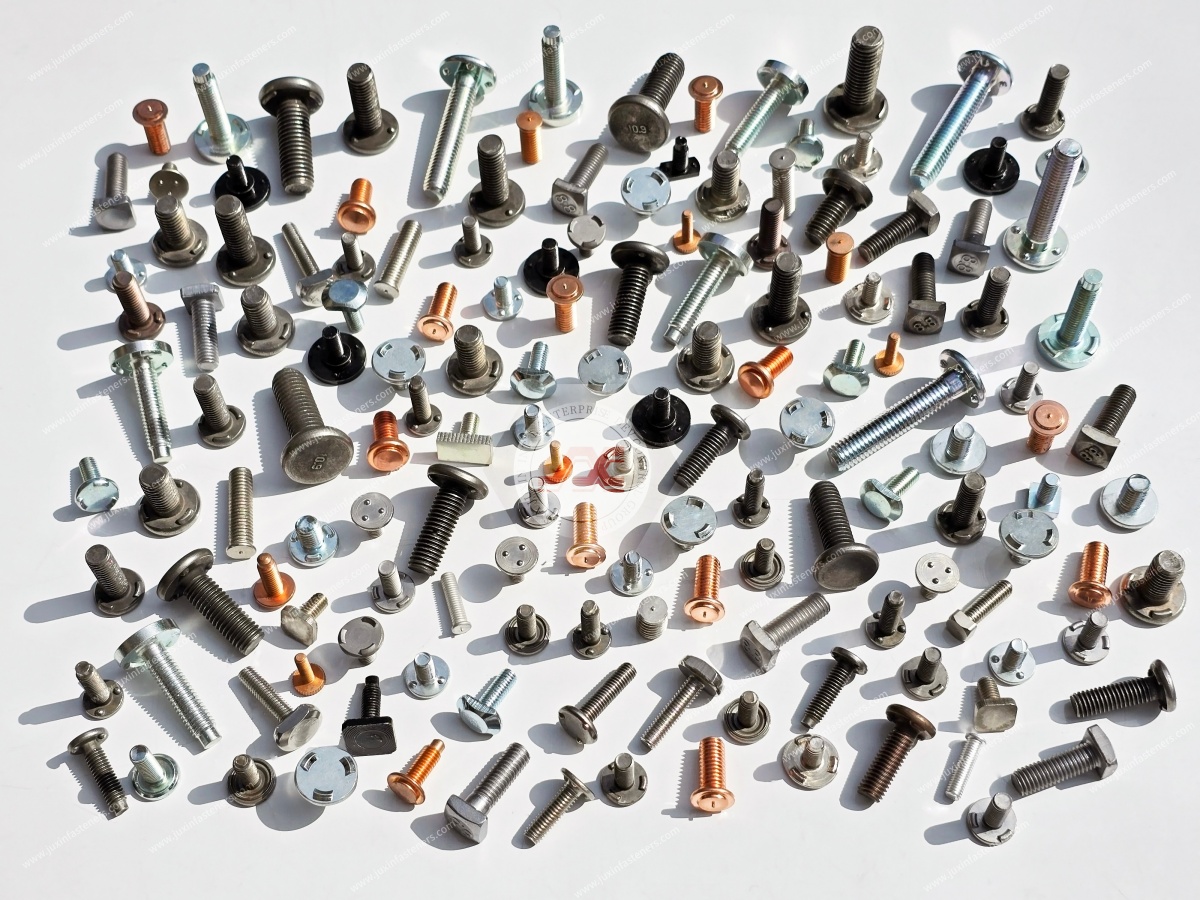
Request a High-Strength Bolt OEM RFQ
Are you sourcing property class 8.8, 10.9 or 12.9 bolts, high-tensile flange screws or custom threaded components for industrial production?
JUXIN FASTENERS welcomes inquiries from:
Automotive OEM manufacturers
Mechanical design engineers
Structural engineers
Manufacturing engineers
Production managers
Procurement specialists
Supplier-development teams
Global supply chain managers
For efficient technical and commercial review, provide:
Approved drawing + thread specification + property class + material + coating + friction requirements + inspection requirements + annual volume + delivery schedule
For critical joints, include the approved assembly tightening requirements and any customer-specific qualification criteria.
Company: JUXIN FASTENERS
Website: https://www.juxinfasteners.com/
Email: info@juxinfasteners.com
Send your high-strength bolt drawings and OEM RFQ requirements to JUXIN FASTENERS for technical review and quotation.
Contact Us
Tel.:
+86 020 8621 0320
+86 020 3121 6067
E-mail:
Technical Support:
Navigation
SEND INQUIREY



