Call Us
+86 136 6007 9809
Call Us
+86 136 6007 9809

Jun. 09, 2024
Electronic Equipment Screws: PCB, Enclosure and Thermal Assembly Fastening Solutions
Electronic equipment screws perform critical mechanical functions in circuit board assemblies, electronic enclosures, heat sinks, control modules and precision industrial equipment.
Although these components are often small, incorrect screw selection can cause damaged threads, cracked housings,
distorted circuit boards, inconsistent clamping force or production-line assembly problems.
A screw that performs adequately in a steel bracket may not be suitable for a plastic enclosure or a printed circuit board.
Similarly, a fastener used to retain a heat sink must be evaluated as part of the thermal and mechanical assembly rather than selected only by nominal thread size.
For design and mechanical engineers, the main concerns include joint geometry, material compatibility, thread engagement and component loading.
For manufacturing engineers and production managers, the priorities include screwdriving efficiency, repeatable installation, defect prevention and assembly cost.
For purchasing and supplier-development teams, reliable sourcing depends on drawing conformance, material specifications, dimensional consistency and commercial supply requirements.
JUXIN FASTENERS supplies industrial machine screws, stainless steel screws, miniature screws, self-tapping screws, plastic fasteners and drawing-based OEM fastening components.
This guide focuses on the engineering selection and production use of screws in electronic equipment, rather than providing a general catalog of screw materials.

Why Electronic Equipment Requires Application-Specific Screws
Electronic assemblies combine materials with different mechanical properties.
A typical product may include:
Printed circuit boards
Aluminum heat sinks
Steel or aluminum chassis components
Plastic housings
Threaded inserts
Insulating spacers
Electrical connectors
Protective covers
These materials respond differently to tightening forces, temperature changes and vibration.
Engineering Principle
The correct screw must be selected for the complete joint, including the mating material, component stiffness, thread engagement and installation process.
Machine Screws for Electronic Equipment
Machine screws are commonly used with tapped holes, threaded inserts or mating nuts.
Typical head styles include:
Pan head
Button head
Socket head cap
Countersunk head
Other application-specific geometries
The appropriate head style depends on:
Available installation space
Bearing surface
Required tool access
Appearance
Assembly process
Component material
Pan Head Machine Screws
Pan head screws provide a bearing surface suitable for many electronic enclosure and bracket applications.
They may be used with:
Metal housings
Threaded inserts
PCB mounting hardware
Control panel components
Countersunk Screws
Countersunk screws may be used where a flush surface is required.
However, countersinking can reduce the remaining material thickness around a hole.
They should not automatically be selected for thin PCBs or brittle components.
Socket Head Screws
Socket head screws may be appropriate where tool access and torque transmission requirements favor an internal drive.
Head clearance and surrounding component geometry must be checked.
Miniature and Micro Screws
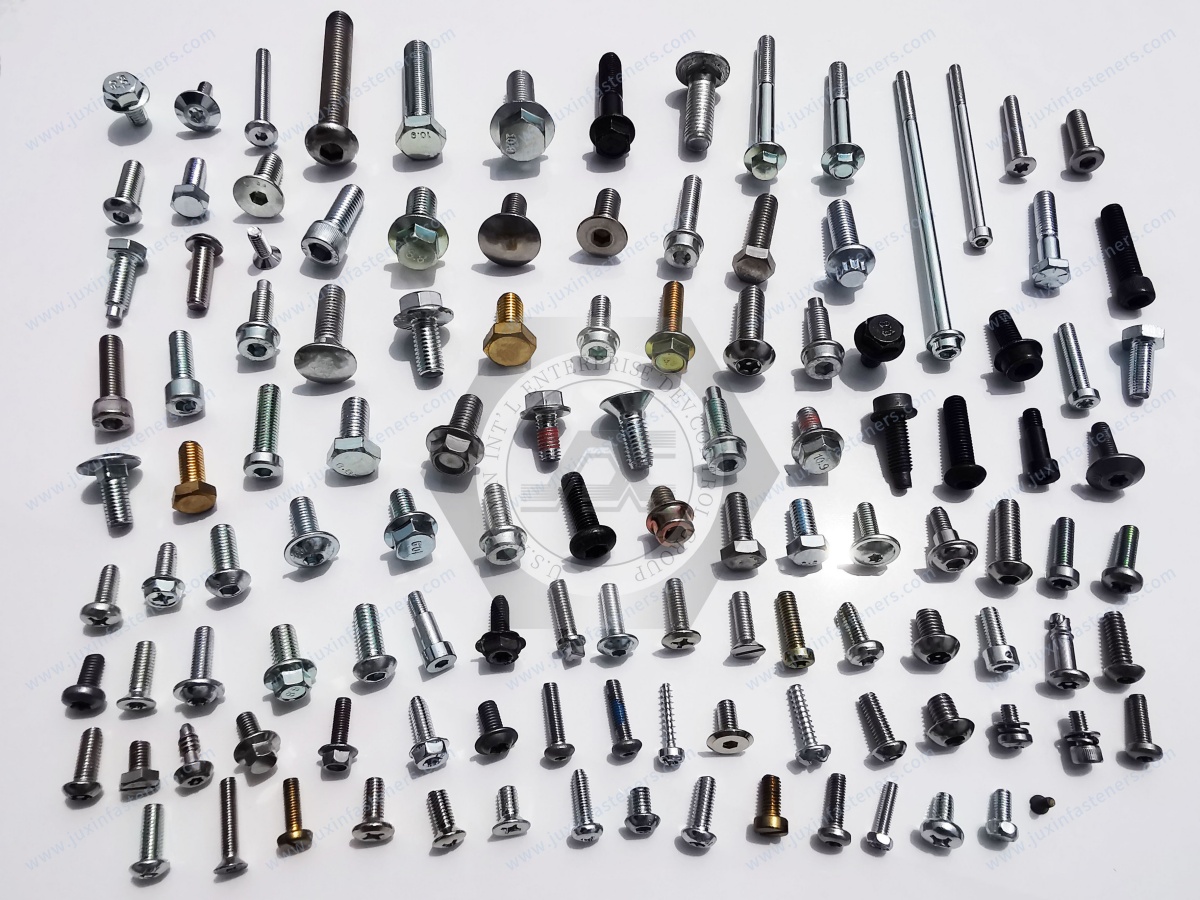
Small electronic products may require miniature screws with restricted head dimensions and short threaded lengths.
Important characteristics include:
Thread accuracy
Head dimensions
Drive recess geometry
Screw length
Surface finish
Dimensional consistency
Why Small Screw Length Errors Matter
A screw that is slightly too long may contact an internal component or bottom out in a blind hole.
A screw that is too short may provide insufficient thread engagement.
For miniature assemblies, length tolerances and available installation depth deserve particular attention.
PCB Mounting Screws
Printed circuit boards require mechanical support without excessive local loading.
PCB mounting systems may include:
Machine screws
Threaded standoffs
Spacers
Washers
Threaded inserts
Compatible mounting brackets
PCB Mechanical Considerations
Board thickness
Mounting hole diameter
Hole location
Supported area
Standoff height
Screw head contact
Assembly load
Thermal expansion
Why Standoffs Matter
A standoff establishes the spacing between the circuit board and the supporting structure.
The screw clamps the board to the standoff or mounting feature.
Incorrect standoff height or uneven support can bend the PCB during assembly.
Engineering Recommendation
Evaluate the mounting screw, standoff and PCB as one mechanical system.
Avoiding PCB Damage During Tightening
Excessive tightening may cause:
Local board deformation
Damage around mounting holes
Cracked components
Uneven loading
Assembly defects
The acceptable installation torque depends on the complete joint.
There is no universal tightening torque suitable for all PCB mounting screws of the same nominal diameter.
Design Considerations
Contact area beneath the screw head
Washer use where appropriate
Board support
Joint stiffness
Thread engagement
Installation equipment
Important Limitation
A larger screw head or washer may distribute load over a larger area, but it does not eliminate the need for suitable board support.
Electronic Enclosure Screws
Electronic enclosures may be manufactured from:
Sheet steel
Stainless steel
Aluminum
Engineering plastics
Composite materials
The fastening method depends on the housing material and required serviceability.
Metal Enclosures
Machine screws may be installed into:
Tapped metal holes
Threaded inserts
Self-clinching nuts
Weld nuts
Mating nuts
Plastic Enclosures
Plastic housings may use:
Screws designed for direct installation into plastic
Threaded inserts
Captive threaded components
Other specified fastening systems
Engineering Principle
A screw intended for a metal machine thread should not automatically be substituted for a thread-forming screw designed for plastic.
Self-Tapping Screws for Electronic Assemblies
Self-tapping screws may be used in compatible materials and hole designs.
However, the term self-tapping covers different thread-forming and thread-cutting designs.
Their performance depends on:
Screw thread geometry
Pilot hole size
Mating material
Engagement length
Installation speed
Torque control
Common Assembly Risks
Thread stripping
Material cracking
Excessive installation torque
Incomplete seating
Reduced retention after repeated removal
Production Recommendation
Validate the screw and pilot hole together before approving a high-volume assembly.
Plastic Housing Screw Design
Plastic housings introduce additional considerations.
Boss Geometry
The screw boss must provide sufficient material to support the installed thread.
Pilot Hole
An unsuitable pilot hole can increase the risk of cracking or thread stripping.
Engagement Length
The required engagement depends on the plastic material, screw design and expected load.
Repeated Assembly
Repeated removal and installation may degrade threads formed directly in plastic.
Temperature Effects
Plastic materials may experience creep or dimensional changes under temperature and sustained loading.
When Threaded Inserts May Be Preferred
Threaded inserts can be considered where repeated assembly, higher loads or serviceability justify their use.
JUXIN FASTENERS also supplies threaded inserts for plastic applications.
Heat Sink Mounting Screws
Heat sinks are used to transfer heat away from electronic components.
The mounting system may include:
Screws
Springs
Washers
Spacers
Threaded inserts
Mounting brackets
The screw is part of a mechanical system that influences contact between the heat sink, thermal interface material and electronic component.
Why Clamping Force Matters
Insufficient contact pressure may reduce the effectiveness of the thermal interface.
Excessive pressure may damage the electronic component, package or circuit board.
Engineering Recommendation
Determine the required mounting load from the complete thermal assembly design.
Do not select tightening torque solely from the screw's nominal size.
Thermal Cycling
Electronic equipment experiences temperature changes during operation.
Different materials may expand and contract at different rates.
This can influence:
Joint preload
Contact pressure
Component stress
Fastener retention
Spring-loaded or otherwise compliant mounting arrangements may be considered where appropriate.
Their design must be validated for the intended thermal and mechanical conditions.
Screws for Power Electronics
Power electronic assemblies may include:
Inverters
DC-DC converters
Power supply modules
Industrial controllers
EV electronic control units
Battery management electronics
Fasteners may secure:
Housings
Heat sinks
Control boards
Protective covers
Mounting brackets
Electrical Safety Consideration
A mechanically suitable screw does not automatically provide the required electrical insulation, grounding or current-carrying function.
Electrical requirements must be assessed separately.
Electrical Conductivity and Insulation
Electronic equipment may require either conductive or electrically insulating fastening arrangements.
These functions must be distinguished.
Conductive Fastening
Where a screw forms part of an intentional electrical connection, the complete contact interface must be evaluated.
Relevant factors may include:
Contact materials
Surface coatings
Contact resistance
Clamping force
Corrosion
Thermal cycling
Insulating Fastening
Plastic screws or insulating components may be considered where electrical isolation is required.
However, an insulating screw alone does not establish the electrical safety of the complete assembly.
Required creepage, clearance, dielectric and mechanical characteristics must be evaluated according to the equipment design and applicable safety requirements.
Nylon Screws for Electronic Equipment
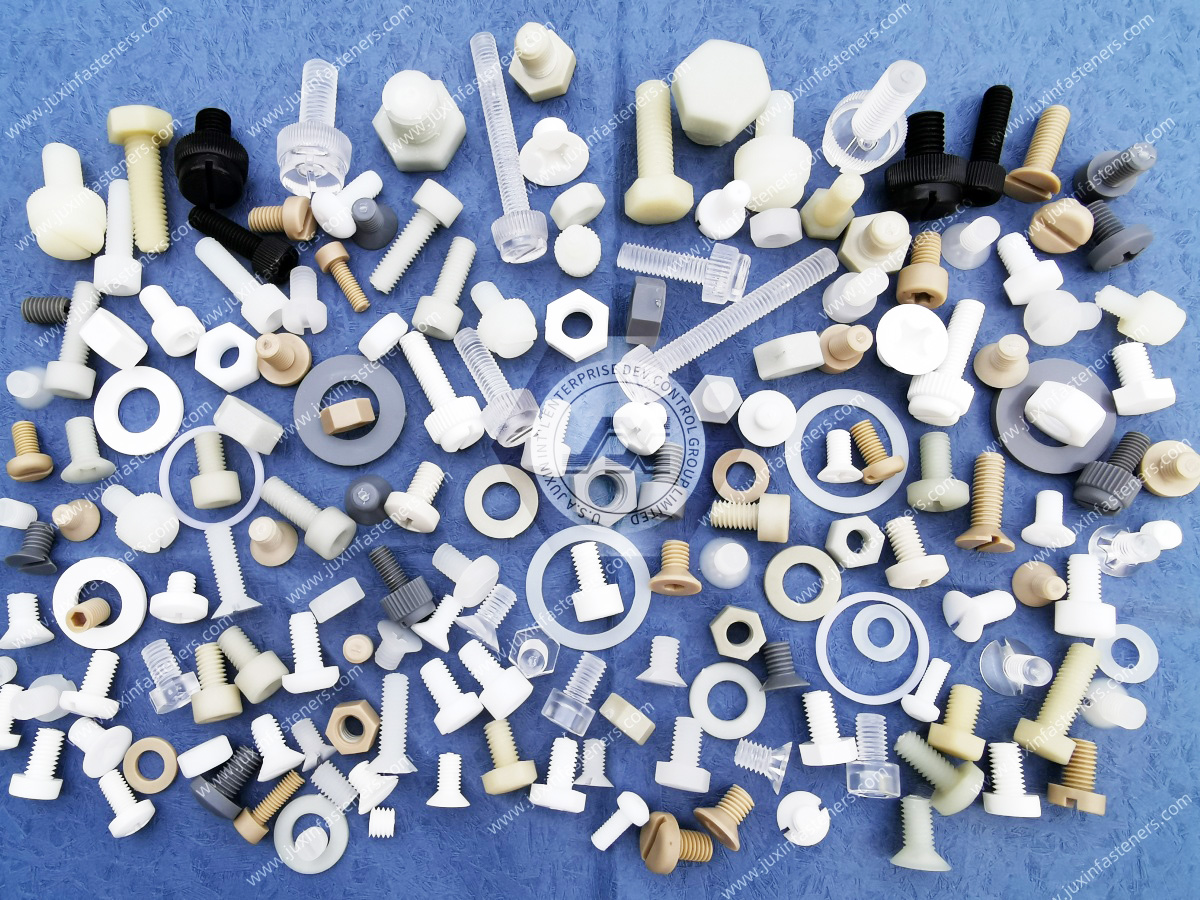
Nylon screws may offer:
Electrical insulation
Low weight
Corrosion resistance
Nonmetallic contact surfaces
They may be considered for selected:
PCB assemblies
Electronic housings
Insulating supports
Precision instruments
Important Limitations
Nylon fasteners generally have different mechanical and thermal characteristics from metal screws.
Potential concerns include:
Creep under sustained load
Temperature sensitivity
Moisture-related dimensional changes
Lower stiffness
Thread damage
Material grade and service conditions must be considered.
Carbon Steel Screws
Carbon steel screws may provide a cost-effective option for suitable industrial electronic assemblies.
Potential applications include:
Electrical cabinets
Equipment brackets
Metal housings
Industrial controllers
Surface protection may be required depending on the environment.
Stainless Steel Screws
Stainless steel screws are used where corrosion resistance or material compatibility is important.
Common material designations include A2 and A4 stainless steel fastener categories under applicable specifications.
18-8 Stainless Steel
The commercial term 18-8 stainless steel generally describes a family of chromium-nickel stainless steels.
It should not automatically be treated as a complete material specification.
For procurement, the exact grade and mechanical-property requirements should be defined.
A2 and A4 Fasteners
ISO 3506-1 provides mechanical-property requirements for specified corrosion-resistant stainless steel bolts, screws and studs.
A2 and A4 designations must be used with the relevant property class and applicable product requirements.
Corrosion Resistance
Stainless steel corrosion resistance depends on the grade and exposure environment.
It is not universal.
Assembly Consideration
Stainless steel threaded joints may be susceptible to galling under certain conditions.
Suitable surface condition, lubrication where permitted and installation controls may be required.
Aluminum and Copper Fasteners
Specialized electronic equipment may use aluminum or copper-based fastening components.
However, these materials should not be selected solely because of low weight or electrical conductivity.
Aluminum
Potential considerations include:
Lower density
Material strength
Thread wear
Galvanic corrosion
Temperature exposure
Copper-Based Materials
Potential considerations include:
Electrical conductivity
Mechanical strength
Thread durability
Surface oxidation
Contact resistance
Important Procurement Consideration
For electrical connections, a copper screw is not automatically superior to a correctly engineered steel or other specified fastening arrangement.
The complete electrical and mechanical joint must be evaluated.
Surface Finishes for Electronic Screws
Depending on the screw material and application, surface finish options may include:
Zinc plating
Zinc-nickel plating
Black oxide
Passivation for suitable stainless steel
Other specified protective or functional coatings
Some specialized applications may require controlled-friction or low-reflectivity finishes.
Coating Selection Factors
Corrosion exposure
Appearance
Thread fit
Friction behavior
Electrical contact requirements
Installation process
Important Distinction
A decorative black finish does not automatically provide sufficient corrosion protection.
Likewise, a coating that reduces friction may change the relationship between tightening torque and clamp load.
Torque Control in Electronics Assembly
Torque control is one of the most important aspects of electronic screw installation.
Incorrect tightening can cause:
Thread stripping
Housing deformation
PCB damage
Component cracking
Insufficient clamping
Assembly inconsistency
Why Torque Alone Is Not Enough
The relationship between applied torque and resulting preload is influenced by:
Thread friction
Bearing-surface friction
Coating
Lubrication
Material
Joint stiffness
Two screws of the same nominal size may produce different clamp loads at the same torque.
Engineering Recommendation
Define installation requirements using the actual screw, mating component and assembly conditions.
Thread Engagement
Thread engagement affects joint performance.
For a machine screw installed into a tapped hole, important variables include:
Screw material
Mating material
Thread size
Thread tolerance
Engagement length
Applied load
Common Problem
A screw may have sufficient tensile strength while the mating internal thread is too weak.
This is particularly important for aluminum and other lower-strength mating materials.
Design Recommendation
Evaluate thread stripping and fastener failure as separate possible failure modes.
Screw Length and Bottoming-Out Risk
In compact electronic equipment, available thread depth may be limited.
A screw that bottoms out in a blind hole may reach the specified tightening torque without providing the intended clamping force.
This can produce a misleading assembly result.
Drawing Recommendation
Define screw length, hole depth and assembly stack-up together.
Vibration and Thread Retention
Electronic equipment may experience vibration during transport or operation.
Potential retention methods include:
Appropriate joint preload
Prevailing-torque locking features
Suitable threadlocking systems
Other approved mechanical locking methods
The correct approach depends on the application.
A stainless steel screw or high-strength screw does not automatically resist loosening under all vibration conditions.
Automated Screwdriving
High-volume electronics manufacturing may use automated or semi-automated screwdriving equipment.
Fastener characteristics affecting production include:
Head geometry
Drive recess dimensions
Screw length
Thread consistency
Surface finish
Feeding compatibility
Why Drive Recess Quality Matters
Inconsistent drive geometry may cause:
Tool cam-out
Recess damage
Installation delays
Rejected assemblies
Production Manager Considerations
Screw feeding reliability
Cycle time
Torque traceability where required
Installation defects
Rework
Tool wear
Packaging suitability
Manufacturing Recommendation
Evaluate the screw with the intended driver bit, feeding system and mating component.
Common Electronic Screw Assembly Failures
| Failure | Possible cause | Engineering review |
|---|---|---|
| Stripped plastic thread | Unsuitable screw or pilot hole | Screw-to-plastic compatibility |
| Cracked housing boss | Excessive installation load | Boss geometry and torque |
| PCB bending | Uneven support or clamping | Standoff and mounting layout |
| Heat sink contact variation | Inconsistent mounting load | Thermal interface assembly |
| Screw bottoms out | Incorrect length or hole depth | Assembly stack-up |
| Drive recess damage | Tool or recess mismatch | Drive geometry |
| Thread galling | Material and friction conditions | Material and installation |
| Loose joint | Inadequate preload or retention | Joint design |
| Corrosion | Unsuitable material or finish | Environmental requirements |
| Automated feeding failure | Screw geometry or packaging variation | Production equipment compatibility |
The corrective action should address the complete assembly rather than automatically changing screw material or strength.
Electronic Screw Inspection and Quality Requirements
Incoming fastener inspection may include:
Thread dimensions
Screw length
Head geometry
Drive recess dimensions
Material specification
Surface finish
Visual condition
For production approval, the customer may also require:
Functional assembly testing
Installation torque evaluation
Thread engagement verification
Corrosion testing
Lot identification
Inspection documentation
The actual inspection plan depends on the drawing and agreed customer requirements.
Metric and Inch Screw Standards
Electronic screws may use metric or Unified inch threads.
Relevant references include:
ISO 261 for metric thread designation
ISO 965 for metric thread tolerances
ASME B1.1 for Unified inch threads
ISO 3506-1 for mechanical properties of applicable stainless steel fasteners
Specific product standards should be selected according to the screw head, drive, dimensions and material.
Important Distinction
Metric, UNC, UNF, BSW and BSF thread systems are not directly interchangeable.
A numerical diameter conversion does not establish thread compatibility.
Industry Applications
Industrial Electronics
Control modules
Power supply housings
Instrument enclosures
Electronic assemblies
Automotive Electronics
Electronic control units
Sensor mounting
Vehicle display assemblies
Auxiliary electronic brackets
EV Power Electronics
Inverter housings
DC-DC converter assemblies
Cooling system supports
Electronic protection covers
Electrical Cabinets
Switchgear housings
Control panels
Distribution equipment enclosures
Medical Equipment
Instrument housings
Diagnostic equipment structures
Laboratory devices
Robotics and Automation
Robot controllers
Sensors
Precision brackets
Equipment housings
Communication Equipment
Network enclosures
Electronic modules
Equipment mounting
HVAC Electronics
Control boards
Electrical housings
Sensor modules
Rail and Aerospace Electronics
Applications may require additional industry-specific material, traceability and qualification requirements.
General industrial screw specifications should not be assumed sufficient for safety-critical or regulated systems.
Custom OEM Electronic Screws
Standard screws may not satisfy every electronic assembly requirement.
Drawing-based customization may involve:
Nonstandard lengths
Special head dimensions
Custom drive recesses
Special thread geometry
Material requirements
Surface treatments
Tight dimensional tolerances
Manufacturing feasibility depends on the product design, material and production requirements.
Second-Source Qualification
An alternative screw supplier should be evaluated for:
Dimensional Equivalence
Thread
Length
Head geometry
Drive recess
Material Equivalence
Material grade
Mechanical properties
Surface finish
Assembly Equivalence
Installation torque behavior
Thread engagement
Driver compatibility
Mating component fit
Production Equivalence
Feeding
Packaging
Inspection
Lot consistency
Commercial Equivalence
MOQ
Sample requirements
Annual demand
Lead time
Delivery conditions
A visually similar screw is not automatically a qualified replacement.
OEM Electronic Screw RFQ Checklist
For an accurate technical and commercial quotation, provide:
Screw Specification
2D drawing or 3D model
Thread designation
Length
Head style
Drive type
Material
Surface finish
Application
Mating material
Hole dimensions
Assembly stack-up
Required load
Installation torque requirements
Temperature and environmental conditions
Production
Manual or automated installation
Driver type
Feeding requirements
Inspection criteria
Sample approval requirements
Commercial
Initial order quantity
Annual forecast
MOQ expectations
Packaging requirements
Delivery destination
Required delivery schedule
Frequently Asked Questions
What screws are commonly used in electronic equipment?
Machine screws, miniature screws, self-tapping screws and specialized fastening components are used depending on the assembly.
Are stainless steel screws always the best choice for electronics?
No. Material selection depends on corrosion exposure, strength, electrical requirements and installation conditions.
Can self-tapping screws be used in plastic electronic housings?
Yes, where the screw design, plastic material and pilot hole geometry are compatible.
Why do PCB mounting screws damage circuit boards?
Possible causes include excessive clamping load, insufficient support, incorrect standoff height or unsuitable head contact.
What screws are suitable for heat sink mounting?
The correct screw and mounting arrangement depend on the thermal interface, required contact load and component design.
Can nylon screws provide electrical insulation?
Nylon screws can be electrically insulating, but the complete assembly must meet its electrical safety requirements.
Does a higher screw strength class improve electronic assembly reliability?
Not necessarily. The mating material and assembly design may govern the failure mode.
Why is screw length important in electronics?
Compact assemblies may have limited hole depth and clearance. Incorrect length can cause bottoming out or insufficient engagement.
What should purchasing check when qualifying an alternative screw supplier?
Drawing conformance, material, surface finish, assembly compatibility, production consistency and commercial requirements.
Can JUXIN FASTENERS review custom electronic screw drawings?
Yes. Customers can submit drawings and technical requirements for feasibility and quotation review.
JUXIN FASTENERS: Precision Screws and OEM Electronic Fastening Components
JUXIN FASTENERS supplies industrial screws and drawing-based fastening components for electronic equipment manufacturers.
Relevant product categories include:
Stainless steel machine screws
Carbon steel screws
Pan head screws
Socket head screws
Miniature screws
Self-tapping screws
Selected plastic and nylon screws
Custom drawing-based screws
Related threaded inserts and sheet metal fastening components
Material grades, finishes, dimensions and production feasibility should be confirmed for each project.
Request an OEM Electronic Screw Quotation
If you are developing an electronic enclosure, reviewing a PCB mounting design, sourcing heat sink fasteners or qualifying an alternative screw supplier, contact JUXIN FASTENERS.
For efficient review, send:
Screw drawing + mating material + assembly requirements + material and finish specification + annual purchasing volume
JUXIN FASTENERS can review the submitted requirements and discuss suitable standard or drawing-based fastening options.
Company: JUXIN FASTENERS
Website: https://www.juxinfasteners.com/
Email: info@juxinfasteners.com
Send your electronic screw drawings and OEM RFQ requirements to JUXIN FASTENERS for technical review and quotation.
Contact Us
Tel.:
+86 020 8621 0320
+86 020 3121 6067
E-mail:
Technical Support:
Navigation
SEND INQUIREY