
Call Us
+86 136 6007 9809
Call Us
+86 136 6007 9809

Apr. 18, 2023
Electric vehicle engineering is changing how automotive manufacturers design, specify and source industrial fasteners.
Conventional automotive fastening requirements—including mechanical strength, fatigue resistance, corrosion protection and assembly consistency—remain essential.
Electric vehicle architectures introduce additional challenges through lightweight aluminum structures,
large battery enclosures, compact electric drive units, thermal management systems and high-density power electronics.
A fastener that performs reliably in a conventional steel assembly may require a different material, coating,
installation method or joint design when introduced into an aluminum battery tray, magnesium component or mixed-material structure.
For automotive OEMs and Tier-1/Tier-2 suppliers, the challenge is not simply finding a bolt with sufficient tensile strength.
The complete fastening system must maintain its intended mechanical and functional performance throughout production, vehicle operation and service.
For procurement and supplier-development teams, those engineering requirements must be translated into clear product specifications, validated alternatives and repeatable supply arrangements.
JUXIN FASTENERS supplies industrial bolts, studs, nuts, self-clinching fasteners, weld fasteners, blind rivet nuts and drawing-based custom fastening components for international OEM applications.
This guide examines the engineering and manufacturing decisions involved in selecting fastening solutions for electric vehicles,
with particular attention to joint reliability, lightweight materials, corrosion control, production efficiency and supplier qualification.

Modern electric vehicle platforms combine different materials and assembly technologies within the same vehicle.
Common materials include:
Aluminum sheet, extrusions and castings
Carbon and alloy steels
High-strength automotive steels
Stainless steels
Engineered polymers
Electrical insulation materials
Coated and plated components
Each material has different mechanical, thermal and corrosion characteristics.
For example, a high-strength steel bolt installed in an aluminum housing may have sufficient tensile capacity while the aluminum internal thread becomes the limiting element.
Likewise, a corrosion-resistant coating may protect a steel fastener but require additional interface measures when the fastener contacts aluminum in the presence of moisture and road salt.
The engineering objective is to balance several requirements:
Joint Strength + Preload Retention + Material Compatibility + Corrosion Protection + Assembly Repeatability + Serviceability + Total Installed Cost
A fastening solution should therefore be selected as part of the complete joint rather than as an isolated component.
 |  |
Automotive fastener specifications should identify the standards applicable to the actual product geometry, thread system, material and surface treatment.
An international standard may define a product's mechanical properties or dimensional requirements, but it does not necessarily establish the suitability of the complete joint.
ISO 898-1 covers mechanical and physical properties of specified carbon steel and alloy steel bolts, screws and studs with ISO metric threads.
Relevant mechanical property classes include:
Class 8.8
Class 10.9
Class 12.9
The appropriate class depends on the intended loading, joint geometry, mating material and installation method.
A higher property class does not automatically provide better fatigue performance, corrosion resistance or joint reliability.
ISO 898-2 addresses mechanical properties of applicable carbon steel and alloy steel nuts.
ISO 965 provides requirements for ISO metric thread tolerances.
For unified inch threads, ASME B1.1 provides the relevant thread definitions.
Metric, UNC, UNF, BSW and BSF threads must be identified separately.
For example, M12 × 1.5 and 1/2-20 UNF are different thread specifications and are not directly interchangeable.
Approximate inch conversions may be useful for dimensional reference, but they do not establish thread compatibility.
Depending on the product and coating process, relevant references may include:
ISO 10683 for applicable non-electrolytically applied zinc-flake coating systems
ISO 4042 for electroplated coating systems on fasteners
ISO 19598 for applicable zinc and zinc-alloy coatings on iron or steel
ISO 9227 for specified salt spray testing
The actual standard, coating designation and acceptance criteria should be included in the engineering specification.
OEM and Tier-1 programs may require additional quality documentation, including:
Material records
Dimensional inspection reports
Mechanical test reports
Coating verification
Lot traceability
Process control documentation
PPAP documentation where specified
The availability and scope of these requirements must be confirmed for the actual sourcing program.
High-strength bolts are used in selected automotive assemblies where the design requires a defined combination of mechanical capacity, dimensional control and joint preload.
However, fastener strength should not be evaluated independently of the mating components.
| Property Class | Engineering Characteristic | Selection Consideration |
|---|---|---|
| 8.8 | Specified medium/high-strength steel fastener class | Suitable for selected general mechanical joints |
| 10.9 | Higher mechanical strength and potential preload capacity | Requires compatible joint and mating components |
| 12.9 | Higher specified strength | Requires careful review of loading, material and environmental risks |
Exact mechanical requirements must follow the applicable product standard and drawing.
A higher-strength bolt may help engineers achieve:
Greater permissible tensile loading
Higher intended preload
More compact joint packaging
A smaller fastener diameter where validated
Improved load capacity within a constrained design
A stronger bolt may provide little benefit when the limiting failure mechanism is:
Aluminum internal thread stripping
Parent-material bearing failure
Insufficient thread engagement
Joint separation
Inadequate fatigue design
Weak weld attachment
Excessive local deformation
Incorrect tightening conditions
Engineering insight: The weakest element of the complete joint often determines its actual load capacity.
For a high-strength bolt installed in an aluminum housing, engineers should evaluate bolt strength, internal thread strength and local bearing behavior separately.
High-strength steel fasteners can be susceptible to hydrogen embrittlement under certain material, processing, stress and environmental conditions.
Relevant factors include:
Material strength and hardness
Surface preparation
Electroplating processes
Residual and applied stress
Environmental hydrogen exposure
Coating and post-treatment procedures
Appropriate controls should be established for the specified fastener.
Non-electrolytically applied zinc-flake coatings may avoid certain hydrogen-introduction mechanisms associated with electroplating, but they do not eliminate every possible hydrogen-related failure risk.
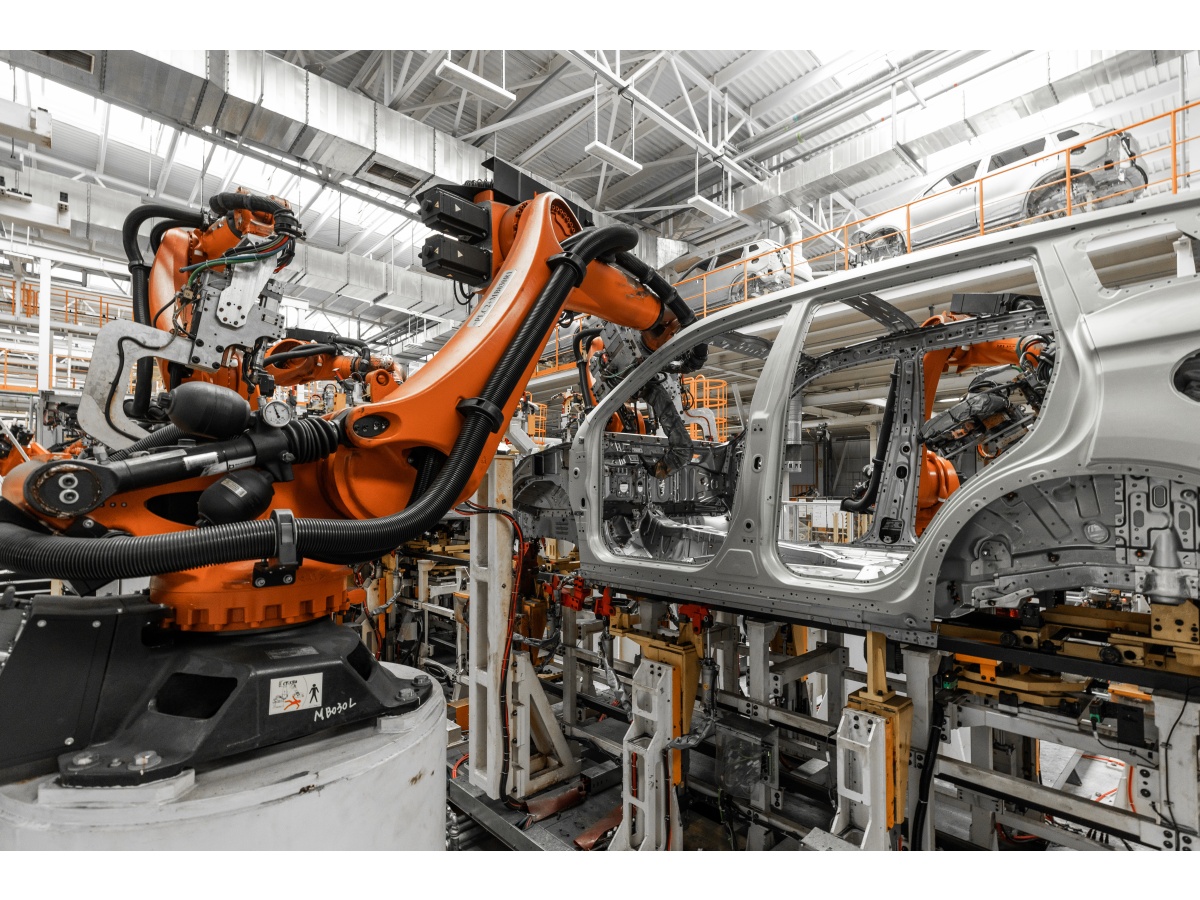
Electric vehicle structures frequently combine steel fasteners with aluminum components.
These material combinations require attention to both mechanical compatibility and corrosion behavior.
When dissimilar metals are electrically connected in the presence of a suitable electrolyte, galvanic corrosion may occur.
The severity depends on several variables:
Material combination
Exposed surface area
Coating condition
Moisture exposure
Road-salt contamination
Joint geometry
Drainage
Electrical continuity
A steel fastener with a protective coating may still require additional interface protection in a demanding aluminum assembly.
Potential measures include:
Suitable zinc-alloy or zinc-flake coatings
Compatible washers or interface materials
Electrical isolation where permitted
Joint sealants
Improved drainage
Reduced crevice exposure
Material selection based on the complete joint
The appropriate approach depends on the mechanical, environmental and electrical functions of the connection.
Some EV fasteners provide electrical grounding or bonding connections.
In these cases, electrical conductivity is part of the joint's functional requirement.
An insulating washer may reduce galvanic interaction but interfere with the required electrical path.
Therefore, corrosion protection and electrical bonding must be evaluated together.
Magnesium alloys may be used in selected lightweight automotive components.
These materials can require additional attention to galvanic compatibility, surface protection and joint design.
Fastener selection should follow the actual magnesium alloy, component geometry and environmental requirements.
EV battery enclosures, electric motor housings and power electronics components may experience significant temperature variation during operation and environmental exposure.
When the bolt and clamped components have different thermal expansion characteristics, joint preload may change.
Approximate room-temperature linear thermal expansion coefficients are:
| Material | Approximate Coefficient |
|---|---|
| Carbon steel | 12 × 10⁻⁶ /K |
| Aluminum alloys | 23 × 10⁻⁶ /K |
These are representative values. Actual coefficients vary by alloy and temperature.
Consider a steel bolt clamping an aluminum structure.
During heating, the aluminum and steel may expand by different amounts.
The resulting change in clamp force depends on:
Effective grip length
Bolt stiffness
Joint stiffness
Material expansion coefficients
Temperature distribution
Gasket behavior
Embedment
Material relaxation
A simplified elastic relationship is:
ΔF ≈ k_eq × L × (α_joint − α_bolt) × ΔT
Where:
ΔF = approximate clamp-force change
k_eq = equivalent elastic stiffness of the bolt and joint
L = effective reference grip length
α_joint = effective thermal expansion coefficient of the clamped stack
α_bolt = bolt thermal expansion coefficient
ΔT = temperature change
This expression is a simplified model for suitable elastic conditions. It does not fully describe temperature gradients, gasket compression, creep or nonlinear material behavior.
Engineers should evaluate:
Minimum residual preload
Maximum bolt stress
Joint separation risk
Aluminum thread stripping
Bearing stress
Thermal cycling
Seal compression
Long-term relaxation
A fastener suitable at room temperature may require further evaluation when used in an assembly exposed to repeated heating and cooling.
Battery modules and other vehicle assemblies may require long threaded components.
These can include:
Double-ended studs
Long threaded studs
Battery module tie rods
Custom threaded rods
Drawing-based fastening components
The exact geometry depends on the battery structure and intended load path.
Long studs introduce dimensional and manufacturing challenges beyond those of shorter bolts.
Important characteristics include:
Overall length
Straightness
Thread concentricity
Thread length
End geometry
Material strength
Surface treatment
Packaging
A long stud with excessive curvature may create:
Assembly misalignment
Insertion resistance
Thread damage
Uneven contact
Automated installation interruptions
Straightness tolerance should be defined according to the actual length, mating components and assembly clearance.
Depending on the product, threads may be rolled or machined.
The manufacturing method must be compatible with the required material, dimensions and mechanical properties.
Critical dimensions may include:
Thread pitch
Thread tolerance
Threaded length
Thread runout
End chamfer
Overall length
Straightness
A complete inquiry should include:
Engineering drawing
Overall length and tolerance
Thread diameter and pitch
Thread length at each end
Material
Mechanical property class
Straightness tolerance
Coating
Inspection requirements
Estimated annual demand
A generic description such as “M8 long battery stud” is insufficient for a precise engineering quotation.
Battery enclosures combine structural, environmental and manufacturing requirements.
Fasteners may be used for:
Battery cover attachments
Tray mounting
Module brackets
Cooling-system supports
Cable and harness retention
Thermal management hardware
Internal equipment mounting
Service-access panels
A bolt or threaded insert does not automatically create a sealed connection.
Sealing performance depends on:
Gasket material
Compression distribution
Surface flatness
Joint stiffness
Fastener spacing
Preload
Thermal movement
Seal aging
Where an enclosure has a specified ingress-protection requirement, the complete assembly must be validated accordingly.
Battery assemblies are exposed to vehicle vibration and repeated mechanical loading.
Relevant design variables include:
Joint stiffness
Bolt preload
Thread engagement
Surface friction
Locking mechanism
Fastener fatigue resistance
Local structural deformation
A locking feature should not be treated as a substitute for adequate preload and joint design.
Battery assemblies may require maintenance or replacement.
Engineers should consider:
Repeated thread engagement
Tool access
Fastener replacement
Coating wear
Seal replacement
Reassembly procedures
A permanent attachment may be unsuitable where repeated service access is required.
Self-clinching fasteners provide threaded attachment points in suitable sheet materials without conventional welding.
Relevant product families include:
Self-clinching nuts
Self-clinching studs
Self-clinching standoffs
Blind self-clinching hardware
Flush-mount fastening components
During installation, the fastener's clinching feature displaces suitable sheet material into a retaining groove or undercut.
This creates a mechanical interlock.
Performance depends on the fastener geometry and parent material.
Sheet material
Sheet hardness
Minimum sheet thickness
Hole diameter
Edge distance
Fastener material
Installation force
Push-out resistance
Torque-out resistance
Thread dimensions
Self-clinching fasteners rely on controlled deformation of the sheet.
If the sheet is too hard for the selected fastener, sufficient material flow may not occur.
This can reduce retention or cause installation defects.
The validated installation requirements should therefore be checked before selecting a clinching fastener for high-strength steel or other difficult substrates.
Where suitable, self-clinching hardware can provide:
Integrated threaded attachment points
Repeatable press installation
Compatibility with automated equipment
Reduced loose-part handling
No welding heat input
However, production must control hole preparation, press alignment and installation force.
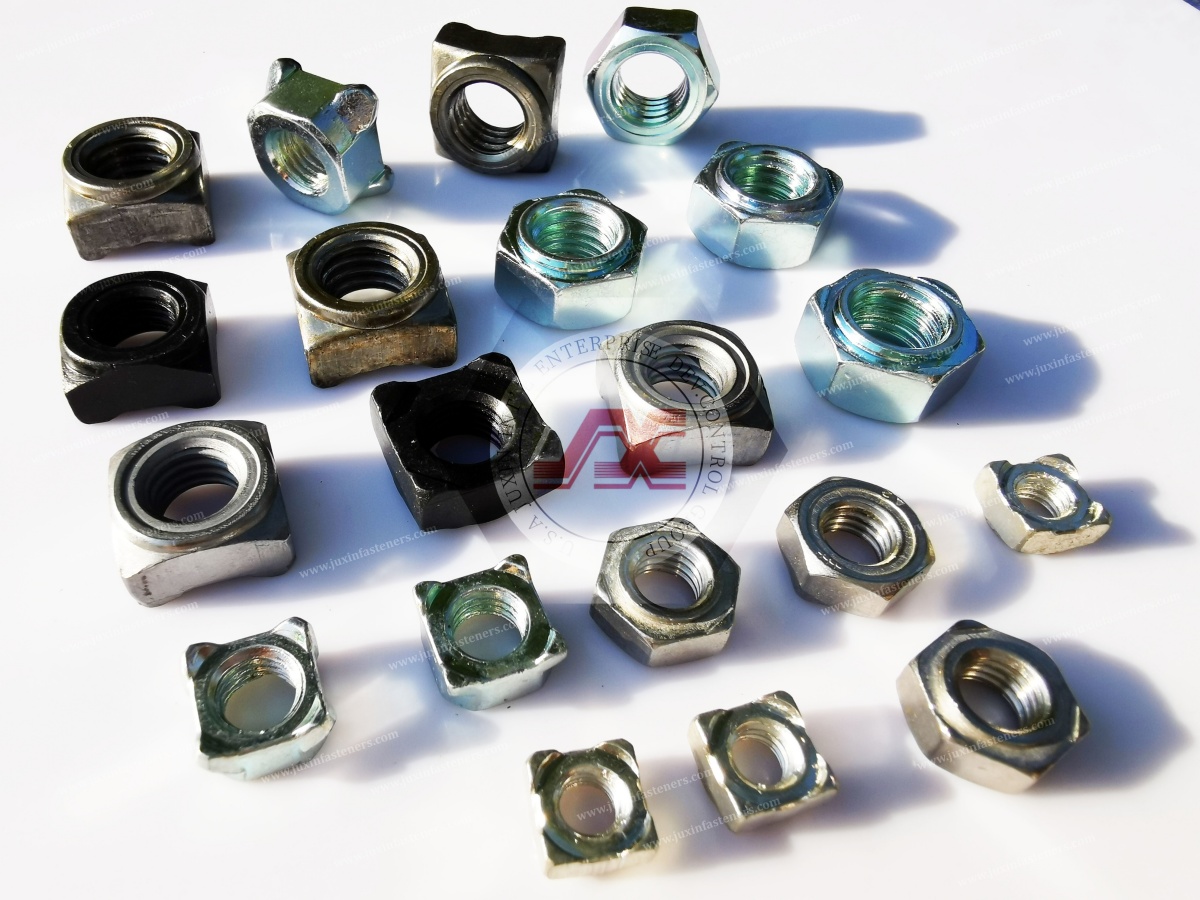
Weld nuts and weld studs provide permanent threaded attachment points on suitable fabricated components.
Relevant products include:
Projection weld nuts
DIN 928 square weld nuts
Projection weld studs
Capacitor discharge weld studs
Arc weld studs
Custom welded fastening components
Potential applications include:
Body-in-white brackets
Seat structures
Underbody components
Battery enclosure brackets
Wiring supports
Heat shields
Electrical mounting points
Important variables include:
Projection geometry
Parent material
Sheet thickness
Welding current
Welding time
Electrode force
Electrode condition
Surface treatment
Fastener positioning
A weld nut should not be selected solely because its thread matches the mating bolt.
Its weld geometry and installation process must also be compatible with the parent material and production equipment.
Depending on the application, verification may include:
Dimensional inspection
Thread inspection
Weld integrity evaluation
Torque resistance
Push-out testing
Pull-off testing
Application-specific destructive testing
Acceptance criteria should be defined by the engineering drawing and relevant customer requirements.
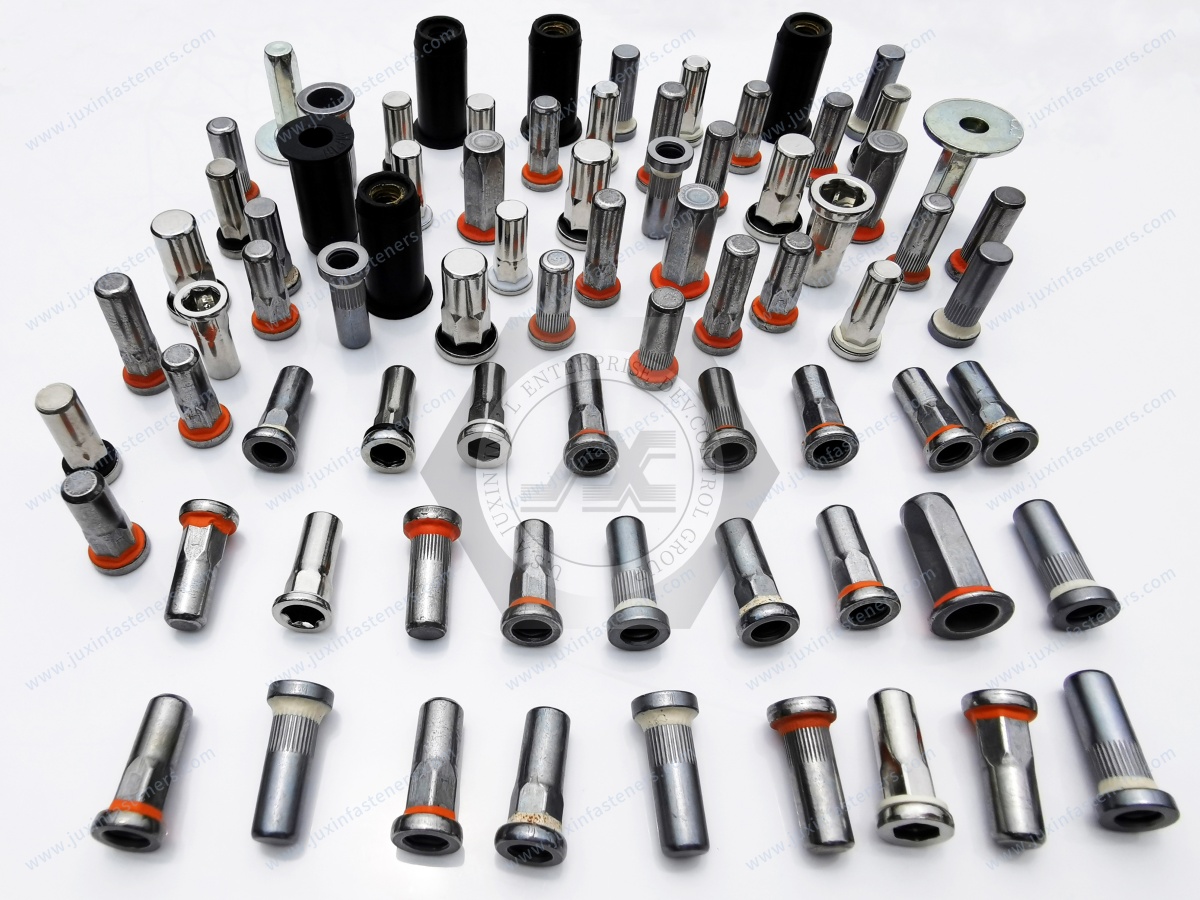
Blind rivet nuts provide internal threads where installation access is available from only one side.
Potential applications include:
Closed aluminum profiles
Hollow structural members
Sheet-metal enclosures
Service panels
Access-limited brackets
Common configurations include:
Round-body rivet nuts
Knurled-body rivet nuts
Half-hex-body rivet nuts
Full-hex-body rivet nuts
Open-end rivet nuts
Closed-end rivet nuts
Engineers should evaluate:
Parent material
Hole geometry
Grip range
Blind-side clearance
Thread size
Installation force or stroke
Torque-out resistance
Pull-out resistance
Corrosion protection
Sealing requirements
A hexagonal-body rivet nut can provide anti-rotation engagement when installed in a correctly prepared matching hole.
A round-body rivet nut may be easier to accommodate in a drilled circular hole.
However, its rotation resistance depends on the actual body geometry, material and installation.
A blind rivet nut should not automatically replace a weld nut or self-clinching nut.
These products may differ in:
Load capacity
Hole preparation
Installation access
Joint stiffness
Production cycle time
Serviceability
Engineering validation is required before substitution.
Different fastening technologies provide different mechanical and manufacturing characteristics.
| Fastening Method | Installation Method | Potential Advantage | Main Engineering Limitation |
|---|---|---|---|
| Self-clinching nut | Press installation | Threaded attachment without welding | Requires suitable sheet hardness and thickness |
| Self-clinching stud | Press installation | Integrated external thread | Depends on sheet material flow |
| Projection weld nut | Resistance welding | Permanent threaded attachment | Welding process compatibility |
| Weld stud | Process-specific welding | Permanent stud attachment | Weld integrity and heat effects |
| Blind rivet nut | One-sided setting | Access from one side | Grip range and blind-side clearance |
| Conventional bolt and nut | Mechanical assembly | Removable joint | Access and loose-part handling |
| Threaded insert | Process-specific installation | Reinforced internal thread | Substrate and installation compatibility |
Begin with the joint's function.
Determine whether the connection must be removable or permanent.
Then assess:
Mechanical loads
Parent material
Sheet thickness
Hole geometry
Access
Production equipment
Inspection requirements
Environmental conditions
Only after these requirements are understood should the specific fastener be selected.
The best fastening method is not necessarily the one with the highest nominal load rating.
It is the method that satisfies the joint requirements while remaining compatible with the actual production sequence, equipment, inspection plan and service strategy.
Vehicle vibration and temperature changes can contribute to preload loss or rotational loosening.
Potential mechanisms include:
Joint embedment
Material relaxation
Transverse slip
Nut or bolt rotation
Differential thermal expansion
Gasket compression changes
Incorrect tightening
Surface wear
A simplified relationship is:
T ≈ K × F × d
Where:
T = tightening torque
K = empirical torque coefficient
F = resulting clamp force
d = nominal fastener diameter
This expression illustrates the influence of friction.
It is not sufficient by itself to establish a production tightening specification.
Two bolts with the same dimensions and property class may produce different preload levels at the same tightening torque.
Potential causes include differences in:
Coating
Lubrication
Surface finish
Thread condition
Bearing surface
Installation speed
Temperature
A coating change may therefore require torque–clamp-force verification.
Depending on the application, engineers may consider:
Prevailing-torque lock nuts
Pre-applied thread-locking systems
Mechanical locking features
Appropriate joint geometry
Controlled tightening processes
A locking feature can resist rotation but cannot compensate for every mechanism of preload loss.
Surface treatment must be selected according to the actual material, environment and assembly requirements.
Zinc-nickel coatings may provide corrosion protection for specified steel fasteners.
Relevant characteristics include:
Coating thickness
Corrosion resistance
Passivation
Topcoat
Friction behavior
Thread fit
Process controls
Non-electrolytically applied zinc-flake coatings are used in selected automotive fastening applications.
Important considerations include:
Corrosion performance
Coating thickness
Friction consistency
Thread compatibility
Installation conditions
High-strength fastener processing
Stainless steel may be appropriate for selected corrosion-resistant applications.
However, stainless steel should not automatically replace a high-strength alloy steel bolt.
Engineers must consider:
Mechanical properties
Thread galling
Fatigue
Galvanic compatibility
Operating temperature
Installation requirements
Aluminum fasteners may reduce weight in suitable applications.
Their use requires evaluation of:
Mechanical capacity
Thread durability
Fatigue
Corrosion
Installation method
Service conditions
| Application Requirement | Key Engineering Consideration |
|---|---|
| Road-salt exposure | Coating and joint corrosion validation |
| High-strength steel | Hydrogen embrittlement risk |
| Aluminum-steel connection | Galvanic corrosion control |
| Automated tightening | Friction consistency |
| Electrical grounding | Conductivity and corrosion compatibility |
| Repeated service | Coating wear and thread durability |
| Welded attachment | Welding and coating compatibility |
Some EV components operate at elevated temperatures.
Potential applications include:
Electric motor housings
Inverter assemblies
Power electronics
Thermal management equipment
High-temperature mounting points
Material selection depends on the actual operating temperature, exposure duration and mechanical loading.
Depending on the application, engineers may evaluate:
Alloy steels
Austenitic stainless steels
A286-type heat-resistant alloys
Nickel-based alloys such as Alloy 718
Specialized alloys should only be proposed when supported by the application requirements and confirmed manufacturing feasibility.
Strength at operating temperature
Creep and stress relaxation
Thermal expansion
Oxidation
Corrosion
Thread galling
Fatigue
Coating temperature limitations
A fastener installed near an electric motor or cooling circuit does not automatically require a nickel-based superalloy.
Material selection should follow the actual temperature, loading and service environment.
An unnecessarily expensive alloy can increase procurement cost without improving the joint's performance.
Automotive fastener quality depends on consistent materials, dimensions, manufacturing processes and inspection.
Depending on the product, manufacturing may involve:
Raw material preparation
Cold forming
CNC machining
Thread rolling or machining
Heat treatment
Surface treatment
Dimensional inspection
Mechanical testing
Packaging and lot identification
Not every product follows the same manufacturing sequence.
Critical characteristics may include:
Thread dimensions
Head geometry
Shank diameter
Overall length
Straightness
Concentricity
Surface condition
Coating thickness
Depending on the fastener, verification may include:
Tensile testing
Proof-load testing
Hardness testing
Torque-related testing
Fatigue evaluation
Installation performance testing
Some products require additional verification.
For example:
Self-clinching nuts: torque-out and push-out resistance
Blind rivet nuts: installation and retention performance
Weld nuts: weld attachment integrity
Long studs: straightness and thread alignment
High-strength bolts: mechanical properties and coating compatibility
OEM customers may request:
Material certificates
Dimensional reports
Mechanical test reports
Coating verification
Lot traceability
Sample approval records
PPAP documentation where specified
The exact scope should be agreed during supplier qualification.
A fastener can meet its dimensional specification and still create production problems if it is poorly suited to automated installation.
Important considerations include:
Part orientation
Head geometry
Length variation
Surface condition
Tangling risk
Packaging
Feeding equipment compatibility
Manufacturing engineers should evaluate:
Tool access
Driver engagement
Thread alignment
Installation force
Tightening strategy
Cycle time
Error detection
Depending on the application, controls may include:
Fastener presence detection
Position verification
Torque monitoring
Angle monitoring
Welding parameter monitoring
Clinching force monitoring
Traceability
A fastening design should be reviewed against the actual manufacturing sequence.
For example, a long stud that is easy to install manually may be difficult to feed through automated equipment.
A weld nut may have the correct dimensions but require electrode access that the assembly fixture cannot provide.
A self-clinching nut may be compatible with the sheet material but impossible to install after surrounding components have been assembled.
These issues should be addressed during product development rather than after production tooling is finalized.
| EV Application | Potential Fasteners | Engineering Priorities | Procurement Priorities |
|---|---|---|---|
| Battery enclosure cover | Bolts, threaded inserts, clinch hardware | Sealing, preload, serviceability | Coating, dimensions, consistency |
| Battery module mounting | Studs, tie rods, high-strength bolts | Load distribution, straightness, fatigue | Drawing control and inspection |
| Aluminum brackets | Coated bolts, inserts, rivet nuts | Galvanic corrosion, thread strength | Installation cost and compatibility |
| Electric drive unit | High-strength bolts and studs | Preload, vibration, thermal effects | Mechanical properties and friction |
| Body-in-white | Weld nuts, weld studs, clinch hardware | Attachment strength | Process consistency and traceability |
| Electrical enclosure | Clinch nuts, rivet nuts, standoffs | Sheet thickness, grounding, access | Assembly efficiency |
| Thermal management | Bolts, studs, custom hardware | Temperature, corrosion, sealing | Material and documentation |
| Service-access assembly | Removable bolts and threaded hardware | Repeated assembly and durability | Replacement availability |
This matrix provides preliminary selection guidance.
Final approval must be based on the actual engineering requirements and validation.
Automotive fastener sourcing requires more than matching nominal dimensions.
Procurement teams should evaluate the complete specification and the supplier's ability to support the required manufacturing and quality program.
Can the supplier review the drawing?
Is the specified material suitable for the product geometry?
Can the required tolerances be achieved?
Is the coating compatible with assembly?
What inspection documentation is required?
Are samples needed for installation validation?
Is custom tooling required?
How will drawing revisions be controlled?
What packaging and delivery requirements apply?
Procurement cost can include:
Fastener price
Tooling
Surface treatment
Inspection
Packaging
Freight
Inventory
Assembly labor
Rework
Scrap
A lower-cost fastener may increase total manufacturing cost if it causes feeding interruptions, inconsistent installation or additional inspection.
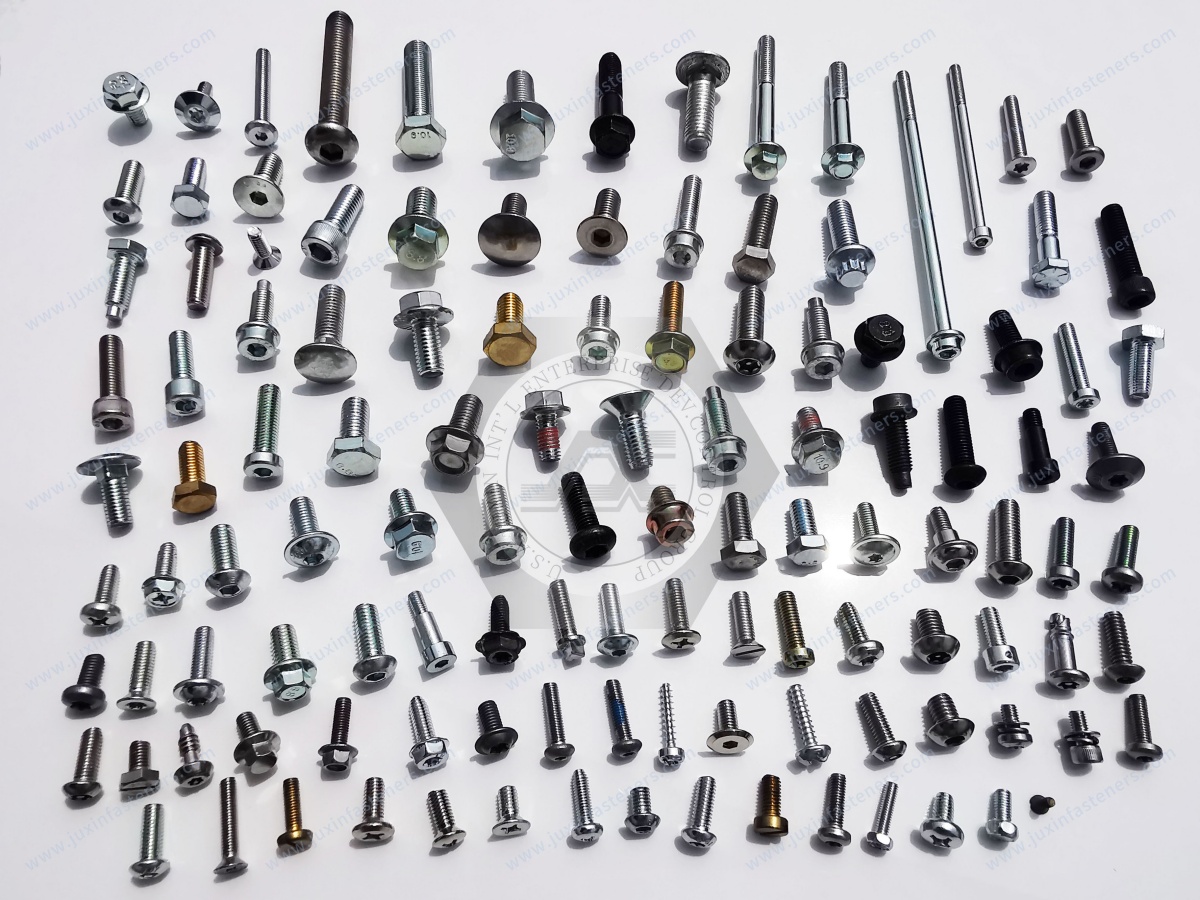
When considering a replacement product or supplier, verify:
Thread system
Material
Mechanical property class
Geometry
Surface treatment
Coating friction
Installation compatibility
Testing requirements
Drawing revision
Visual similarity and matching nominal dimensions are not sufficient for approval.
A complete RFQ improves technical review and quotation accuracy.
| RFQ Category | Required Information |
|---|---|
| Product | Bolt, stud, nut, clinch fastener, weld fastener or rivet nut |
| Drawing | 2D drawing, CAD model and revision |
| Thread | Exact metric or inch-thread specification |
| Geometry | Length, head, shank, special features and tolerances |
| Material | Grade, alloy and mechanical property requirements |
| Coating | Finish, thickness, corrosion and friction requirements |
| Assembly | Parent material, thickness, hole and installation method |
| Performance | Mechanical, fatigue or retention requirements |
| Quality | Inspection, testing and documentation |
| Commercial | Sample quantity, order volume, annual demand and delivery |
Engineering teams should identify:
Joint function
Loading conditions
Mating materials
Thread engagement
Installation method
Environmental exposure
Critical dimensions
Required validation
Purchasing and supplier-development teams should identify:
Approved drawing revision
Estimated annual demand
Initial order quantity
Delivery requirements
Packaging
Quality documentation
Supplier qualification requirements
This distinction helps ensure that both engineering feasibility and commercial requirements are addressed before quotation.
JUXIN FASTENERS supplies industrial fastening components for automotive, electrical, machinery and other OEM applications.
Relevant product families include:
High-strength steel bolts
Custom automotive bolts and studs
Long threaded studs and tie rods
Self-clinching nuts
Self-clinching studs
Self-clinching standoffs
Projection weld nuts
Weld studs
Blind rivet nuts
Brass threaded inserts
CNC-machined fastening components
Drawing-based custom hardware
Product feasibility, material availability, coatings, dimensional tolerances and quality documentation are confirmed against the customer's actual requirements.
OEM inquiries may involve:
Drawing evaluation
Fastener selection
Material comparison
Thread specification
Coating selection
Sample development
Installation requirements
Inspection planning
Custom component quotation
Bulk procurement
For safety-critical automotive applications, product approval and application validation must follow the relevant OEM requirements.
Depending on the design, EV battery assemblies may use high-strength bolts, long studs, tie rods, weld nuts, self-clinching hardware, blind rivet nuts and custom threaded components.
No. The correct choice depends on the complete joint, including mating material, preload, fatigue, corrosion and installation conditions.
There is no universal choice. Engineers must evaluate load requirements, galvanic corrosion, thread engagement, coating compatibility and manufacturing access.
Yes, for suitable aluminum sheet materials and thicknesses when the selected fastener and installation conditions are compatible.
They may be appropriate for selected attachment points where one-sided access is required. Structural, sealing and environmental requirements must be verified.
Differential thermal expansion, joint stiffness, relaxation and contact conditions can alter the relationship between bolt elongation and joint compression.
No. They differ in application process and may differ in thickness, friction behavior, corrosion performance and compatibility with the fastening process.
Not directly. Metric and unified inch threads use different specifications and require separate engineering verification.
Provide the engineering drawing, material, thread specification, mechanical requirements, coating, application details, testing requirements and estimated quantity.
EV fastener engineering requires a complete system-level approach.
The correct component must satisfy not only dimensional and mechanical specifications but also the requirements of the parent material,
surface treatment, assembly process, operating environment and production system.
The most important engineering decisions include:
Selecting bolt strength according to the complete joint
Managing galvanic corrosion in dissimilar-metal connections
Evaluating preload changes during thermal cycling
Matching sheet-metal fasteners to material and thickness
Selecting welding, clinching or blind installation according to access and manufacturing conditions
Controlling coating friction and tightening consistency
Defining inspection and documentation requirements before production
Evaluating total installed cost rather than unit price alone
A complete OEM fastener specification should combine:
Product Geometry + Material + Mechanical Properties + Thread System + Coating + Joint Design + Installation Process + Quality Requirements + Production Volume
This provides a stronger foundation for reliable automotive manufacturing and long-term supply-chain performance.
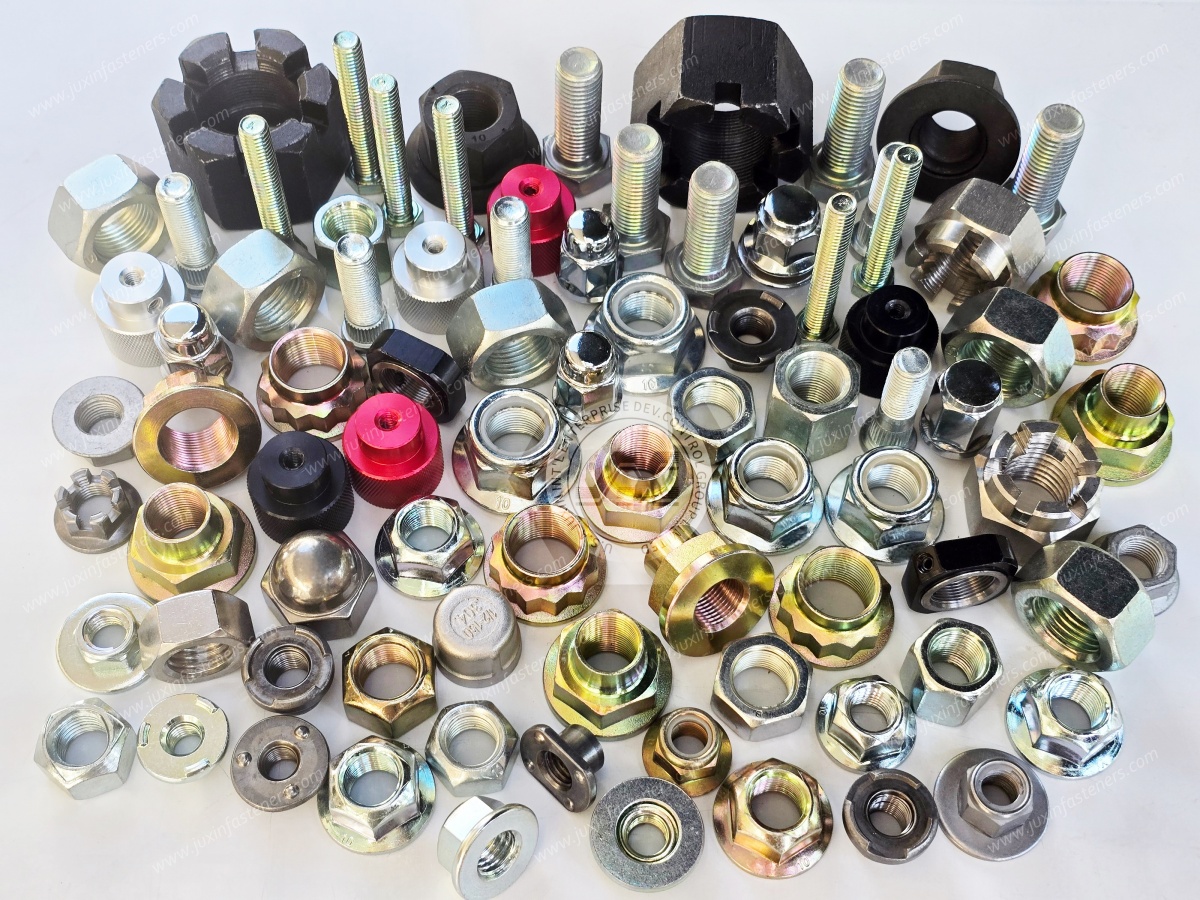
JUXIN FASTENERS welcomes inquiries from automotive OEMs, Tier-1 and Tier-2 suppliers, EV battery manufacturers, equipment builders,
design engineers, manufacturing engineers, production managers and global procurement teams.
Whether your project requires high-strength bolts, long battery studs, self-clinching hardware, weld fasteners, blind rivet nuts or custom threaded components,
send the relevant engineering information for technical review and quotation.
For an efficient RFQ, please include:
Engineering drawings or CAD files
Thread size and pitch
Material and mechanical property requirements
Surface treatment
Application and assembly conditions
Quality and testing requirements
Order quantity and annual demand
Packaging and delivery requirements
Company: JUXIN FASTENERS
Website: https://www.juxinfasteners.com/
Email: info@juxinfasteners.com
Contact JUXIN FASTENERS for EV automotive fastener selection, custom component sourcing, drawing evaluation and OEM quotation requests.
Contact Us
Tel.:
+86 020 8621 0320
+86 020 3121 6067
E-mail:
Technical Support:
Navigation
SEND INQUIREY



