Call Us

+86 136 6007 9809

Products News

High-Strength and Heat-Resistant Fasteners for New Energy Vehicles

Jun. 20, 2023


High-Strength and Heat-Resistant Fasteners for New Energy Vehicles


Executive Summary & Engineering Overview


The rapid evolution of New Energy Vehicles (NEVs) introduces extreme performance demands on mechanical connection systems.


 Powertrain electrification, high-density battery packs, and elevated thermal operating envelopes require 


specialized fastening architectures. Standard carbon steel hardware is no longer sufficient to manage high-frequency vibration, thermal expansion deltas, and aggressive electrochemical environments.


This technical guide provides automotive structural engineers, design leads, and strategic procurement managers with an advanced analytical framework covering:

  1. NEV Fastening Methods & Grade Matching: Establishing correct property class pairings (ISO 898-1) and preventing hydrogen embrittlement in high-hardness components.


  2. Systematic Engineer Selection Criteria: Translating operational loads, shear-tensile forces, and clamped part face pressures into accurate fastener specifications.


  3. Ultra-High-Strength & Non-Quenched Battery Studs: Optimizing weight reduction in battery modules and chassis subframes using micro-alloyed boron-vanadium steels.


  4. High-Temperature & Nickel-Alloy Solutions: Deploying Inconel 718 and precipitation-hardening stainless alloys to prevent thermal creep and fastener failure in high-load thermal zones.


1. Overview of Vehicle Fastening Methods & Metallurgical Matching


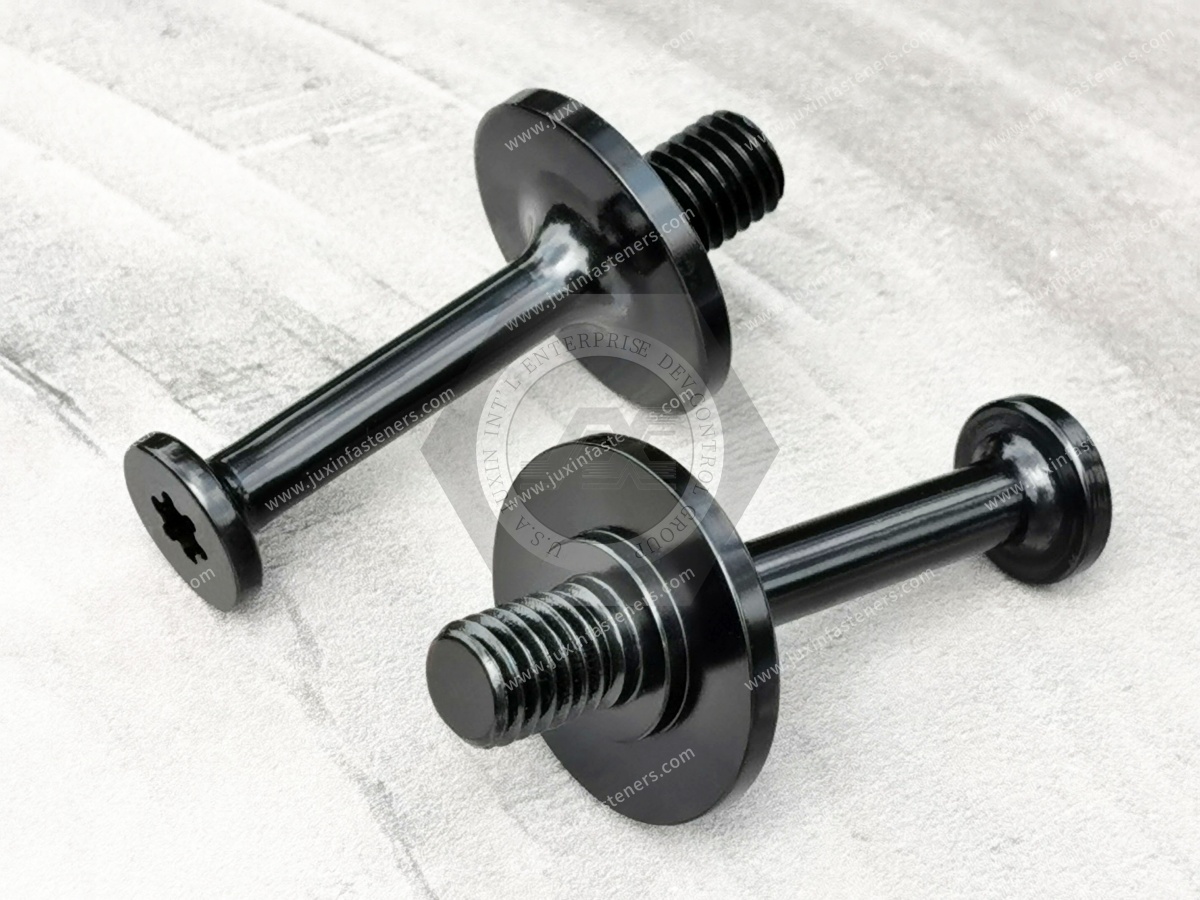
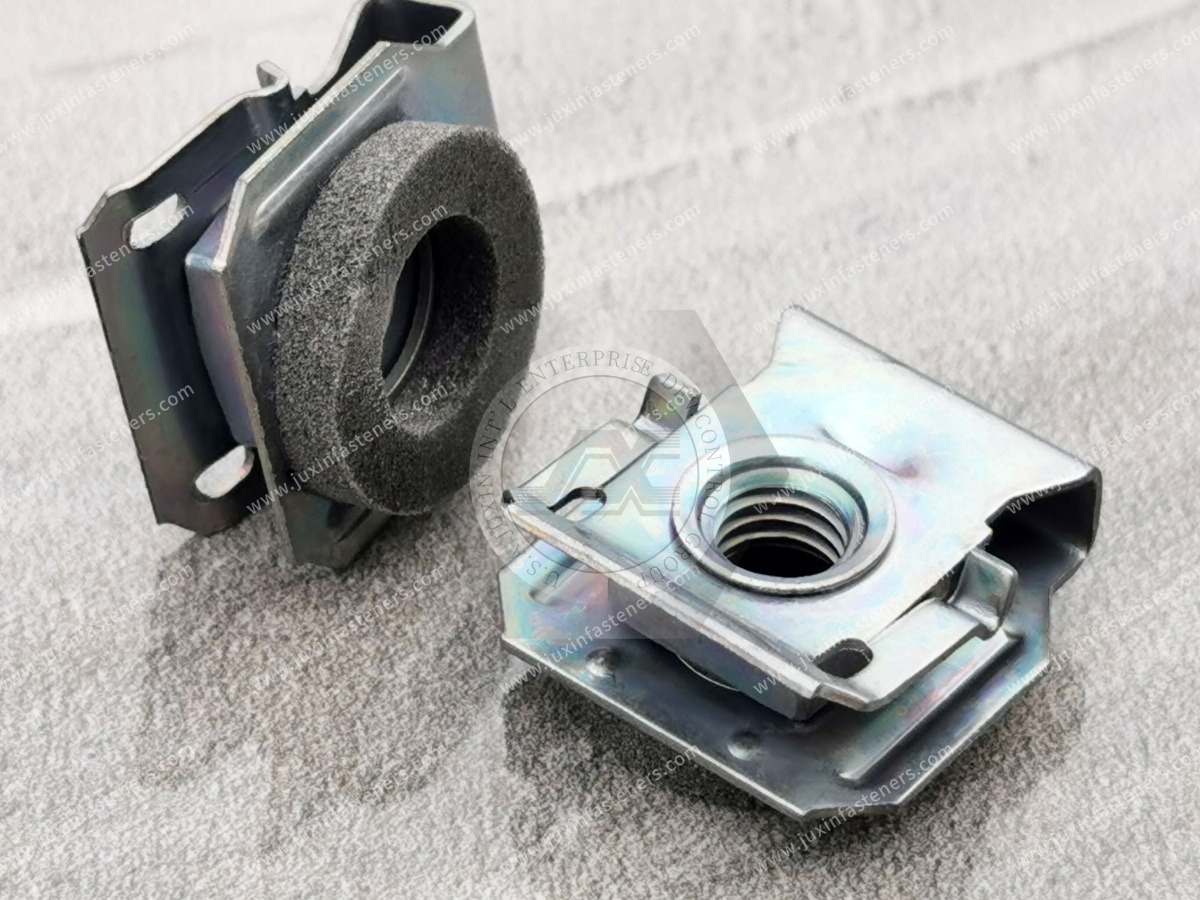
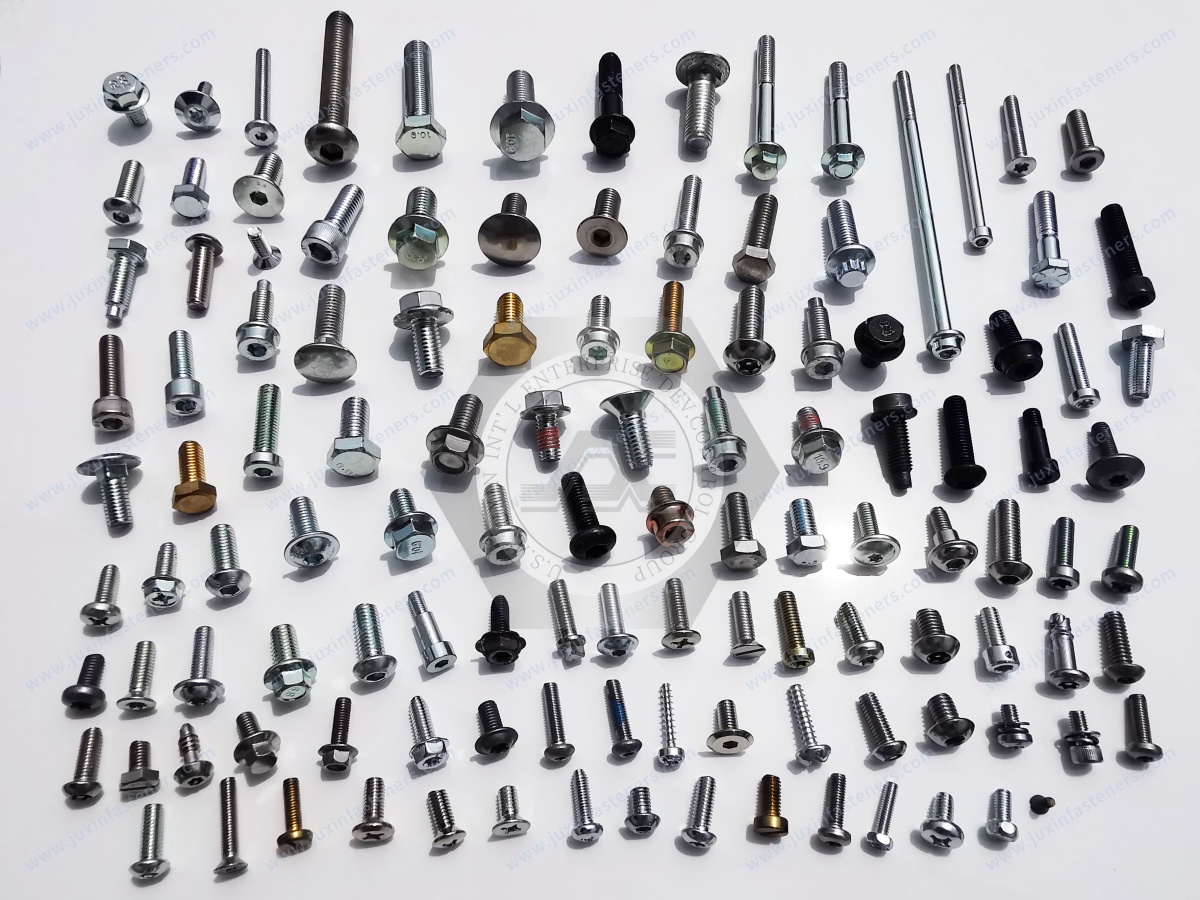
Modern NEV assembly integrates a diverse ecosystem of threaded components—including high-tensile bolts, socket screws, double-ended studs, 


prevailing-torque nuts, and specialized self-tapping fasteners—alongside wire-harness clamping rings.

High-Strength and Heat-Resistant Fasteners for New Energy Vehicles

Hydrogen Embrittlement Prevention & Plating Rules


For critical structural joints operating above Property Class 8.8 or components with core hardness exceeding 350 HV (such as high-load spring washers and Belleville discs):


  • Prohibition: Standard electroplated zinc passivation is strictly prohibited due to the risk of atomic hydrogen diffusion during acid pickling and electro-deposition.


  • Alternative: Non-electrolytic zinc-flake coatings (ISO 10683) or zinc-nickel electroplating coupled with immediate baking bake-out cycles must be specified to eliminate hydrogen embrittlement failure.


Mechanical Grade Compatibility Matrix


To prevent asymmetrical thread stripping during high-torque tightening, nut and bolt property classes must be correctly matched:


Mating Nut Property ClassCompatible Bolt / Stud Property ClassEngineering Application Rule
Grade 8 NutsISO 898-1 Class 8.8 Bolts or ScrewsStandard chassis brackets and auxiliary assemblies.
Grade 10 NutsISO 898-1 Class 10.9 Bolts or StudsHigh-stress structural powertrain and subframe mounts.
Grade 12 NutsISO 898-1 Class 12.9 Bolts or ScrewsCritical torque-angle dynamic chassis nodes.
Note: Higher-grade nuts may be substituted for lower-grade counterparts, but lower-grade nuts must never be paired with high-tensile bolts.

High-Strength and Heat-Resistant Fasteners for New Energy Vehicles

2. Systematic Fastening Selection Process for Engineers


Design engineers must follow a rigorous analytical workflow when sizing NEV connection pairs to ensure long-term joint integrity:


  1. Connection Loading Identification: Classify the joint type as purely tensile, pure shear, or a combined eccentric multi-axis load.


  2. Working Load Calculation: Quantify maximum dynamic operating loads, accounting for vehicle acceleration, regenerative braking shock, and thermal expansion forces.


  3. Preload Determination: Calculate the minimum required clamping force ($F_v$) necessary to prevent joint separation or interface slippage.


  4. Face Pressure Verification: Ensure that the clamping stress exerted under the bolt head or nut bearing surface does not exceed the yield strength or Brinell hardness limit of the connected aluminum, magnesium, or composite


    plates, preventing embedding and settlement.


  5. Fastener Sizing: Finalize thread diameter, pitch, length, and property class based on safety factor margins.


3. Ultra-High-Strength Bolts & Non-Quenched Battery Studs


Weight reduction directly correlates with extended driving range in electric vehicles. Transitioning to ultra-high-strength fasteners allows design engineers to downsize fastener envelopes and reduce surrounding structural mass.


Ultra-High-Strength Alloy Performance


NEV powertrains utilize premium carbon and alloy steels—including 10B33, SCr440 (40Cr), SCM435 (35CrMo), and SCM440 (42CrMo)—processed to Property Classes 8.8, 10.9, and up to 1,400 MPa (Class 14.9).


  • Chassis Downsizing: Wheel-end and subframe bearing connection bolts have been successfully reduced from 4 × M12 down to 3 × M10 configurations.


  • Battery Enclosure Optimization: Battery module internal frame bolts are downsized from M8 to M6, while main battery pack structural housing bolts scale down from M10 to M8.


Non-Quenched and Tempered Cold-Heading Steels


To lower carbon footprints without sacrificing mechanical integrity, advanced NEV manufacturing utilizes micro-alloyed steels (such as MLF20MnVNb) strengthened via cold work and ferritic-pearlitic/bainitic structures.


  • Battery Pack Tie-Rod Studs: Long structural studs (e.g., M6×840 mm, M8×675 mm, M6×930 mm) manufactured from non-quenched wire stock achieve a 5-million-cycle fatigue limit ($\sigma_{-1}$) of 86 to 101 MPa (exceeding


  • the automotive threshold of $\ge 80 \text{ MPa}$) while maintaining strict straightness tolerances ($\le 0.5 \text{ mm/m}$).


4. Heat-Resistant Steel and Nickel Alloy Fasteners


Operating environments near NEV electric motors, power inverters, and thermal management loops experience elevated temperatures that induce metal creep, bolt elongation, and loss of clamping preload.

High-Strength and Heat-Resistant Fasteners for New Energy Vehicles


High-Temperature Material Specifications


To prevent high-temperature relaxation, fasteners deployed in thermal zones are manufactured from specialized austenitic iron-base and nickel-chromium superalloys:


  • Alloy Grades: ML06Cr15Ni25Ti2MoAlVB (GH2132), 14Cr17Ni2, NiCr20TiAl (GH4080A), and Inconel 718 (GH4169).


  • Metallurgical Design: These alloys retain ultimate tensile strength and creep resistance at operating temperatures exceeding $+650^\circ\text{C}$, preventing thermal stress fatigue in high-output auxiliary heating and power-conversion systems.


5. Strategic Procurement & Sourcing Framework


This matrix supports supply chain directors and procurement managers in evaluating component specifications based on commercial risk and technical validation requirements:


Sourcing Evaluation MetricHigh-Strength Structural BoltsNon-Quenched Battery StudsHigh-Temperature Alloy Fasteners
Material DesignationSCM435 / SCM440 / 42CrMoMLF20MnVNb Micro-Alloy SteelInconel 718 / GH2132 Superalloys
Quality Control StandardISO 898-1 / ISO 16047 Torque-TensionFatigue limit testing ($\ge 5\text{M}$ cycles)Full Mill Test Reports (MTRs) & Creep Audits
Procurement PriorityZero hydrogen embrittlement verificationDimensional straightness ($\le 0.5 \text{ mm/m}$)Batch heat-treatment traceability & high-temp stability
Target Engineering RolePowertrain & Chassis Structural LeadsEV Battery Pack Design EngineersThermal Management & Exhaust Systems Leads

High-Strength and Heat-Resistant Fasteners for New Energy Vehicles

6. Related Technical Guides & Internal Site Resources


Explore our comprehensive engineering library for related fastener solutions:

High-Strength and Heat-Resistant Fasteners for New Energy Vehicles

Strategic Sourcing & Engineering Support


Juxin Fasteners operates advanced multi-station cold headers, CNC precision turning lathes, and automated optical sorting systems certified to ISO 9001 and IATF 16949 standards.


 We partner with global New Energy Vehicle manufacturers and Tier-1 sub-assembly suppliers to deliver fully traceable, high-performance fastening solutions.


For technical data sheets, 3D CAD models, PPAP Level 3 documentation, or custom RFQs, contact our engineering sales department:

  • Official Corporate Website: https://www.juxinfasteners.com


  • Engineering & Sourcing Email: info@juxinfasteners.com


  • Core Product Capabilities: NEV High-Strength Bolts (Class 10.9/12.9), Battery Pack Long Studs, Inconel Heat-Resistant Fasteners, Rivet Nuts, Custom Cold-Formed Automotive Hardware.


Contact Us

Tel.:

+86 020 8621 0320

+86 020 3121 6067

Mobile: +86 136 6007 9809

Technical Support:

SEND INQUIREY

Copyright © Guangzhou Juxin Development Co., Ltd. All Rights Reserved | Sitemap