
Call Us
+86 136 6007 9809
Call Us
+86 136 6007 9809

Nov. 16, 2024
In modern industrial manufacturing, the reliability of bolted connections depends not only on fastener strength but also on accurate control of the relationship between tightening torque, friction coefficient, and bolt preload.
For automotive, aerospace, construction, wind power, railway, heavy machinery, and industrial equipment applications, uncontrolled friction variation can lead to:
Insufficient preload
Over-tightening
Bolt fatigue failure
Connection loosening
Inconsistent assembly quality
Therefore, controlling the friction coefficient of fasteners has become a critical engineering requirement for OEM manufacturers and precision assembly applications.
At Juxin Fasteners, we provide advanced fastener manufacturing and surface treatment solutions designed to achieve stable friction performance, corrosion protection, and reliable torque-preload relationships.
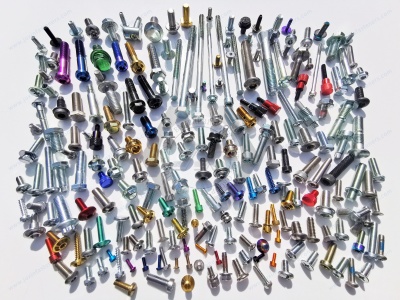
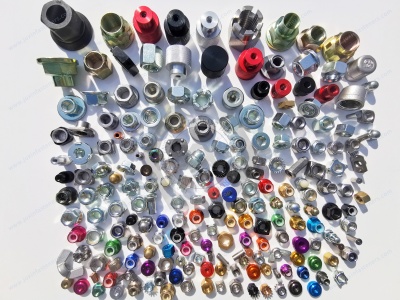
The friction coefficient of fasteners represents the resistance generated between contacting surfaces during tightening.
It directly influences how tightening torque is converted into bolt preload.
In a threaded connection, approximately:
A large portion of tightening torque is consumed by thread friction.
Another portion is consumed by the bearing surface friction.
Only a small percentage generates actual clamping force.
Therefore, even if the same torque value is applied, different friction coefficients can produce significantly different preload forces.
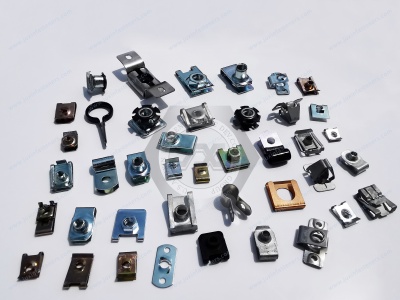
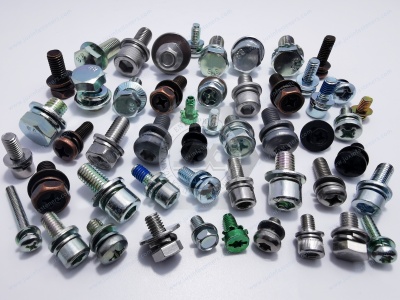
The tightening torque of bolted connections is commonly calculated according to the principles of VDI 2230 – Systematic Calculation of High Duty Bolted Joints.
Where:
MA = Tightening torque (Nm)
FV = Bolt preload force (N)
d₂ = Pitch diameter of thread (m)
μt = Thread friction coefficient
d = Average bearing diameter of bolt head or nut surface (m)
μg = Bearing surface friction coefficient
Bolt preload is an essential factor determining connection performance.
The preload can be calculated as:
Where:
α = Tightening factor (normally 0.6–0.8)
As = Effective stress area of bolt
Rp = Yield strength of fastener material
Proper preload ensures:
Structural stability
Vibration resistance
Fatigue performance
Long-term connection reliability
The friction coefficient depends on:
Material
Surface roughness
Coating system
Lubrication
Sealing treatment
Typical values:
| Parameter | Typical Range |
|---|---|
| Thread friction coefficient μt | 0.10–0.20 |
| Bearing friction coefficient μg | 0.08–0.18 |
For automotive and industrial applications, controlled friction values are usually required to maintain consistent assembly torque.
Incorrect friction values can cause:
Low clamping force
Reduced joint stiffness
Vibration loosening
Controlled friction fasteners improve connection stability in:
Automotive suspension systems
Engine components
Battery structures
Heavy machinery
Railway equipment
Modern production lines use torque-controlled or angle-controlled tightening systems.
Stable friction performance ensures:
Repeatable tightening torque
Consistent preload
Reduced assembly variation
Improved production quality
Surface treatment technology plays a key role in controlling friction behavior.
Different coatings provide different combinations of:
Corrosion resistance
Surface hardness
Lubrication characteristics
Torque consistency
Electroplated zinc fasteners are widely used for automotive and industrial applications.
Electroplating
→ Washing
→ Passivation
→ Sealing
→ Drying
Sealing layers improve:
Corrosion resistance
Surface uniformity
Appearance
Friction stability
Adding controlled lubricants into sealing agents can adjust friction coefficients.
Target friction coefficient:
0.09–0.15
The final friction coefficient depends on:
Lubricant concentration
Centrifuge speed
Drying temperature
Curing conditions
Surface handling process
Zinc-aluminum coating, also known as:
Zinc Flake Coating
Dacromet Coating
Geomet Coating
is an advanced environmentally friendly corrosion protection system.
It is widely used for:
High-strength bolts
Automotive fasteners
Wind power fasteners
Structural components
Degreasing
→ Mechanical blasting
→ Base coating (2–3 layers)
→ Baking
→ Top coating
→ Baking
→ Final treatment
Excellent corrosion resistance
Hydrogen embrittlement-free process
Suitable for high-strength fasteners
Controlled friction performance
Lubricated top coatings can adjust friction values for torque-controlled assembly.
Phosphating is commonly used for:
Structural bolts
High-strength screws
Automotive components
Degreasing
→ Pickling
→ Neutralizing
→ Phosphating
→ Rinsing
→ Drying
→ Oiling
Phosphating provides:
Stable friction characteristics
Improved lubrication retention
Better torque consistency
Reduced risk of hydrogen embrittlement
It is widely used for:
Construction fasteners
Heavy machinery bolts
High-strength connection systems
Electrophoretic coating forms a protective film through an electric field process.
Surface preparation
→ Electrophoresis
→ Rinsing
→ Sealing
→ Baking
Electrophoretic coating provides:
Uniform surface protection
Excellent corrosion resistance
Adjustable friction characteristics
Lubricated sealing treatments can optimize torque performance.
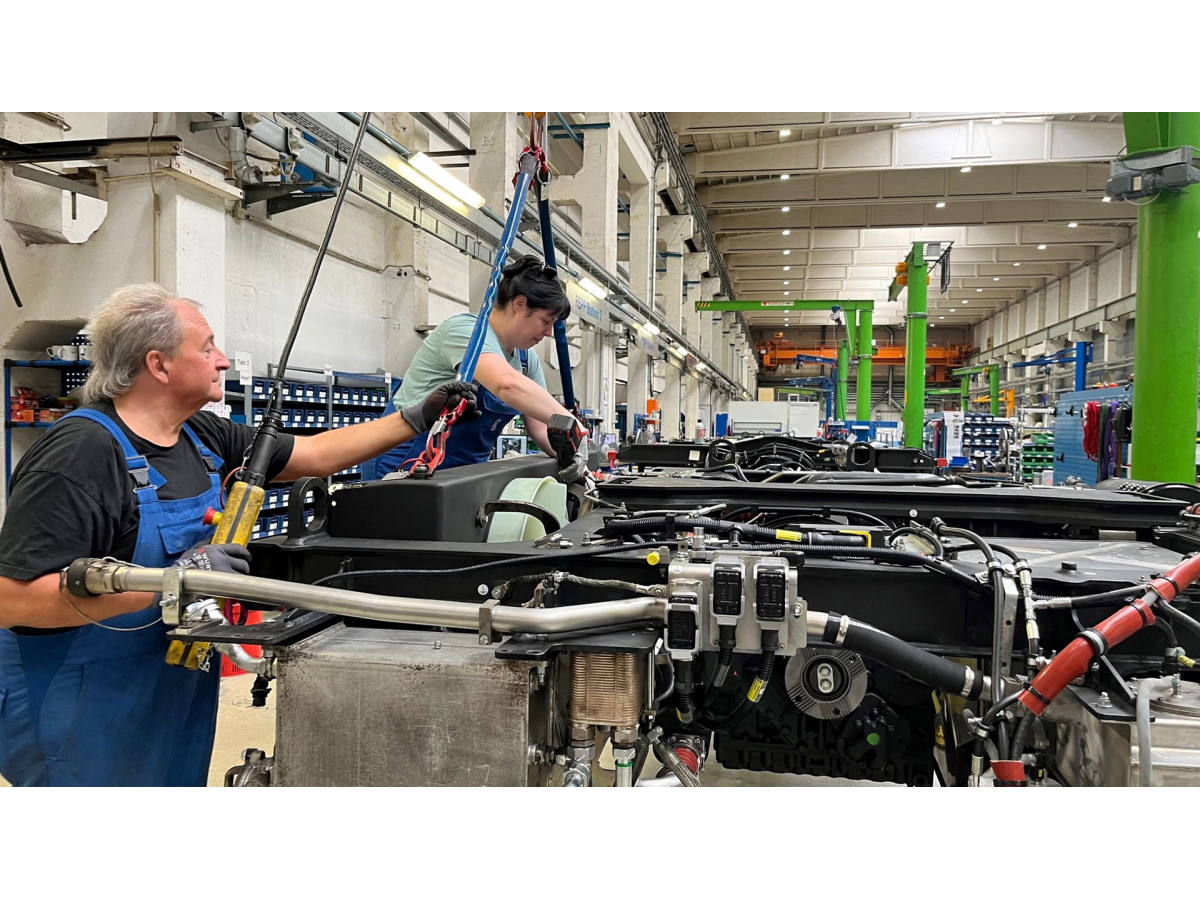
Automotive manufacturers require precise torque-preload control for:
Engine components
Suspension systems
Chassis assemblies
EV battery structures
Body fastening systems
Controlled friction fasteners are critical for:
Battery pack assembly
Aluminum structures
Motor systems
Electrical connections
Benefits:
Vibration resistance
Long service life
Reliable preload
Wind turbines experience:
Continuous vibration
Dynamic loading
Environmental exposure
Applications:
Tower bolts
Structural connections
Equipment fasteners
Railway fasteners require:
High fatigue resistance
Stable preload
Long-term durability
Applications:
Rail vehicles
Mechanical assemblies
Structural components
Used in:
Mining machinery
Construction equipment
Industrial machinery
Controlled friction improves connection safety under heavy loads.
Juxin Fasteners provides professional fastener solutions including:
High-strength bolts and screws
Automotive fasteners
Custom OEM fasteners
Zinc plating
Zinc-nickel plating
Zinc-aluminum coating
Phosphating
Lubricated coating systems
Our engineering team helps customers optimize:
Torque requirements
Friction coefficient
Surface treatment selection
Assembly performance
Juxin Fasteners focuses on providing reliable fastening solutions for global industrial customers.
Our advantages include:
✔ OEM fastener manufacturing
✔ Advanced surface treatment technology
✔ Controlled friction performance
✔ Automotive application experience
✔ High-strength fastener expertise
✔ Customized engineering support
✔ International quality standards
We help engineers achieve safer, stronger, and more reliable bolted connections.
If you need professional support for:
Fastener friction coefficient control
Torque-preload optimization
Zinc flake coated fasteners
Automotive fastener solutions
Custom surface treatment requirements
Please contact Juxin Fasteners.
Email: info@juxinfasteners.com
Website:
https://www.juxinfasteners.com
 MORE NEWS
Sep. 27, 2026
Sep. 27, 2026
Sep. 27, 2026
Contact Us
Tel.:
+86 020 8621 0320
+86 020 3121 6067
E-mail:
Technical Support:
Navigation
SEND INQUIREY