
Call Us
+86 136 6007 9809
Call Us
+86 136 6007 9809

Aug. 11, 2026
Why Do Fasteners Fail? Common Bolt Failure Modes and Engineering Solutions
A Complete Guide for OEM Engineers and Industrial Buyers
Every fastener is designed to hold components together safely throughout its service life. However,
even a properly manufactured bolt or nut can fail prematurely if the wrong material, coating, tightening method,
or operating environment is selected.
In industries such as automotive manufacturing, renewable energy, construction equipment, industrial machinery,
railway systems, mining equipment, marine engineering, and heavy machinery, fastener failure can lead to costly downtime,
safety risks, warranty claims, and equipment damage.
Understanding the root causes of fastener failure is essential when selecting industrial fasteners for demanding applications.
At JUXIN FASTENERS, we help OEM manufacturers identify failure risks and provide engineered fastening solutions for critical applications worldwide.
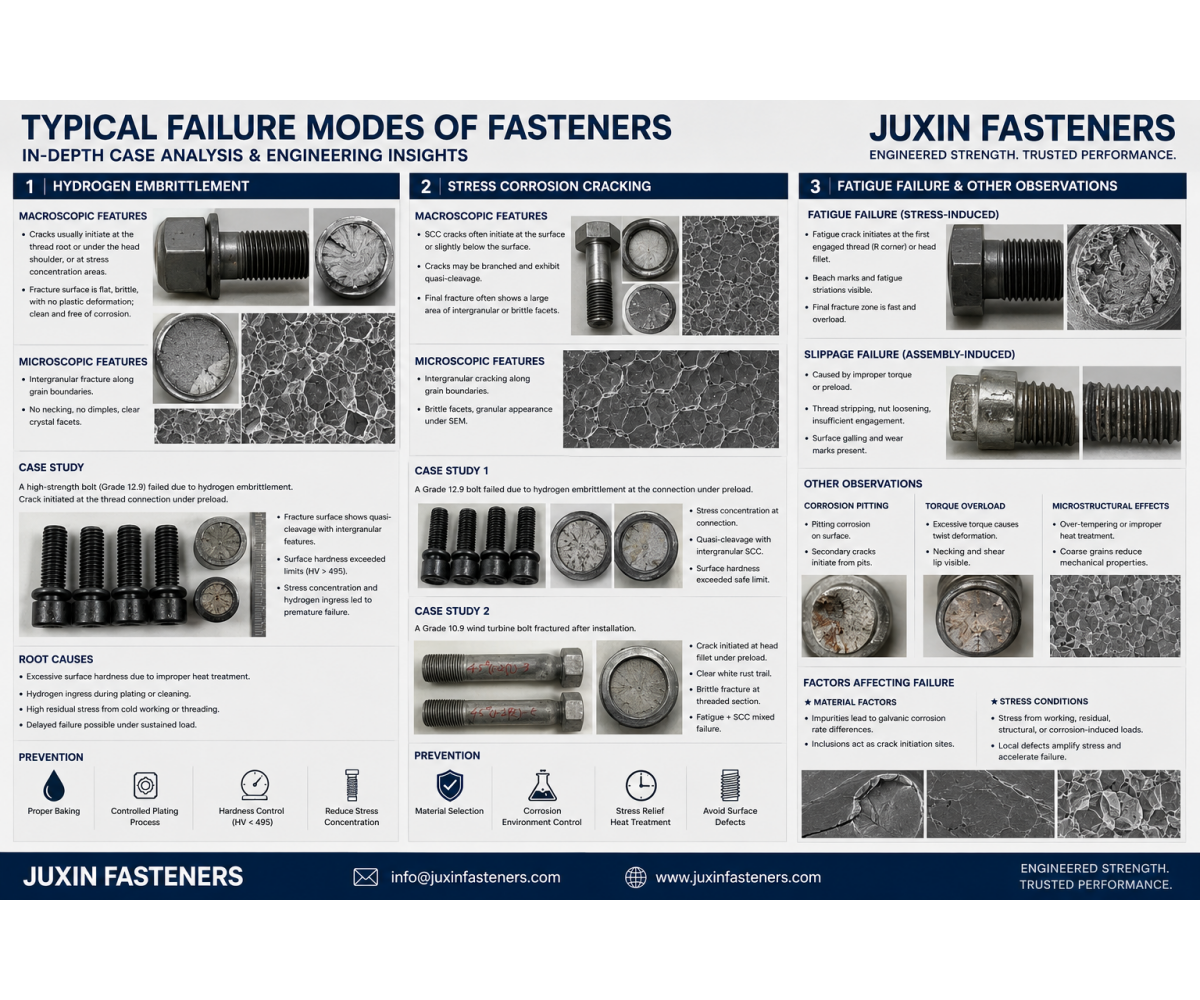
The Most Common Fastener Failure Modes
Industrial fasteners generally fail due to one or more of the following reasons:
Hydrogen Embrittlement
Fatigue Failure
Stress Corrosion Cracking (SCC)
Overload Fracture
Torsional Shear Failure
Transverse Shear Failure
Thread Stripping
Quench Cracking
Creep Failure
Corrosion Damage
Each failure mode has different causes and requires different engineering solutions.
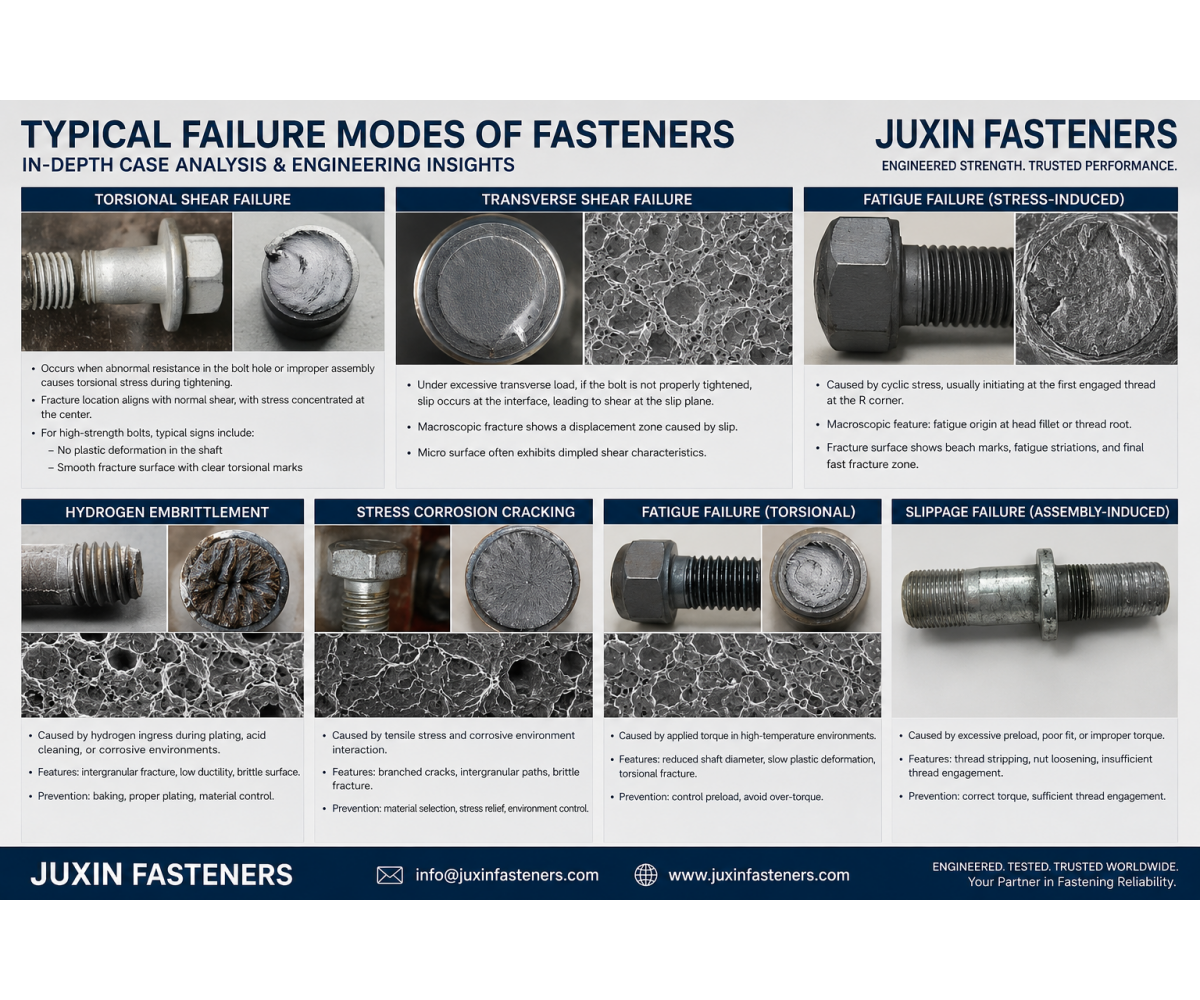
1. Hydrogen Embrittlement in High-Strength Bolts
Hydrogen embrittlement is one of the most serious failure mechanisms affecting high-strength steel fasteners.
Hydrogen atoms introduced during manufacturing processes such as acid pickling, electroplating, phosphating,
or corrosion can diffuse into the steel matrix. Under sustained tensile stress,
microscopic cracks initiate and propagate until the fastener suddenly fractures.
One of the most dangerous characteristics is that failure often occurs long after installation while the applied load remains well below the bolt's tensile strength.
Typical applications include:
Grade 10.9 bolts
Grade 12.9 bolts
Automotive fasteners
Wind turbine bolts
Structural fasteners
Heavy equipment bolts
Common Symptoms
Sudden brittle fracture
No visible plastic deformation
Fracture near thread roots
Failure beneath bolt head radius
Delayed fracture after installation
Engineering Solutions
To reduce hydrogen embrittlement risks:
Select suitable steel hardness
Control electroplating processes
Perform hydrogen de-embrittlement baking immediately after plating
Optimize heat treatment
Avoid excessive surface hardness
Use qualified zinc plating or zinc nickel coating systems
JUXIN FASTENERS provides high-strength bolts manufactured through controlled heat and surface treatment processes
to minimize the risk of hydrogen embrittlement.
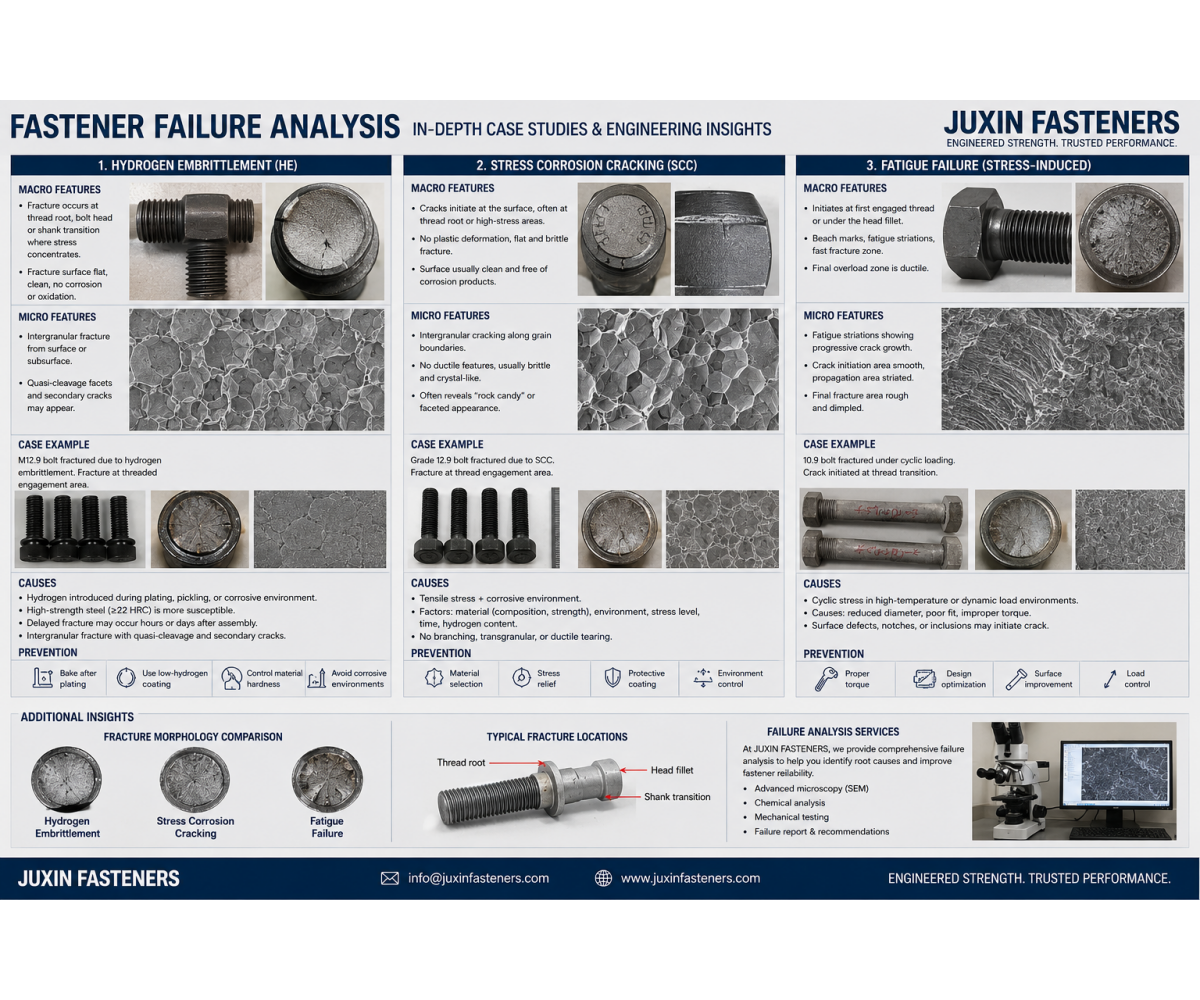
2. Fatigue Failure Caused by Repeated Loading
Fatigue failure is one of the most common causes of fastener failure in dynamic applications.
Unlike overload fracture, fatigue develops gradually under cyclic loading, vibration, or fluctuating stress.
Small cracks initiate at stress concentration areas and grow until catastrophic fracture occurs.
Typical fatigue initiation locations include:
Thread roots
Under-head fillets
First engaged thread
Diameter transition areas
Industries affected include:
Automotive
Railway
Agricultural machinery
Construction equipment
Industrial automation
Mining machinery
Prevention Methods
Proper preload
Correct tightening torque
Improved joint design
Rolled threads instead of cut threads
Larger under-head fillets
High fatigue-resistant fasteners
Regular maintenance inspection
3. Stress Corrosion Cracking (SCC)
Stress corrosion cracking occurs when tensile stress combines with a corrosive environment.
Even moderate mechanical loads can eventually cause brittle cracking if corrosive ions such as chlorides or sulfides are present.
Typical environments include:
Marine applications
Offshore equipment
Chemical plants
Coastal infrastructure
Wastewater systems
Typical corrosion agents include:
Chloride ions (Cl⁻)
Sulfides
Acidic environments
Salt spray exposure
Engineering Recommendations
Select corrosion-resistant materials
Use stainless steel fasteners when appropriate
Apply zinc nickel plating
Improve sealing
Reduce residual stress
Avoid aggressive chemical exposure
4. Overload Fracture
Overload failure occurs when the applied load exceeds the fastener's design capacity.
This usually results from:
Incorrect bolt size
Wrong strength grade
Insufficient tightening
Unexpected impact loading
Design changes
Overload fractures may be:
Ductile fracture
Brittle fracture
Proper fastener selection during product design greatly reduces this risk.
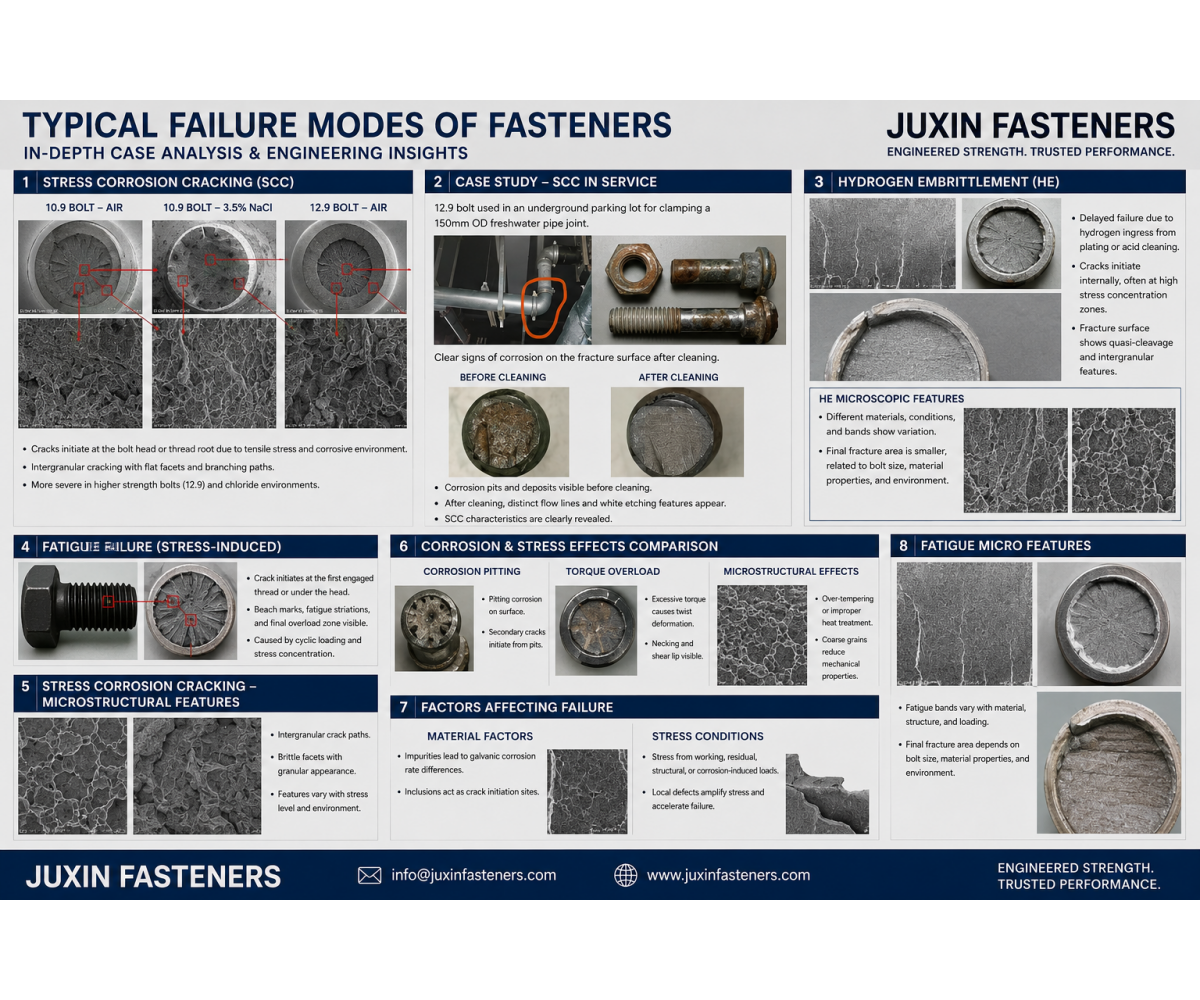
5. Thread Stripping
Thread stripping occurs when mating threads can no longer carry the applied load.
Common causes include:
Insufficient thread engagement
Incorrect installation torque
Low-strength materials
Manufacturing defects
Poor thread quality
Proper thread engagement length and accurate machining are essential for reliable performance.
6. Corrosion Damage
Corrosion weakens fasteners by reducing effective cross-sectional area while simultaneously increasing stress concentrations.
Common forms include:
Uniform corrosion
Pitting corrosion
Galvanic corrosion
Crevice corrosion
Selecting the proper protective coating is critical for long-term durability.
JUXIN FASTENERS offers multiple corrosion-resistant surface treatments, including:
Zinc Plating
Zinc Nickel Plating
Mechanical Zinc Coating
Dacromet®-type coatings
Geomet® coatings
Stainless Steel Fasteners
Customized surface treatments
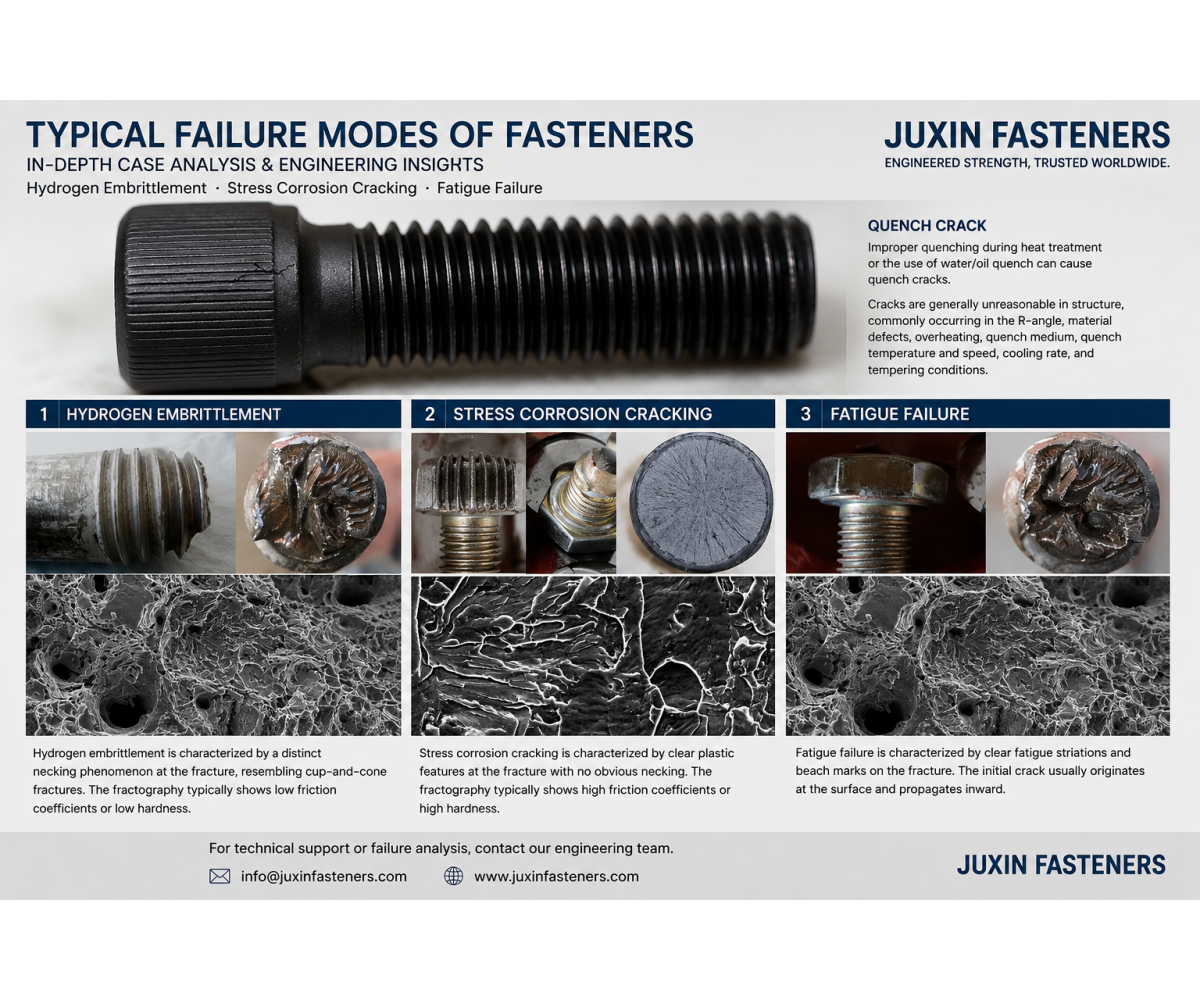
Choosing the Right Fastener Can Prevent Costly Failures
Many fastener failures are not caused by manufacturing defects but by improper product selection, unsuitable coatings,
incorrect installation methods, or harsh operating environments.
Selecting the correct combination of:
Material
Strength grade
Heat treatment
Surface coating
Thread design
Installation torque
can significantly improve joint reliability and service life.
For critical industries such as automotive, industrial equipment, renewable energy, construction machinery, telecommunications,
electrical enclosures, and heavy engineering, working with an experienced fastener manufacturer helps reduce maintenance costs and improve product reliability.
Why Choose JUXIN FASTENERS?
With more than 20 years of manufacturing experience, JUXIN FASTENERS supplies OEM fastening solutions to customers worldwide.
Our capabilities include:
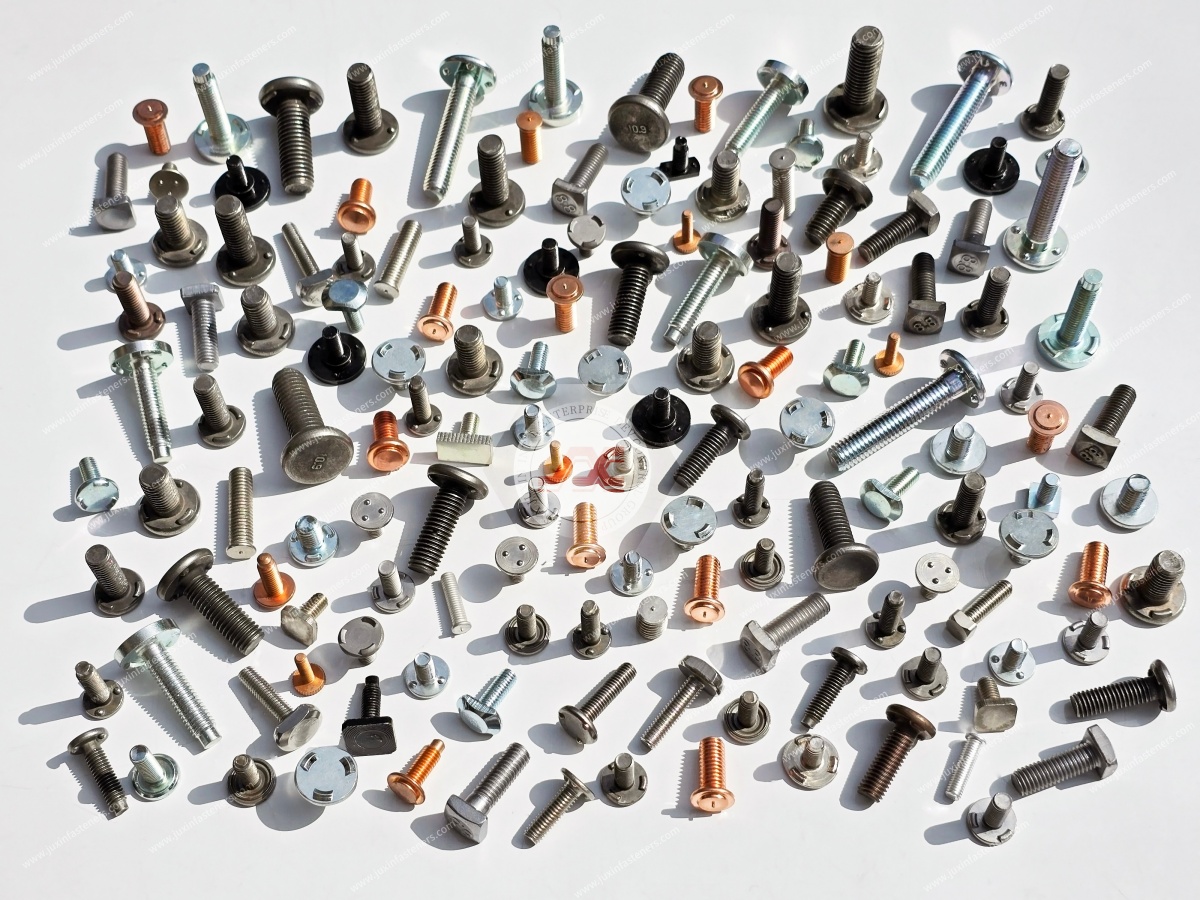
Custom fasteners
High-strength bolts
Hex bolts
Socket screws
Weld nuts
Rivet nuts
CNC machined parts
Special fasteners
Zinc plated fasteners
Zinc nickel coated fasteners
Stainless steel fasteners
Cold forged components
Precision machining
Every project is supported by professional engineering, strict quality control,
and customized manufacturing according to customer drawings or international standards.
Whether you are developing new equipment or solving existing fastening failures,
our engineering team can recommend the most suitable fastening solution for your application.
 MORE NEWS
Sep. 27, 2026
Sep. 27, 2026
Sep. 27, 2026
Contact Us
Tel.:
+86 020 8621 0320
+86 020 3121 6067
E-mail:
Technical Support:
Navigation
SEND INQUIREY