
Call Us
+86 136 6007 9809
Call Us
+86 136 6007 9809

Oct. 28, 2023
Fastener surface treatment is not simply a cosmetic operation. For industrial screws, bolts, nuts, spring clips, weld nuts, rivet nuts and custom fastening components,
the selected surface finish can affect corrosion protection, dimensional fit, assembly behavior, friction, electrical interaction and long-term joint performance.
A coating that works well on one fastener may be unsuitable for another.
The correct engineering question is therefore not:
“Which fastener coating is best?”
It is:
“Which surface finish is appropriate for this base material, geometry, assembly interface, service environment and performance requirement?”
For OEM engineers and procurement teams, surface-finish selection should be treated as part of the fastener specification rather than as an appearance requirement added at the end of sourcing.
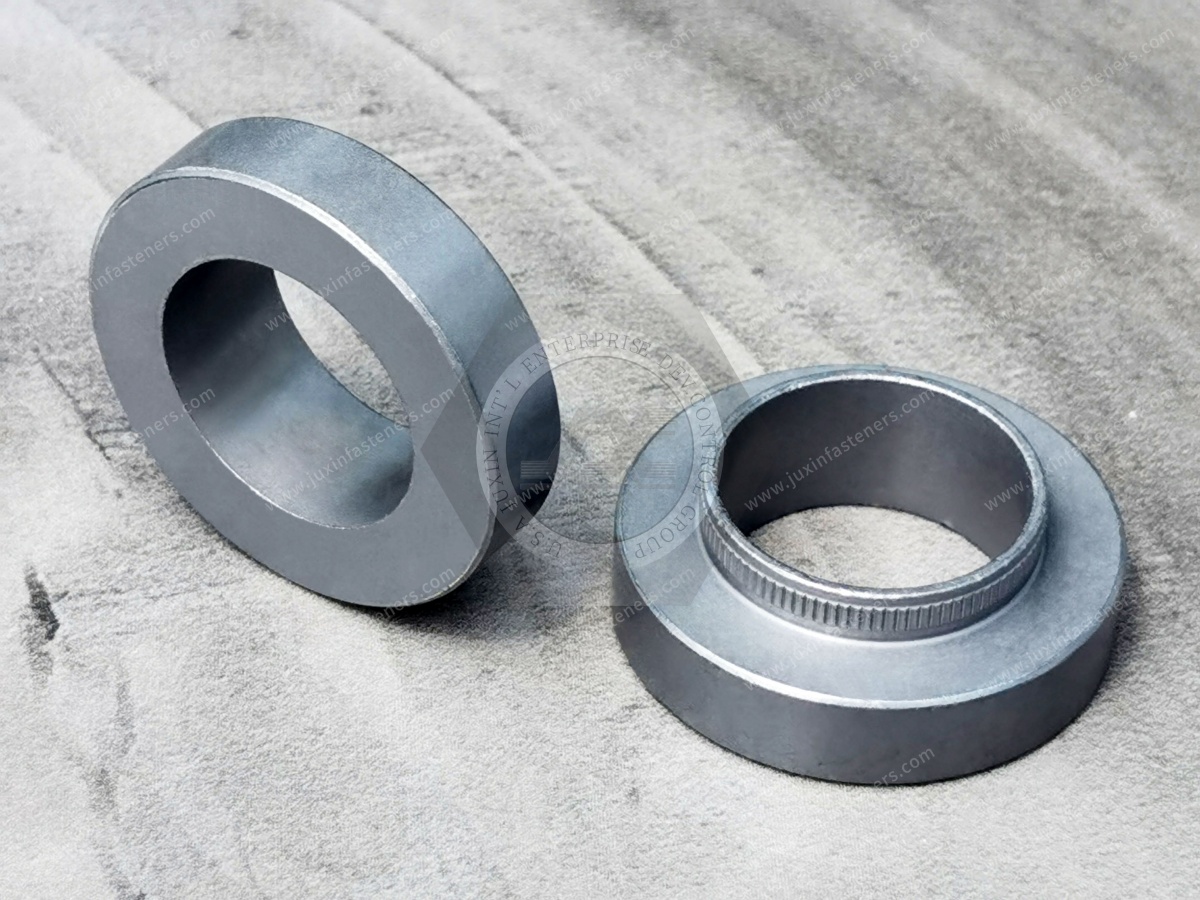
Fastener surface treatment refers to processes used to modify or coat the surface of a fastener or component.
Depending on the process and application, a surface treatment may be selected to support requirements such as:
Corrosion protection
Appearance
Assembly behavior
Wear resistance
Electrical characteristics
Friction control
Compatibility with the surrounding assembly
The required finish should be defined according to the actual application and customer specification.
There is no universal finish for all fasteners.
Common categories include:
Electroplated zinc systems
Zinc-alloy coating systems
Nickel-based finishes
Hot-dip galvanized coatings
Mechanical plating
Phosphate-based treatments
Black oxide
Organic or inorganic coating systems
Passivation treatments for appropriate stainless steels
Customer-specified special finishes
The correct option depends on the fastener material, strength level, geometry, environment and mating components.
Electroplated zinc is widely used for carbon-steel fasteners.
The process deposits zinc onto the component through an electrolytic process.
Depending on the required specification, additional conversion coatings or sealers may form part of the complete finish system.
Electroplated zinc can be considered for applications where factors such as the following are important:
Relatively controlled coating buildup
Appearance
General corrosion protection
Dimensional compatibility
Production-volume economics
However, simply specifying “zinc plated” may not adequately define an OEM requirement.
Engineers and procurement teams may also need to establish:
Required coating system
Appearance where relevant
Corrosion requirement
Coating thickness requirement where specified
Friction requirement where relevant
Hydrogen-embrittlement controls where applicable
Zinc-alloy systems may be considered when the application requires performance beyond a basic zinc finish.
The actual coating system and performance depend on the specified process and supplier capability.
For engineered fasteners, it is better to specify the required coating system and validated performance than to assume all zinc-alloy finishes are equivalent.
This is particularly important when qualifying a second source.
Two coatings with a similar appearance may have different:
Corrosion behavior
Friction characteristics
Thickness
Conversion layers
Sealing systems
Process controls
Appearance alone is not sufficient for equivalency.
Hot-dip galvanizing creates a zinc-based coating by immersing appropriately prepared steel components in molten zinc.
It is commonly associated with fasteners used in environments where a heavier protective coating is appropriate.
Potential applications can include:
Outdoor equipment
Infrastructure
Agricultural equipment
Industrial installations
Certain structural fastening applications
However, the comparatively substantial coating buildup must be considered when designing threaded assemblies.
Threaded fasteners require particular attention because coating thickness changes the effective dimensions of the male and female threads.
If the coating system is not considered in the thread design, problems may include:
Difficult assembly
Thread interference
Damaged coatings
Inconsistent installation
Mating nut incompatibility
For coated threaded fasteners, the complete bolt-and-nut system should therefore be considered rather than treating the bolt finish as an isolated requirement.
Where applicable, the relevant ISO, ASTM or other customer-specified system should define the coating and thread accommodation requirements.
Mechanical plating applies coating material through a mechanical process rather than conventional electrolytic deposition.
It may be considered for particular steel fasteners where the manufacturing route and application requirements make it appropriate.
One reason engineers may evaluate mechanical plating is hydrogen-embrittlement risk management for susceptible high-strength steel components.
However, it should not be described as universally eliminating hydrogen-embrittlement risk.
Material strength, prior manufacturing processes, cleaning operations, coating preparation and the complete production route still require engineering consideration.
Phosphate treatments may be used as part of a fastener surface system depending on the intended application.
They can be relevant to:
Assembly characteristics
Subsequent lubrication
Paint or coating preparation
Specific industrial fastening systems
A phosphate finish should not automatically be treated as equivalent to a high-corrosion-resistance coating.
Its suitability depends on the complete surface system and service conditions.
Black oxide is sometimes selected for:
Appearance
Dimensional considerations
Specific indoor mechanical applications
It should not automatically be specified when substantial corrosion protection is required.
The actual performance depends on the treatment system and any supplementary protection.
An important sourcing mistake is treating stainless steel and coated carbon steel as interchangeable ways to achieve “corrosion resistance.”
They are different material systems.
A coated carbon-steel fastener obtains surface protection from its coating system.
A stainless-steel fastener relies primarily on the corrosion behavior of the base alloy and its passive surface.
Selection should consider:
Mechanical requirements
Environment
Corrosion mechanism
Mating materials
Temperature
Assembly conditions
Cost
Maintenance expectations
Changing from plated carbon steel to stainless steel should therefore be treated as an engineering material change, not merely a finish change.
A useful selection process begins with the application rather than the coating name.
Identify whether the fastener is made from:
Carbon steel
Alloy steel
Stainless steel
Spring steel
Aluminum
Titanium
Another specified material
Not every surface-treatment process is suitable for every material.
Consider:
Indoor or outdoor exposure
Humidity
Condensation
Water exposure
Chlorides
Industrial contaminants
Cleaning chemicals
Temperature cycling
Contact with dissimilar materials
“Outdoor use” alone may not sufficiently define the environment.
Do not select a coating based only on generic descriptions such as:
corrosion resistant
heavy duty
premium coating
Instead, define the customer's actual acceptance criteria where required.
These may be based on:
Customer specification
Applicable industry specification
Defined corrosion test
Approved reference component
Environmental qualification
A laboratory corrosion test should not automatically be interpreted as a direct prediction of real-world service life.
Coating behavior can vary across:
External threads
Internal threads
Recesses
Edges
Corners
Holes
Stamped features
Weld projections
Spring elements
Complex geometry can affect coating distribution and dimensional control.
Ask:
What material does the fastener contact?
What finish is on the mating part?
Is the fastener installed into a threaded hole?
Is it assembled with a nut?
Is it installed into sheet metal?
Is electrical continuity relevant?
Is galvanic interaction a concern?
A fastener cannot be properly specified without understanding its interface.
Increasing coating thickness may improve certain corrosion characteristics in some coating systems, but that does not mean maximum thickness is always desirable.
Excessive coating buildup can create problems with:
Thread fit
Recess dimensions
Small holes
Clip openings
Rivet-nut geometry
Press-fit features
Assembly force
The correct coating thickness must balance corrosion requirements with dimensional and functional requirements.
Coatings do not necessarily build uniformly over every feature.
Depending on the process and component geometry, deposition can differ around:
Corners
Edges
Thread crests
Thread roots
Recesses
Internal features
This is particularly important for small precision fasteners and stamped components.
An engineer should therefore consider where the coating is measured and which dimensions are critical after finishing.
For precision components, drawings should make clear whether critical dimensions apply:
Before coating
After coating
This distinction can be important for:
Threads
Clip openings
Rivet nuts
Self-clinching features
Retaining clips
Press-fit components
Custom stamped parts
For many functional interfaces, the finished dimension is what the assembly actually sees.
For spring-steel clip nuts and U-nuts, coating affects more than appearance.
Potential interactions include:
Panel grip
Clip opening
Thread engagement
Spring contact surfaces
Installation force
Corrosion protection
A coating change can therefore affect the functional assembly even if the underlying stamping remains unchanged.
This is why coating substitutions should be validated when qualifying an alternative supplier.
Rivet nuts combine threaded geometry with installation deformation.
Surface finish can influence:
Corrosion protection
Thread fit
Installation behavior
Appearance
Interface with the parent material
For applications requiring sealing, remember that corrosion protection and sealing are different requirements.
A coated or closed-end rivet nut should not automatically be described as waterproof.
The complete joint must be validated for the specified sealing requirement.
Weld nuts require another engineering consideration: the fastener must participate in a welding process.
The selected finish must therefore be compatible with:
Welding method
Weld projections
Parent sheet
Manufacturing sequence
Customer process requirements
A finish appropriate for a conventional bolt may not automatically be appropriate for a weld nut.
Welding and corrosion protection should be considered together during process planning.
High-strength steel fasteners require particular process awareness.
Cleaning, pickling, electroplating and other manufacturing steps can introduce hydrogen into susceptible materials.
This leads to one of the most important issues in fastener surface treatment:
Hydrogen embrittlement can cause delayed brittle failure in susceptible high-strength steel components.
Risk depends on multiple factors, including:
Material strength and hardness
Residual stress
Applied stress
Manufacturing process
Cleaning and pretreatment
Plating process
Component geometry
Failure may occur after the component has been installed and loaded, which makes process control particularly important.
Post-process baking may form part of hydrogen-embrittlement risk-control requirements for certain plated high-strength steel components.
However:
baking should not be presented as a universal guarantee against hydrogen embrittlement.
Required procedures depend on:
Material
Hardness
Coating process
Applicable standard
Customer specification
The correct approach is to follow the defined engineering and process requirements for the specific fastener.
Corrosion selection should not evaluate the fastener alone.
When dissimilar metals are electrically connected in the presence of an electrolyte, galvanic interaction may occur.
Relevant variables include:
Fastener material
Fastener coating
Mating material
Area relationship
Moisture
Electrolyte
Environment
For example, a fastener selected only for its individual corrosion resistance may still create an undesirable material combination with the surrounding assembly.
This is particularly relevant in:
Outdoor equipment
Automotive assemblies
Marine environments
HVAC equipment
Electrical enclosures
Aluminum structures
Salt spray and other accelerated corrosion tests can be useful for:
Comparing coating systems
Production qualification
Customer acceptance
Process monitoring
But a laboratory test result should not automatically be translated into a specific number of years of service life.
Real-world corrosion depends on variables such as:
Wet/dry cycling
Temperature
Chlorides
Chemicals
Mechanical damage
Joint geometry
Maintenance
Use the customer's specified test requirement where applicable and validate the complete assembly for the actual environment.
For engineered bolted joints, surface finish can influence friction between:
Threads
Bearing surfaces
Washers
Mating components
This matters because installation torque is related to the friction conditions within the joint.
A change in coating or lubricant can therefore change the relationship between applied torque and achieved clamp load.
For torque-controlled assemblies, do not assume that changing the finish has no effect on tightening behavior.
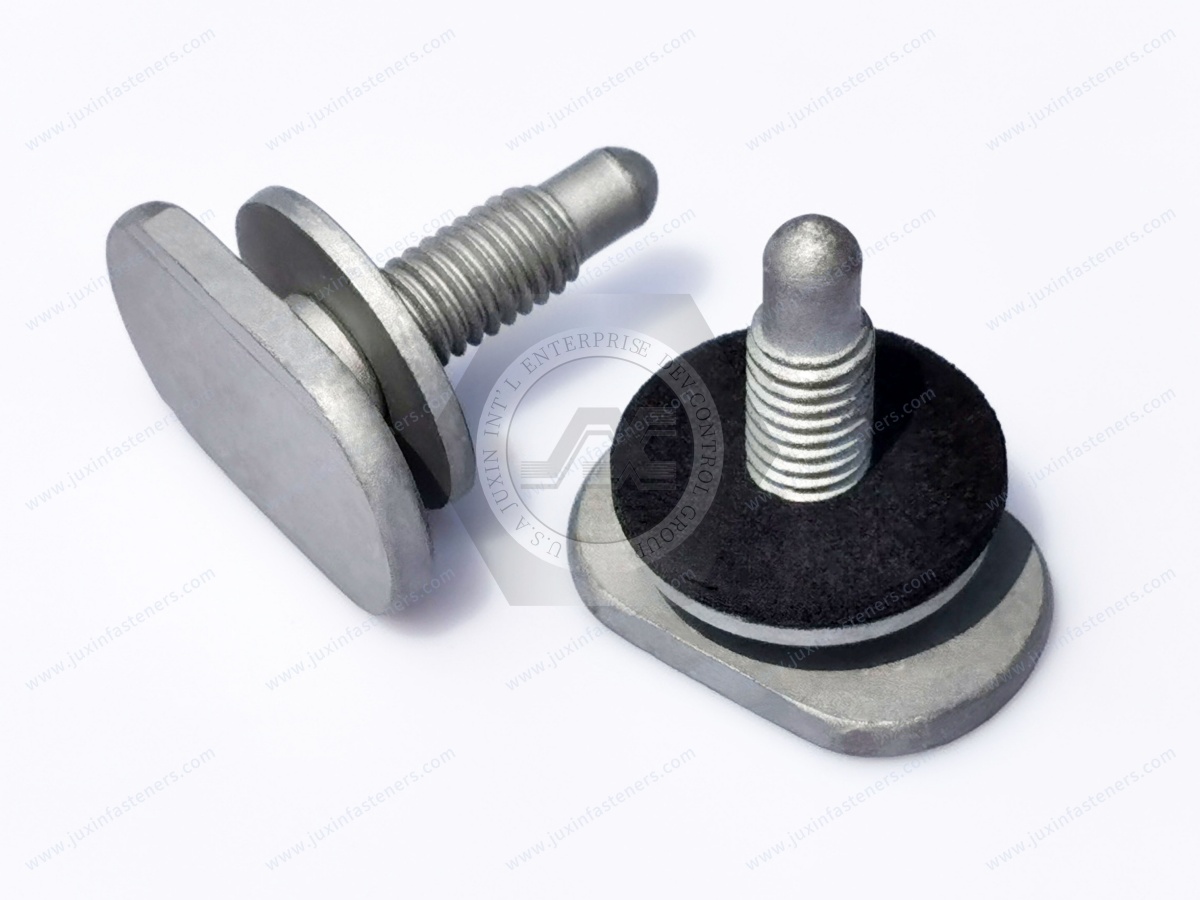
Suppose an existing fastener changes from one finish system to another.
Even if:
Thread size is unchanged
Material grade is unchanged
Geometry is unchanged
the friction condition may change.
Therefore, the existing installation torque should not automatically be transferred without reviewing the joint specification and validation requirements.
Automotive fastening environments can involve:
Humidity
Road contamination
Temperature cycling
Vibration
Underbody exposure
Engine-compartment conditions
Interior environments
Different vehicle locations can therefore require different finish strategies.
Typical products may include:
Bolts
Nuts
Weld nuts
Rivet nuts
Clip nuts
Spring clips
Custom fasteners
The finish should be selected according to the specific installation location and OEM specification.
Fasteners in electrical equipment may be used in:
Cabinets
Switchgear
Enclosures
Power-distribution equipment
Mounting systems
Busbar-related mechanical assemblies
Selection may need to consider:
Indoor or outdoor environment
Condensation
Dissimilar metals
Electrical requirements
Service access
Coating debris
Assembly requirements
Where electrical conductivity or grounding is involved, mechanical corrosion protection alone is not sufficient to define the surface requirement.
Fasteners used in data center and AI/HPC equipment can appear in:
Server and equipment racks
Power-distribution equipment
Cooling systems
Liquid-cooling equipment
UPS equipment
Electrical cabinets
Structural frames
Corrosion exposure may differ substantially between a climate-controlled equipment enclosure and a cooling-system connection.
Surface-finish selection should follow the actual subsystem.
HVAC and thermal-management assemblies can experience:
Condensation
Temperature cycling
Outdoor exposure
Water or coolant proximity
Sheet-metal interfaces
Relevant fasteners can include:
Screws
Bolts
Nuts
Clip nuts
Rivet nuts
Hose-clamping components
Custom stamped fasteners
Finish selection should consider both corrosion protection and assembly compatibility.
Industrial equipment may operate in environments containing:
Lubricants
Coolants
Humidity
Cleaning agents
Dust
Process chemicals
A generic zinc finish should not automatically be specified without reviewing the actual exposure.
Two silver-colored fasteners may use entirely different coating systems.
Additional thickness can interfere with threads and precision interfaces.
This can create hydrogen-embrittlement risk for susceptible high-strength steel fasteners.
A coating may perform differently when assembled against another metal.
Accelerated testing and field exposure are not directly interchangeable.
Coating and lubrication can change friction.
Similar appearance does not prove equivalent coating chemistry or performance.
Where appropriate, a fastener drawing or specification should define:
Base material
Strength or property class where applicable
Surface finish or coating system
Applicable standard or customer specification
Required coating thickness where relevant
Corrosion test requirement where specified
Appearance requirements where functional
Friction requirements where applicable
Hydrogen-embrittlement controls where applicable
Critical dimensions after coating
Masking or coating-restricted areas where required
Do not add arbitrary coating values or test hours if the application does not require them.
When qualifying a new supplier for an existing coated fastener, compare more than dimensions.
Review:
Material
Strength class
Geometry
Thread
Coating type
Conversion layer where applicable
Sealer or lubricant where applicable
Thickness requirement
Appearance
Thread fit
Assembly behavior
Friction requirement
Corrosion requirement
Critical finished dimensions
Hydrogen-embrittlement considerations
Welding compatibility
Press-fit compatibility
Spring-function interaction
Drawing inspection
Sample comparison
Assembly testing
Customer-required coating testing
This is more reliable than qualifying an alternative fastener by appearance alone.
For standard screws, bolts and nuts, provide:
Fastener type
Thread size
Length
Material or property class
Required finish
Applicable coating specification if defined
Corrosion requirement if defined
Mating component
Quantity
Annual demand
For drawing-controlled parts, provide:
2D drawing
3D model where available
Material
Heat treatment where specified
Surface finish
Critical finished dimensions
Mating component
Application environment
Functional requirements
Quantity
Annual demand
For an existing coated component, provide where available:
drawing + approved sample + material specification + coating specification + mating component + corrosion requirement + assembly requirement + annual demand
If the current coating specification is unknown, an unused approved sample can help support technical comparison, but sample appearance alone should not be used to define coating equivalency.
Related engineering and sourcing resources include:
Spring Steel for Fasteners
Stainless Steel Fasteners
Automotive Fasteners
High-Strength Fasteners
Clip Nuts and U-Nuts
Weld Nuts
Rivet Nuts
Custom Stamped Components
Custom Fasteners
Second-Source Fasteners
These topics help engineers and sourcing teams evaluate the fastener as part of the complete assembly rather than as an isolated commodity.
JUXIN FASTENERS supports standard and custom industrial fasteners for OEM and industrial applications,
including drawing-controlled components requiring customer-defined materials and surface finishes.
Projects can begin from:
Customer drawing
Existing specification
Approved sample
Material requirement
Surface-finish requirement
Mating component information
Application environment
Quantity
Annual demand
For second-source projects, providing both the existing drawing and an unused approved sample can help establish a more complete comparison.
A practical engineering selection path is:
environment → base material → fastener strength → geometry → mating material → corrosion requirement → finish → dimensional impact → assembly/friction → validation
For procurement and supplier-development teams:
drawing/sample → material → finish specification → corrosion requirement → critical dimensions → mating components → annual demand → qualification
Surface treatment should never be reduced to:
“zinc,” “silver,” “black,” or “corrosion resistant.”
A properly specified fastener finish connects the material, coating process, geometry, assembly interface and service environment into one controlled requirement.
If you require zinc-plated fasteners, zinc-alloy coated fasteners, hot-dip galvanized fasteners, stainless steel fasteners, coated spring clips, weld nuts, rivet nuts,
custom fasteners or second-source development, send JUXIN FASTENERS your available technical information.
For an existing component, provide the drawing, coating specification and unused approved sample where available.
For a new design, provide the application environment, base material, fastener type, mating materials, corrosion requirement, quantity and annual demand.
For second-source qualification, provide the existing drawing, approved sample, material and finish requirements, mating components, functional requirements and annual volume.
Email: info@juxinfasteners.com
Website: www.juxinfasteners.com
 MORE NEWS
Sep. 27, 2026
Sep. 27, 2026
Sep. 27, 2026
Contact Us
Tel.:
+86 020 8621 0320
+86 020 3121 6067
E-mail:
Technical Support:
Navigation
SEND INQUIREY