Call Us
+86 136 6007 9809
Call Us
+86 136 6007 9809

Oct. 29, 2023
A flat washer may look like one of the simplest components in a bolted assembly, but choosing the wrong washer material can create problems involving corrosion,
embedment, surface damage, electrical performance, galvanic interaction and long-term joint reliability.
For engineers and procurement teams, selecting a flat washer should therefore involve more than matching the inside diameter to the bolt.
The decision should consider:
Bolt and nut material
Washer dimensions
Bearing surface
Clamped material
Required mechanical properties
Corrosion environment
Electrical requirements
Temperature and chemical exposure
Surface finish
Galvanic compatibility
Applicable washer standard
OEM or customer specification
Common washer materials include carbon steel, stainless steel, brass, copper, aluminum and titanium. Specialty alloys may also be specified for demanding chemical, marine, thermal or process environments.
The correct material depends on the assembly.
A flat washer is installed beneath a bolt head, screw head or nut to create a defined bearing interface.
Depending on the joint design, it may help:
Distribute bearing load over a larger area
Protect the surface of the clamped component
Provide a controlled bearing surface
Bridge an oversized or clearance hole where appropriate
Support assembly on softer materials
Separate mating surfaces
Provide a defined interface for the fastener
However, a standard flat washer should not automatically be described as an anti-loosening device.
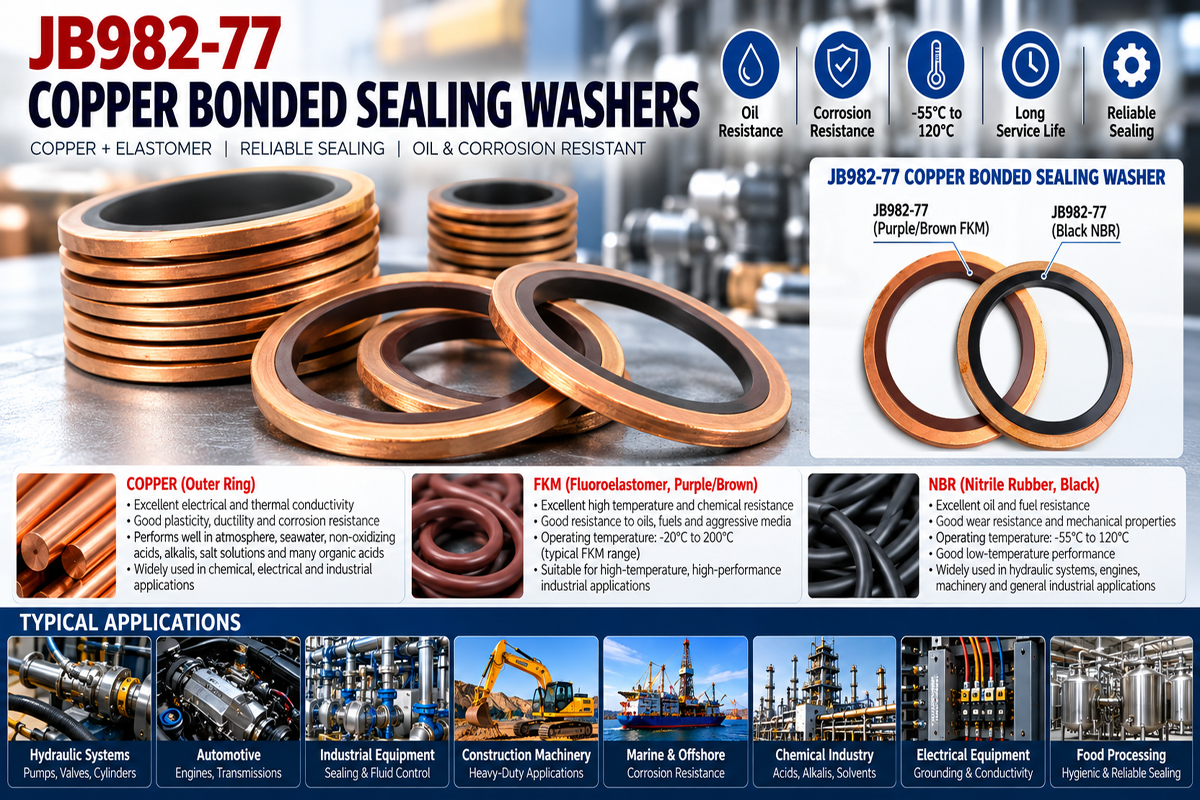
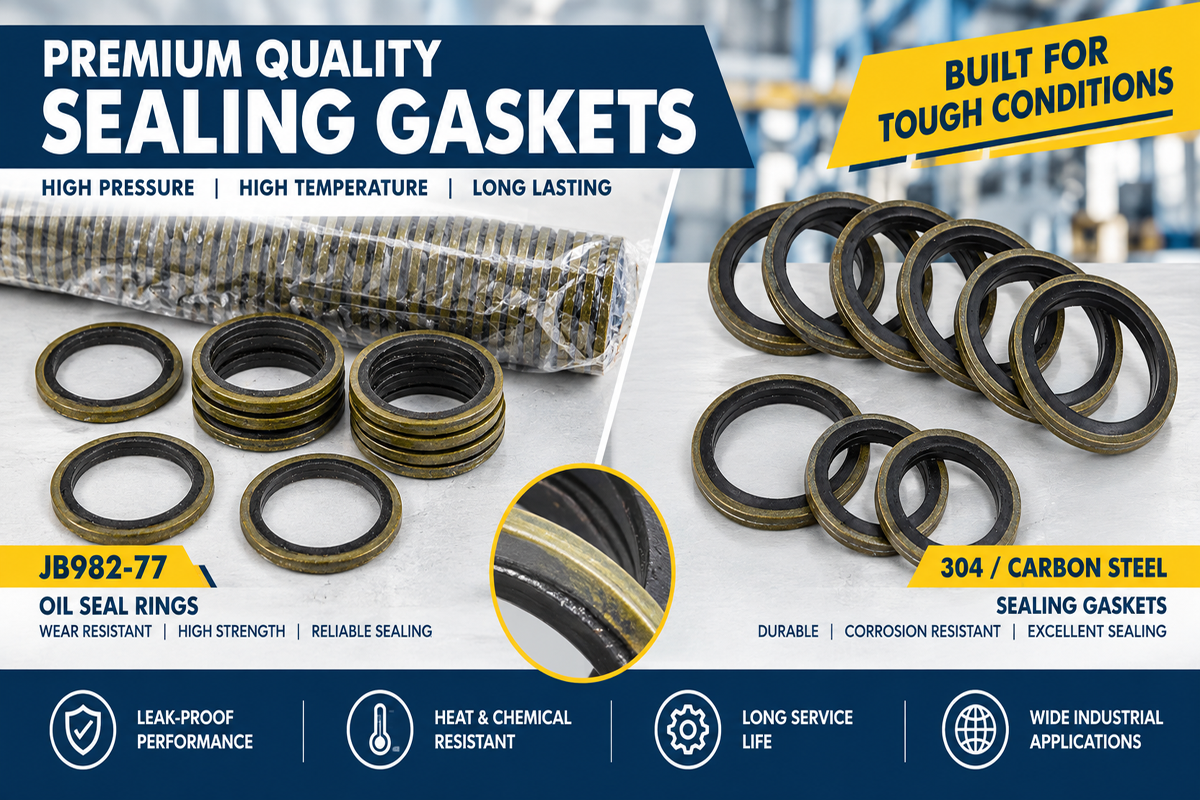
It also should not be confused with a sealing gasket.
A flat washer and a gasket may have similar basic shapes, but their engineering functions can be very different.
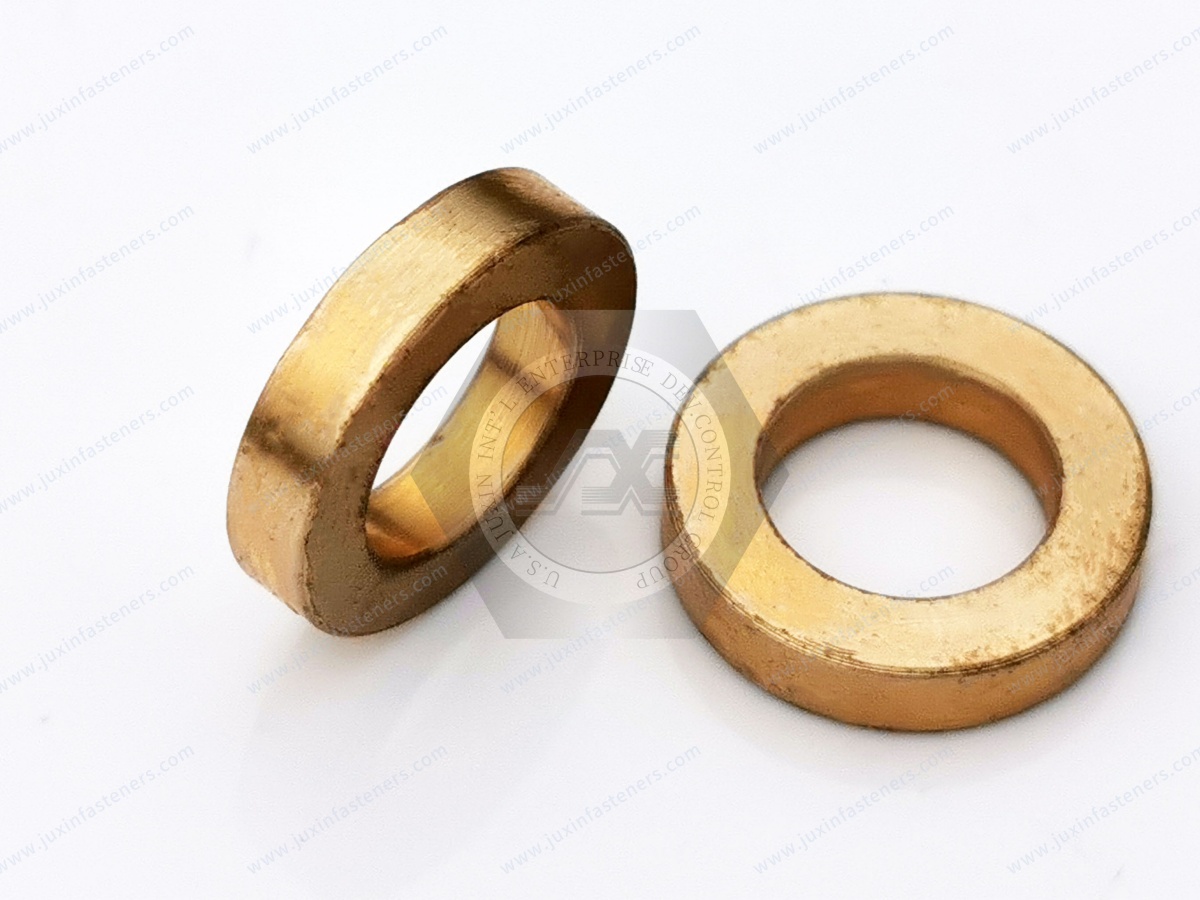
This distinction is important when reviewing drawings and supplier quotations.
A conventional flat washer is primarily a mechanical bearing component.
A gasket is primarily intended to create or support a sealing interface.
A gasket may require engineering characteristics such as:
Compressibility
Recovery
Chemical compatibility
Pressure capability
Temperature capability
Surface conformity
Controlled sealing stress
Those requirements should not automatically be assigned to an ordinary stainless steel or carbon steel flat washer.
If the application requires fluid or gas sealing, the sealing system should be engineered and validated separately.
Flat washers are available under multiple international and regional dimensional standards.
Examples include ISO and DIN washer systems as well as ASME/ANSI and other standards used for inch-series fasteners.
Depending on the product, engineers may encounter standards such as:
ISO 7089
ISO 7090
DIN 125
Relevant ASME washer dimensions for inch fastener systems
The applicable standard should be confirmed against the actual drawing and mating fastener.
Do not assume washers from different standards are dimensionally interchangeable simply because they share the same nominal bolt size.
Important dimensions include:
Inside diameter
Outside diameter
Thickness
Flatness
Edge condition
For custom washers, additional requirements may include special OD/ID ratios, non-round geometry, tabs, slots, locating features or drawing-controlled tolerances.
| Material | Why Engineers Consider It | Important Considerations |
|---|---|---|
| Carbon Steel | Mechanical performance, broad availability, economical sourcing | Usually requires appropriate finish where corrosion protection is needed |
| 304 Stainless Steel | General corrosion resistance and broad industrial use | Environment, mating materials and galling considerations |
| 316 Stainless Steel | More demanding corrosion environments, especially where chloride exposure is a concern | Application severity and actual chemical environment |
| Brass | Conductivity, non-ferrous material requirements, appearance | Mechanical properties and environmental compatibility |
| Copper | High electrical and thermal conductivity in appropriate designs | Softness, deformation and galvanic interaction |
| Aluminum | Low mass and compatibility with certain aluminum assemblies | Bearing strength, deformation and galvanic compatibility |
| Titanium | Low density and corrosion resistance for specialized applications | Cost, material grade, mating materials and application requirements |
| Nickel-Based Alloys | Specialized corrosive or thermal environments | Exact alloy and service conditions must be specified |
This comparison is a starting point. Final selection should be based on actual service conditions.
Carbon steel is one of the most common materials for general industrial flat washers.
It can provide a practical combination of:
Mechanical strength
Manufacturability
Availability
Cost efficiency
Compatibility with many carbon and alloy steel fasteners
Carbon steel washers may be supplied with different surface treatments depending on the application.
Examples can include:
Zinc-based coatings
Zinc-nickel systems
Zinc-flake systems
Phosphate-based finishes
Black oxide
Hot-dip galvanizing where appropriate
The finish should be specified separately from the base material.
Carbon steel + coating is an engineered material system, not simply “steel washer.”
Carbon steel may be appropriate when:
Mechanical requirements favor steel
The assembly uses carbon or alloy steel fasteners
The environment can be addressed by the specified coating system
Cost and high-volume sourcing are important
Stainless steel is not required by the application
Applications can include:
Automotive assemblies
Industrial machinery
Equipment frames
Electrical enclosures
HVAC equipment
Agricultural equipment
Commercial machinery
The correct grade and finish should follow the drawing or application requirement.
304 stainless steel is widely used for flat washers where corrosion resistance is required beyond that of unprotected carbon steel.
It is common in:
Industrial equipment
Electrical equipment
Commercial equipment
Food-service equipment
Machinery
Indoor and moderately corrosive environments
Its broad availability also makes it useful for OEM sourcing programs.
However, “stainless steel” does not mean universally corrosion-proof.
Corrosion behavior depends on:
Chloride exposure
Chemicals
Moisture
Temperature
Crevices
Surface condition
Contact with dissimilar metals
The actual environment should be reviewed before material selection.
304L is a lower-carbon version of the 304 stainless family.
Lower carbon content can be important in applications involving welding or thermal exposure where resistance to sensitization-related intergranular corrosion is relevant.
For a conventional non-welded flat washer, however, specifying 304L instead of 304 should have a defined engineering reason.
Do not increase material specification complexity without understanding the assembly requirement.
316 stainless steel contains molybdenum as part of its alloy composition and is commonly considered when improved resistance to certain corrosive environments is needed compared with 304.
Potential applications include equipment exposed to:
Moisture
Certain chloride-containing environments
Marine-related conditions
Chemical-processing environments
Outdoor industrial service
But 316 should not be described as universally resistant to seawater, chemicals or all chloride environments.
Concentration, temperature, crevice conditions and exposure duration matter.
A useful engineering decision path is:
General corrosion resistance is required
The service environment is compatible with 304
Broad availability is beneficial
The mating fasteners are compatible
The corrosion environment is more demanding
Chloride exposure is a concern
The equipment specification requires 316
The additional material cost is justified by the environment
The choice should be driven by service conditions rather than assuming 316 is automatically necessary for every outdoor application.
Stainless steel corrosion performance depends not only on alloy designation but also on manufacturing and surface condition.
Depending on the product specification, manufacturing may involve processes such as:
Stamping
Deburring
Cleaning
Passivation
Other specified finishing operations
The exact surface requirement should be defined when it is functionally important.
A purchasing description such as “stainless washer” may be insufficient for a controlled OEM component.
Brass washers can be useful where engineers require a non-ferrous material with characteristics such as:
Electrical conductivity
Corrosion behavior suitable for the environment
Machinability or formability
Decorative appearance
Compatibility with certain electrical or mechanical assemblies
Potential applications include:
Electrical equipment
Terminals
Instrumentation
Electronic assemblies
Commercial equipment
However, “brass” is not one universal material.
Different brass alloys can have significantly different:
Composition
Strength
Formability
Corrosion behavior
Electrical properties
For drawing-controlled components, specify the required alloy rather than simply writing “brass.”
Copper washers are often considered where high electrical or thermal conductivity is useful.
Potential applications can include:
Electrical connections
Grounding interfaces
Power-distribution equipment
Busbar-related assemblies
Electrical terminals
Copper is relatively soft compared with many steels.
That means engineers should evaluate:
Bearing pressure
Permanent deformation
Joint preload
Surface condition
Repeated assembly
Mating materials
A conductive material does not automatically guarantee a reliable electrical joint.
Contact pressure, oxidation, surface finish and joint design also matter.
The selection should not be based only on conductivity.
Consider:
electrical requirement → mechanical load → bearing stress → corrosion environment → mating metals → surface finish → assembly method
Copper may provide higher conductivity, while a brass alloy may offer a different balance of mechanical properties and manufacturability.
The correct choice depends on the electrical and mechanical system together.
Aluminum washers can be considered where low mass or compatibility with aluminum structures is important.
Applications may include:
Lightweight equipment
Electronics
Transportation
Certain automotive assemblies
Equipment housings
Specialized industrial systems
However, aluminum washers generally require careful consideration of:
Bearing stress
Surface damage
Permanent deformation
Mating fastener material
Galvanic interaction
Environment
Do not substitute an aluminum washer for a steel washer solely to reduce weight without reviewing the joint mechanics.
Titanium washers are specialized components used where a combination of low density and corrosion resistance is valuable.
Potential sectors can include:
Aerospace-related equipment
Marine systems
Chemical-processing equipment
High-performance machinery
Specialized medical or industrial equipment
The exact titanium grade must be defined by the drawing or customer specification.
“Titanium washer” alone does not define:
Alloy
Strength
Hardness
Surface condition
Dimensional tolerance
Application suitability
For OEM sourcing, the material specification should be controlled.
For highly specialized corrosive or elevated-temperature environments, engineers may consider nickel-based alloys such as specific Hastelloy, Inconel or Monel families.
These materials should not be selected through generic temperature charts.
Their suitability depends on factors including:
Exact alloy
Chemical medium
Concentration
Temperature
Stress
Fabrication history
Mating materials
For such applications, the washer material should follow the equipment material specification or engineering drawing.
JUXIN FASTENERS should receive the exact alloy designation when quoting a specialty-alloy washer.
A common sourcing mistake is asking:
“What is the maximum temperature of a stainless steel washer?”
There is no single useful answer for all applications.
Temperature capability depends on:
Material grade
Required strength at temperature
Oxidation environment
Creep behavior
Exposure time
Thermal cycling
Mating fastener
Joint preload requirement
A washer may physically survive a temperature while no longer providing the mechanical behavior required by the joint.
For elevated-temperature assemblies, evaluate the entire bolted joint.
A washer creates a mechanical interface between the fastener and the clamped component.
Material selection should therefore consider relative hardness.
If the washer is too soft for the bearing stress, it may experience:
Embedment
Permanent deformation
Surface indentation
Loss of joint preload
If the washer or its edges are too aggressive for a sensitive mating surface, surface damage may occur.
Engineers should evaluate:
fastener → washer → clamped material
as one load path.
Increasing washer OD can spread load over a larger area, but larger is not automatically better.
Design considerations include:
Available installation space
Edge distance
Nearby features
Clamped-material stiffness
Hole diameter
Washer thickness
Bearing stress
A thin oversized washer can still deform if the geometry and load are incompatible.
Material and geometry must be selected together.
Washer thickness affects stiffness and resistance to local deformation.
For custom stamped washers, engineers should define:
ID
OD
Thickness
Flatness
Burr direction if functionally important
Edge condition
Material
Finish
For tight packaging, the washer thickness may also affect stack height and available thread engagement.
This is an important issue in multi-material assemblies.
When dissimilar metals are electrically connected in the presence of an electrolyte, galvanic corrosion can become a design consideration.
A washer introduces another metal into the interface.
Examples requiring evaluation may include:
Stainless fastener + aluminum structure
Carbon steel fastener + aluminum panel
Copper washer + steel hardware
Stainless washer + coated steel
Titanium fastener + dissimilar structure
Galvanic behavior depends on the entire assembly and environment.
Do not assume that using the “most corrosion-resistant” washer automatically creates the most corrosion-resistant joint.
Procurement teams often compare these two solutions.
They are not technically identical.
May offer:
Strong mechanical properties
Cost-effective high-volume sourcing
Multiple coating options
Compatibility with many steel fastener systems
But corrosion protection depends on the coating system and environment.
Provides corrosion resistance through the base alloy rather than relying entirely on a sacrificial surface coating.
But engineers must consider:
Grade
Mechanical properties
Galling
Galvanic compatibility
Cost
The selection should follow the assembly requirement.
Automotive washers can be used in:
Body assemblies
Brackets
Interior systems
Electrical equipment
Thermal-management systems
Battery-related structures
Equipment mounting
Important sourcing variables can include:
Material
Hardness
ID/OD
Thickness
Coating
Friction
Corrosion requirement
Mating bolt
Assembly torque
For drawing-controlled automotive components, washer substitution should be reviewed against the complete assembly requirement.
EV battery and energy-storage systems may contain mixed materials, electrical equipment and thermal-management components.
Washer selection can therefore involve:
Corrosion
Electrical conductivity or isolation
Dissimilar metals
Condensation
Clamping pressure
Thermal cycling
Weight
Serviceability
The same washer material may not be appropriate for every subsystem within a battery enclosure.
Electrical equipment creates a particularly important distinction between mechanical fastening and electrical connection.
For purely structural mounting, engineers may prioritize:
Strength
Corrosion resistance
Cost
For current-carrying or grounding interfaces, additional factors can include:
Conductivity
Contact resistance
Contact pressure
Surface finish
Oxidation
Galvanic compatibility
Do not assume an ordinary structural washer is suitable for an electrical contact interface.
Data center infrastructure uses fasteners and washers in systems such as:
Server racks
Electrical cabinets
Power-distribution equipment
UPS systems
Cooling equipment
Liquid-cooling infrastructure
Structural mounting systems
Different subsystems can require different washer materials.
A dry indoor rack assembly and a cooling-system interface should not automatically use the same material-selection logic.
Nominal bolt size does not fully define washer dimensions.
304, 316 and other stainless grades have different characteristics.
Galvanic compatibility and mechanical requirements still matter.
A conventional washer does not automatically create a liquid- or gas-tight joint.
A washer can deform under bearing load.
For coated washers, finish is part of the final dimensional and functional system.
The exact alloy may matter.
Actual joint performance depends on the complete service condition.
A practical decision path is:
joint function → bolt material → clamped material → bearing requirement → corrosion environment → electrical requirement
→ galvanic compatibility → temperature/chemical exposure → washer material → finish → dimensions → validation
This sequence avoids choosing the washer independently from the assembly.
Two washers with the same ID and OD are not necessarily equivalent.
Compare:
Dimensional standard
Drawing revision
Material
Material grade
Hardness where specified
ID
OD
Thickness
Flatness
Finish
Coating requirement
Edge condition
Corrosion requirement
Mating fastener
Packaging
Annual volume
For custom washers, also compare the manufacturing drawing and critical tolerances.
When qualifying an alternative supplier, begin with:
existing drawing → approved sample → material → finish → critical dimensions → mating fastener → assembly conditions → validation
Important checks can include:
Confirm the required material grade rather than accepting a generic family description.
Check:
ID
OD
Thickness
Flatness
Critical tolerances
Confirm:
Finish
Coating
Surface condition
Burr/edge requirements where applicable
Evaluate the washer with the actual:
Bolt or screw
Nut
Clamped material
Hole geometry
Installation process
The component should be qualified as part of the assembly, not only as an isolated stamped ring.
For a standard washer RFQ, provide where available:
Washer standard
Nominal size
ID
OD
Thickness
Material
Material grade
Finish
Quantity
Annual demand
For a custom washer, provide:
2D drawing
3D model where applicable
Material specification
Thickness
ID and OD
Critical tolerances
Edge or burr requirements
Surface finish
Application
Mating fastener
Clamped material
Environment
Quantity
Annual volume
For second-source development, provide:
Existing drawing
Unused approved sample
Current material specification
Finish requirement
Mating components
Functional requirements
Annual demand
Related engineering and sourcing resources include:
Fastener Surface Finish Selection Guide
Fastener Coating Comparison
Stainless Steel Fasteners
Custom Washers
Custom Stamped Components
Automotive Fasteners
Electrical Equipment Fasteners
Titanium Fasteners
Custom Fasteners
These topics help engineers move from basic washer dimensions toward complete material, interface and sourcing decisions.
JUXIN FASTENERS supports standard and custom fasteners for global OEM, Tier-1, Tier-2 and industrial sourcing projects.
Relevant capabilities include:
Standard flat washers
Stainless steel fasteners
Custom washers
Custom stamped components
Automotive fasteners
Electrical equipment fasteners
Titanium and aluminum fasteners
Drawing-controlled custom components
Projects can begin from:
International standard
Customer drawing
Physical sample
Material requirement
Existing component
Mating fastener
Application information
For custom and second-source projects, drawings and approved samples help establish the technical baseline before quotation and validation.
A flat washer should not be selected as an isolated commodity.
For engineering teams:
load path → mating materials → environment → washer material → geometry → finish → assembly → validation
For procurement and supplier-development teams:
drawing/sample → material → dimensions → finish → mating components → volume → supplier comparison → qualification
This approach helps prevent a low-cost washer substitution from becoming a high-cost assembly problem.
For standard flat washers, stainless steel washers, carbon steel washers, brass washers, aluminum washers, titanium washers or drawing-controlled custom washers,
send JUXIN FASTENERS your technical requirements.
For an existing component, provide the drawing, material specification, finish, dimensions and approved sample where available.
For a new design, provide the application, mating fastener, clamped materials, environment, required dimensions, material preference, quantity and annual demand.
For second-source development, provide the existing drawing, unused approved sample, current material and finish requirements, mating components and annual volume.
Email: info@juxinfasteners.com
Website: www.juxinfasteners.com
 MORE NEWS
Sep. 27, 2026
Sep. 27, 2026
Sep. 27, 2026
Contact Us
Tel.:
+86 020 8621 0320
+86 020 3121 6067
E-mail:
Technical Support:
Navigation
SEND INQUIREY