
Call Us
+86 136 6007 9809
Call Us
+86 136 6007 9809

Sep. 25, 2026
Industrial OEMs frequently design products around fasteners that become deeply embedded in the assembly architecture.
A captive screw may be designed into a server chassis. A self-clinching stud may locate an automotive electronic module.
A floating nut may compensate for alignment variation in a power enclosure. A standoff may establish the exact PCB mounting height inside telecommunications equipment.
Once production begins, these components can remain in the bill of materials for years.
The sourcing problem appears when the approved component becomes:
single-source
difficult to obtain
subject to extended lead times
commercially unattractive at current volumes
unavailable in a required region
obsolete
affected by supplier capacity constraints
vulnerable to supply interruption
Procurement may then ask:
“Can another manufacturer supply an equivalent part?”
For engineered hardware, that question cannot be answered responsibly by comparing catalog photographs or thread size alone.
A functional equivalent fastener must be evaluated according to the characteristics that allow it to perform the required function in the customer's actual assembly.
Depending on the component, these can include:
physical envelope
mounting interface
thread
panel compatibility
installation method
mechanical performance
material
finish
corrosion requirement
vibration behavior
electrical function
serviceability
Also searched as equivalent fastener qualification, fastener cross reference, alternative fastener supplier,
second source fasteners, dual source fasteners, functional replacement hardware, equivalent self-clinching fasteners,
and fastener second-source qualification, these programs combine engineering validation with strategic sourcing.
The correct workflow is:
Existing component → requirement definition → critical interface mapping → cross-reference
→ sample evaluation → application testing → supplier qualification → controlled approval → production sourcing
A functional equivalent fastener is an alternative component evaluated to satisfy the defined requirements of an existing application.
It does not necessarily mean that every visible dimension or manufacturing detail must be identical.
Instead, the engineering team determines which characteristics must be:
identical
dimensionally compatible
functionally equivalent
equal to a specified requirement
independently revalidated
This distinction is important.
A replacement may look different in a non-functional area while still performing the required assembly function.
Conversely, two components can look almost identical while behaving differently after installation.
Visual similarity is one of the weakest ways to qualify engineered fasteners.
Two fasteners may share:
thread size
head diameter
overall length
finish color
yet differ in:
clinching geometry
installation force
panel-thickness compatibility
material hardness
thread tolerance
coating thickness
push-out resistance
torque-out resistance
spring travel
electrical contact behavior
Functional equivalence must therefore be based on defined requirements and validation—not appearance.
A useful qualification structure is Form, Fit and Function, commonly abbreviated FFF.
Form describes the physical characteristics that determine how the component occupies space and interfaces geometrically with the assembly.
Depending on the fastener, this can include:
head diameter
head height
shank diameter
shoulder geometry
overall length
thread length
under-head geometry
flange dimensions
drive geometry
retainer geometry
The objective is not necessarily to make every external feature identical.
The objective is to identify which dimensions control assembly compatibility.
Fit describes how the fastener interfaces with the surrounding components.
Important variables can include:
mounting-hole diameter
panel thickness
panel material
sheet hardness
thread size
thread pitch
thread tolerance or class
mating thread
installation direction
available installation clearance
tooling interface
For captive hardware, fit may also include:
panel retention
retracted clearance
extended position
Function describes what the component must actually accomplish after installation.
Examples include:
thread engagement
clamp function
push-out resistance
torque-out resistance
captive retention
alignment
vibration resistance
spring retraction
electrical bonding
grounding
gasket compression
corrosion resistance
A successful functional-equivalent qualification must define the relevant function before testing it.
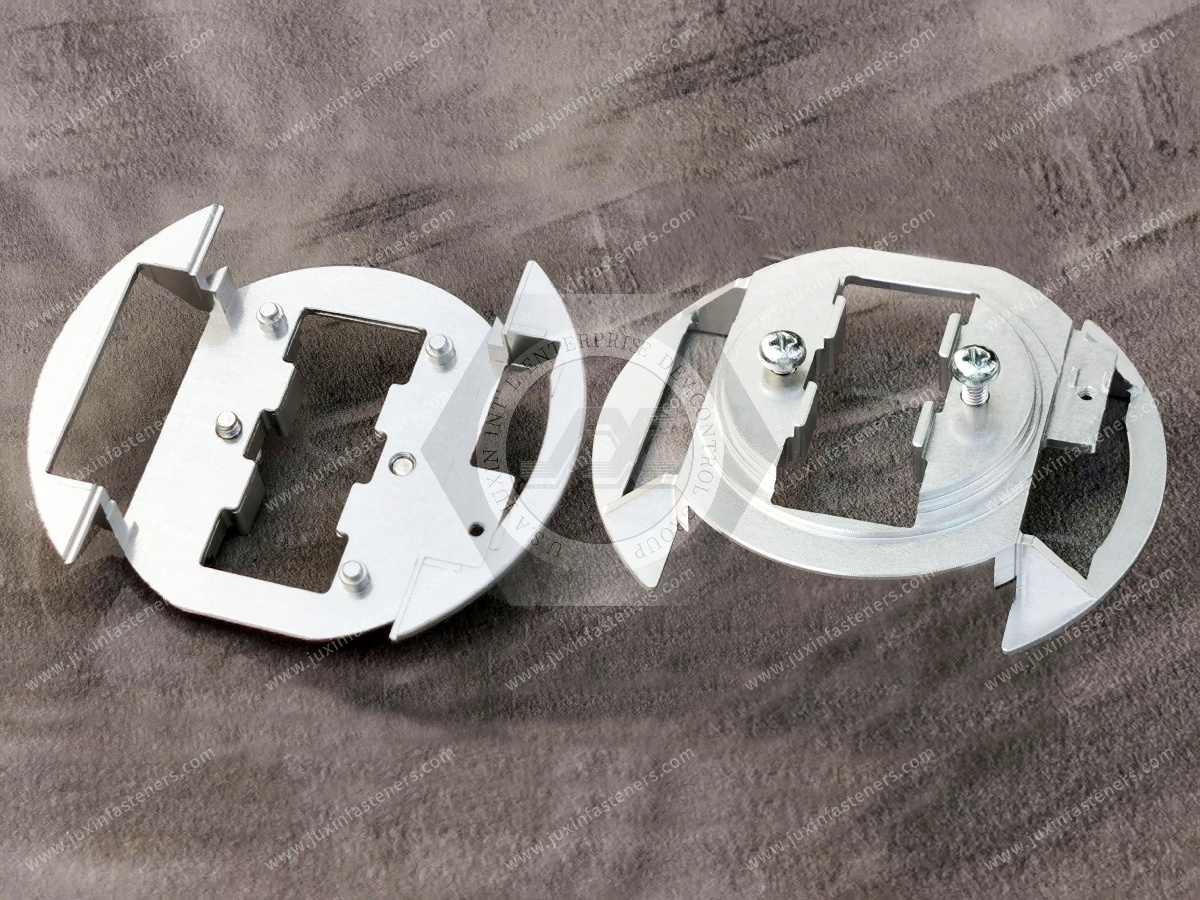
Instead of asking whether two parts are “the same,” engineering and procurement can classify requirements.
| Requirement Category | Example | Qualification Question |
|---|---|---|
| Critical interface | Mounting hole | Will it install into the approved panel geometry? |
| Critical interface | Thread | Will it correctly mate with the existing assembly? |
| Functional | Push-out resistance | Does installed retention satisfy the application requirement? |
| Functional | Torque-out resistance | Does rotational retention satisfy the joint requirement? |
| Envelope | Head height | Does it clear surrounding components? |
| Serviceability | Retraction | Does the disengaged captive screw clear the mating structure? |
| Environmental | Corrosion | Does the finish satisfy the specified corrosion requirement? |
| Electrical | Bonding | Does the installed assembly maintain the required electrical function? |
| Manufacturing | Installation | Can it be installed using an approved process and tooling? |
This matrix helps prevent irrelevant dimensions from dominating the qualification process.
These terms should not automatically be treated as identical.
This may be required when the replacement must:
use the same mounting hole
fit the same panel
use the same mating thread
occupy the same critical envelope
work with existing automation
work with existing service procedures
Functional equivalence can allow selected differences where those differences do not compromise the approved requirements.
For example, a non-critical head chamfer might differ while:
thread
mounting interface
panel compatibility
head clearance
mechanical retention
remain suitable.
The customer determines which level of interchangeability is required.
A functional-equivalent project can begin from several types of information.
This is often the strongest starting point because it may define:
dimensions
tolerances
material
thread
finish
critical characteristics
A supplier or competitor part number can help identify the baseline component.
However, a part number alone may not reveal every engineering requirement.
An original component can be measured and evaluated.
Physical-sample development is particularly useful when drawings are unavailable.
A STEP model can help establish:
envelope
interfaces
assembly geometry
but may not contain:
tolerances
material
finish
performance requirements
This is essential when the fastener performs more than a simple threaded function.
Procurement sometimes treats the currently approved supplier's component as the complete technical specification.
That can create unnecessary supplier dependency.
A stronger approach is to determine:
What does the assembly actually require?
The answer may include:
interface dimensions
thread
panel conditions
minimum mechanical performance
material requirements
corrosion performance
installation requirements
Once these are controlled by the OEM, alternative suppliers can be evaluated against engineering requirements rather than only against another supplier's commercial part number.
Self-clinching fasteners are a good example of why visual cross-referencing is insufficient.
Performance depends on the interaction between the fastener and host sheet.
Relevant variables can include:
panel material
panel hardness
sheet thickness
mounting-hole diameter
hole preparation
edge distance
installation force
installation tooling
fastener geometry
Therefore, push-out and torque-out performance should not be treated as intrinsic numbers that remain constant in every panel.
For an alternative self-clinching fastener, engineering should confirm whether the proposed part is compatible with the intended mounting hole.
Questions include:
Is the nominal hole diameter compatible?
What hole tolerance is required?
Is the hole punched, drilled, laser-cut, or otherwise produced?
Are burr orientation or hole quality relevant?
Does the alternative require a different hole?
A component that requires a different mounting hole may still be technically usable, but it is no longer a simple drop-in replacement.
Panel thickness directly affects many installed fastener systems.
The alternative should be evaluated against the actual panel thickness or thickness range used by the OEM.
Do not assume that similar external geometry means identical panel compatibility.
A self-clinching component that performs correctly in one sheet material may behave differently in another.
Potential host materials include:
carbon steel
stainless steel
aluminum
The relationship between fastener design and host-sheet hardness is particularly important for clinching.
Qualification should therefore use representative production panel conditions.
Installation force matters because excessive force can:
distort thin sheet
mark cosmetic panels
damage surrounding features
increase tooling load
Insufficient force can result in:
incomplete seating
inadequate material flow
poor retention
The alternative component should be evaluated using the approved installation process for the actual assembly.
One of the most commercially important questions in a second-source project is:
Can the alternative component use the existing installation tooling?
The answer should be verified, not assumed.
Tooling compatibility can depend on:
anvil geometry
punch geometry
fastener dimensions
access
press setup
installation direction
If new tooling is required, procurement should include that cost and implementation impact in the sourcing decision.
Two fasteners may install into the same nominal mounting hole while requiring different:
punch geometry
anvil support
press settings
installation force
Therefore, hole compatibility and tooling compatibility should be evaluated separately.
This is particularly important for automated or semi-automated production lines.
Push-out testing evaluates axial retention of an installed fastener in the host panel.
Results depend on variables such as:
fastener design
sheet material
sheet hardness
thickness
hole condition
installation process
Qualification should therefore compare components using representative and controlled panel conditions.
The acceptance criterion should come from:
customer requirement
approved baseline
drawing
application validation
rather than an arbitrary universal value.
Torque-out testing evaluates resistance to rotational movement within the host sheet.
This can be important for:
self-clinching nuts
studs
standoffs
other permanently installed threaded hardware
Again, results depend on the installed system—not the fastener alone.
Testing should reproduce relevant panel and installation conditions.
Torque-out failure and thread failure are different events.
A fastener may:
rotate in the panel
strip its internal thread
fracture
damage the mating screw
at different loads.
Qualification should define which failure mode matters to the application.
For captive panel screws, functional equivalence can require review of:
mounting method
panel thickness
thread
screw length
retracted position
extended position
spring behavior
head diameter
head height
drive
captive retention
service access
Matching the thread alone is insufficient.
Where the original component contains a spring, qualification may need to consider:
travel
free position
compressed position
retraction
spring force where functionally relevant
Spring force should not be confused with the clamp load generated by tightening the screw.
Floating nuts and related hardware introduce another variable: controlled movement.
Qualification may need to evaluate:
lateral float
vertical float where applicable
thread position
mounting interface
panel retention
anti-rotation behavior
The correct amount of float depends on the assembly tolerance stack.
For self-clinching or other panel-mounted standoffs, critical requirements can include:
standoff length
thread
panel interface
mounting-hole compatibility
perpendicularity
push-out resistance
torque-out resistance
board clearance
In electronics equipment, standoff height can directly affect PCB positioning.
For self-clinching studs and related threaded studs, evaluate:
thread
thread length
installed height
panel interface
head or clinching geometry
mechanical retention
material
finish
Automotive and electrical applications may introduce additional mechanical, corrosion, or electrical requirements.
Material names should not be substituted casually.
A functional-equivalent component may need to satisfy requirements relating to:
strength
hardness
corrosion
forming behavior
conductivity
temperature
If a different material is proposed, engineering should evaluate whether it satisfies the defined requirements.
Two coatings of similar appearance may behave differently.
Qualification can involve:
corrosion performance
coating thickness
friction
conductivity
appearance
chemical compatibility
Therefore, “same color” does not establish finish equivalence.
Where corrosion resistance is a defined requirement, testing may reference applicable methods such as:
ASTM B117
ISO 9227
The test method alone does not define acceptance.
The RFQ or drawing should also specify the required acceptance criteria.
Salt-spray testing is useful for comparing specified coating performance under a controlled accelerated test.
It should not automatically be interpreted as a direct conversion to years of field service.
Actual service life depends on:
environment
temperature
wet/dry cycles
chemicals
coating damage
assembly geometry
dissimilar metals
Procurement should therefore use salt-spray requirements as part of a coating specification rather than a universal field-life guarantee.
For bolts, screws, studs, and threaded components, mechanical equivalence may involve:
tensile properties
yield behavior
hardness
proof requirements
thread strength
The applicable ISO, ASTM, SAE, ASME/ANSI, DIN, EN, BS, or customer specification should be identified where relevant.
Do not assume that identical dimensions guarantee identical mechanical performance.
Applications in:
automotive
rail
industrial machinery
data center cooling systems
commercial vehicles
may experience vibration.
If vibration resistance is functionally important, qualification should evaluate the actual joint architecture.
No fastener should be described as universally vibration-proof simply because it uses a particular geometry.
Some fasteners also contribute to:
grounding
bonding
current transfer
EMI-related enclosure continuity
In these applications, functional equivalence may require electrical testing or controlled surface requirements in addition to mechanical testing.
Captive screws and panel fasteners may be used on gasketed enclosures.
The fastener can influence:
gasket compression
panel position
clamp distribution
But replacing a fastener does not automatically establish or restore an enclosure IP rating.
Where environmental sealing matters, the complete enclosure assembly should be validated according to the relevant requirement.
The qualification process should be tailored to the component.
A typical program may include:
Collect:
existing drawing
supplier part number
physical sample
application data
Identify:
form requirements
fit requirements
function requirements
Compare the proposed alternative with the baseline.
Determine whether the alternative can be manufactured consistently and whether any differences require customer approval.
Produce qualification samples using the agreed manufacturing route.
Verify critical dimensions and interfaces.
Install samples into representative production panels or assemblies.
Where applicable, test:
push-out
torque-out
tensile performance
clamp behavior
Where required, test:
corrosion
electrical bonding
environmental performance
For automated or high-volume programs, evaluate:
feeding
installation
tooling
cycle compatibility
Release the alternative supplier according to the customer's quality system.
A common qualification mistake is requiring every measured characteristic of the second source to exceed the original component.
More is not always better.
For example:
higher installation force may damage the panel
higher hardness may reduce compatibility with the sheet
thicker coating may affect thread fit
stronger spring force may change service behavior
The correct requirement is:
Meet the defined engineering acceptance criteria.
Not:
Maximize every measurable property.
A useful qualification matrix separates the baseline supplier's measured characteristics from the OEM requirement.
| Characteristic | Baseline Component | OEM Requirement | Proposed Equivalent | Validation |
|---|---|---|---|---|
| Thread | Existing part | Defined by assembly | Candidate part | Gauge / fit |
| Mounting hole | Existing application | Controlled drawing | Candidate interface | Installation trial |
| Panel thickness | Existing application | Production range | Candidate capability | Representative panels |
| Head envelope | Baseline geometry | Clearance requirement | Candidate geometry | Dimensional review |
| Push-out | Baseline test if available | Required minimum or approved baseline | Candidate result | Test |
| Torque-out | Baseline test if available | Required minimum or approved baseline | Candidate result | Test |
| Finish | Existing specification | Corrosion / functional requirement | Proposed finish | Documentation / test |
This structure helps engineering avoid turning an existing supplier's incidental characteristics into unnecessary permanent requirements.
High-density computing equipment uses large quantities of engineered panel hardware.
Potential applications include:
GPU server chassis
compute trays
rack power shelves
cooling distribution units
storage systems
network equipment
Common hardware can include:
captive panel screws
self-clinching nuts
standoffs
studs
threaded inserts
Second-source qualification can help OEMs reduce dependence on a single hardware source while maintaining controlled assembly interfaces.
Cooling distribution units, manifolds, pump assemblies, heat exchangers, and related equipment may use specialized fasteners and panel hardware.
Where a fastener participates in:
sealing
pressure retention
critical alignment
qualification must include the relevant system-level requirements.
Dimensional similarity alone is not sufficient.
Automotive electronic and EV systems can use engineered fasteners in:
battery management systems
battery enclosures
traction inverters
high-voltage junction boxes
control modules
thermal-management equipment
Potential hardware includes:
self-clinching studs
nuts
standoffs
custom bolts
panel fasteners
Automotive programs may require customer-specific qualification, traceability, production approval, and change-control requirements.
These requirements should be defined by the customer program rather than assumed from the fastener category.
Battery assemblies can combine:
aluminum panels
steel brackets
electrical busbars
thermal systems
sealed covers
A functional-equivalent fastener may therefore need evaluation for:
panel compatibility
corrosion
electrical behavior
clamp function
vibration
thermal cycling
The fastener should be qualified within the relevant joint architecture.
Telecommunications infrastructure can use engineered hardware in:
outdoor 5G equipment
radio units
network switches
fiber equipment
power cabinets
Outdoor applications can place additional importance on:
corrosion
sealing
grounding
long service life
Alternative components should be evaluated against the actual equipment requirements.
Switchgear, power converters, UPS systems, inverters, and industrial power cabinets use permanent and serviceable fastening systems.
Applications may include:
busbar supports
enclosure panels
electronic modules
control boards
power shelves
Where fasteners contribute to electrical bonding or grounding, qualification should include those functions.
BESS equipment combines:
battery modules
power conversion
HVAC
control electronics
outdoor enclosures
Dual sourcing can support long production programs and aftermarket service.
However, equivalent hardware must be evaluated for the specific mechanical, environmental, and electrical requirements of the assembly.

Semiconductor manufacturing equipment may require precise panel hardware, standoffs, studs, and custom threaded components.
Qualification may need to consider:
dimensional precision
material restrictions
surface requirements
cleanliness
documentation
A general cross-reference should not override equipment-specific requirements.
Automation equipment uses:
panel fasteners
shoulder screws
threaded standoffs
custom studs
locating components
For moving or precision assemblies, functional equivalence may involve:
fit
wear
hardness
alignment
surface finish
rather than simply thread compatibility.
Medical diagnostic and laboratory equipment may use captive hardware and specialized panel fasteners in serviceable assemblies.
Qualification requirements may include:
material documentation
corrosion
cleanliness
dimensional control
traceability
Compliance requirements should be defined by the specific customer program.
Rail equipment can remain in service for decades.
Second-source qualification can support:
production
refurbishment
fleet maintenance
obsolete-part replacement
Rail programs may require controlled documentation, material traceability, mechanical validation, and customer approval.
Second-source programs can be initiated for several reasons:
supply-chain resilience
regional supply
lead-time risk
capacity risk
lifecycle support
commercial benchmarking
cost-reduction programs
supplier consolidation
obsolete-part replacement
However, a second source should not be approved solely because it is cheaper.
The technical and commercial evaluation should remain connected.
A functional-equivalent fastener may require:
new tooling
qualification testing
line trials
inventory transition
engineering approval
Procurement should therefore evaluate:
Part price + tooling + qualification + implementation + logistics + supply risk
rather than comparing piece price alone.
A lower unit price does not automatically create a lower total sourcing cost.
For high-volume production, tell the alternative supplier whether the component is:
bowl-fed
tape-fed
manually loaded
robotically installed
press-installed
automatically screwed
Provide relevant tooling or automation interface information where possible.
A dimension that appears unimportant on the finished assembly may be critical to automatic feeding or installation.
A component can meet the final assembly dimensions yet fail during manufacturing because it:
jams in a feeder
does not orient correctly
requires different tooling
changes press force
increases cycle time
For high-volume OEM production, manufacturing process compatibility is itself a functional requirement.
This is especially important in automotive, electronics, and automated sheet-metal assembly.
Where appropriate and legally permitted, OEMs can reduce dependency on commercial catalog identifiers by maintaining their own controlled engineering requirements.
This may include:
internal part number
approved drawing
critical dimensions
material
finish
performance criteria
inspection requirements
The objective is not to copy proprietary documentation.
It is to ensure that the OEM understands and controls the requirements necessary for its own assembly.
Cross-referencing should respect applicable:
patents
contractual restrictions
confidential drawings
trademarks
proprietary specifications
A competitor part number can be useful as a commercial reference, but it should not be treated as authorization to reproduce protected intellectual property.
Where intellectual-property restrictions may apply, the customer should determine the appropriate sourcing path.
Depending on the customer program, qualification documentation may include:
approved drawing
dimensional inspection report
material certificate
coating documentation
mechanical test results
corrosion test results
sample approval
first-article documentation
production-line trial record
Automotive and other controlled programs may require additional customer-specific documentation.
After a functional equivalent has been approved, changes to:
material
tooling
manufacturing process
heat treatment
coating
critical dimensions
may require customer review.
Second-source qualification should therefore include ongoing change control, not just initial sample approval.
For functional equivalent fasteners, fastener cross reference, equivalent self-clinching fasteners, second source fasteners, dual source fasteners,
alternative fastener suppliers, or functional replacement hardware, provide as much of the following information as possible:
existing supplier part number
customer internal part number
existing 2D drawing
3D STEP model where available
physical sample
assembly photographs
host panel material
panel hardness where relevant
panel thickness
mounting-hole diameter
hole tolerance
thread size
thread pitch
thread tolerance or class
critical envelope dimensions
material requirement
hardness requirement
surface finish
corrosion requirement
installation method
installation tooling information
installation force requirement where applicable
push-out requirement where applicable
torque-out requirement where applicable
tensile requirement where applicable
vibration requirement
operating temperature
electrical requirement where applicable
sealing requirement where applicable
sample quantity
validation quantity
Estimated Annual Usage (EAU)
expected production batch size
production schedule
inspection requirements
quality documentation requirements
If a requirement is unknown, identify it as unknown rather than assuming equivalence.
Useful questions include:
Can you evaluate our existing supplier part number?
Can you review the existing drawing?
Can you evaluate a physical sample?
Which characteristics are critical for interchangeability?
Does your component use the same mounting hole?
Does it support the same panel thickness?
Is existing installation tooling compatible?
What installation force is required?
How should push-out and torque-out be validated?
What material is proposed?
What finish is proposed?
Which characteristics differ from the baseline part?
Which differences require engineering approval?
Can qualification samples be provided?
What inspection documentation can be provided?
What material and coating documentation can be supplied?
Can you support our EAU?
What tooling is required?
What production lead-time assumptions apply?
How will future engineering changes be controlled?
These questions make the second-source decision technically transparent.
Clarify whether the project is driven by:
supply risk
lead time
cost
capacity
regionalization
lifecycle support
Provide:
drawing
part number
sample
application information
Separate:
form
fit
function
manufacturing-interface requirements
Identify:
matching characteristics
differences
open technical questions
Understand how the proposed alternative will be produced.
Use an agreed production-intent process where required.
Verify dimensional and material requirements.
Evaluate actual installation and functional performance.
Verify tooling, feeding, installation, and cycle compatibility.
Release the alternative according to the OEM's quality process.
After approval, maintain:
drawing revision
part number
approved material
approved finish
inspection plan
change-notification requirements
A functional-equivalent project can begin with a single question:
“Can you cross-reference this part?”
But for an OEM, the larger opportunity is to create a controlled second source.
The sourcing path becomes:
Existing component → technical baseline → FFF requirements → cross-reference → sample → testing → line trial → approval → second source → recurring production
This gives engineering a controlled qualification path and gives procurement an alternative supply option.
JUXIN FASTENERS supplies engineered fasteners, custom fasteners, self-clinching hardware, captive panel screws, studs, standoffs, nuts,
threaded inserts, precision machined components, and functional-equivalent fastening solutions for industrial OEM applications.
For projects involving functional equivalent fasteners, fastener cross-referencing, second-source fasteners,
dual-source fasteners, alternative self-clinching hardware, replacement captive fasteners, or functional replacement components,
our team can review available customer technical information and evaluate a suitable qualification path.
A cross-reference project can begin from:
an existing 2D engineering drawing
a 3D model
an existing supplier part number
a physical fastener sample
a customer internal part number
assembly information
host panel specifications
performance requirements
Depending on the application, evaluation may include:
dimensional comparison
thread review
panel compatibility
installation-method review
material and finish comparison
tooling compatibility
sample manufacturing
push-out and torque-out testing requirements
corrosion requirements
customer assembly validation
Where the proposed alternative differs from the existing component, those differences should be identified for customer engineering review rather than hidden under a generic “equivalent” claim.
The objective is to establish a technically controlled alternative supply option that meets the customer's defined assembly and production requirements.
For cross-reference evaluation, functional-equivalent development, second-source qualification, sample requirements,
physical-sample review, cost-reduction projects, or production-volume RFQs, send your technical requirements to JUXIN FASTENERS.
Email: info@juxinfasteners.com
Website: www.juxinfasteners.com
 MORE NEWS
Sep. 25, 2026
Sep. 25, 2026
Sep. 25, 2026
Contact Us
Tel.:
+86 020 8621 0320
+86 020 3121 6067
E-mail:
Technical Support:
Navigation
SEND INQUIREY