
Call Us
+86 136 6007 9809
Call Us
+86 136 6007 9809

Mar. 29, 2026
In modern manufacturing, injection molded plastic components are widely used because of their advantages including lightweight construction, corrosion resistance, electrical insulation, and design flexibility.
However, creating reliable threaded connections in plastic parts requires careful engineering consideration.
Directly tapping threads into plastic materials may result in:
Thread stripping
Reduced tightening force
Limited assembly cycles
Cracking under load
Reduced product reliability
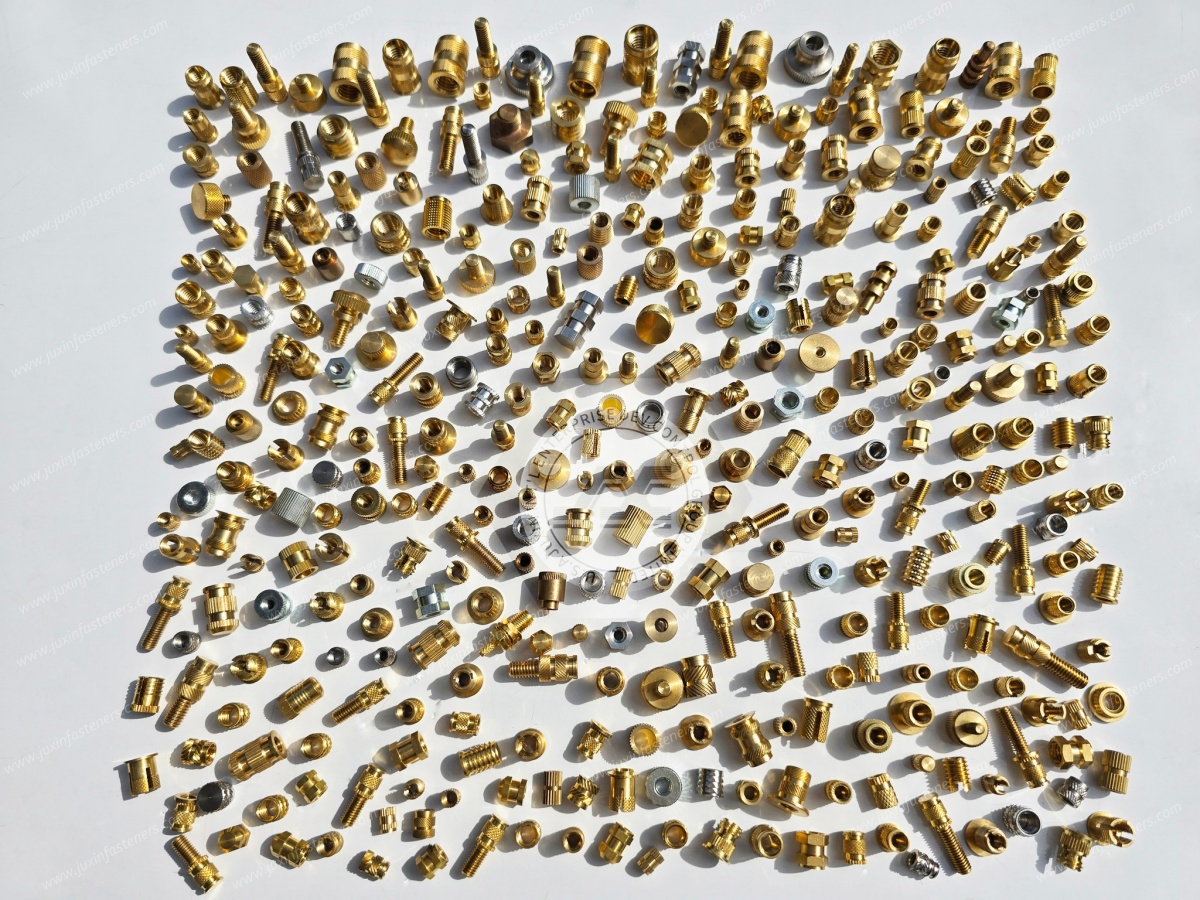
For applications requiring durable and reusable threaded connections, thread insert nuts for injection molded parts provide an effective fastening solution.
Proper design of the plastic component is critical to achieving maximum performance from the insert.
Key design factors include:
Insert hole size
Plastic boss diameter
Wall thickness
Insert placement
Plastic material selection
Installation method
This engineering guide explains the essential thread insert design guidelines for injection molded parts to help engineers optimize torque resistance, pull-out strength, and long-term fastening reliability.
As an experienced OEM thread insert manufacturer, Juxin Fasteners provides customized plastic threaded inserts, insert nuts, molded-in inserts, heat set inserts, and precision fastening solutions for global industrial applications.
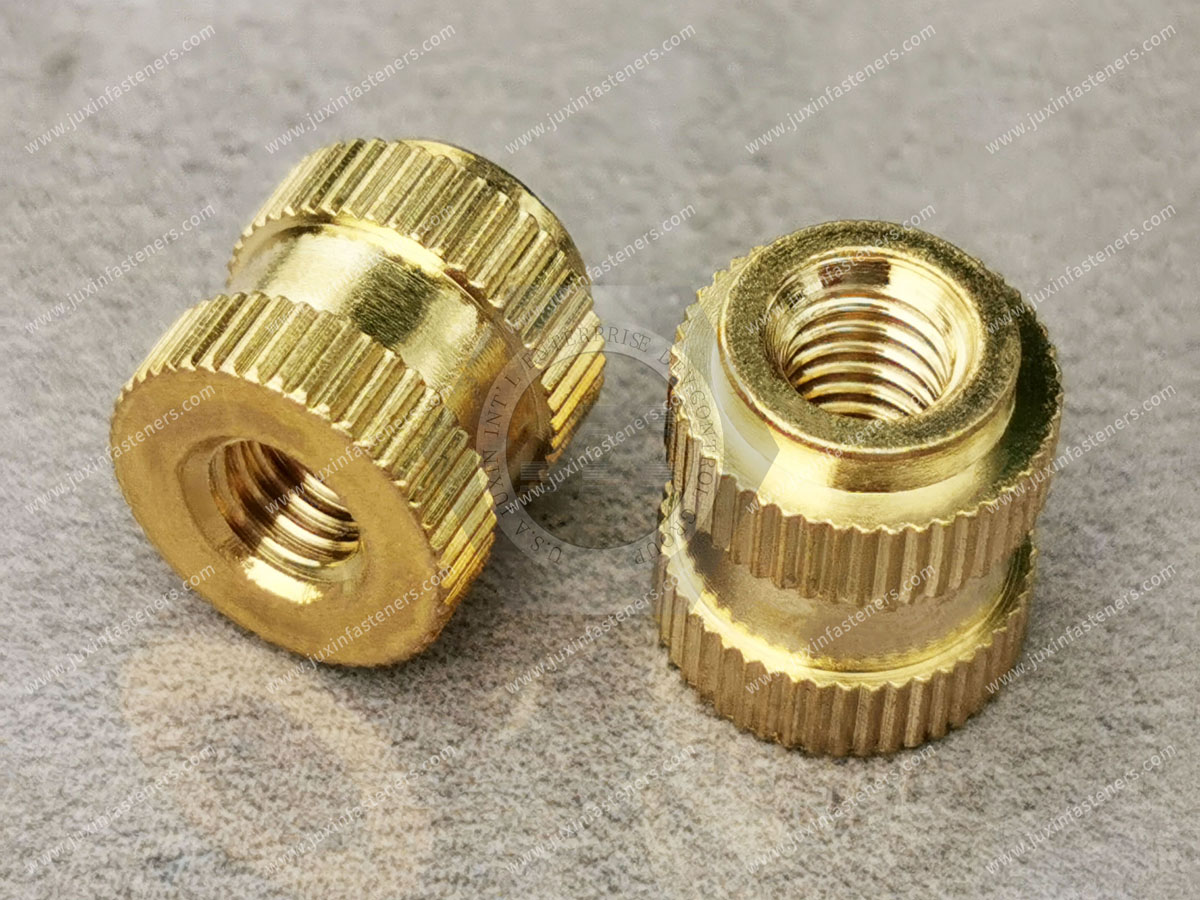
Plastic materials have excellent design flexibility, but their mechanical properties are different from metals.
Compared with steel or aluminum components, plastics generally have:
Lower hardness
Lower thread strength
Higher stress relaxation
When screws are repeatedly installed or exposed to vibration, conventional plastic threads may fail.
Thread inserts provide a reinforced metal thread structure that improves:
Torque resistance
Pull-out strength
Screw retention
Product service life
However, even the highest-quality insert cannot achieve optimal performance without proper plastic component design.
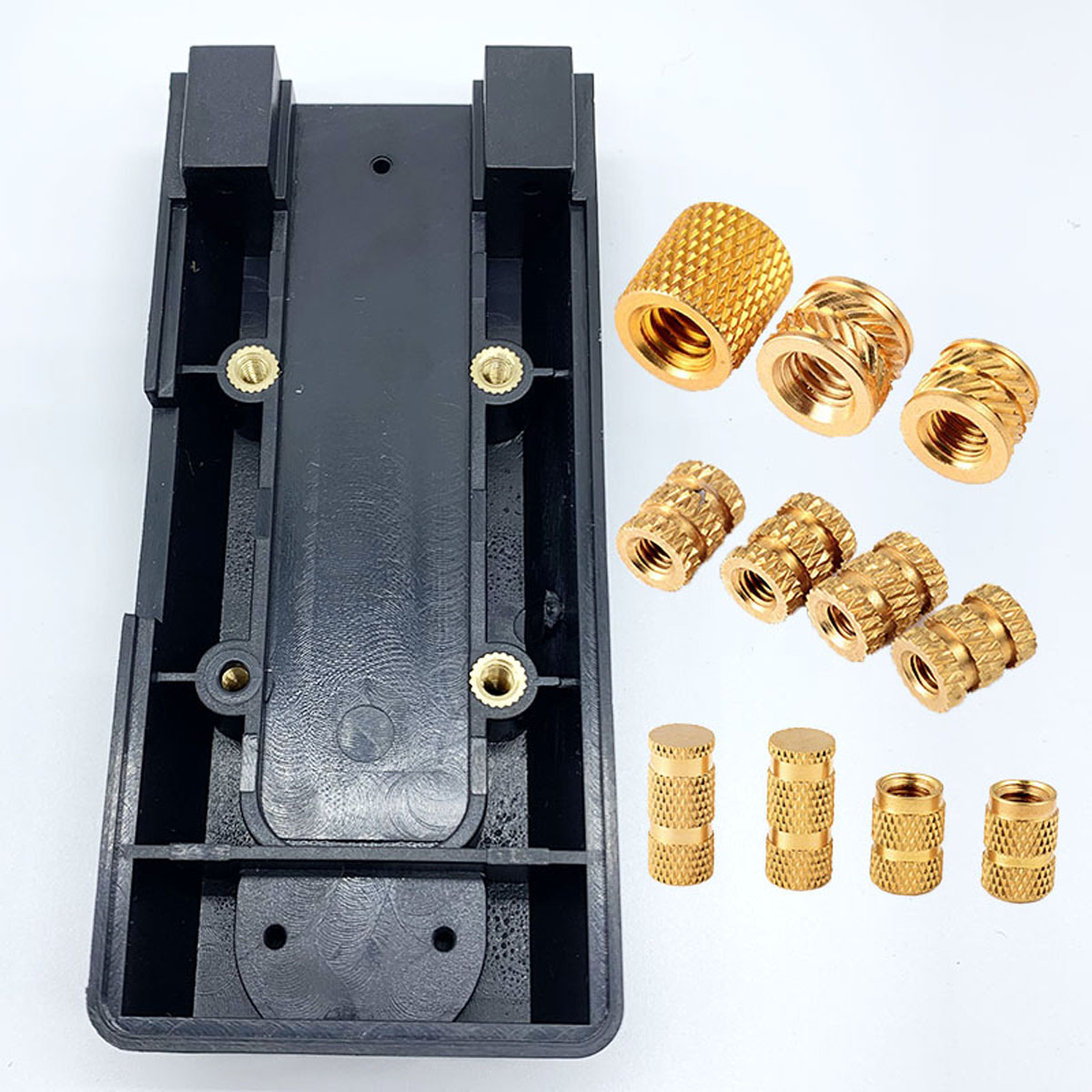
Successful thread insert applications depend on four primary design elements:
Each factor directly affects installation quality and fastening performance.
The hole size in an injection molded plastic component is one of the most important design parameters.
The hole must provide enough space for proper insert installation while maintaining sufficient material engagement.
If the hole diameter is too large:
Insert retention decreases
Torque resistance is reduced
Pull-out strength decreases
Insert rotation may occur
The insert may not have enough contact area with the surrounding plastic material.
If the hole diameter is too small:
Plastic stress increases
Installation force becomes excessive
Cracks may develop around the boss area
Component damage may occur
Engineers should consider:
Insert manufacturer's recommended hole diameter
Plastic material properties
Installation method
Required strength level
Correct hole sizing allows plastic material to properly flow around insert features and achieve secure mechanical retention.
The plastic boss surrounding the insert provides structural support during installation and operation.
An insufficient boss diameter may cause:
Cracking
Plastic deformation
Reduced load capacity
A common engineering guideline:
Plastic Boss Diameter = 2 to 3 × Insert Outside Diameter
This design provides sufficient surrounding material to:
Support installation forces
Improve load distribution
Increase pull-out resistance
Reduce cracking risk
For a thread insert with:
Outer Diameter = 5 mm
Recommended boss diameter:
Approximately:
10–15 mm
(actual design should consider plastic material and application requirements)
Wall thickness around the insert area plays an important role in structural performance.
Insufficient wall thickness may cause:
Boss splitting
Stress concentration
Reduced insert retention
Engineers should consider:
Plastic material strength
Insert size
Screw tightening torque
Environmental loading
For reinforced engineering plastics, design parameters may differ from standard plastics.
For injection molded components, manufacturers generally prefer molded holes instead of secondary drilling operations.
Molded holes maintain the original plastic grain structure and avoid machining damage.
Properly designed molded holes provide:
Better material engagement
More consistent installation
Improved torque performance
Injection molding allows:
Repeatable hole dimensions
Stable production quality
High-volume manufacturing efficiency
Drilled holes may be suitable for:
Prototype parts
Low-volume production
Product modification
Repair applications
However, production designs typically benefit from molded hole integration.
Proper insert positioning is essential for reliable assembly.
Engineers should consider:
Insufficient edge distance may cause:
Plastic cracking
Reduced strength
Component deformation
Incorrect insert placement may result in:
Screw misalignment
Assembly difficulty
Uneven loading
For components using multiple inserts:
Consider:
Uniform load distribution
Mold design limitations
Assembly sequence
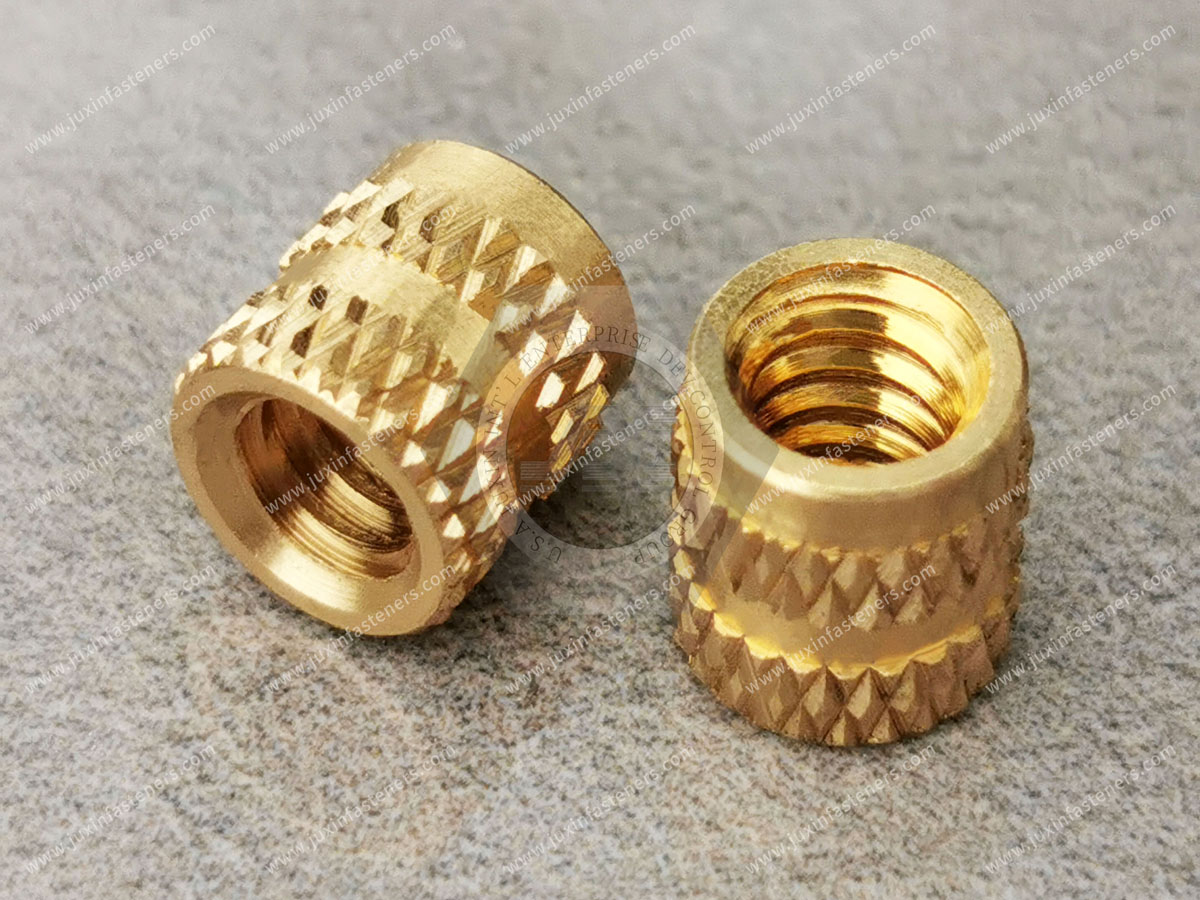
Different applications require different insert designs.
Recommended for:
Thermoplastic components
Electronics housings
Automotive interior parts
Advantages:
High torque resistance
Reliable installation
Excellent plastic bonding
Recommended for:
High-volume assemblies
Low-to-medium load applications
Advantages:
Fast installation
Low production cost
Simple assembly process
Recommended for:
Maximum strength applications
Injection molding production
Advantages:
Highest pull-out resistance
Superior torque performance
Permanent integration
Thread insert nuts are widely used in industries requiring lightweight and durable assemblies.
Applications:
Interior panels
Instrument components
Electronic modules
Plastic brackets
Benefits:
Lightweight fastening
Vibration resistance
Long-term reliability
Applications:
Battery management housings
Electrical covers
Lightweight structural components
Requirements:
Reliable fastening
Repeated assembly capability
Stable performance
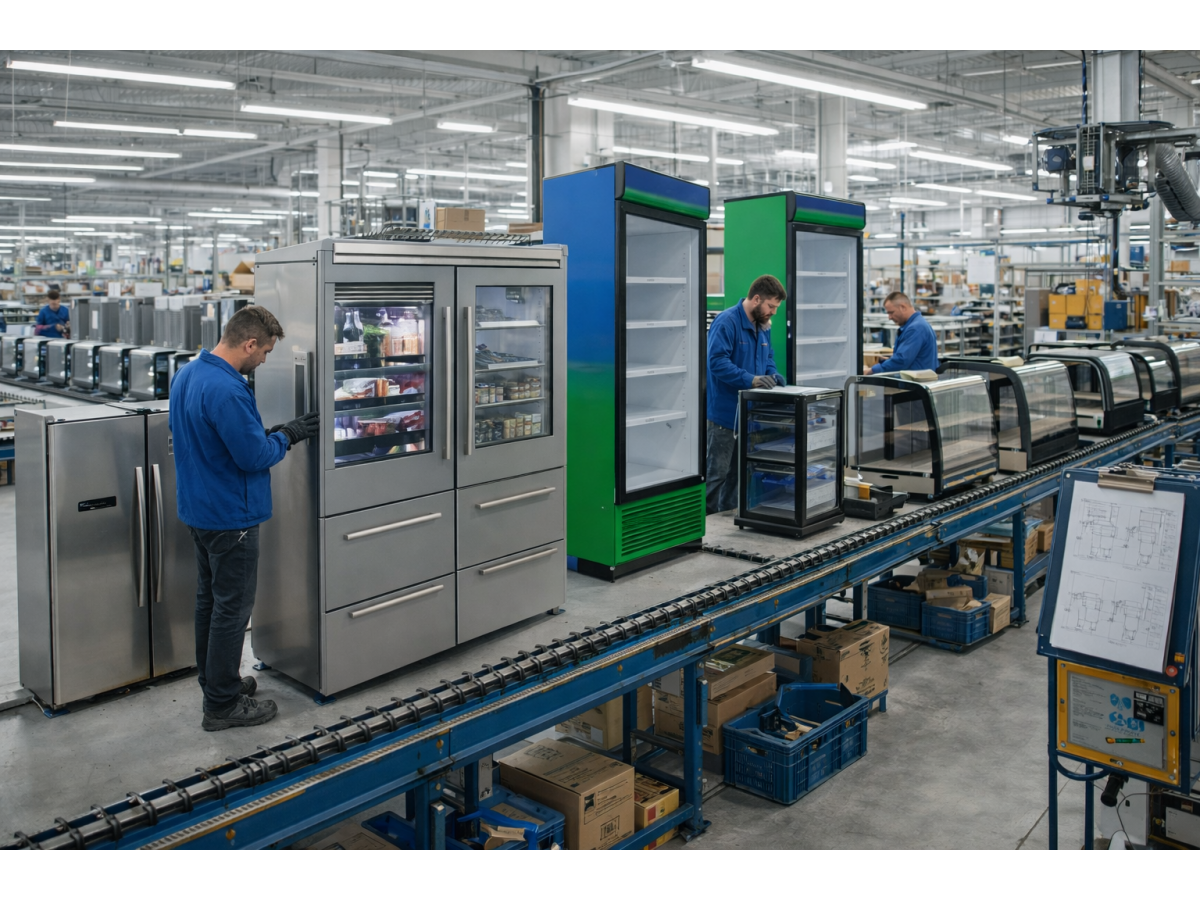
Applications:
ABS housings
Control boxes
Sensor enclosures
Thread inserts provide strong mounting points for:
Circuit boards
Brackets
Electrical components
Applications:
Plastic covers
Control components
Equipment housings
Applications:
Medical device housings
Laboratory instruments
Precision equipment
Applications:
Robot covers
Sensor assemblies
Automation modules
Applications:
Composite panels
Lightweight interior components
Juxin Fasteners specializes in providing professional thread insert solutions for injection molded plastic components.
Our product solutions include:
Thread insert nuts
Plastic threaded inserts
Heat set inserts
Press-in inserts
Molded-in inserts
Custom insert fasteners
Our engineering support includes:
Insert type selection
Hole size recommendations
Boss diameter optimization
Plastic component design guidance
Torque and pull-out performance evaluation
Our manufacturing capabilities include:
Precision machining
Cold forming
Thread processing
Surface treatment
OEM customization
Quality inspection
We support customers across:
Automotive / EV / Battery Pack / Rail Transit / Aerospace / Electrical Cabinets / HVAC / Medical Equipment / Construction / Machinery / Robotics / Sheet Metal Fabrication
With professional engineering support and strict quality control, Juxin Fasteners helps global manufacturers achieve reliable, cost-effective, and durable fastening solutions.
For technical consultation, drawing review, OEM quotation, or customized thread insert solutions:
Email: info@juxinfasteners.com
Juxin Fasteners — Your Reliable OEM Partner for Industrial Fastening Solutions Worldwide
 MORE NEWS
Sep. 27, 2026
Sep. 27, 2026
Sep. 27, 2026
Contact Us
Tel.:
+86 020 8621 0320
+86 020 3121 6067
E-mail:
Technical Support:
Navigation
SEND INQUIREY