
Call Us
+86 136 6007 9809
Call Us
+86 136 6007 9809

Jun. 22, 2024
Hex Head Bolt Materials and Strength Grades: Steel Selection, Coatings and OEM Sourcing Guide
Selecting the correct hex head bolt material is essential for achieving reliable mechanical performance, consistent assembly and long-term serviceability.
A hexagonal head provides a convenient wrenching interface, but it does not determine the fastener's tensile strength,
fatigue resistance, corrosion performance or suitability for a particular industrial application.
Those characteristics depend on the interaction between the material, mechanical property specification, manufacturing process, surface treatment and complete joint design.
For OEM engineers, an important distinction is that a steel grade identifies a material, while a bolt property class defines mechanical requirements for the finished fastener.
For purchasing managers and supplier development teams,
the distinction matters because two bolts with the same nominal dimensions and property class may be manufactured using different qualified materials and processes.
JUXIN FASTENERS supplies industrial hex head bolts, high-strength threaded fasteners and drawing-based custom fastening components for international OEM applications.
This guide focuses on material selection, strength grades, heat treatment, coatings and the information required to qualify hex head bolts for production.
Why Hex Head Bolt Material Selection Matters
The material affects more than the maximum tensile load a bolt can withstand.
It also influences:
Hardenability and heat-treatment response
Yield and tensile strength
Ductility and toughness
Fatigue behavior
Corrosion susceptibility
Temperature-dependent performance
Hydrogen embrittlement susceptibility
Manufacturing feasibility
Cost and supply availability
The most suitable material depends on the application rather than the highest available strength.
A higher-strength steel bolt may be appropriate for a heavily loaded mechanical joint,
while a stainless steel bolt may be preferable where corrosion resistance is more important than maximum tensile capacity.
For a high-volume OEM assembly, the final decision must also account for manufacturing consistency, installation requirements and supply-chain continuity.
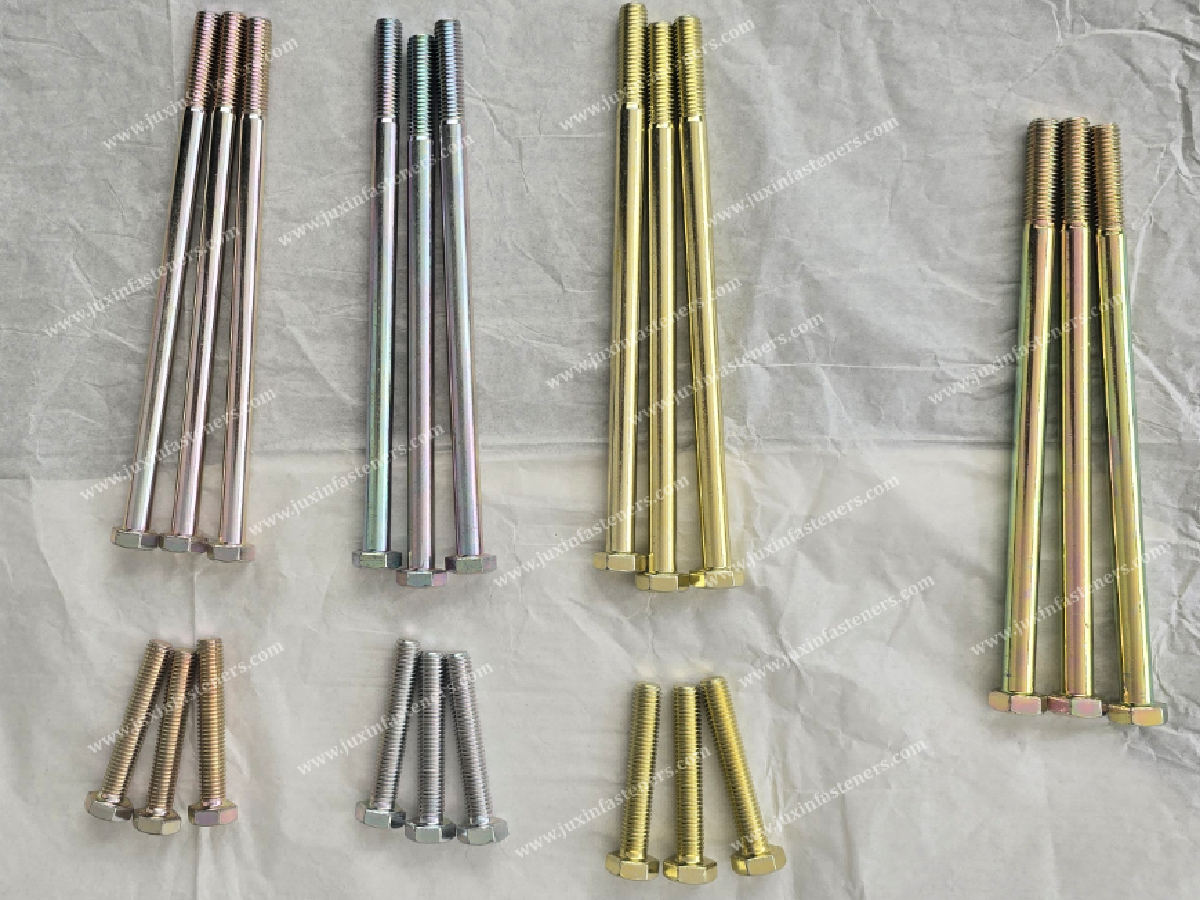
Material Grade vs. Bolt Property Class: The Essential Difference
A common sourcing mistake is treating a raw-material designation as equivalent to a finished bolt strength class.
They describe different characteristics.
Material Grade
A material grade identifies a defined chemical composition and, where applicable, other material requirements.
Examples include:
SAE 1008
SAE 1018
SAE 1022
SAE 4140
SAE 10B21
SCM435
Stainless steel 304
Stainless steel 316
These names do not independently establish the finished bolt's mechanical property class.
Mechanical Property Class
For applicable metric carbon steel and alloy steel fasteners, ISO 898-1 defines mechanical property requirements.
Examples include:
Property class 4.8
Property class 5.8
Property class 8.8
Property class 10.9
Property class 12.9
The property class relates to the finished fastener's specified mechanical performance.
Why This Matters for OEM Procurement
A drawing that specifies only “SCM435 hex bolt” may be incomplete if the required finished-fastener mechanical properties are not defined.
Likewise, a drawing specifying only “10.9 hex bolt” may require additional material, dimensional, coating and application requirements.
The purchasing specification should identify the applicable standard, property class, geometry, surface treatment and any customer-specific restrictions.
Carbon Steel Hex Head Bolts
Carbon steel is widely used in industrial fastener manufacturing because suitable grades can offer economical forming, machining and mechanical performance.
However, not every carbon steel grade is suitable for every bolt strength class.
Low-Carbon Steel
Low-carbon steels may be considered for certain general-purpose fasteners and lower-strength applications.
Examples of SAE material designations include:
SAE 1008
SAE 1010
SAE 1015
SAE 1018
SAE 1022
Their suitability depends on the required mechanical properties, product geometry and manufacturing process.
Cold-Heading Considerations
Certain low-carbon steels are suitable for cold-forming operations.
However, material suitability must be evaluated for the specific heading process and finished geometry.
A material that forms easily does not necessarily provide the mechanical properties required for a high-strength bolt.
Medium-Carbon Steel
Medium-carbon steels may be selected where higher mechanical properties are required.
Depending on composition and processing, heat treatment may be used to achieve specified properties.
The appropriate material must be selected according to the bolt diameter, required strength, toughness and manufacturing conditions.
Boron Steel Hex Head Bolts
Boron-containing steels are used in some high-strength fastener applications.
Suitable boron additions can improve hardenability when composition and processing are properly controlled.
However, boron steel should not automatically be described as stronger than alloy steel.
The finished mechanical properties depend on the complete material and heat-treatment specification.
Engineering Considerations
For a proposed boron steel fastener, evaluate:
Chemical composition
Hardenability
Bolt diameter
Heat-treatment requirements
Mechanical property class
Toughness requirements
Customer material restrictions
A material substitution should be approved before production where the drawing or purchasing specification controls the steel grade.
Alloy Steel Hex Head Bolts
Alloy steels are commonly considered for higher-strength fasteners requiring controlled heat-treatment response.
Relevant material families may include chromium-molybdenum steels and other qualified alloy compositions.
SAE 4140
SAE 4140 is a chromium-molybdenum alloy steel commonly used in engineered mechanical components.
It may be considered for certain custom bolts, subject to the required heat treatment, geometry and finished properties.
SCM435
SCM435 is a familiar chromium-molybdenum steel designation used in industrial manufacturing.
It should not automatically be treated as identical to SAE 4140 or another alloy steel grade.
Any proposed equivalence requires a comparison of the applicable material specifications and customer requirements.
Why Alloy Steel May Be Selected
Depending on the grade and heat treatment, alloy steel can offer:
Suitable hardenability for specified sections
Controlled strength and toughness
Mechanical properties appropriate for demanding joints
Flexibility for certain custom bolt designs
These advantages are conditional on correct material selection and processing.
Hardenability Is Not the Same as Hardness
Hardenability describes a steel's ability to develop a hardened structure through a section under specified heat-treatment conditions.
Hardness describes resistance to localized deformation.
A steel with greater hardenability is not necessarily harder in its delivered condition.
This distinction matters when comparing large-diameter bolts with smaller fasteners.
A material that achieves the required properties in a small bolt may not provide the same through-section response in a substantially larger component.
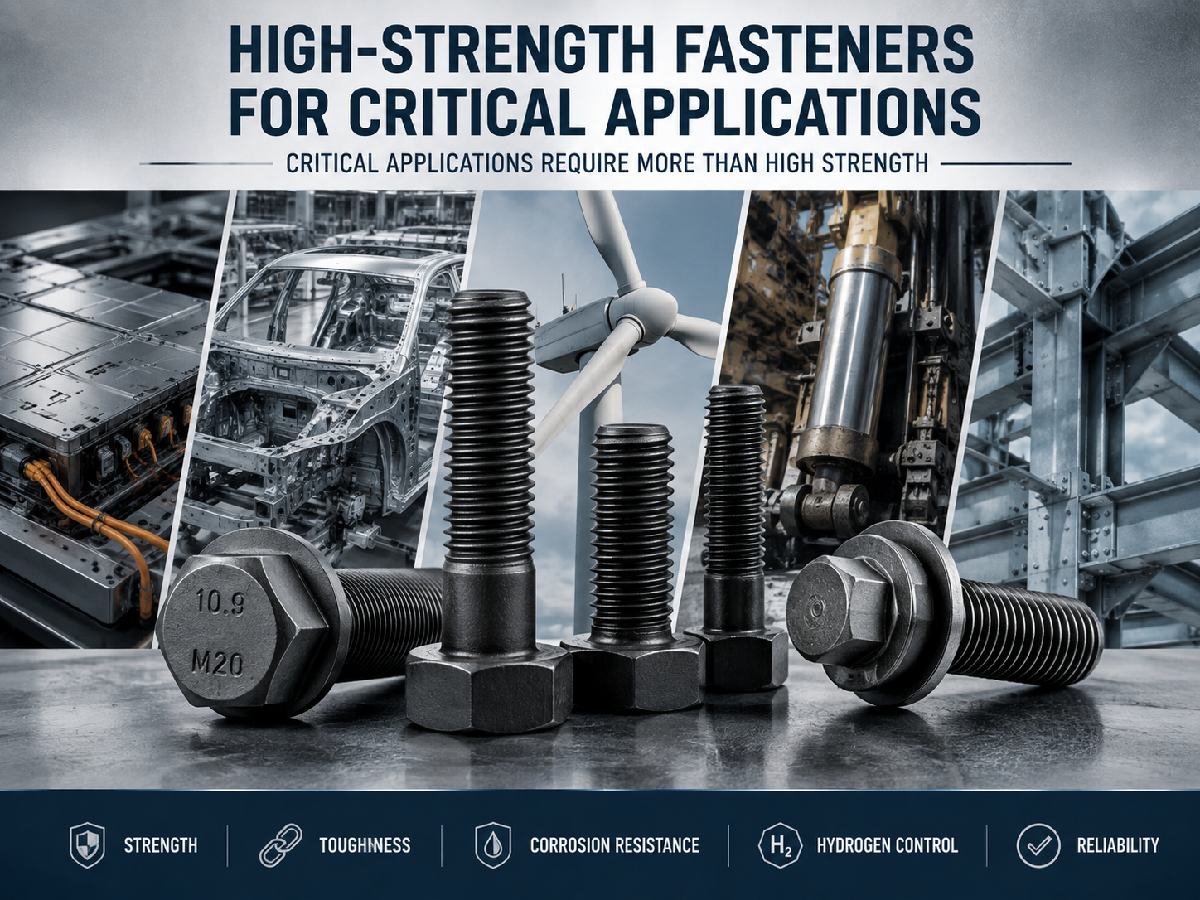
Hex Head Bolt Property Classes: 8.8 vs. 10.9 vs. 12.9
For applicable metric carbon steel and alloy steel fasteners, property classes define minimum and other specified mechanical requirements.
The nominal tensile-strength values associated with common classes are useful for understanding their relative categories,
but the applicable ISO 898-1 requirements must be used for product acceptance.
| Property class | Nominal tensile-strength designation | Typical engineering consideration |
|---|---|---|
| 4.8 | 400 MPa | General-purpose lower-strength applications |
| 8.8 | 800 MPa | Common industrial machinery and equipment |
| 10.9 | 1,000 MPa | Higher-strength mechanical joints |
| 12.9 | 1,200 MPa | High-strength applications requiring additional design attention |
These are nominal designation values, not a substitute for the standard's size-dependent minimum requirements, proof-load requirements or test criteria.
Property Class 8.8
Class 8.8 is widely specified in machinery and equipment applications where its mechanical properties satisfy the joint design.
It can offer a practical balance of strength, availability and cost.
Property Class 10.9
Class 10.9 may be selected where higher bolt strength is required.
Applications may include certain automotive, hydraulic equipment and industrial machinery connections.
The joint design must still verify thread engagement, preload and the strength of the mating components.
Property Class 12.9
Class 12.9 provides higher specified mechanical strength.
However, the additional strength may not improve the joint if the limiting factor is:
Internal thread stripping
Joint member deformation
Insufficient bearing area
Fatigue loading
Corrosion
Inadequate tightening control
High-strength fasteners may also require increased attention to hydrogen embrittlement and surface-treatment compatibility.
Why Stronger Bolts Are Not Always Better
Consider an assembly with a tapped aluminum housing.
Replacing a class 8.8 bolt with a class 12.9 bolt does not automatically improve the joint.
If the internal aluminum threads are the limiting element, increasing bolt strength may provide little benefit.
The higher-strength bolt may also introduce different coating, tightening or material-control requirements.
The correct engineering approach is to identify the joint's actual failure limit before changing the property class.
Understanding Proof Load, Yield Strength and Tensile Strength
These terms are related but not interchangeable.
Tensile Strength
Tensile strength describes the maximum tensile stress sustained during a specified tensile test.
Yield Strength
Yield strength concerns the onset of permanent deformation under the relevant material or fastener test definition.
Proof Load
Proof load is associated with a specified load that a fastener must withstand without exceeding the permitted permanent deformation under the applicable test method.
For production approval, the correct mechanical property requirements must be taken from the specified standard.
A single published tensile-strength figure is insufficient to establish complete fastener conformity.
Heat Treatment of High-Strength Hex Head Bolts
Heat treatment is an important part of manufacturing certain high-strength carbon and alloy steel fasteners.
Quenching and Tempering
Suitable steels may be quenched and tempered to achieve the required combination of strength, hardness and toughness.
The results depend on:
Steel composition
Section dimensions
Austenitizing conditions
Quenching conditions
Tempering conditions
Process control
Section-Size Effect
Larger bolts may require particular attention to through-section hardening and mechanical-property consistency.
Material selection should therefore consider both the specified property class and the bolt dimensions.
Why Surface Hardness Alone Is Insufficient
A hardness reading at one location does not necessarily demonstrate the complete mechanical performance of a bolt.
The applicable inspection plan may require other mechanical tests or verification methods.
Heat-Treatment Risks
Improper processing can contribute to:
Inadequate mechanical properties
Excessive hardness
Distortion
Decarburization
Unfavorable microstructure
Reduced toughness
The applicable requirements and acceptance criteria should be established before production.
Stainless Steel Hex Head Bolts: A2 and A4
Stainless steel fasteners are commonly selected where corrosion resistance is an important design requirement.
However, stainless steel strength classifications differ from those used for carbon and alloy steel fasteners.
A2 Stainless Steel
A2 is commonly associated with austenitic stainless steel compositions used for general corrosion-resistant fastening.
The actual material and mechanical property class should be specified.
A4 Stainless Steel
A4 is commonly associated with molybdenum-containing austenitic stainless steel compositions.
It may provide improved resistance to certain chloride-containing environments compared with common A2 materials.
However, corrosion performance depends on the actual environment, material condition and joint geometry.
A2-70 and A4-80
Under the applicable ISO 3506-1 requirements, designations such as A2-70 and A4-80 identify stainless fastener material groups and property classes.
They should not be compared directly with ISO 898-1 classes by matching the numbers.
Can A2-70 Replace a Class 10.9 Steel Bolt?
Not automatically.
The two fasteners have different material and mechanical property specifications.
A substitution may affect:
Tensile capacity
Proof or yield behavior
Joint preload
Corrosion resistance
Galling risk
Thermal expansion
Assembly friction
Engineering approval is required where the original drawing specifies a particular fastener.
Stainless Steel Galling
Certain stainless threaded combinations may be susceptible to galling during assembly.
The risk depends on material pairing, surface finish, lubrication, tightening speed and load.
A suitable assembly procedure should be developed where galling is a concern.
Stainless Steel in Marine Environments
Stainless steel is not universally immune to corrosion.
Chloride exposure, crevices, temperature and oxygen availability can affect performance.
The specific stainless grade should be selected for the actual service environment.
Brass Hex Head Bolts
Brass fasteners may be considered for applications requiring certain electrical, corrosion or appearance characteristics.
Potential applications include instrumentation, electrical equipment and specialized machinery.
However, brass should not be treated as a substitute for high-strength steel in load-critical joints.
Its mechanical properties and compatibility with mating materials must be evaluated.
Aluminum Hex Head Bolts
Aluminum fasteners may offer weight advantages in suitable applications.
However, the bolt's load capacity depends on the specific alloy, temper, geometry and mechanical properties.
Aluminum bolts should not be substituted for steel fasteners based only on dimensional compatibility.
Engineering Considerations
Required tensile and shear capacity
Joint stiffness
Fatigue loading
Galvanic corrosion
Operating temperature
Assembly torque
Thread wear
Applications may include suitable lightweight equipment, electronics and specialized mechanical assemblies.
Titanium Hex Head Bolts
Titanium alloys may offer attractive strength-to-weight and corrosion-resistance characteristics for selected applications.
However, titanium fasteners require application-specific evaluation.
Important considerations include:
Alloy designation
Mechanical properties
Thread galling
Surface treatment
Fatigue loading
Cost
Material traceability requirements
Use in aerospace or regulated medical applications requires the applicable customer and regulatory qualification.
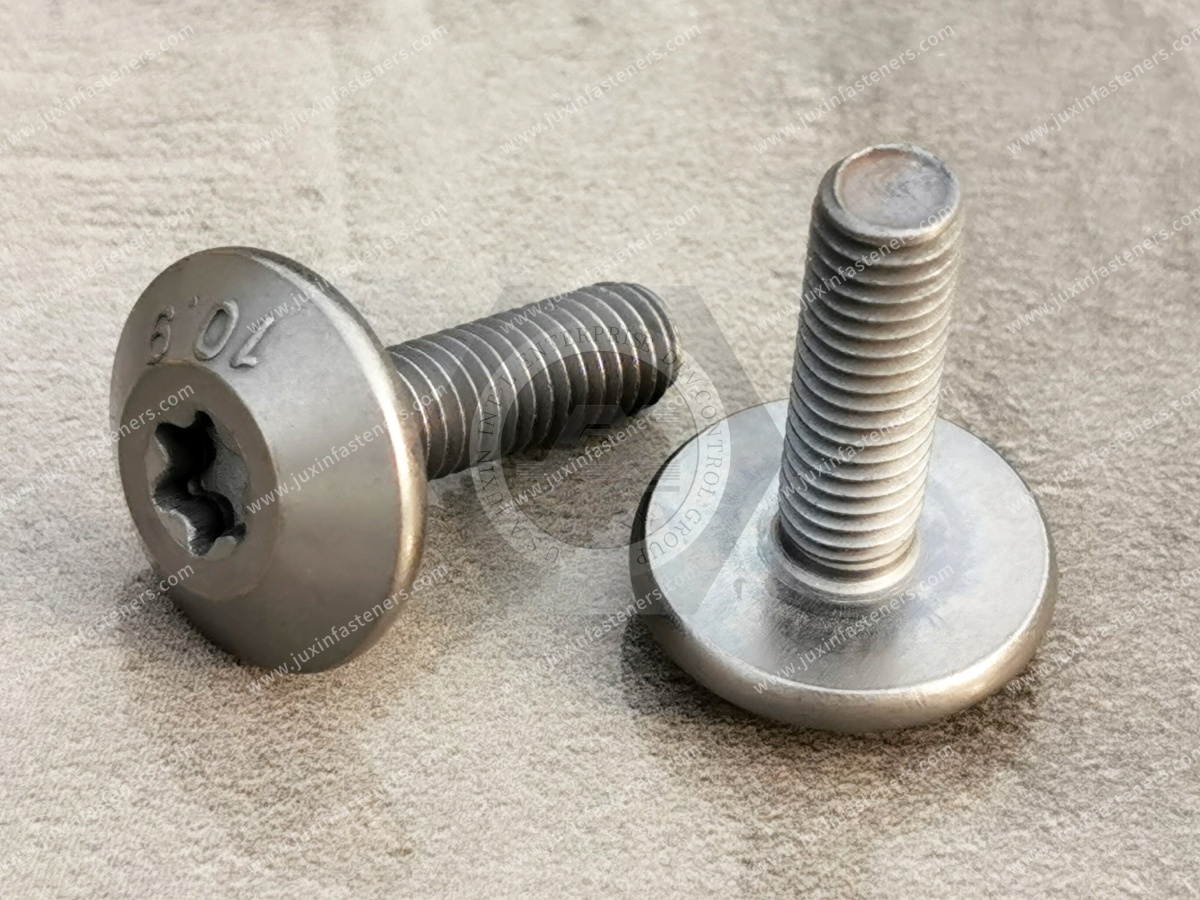
JUXIN FASTENERS can review drawing-based specialty-material fastener inquiries, subject to manufacturing feasibility and project requirements.
Nickel Alloys and Other Specialty Materials
Nickel alloys may be used in specialized corrosive or elevated-temperature environments.
However, a general hex head bolt supplier should not be assumed to offer every specialty alloy or regulated application grade.
Where a customer requires a nickel-alloy fastener, the exact material specification, dimensions, testing and documentation requirements must be reviewed during quotation.
Material Selection Matrix for Industrial Hex Head Bolts
| Application requirement | Potential material approach | Critical verification |
|---|---|---|
| General machinery | Suitable carbon steel | Property class and joint loads |
| Higher-strength equipment | Qualified carbon or alloy steel | Heat treatment and mechanical properties |
| Outdoor electrical cabinet | Coated steel or suitable stainless steel | Corrosion exposure and coating |
| Chloride-containing environment | Suitable corrosion-resistant alloy | Actual corrosion conditions |
| Lightweight equipment | Selected aluminum or titanium alloy | Strength, stiffness and cost |
| Elevated-temperature equipment | Application-qualified material | Temperature-dependent properties |
| Repeated maintenance | Suitable bolt and mating threads | Wear, galling and service procedure |
| Mixed-metal assembly | Compatible material/coating system | Galvanic corrosion |
The table is a preliminary selection framework, not a universal material approval.
Hex Head Bolt Coatings: Corrosion Protection and Assembly Performance
A surface coating can influence both corrosion resistance and fastening performance.
For OEM applications, coating selection should consider the complete assembly rather than appearance alone.
Zinc Plating
Zinc plating is commonly used for certain industrial steel fasteners.
Performance depends on coating thickness, passivation, sealing and service conditions.
Zinc-Nickel Plating
Zinc-nickel coatings may be selected where a specified corrosion protection system is required.
Actual performance depends on the coating specification and process.
Zinc-Flake Coatings
Zinc-flake coatings are used in many industrial and automotive applications.
They may be considered for certain high-strength fasteners where the specified process helps manage hydrogen-related risks.
However, a zinc-flake coating is not automatically suitable for every bolt or environment.
Black Oxide
Black oxide may be used where a dark appearance or specified surface condition is required.
It should not be assumed to provide the same corrosion protection as a properly specified zinc-based coating system.
Phosphate Coatings
Phosphate-based treatments may be used for selected applications and assembly conditions.
Their performance depends on the complete coating and lubrication system.
Hot-Dip Galvanizing
Hot-dip galvanizing may be used for certain outdoor fastener systems.
Coating thickness and mating-thread compatibility require particular attention.
Coating Selection Matrix
| Coating system | Typical selection reason | Main engineering concern |
|---|---|---|
| Zinc plating | General corrosion protection | Exposure and hydrogen embrittlement |
| Zinc-nickel | Specified corrosion performance | Coating control and thread fit |
| Zinc-flake | Industrial corrosion protection | Friction and application specification |
| Black oxide | Appearance or specified surface finish | Limited corrosion protection without suitable supplementary treatment |
| Phosphate | Surface and lubrication requirements | Complete process specification |
| Hot-dip galvanizing | Certain outdoor applications | Thread allowances and mating nut compatibility |
Relevant Coating Standards
ISO 4042 may apply to electroplated fasteners within its scope.
ISO 10683 may apply to non-electrolytically applied zinc-flake coatings within its scope.
The applicable coating standard should be specified according to the actual process.
Coating Thickness and Thread Fit
Coating thickness can affect the effective thread dimensions.
A coated bolt must remain compatible with the specified mating nut or tapped hole.
A nominally correct bolt diameter does not guarantee acceptable thread fit after coating.
Why Coatings Affect Tightening Torque
A significant portion of applied tightening torque is consumed by friction.
Changes in coating, lubrication or surface condition can alter the relationship between tightening torque and clamp load.
For production managers, this creates an important process-control issue.
A bolt substitution involving a different coating may require tightening-process validation even when the dimensions and property class remain unchanged.
Hydrogen Embrittlement in High-Strength Steel Bolts
Hydrogen embrittlement is a potential concern for certain high-strength steel fasteners.
Hydrogen introduced during manufacturing or surface-treatment processes may contribute to delayed brittle failure under unfavorable conditions.
Risk depends on factors including:
Material strength and hardness
Processing history
Hydrogen exposure
Applied stress
Service environment
A coating change should therefore be evaluated as a technical modification, not merely a cosmetic or purchasing decision.
Appropriate process controls and acceptance requirements should be defined for the specified fastener.
Why Salt-Spray Hours Alone Do Not Define Service Life
Salt-spray testing can be useful for comparing specified coating systems under controlled test conditions.
However, a particular laboratory test duration does not directly establish years of outdoor service life.
Real-world corrosion depends on moisture, salts, temperature, chemicals, joint geometry and maintenance.
For OEM qualification, the coating requirement should be linked to the actual application and customer test specification.
Hex Bolt Materials in Automotive and EV Applications
Automotive assemblies may require high-strength fasteners with controlled mechanical properties and surface finishes.
Applications can include:
Engine and transmission equipment
Chassis-related brackets
Suspension-related assemblies
Automotive electronic housings
EV battery equipment
Power electronics enclosures
For critical automotive joints, the fastener must be evaluated against the approved design.
Important Engineering Considerations
Preload requirements
Fatigue loading
Vibration
Joint stiffness
Coating friction
Corrosion exposure
Assembly consistency
Material traceability where required
A property class 10.9 bolt is not automatically suitable for every automotive connection.
Hex Bolts for Heavy Equipment and Mining Machinery
Heavy machinery may experience shock loading, vibration, contamination and frequent maintenance.
Applications include:
Excavators
Crushers
Loaders
Conveyors
Hydraulic equipment
Industrial gearboxes
Material and strength selection should account for both static and dynamic loading.
Why Higher Strength Alone Is Insufficient
A bolt can fail because of joint separation, bending, thread stripping or fatigue even when its nominal tensile strength appears adequate.
The complete joint should be evaluated.
Electrical Equipment and Power Distribution
Hex bolts are used in equipment frames, mounting structures, electrical enclosures and other mechanical assemblies.
Relevant applications include:
Control cabinets
Power distribution equipment
Inverter enclosures
UPS equipment
Industrial electrical machinery
Energy storage equipment
Material and coating selection may need to consider humidity, temperature, mixed-metal contact and maintenance access.
For current-carrying electrical joints, electrical performance and applicable assembly requirements must be evaluated separately.
Renewable Energy and Outdoor Equipment
Potential applications include solar equipment, wind-related machinery and industrial energy infrastructure.
Outdoor exposure may require additional corrosion protection.
However, structural connections in wind towers, buildings or other safety-critical structures require the specified structural bolting system and project qualification.
A general-purpose high-strength hex bolt should not automatically be substituted.
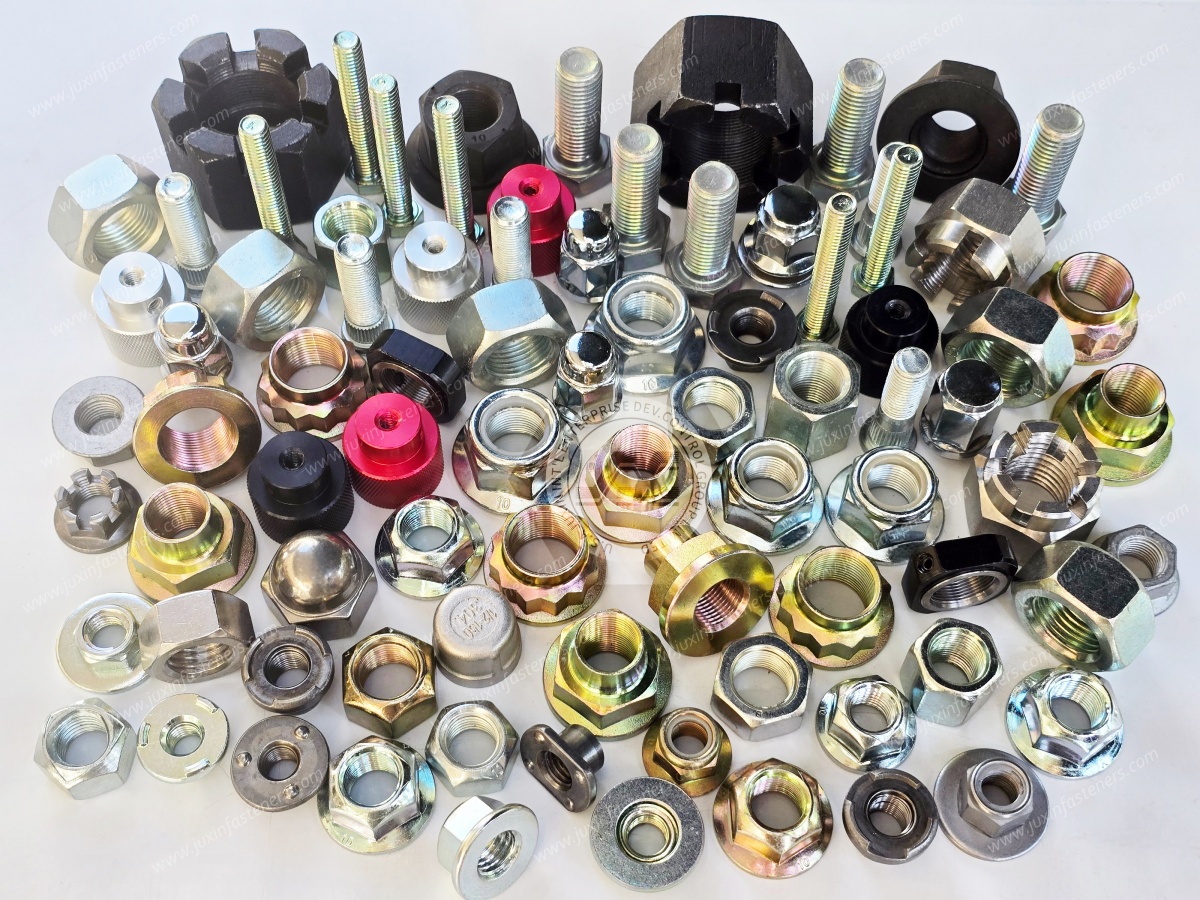
Marine and Chemical Equipment
Corrosion-resistant materials may be considered for suitable marine or chemical equipment applications.
However, material selection must reflect the actual chemicals, chloride exposure, temperature and joint conditions.
Stainless steel, titanium and nickel alloys should not be described as universally corrosion-proof.
Oil and Gas Equipment
Some oil and gas assemblies require specialized bolting materials and additional testing or traceability.
Pressure-containing and high-temperature service may require dedicated ASTM specifications and project approval.
Ordinary industrial hex head bolts should not automatically be represented as suitable for pressure-rated flange connections.
Aerospace and Medical Equipment
Specialty-material bolts may be used in aerospace-related and medical equipment applications.
However, ordinary industrial fasteners should not be represented as approved for aircraft primary structures, implants or other regulated critical applications without the required qualification.
Drawing-based inquiries for suitable noncritical equipment components can be reviewed against the customer's specifications.
Industrial Machinery and OEM Equipment
Industrial machinery uses hex bolts in a wide range of assemblies, including:
CNC machinery
Injection molding equipment
Packaging machinery
Industrial robots
Processing equipment
HVAC machinery
Automated production systems
For these applications, material selection should consider assembly access, service requirements and production consistency as well as mechanical strength.
Common Material-Related Hex Bolt Failures
Tensile Overload
The bolt may fail when the applied tensile load exceeds its capacity.
Potential causes include incorrect property class, excessive preload or unexpected service loading.
Thread Stripping
Internal or external threads may fail before the bolt reaches its nominal tensile capacity.
Potential causes include insufficient engagement, weak mating material or incorrect thread compatibility.
Fatigue Cracking
Repeated loading can produce fatigue cracks, often near stress concentrations.
Material strength alone does not determine fatigue life.
Joint stiffness, preload, geometry and loading are important.
Hydrogen Embrittlement
Certain high-strength fasteners may experience delayed brittle failure under unfavorable material, processing and stress conditions.
Corrosion-Assisted Failure
Corrosion can reduce effective section size or contribute to cracking under certain conditions.
Galling
Certain threaded material combinations, especially some stainless steel assemblies, may experience adhesive wear or seizure.
Preload Loss
Preload may decrease because of joint settlement, relaxation, thermal effects or other mechanisms.
Changing the bolt material without evaluating the complete joint may not resolve the problem.
Engineering Failure Review
A failed bolt should be evaluated together with:
The mating component
Installation history
Applied loads
Thread condition
Coating and lubrication
Operating environment
Failure location
Replacing a failed bolt with a higher property class without identifying the failure mechanism can create additional risks.
Production Engineering: From Material Specification to Repeatable Assembly
For manufacturing engineers and production managers, a suitable bolt must work consistently on the production line.
Incoming Material and Fastener Verification
Depending on the project, relevant checks may include:
Material specification
Property class
Dimensional conformity
Thread condition
Surface finish
Coating requirements
Packaging and identification
Tightening Process Control
A coating or lubrication change may affect the torque-preload relationship.
Assembly procedures should be validated for the actual fastener and joint.
Automated Assembly
High-volume production may require consistent:
Head dimensions
Thread quality
Bolt length
Surface condition
Fastener feeding characteristics
Packaging configuration
Rework and Maintenance
A material substitution may affect disassembly, galling, corrosion and replacement procedures.
Total Installed Cost
The lowest bolt purchase price may not produce the lowest total cost.
The complete cost can include:
Fastener price
Installation labor
Tightening control
Inspection
Scrap and rework
Maintenance
Production downtime
OEM Procurement: How to Qualify a Hex Head Bolt Supplier
Supplier development should begin with a complete technical specification.
A request such as “M10 × 40, Grade 10.9, zinc plated” may still be incomplete for a critical OEM assembly.
Additional requirements may include the dimensional standard, thread pitch, coating specification, friction requirements and inspection documentation.
Supplier Qualification Checklist
| Requirement | Why it matters |
|---|---|
| Approved drawing | Controls product geometry |
| Dimensional standard | Defines relevant dimensions |
| Thread designation | Prevents mating-thread mismatch |
| Material specification | Controls approved material |
| Property class | Defines finished mechanical requirements |
| Heat-treatment requirements | Supports specified performance |
| Coating specification | Controls surface condition |
| Assembly friction requirement | Supports tightening consistency |
| Inspection plan | Defines verification |
| Documentation | Supports customer approval |
| MOQ and lead time | Supports purchasing planning |
| Annual volume | Supports long-term supply planning |
Alternative Material Approval
An alternative steel grade should not be approved solely because it can achieve a similar tensile strength.
The review should consider:
Chemical composition
Hardenability
Bolt dimensions
Heat-treatment response
Toughness
Coating compatibility
Applicable customer restrictions
Required testing
Alternative Coating Approval
A coating substitution may affect corrosion resistance, thread fit and tightening friction.
It should be reviewed as an engineering change where the application requires approval.
Custom Hex Head Bolts for OEM Manufacturing
JUXIN FASTENERS supports inquiries for standard industrial hex head bolts and drawing-based custom fastening components.
Relevant product requirements may include:
Metric hex head bolts
High-strength steel bolts
Special lengths
Full or partial threading
Custom shank dimensions
Nonstandard head geometry
Special thread configurations
Selected stainless steel or specialty materials
Drawing-defined coatings and tolerances
Manufacturing feasibility, available materials, coating options, sample arrangements, MOQ and lead time are confirmed during quotation.
International Thread Compatibility
Metric threads, UNC, UNF, BSW and BSF belong to different thread systems.
They are not directly interchangeable.
Where an OEM requires inch-series fasteners, the exact thread designation and applicable standard must be specified.
A dimensional conversion from millimeters to inches is only a reference and does not establish thread compatibility.
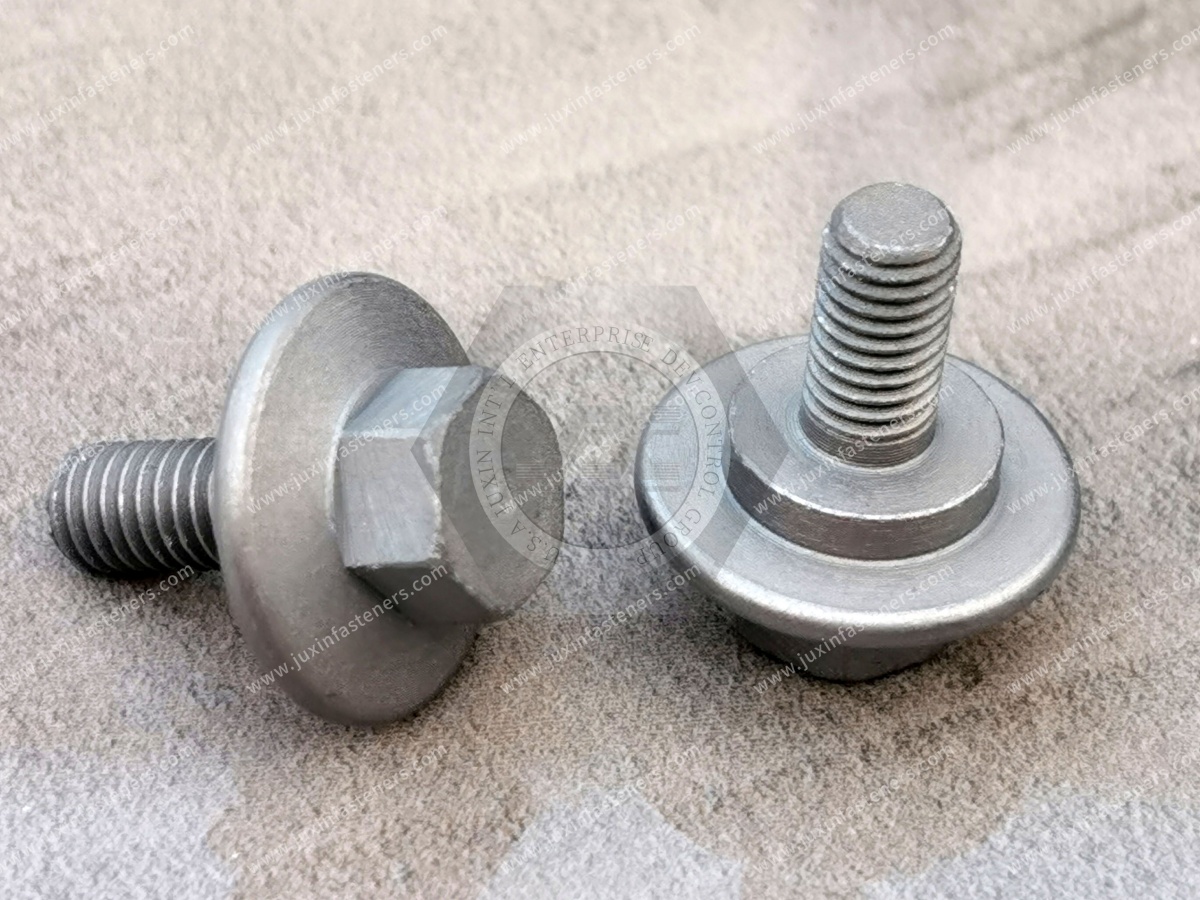
Frequently Asked Questions
What is the best material for hex head bolts?
There is no universally best material. Selection depends on strength, corrosion, temperature, joint design and cost requirements.
What is the difference between a steel grade and a bolt property class?
A steel grade identifies a material specification. A property class identifies specified mechanical requirements for the finished fastener.
Are property class 10.9 bolts always made from the same alloy steel?
No. Different suitable materials and processes may be used, subject to the applicable standard and customer requirements.
Is property class 12.9 always better than 10.9?
No. Higher strength does not automatically improve fatigue, corrosion resistance or overall joint reliability.
Can stainless steel A2-70 replace a class 10.9 steel bolt?
Not automatically. The mechanical properties and other application characteristics differ.
Is SAE Grade 8 the same as metric property class 8.8?
No. They are different specification systems and must not be treated as equivalent.
Can a bolt's material grade guarantee its tensile strength?
No. Finished-fastener properties depend on material, manufacturing and processing, as well as the applicable mechanical requirements.
Why does coating affect bolt tightening?
Coating and lubrication can change friction, which affects the relationship between applied torque and clamp load.
Does zinc-flake coating eliminate hydrogen embrittlement risk?
No coating should be assumed to eliminate every hydrogen-related risk. Material strength and the complete manufacturing process must be considered.
Can JUXIN FASTENERS review custom hex head bolt drawings?
Yes. Drawing-based inquiries can be reviewed for material, dimensions, property class, surface treatment and manufacturing feasibility.
What information is required for a hex bolt RFQ?
Provide the drawing or applicable standard, size, thread, material, property class, coating, quantity and delivery requirements.
JUXIN FASTENERS: Hex Head Bolt Materials and OEM Supply Solutions
JUXIN FASTENERS supplies industrial threaded fasteners and drawing-based custom fastening components for international OEM customers.
Relevant product categories include:
Carbon steel hex head bolts
Alloy steel high-strength bolts
Property class 8.8 fasteners
Property class 10.9 fasteners
Property class 12.9 fasteners
Custom hex head bolts
CNC-machined threaded components
Selected stainless steel and specialty-material fasteners
Compatible industrial nuts and locking fasteners
Our team can review customer drawings and purchasing requirements to evaluate suitable material options, manufacturing feasibility and commercial quotation.
Specific material grades, coatings, testing, certifications and production documentation are subject to confirmation for each project.
Request a Hex Head Bolt Material Selection and OEM RFQ
Are you selecting a material for a new industrial assembly, evaluating a class 10.9 or 12.9 fastener, reviewing a coating change or qualifying an alternative supplier?
JUXIN FASTENERS welcomes inquiries from design engineers, mechanical engineers, structural engineers, manufacturing engineers,
production managers, procurement specialists, purchasing managers and supplier development teams.
For an efficient technical and commercial review, please provide:
2D drawing or applicable standard + thread designation + diameter + length + material specification + property class + heat-treatment requirements
+ coating specification + assembly conditions + inspection requirements + sample quantity + annual purchasing volume + target delivery schedule
We can review the requirements for suitable product options, sample arrangements, MOQ, lead time and quotation.
Company: JUXIN FASTENERS
Website: https://www.juxinfasteners.com/
Email: info@juxinfasteners.com
Send your hex head bolt drawings and RFQ to JUXIN FASTENERS for material evaluation and quotation.
Contact Us
Tel.:
+86 020 8621 0320
+86 020 3121 6067
E-mail:
Technical Support:
Navigation
SEND INQUIREY



