
Call Us
+86 136 6007 9809
Call Us
+86 136 6007 9809

Jun. 22, 2024
Drilled-Head Hex Bolts for Safety Wire: Locking Methods, Design and OEM Applications
Drilled-head hex bolts are specialized threaded fasteners incorporating one or more holes through the bolt head to accommodate safety wire, also known as lock wire.
These fasteners are used in mechanical assemblies where a secondary retention method is required to help restrict unintended bolt rotation.
They are particularly relevant to equipment exposed to vibration, repeated maintenance, dynamic loading or operating conditions where a visible mechanical locking arrangement is specified.
However, a drilled-head bolt does not automatically prevent loosening.
Its effectiveness depends on the complete fastening system, including the initial joint preload, bolt geometry, wire material, routing direction, installation technique and inspection procedure.
For OEM manufacturers, specifying a drilled-head hex bolt also introduces additional manufacturing considerations.
The location and diameter of the drilled hole must be compatible with the selected safety wire and must not compromise the fastener's required mechanical performance.
JUXIN FASTENERS supplies industrial threaded fasteners and drawing-based custom machined components, including inquiries for hex head bolts with specialized hole configurations.
This guide explains how drilled-head hex bolts work, how safety wire should function, and what engineers,
production managers and procurement teams should evaluate before approving a custom safety-wire fastening solution.
What Is a Drilled-Head Hex Bolt?
A drilled-head hex bolt is an externally threaded fastener with a hexagonal head containing a drilled hole intended for a specified locking arrangement.
The hole may pass through the head in a direction defined by the product drawing.
Some designs use more than one hole to accommodate different installation orientations.
Common commercial terms include:
Drilled-head hex bolt
Hex head bolt with hole
Safety wire bolt
Lock wire bolt
Drilled hex cap screw
Cross-drilled hex head bolt
Hex head screw with safety wire hole
The exact terminology may vary between industrial equipment, motorsport and maintenance applications.
For procurement, the drawing should identify whether the hole is located in the head, shank or threaded end.
These configurations are not interchangeable.
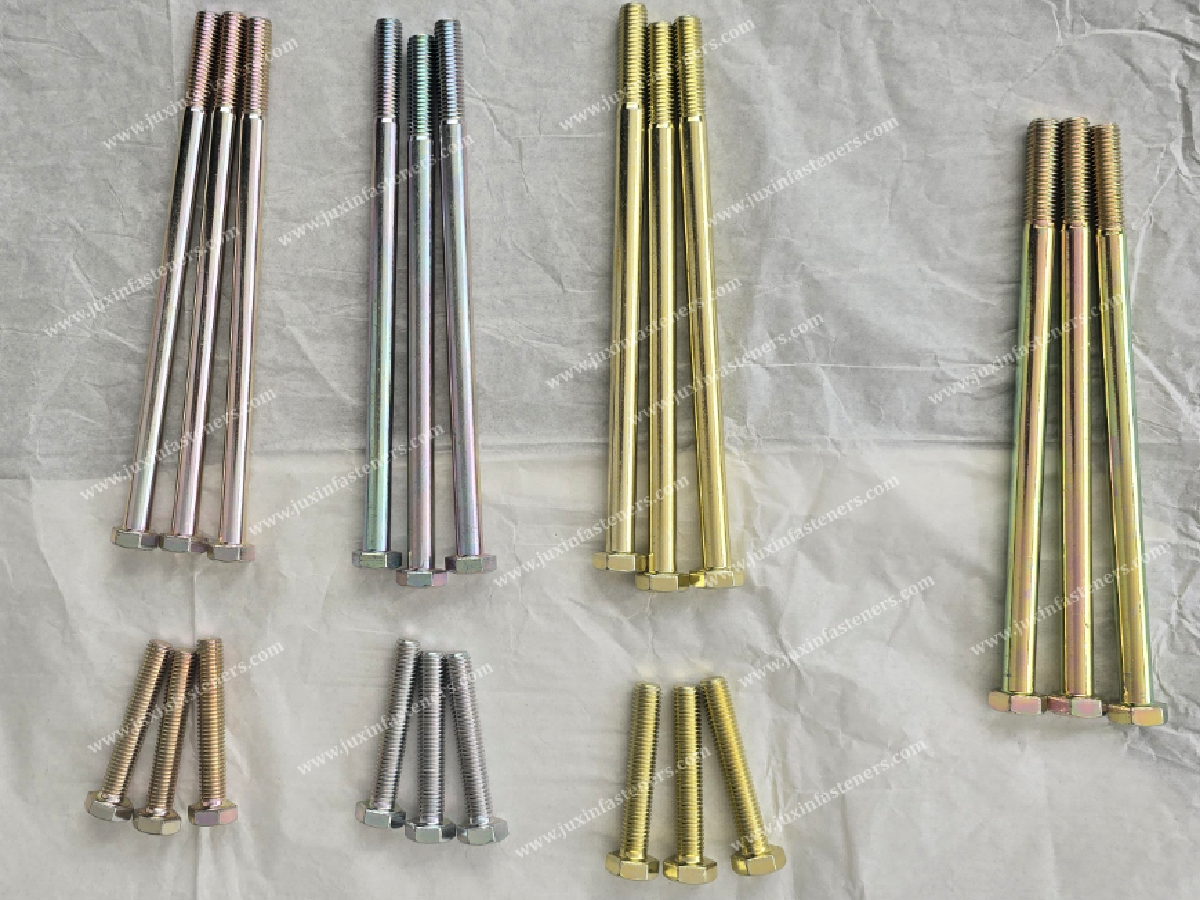
Drilled-Head Bolts vs. Drilled-Shank Bolts
One of the most important distinctions is the location and purpose of the hole.
Drilled-Head Hex Bolts
The hole is located in the bolt head.
Its intended purpose is typically to accommodate safety wire or another approved head-retention arrangement.
Drilled-Shank Bolts
A drilled-shank bolt has a hole through a portion of the shank, frequently near the threaded end.
Such designs may be used with a cotter pin and an appropriate castellated or slotted nut.
Why the Difference Matters
A safety-wire hole in a bolt head does not automatically support a cotter-pin installation.
Likewise, a drilled shank does not provide the same wire-routing arrangement as a drilled head.
The locking method must match the fastener geometry and the approved joint design.
How Does Safety Wire Work?
Safety wire is a mechanical retention method used to restrict unintended rotation of a fastener.
In a typical arrangement, wire passes through the drilled head of one fastener and is routed to an adjacent fastener or another approved anchoring point.
The wire is installed so that any tendency of the secured fastener to rotate in the loosening direction is opposed by the wire arrangement.
The Basic Operating Principle
The effectiveness of safety wire depends on three essential conditions.
Correct Direction
The wire must be routed so that it resists rotation in the loosening direction.
Incorrect routing may fail to provide the intended retention.
Appropriate Tension
The wire should be installed with the tension required by the applicable procedure.
Excessively loose wire may permit unnecessary movement.
Excessive tension may damage the wire or create unfavorable loading.
Secure Anchorage
The wire must connect to an approved anchoring point or another fastener in a configuration that provides the intended restraint.
A drilled hole alone does not establish a functional locking system.
Does Safety Wire Maintain Bolt Preload?
Not necessarily.
Safety wire is primarily a rotational retention method.
It is not a substitute for achieving the correct initial preload.
A joint may lose clamping force because of:
Joint settlement
Embedment
Thermal relaxation
Material creep
Joint member deformation
Other load-related mechanisms
These conditions may occur even when the safety wire remains intact.
For this reason, safety wire should be considered part of the complete fastening design rather than a universal solution to preload loss.
Can Safety Wire Completely Prevent Bolt Loosening?
No mechanical locking method should be described as universally preventing every form of loosening or joint failure.
Safety wire can help restrict unintended fastener rotation when correctly specified and installed.
However, it cannot compensate for inadequate joint design, incorrect bolt strength, insufficient thread engagement or unsuitable preload.
Safety Wire Installation: Engineering Principles
Safety-wire installation must follow the approved procedure for the equipment and fastener configuration.
The following principles are useful when reviewing a design.
Confirm the Required Tightening Condition
The bolt must first be installed and tightened according to the approved assembly procedure.
Safety wire should not be used to compensate for insufficient tightening.
Verify the Wire Routing
The route should resist rotation in the loosening direction.
Use the Specified Wire
Wire material, diameter and construction must match the application requirements.
Avoid Damaging the Wire
Sharp edges, burrs and unsuitable bending conditions may damage the wire.
Inspect the Completed Installation
The installation should be checked for routing, anchorage, wire condition and compliance with the specified procedure.
For safety-critical equipment, only qualified personnel should perform the installation under the applicable approved instructions.
Single-Wire and Double-Twist Arrangements
Different applications may specify different safety-wire configurations.
A single-wire arrangement and a double-twist arrangement are not automatically interchangeable.
Selection depends on:
Fastener arrangement
Anchorage geometry
Applicable maintenance specification
Wire material and diameter
Installation access
Inspection requirements
The approved installation standard or equipment procedure should control the final method.
Safety Wire vs. Threadlocker vs. Prevailing-Torque Nuts
These are different approaches to threaded-joint retention.
| Retention method | Main function | Important limitation |
|---|---|---|
| Safety wire | Mechanically restricts fastener rotation | Does not guarantee retained preload |
| Threadlocking adhesive | Provides resistance to rotation through a cured adhesive system | Performance depends on materials, preparation, temperature and service conditions |
| Prevailing-torque nut | Provides resistance to rotation through a locking feature | Requires compatible design and application conditions |
| Cotter pin with castellated nut | Provides mechanical rotational restraint | Requires suitable drilled-shank and nut geometry |
| Correct joint preload | Maintains clamping force for the designed joint | Must be achieved and maintained under service conditions |
In some assemblies, more than one retention measure may be specified.
However, adding multiple locking methods without engineering review can introduce unnecessary complexity or compatibility problems.
Drilled-Head Hole Design: What Engineers Must Specify
The drilled hole is a functional feature.
Its dimensions and position should be controlled by an approved drawing.
Hole Diameter
The hole must accommodate the specified safety wire and installation procedure.
A hole that is too small may prevent installation or damage the wire.
A hole that is unnecessarily large may reduce the remaining material around the drilled feature.
Hole Location
The position must provide suitable access and sufficient remaining material.
The drawing should define the hole center relative to appropriate head datums.
Hole Orientation
The orientation may affect installation access and wire routing.
For multi-hole designs, the relationship between holes should be clearly specified.
Edge Distance
The distance between the drilled hole and adjacent head surfaces should be reviewed.
Insufficient remaining material may create unfavorable stress concentrations or local weakness.
Burr Control
Drilling may produce burrs at the hole entrance and exit.
Burrs can damage safety wire during installation or service.
The required deburring and edge condition should therefore be defined.
Surface Integrity
The drilling operation should not leave unacceptable cracks, severe burrs or other defects.
Hole Geometry and Fatigue
A drilled hole introduces a geometric discontinuity.
The effect on fatigue and mechanical performance depends on its position, size, surface quality and the actual loading.
Engineers should not assume that drilling a standard hex bolt produces an automatically qualified safety-wire fastener.
Design Review Table
| Feature | Engineering concern | Drawing requirement |
|---|---|---|
| Hole diameter | Wire compatibility | Specified diameter and tolerance |
| Hole location | Remaining head material | Datum-based location |
| Hole orientation | Installation access | Defined orientation |
| Number of holes | Routing flexibility | Exact hole configuration |
| Edge condition | Wire damage | Deburring requirement |
| Head dimensions | Tool compatibility | Applicable dimensional standard |
| Material | Mechanical performance | Material and property class |
| Surface treatment | Corrosion and friction | Coating specification |
| Inspection | Production consistency | Acceptance criteria |
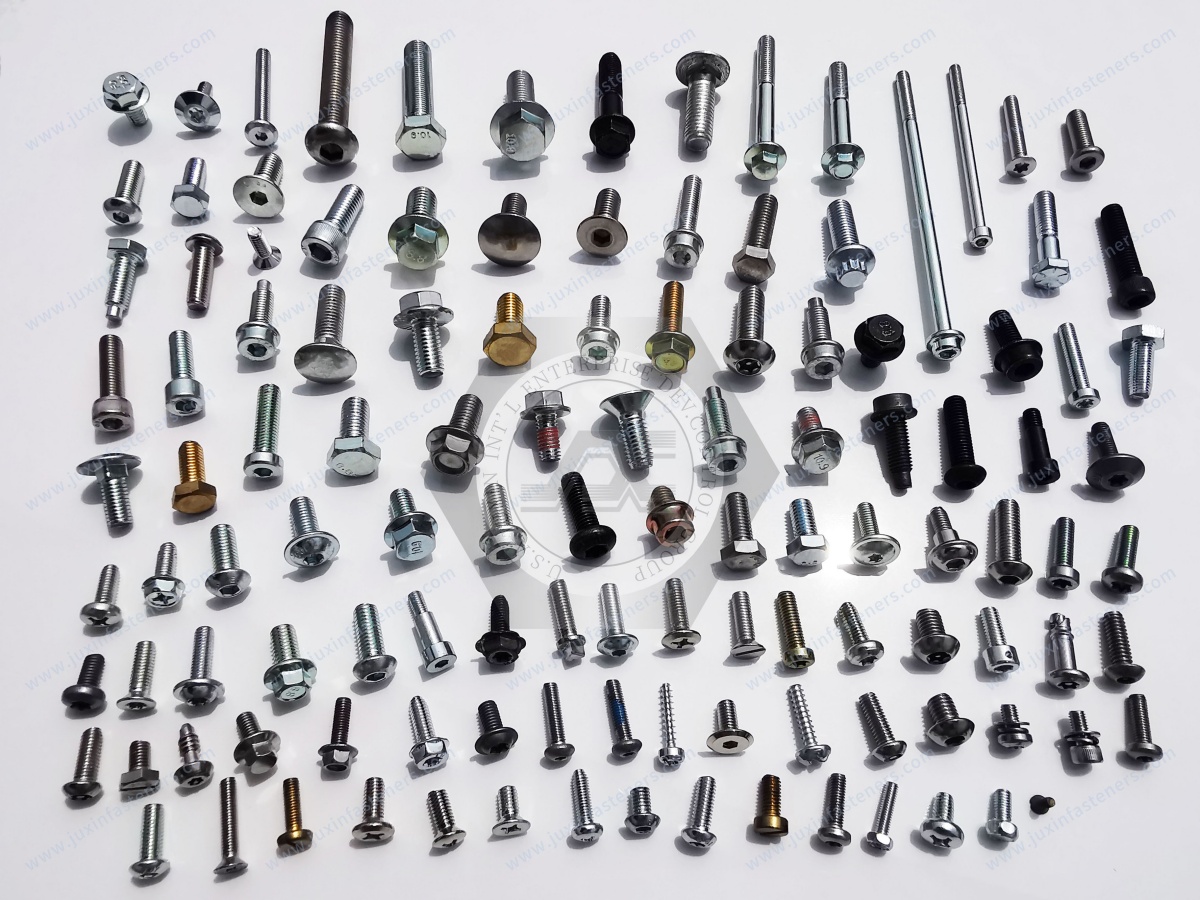
Single-Hole vs. Multiple-Hole Drilled Hex Heads
A single-hole design may be sufficient when the bolt orientation and wire route are controlled.
A multiple-hole design may provide additional installation options.
However, more holes are not automatically better.
Each additional hole introduces machining requirements and may affect the available material in the head.
When a Single Hole May Be Suitable
Defined assembly orientation
Accessible wire-routing path
Approved anchoring arrangement
Adequate installation clearance
When Multiple Holes May Be Considered
Different permitted final bolt orientations
Restricted access
Multiple approved wire-routing options
Drawing-specific installation requirements
The final configuration should be approved based on the complete assembly.
Can a Standard Hex Bolt Be Drilled After Manufacturing?
It may be technically possible to machine a hole in a finished hex bolt.
However, this should not be done without considering the approved fastener specification.
Important factors include:
Bolt material and hardness
Head geometry
Drilling process
Hole position
Burr removal
Surface coating damage
Inspection requirements
Mechanical qualification
For controlled OEM production, a drawing-defined drilled-head fastener is preferable to an undocumented modification.
Does Drilling Affect Bolt Strength?
Drilling removes material and introduces a local geometric discontinuity.
The effect depends on the hole configuration and the bolt's loading.
A drilled head does not automatically reduce the bolt's specified tensile capacity below its required value,
but conformity cannot be assumed without reviewing the design and applicable requirements.
Where the application is critical, the approved engineering specification should determine whether additional validation is necessary.
Drilled-Head Hex Bolt Materials
Material selection must satisfy the underlying joint requirements as well as the drilled-head design.
Carbon Steel
Carbon steel may be suitable for general industrial applications where the specified mechanical properties can be achieved.
Alloy Steel
Alloy steel may be considered for higher-strength applications.
The material and heat treatment should be selected according to the required property class and bolt geometry.
Stainless Steel
Stainless steel may be selected where corrosion resistance is important.
The actual stainless grade and mechanical property class must be specified.
Specialty Materials
Selected titanium, aluminum or other specialty materials may be considered for drawing-based projects.
Availability and manufacturing feasibility must be confirmed.
Important Material Limitation
A drilled-head design does not automatically make a fastener suitable for aerospace, medical, pressure equipment or other regulated applications.
The applicable material, manufacturing and qualification requirements remain essential.
Metric and Inch Thread Specifications
Drilled-head hex bolts may be specified with metric or inch-series threads.
Metric Threads
Metric thread requirements may reference applicable ISO thread standards, including ISO 261 and ISO 965 where relevant.
Unified Inch Threads
UNC and UNF threads may be specified according to ASME B1.1.
Other Thread Systems
BSW and BSF may appear in certain legacy equipment applications.
These thread systems must not be treated as interchangeable.
Thread Compatibility Rule
Metric, UNC, UNF, BSW and BSF threads have different specifications.
Similar nominal diameters do not establish interchangeability.
The drawing should identify the exact thread designation and tolerance requirements.
Relevant International Standards
A drilled-head hex bolt may incorporate a base fastener geometry associated with a recognized dimensional standard.
Examples include:
ISO 4014 for specified partially threaded metric hexagon head bolts
ISO 4017 for specified fully threaded metric hexagon head screws
ASME B18.2.1 for applicable inch-series hex bolts and screws
ISO 898-1 for applicable carbon steel and alloy steel fastener mechanical properties
ISO 3506-1 for applicable stainless steel fastener mechanical properties
SAE J429 for specified inch-series mechanical fastener requirements
These standards do not automatically define every drilled-head hole configuration or safety-wire installation procedure.
The hole geometry and retention requirements should be identified separately in the drawing or applicable approved specification.
Safety Wire Installation Standards
In aerospace-related maintenance, FAA Advisory Circular AC 43.13-1B is a familiar reference containing acceptable methods,
techniques and practices under its stated conditions of applicability.
However, it is not a universal substitute for aircraft-specific approved maintenance data or a product manufacturing standard.
Industrial and motorsport applications may use other approved installation specifications.
JUXIN FASTENERS does not claim aerospace approval or qualification merely because a bolt includes a safety-wire hole.
Surface Coatings and Corrosion Protection
The appropriate finish depends on the material, environment and mechanical requirements.
Possible coating specifications may include:
Zinc plating
Zinc-nickel plating
Zinc-flake coating
Black oxide
Phosphate-based treatments
Plain or uncoated finish
Other finishes may be reviewed for custom applications.
Corrosion Protection of Drilled Holes
A drilled hole may expose uncoated material if machining occurs after the original surface treatment.
The manufacturing sequence should therefore be considered.
Depending on the approved process, coating may be applied after machining or the drilled area may require another specified protection method.
High-Strength Steel and Hydrogen Embrittlement
High-strength steel fasteners may be susceptible to hydrogen embrittlement under certain material, processing and loading conditions.
Surface treatment should be selected with this risk in mind.
Safety Wire Material Compatibility
The wire material should be compatible with the bolt, adjacent components and operating environment.
Galvanic corrosion may be relevant where dissimilar metals are exposed to moisture or other electrolytes.
Coating and Tightening Friction
The coating may influence the torque-preload relationship.
A coating substitution should therefore be reviewed where the joint requires controlled tightening.
Industrial Applications of Drilled-Head Hex Bolts
Motorsport and Performance Equipment
Drilled-head bolts may be specified in selected motorsport equipment where an approved safety-wire retention arrangement is required.
Potential applications include:
Serviceable mechanical assemblies
Equipment covers
Certain mounting connections
Auxiliary mechanical components
Brake, steering, suspension and other safety-critical applications require design-specific approval.
The presence of a safety-wire hole does not establish suitability for these systems.
Industrial Machinery
Applications may include:
CNC equipment
Packaging machinery
Processing equipment
Automated production systems
Industrial gearboxes
Maintenance-intensive assemblies
Safety-wire retention may be considered where the equipment design requires a visible mechanical locking arrangement.
Heavy Equipment and Mining Machinery
Equipment exposed to vibration and shock loading may require carefully engineered fastener retention.
Examples include selected assemblies on:
Excavators
Crushers
Conveyors
Hydraulic machinery
Industrial gearboxes
However, safety wire should not be assumed to reduce maintenance intervals without application-specific evidence.
Marine Equipment
Marine machinery may combine vibration, moisture and corrosive exposure.
Where drilled-head bolts are specified, material and wire compatibility should be evaluated.
Pumps and Compressors
Selected serviceable assemblies may use drilled-head bolts where mechanical retention is required.
Pressure-containing components and critical rotating equipment require project-specific qualification.
Railway Maintenance Equipment
Drilled-head bolts may be considered for suitable maintenance equipment and auxiliary machinery.
Use in safety-critical rolling-stock systems requires the applicable approval and specifications.
Aerospace-Related Equipment
Safety wiring is a recognized retention technique in certain aerospace maintenance applications.
However, an ordinary industrial drilled-head bolt is not automatically suitable for aircraft engines, flight controls or landing gear.
These applications require the appropriate approved part specifications, traceability and qualification.
Construction Machinery
Selected assemblies in cranes, earthmoving equipment and other construction machinery may require mechanical fastener retention.
Structural or safety-critical connections must be evaluated under the applicable equipment requirements.
Production Engineering: Installing Drilled-Head Bolts Consistently
For production managers, safety-wire fastening introduces additional assembly operations.
The complete process may include:
Bolt identification
Thread and joint inspection
Tightening
Wire preparation
Wire routing
Wire installation
Final visual inspection
Documentation where required
Assembly Time
Safety wiring requires additional labor compared with installing an ordinary bolt without a secondary locking method.
The added process may be justified where the design requires positive mechanical retention.
However, production efficiency should be assessed using the actual assembly procedure.
Tool Access
The bolt head and wire route must remain accessible after tightening.
An otherwise suitable drilled-head bolt may be impractical if the equipment design prevents correct wire installation.
Inspection Access
The completed wire arrangement should be accessible for the specified inspection.
Rework
Where safety wire must be removed during maintenance, the applicable procedure should define replacement and reinstallation requirements.
Common Safety-Wire Installation Errors
Incorrect Wire Direction
Wire routing does not resist rotation in the loosening direction.
Insufficient Wire Tension
Excessive slack may permit unnecessary movement.
Excessive Wire Tension
Overtension may damage the wire or create an unsuitable installation condition.
Sharp Hole Edges
Burrs or sharp edges may damage the wire.
Unsuitable Anchorage
The wire is connected to an arrangement that does not provide the intended restraint.
Wrong Wire Specification
The wire diameter or material does not match the approved procedure.
Unverified Bolt Tightening
Safety wire is installed without confirming the required initial tightening condition.
Inadequate Inspection
The installation is not checked against the specified acceptance criteria.
Quality Control for Custom Drilled-Head Hex Bolts
A drawing-based inspection plan may include the following characteristics.
| Inspection characteristic | Purpose |
|---|---|
| Bolt head dimensions | Confirm tool and assembly compatibility |
| Thread dimensions | Verify mating-thread compatibility |
| Overall length | Confirm assembly geometry |
| Hole diameter | Confirm wire compatibility |
| Hole position | Confirm drawing conformity |
| Hole orientation | Confirm installation requirements |
| Burr condition | Reduce wire damage risk |
| Surface finish | Verify specified protection |
| Material specification | Confirm approved material |
| Mechanical properties | Confirm applicable strength requirements |
| Identification | Support specified lot control |
Not every project requires every test.
The inspection plan should reflect the actual drawing, application and purchasing requirements.
Why Hole Inspection Matters
For a standard hex bolt, inspection often emphasizes threads, head dimensions, length and mechanical properties.
For a drilled-head bolt, the hole becomes an additional functional characteristic.
A small positional error may interfere with wire installation even if the base bolt dimensions are correct.
Custom Drilled-Head Bolt Manufacturing
JUXIN FASTENERS supports drawing-based inquiries for specialized threaded fasteners.
Custom requirements may include:
Single drilled-head hole
Multiple drilled-head holes
Special hole diameter
Defined hole orientation
Custom bolt length
Full or partial threading
Special head geometry
Metric or specified inch threads
Material and property class requirements
Drawing-defined surface finishes
Custom packaging and identification
Manufacturing feasibility, process selection, tooling, MOQ and lead time depend on the drawing and order requirements.
OEM Supplier Qualification
Procurement and supplier development teams should evaluate more than the unit price.
A suitable supplier must understand the functional importance of the drilled-head feature.
Key Qualification Questions
Can the required hole position and tolerance be achieved?
Is the selected material suitable for the required mechanical properties?
Is the coating process compatible with the drilled geometry?
Can the required burr condition be controlled?
Are the specified inspection methods available?
Can samples be evaluated before production?
Are packaging and identification requirements defined?
Can the required quantities and delivery schedule be supported?
The answers should be confirmed for the specific project rather than assumed from general manufacturing claims.
Total Installed Cost
The cost of a drilled-head safety-wire connection includes more than the bolt purchase price.
It may include:
Drilling or specialized manufacturing
Additional inspection
Safety wire material
Installation labor
Assembly tooling
Maintenance procedures
Rework and replacement
A safety-wire solution should be selected because it satisfies an engineering requirement,
not simply because it appears more secure than a conventional bolt.
Frequently Asked Questions
What is a hex head bolt with a hole called?
Common terms include drilled-head hex bolt, safety wire bolt, lock wire bolt and drilled hex cap screw.
What is the purpose of the hole in a hex bolt head?
It provides an attachment point for a specified safety-wire or other approved retention arrangement.
Does safety wire increase bolt preload?
No. Safety wire is primarily intended to restrict rotation, not generate additional clamping force.
Can a bolt still lose preload when safety wire is installed?
Yes. Preload may decrease because of settlement, relaxation or other joint-related mechanisms even when the wire remains intact.
Is a drilled-head bolt the same as a drilled-shank bolt?
No. The hole location and intended locking arrangement are different.
Can a cotter pin be used through a drilled bolt head?
A cotter pin should only be used in an arrangement specifically designed and approved for that locking method.
Conventional cotter-pin retention commonly involves a drilled shank and compatible nut geometry.
Can standard hex bolts be modified by drilling?
Modification requires engineering review and an approved manufacturing and inspection process.
Are safety-wire bolts suitable for aerospace applications?
Only where the specific fastener and installation meet the applicable approved aerospace requirements.
Can drilled-head bolts use metric and UNC threads?
Yes, custom designs may be specified with either thread system, subject to manufacturing feasibility. Metric and UNC threads are not interchangeable.
What should be included in a drilled-head bolt drawing?
The drawing should identify bolt dimensions, thread, material, property class, hole diameter, hole location, edge condition, coating and inspection requirements.
Can JUXIN FASTENERS review custom drilled-head bolt drawings?
Yes. Drawing-based inquiries can be reviewed for dimensions, materials, hole configuration, manufacturing feasibility and quotation.
JUXIN FASTENERS: Drilled-Head Hex Bolts and Custom Safety-Wire Fasteners
JUXIN FASTENERS supplies industrial threaded fasteners and drawing-based custom fastening components for international OEM customers.
Relevant products include:
Drilled-head hex bolts
Hex head bolts with safety-wire holes
Custom hex head bolts
High-strength industrial bolts
CNC-machined threaded components
Compatible industrial nuts and locking fasteners
Specific materials, coatings, hole configurations, inspection requirements and production feasibility are reviewed according to customer drawings.
Request a Custom Drilled-Head Hex Bolt RFQ
Are you developing an industrial assembly requiring safety-wire retention, replacing an existing drilled-head bolt or qualifying an alternative OEM fastener supplier?
JUXIN FASTENERS welcomes inquiries from design engineers, mechanical engineers, manufacturing engineers, production managers,
maintenance equipment manufacturers, procurement specialists, purchasing managers and supplier development teams.
For an efficient technical review, please provide:
2D drawing + bolt standard + thread designation + diameter + length + material + property class + drilled-hole diameter + hole position and orientation
+ safety-wire specification + coating + inspection requirements + sample quantity + annual purchasing volume + target delivery date
Our team can review the drawing, discuss product options, confirm sample arrangements and provide MOQ, lead-time and quotation information.
Company: JUXIN FASTENERS
Website: https://www.juxinfasteners.com/
Email: info@juxinfasteners.com
Send your drilled-head hex bolt drawings and RFQ to JUXIN FASTENERS for technical evaluation and quotation.
Contact Us
Tel.:
+86 020 8621 0320
+86 020 3121 6067
E-mail:
Technical Support:
Navigation
SEND INQUIREY



