
Call Us
+86 136 6007 9809
Call Us
+86 136 6007 9809

Jun. 29, 2024
Socket Head Cap Screw Assembly Reliability: Failure Prevention and OEM Sourcing
Hexagon socket head cap screws are widely used in modern industrial equipment because their cylindrical heads and
internal hexagonal drives provide a practical fastening arrangement for compact mechanical assemblies.
Also known as socket head cap screws, hex socket cap screws or Allen head screws, these fasteners are commonly specified for CNC machinery,
mold and die equipment, industrial automation, robotics and precision mechanical systems.
However, reliable fastening performance depends on much more than the screw's head design.
A socket head cap screw may fail to achieve the required clamping force even when its nominal diameter and material appear correct.
Common causes include inadequate thread engagement, incorrect screw length, drive damage, friction variation, unsuitable counterbore geometry and assembly-process errors.
For design and mechanical engineers, these issues begin with joint geometry and fastener selection. For manufacturing engineers and production managers,
they become installation repeatability, tooling, quality control and rework challenges.
For procurement and supplier development teams, incomplete specifications can create unnecessary substitution risks and inconsistent batch acceptance.
JUXIN FASTENERS supplies industrial socket head cap screws and supports drawing-based OEM fastening inquiries for international manufacturers.
This guide focuses on practical assembly reliability, failure prevention and supplier qualification.
Why Socket Head Cap Screw Assembly Reliability Matters
A socket head cap screw is an externally threaded fastener with a cylindrical head and an internal hexagonal drive recess.
It is installed using a suitable hex key, hex bit or powered tool.
Compared with external hexagon head bolts, the arrangement can reduce the side clearance required around the fastener head.
This is useful in compact machinery, but the internal drive introduces specific engineering considerations.
Reliable assembly depends on several connected factors:
Internal socket dimensions and tool engagement
Head and counterbore geometry
Screw length and thread engagement
Material and mechanical properties
Tightening torque and achieved preload
Surface coating and friction
Operating vibration and cyclic loading
Production inspection and maintenance
A mismatch in any of these areas may affect the complete joint.
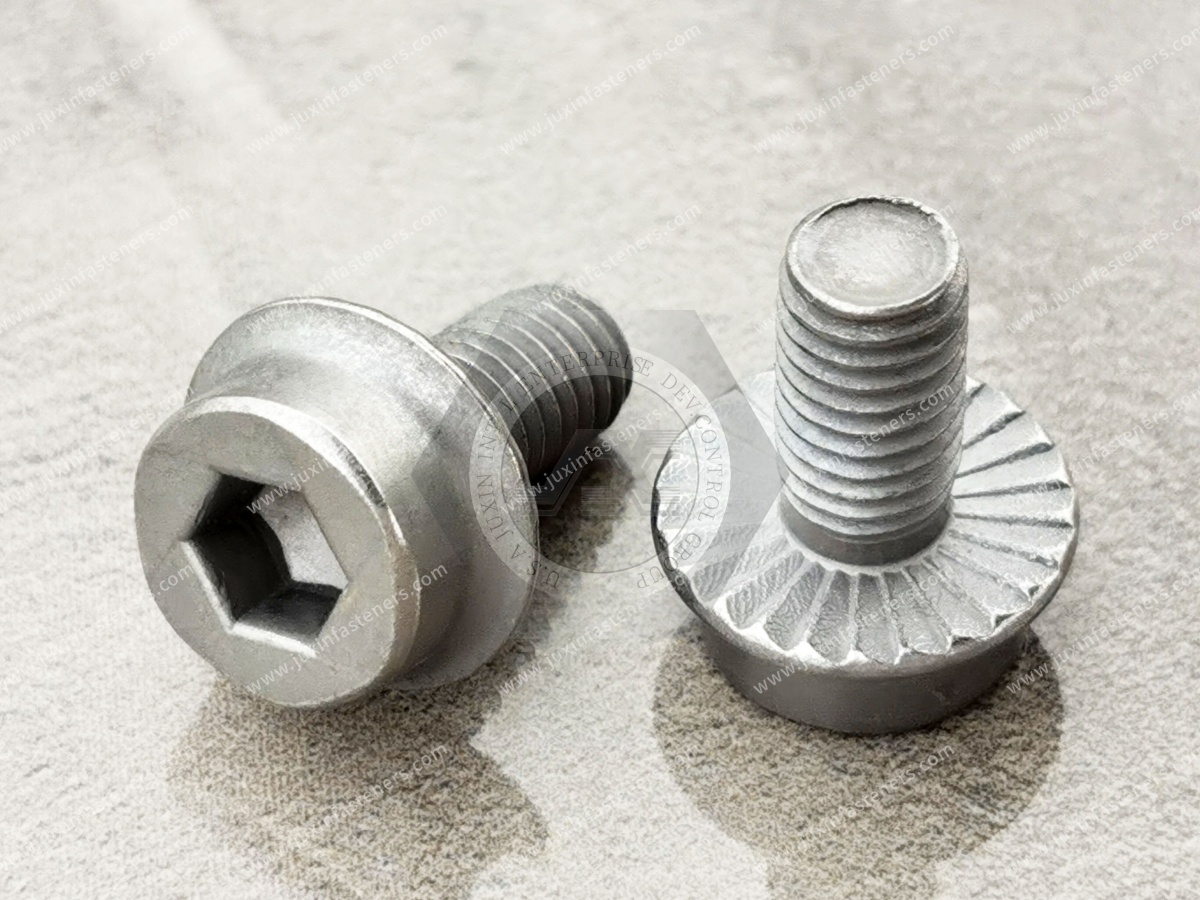
ISO 4762 and DIN 912: Understanding the Product Requirements
ISO 4762 is an international dimensional standard for hexagon socket head cap screws. DIN 912 is a traditional designation associated with metric socket head cap screws.
Both designations are widely encountered in industrial purchasing specifications.
Critical Dimensions
Nominal thread diameter
Thread pitch
Screw length
Head diameter
Head height
Socket size
Socket depth
Thread length
The applicable standard and edition should be identified.
A DIN 912 product should not automatically be substituted with another fastener without reviewing the actual dimensional requirements.
Mechanical properties are a separate consideration. ISO 898-1 may apply to specified metric steel fasteners,
while ISO 3506-1 may apply to specified stainless steel fasteners.
Standard Socket Head vs. Low-Head Socket Screws
A standard ISO 4762 socket head cap screw has a defined cylindrical head geometry.
It should not automatically be described as a low-head screw.
Low-head socket screws are separate configurations with different head dimensions and potentially different mechanical limitations.
Where head height is restricted, specify the required configuration rather than assuming a standard socket head screw will fit.
Common Socket Head Cap Screw Assembly Failures
Socket head cap screw problems frequently result from a mismatch between the fastener, joint design and installation process.
| Problem | Possible cause | Recommended review |
|---|---|---|
| Rounded hex socket | Incorrect bit or inadequate engagement | Socket geometry and tooling |
| Stripped internal thread | Insufficient engagement or excessive load | Mating material and thread depth |
| Screw bottoms in blind hole | Excessive screw length | Hole depth and grip |
| Low joint preload | Friction variation or tightening error | Tightening procedure |
| Fatigue cracking | Cyclic loading or unsuitable joint design | Stress range and joint stiffness |
| Vibration loosening | Loss of preload or joint movement | Joint design and locking method |
| Corrosion damage | Unsuitable material or coating | Environmental specification |
| Head interference | Incorrect counterbore | Head and tool clearance |
The correct response is to identify the underlying mechanism rather than simply replacing the screw with a higher-strength version.
Failure Mode 1: Rounded or Damaged Internal Hex Socket
The internal hex socket must transmit the applied installation torque through contact with the tool.
Damage may occur when the tool and socket are incompatible.
Potential Causes
Incorrect hex bit size
Worn installation tools
Insufficient tool insertion
Tool misalignment
Excessive applied torque
Dimensional or surface defects
Engineering Prevention
Verify the specified socket size and depth.
Confirm that the tool can fully engage the recess and that surrounding components do not obstruct installation.
Production Control
For repeated assembly, establish inspection and replacement criteria for worn hex bits.
A damaged bit can affect many consecutive assemblies before the problem becomes obvious.
Failure Mode 2: Thread Stripping
Thread stripping may occur when the engaged threads cannot sustain the applied load.
The risk depends on both the screw and the mating component.
Relevant Factors
Thread engagement length
Internal thread material
Thread pitch
Screw strength
Installation load
Thread condition
Engineering Principle
A high-strength screw installed into a comparatively weak tapped material may cause the internal threads to fail before the screw reaches its intended load.
Design Recommendation
Evaluate the engaged thread length and the mechanical properties of the mating component.
For softer materials, suitable threaded inserts may be considered where the joint design requires them.
Failure Mode 3: Screw Bottoming in a Blind Hole
A screw can contact the bottom of a blind tapped hole before the joint reaches the intended clamping force.
The installation tool may indicate resistance even though the components are not properly clamped.
Potential Causes
Incorrect screw length
Insufficient usable hole depth
Thread runout
Unaccounted washer or component thickness
Drawing or assembly changes
Engineering Check
Compare the screw's underhead length with the actual grip length, usable thread depth and required clearance.
Do not assume that achieving a target torque confirms correct clamping if the screw may have bottomed.
Failure Mode 4: Insufficient or Inconsistent Preload
Preload is the tensile force generated in a screw during tightening.
For many bolted joints, adequate preload is important for maintaining contact between the clamped components.
A simplified torque relationship is:
T ≈ K × F × d
Where:
T = applied tightening torque
K = simplified torque coefficient
F = screw preload
d = nominal screw diameter
This approximation illustrates the role of friction. It is not a universal tightening specification.
Factors Affecting Achieved Preload
Thread friction
Underhead friction
Lubrication
Coating
Surface condition
Joint stiffness
Tightening equipment
Two nominally identical screws may develop different preload at the same applied torque if their friction conditions differ.
Manufacturing Recommendation
Validate tightening conditions using the actual screw, mating component, surface finish and assembly method.
Failure Mode 5: Vibration Loosening
Socket head cap screws are not inherently self-locking.
The internal hex drive does not independently prevent loosening.
Fine threads also should not be treated as a guaranteed anti-loosening feature.
Potential Contributors
Insufficient preload
Relative movement between joint members
Transverse vibration
Joint relaxation
Unsuitable locking arrangements
Possible Engineering Solutions
Depending on the design, appropriate measures may include:
Improved joint stiffness
Suitable preload control
Approved threadlocking compounds
Pre-applied locking patches
Compatible prevailing-torque locking components
Mechanical locking features
Any locking method must be evaluated for temperature, chemical exposure, repeated assembly and applicable mechanical requirements.
Failure Mode 6: Fatigue Under Repeated Loading
A screw may experience fatigue when cyclic stresses exceed what the complete joint can withstand.
Fatigue behavior depends on:
Alternating load
Mean stress
Joint stiffness
Preload
Thread geometry
Material properties
Surface condition
Important Limitation
A higher tensile-strength class does not automatically guarantee better fatigue life.
Improving fatigue performance may require changes to joint geometry,
preload control, load distribution or component stiffness rather than simply selecting a stronger screw.
Counterbore and Tool Clearance: Preventing Design Errors
Socket head cap screws are frequently used in counterbored holes.
The counterbore must accommodate both the screw head and the intended assembly method.
Critical Dimensions
Counterbore diameter
Counterbore depth
Head diameter and tolerance
Head height and tolerance
Underhead bearing surface
Tool insertion clearance
A Common Design Oversight
A counterbore may provide sufficient space for the screw head but inadequate access for the installation tool.
This can cause poor engagement, angled tightening or damage to the internal socket.
Engineering Recommendation
Review the fastener, counterbore, surrounding components and installation tooling together before releasing the assembly drawing.
Material Selection and Assembly Reliability
Material selection affects strength, corrosion resistance, thread behavior and suitability for the service environment.
Alloy Steel Socket Head Cap Screws
Alloy steel socket screws may be selected where defined mechanical properties are required.
Potential applications include:
CNC machinery
Mold and die equipment
Industrial automation
Mechanical fixtures
Heavy equipment accessories
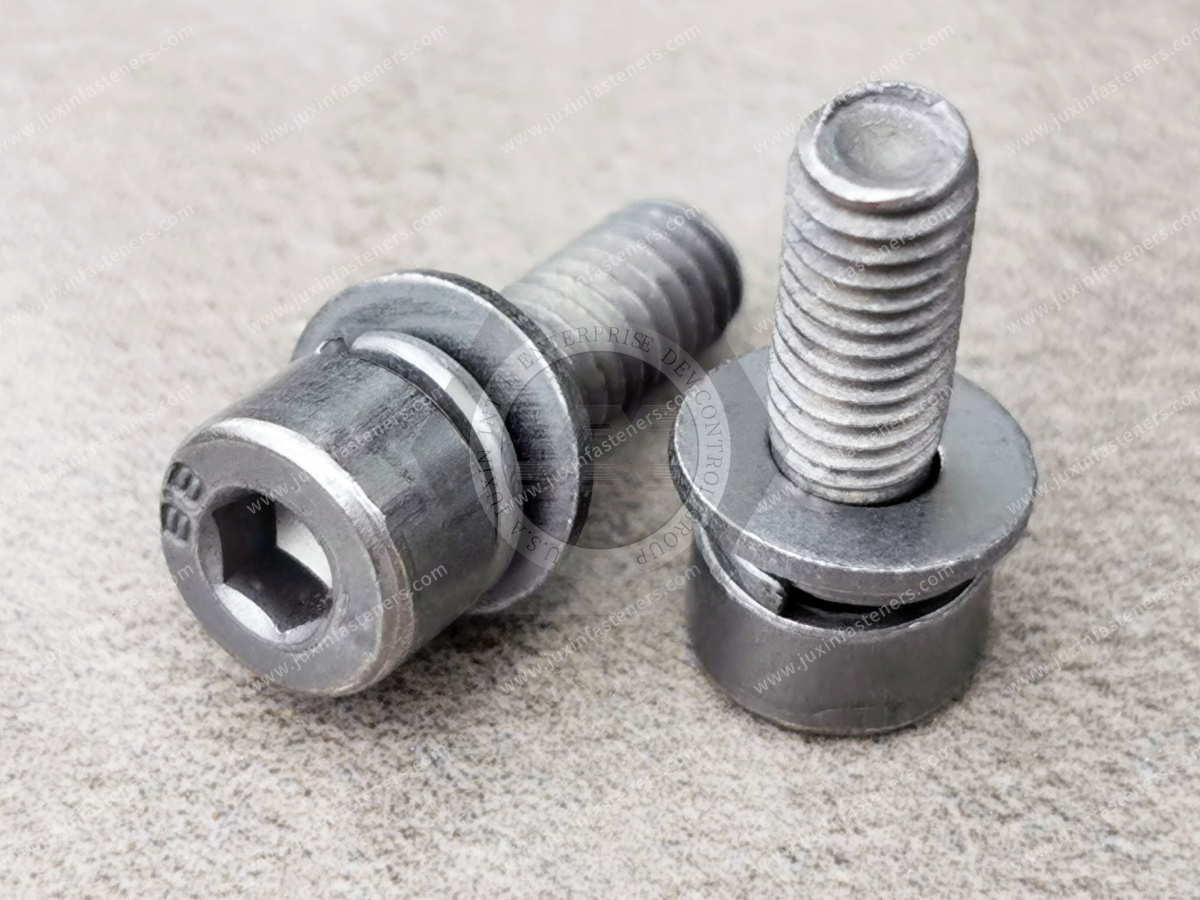
Mechanical properties must be specified under the applicable standard. A cylindrical socket head alone does not establish a particular property class.
Carbon Steel Socket Screws
Carbon steel may be suitable for selected general industrial applications.
Relevant factors include the required mechanical properties, surface treatment and operating conditions.
Stainless Steel Socket Head Cap Screws
Stainless steel fasteners may be considered for suitable corrosion-sensitive applications.
A2 and A4 are common stainless steel fastener designations.
A2 may be considered for general industrial corrosion-resistant applications. A4 may be considered for environments requiring additional resistance to certain corrosive conditions.
Neither grade is universally suitable for every marine, chemical or high-temperature environment.
Stainless Steel Galling
Certain stainless steel threaded combinations may experience galling during installation.
Relevant factors include:
Thread fit
Installation speed
Surface finish
Lubrication
Mating material
Material Selection Matrix
| Application requirement | Potential option | Main verification |
|---|---|---|
| General industrial machinery | Suitable carbon steel screw | Mechanical properties and coating |
| Higher specified strength | Suitable alloy steel screw | Property class and joint loading |
| Corrosion-sensitive equipment | Suitable stainless steel screw | Environment and mechanical properties |
| Repeated assembly | Application-specific material and finish | Thread wear and galling |
| Outdoor equipment | Approved material/coating combination | Exposure and corrosion requirements |
Coatings: Corrosion Protection vs. Tightening Consistency
A surface treatment may affect both corrosion performance and tightening friction.
Black Oxide
Black oxide is commonly used for a dark appearance.
Its corrosion protection depends on the complete treatment system and should not automatically be considered suitable for prolonged outdoor exposure.
Zinc Plating
Zinc plating may provide suitable corrosion protection for selected industrial environments.
Zinc-Flake Coatings
Zinc-flake systems may be considered for specified applications, depending on the coating process and requirements.
Zinc-Nickel Coatings
Zinc-nickel may be considered where a particular corrosion protection system is specified.
Relevant Standards
ISO 4042 may apply to electroplated fasteners, while ISO 10683 may apply to specified non-electrolytically applied zinc-flake coating systems.
High-Strength Fastener Consideration
Certain high-strength steel screws may be susceptible to hydrogen embrittlement under particular processing and service conditions.
Coating selection should therefore consider mechanical integrity as well as corrosion protection.
Production Implication
Changing the coating can change friction.
A supplier substitution involving a different coating may require review of the tightening procedure even when the nominal screw dimensions remain unchanged.
Socket Head Cap Screw Applications in Industrial Manufacturing
CNC Machinery and Machine Tools
Socket head cap screws are used in suitable machine tool assemblies where compact fastening and maintenance access are important.
Potential applications include machine guards, brackets, equipment housings and fixtures.
Key engineering concerns include tool access, preload, vibration and thread engagement.
Mold and Die Equipment
Mold and die assemblies may use socket head cap screws in tooling plates, fixtures and mechanical components.
Counterbore dimensions, screw length, thermal conditions and maintenance requirements are important.
Industrial Automation and Robotics
Automation equipment may require compact fasteners compatible with repeatable assembly.
Potential applications include robot accessory brackets, sensor mounts, linear motion equipment and production fixtures.
Manufacturing considerations include screw feeding, drive engagement, tightening repeatability and inspection.
Automotive and EV Equipment
Socket head cap screws may be used in approved auxiliary automotive and EV mechanical assemblies.
Potential applications include equipment supports, brackets, charging equipment and production tooling.
Vibration, temperature, corrosion and tightening consistency must be evaluated.
General industrial screws should not automatically be substituted into safety-critical steering, braking, suspension or other regulated vehicle connections.
Semiconductor and Precision Equipment
Compact socket head screws may be useful in semiconductor equipment frames, instrument housings and precision mechanical assemblies.
Selection may require attention to material compatibility, cleanliness, particle generation, access and repeated maintenance.
Application-specific cleanliness or material requirements must be confirmed rather than assumed from the screw designation.
Electrical Cabinets and Power Equipment
Socket head screws may be used in mechanical supports, electrical enclosures, UPS equipment and power conversion equipment.
Important considerations include electrical clearance, sheet metal thickness, corrosion and installation access.
For thin sheet metal or blind-side assembly, suitable alternatives may include self-clinching nuts, blind rivet nuts, weld nuts, cage nuts and threaded standoffs.
Energy and Heavy Equipment
Socket head screws may be used in suitable industrial motors, machinery housings, power equipment and heavy equipment accessories.
The actual loading, corrosion environment and maintenance requirements govern selection.
Aerospace-Related Equipment
Specialized socket head screws may be used in approved aerospace-related equipment, including ground support systems and selected precision assemblies.
However, general ISO 4762 or ASTM A574 screws are not automatically qualified for flight-critical applications.
The approved engineering specification and traceability requirements must govern such use.
Production-Line Quality: From Incoming Inspection to Final Assembly
Manufacturing engineers and production managers should treat socket head cap screws as part of the assembly process rather than as isolated purchased components.
Incoming Material Verification
Confirm the product against the approved purchase specification.
Depending on project requirements, verification may include:
Product identification
Dimensions
Thread fit
Head geometry
Internal socket dimensions
Material and mechanical property documentation
Coating requirements
Visual condition
The actual inspection plan should be agreed for the project.
Tooling Control
Use the correct hex bit and suitable tightening equipment.
Monitor tool wear and ensure that the tool can engage the socket without interference.
Assembly Process Validation
Confirm:
Correct screw length
Adequate thread engagement
No bottoming in blind holes
Suitable tightening method
Required joint preload
Tool accessibility
In-Process Monitoring
For repeated assembly, useful checks may include torque-process monitoring, tool-condition checks and inspection of selected completed joints.
The appropriate control method depends on the application and production requirements.
Rework and Maintenance
The quality plan should define when a screw may be reused and when replacement is required.
Damaged sockets, deformed threads, corrosion or application-specific single-use requirements may justify replacement.
Production Decision Matrix
| Production issue | Possible cause | Corrective review |
|---|---|---|
| Rounded socket | Incorrect or worn tool | Tool size and engagement |
| Variable tightening results | Friction or coating variation | Process validation |
| Screw bottoming | Incorrect length or hole depth | Drawing and assembly stack-up |
| Head interference | Counterbore mismatch | Geometric clearance |
| Thread damage | Incorrect engagement or mating material | Thread design |
| Corrosion complaints | Unsuitable material or finish | Environmental specification |
| Repeated fastener failure | Loading or joint design | Engineering analysis |
| High rework rate | Inconsistent installation process | Production controls |
OEM Supplier Qualification and Purchasing Decisions
Purchasing managers and supplier development teams should evaluate the complete fastener specification rather than comparing prices for a generic product name.
Recommended RFQ Specification
| Requirement | Information to provide |
|---|---|
| Product | Socket head cap screw |
| Standard | ISO 4762, DIN 912 or approved drawing |
| Thread | Nominal diameter and pitch |
| Length | Nominal screw length |
| Head geometry | Standard or drawing-specific |
| Socket geometry | Required dimensions and drive |
| Material | Approved material |
| Mechanical properties | Required property class or specification |
| Surface finish | Coating and relevant requirements |
| Application | Equipment and operating environment |
| Assembly | Tightening and locking requirements |
| Inspection | Acceptance criteria and documentation |
| Samples | Prototype or approval quantity |
| Purchasing volume | Batch quantity and annual forecast |
| Delivery | Required schedule |
Supplier Substitution Checklist
Before approving a replacement supplier or alternative screw, verify:
Dimensional compatibility
Thread compatibility
Head and socket geometry
Material
Mechanical properties
Coating
Tightening behavior
Required inspection
Application approval
A fastener that appears dimensionally similar may still behave differently during assembly.
Total Installed Cost
The lowest unit price does not always produce the lowest manufacturing cost.
Consider:
Purchase price
Tooling compatibility
Assembly cycle time
Inspection
Rework
Maintenance
Inventory
Supplier qualification
Delivery reliability
For high-volume OEM production, preventing recurring assembly problems can be more valuable than a small reduction in screw unit price.
Frequently Asked Questions
What causes a socket head cap screw to strip?
A rounded internal socket may result from incorrect tooling, poor engagement or excessive torque.
Thread stripping is a separate failure involving the engaged threads.
Why does a socket head screw tighten without clamping the joint?
One possible cause is bottoming in a blind tapped hole before the components are properly clamped.
Are socket head cap screws self-locking?
No. A standard internal hex drive does not provide an inherent self-locking function.
Do fine threads prevent vibration loosening?
Not automatically. Vibration resistance depends on preload, joint design and any approved locking system.
Can a higher-strength screw solve fatigue failure?
Not necessarily. Fatigue performance depends on the complete joint and cyclic loading.
Are ISO 4762 and DIN 912 socket head screws interchangeable?
Compatibility must be checked against the applicable standards, editions and engineering drawing.
Can stainless steel socket head screws gall?
Yes. Certain material combinations and installation conditions may increase galling risk.
Can a different coating affect tightening torque?
Yes. Coating changes may affect friction and the preload achieved at a given torque.
Can JUXIN FASTENERS review custom socket head cap screw drawings?
Yes. Drawing-based inquiries can be reviewed for dimensions, materials, mechanical properties, surface finishes and commercial requirements.
JUXIN FASTENERS: Industrial Socket Head Cap Screws and OEM Fastening Solutions
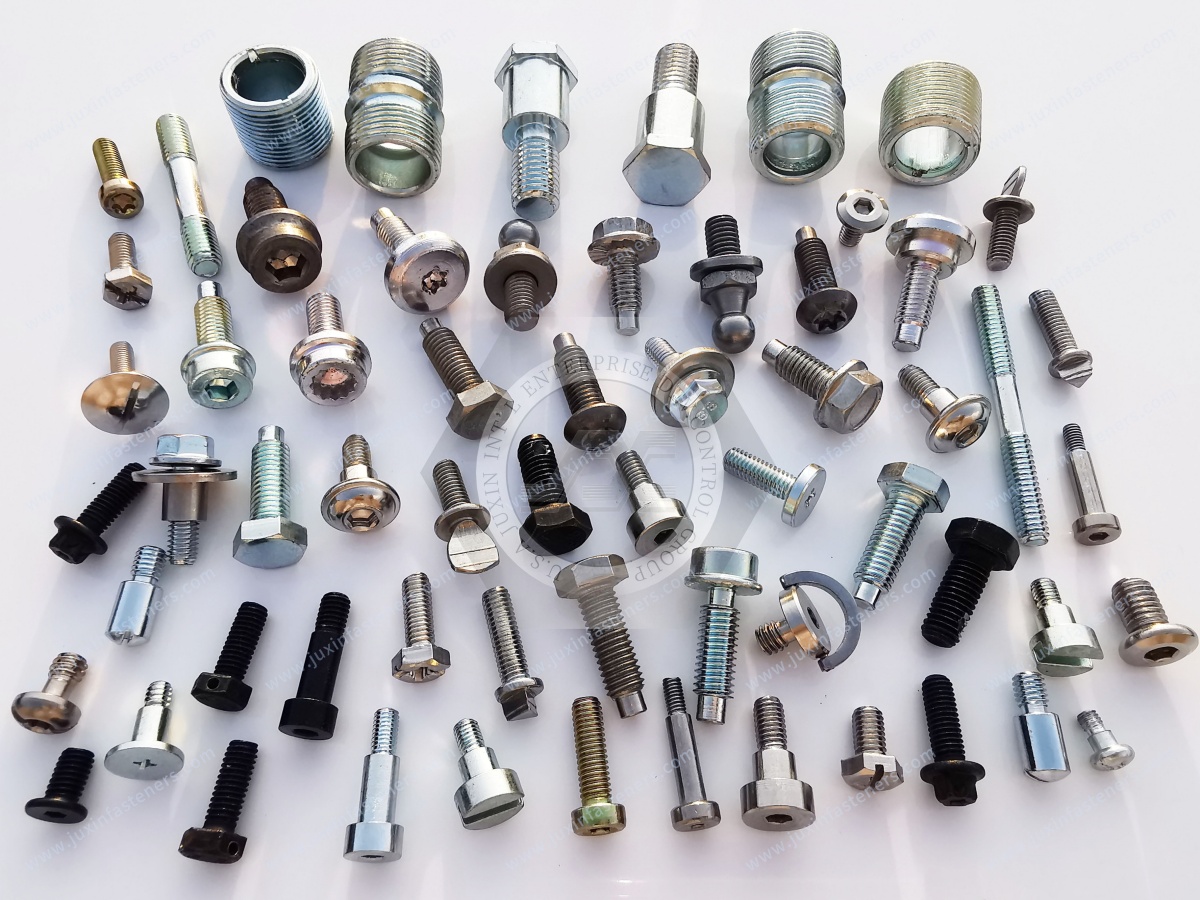
JUXIN FASTENERS supplies industrial fastening components and supports drawing-based OEM inquiries for international manufacturers.
Relevant product categories include:
Hexagon socket head cap screws
ISO 4762 socket head cap screws
DIN 912 socket head cap screws
Alloy steel socket screws
Stainless steel socket screws
High-strength industrial screws
Drawing-specific threaded components
CNC-machined fastening parts
Specific dimensions, materials, mechanical properties, coatings, inspection requirements, MOQ and lead time are confirmed during project review.
Request a Socket Head Cap Screw Engineering Review and OEM RFQ
Are you sourcing socket head cap screws for CNC machinery, mold and die equipment, robotics, industrial automation, automotive auxiliary equipment,
EV systems, semiconductor equipment or electrical enclosures?
JUXIN FASTENERS welcomes inquiries from design engineers, mechanical engineers, structural engineers, manufacturing engineers, production managers,
procurement specialists, purchasing managers, supplier development teams and supply chain managers.
For an efficient technical and commercial review, please provide:
2D drawing or applicable standard + thread designation + screw length + head and socket requirements + material + mechanical property class
+ coating + application + tightening requirements + inspection criteria + sample quantity + annual purchasing volume + target delivery schedule
Our team can review your requirements, discuss suitable fastening options, confirm sample arrangements and provide quotation information.
Company: JUXIN FASTENERS
Website: https://www.juxinfasteners.com/
Email: info@juxinfasteners.com
Send your socket head cap screw drawings and RFQ to JUXIN FASTENERS for technical evaluation and quotation.
Contact Us
Tel.:
+86 020 8621 0320
+86 020 3121 6067
E-mail:
Technical Support:
Navigation
SEND INQUIREY



