
Call Us
+86 136 6007 9809
Call Us
+86 136 6007 9809

Nov. 05, 2023
Hexagonal joint nuts are internally threaded fastening components used where a mechanical assembly requires a wrench-driven threaded connection between mating parts.
Depending on the design, the term may refer to a standard hexagonal nut used as part of a joint, a special hex fitting nut,
or a custom threaded component with application-specific length, thread, shoulder, flange, bore, or engagement geometry.
For design engineers, the important question is not simply whether a nut has a hexagonal outside profile.
Reliable joint performance depends on the relationship between thread specification, nut geometry, material and property class,
thread engagement, mating fastener, tightening method, coating, operating environment and load path.
For procurement and supplier-development teams, the same component creates a different set of questions: Is it a standard part or a drawing-controlled special nut?
Which international standard applies? What material and property class are required? Which dimensions are critical to assembly? What inspection and documentation should be included in the RFQ?
This guide explains how to evaluate hexagonal joint nuts, hex joint nuts, special hex nuts and custom threaded nuts for industrial OEM applications.
A hexagonal joint nut is an internally threaded component with a six-sided external wrenching profile.
The hex geometry allows torque to be applied with conventional sockets, spanners or automated assembly tooling while maintaining a relatively compact external envelope.
However, “hexagonal joint nut” is not one universal international standard designation. The terminology can be used commercially for different types of threaded joining components.
The first engineering step is therefore to identify what the component actually does.
It may function as:
a conventional hex nut in a bolted joint;
a long hexagonal threaded connector;
a coupling-style nut joining two externally threaded components;
a fitting nut within a mechanical assembly;
a special nut with non-standard dimensions;
a machined hexagonal threaded component;
or a drawing-specific OEM connection element.
This distinction matters because components that look similar externally may have very different requirements for thread engagement, material strength, dimensional tolerances and installation.
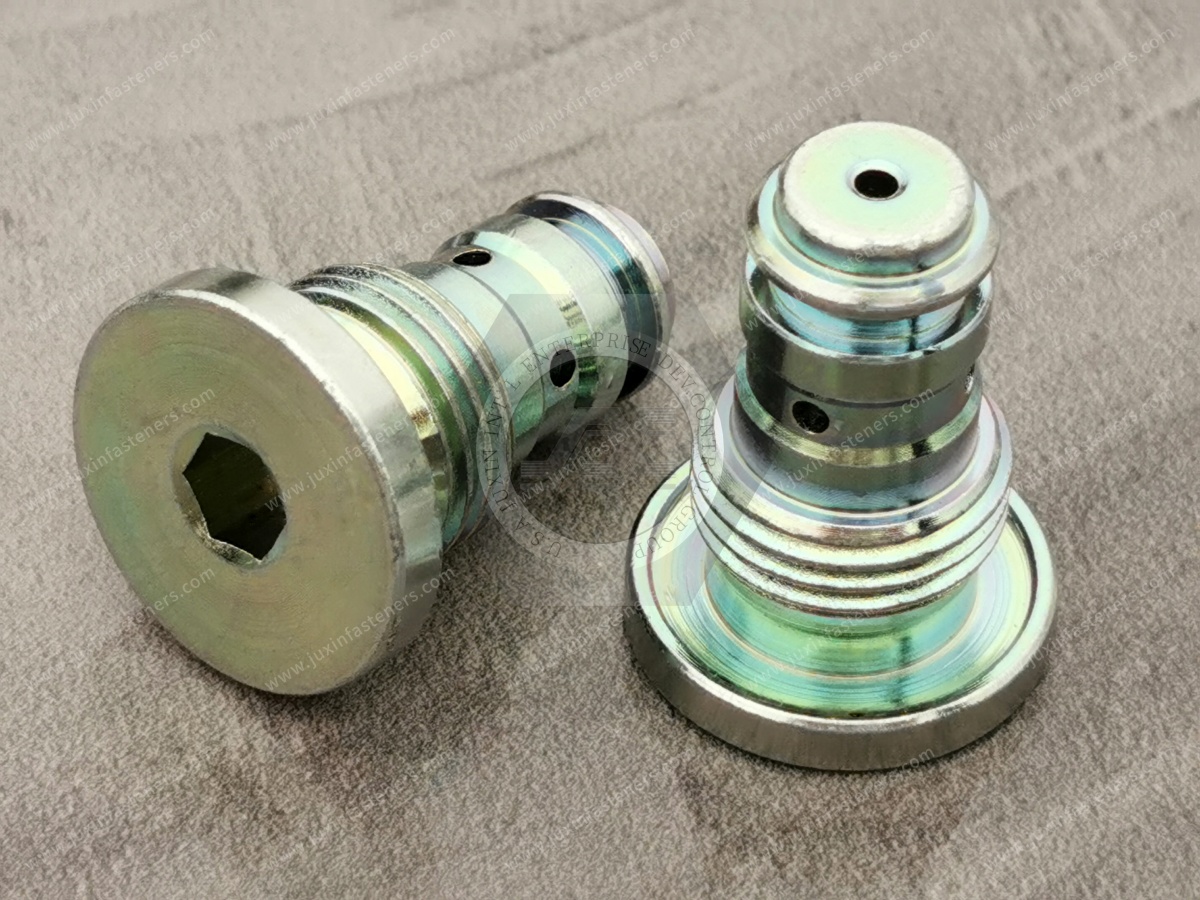
Do not select a hexagonal threaded component by its outside hex size alone.
Start with its function in the joint, then define the thread, geometry, material, strength requirement and operating conditions.
One of the most common sourcing problems is assuming that all elongated or special hexagonal nuts belong to the same product category.
They do not.
| Component | Primary Function | Typical Engineering Consideration |
|---|---|---|
| Standard Hex Nut | Clamps components with a mating bolt or stud | Property class, thread, bearing surface and tightening |
| Hexagonal Joint Nut | Application-dependent threaded connection | Function, geometry, thread engagement and load path |
| Coupling Nut | Connects two externally threaded components | Engagement length, alignment and axial load transfer |
| Lock Nut | Resists unintended rotational loosening | Locking mechanism, reuse conditions and temperature |
| Weld Nut | Provides a permanent threaded attachment to sheet or structure | Projection geometry, welding process and base material |
| Rivet Nut | Creates an internal thread in thin material with one-sided installation | Grip range, hole size, anti-rotation and installation force |
| Custom Hex Nut | Drawing-controlled special connection | Critical dimensions, tolerances, material and inspection |
Using the wrong category during sourcing can create problems even when the thread diameter appears correct.
For example, replacing a drawing-specific long hex joint nut with a standard nut can change thread engagement.
Replacing a lock nut with a conventional nut removes the intended prevailing-torque or locking function. Replacing a weld nut with a standard hex nut changes the entire installation method.
Product classification should follow the joint function, not appearance alone.
When the component is a standard nut, engineers should identify the applicable dimensional and mechanical-property standard rather than specifying only a generic name.
Common international references may include:
ISO 4032 — dimensional reference for regular-style metric hexagon nuts in applicable designs;
ISO 4033 — high-style metric hexagon nuts for applicable configurations;
ISO 4035 — thin metric hexagon nuts for applicable configurations;
ISO 898-2 — mechanical properties of carbon and alloy steel nuts for specified property classes and thread ranges;
ISO 3506-2 — mechanical properties of corrosion-resistant stainless steel nuts;
ASME B18.2.2 — dimensional requirements covering applicable inch-series square and hex nuts;
ASTM material and mechanical specifications — where required by the particular inch-series structural or industrial application;
DIN / EN standards — where the customer drawing or legacy equipment specification requires a particular European configuration.
The exact standard must be confirmed against the product geometry and application.
A DIN, ISO or ASME nut should not automatically be described as “equivalent” to another standard simply because the nominal thread size is the same.
Differences can exist in:
width across flats;
nut height;
bearing geometry;
thread series;
tolerance;
material/property requirements;
marking;
and application scope.
For global OEM sourcing, the safest RFQ practice is to provide the exact standard designation and edition where relevant, or the controlled customer drawing.
A threaded joint does not transfer load through the hexagonal body alone.
The mechanical load path typically involves:
Applied load → mating components → bolt/stud → engaged threads → nut body → bearing interface
This means nut performance depends on the complete joint.
Important variables include:
bolt or stud strength;
nut property class;
internal thread tolerance;
thread engagement;
bearing surface;
clamped material;
preload;
tightening method;
lubrication or coating;
temperature;
corrosion;
vibration;
and external loading.
A physically larger nut is therefore not automatically a stronger joint.
If the mating bolt, thread engagement, bearing material or installation method is inadequate, increasing the outside dimensions of the nut alone may not solve the problem.
For standard bolted joints, engineers normally select compatible fastener property classes and dimensions according to the applicable standards.
For custom joint nuts or coupling-style components, thread engagement becomes a particularly important design variable.
Insufficient engagement can increase the risk of thread stripping. Excessive length, however,
does not necessarily produce a proportional increase in useful joint capacity and can add mass, material cost and assembly space.
When reviewing a custom design, consider:
internal thread diameter and pitch;
mating external thread;
nut and bolt/stud material strengths;
effective engagement length;
thread tolerance class;
expected axial load;
installation torque or preload;
repeated assembly requirements;
temperature;
corrosion or surface-treatment effects.
For highly loaded or non-standard joints, thread engagement should be established by engineering calculation and validated against the applicable design requirements rather than selected from a generic rule alone.
The thread system must be unambiguous on both drawings and purchase orders.
A metric specification may define:
nominal diameter;
coarse or fine pitch;
internal thread tolerance;
applicable ISO thread standard;
and any coating-related allowance requirements.
An example drawing designation may identify a metric internal thread such as M10 × 1.5 – 6H, where applicable to the design.
North American applications may use:
UNC;
UNF;
UNEF;
or other specified Unified thread series.
The drawing should also identify the required thread class, such as the applicable internal-thread class.
Ordering a component simply as an “M10 hex joint nut” or “3/8 hex nut” can leave important engineering variables undefined.
For OEM procurement, the RFQ should identify the complete thread specification.
Material selection should follow the load, environment, mating fastener and manufacturing requirements rather than treating all hex nuts as interchangeable.
Carbon steel is widely used for industrial threaded fasteners where mechanical strength, manufacturing efficiency and cost are important.
Depending on the applicable standard and property requirements, material condition and heat treatment must be matched to the specified nut property class.
Typical applications include:
industrial machinery;
equipment frames;
automation systems;
general mechanical assemblies;
automotive equipment;
and fabricated industrial structures.
Alloy steel may be appropriate where the component requires higher mechanical properties or where the customer's drawing specifies a particular material and heat-treatment condition.
Selection should be coordinated with:
mating fastener strength;
required mechanical properties;
heat treatment;
hardness;
fatigue conditions;
coating process;
and hydrogen-embrittlement considerations where applicable.
Stainless steel can be selected where corrosion resistance is important, but “stainless steel” should not be treated as one universal material.
Austenitic, martensitic and precipitation-hardening stainless steels have different combinations of:
corrosion resistance;
strength;
hardness;
magnetic behavior;
machining characteristics;
and galling susceptibility.
For conventional corrosion-resistant stainless fasteners, ISO 3506-2 may be relevant depending on the product and application.
When stainless steel internal and external threads are assembled together, galling can become an important installation risk.
Thread condition, surface finish, assembly speed, lubrication and installation method can influence galling behavior.
This is particularly relevant to OEM assembly lines where repeated tightening operations are performed at production speed.
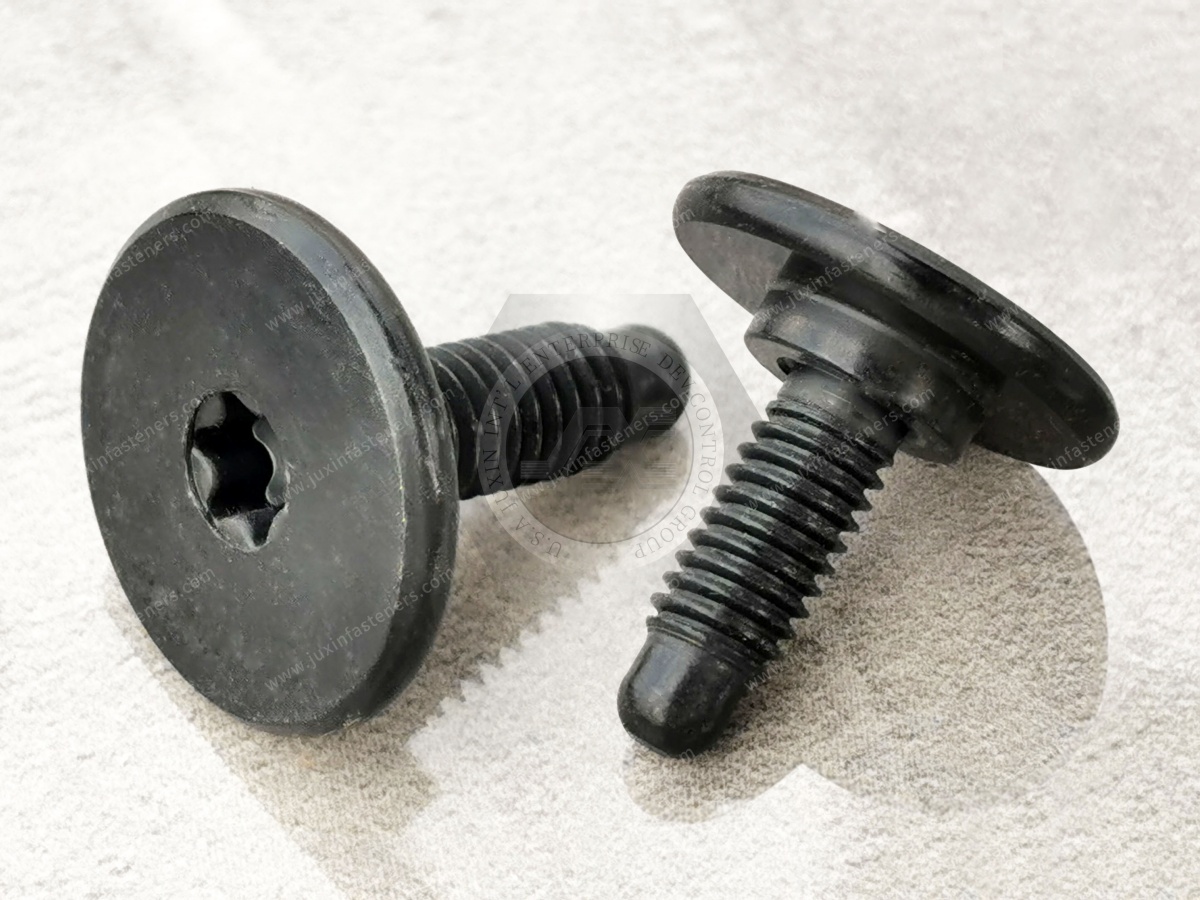
The original geometry, volume, material and tolerance requirements determine the appropriate manufacturing route.
Cold forming is commonly suitable for higher-volume fastener production when the geometry, material and tooling conditions support the process.
Potential advantages include:
high production efficiency;
good material utilization;
repeatable geometry;
and favorable economics at suitable production volumes.
However, the engineering benefit should not be simplified into a claim that cold forming automatically makes every nut stronger than a machined component.
Final performance depends on the complete combination of material, forming history, heat treatment, geometry and required mechanical properties.
Machining can be appropriate for:
special hex joint nuts;
prototype development;
non-standard lengths;
unusual internal or external geometry;
special shoulders or bores;
lower-volume projects;
and drawing-controlled dimensions that are not economical with standard forming tooling.
Machining also allows special features to be incorporated where required by the customer drawing.
Some OEM fasteners require more than one manufacturing process.
A component may be formed first and then receive secondary operations such as:
machining;
drilling;
tapping;
thread finishing;
grinding;
or application-specific feature generation.
The manufacturing route should therefore be selected after reviewing the drawing rather than assumed from the product name.
A coating should be selected according to the operating environment and assembly requirements.
Depending on material and project requirements, surface-treatment considerations may include:
corrosion protection;
dimensional effect on threads;
friction behavior;
tightening consistency;
electrical requirements;
appearance;
mating material;
and OEM specifications.
Possible processes vary by material and application and may include zinc-based finishes, zinc-nickel systems,
hot-dip galvanizing for appropriate geometries, passivation for applicable stainless steels, or other customer-specified treatments.
However, coating selection cannot be separated from thread fit.
Internal threads have limited tolerance space. A coating applied after thread production can consume part of that allowance.
This means an RFQ should not simply state:
“M10 nut, zinc plated.”
For tighter assemblies, engineers and procurement teams should establish:
thread requirement;
whether dimensions apply before or after coating;
coating system;
required corrosion performance;
friction requirement where applicable;
and final functional gauging requirement.
This becomes especially important when a coated nut must mate with a coated bolt in automated production.
One common sourcing mistake is asking for a universal tightening torque based only on the nut size.
Tightening torque depends on the complete bolted joint.
Factors include:
bolt size;
bolt property class;
nut property class;
thread pitch;
surface coating;
lubrication;
friction coefficient;
bearing surface;
joint stiffness;
required preload;
and assembly method.
Therefore, a generic torque number should not be treated as universally applicable to every nut of the same nominal thread size.
For engineered joints, the tightening specification should be established from the actual joint design and applicable engineering requirements.
Understanding failure mechanisms can help identify which specification is incomplete.
Possible contributors include:
insufficient thread engagement;
incompatible nut and bolt strength;
damaged threads;
incorrect thread tolerance;
excessive installation load;
or material selection problems.
This is not automatically evidence of a defective nut.
In a correctly engineered joint, the relationship between the nut property class and mating bolt must be considered as a system.
Possible causes include:
incorrect tool size;
poor wrench engagement;
damaged hex geometry;
excessive installation torque;
or unsuitable tool alignment.
A standard hex nut does not automatically provide a locking function.
Where resistance to rotational loosening is required, engineers should evaluate an appropriate locking strategy rather than assuming a larger hex nut will solve the problem.
Recommended Internal Link: Lock Nuts → relevant existing JUXIN FASTENERS page
The nut material cannot be selected independently of:
mating bolt material;
clamped materials;
environment;
coating;
moisture exposure;
and galvanic compatibility.
Possible contributors include high assembly speed, surface condition, material pairing and friction.
The solution may involve reviewing material selection, surface treatment, lubrication and assembly parameters rather than simply increasing tightening force.
A standard ISO, DIN or ASME nut is generally the logical starting point when:
standard geometry fits the available assembly space;
the required thread is standardized;
normal wrench access is available;
standard mechanical properties satisfy the joint;
no special anti-rotation feature is required;
and the assembly does not require special locating, welding, riveting or captive functionality.
Standardization can simplify:
sourcing;
inspection;
replacement;
inventory;
and multi-supplier procurement.
A custom or made-to-drawing hex nut becomes more relevant when the assembly requires features that standard nuts do not provide.
Examples include:
non-standard nut height;
extended thread engagement;
special width across flats;
restricted installation envelope;
shoulder geometry;
stepped outside diameter;
special bore;
non-standard thread;
special mating interface;
customer-specific material;
drawing-controlled surface requirements;
or integration with another mechanical component.
The engineering question should be:
Which feature of the assembly cannot be satisfied by an existing standardized fastener?
That question helps avoid unnecessary customization while identifying situations where a drawing-specific component genuinely adds value.
Hexagonal threaded components are used across many industries, but their role should be described by the actual joint requirement rather than by industry name alone.
Potential applications include brackets, mechanisms, equipment housings, seat and interior assemblies, power-system supporting hardware and other drawing-controlled threaded connections.
For safety-related automotive assemblies, product selection is subject to the applicable customer drawing, material, testing, documentation and qualification requirements.
Hexagonal nuts and custom joint nuts can be used in:
machine frames;
drive-system supporting structures;
guards;
adjustment mechanisms;
equipment housings;
fixtures;
and replaceable mechanical modules.
Repeatable wrench access, controlled thread engagement and assembly efficiency are important for:
robotic equipment;
automated fixtures;
production tooling;
conveyor equipment;
and modular machine assemblies.
Material, corrosion protection, conductivity requirements and service environment may influence nut selection in:
switchgear;
power conversion equipment;
electrical enclosures;
mounting structures;
and industrial power-distribution assemblies.
Outdoor exposure can make material and coating selection particularly important in renewable-energy and other energy-equipment assemblies.
Fastener requirements may involve vibration, repeated service, maintainability and customer-specific documentation.
Use in railway projects must be evaluated against the applicable drawing, material, testing, documentation and project qualification requirements.
Compact hexagonal threaded components may be used for mechanical mounting, enclosure assembly and internal structural connections.
Electrical grounding or EMI performance should never be assumed merely from the presence of a metal nut; those functions depend on the complete joint design and surface condition.
Before releasing a hexagonal joint nut specification, confirm:
What function does the nut perform?
Is a standard nut sufficient?
Which dimensional standard applies?
What is the complete thread designation?
What mating bolt or stud will be used?
What mechanical property class is required?
How much thread engagement is available?
What loads act on the joint?
Is vibration present?
Is a locking function required?
What material is required?
What corrosion environment exists?
Is a coating required?
Will coating affect the internal thread tolerance?
Is stainless-on-stainless galling a concern?
What wrench or socket access is available?
Is automated installation involved?
Which dimensions are functionally critical?
What inspection requirements apply?
Is the component controlled by a customer drawing?
This checklist converts a generic nut request into an engineering specification that suppliers can quote accurately.
For an efficient RFQ, purchasing managers, supplier-development engineers and sourcing teams should provide as much of the following information as applicable:
product type;
applicable ISO, DIN, EN, ASME or other standard;
customer drawing for special parts;
nominal thread diameter;
thread pitch or TPI;
thread tolerance/class;
nut dimensions;
critical tolerances;
material;
property class or mechanical requirements;
heat-treatment requirement where applicable;
surface treatment;
corrosion requirement;
friction requirement where applicable;
mating bolt or stud information;
application;
operating environment;
expected load conditions where relevant;
quantity per order;
estimated annual demand;
inspection requirements;
documentation requirements;
marking requirements;
and packaging requirements.
For custom OEM projects, RFQs become more efficient when requirements are separated into two groups.
Customer-controlled requirements may include thread, interface dimensions, material, critical tolerances, regulatory requirements and functional performance.
Supplier-proposed variables may include manufacturing route, tooling approach, production optimization and non-functional dimensions, depending on the project.
This distinction gives suppliers room to propose a manufacturable solution without changing the engineering interfaces that matter to the customer.
JUXIN FASTENERS supplies industrial fasteners for B2B, OEM and industrial sourcing requirements.
Our product scope includes multiple threaded fastening families, including:
hex nuts;
lock nuts;
nylon insert lock nuts;
all-metal lock nuts;
weld nuts;
rivet nuts;
self-clinching nuts;
specialty threaded components;
stainless steel fasteners;
carbon and alloy steel fasteners;
and custom made-to-drawing fastening components.
For special hexagonal joint nuts and non-standard threaded components, feasibility depends on the drawing, material, geometry, tolerance, quantity and application requirements.
Customers can submit a 2D drawing, specification or physical sample information for technical review.
Depending on the project requirements, the review can consider:
standard vs. custom geometry;
material specification;
thread requirements;
manufacturing feasibility;
surface treatment;
critical dimensions;
inspection requirements;
and production-volume considerations.
Engineers evaluating a hexagonal joint nut may also need to compare alternative fastening methods.
Recommended Internal Link: Hex Nuts → relevant existing page
Use when a standardized removable threaded connection satisfies the joint.
Recommended Internal Link: Lock Nuts → relevant existing page
Evaluate when the assembly requires resistance to unintended rotational loosening.
Recommended Internal Link: Weld Nuts → relevant existing page
Evaluate when a permanent threaded attachment is required on a weldable structure or sheet component.
Recommended Internal Link: Rivet Nuts → relevant existing page
Evaluate when an internal thread must be installed into thin material with one-sided access.
Recommended Internal Link: Self-Clinching Nuts → relevant existing page
Evaluate for suitable sheet-metal applications requiring a mechanically installed captive thread.
Recommended Internal Link: Custom Fasteners → relevant existing page
Use for drawing-controlled geometry that cannot be satisfied by a standard catalog fastener.
If your project requires a standard or custom hexagonal joint nut, special hex nut, coupling-style threaded component or made-to-drawing nut,
send JUXIN FASTENERS your drawing or specification for review.
For faster technical evaluation, include:
Thread + dimensions + material + mechanical requirements + surface treatment + quantity + annual demand + application + inspection/documentation requirements.
For custom components, a 2D drawing is normally the most effective starting point because it defines the interfaces and dimensions that control assembly.
JUXIN FASTENERS
B2B Industrial Fasteners | OEM & Custom Fastening Components
Website: www.juxinfasteners.com
Email: info@juxinfasteners.com
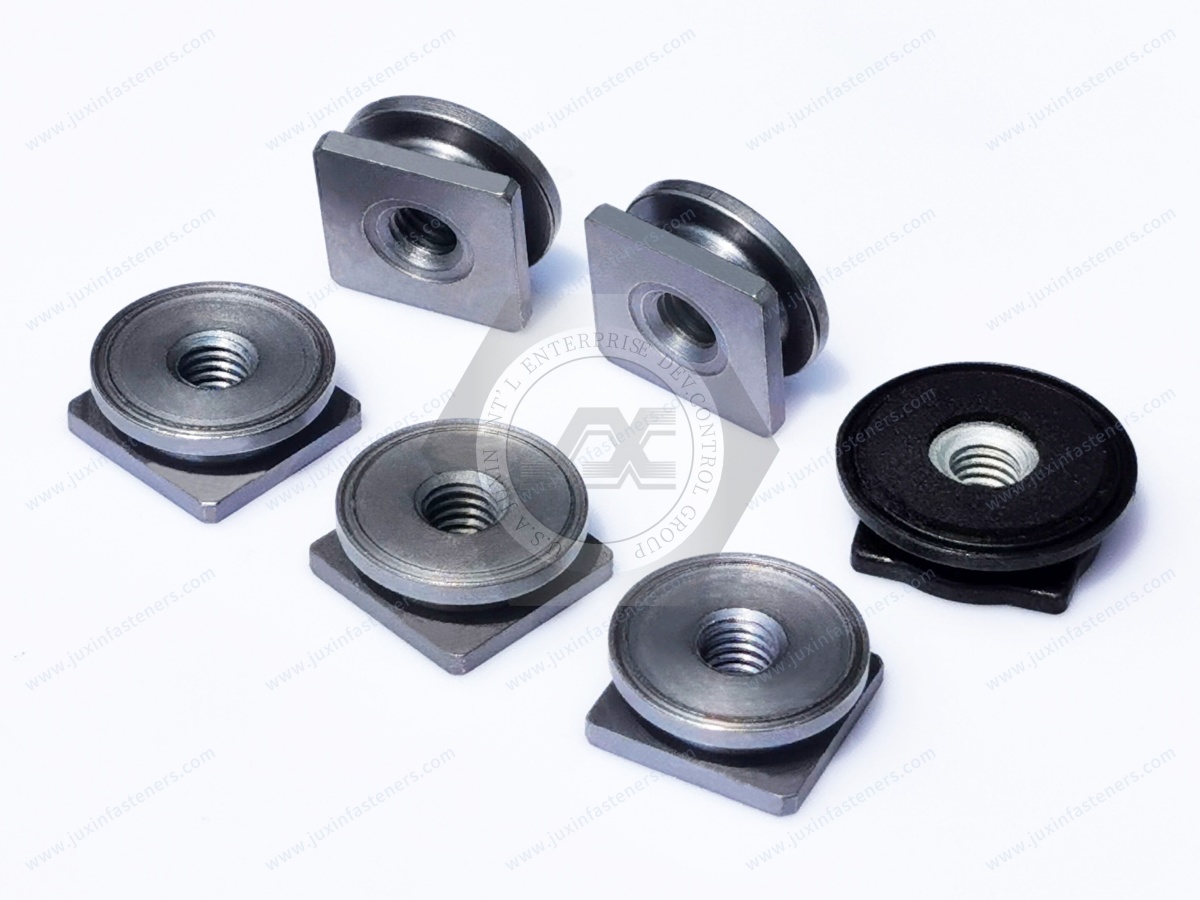
 MORE NEWS


Oct. 13, 2026
Contact Us
Tel.:
+86 020 8621 0320
+86 020 3121 6067
E-mail:
Technical Support:
Navigation
SEND INQUIREY