
Call Us
+86 136 6007 9809
Call Us
+86 136 6007 9809

Oct. 17, 2024
SAE Grade 8 Hex Head Screws: Strength, UNC/UNF Threads, Coatings and OEM Selection
SAE Grade 8 hex head screws and bolts are high-strength inch-series steel fasteners used in mechanical assemblies where the joint design requires elevated strength and controlled fastening performance.
They are commonly considered for suitable automotive equipment, heavy machinery, industrial drives, agricultural equipment and other mechanically demanding applications.
However, selecting a Grade 8 fastener requires more than identifying a hexagonal head or choosing a nominal diameter.
Engineers must confirm the applicable strength specification, thread series, head geometry, joint loading, installation method and surface treatment.
Production teams must also consider tightening consistency, tooling access and repeatable assembly performance.
For purchasing managers and supplier development teams, the complete specification is essential when qualifying an alternative supplier or comparing OEM quotations.
Juxin Fasteners supplies high-strength industrial fastening components, including hex head screws, bolts and drawing-specific OEM fasteners.
This guide focuses on SAE Grade 8 inch-series fasteners and explains their mechanical requirements, design limitations and sourcing considerations.
What Is an SAE Grade 8 Hex Head Screw?
SAE Grade 8 is a mechanical-property classification for applicable inch-series steel bolts, screws and studs under SAE J429.
Grade 8 fasteners are typically manufactured from medium-carbon alloy steel or suitable medium-carbon steel meeting
the specification's requirements and are quenched and tempered to achieve the required properties.
The designation identifies a mechanical-property grade. It does not, by itself, define every dimension, thread configuration or coating requirement.
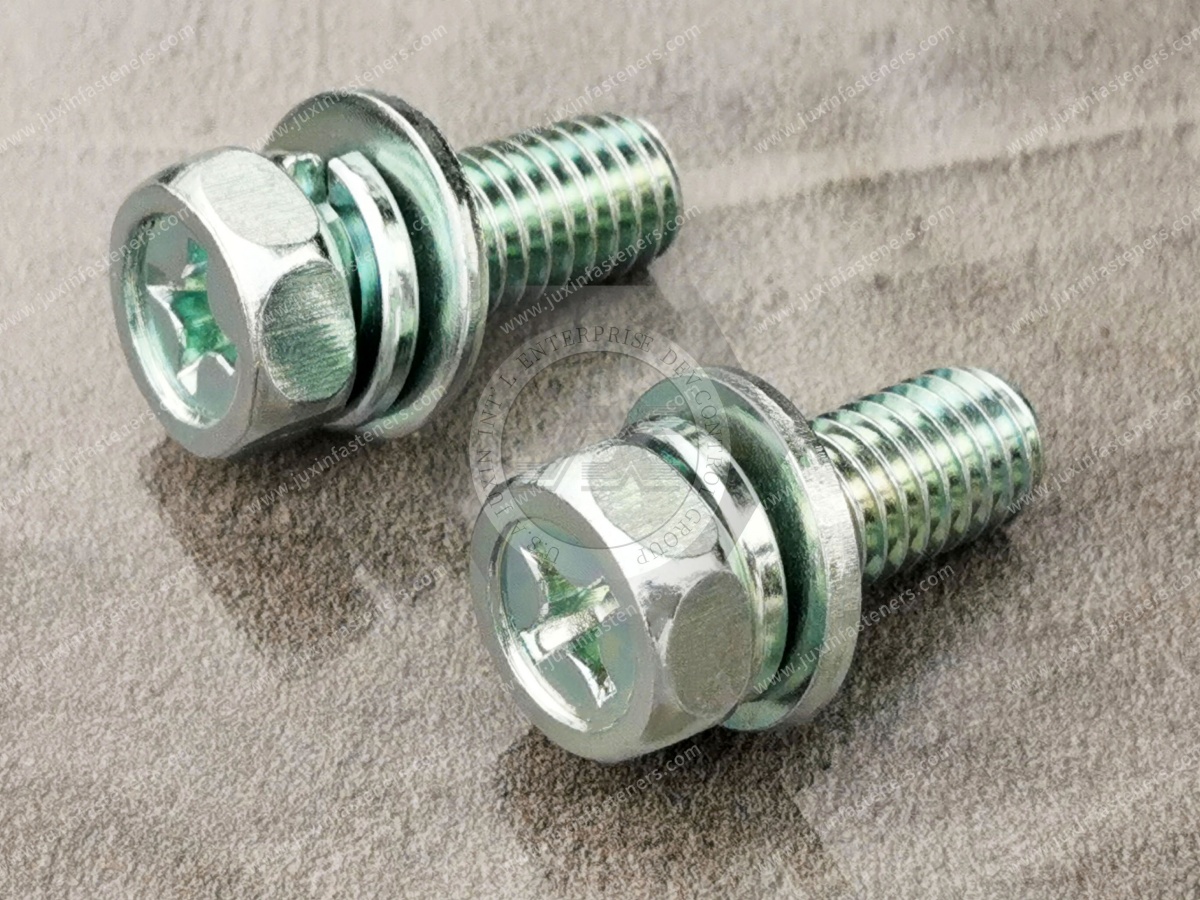
A complete purchase specification should identify:
SAE J429 Grade 8
Nominal inch-series diameter
UNC or UNF thread designation
Thread length
Hex head style
Dimensional standard
Surface finish
Any additional customer requirements
Grade 8 Bolt Head Markings
SAE Grade 8 hex head fasteners are commonly identified by six radial lines on the head.
These markings help identify the property grade, but markings alone should not replace material and mechanical-property verification when required.
SAE Grade 8 Mechanical Properties
SAE J429 defines mechanical-property requirements for fasteners within its scope.
For common Grade 8 sizes within the applicable range, minimum tensile strength is typically 150 ksi, approximately 1,034 MPa.
The corresponding proof and yield requirements depend on the applicable size range and specification provisions.
For engineering calculations and acceptance testing, use the current applicable standard and the exact fastener size rather than relying on a simplified universal value.
Why Tensile Strength Is Not the Same as Joint Capacity
A fastener's tensile strength is a material-related property.
The load capacity of a completed joint also depends on:
Tensile stress area
Thread engagement
Mating nut or tapped material
Clamp length
Joint stiffness
Applied preload
External loading
Fatigue conditions
Engineering Recommendation
Do not use the Grade 8 designation alone to establish an allowable working load for a particular assembly.
SAE Grade 8 Versus Metric Property Class 8.8
One of the most important sourcing distinctions is that SAE Grade 8 and ISO metric property class 8.8 are not equivalent.
| Characteristic | SAE Grade 8 | ISO Property Class 8.8 |
|---|---|---|
| Primary specification | SAE J429 | ISO 898-1 |
| Typical thread system | Inch-series Unified | ISO metric |
| Strength classification | SAE Grade 8 | Metric class 8.8 |
| Nominal tensile-strength level | Commonly at least 150 ksi within applicable size ranges | Nominal 800 MPa class designation |
| Direct interchangeability | No | No |
What About Metric Property Class 10.9?
ISO property class 10.9 is generally closer to SAE Grade 8 in nominal strength level than class 8.8.
However, the standards are different and have their own mechanical-property, dimensional and testing requirements.
A metric 10.9 bolt is not automatically an approved substitute for an SAE Grade 8 bolt.
Engineering Recommendation
When converting a drawing from inch-series to metric fasteners, re-evaluate thread geometry,
joint dimensions, mechanical properties and assembly requirements.
A diameter conversion alone is not sufficient.
Hex Bolts Versus Hex Cap Screws
The terms hex bolt, hex head screw and hex cap screw are sometimes used interchangeably in commercial descriptions.
However, dimensional requirements can differ depending on the specified product standard.
For inch-series hex bolts and hex cap screws, ASME B18.2.1 is a relevant dimensional standard.
The approved drawing should identify the intended product form and dimensional requirements.
Why Head Geometry Matters
Hex head dimensions affect:
Socket and wrench engagement
Tool clearance
Bearing surface
Assembly access
Automated tightening
Maintenance access
Production Recommendation
When changing suppliers, confirm the actual head dimensions and thread length rather than assuming all nominally identical hex fasteners fit the same tooling.
UNC, UNF and Fine Thread Selection
SAE Grade 8 hex head screws may use different Unified thread series.
UNC Coarse Threads
UNC threads are commonly used for general industrial assembly.
Potential advantages include relatively robust thread geometry and suitability for many conventional fastening applications.
UNF Fine Threads
UNF threads provide a finer pitch at a given nominal diameter.
They may offer a larger tensile stress area than the corresponding coarse thread and can be useful where thread engagement or adjustment requirements favor a fine pitch.
However, thread performance depends on the complete joint.
Does a Fine Thread Automatically Prevent Loosening?
No.
Fine threads do not automatically make a joint vibration-proof.
Resistance to loosening depends on preload, joint design, loading conditions and any required locking method.
Extra-Fine Threads
Specialized extra-fine thread configurations may be used where specifically required by the drawing and supported by the applicable thread standard.
They should not be assumed to be standard availability for every Grade 8 diameter.
Thread Compatibility
UNC, UNF, ISO metric, BSW and BSF are distinct thread systems.
They are not directly interchangeable.
Engineering Recommendation
For OEM sourcing, specify the complete thread designation, not merely the nominal diameter.
Joint Preload: Why Grade 8 Strength Is Only One Part of Reliability
A properly designed bolted joint often relies on preload to maintain clamping force between assembled components.
The required preload depends on the joint design and service conditions.
Why Higher Strength Does Not Automatically Mean Better Performance
A stronger fastener can be beneficial when the joint requires higher allowable preload or strength.
However, using a higher-strength fastener does not automatically improve joint reliability if the mating components, bearing surfaces or thread engagement are inadequate.
Common Joint Design Risks
Insufficient preload
Excessive preload
Joint separation
Thread stripping
Bearing surface damage
Fatigue loading
Loss of clamp load
Engineering Recommendation
Select fastener strength together with joint geometry, mating materials and the approved tightening procedure.
Torque Versus Clamp Load
Installation torque is commonly used to control bolted assembly, but torque is not a direct measurement of clamp load.
The relationship is influenced by friction at the threads and bearing surfaces.
A simplified engineering expression is:
T = K × F × d
Where:
T = applied tightening torque
K = empirical torque coefficient
F = intended preload
d = nominal fastener diameter
This relationship is an approximation and should not replace application-specific testing or validated tightening specifications.
Why Coating Changes Matter
A different coating or lubricant can change friction and therefore alter the clamp load produced by the same installation torque.
Production Recommendation
When qualifying a new supplier or coating, verify that the tightening process remains appropriate for the actual fastener and mating components.
Fatigue and Dynamic Loading
High-strength fasteners may be used in joints exposed to repeated mechanical loading.
However, fatigue performance depends on the complete joint and operating conditions.
Relevant factors include:
Preload retention
Stress concentration
Thread geometry
Joint stiffness
External load direction
Surface condition
Manufacturing defects
Important Limitation
Grade 8 classification alone does not guarantee a particular fatigue life or vibration-resistance performance.
Engineering Recommendation
For fatigue-sensitive applications, evaluate the assembled joint under representative loading conditions.
Corrosion Protection for SAE Grade 8 Fasteners
Surface treatment selection should consider environmental exposure, mechanical-property requirements and installation friction.
Common industrial coating options may include zinc-based electroplating, zinc-flake systems and other specified finishes.
Availability must be confirmed for the exact fastener.
Zinc-Plated Grade 8 Hex Head Screws
Electroplated zinc coatings may be used for suitable industrial applications.
Chromate or other conversion treatments can provide additional corrosion protection depending on the system.
Yellow Chromate Appearance
A yellow or iridescent finish is not, by itself, proof of a specific coating specification or corrosion performance.
The actual coating system and applicable environmental requirements should be identified.
Important Consideration: Hydrogen Embrittlement
High-strength steel fasteners can be susceptible to hydrogen embrittlement associated with certain manufacturing or surface-treatment processes.
The risk must be addressed through appropriate material, processing and specification controls.
Engineering Recommendation
Do not select an electroplated coating solely on appearance or price when sourcing high-strength fasteners.
Zinc-Flake-Coated Grade 8 Fasteners
Zinc-flake coatings are frequently considered for corrosion protection of high-strength fasteners.
For applicable systems, ISO 10683 addresses non-electrolytically applied zinc-flake coatings.
Potential advantages may include corrosion protection and avoidance of certain hydrogen-generating electroplating steps.
However, coating performance depends on the actual system, application process and specification.
Salt Spray Results
Salt spray performance must be evaluated against the specified test method and acceptance criteria.
A generic claim of superior corrosion resistance is not sufficient for OEM approval.
Thread Fit and Coating Thickness
Coating thickness and distribution can affect thread fit.
The complete fastener should satisfy the approved post-coating dimensional requirements.
Coating Compatibility With Nuts and Washers
Compatible nuts, washers and bearing surfaces are important.
However, a Grade 8 bolt does not automatically require every mating component to have the same coating.
The mating components must be selected according to the joint's mechanical, corrosion and friction requirements.
Engineering Recommendation
Treat the bolt, nut, washer, coating and installation process as one fastening system.
Relevant International Standards
SAE J429
Defines mechanical and material requirements for applicable inch-series bolts, screws and studs, including Grade 8.
ASME B18.2.1
Provides dimensional requirements for inch-series square and hex bolts and screws within its scope.
ASME B1.1
Defines Unified inch screw thread requirements, including UNC and UNF series.
ASTM A354 Grade BD
ASTM A354 Grade BD is a separate high-strength alloy steel bolting specification.
It should not be treated as automatically identical to SAE J429 Grade 8.
When ASTM A354 Grade BD is specified, the supplied product must meet that standard's applicable requirements.
ISO 10683
Addresses non-electrolytically applied zinc-flake coating systems for fasteners within its scope.
ISO 4042
Addresses electroplated coating systems for fasteners within its scope.
Standard Selection Recommendation
Specify the standards that actually govern the purchased fastener.
Do not list unrelated standards as evidence of compliance.
Automotive and EV Applications
SAE Grade 8 fasteners may be considered for suitable automotive-related mechanical assemblies where the approved design requires inch-series high-strength fastening.
Potential applications include:
Mechanical mounting brackets
Industrial vehicle equipment
Auxiliary machinery
Serviceable mechanical connections
Selected equipment structures
Safety-Critical Automotive Components
Steering, suspension, braking and other safety-critical connections may require dedicated OEM fastener specifications, qualification procedures and traceability.
A generic SAE Grade 8 hex bolt should not be substituted for an approved safety-critical component without engineering authorization.
EV Equipment
High-strength fasteners may be relevant to selected mechanical mounting applications.
However, EV battery and electrical systems require additional consideration of electrical isolation, thermal conditions, corrosion and application-specific safety requirements.
Industrial Machinery and Power Transmission
High-strength hex head fasteners may be used in suitable:
Pump assemblies
Valve equipment
Industrial motors
Gear housings
Machinery brackets
Maintenance-accessible joints
Engineering Considerations
The selected fastener must match the required loading, thread engagement, preload and service environment.
For vibrating equipment, evaluate the complete joint and any required locking strategy.
Construction and Heavy Equipment
Grade 8 hex head fasteners may be considered for selected mechanical connections in:
Agricultural equipment
Construction machinery
Material-handling equipment
Mining machinery
Industrial equipment structures
Important Limitation
Structural construction bolting may be governed by different standards and approval requirements.
SAE Grade 8 should not automatically be substituted for structural bolting specified under other standards.
Renewable Energy and Outdoor Equipment
Potential applications include:
Solar equipment mounting components
Outdoor machinery
Energy equipment housings
Selected wind-related mechanical assemblies
Outdoor exposure may require qualified corrosion protection and suitable inspection requirements.
Safety-critical wind turbine or structural connections require application-specific fastener qualification.
Hex Head Screws Versus Fully Threaded Studs
Hex head screws and fully threaded studs provide different assembly configurations.
Hex Head Screws
A hex head screw includes an integral head and is generally installed using a wrench or socket.
It may be suitable where the assembly requires accessible tightening and removal.
Fully Threaded Studs
A fully threaded stud has external threads along its length and is generally used with nuts or threaded components.
Studs can be useful where the assembly configuration favors two-ended engagement or a particular mounting arrangement.
What Determines the Better Choice?
Consider:
Assembly access
Clamp length
Thread engagement
Maintenance requirements
Load direction
Installation procedure
Component geometry
Important Distinction
A stud is not automatically stronger or more permanent than a hex head screw.
The actual mechanical properties and joint design determine suitability.
OEM Production and Supplier Qualification
For production managers and manufacturing engineers, a suitable Grade 8 fastener must also perform consistently during assembly.
Important production considerations include:
Head and drive geometry
Thread quality
Coating consistency
Friction variation
Tool access
Tightening procedure
Lot identification
Packaging and handling
Why Batch Consistency Matters
Fasteners from different production batches may meet basic dimensional requirements while exhibiting differences in coating friction or surface condition.
These variations can affect automated tightening.
Production Recommendation
Where clamp-load consistency is important, define suitable coating and tightening requirements rather than relying only on nominal Grade 8 classification.
Supplier Development and Commercial Sourcing
Purchasing managers should evaluate both technical conformity and supply reliability.
A complete sourcing review may address:
Applicable mechanical-property standard
Dimensional standard
Thread series and tolerance
Material requirements
Coating specification
Inspection documentation
Sample approval
Packaging
MOQ
Lead time
Annual demand
Change-control requirements
Alternative Supplier Qualification
When replacing an existing Grade 8 bolt supplier, confirm the complete specification and assembly performance.
A lower unit price does not necessarily reduce total manufacturing cost if additional inspection, tooling changes or production disruptions are required.
Frequently Asked Questions
What does SAE Grade 8 mean?
It identifies a high-strength inch-series mechanical-property grade defined under SAE J429 for applicable fasteners.
Is SAE Grade 8 the same as metric 8.8?
No. SAE Grade 8 and ISO metric class 8.8 are different classifications with different strength levels and thread systems.
Is metric 10.9 equivalent to SAE Grade 8?
They may be closer in nominal strength than Grade 8 and class 8.8, but they are not automatically interchangeable.
What do six radial lines on a bolt head indicate?
They are commonly used to identify SAE Grade 8 fasteners.
Are Grade 8 hex bolts available with UNC and UNF threads?
These thread series may be specified for appropriate inch-series products, subject to size and supply confirmation.
Are fine-thread Grade 8 bolts more vibration-resistant?
Not automatically. Joint preload, loading conditions and the complete locking strategy determine resistance to loosening.
Can Grade 8 bolts be zinc plated?
Suitable zinc-based coatings may be specified, but hydrogen-embrittlement risk, corrosion requirements and friction characteristics must be addressed.
Are zinc-flake coatings always better than zinc plating?
No. The appropriate coating depends on the environment, corrosion requirements, process controls and installation needs.
Can SAE Grade 8 bolts be used in safety-critical automotive assemblies?
Only where the approved engineering specification and qualification process permit their use.
What information should be included in a Grade 8 hex bolt RFQ?
Provide the drawing, SAE grade, thread designation, dimensions, coating, assembly requirements, inspection criteria and expected purchasing volume.
Juxin Fasteners: High-Strength Hex Head Screws and OEM Fasteners
Juxin Fasteners supplies industrial fastening components for mechanical equipment and OEM manufacturing.
Relevant product categories include:
SAE Grade 8 hex head screws
High-strength hex bolts
Inch-series UNC and UNF fasteners
Metric high-strength hex head screws
Coated industrial bolts
Fully threaded studs
Drawing-specific OEM fasteners
Specific grades, thread series, coating systems, testing, documentation, MOQ and lead times are subject to technical and commercial confirmation.
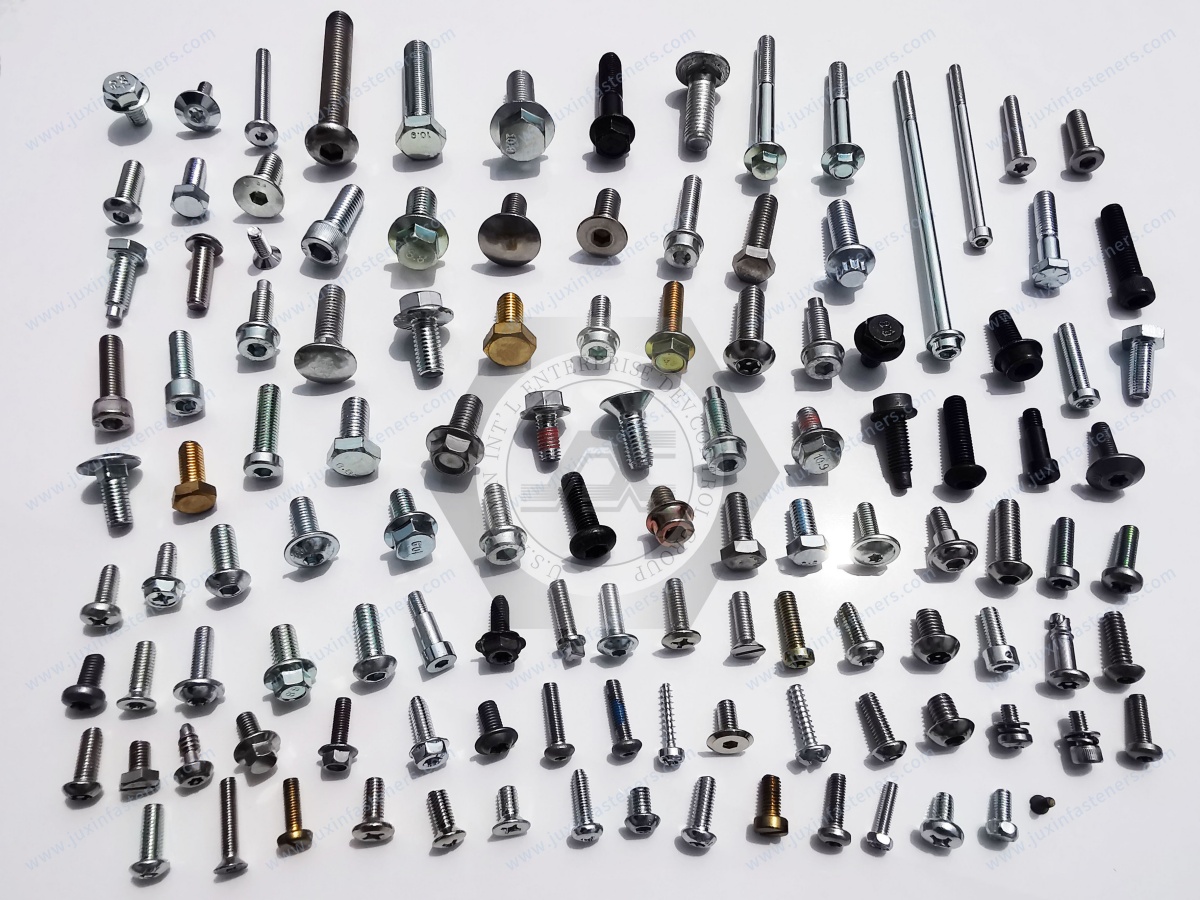
Request an SAE Grade 8 Hex Head Screw RFQ
Are you sourcing Grade 8 hex head screws, evaluating a replacement bolt supplier or developing a drawing-specific high-strength fastener?
Juxin Fasteners welcomes inquiries from OEM manufacturers, mechanical engineers, design engineers,
manufacturing engineers, production managers, purchasing specialists and supplier development teams.
To support technical confirmation and quotation, please provide:
Part drawing and revision + SAE J429 Grade 8 requirement + UNC/UNF thread designation + nominal diameter and length
+ head style + coating specification + mating components + installation requirements + inspection documentation
+ prototype quantity + annual demand + batch size + packaging + target delivery schedule.
Company: Juxin Fasteners
Website: https://www.juxinfasteners.com/
Email: info@juxinfasteners.com
Send your drawings and Grade 8 hex head screw RFQ to Juxin Fasteners for specification review, product selection and quotation.
Contact Us
Tel.:
+86 020 8621 0320
+86 020 3121 6067
E-mail:
Technical Support:
Navigation
SEND INQUIREY



