Call Us
+86 136 6007 9809
Call Us
+86 136 6007 9809

Nov. 02, 2023
High-strength bolts are critical mechanical fasteners used in assemblies where joint integrity must be maintained under substantial static loads,
dynamic loads, vibration, shock, fatigue cycles or demanding environmental conditions.
However, specifying a high-strength bolt is not simply a matter of selecting the highest available strength class.
For automotive manufacturers, machinery builders, heavy-equipment OEMs and industrial procurement teams, the correct fastening solution depends on the complete joint:
application load → joint design → bolt geometry → property class → mating material → surface finish → friction conditions → assembly method → operating environment → validation
JUXIN FASTENERS supplies standard and custom high-strength bolts, high-tensile fasteners and drawing-based special bolts for global OEM and industrial applications.
For applicable metric carbon and alloy steel bolts, screws and studs, ISO 898-1 defines mechanical property classes including commonly specified classes such as:
Property Class 8.8
Property Class 10.9
Property Class 12.9
These classifications describe defined mechanical-property requirements for applicable fasteners.
They should not be confused with stainless steel property-class systems or treated as universal classifications for every type of bolt material.
A complete high-strength bolt specification can include:
Product geometry
Diameter and thread pitch
Property class
Material requirements
Heat treatment
Thread tolerances
Surface coating
Friction requirements
Dimensional tolerances
Inspection requirements
Traceability requirements
For OEM projects, the engineering drawing and referenced specifications should control the final product requirements.
High-strength bolting appears across many industries, but the engineering requirements can be very different.
A 10.9 flange bolt used in an automotive chassis assembly should not automatically be treated as technically equivalent to a high-strength bolt used in industrial machinery or a structural bolting assembly.
Understanding the application is therefore essential before selecting the fastener.
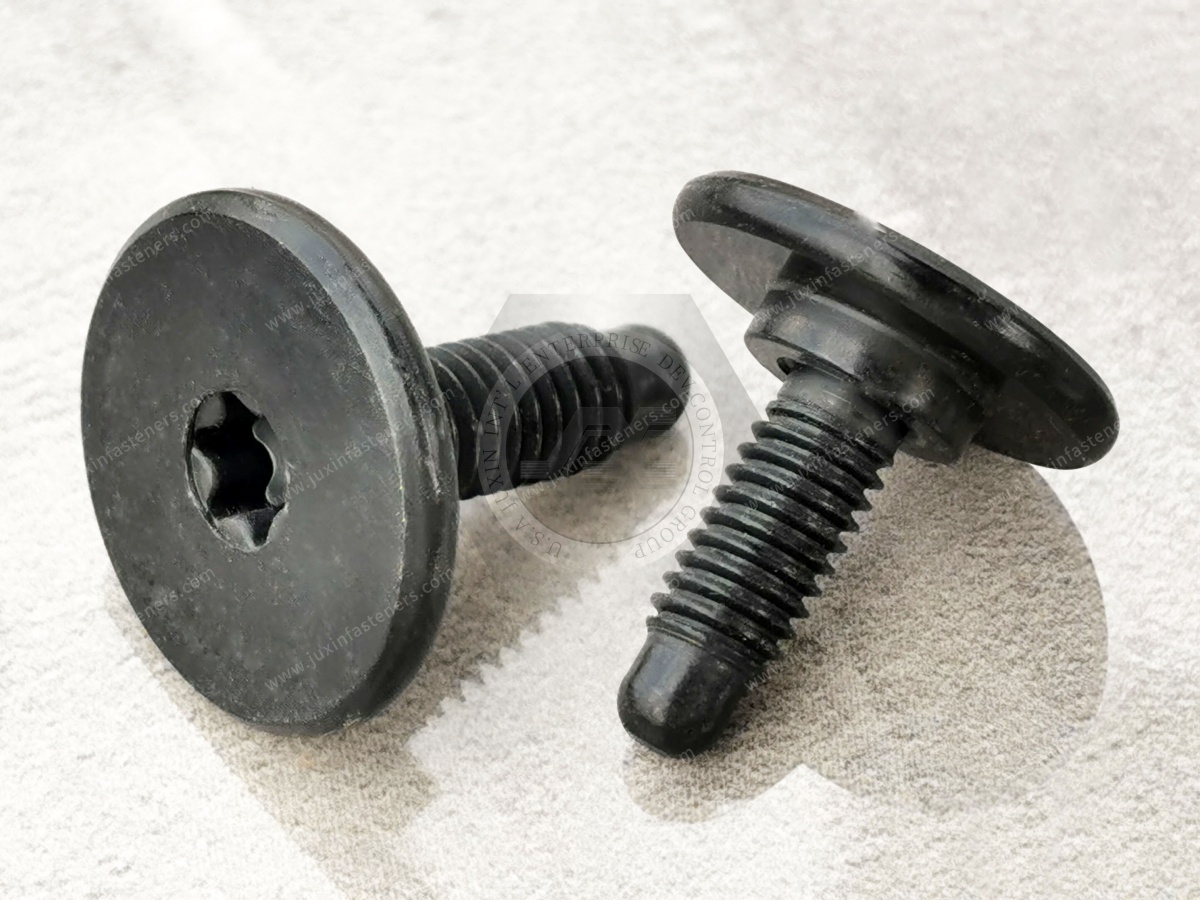
Automotive fastening systems are exposed to combinations of vibration, cyclic loading, temperature variation, corrosion and highly controlled assembly processes.
High-strength automotive bolts may be used in:
Chassis assemblies
Suspension-related components
Steering-related mechanical systems
Powertrain assemblies
Transmission systems
Seat structures
Brackets and structural supports
Electric-drive systems
EV battery structural assemblies
Thermal-management equipment
Common product configurations can include:
Hex bolts
Flange bolts
Socket screws
Shoulder bolts
Fine-thread bolts
Special automotive bolts
Drawing-based cold-formed fasteners
An automotive engineer may need to define:
Property class
Thread pitch
Bearing surface
Flange geometry
Coating system
Coefficient-of-friction requirement
Corrosion requirement
Tightening strategy
Lot traceability
Functional testing
This is why replacing an existing automotive bolt based only on M diameter × length × property class can create qualification problems.
The complete drawing and assembly requirements matter.
Automotive fasteners frequently require engineered corrosion-protection systems.
Depending on the specification, options can include:
Zinc plating
Zinc-nickel plating
Zinc-flake coating systems
Phosphate-based finishes
Application-specific topcoats and lubricants
The correct coating cannot be selected from corrosion resistance alone.
Coating systems can also affect friction and therefore the relationship between tightening torque and achieved preload.
For controlled automotive assembly, coating and friction requirements should be treated as part of the fastener specification.
Industrial machinery can expose bolted joints to:
Continuous vibration
Cyclic loading
Shock
Repeated start-stop operation
Thermal variation
High clamping loads
Applications can include:
Machine tools
Gearboxes
Hydraulic equipment
Pumps
Compressors
Industrial robots
Production machinery
Conveying systems
Automated manufacturing equipment
Common high-strength fasteners include:
High-tensile hex bolts
Socket head cap screws
Flange bolts
Shoulder bolts
Studs
Custom machine bolts
One of the most important functions of a high-strength bolt is to create and maintain sufficient clamp load in the joint.
The bolt itself should not be viewed merely as a pin holding two components together.
In a properly engineered preloaded joint, the clamping force helps the assembled components resist external loading.
This means machinery designers should consider:
Target preload
Joint stiffness
Bolt stiffness
Friction
Thread engagement
Bearing surface
External cyclic load
Simply changing from an 8.8 bolt to a 10.9 or 12.9 bolt does not automatically solve a loosening or fatigue problem.
The joint should be reviewed as a system.
Construction equipment, agricultural machinery, mining equipment and material-handling systems can expose fasteners to severe mechanical conditions.
Typical challenges include:
Shock loading
High vibration
Dirt and abrasive contamination
Outdoor moisture
Corrosive environments
Large mechanical loads
Repeated service cycles
Applications may include:
Equipment frames
Hydraulic assemblies
Boom and bracket systems
Drive assemblies
Engine-related equipment
Material handling machinery
Agricultural equipment
Industrial vehicles
High-strength bolts for these applications may require a combination of mechanical performance and environmental protection.
A frequent sourcing assumption is:
heavy equipment = highest possible bolt strength
That is not a reliable selection rule.
The correct fastener depends on factors including:
Load direction
Static versus cyclic loading
Mating thread strength
Required ductility
Joint geometry
Serviceability
Corrosion
Assembly control
For example, using a very high-strength bolt with an inadequately designed internal thread may simply shift the failure mode from the bolt to the mating component.
Structural bolting requires special attention because structural bolts are not simply generic high-strength industrial bolts used in a building.
Structural connections are engineered systems governed by the applicable design, product, installation and inspection requirements.
Depending on project location and specification, relevant standards may include ASTM, EN, ISO and other recognized structural bolting requirements.
Potential applications include:
Steel buildings
Industrial structures
Bridges
Infrastructure
Structural frames
Equipment-support structures
The project may define requirements covering:
Bolt assembly
Mechanical properties
Nut and washer compatibility
Coating
Installation method
Pretensioning
Inspection
Documentation
Therefore, a generic property class 8.8 or 10.9 industrial bolt should not automatically be substituted for a specified structural bolting assembly.
Procurement teams should source according to the exact project standard and approved specification.
High-strength fasteners are also used throughout energy and electrical infrastructure.
Applications can include:
Power-generation equipment
Energy-storage systems
Electrical equipment
Industrial power systems
Solar-support equipment
Wind-energy equipment
Thermal-management equipment
The fastening requirement can vary significantly between a structural frame, rotating machine, electrical cabinet and battery system.
Relevant considerations can include:
Mechanical loading
Outdoor exposure
Corrosion
Temperature
Maintenance intervals
Electrical considerations
Material compatibility
The fastener should therefore be selected for the specific joint rather than simply for the broader industry.
Rail vehicles and transportation equipment can involve continuous vibration and cyclic loading.
High-strength fasteners may be used in:
Equipment mounting
Mechanical brackets
Structural subassemblies
HVAC equipment
Electrical equipment supports
Underbody systems
Interior structural assemblies
Fastener requirements should follow the applicable project specifications, engineering drawings and relevant railway or transportation standards.
Marine and coastal environments create demanding corrosion conditions.
However, an important engineering distinction must be made:
high mechanical strength and high corrosion resistance are separate material-selection requirements.
A carbon or alloy steel high-strength bolt may require a suitable protective coating, while a stainless or other corrosion-resistant fastener follows a different material and mechanical-property system.
Stainless steel fasteners should not automatically be described using carbon/alloy steel property classes such as 8.8, 10.9 and 12.9.
Material selection should consider:
Required mechanical strength
Chloride exposure
Temperature
Galvanic compatibility
Crevice conditions
Maintenance requirements
Applicable specification
For demanding marine projects, material and coating selection should be reviewed against the actual environment.
High-strength carbon and alloy steel bolts obtain their required properties through a combination of material selection, forming and controlled heat treatment.
Depending on the specification, materials may include appropriate carbon steels or alloy steels capable of achieving the required finished mechanical properties.
For custom projects, material selection should begin with the finished fastener requirements rather than simply choosing a familiar steel grade.
Stainless steel bolts can provide valuable corrosion resistance, but their mechanical classification is different from ISO 898-1 carbon and alloy steel property classes.
For example, stainless steel fasteners may be specified according to relevant ISO 3506 requirements where applicable.
Therefore:
10.9 alloy-steel bolt ≠ stainless steel bolt with equivalent naming
If both high strength and corrosion resistance are required, the design engineer should evaluate the appropriate material system for the application.
Surface treatment is not simply cosmetic.
It can influence:
Corrosion protection
Friction
Tightening behavior
Dimensional fit
Hydrogen-embrittlement risk
Service environment
Electroplated zinc is widely used for industrial carbon-steel fasteners.
It can provide economical corrosion protection, but the processing route requires additional consideration for high-strength steel because of potential hydrogen embrittlement concerns.
Zinc-nickel systems are frequently specified for automotive and other demanding corrosion environments.
Actual performance depends on the complete coating specification, including thickness, passivation, topcoat and test requirements.
Zinc-flake systems are widely used on high-strength automotive and industrial fasteners where the coating specification makes them suitable.
They can be attractive when corrosion performance and high-strength fastener processing requirements must be considered together.
Hot-dip galvanizing is widely used for certain outdoor and structural fastener applications.
However, coating thickness can significantly affect threaded fit.
Bolts, nuts and thread allowances therefore need to be specified as a compatible system according to the applicable standard.
It should not be treated as a coating that can simply be added to any existing high-strength threaded fastener without engineering review.
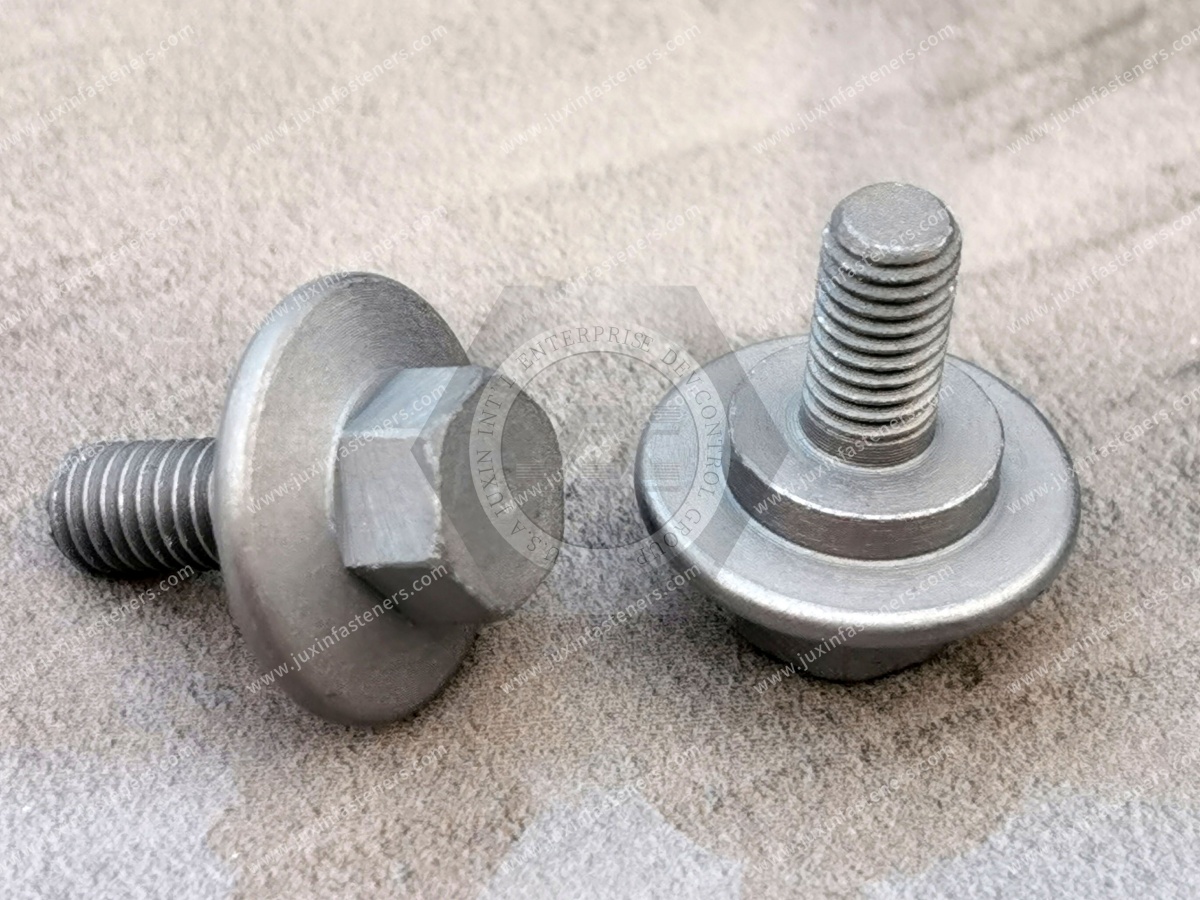
Procurement teams often compare high-strength bolts using:
size + property class + coating + price
But friction can be equally important.
During torque-controlled installation, only part of the applied torque contributes to generating useful bolt preload. A significant portion is consumed by friction in the threads and beneath the head or nut.
Therefore, changes in:
Plating
Topcoat
Lubrication
Thread condition
Bearing surface
can change the resulting preload even when the same torque is applied.
For OEM assembly lines, friction requirements may therefore need to be specified and validated.
Hydrogen embrittlement is an important consideration for high-strength steel fasteners.
Hydrogen may be introduced during certain cleaning, pickling and electroplating processes.
Under susceptible material and stress conditions, delayed brittle failure can occur after installation.
Risk management can involve:
Process selection
Controlled cleaning
Appropriate coating selection
Post-treatment requirements where applicable
Material and hardness control
Applicable hydrogen-embrittlement standards
Customer-specific validation
This issue becomes particularly important when sourcing highly stressed automotive and industrial fasteners.
Standard fasteners are often the most efficient choice when an established ISO, DIN, ASME/ANSI, ASTM, SAE or EN product meets the joint requirements.
Custom high-strength bolts become appropriate when the application requires:
Special head geometry
Special flange diameter
Controlled shoulder
Non-standard shank
Special thread length
Fine thread
Pilot point
Dog point
Special drive
Captive features
Drawing-controlled tolerances
JUXIN FASTENERS supports both standard and drawing-based high-strength fastener projects.
Depending on component design, quantity and technical requirements, manufacturing processes can include:
Cold forming
Thread rolling
CNC machining
Precision turning
Heat treatment
Surface finishing
Assembly
Inspection
Our product scope includes:
High-strength hex bolts
High-tensile bolts
Flange bolts
Socket head cap screws
Shoulder bolts
Automotive bolts
Machinery bolts
Custom special bolts
CNC machined fasteners
Manufacturing route selection depends on geometry, material, production volume, tolerance and mechanical requirements.
Price-per-piece alone is not enough for an engineered high-strength fastener.
A more useful supplier-development checklist includes:
1. Drawing compliance
Can the supplier manufacture all critical dimensions and tolerances?
2. Mechanical requirements
Is the required property class or mechanical specification clearly controlled?
3. Heat treatment
Is the required finished mechanical performance controlled through the manufacturing process?
4. Thread requirements
Are thread specification, tolerance and gauging requirements defined?
5. Coating specification
Does the supplier understand corrosion, friction and coating requirements?
6. Inspection
Are the required dimensional, mechanical and coating inspections available?
7. Documentation
What material, inspection or traceability documents does the project require?
8. Sample qualification
Can samples be evaluated before production approval?
This approach helps procurement teams distinguish a true drawing-controlled fastener supplier from a supplier quoting only by product name.
Supplier-development teams frequently need an alternative source for an existing bolt.
The recommended process is:
existing drawing/sample → specification review → critical characteristics → manufacturing route → coating → sample production → dimensional and functional validation → production approval
Do not assume that a visually identical bolt is functionally interchangeable.
Differences can exist in:
Material
Heat treatment
thread geometry
coating
friction
hardness
tolerances
bearing surface
manufacturing method
These differences may affect assembly performance.
Inspection should be defined according to the applicable drawing, standard and application risk.
Depending on the project, requirements can include:
Dimensional inspection
Thread gauging
Mechanical-property testing
Hardness testing
Surface-finish inspection
Coating-thickness verification
Corrosion testing where specified
Torque-tension or friction testing where specified
Functional testing
Material documentation
Lot traceability
Not every project requires every test.
The inspection plan should match the actual product specification.
To obtain an accurate quotation, provide:
Bolt type
Diameter
Thread pitch
Length
Head style
Drive
Thread length
Special geometry
Property class or mechanical specification
Applicable ISO/DIN/EN/ASME/ASTM/SAE standard
Material specification if controlled
Critical tolerances
Special inspection requirements
Coating type
Coating specification
Corrosion requirement
Coating thickness if specified
Friction requirement
Lubrication/topcoat requirements
Automotive
Machinery
Heavy equipment
Energy
Rail
Structural equipment
Other industrial application
Also provide relevant information regarding operating temperature, vibration, corrosion exposure and mating materials where these affect fastener selection.
Sample quantity
Production quantity
Annual usage
Packaging
Documentation
Delivery requirements
For custom or replacement components, sending the 2D drawing, 3D model and/or physical sample can significantly improve technical review.
For engineers:
joint conditions → load → bolt geometry → property class → thread → coating → assembly → validation
For procurement teams:
drawing → technical specification → supplier quotation → sample → qualification → production
For supplier development:
existing fastener → specification comparison → process capability → sample validation → second-source approval
This creates a much more reliable sourcing process than purchasing a bolt only by diameter, length and nominal grade.
JUXIN FASTENERS supplies high-strength bolts and custom fastening components for automotive, industrial machinery, heavy equipment, energy, transportation and other engineered applications.
Our product capabilities include:
Property Class 8.8 Bolts
Property Class 10.9 Bolts
Property Class 12.9 Fasteners
High-Tensile Hex Bolts
Flange Bolts
Socket Head Cap Screws
Automotive Fasteners
Machinery Fasteners
Custom Special Bolts
Drawing-Based OEM Fasteners
CNC Machined Fasteners
If you are developing a new assembly, qualifying a second source or replacing an existing high-strength bolt, send us your drawing, specification, sample, required quantity and application information.
Our team can review the fastening requirements and prepare a quotation based on the actual component specification.
Email: info@juxinfasteners.com
Website: www.juxinfasteners.com
Previous: Spring Clip Nuts for Sheet Metal
 MORE NEWS
Sep. 27, 2026
Sep. 27, 2026
Sep. 27, 2026
Contact Us
Tel.:
+86 020 8621 0320
+86 020 3121 6067
E-mail:
Technical Support:
Navigation
SEND INQUIREY