
Call Us
+86 136 6007 9809
Call Us
+86 136 6007 9809

Mar. 03, 2023
In high-reliability OEM manufacturing, selecting the optimal permanent mechanical rivet requires balancing joint shear strength, installation force requirements,
component kinematics, parent material limitations, and assembly cycle speed.
Specifying an incorrect rivet architecture can lead to joint slip, surface crushing in soft parent materials, thermal stress cracking, premature joint failure, or costly assembly line downtime.
JUXIN FASTENERS provides a comprehensive, factory-direct portfolio of engineered industrial rivets.
From high-shear solid rivets designed for structural airframes and heavy automotive frames, to force-reducing semi-tubular rivets, precision step rivets for hinged assemblies,
and single-sided blind rivets, JUXIN FASTENERS supports a wide range of industrial fastening requirements and OEM applications.
The selection of an industrial rivet should be based on the complete joint system rather than rivet diameter alone. Engineers should consider joint loading, installation force,
hole geometry, material compatibility, joint movement, assembly access, and production requirements.
Understanding the physical deformation mechanics of each rivet classification is essential for matching structural load specifications with available press tooling capacity and parent material limits.
Different industrial rivet architectures deform in different ways during installation.
Solid rivets undergo full-body upsetting, while semi-tubular rivets use a hollow tip that can be rolled or clinched with substantially lower installation force.
       SOLID RIVET                             SEMI-TUBULAR RIVET
  (Full-Body Upsetting)                     (Tubular Tail Roll-Clinching)

     [ Pneu/Hydraulic Ram ]                    [ Radial/Orbital Peen ]
               |                                          |
               v                                          v
      +-----------------+                        +-----------------+
      |   SOLID HEAD    |                        |   FLAT / OVAL   |
   ===+=================+===                  ===+=================+===
      |  (Heavy Axial   |                        |  (Low Squeezing |
      |   Shank Upset)  |                        |   Force Applied)|
   ===+=================+===                  ===+=================+===
      |   FORMED TAIL   |                        |  O  ROLLED TAIL |
      +-----------------+                        +-----------------+
  Requires 100% Force (100kN)                Requires ~25% Force (25kN)
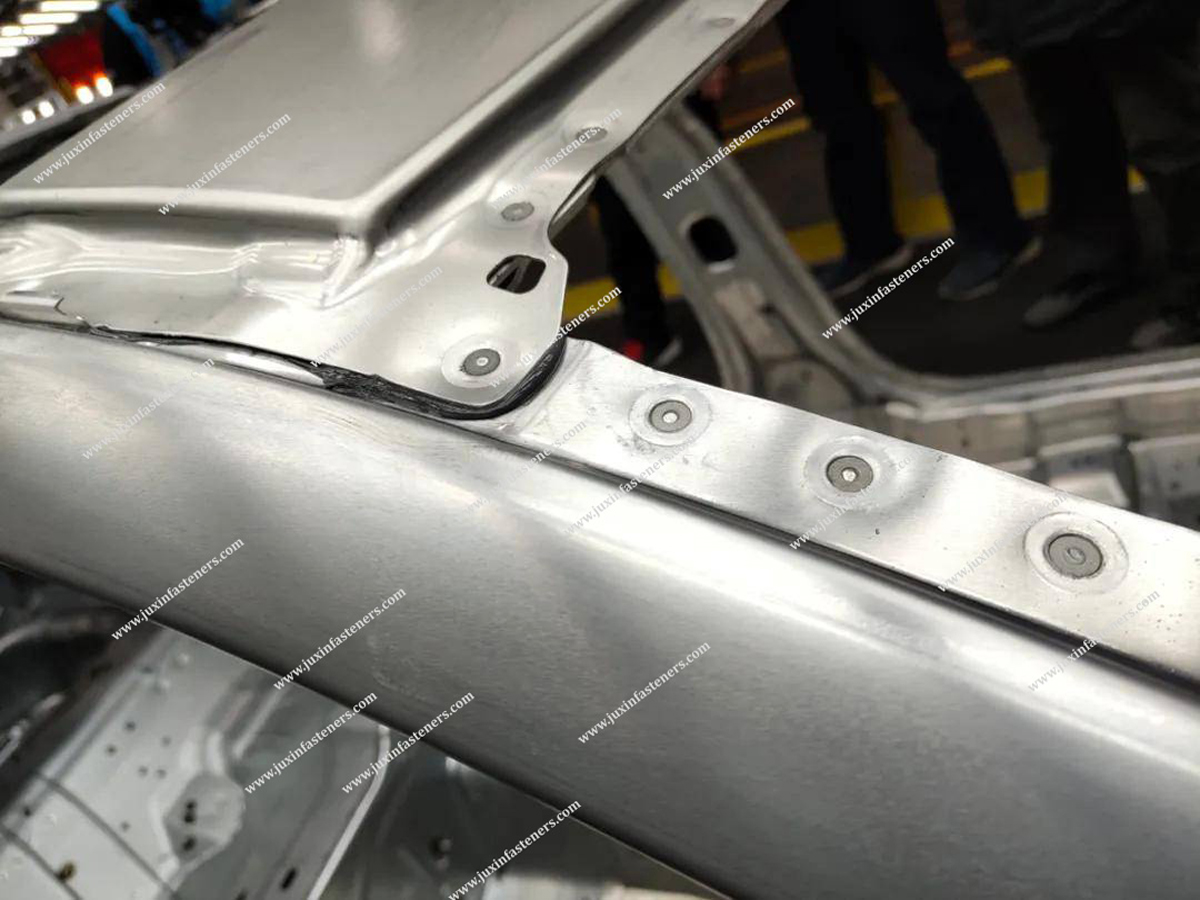
Solid rivets require sufficient compressive load to plastically upset the entire shank volume within the mounting hole.
During installation, the rivet shank expands and fills the hole before forming the driven head. This full-body deformation is one of the reasons solid rivets remain widely used for high-strength and safety-critical permanent joints.
Installation Mechanics:
Requires high-tonnage hydraulic squeezers, servo presses, or pneumatic riveting hammers.
Structural Advantage:
Maximum shear and tensile joint capacity, total hole-fill, and long-term fatigue resistance under dynamic loads.
Solid rivets are therefore commonly considered for applications where structural integrity and load transfer take priority over low installation force.
Semi-tubular rivets feature a shallow tubular hole at the tip.
During setting, an orbital or radial peening die rolls the thin tubular wall outward into a smooth, uniform lip.
Force Reduction Ratio:
Setting force is reduced by up to 75% compared to solid rivets of equal shank diameter.
Engineering Benefit:
The lower setting force helps prevent cracking or surface crushing when fastening fragile resins, soft aluminum, composites, or electrical sub-assemblies.
This makes semi-tubular rivets particularly suitable for high-volume OEM assembly environments where controlled forming force and production efficiency are important.
| Fastener Type | Shank Profile | Installation Force Required | Shear & Tensile Capacity | Primary Joint Motion | Compatible Materials |
|---|---|---|---|---|---|
| Solid Rivets | Solid Cylindrical | High to Very High (20–100+ kN) | Maximum (Structural Baseline) | Fixed, rigid structural joint | Aluminum, Steel, Stainless (18-8, 430), Brass, Copper, Titanium, Monel |
| Semi-Tubular | Hollow Tip / Solid Body | Low to Moderate (5–25 kN) | Moderate to High | Fixed or light pivot movement | Aluminum, Low-Carbon Steel, Stainless Steel, Brass, Copper |
| Step Rivets | Dual-Diameter Stepped Body | Low to Moderate (5–20 kN) | Controlled by shoulder diameter | Controlled rotational pivot | Carbon Steel, Stainless Steel, Brass, Custom Alloys |
| Blind Rivets | Hollow Body + Central Mandrel | Tool-Controlled Mandrel Tension | Moderate to High (Structural) | Single-sided fixed joint | Aluminum, Steel, Stainless Steel, Copper, Monel, Composite Mandrels |
This matrix provides a quick engineering starting point for selecting the correct industrial rivet architecture.
Solid rivets prioritize structural strength.
Semi-tubular rivets prioritize lower setting force and controlled clinching.
Step rivets are designed for controlled rotational movement.
Blind rivets solve one-side-access fastening requirements.
Different industrial assemblies require different rivet architectures.
JUXIN FASTENERS supplies engineered rivet solutions covering fixed structural joints, low-force assemblies, controlled pivot joints, and inaccessible single-sided applications.
Semi-tubular rivets are designed for rapid, energy-efficient assembly lines.
The shallow hollow tip requires minimal setting force, helping reduce panel distortion and allowing controlled roll-clinching during installation.
Standard Dimensions:
Diameters from 1/16" to 3/8"; body lengths from 1/16" to 2-15/16".
Head Configurations:
Flat, Oval, Pan, and Truss head styles.
Primary OEM Uses:
Automotive brake shoe linings
HVAC damper control arms
Lighting fixtures
Extension ladders
Electronics chassis
Their lower installation force makes semi-tubular rivets particularly useful where the parent material is relatively soft or sensitive to localized compression.
Solid structural rivets are a global benchmark for heavy-duty structural integrity and are widely associated with safety-critical permanent assemblies.
Diameter Range:
Standard series: 1/16" to 9/32"
Heavy industrial series: 1/2" to 1-3/4" with lengths up to 8-1/2".
Surface Finishing:
Zinc electroplating
Chromium plating
Phosphoric passivation
Black oxide
Anodizing
Primary OEM Uses:
Aerospace airframe skins
Heavy truck chassis frames
Railway cars
Shipbuilding
Industrial machinery
Solid structural rivets are selected where high shear and tensile capacity, hole-fill, and long-term fatigue resistance are key engineering requirements.
Step rivets feature a precision-machined shoulder.
When clinched, the expanded tail locks against the shoulder step rather than clamping down directly onto the mating workpiece.
       +-----------------------+
       |      RIVET HEAD       |
  =====+=======================+=====  <-- Stationary Mounting Plate
       |   PRIMARY SHOULDER    |
  -----+-----------------------+-----  <-- [ Controlled Axial Clearance / Gap ]
       |  ROTATING COMPONENT   |       <-- Component Swivels Freely
  =====+=======================+=====
       |  CLINCHED STEP TAIL   |
       +-----------------------+
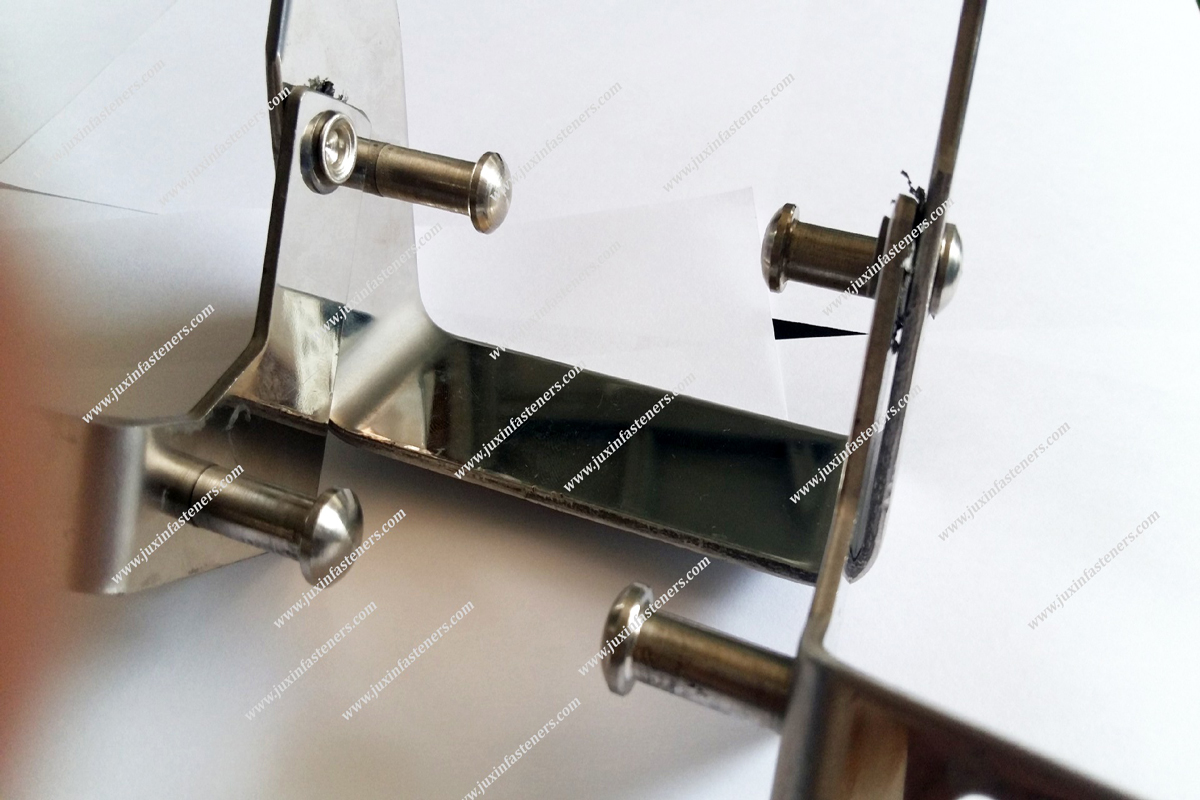
Information Gain — Kinematic Engineering Insight:
Step rivets replace separate shoulder bushings and precision spacer washers.
They guarantee a fixed axial clearance gap, allowing linkage arms, latches, and pre-positioned bracket assemblies to rotate freely without binding or loosening over time.
This makes precision step rivets particularly valuable for controlled pivot joints where free movement and repeatable axial positioning are required.
Typical applications include hinged mechanisms, linkage systems, latches, brackets, and other assemblies requiring controlled rotational movement.
Blind rivets are installed from one side of an assembly using a tubular body and pull mandrel.
They are ideal for fully enclosed panels, tubing, hollow frame profiles, and other structures where the rear side of the joint is inaccessible.
Architectural Variants:
Dome head
120° countersunk
Large flange
Closed-end
Watertight / vapor-tight configurations up to 100 psi
Micro blind rivets
2.0 mm configurations
Pull-Thru (PT) flush series
Primary OEM Uses:
EV battery pack covers
Commercial vehicle side walls
Outdoor LED signage cabinets
Telecommunications switchgear
Blind rivets provide an important alternative to two-sided riveting and welding when access to only one side of the assembly is available.
Design for Manufacturing (DFM) should be considered during the initial product design stage rather than after the rivet has already been selected.
The hole size, edge distance, rivet pitch, material thickness, setting force, and installation tooling all influence the final joint.
For solid rivets, prepare holes 0.1 mm to 0.2 mm larger than the nominal shank diameter to allow proper upset expansion.
Avoid excessive chamfering, which reduces under-head bearing area.
Correct hole preparation is important for consistent rivet deformation and reliable joint formation.
Maintain a minimum distance of at least twice the nominal shank diameter (D) from the hole center to the plate edge:
E ≥ 2 × D
This helps prevent material tear-out during clinching and reduces the risk of localized failure around the rivet hole.
Space adjacent rivets at least three times the body diameter apart:
P ≥ 3 × D
This spacing helps avoid overlapping stress concentration zones and supports more uniform load distribution across the joint.
The installation process should be matched to the strength and sensitivity of the parent material.
High-force solid rivet installation may be appropriate for robust structural materials, while semi-tubular rivets can reduce forming force for softer aluminum, resins, composites, and electrical sub-assemblies.
This is one reason why selecting the correct industrial rivet architecture is a DFM decision as well as a fastener specification decision.
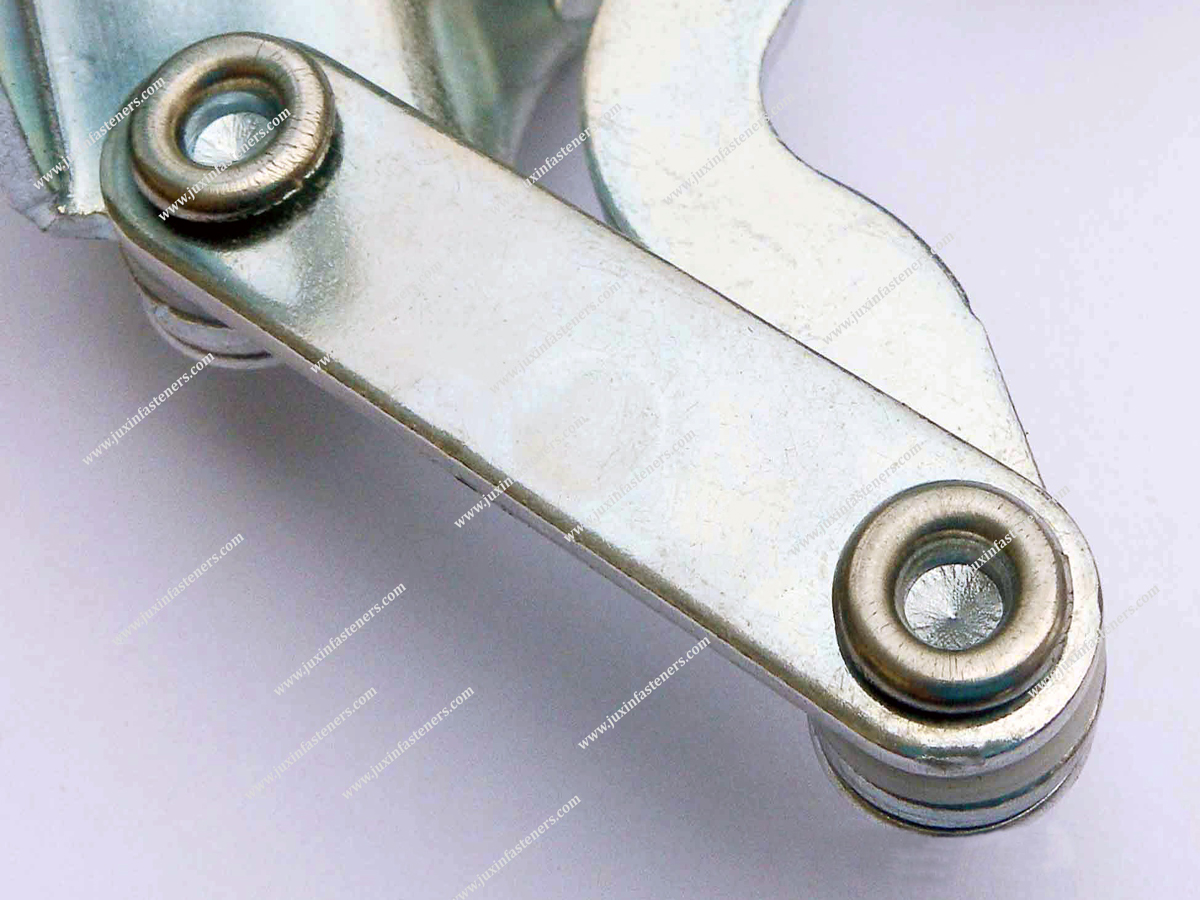
For sourcing managers, selecting industrial rivets involves more than unit purchase price.
Total cost of ownership can be affected by installation energy, tooling wear, automated feeding, inventory requirements, quality documentation, supplier cross-referencing, and production continuity.
JUXIN FASTENERS rivets undergo strict dimensional inspection to guarantee continuous, jam-free operation in automated bowl feeders, orbital riveting stations, and robotic cells.
For automated OEM assembly, consistent dimensions and repeatable geometry are important for reliable feeding, orientation, setting, and production throughput.
Substituting semi-tubular rivets for solid rivets reduces installation press energy consumption by up to 60%, extends tool die lifespan, and accelerates assembly throughput.
The reduced installation force of semi-tubular rivets can also support applications where press capacity is limited or where the parent material is sensitive to high compression forces.
From a procurement perspective, the energy and tooling effects should be considered together with rivet unit cost when calculating total cost of ownership.
Industrial rivets are manufactured under ISO 9001 certified quality control.
Full PPAP Level 3 documentation, material heat-lot traceability, shear/tensile test certificates, and RoHS/REACH compliance reports are available with every production batch.
This documentation supports OEM supplier qualification, engineering validation, incoming inspection, and production traceability requirements.
Selecting the correct industrial rivet starts with understanding the application rather than simply searching by fastener name.
Automotive assemblies can require a combination of structural strength, controlled installation force, vibration resistance, and high-speed automated assembly.
Potential solutions include:
Solid structural rivets for heavy structural joints
Semi-tubular rivets for brake and linkage components
Step rivets for controlled pivot assemblies
Blind rivets for enclosed body structures and inaccessible sections
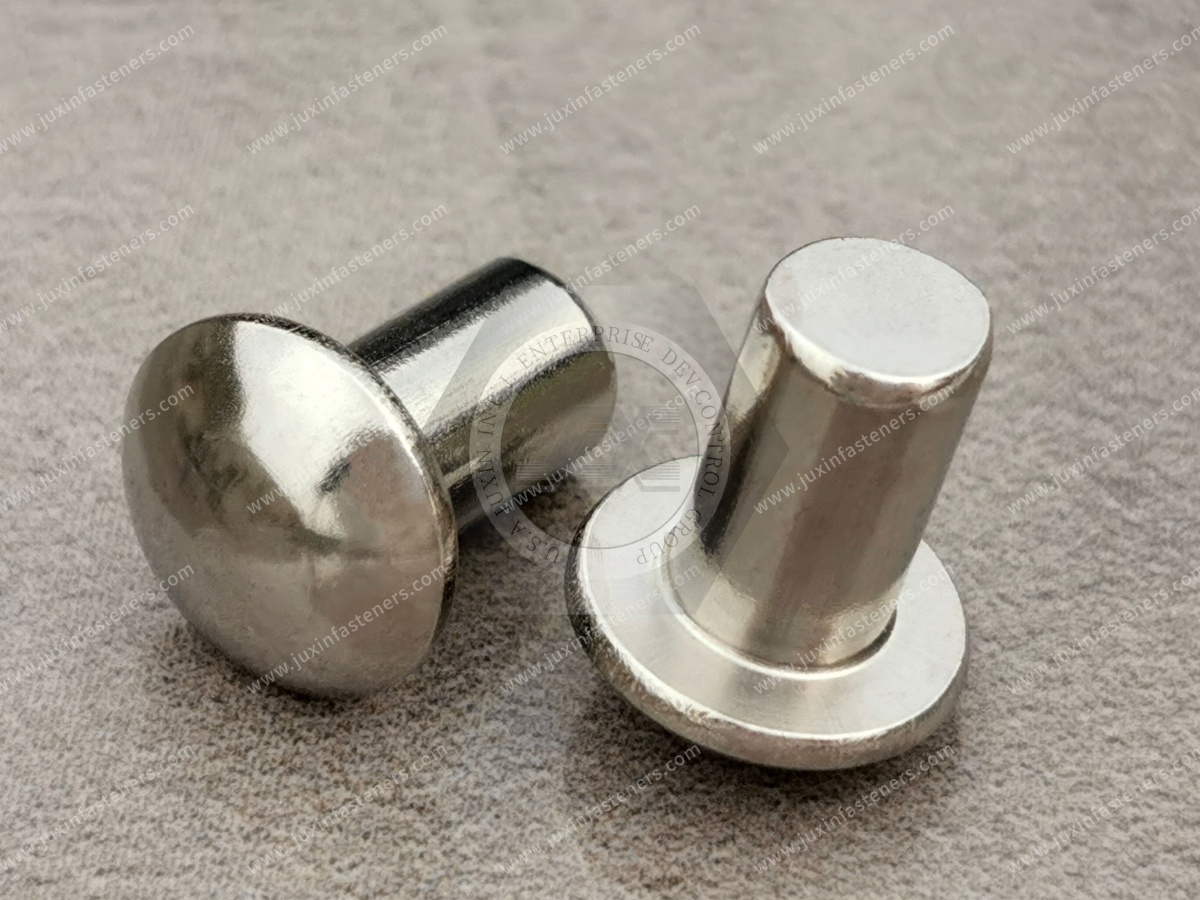
EV battery systems and vehicle structures may require one-side installation, corrosion resistance, sealing, controlled joint geometry, and compatibility with aluminum structures.
Blind rivets, including closed-end configurations, can be used for EV battery pack covers and enclosed assemblies.
HVAC equipment frequently uses sheet metal and mechanical linkages.
Semi-tubular rivets can be applied to HVAC damper control arms, while blind rivets can be used for ducting and cabinet assemblies where rear-side access is limited.
Electronics chassis and electrical sub-assemblies may require lower installation forces and controlled deformation.
Semi-tubular rivets are suitable for many electronics chassis applications, while micro blind rivets can address compact one-side-access requirements.
Solid structural rivets remain an established fastening technology for aerospace airframe structures where high structural integrity and fatigue resistance are required.
Heavy truck chassis, railway cars, rail components, and transportation structures may require structural rivets capable of handling significant mechanical loads.
Solid structural rivets and structural blind rivets can be evaluated according to access conditions and joint loading.
Marine applications require careful consideration of material compatibility and corrosion resistance.
Rivet body material, surface finish, parent material, and environmental exposure should all be evaluated during specification.
For engineering and procurement teams evaluating an industrial rivet supplier, different criteria should be weighted according to their responsibilities.
| Evaluation Area | Engineering Priority | Procurement Priority |
|---|---|---|
| Shear Strength | Very High | High |
| Tensile Strength | Very High | High |
| Installation Force | Very High | High |
| Hole Geometry | Very High | Medium |
| Joint Movement | Very High | Medium |
| Parent Material Compatibility | Very High | High |
| Automated Feeding | High | Very High |
| TCO | Medium | Very High |
| Inventory Consolidation | Medium | Very High |
| PPAP Documentation | High | Very High |
| Heat-Lot Traceability | High | Very High |
| Cross-Reference Capability | High | Very High |
| Lead-Time Stability | Medium | Very High |
| OEM Customization | High | High |
This approach allows engineering and sourcing teams to evaluate the same rivet from two different but complementary perspectives.
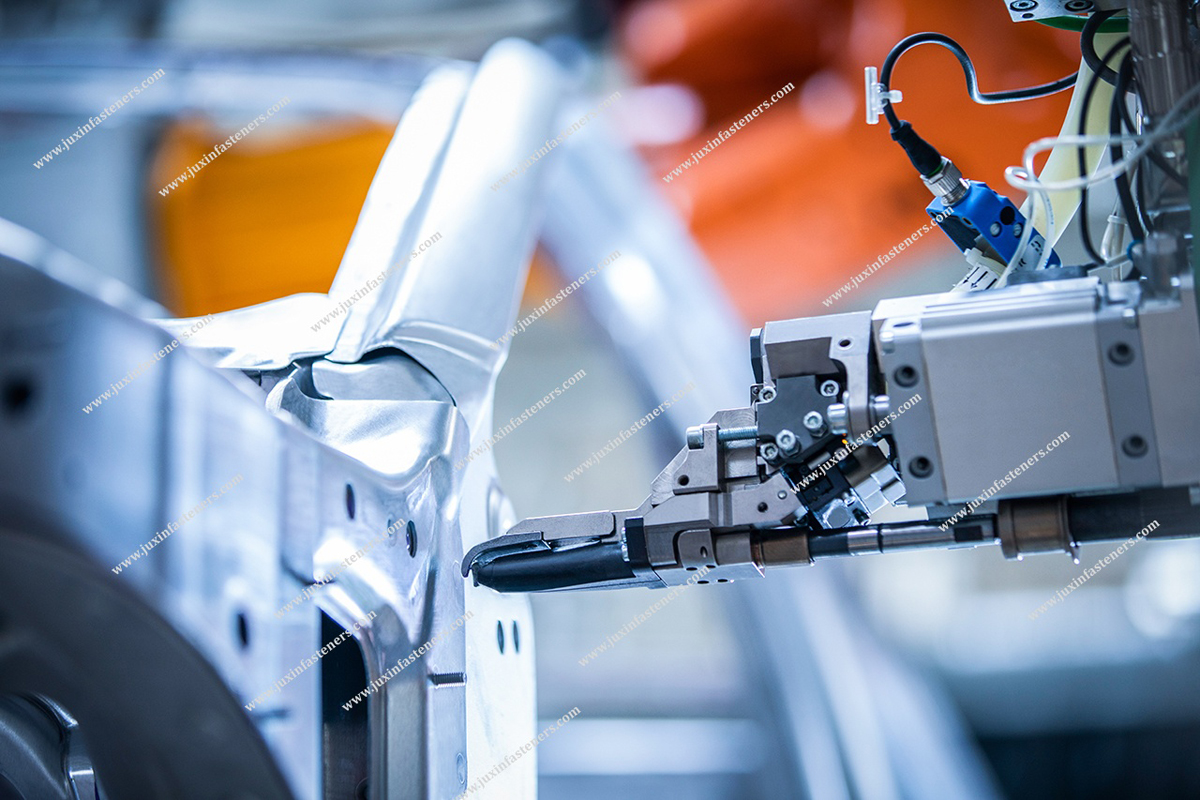
A practical industrial rivet selection process should follow these steps.
Determine whether the joint is:
Fixed structural
Fixed light-duty
Rotational pivot
Single-sided
Enclosed
Low-clearance
Confirm whether the assembly uses:
Aluminum
Steel
Stainless steel
Brass
Copper
Titanium
Monel
Plastics
Composites
Multi-material combinations
Define:
Shear load
Tensile load
Dynamic load
Fatigue requirement
Shock loading
Required joint life
Check:
Available press capacity
Pneumatic or hydraulic tooling
Orbital riveting equipment
Radial riveting equipment
Pull-type blind rivet tools
Automated riveting stations
Bowl feeder requirements
Confirm:
Hole diameter
Hole clearance
Edge distance
Rivet pitch
Material thickness
Grip range
Blind-side clearance
Required axial clearance for pivot joints
Consider:
Humidity
Water
Salt spray
Chemicals
Temperature
Corrosion exposure
Outdoor or indoor use
Confirm:
Annual usage
Packaging
Automation requirements
PPAP requirements
Material certification
Heat-lot traceability
Cross-reference requirements
Lead time
Production capacity
This process reduces the risk of selecting a rivet that appears dimensionally suitable but fails to meet the actual engineering or production requirements.
JUXIN FASTENERS provides factory-direct industrial rivet sourcing for OEM manufacturers, engineering teams, procurement departments, and global supply chains.
The product portfolio covers:
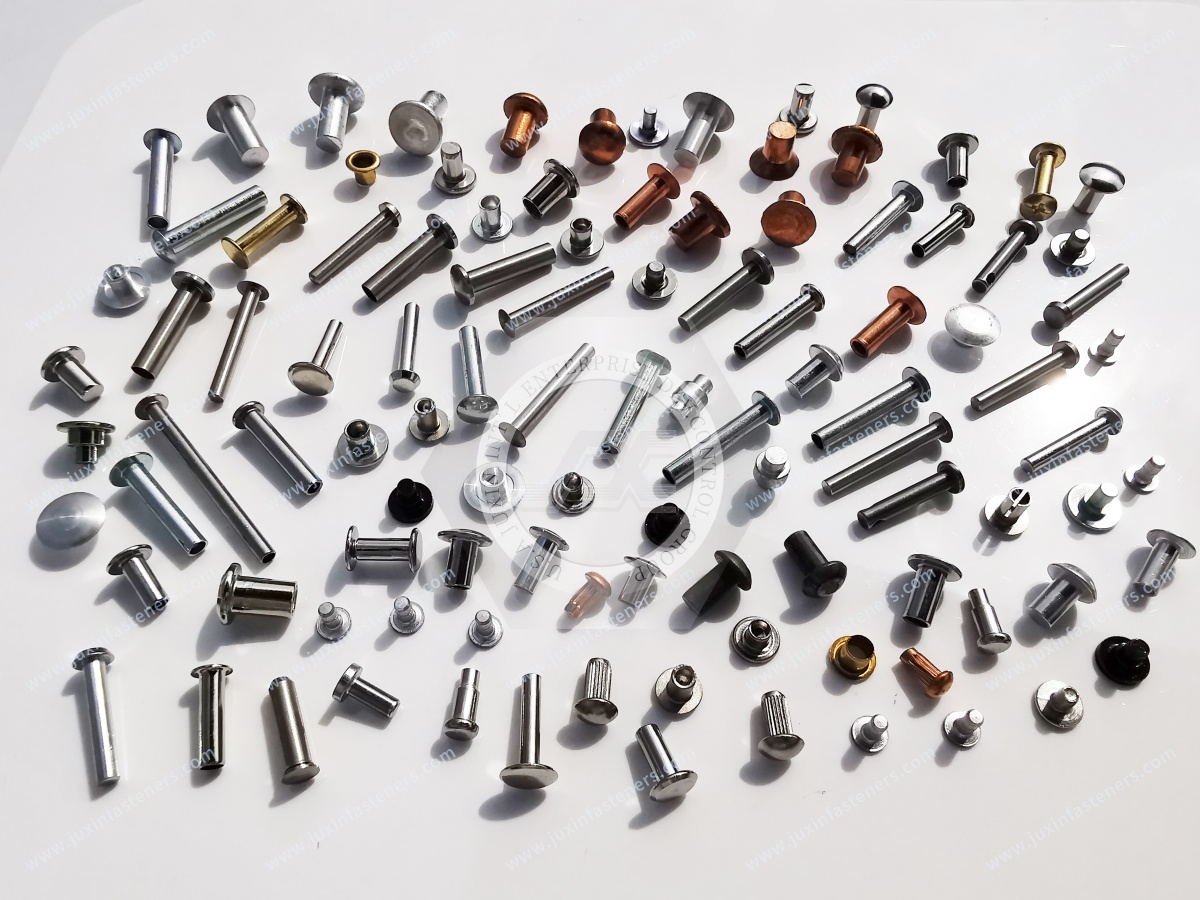
Solid rivets
Semi-tubular rivets
Step rivets
Blind rivets
Structural rivets
OEM rivets
Custom industrial rivets
Applications include:
Automotive
EV
Aerospace
Railway
HVAC
Electronics
Industrial machinery
Shipbuilding
Transportation
Electrical equipment
JUXIN FASTENERS supports both standard and application-specific requirements, allowing engineering teams to evaluate rivet geometry, material, installation method,
joint movement, and production requirements before final sourcing approval.
Need 3D STEP files for CAD assembly verification, physical samples for destructive testing, or a factory-direct RFQ for volume manufacturing?
Email your 2D/3D drawings, material grades, and estimated annual usage directly to the engineering department.
Direct Technical Contact:
Recommended RFQ Information:
2D drawings
3D STEP files
Material grades
Rivet dimensions
Annual usage
Application details
Installation method
Required shear strength
Required tensile strength
Surface treatment
Environmental requirements
Quality documentation requirements
Providing these details allows the technical team to evaluate the complete fastening application rather than quoting only a basic rivet dimension.
Company:
JUXIN FASTENERS — Engineered Industrial Fastening Solutions for Global OEM Manufacturing
Industrial rivet selection is a joint-engineering decision involving mechanical performance, deformation mechanics, installation force, parent material, component movement, DFM geometry, automation, and procurement requirements.
Solid rivets provide a high-strength structural baseline where high installation force and two-sided access can be accommodated.
Semi-tubular rivets reduce setting force and are particularly useful for soft materials, sensitive components, and high-volume automated assembly.
Step rivets provide controlled axial clearance for pivoting and hinged components.
Blind rivets provide permanent single-sided fastening for enclosed panels, tubing, hollow profiles, EV battery covers, vehicle structures, electronics, and other inaccessible assemblies.
For OEM engineering and procurement teams, the best rivet is therefore not simply the lowest-cost or strongest fastener. It is the rivet architecture that provides the required joint performance while fitting the available installation process, parent material, assembly geometry, automation strategy, quality requirements, and total cost of ownership.
JUXIN FASTENERS supports global OEM customers with industrial rivets and engineered fastening solutions for structural, automotive, EV, aerospace, railway, HVAC, electronics, transportation, marine, and industrial applications.
For engineering evaluation, CAD files, samples, technical cross-reference, or factory-direct OEM sourcing:
https://www.juxinfasteners.com/
 MORE NEWS
Sep. 25, 2026
Sep. 25, 2026
Sep. 25, 2026
Contact Us
Tel.:
+86 020 8621 0320
+86 020 3121 6067
E-mail:
Technical Support:
Navigation
SEND INQUIREY